Spleen Qi Deficiency Diet: Foods, Meal Ideas, and TCM Basics
Explore TCM food ideas with a seven-day meal plan, a chicken congee recipe, shopping and preparation steps, and flexible swaps. Learn how traditional food categories differ from serving temperature and what nutrition evidence can tell you.
- What Does “Spleen Qi Deficiency” Mean in TCM?
- Foods to Consider in a Spleen Qi Deficiency Diet
- Foods to Limit: Separate TCM Rules from Personal Triggers
- A 7-Day Spleen Qi Deficiency Diet Meal Plan: Three Meals a Day
- Choose One Change and Keep a Simple Food Note
- What the Evidence Can—and Cannot—Tell You
- When Digestive Symptoms Need Medical Attention
- Frequently Asked Questions
- Choose Your Next Meal
- References & Inspiration
You searched for a spleen qi deficiency diet and came away unsure what to eat. One list says to skip salads. Another rules out dairy. Your usual breakfast suddenly looks complicated.
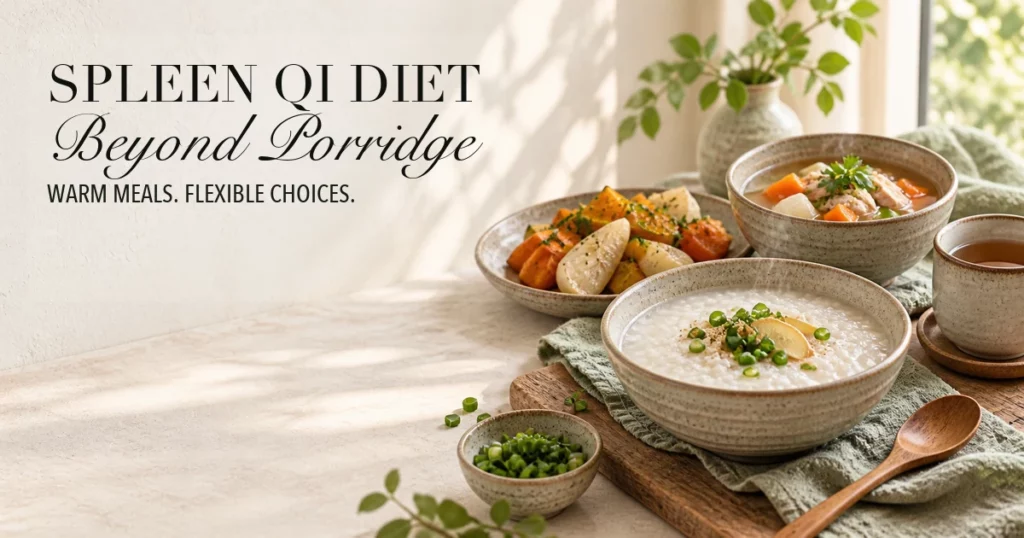
Let’s start with a meal you can make: chicken and carrot congee. Below, you’ll find the ingredients, a seven-day menu, and a shopping list to help you get going.
A spleen qi deficiency diet usually refers to traditional Chinese medicine (TCM) food guidance that favors cooked meals and regular eating habits. Rice porridge, cooked grains, and soups often appear in these guides. But a food list alone cannot tell you what will suit your digestion.
As you plan your meals, we’ll separate traditional food ideas from what nutrition research can tell you. You can use the full menu or begin with one breakfast.
Quick takeaways
- Choose a complete meal, with alternatives you already enjoy.
- Separate a food’s serving temperature from its traditional TCM classification.
- Keep simple meal notes instead of assuming a recommended food must suit everyone.
What Does “Spleen Qi Deficiency” Mean in TCM?
A traditional pattern, not an anatomical spleen diagnosis
In TCM, “Spleen” names a broader functional system associated with processing food and distributing nourishment, as explained in this discussion of TCM organ concepts in The Hong Kong Practitioner. “Qi deficiency” describes a pattern within that traditional framework. The phrase is not a medical diagnosis of damage to your anatomical spleen.
You cannot confirm this pattern from a bloated afternoon, tiredness, or a photograph of your tongue. Those observations also cannot tell you whether you have IBS, a food intolerance, or another medical condition.
I trained in traditional medicine in Vietnam and am not currently practicing medicine. My role here is to explain the terminology and the sources behind it. Use the meal ideas as examples to adapt to your needs.
“Warm” food has two different meanings
The Hong Kong Chinese Medicine Regulatory Office describes traditional food categories such as cold, cool, warm, hot, and neutral. These are part of TCM theory, distinct from a temperature you can measure with a thermometer. See its guide to food in Chinese medicine.
| When you read… | What it means |
|---|---|
| “Serve the soup warm” | The physical temperature when you eat it. |
| “This food is warming in TCM” | A traditional classification, rather than a thermometer reading. |
For example, the CMRO guide classifies glutinous rice as warm and mung beans as cold in nature. Those labels describe the traditional framework even though both ingredients can appear in cooked dishes.
Heating a meal doesn’t automatically establish its traditional classification or prove a digestive benefit. Keep these two meanings separate when comparing food lists. Cooking also raises different questions about texture and nutrients; those deserve their own consideration.
Foods to Consider in a Spleen Qi Deficiency Diet
Start with familiar staples and cooked meals
You don’t need a cupboard full of unfamiliar ingredients to explore TCM food ideas. Begin with meals you can recognize and prepare. The examples below are a practical starting point, not a ranking of foods proven to improve spleen qi.
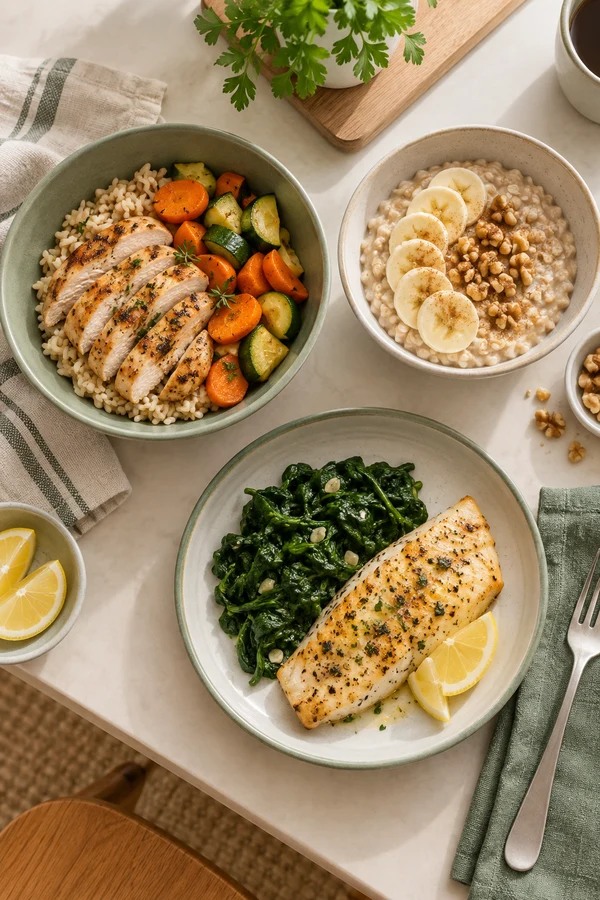
Choose a food you already have, then look across the row for ways to build a meal around it. Rice can become a bowl with chicken and vegetables; oats can be breakfast with familiar additions.
| Food or meal | Simple preparation | Place in your meal | Alternative or tolerance note |
|---|---|---|---|
| Rice or rice porridge | Cook rice normally, or simmer with extra water for porridge. | A starch base for a savory meal. | Add a familiar protein and vegetables; porridge can be one option among many. |
| Cooked oats | Prepare with water or a milk you tolerate. | Another breakfast base. | Keep toppings familiar when changing your breakfast. |
| Cooked vegetables | Steam, roast, or simmer your usual vegetables. | Color, texture, and variety. | Choose vegetables you already enjoy rather than buying an entire new list. |
| Eggs, fish, or chicken | Use your usual safe cooking method. | A protein component. | Choose the option that fits your preferences, allergies, and existing dietary advice. |
| Plant proteins | Include tofu, beans, or lentils you already use comfortably. | A plant-based protein component. | Consider the particular food and amount; “plant-based” doesn’t guarantee digestive comfort. |
| Soups and stews | Combine familiar ingredients in broth or another suitable liquid. | A convenient way to bring components together. | Check what’s actually in the bowl, including seasonings and any dairy. |
Give each meal more than one job
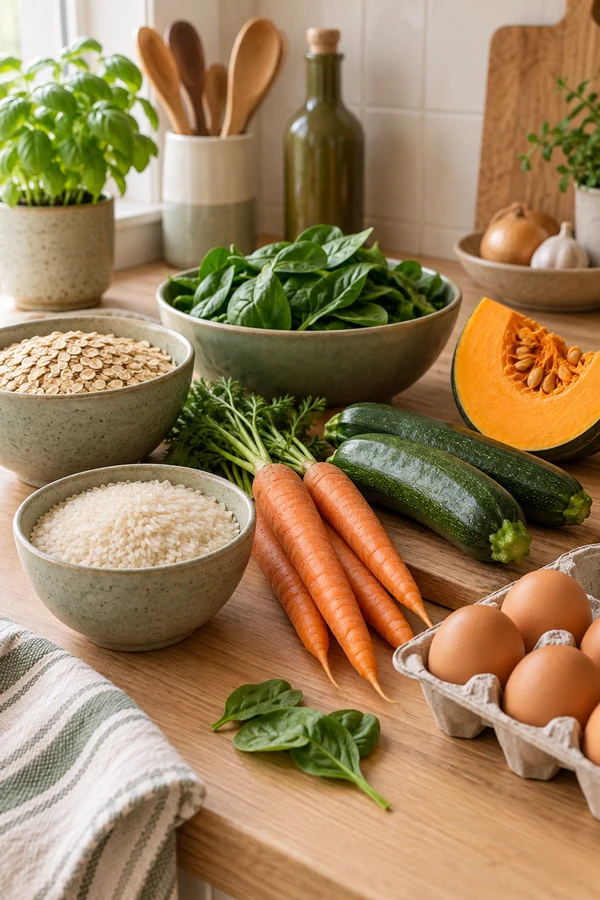
For planning, think starch + protein + vegetables + flavor you enjoy. That might be rice, an egg, cooked carrots, and a familiar seasoning. It might also be a different combination that reflects how your household eats.
Use that combination as a starting point. Adjust the amounts for your appetite, activity, overall diet, and any dietary advice you’ve been given.
Before shopping, check what you already have. Write down two meal combinations and an easy swap for anything missing. That saves you from needing a special shopping trip for one ingredient.
For another way to organize familiar ingredients across the week, see our gut-healthy meal planning guide.
Foods to Limit: Separate TCM Rules from Personal Triggers
Cold drinks and raw foods: avoid blanket bans
Traditional guides often recommend reducing cold or raw foods. You can understand that recommendation within its TCM context without concluding that every chilled drink or salad damages digestion.
The sources discussed here do not establish that cold water “freezes” digestion or solidifies fat inside your gut. Nor do they establish that serving every food hot makes it suitable for everyone.
You may also encounter “dampness” in TCM diet discussions. This is traditional terminology, not a measurement of body fat, inflammation, or toxins. It doesn’t give you a reason to remove whole food groups by yourself.
A traditionally recommended food may still not suit you
NIDDK explains that some carbohydrates, large amounts of fiber, and high-fat foods can contribute to gas or bloating in some people. So a food’s place on a traditional list won’t tell you how you’ll feel after eating it. See NIDDK’s guidance on diet and gas.
Consider these three situations:
- Your new porridge contains milk. If you have diagnosed lactose intolerance, NIDDK identifies lactose-free or lactose-reduced dairy as options. Follow your existing plan and consider the milk ingredient before blaming the entire breakfast. Lactose-free dairy is not an alternative for a milk allergy. See nutrition guidance for lactose intolerance.
- You replaced a familiar lunch with a large bean stew. Note the bean portion and other new ingredients. You might return to your usual protein while reviewing what changed, rather than eliminating every plant food.
- You added several fiber-rich toppings at once. Oats, seeds, dried fruit, and a much larger portion create several changes together. NIDDK advises increasing fiber gradually in its IBS nutrition guidance. Keep the next comparison simpler.
These are examples to help organize your observations, not explanations of your symptoms. Choose pasteurized dairy if you use it; the CDC recommends it over raw milk for food safety.
If your discomfort appeared after changing portions or toppings, our guide to bloating after eating fiber can help you organize what to discuss with a professional. For food choices, use the high-fiber foods guide alongside your own tolerance notes.
A 7-Day Spleen Qi Deficiency Diet Meal Plan: Three Meals a Day
If you’re still thinking, “I understand, but what do I eat tomorrow?”, start with Day 1 breakfast: chicken and carrot congee. Tonight, check whether you have rice, chicken, and carrots. Write down only what’s missing. That’s your first action.
Here are 21 meals: breakfast, lunch, and dinner for seven days. Ingredients repeat to keep shopping and cooking manageable. This sample menu hasn’t been clinically tested for spleen qi deficiency or calculated to meet your individual calorie and nutrient needs.
How to use the plan without changing everything at once
- For a smaller start: make Day 1 breakfast and keep your other meals familiar. Once preparation feels manageable, choose a lunch or dinner from the table.
- For a full week of planning: use the whole table, prioritizing ingredients you already tolerate. Changing several meals at once is a routine change, not a controlled way to identify symptom triggers.
- For portions: use your usual amounts that suit your needs. Each meal includes a starch, protein, and vegetables or fruit; add cooking oil, extra servings, or snacks as needed. The three meals listed are not a limit on how much you may eat.
- For foods outside the table: keep fruit, pasteurized dairy, or suitable alternatives in your diet if you already use them. A food’s absence from this menu isn’t a reason to avoid it.
For breakfast variations, browse these warm breakfast ideas. If you are comparing hot oats with overnight oats, read our oatmeal preparation comparison without assuming one preparation suits everyone.
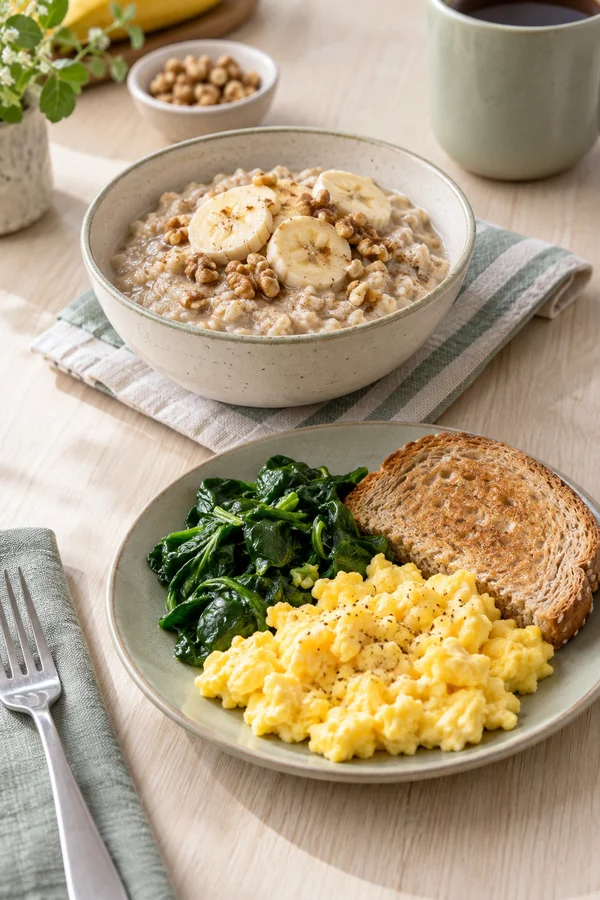
Your week at a glance
Season meals to your preferences and existing dietary guidance. Ginger, onions, garlic, and other seasonings are optional; leave out or replace ingredients you already know don’t suit you.
| Day | Breakfast | Lunch | Dinner |
|---|---|---|---|
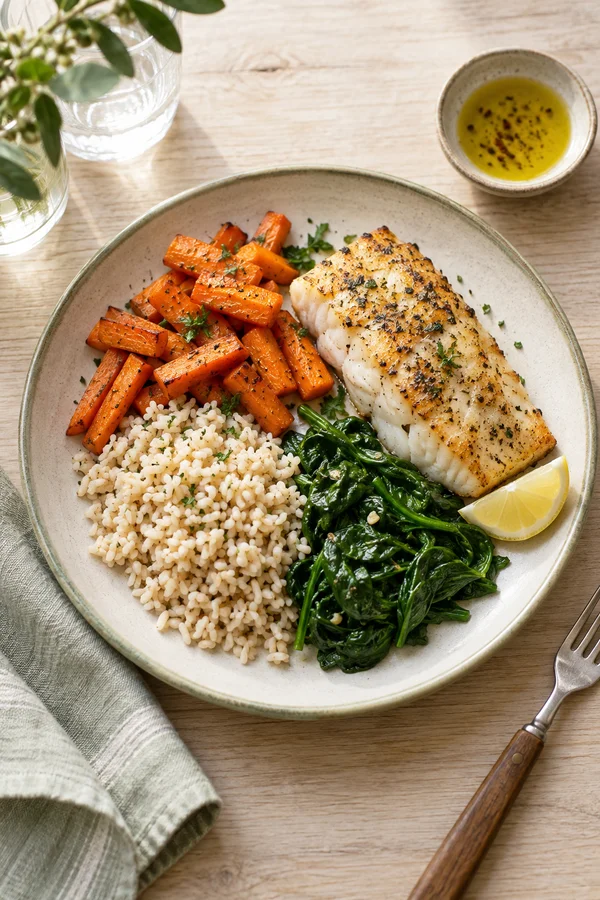
| Day 1 | Chicken and carrot congee: rice porridge with shredded cooked chicken and softened carrots. | Chicken and zucchini rice bowl: rice, cooked chicken, steamed zucchini and carrots; add your usual oil and seasonings. | Fish, rice, and greens: baked salmon or white fish, rice, and cooked spinach. |
| Day 2 | Banana oatmeal with cooked eggs: oats cooked in water or suitable milk, banana, and hard-boiled eggs alongside. | Tofu and pumpkin rice bowl: pan-cooked tofu, steamed or roasted pumpkin, and rice. | Chicken and potato soup: cooked chicken, potatoes, carrots, and spinach; add bread or rice if needed. |
| Day 3 | Eggs and greens on toast: toasted bread, fully cooked eggs, and spinach sautéed with your usual amount of oil. | Fish and carrot rice bowl: steamed or baked fish, rice, cooked carrots, and zucchini. | Tofu, rice, and vegetable soup: tofu, rice, and zucchini-carrot soup. |
| Day 4 | Chicken and pumpkin congee: rice porridge, shredded cooked chicken, and softened pumpkin. | Roast chicken and potatoes: chicken, roasted potatoes, and cooked spinach. | Fish and pumpkin rice bowl: cooked fish, rice, steamed pumpkin, and zucchini. |
| Day 5 | Banana oatmeal with cooked eggs: repeat Day 2 breakfast if it suits you. | Tofu and vegetable rice bowl: pan-cooked tofu, rice, cooked spinach, and carrots. | Chicken and vegetable stew with rice: chicken stewed with carrots and zucchini, served with rice. |
| Day 6 | Eggs and greens on toast: repeat Day 3 breakfast using bread you already tolerate. | Baked fish and potatoes: cooked fish, roasted potatoes, and zucchini. | Tofu and pumpkin rice bowl: tofu, rice, cooked pumpkin, and spinach. |
| Day 7 | Chicken and carrot congee: repeat Day 1 breakfast with freshly cooked or safely stored ingredients. | Chicken and vegetable rice bowl: cooked chicken, rice, carrots, and zucchini. | Fish, rice, and pumpkin soup: steamed or baked fish, rice, and pumpkin-spinach soup. |
The repetition is deliberate: learn a few preparations, then vary the protein or vegetables. Repeating a dish does not mean keeping the same batch refrigerated for seven days.
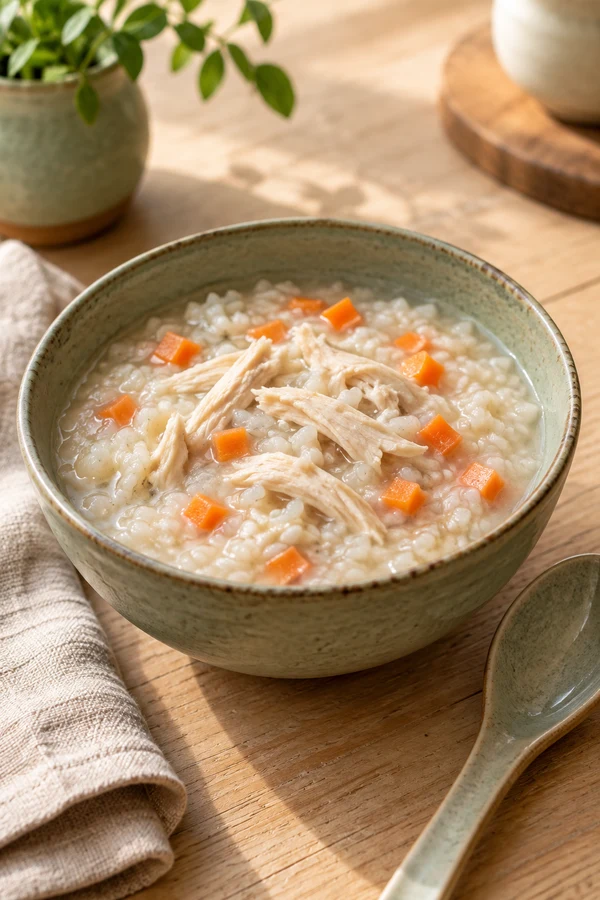
Your first meal: chicken and carrot congee for one
These are example ingredient amounts for one breakfast, not a serving calculated for your individual energy needs. Gather:
- About 50–60 g dry rice.
- About 100–120 g raw boneless chicken.
- Half to one small carrot, washed and finely chopped.
- About 500–700 ml water to start, adding more as needed for your rice and preferred consistency.
- Cooking oil and familiar seasonings, adjusted to your existing diet.
To make it:
- Cook the rice in water. Add the carrot and simmer until both reach the softness you like.
- Cook the chicken separately to a safe temperature, shred it, and stir it into the porridge.
- Adjust the water and seasoning, stir, and serve at a comfortable eating temperature.
USDA specifies an internal temperature of 165°F (74°C) for poultry; check with a food thermometer.
If this amount isn’t enough for you, increase your serving or add a familiar side. For a busy morning, prepare it ahead and follow the storage guidance below. You don’t need herbs or specialty ingredients.
Shopping list: check your kitchen first
This table brings together ingredients for the week. Quantities depend on how many people you’re feeding, your portions, and substitutions. Start by buying enough for Days 1–3, then restock midweek.
| Group | Ingredients used in the plan | How to reduce waste |
|---|---|---|
| Starches | Rice, oats, bread, potatoes. | Check your pantry first; choose bread and oats you already use. |
| Proteins | Boneless chicken, salmon or white fish, eggs, tofu. | Portion for the meals you plan; freeze meat or fish you won’t use soon and thaw safely before cooking. |
| Vegetables | Carrots, zucchini, pumpkin, spinach. | Fresh or frozen vegetables can work in these cooked dishes; avoid buying too much fresh produce at once. |
| Fruit and optional milk | Bananas; pasteurized milk or an alternative you tolerate. | Milk is only needed if you choose it for the oats; buying it is optional. |
| Seasonings and supplies | Cooking oil, familiar seasonings, shallow containers with lids, date labels. | Use what you have; no supplements are needed for this plan. |
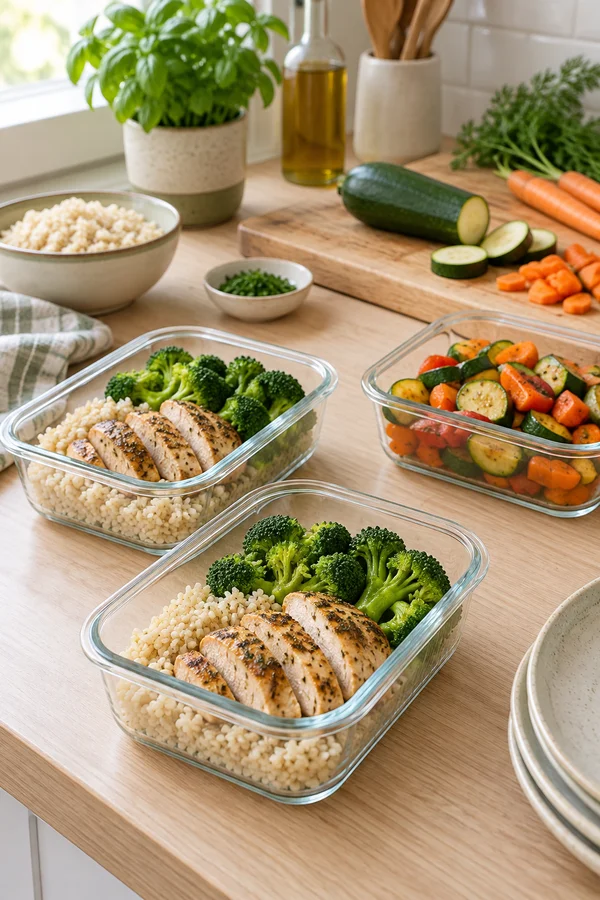
Prepare twice to make daily cooking easier
Before Day 1: check ingredients for the first three days. Cook the rice or porridge and chicken you intend to use soon, and prepare carrots and zucchini. Divide cooked food into portions, date it, and refrigerate promptly. Fish and eggs can be cooked on the day you eat them; store or freeze raw ingredients appropriately if you won’t use them soon.
Before Day 4: restock vegetables and proteins, then prepare a fresh batch. For weekend meals, cook closer to the day or freeze individual portions early. Don’t keep a whole week’s cooked food in the refrigerator.
Following USDA’s storage and reheating guidance, divide cooked food into shallow containers and refrigerate within two hours, or one hour when the surroundings exceed 90°F (32°C). Keep your refrigerator at 40°F (4°C) or below. Use refrigerated leftovers within 3–4 days, or freeze them for later.
Reheat to 165°F (74°C) internally. Thaw in the refrigerator rather than on the counter, and reheat only the portion you need. Rice and porridge also need prompt refrigeration; don’t leave them out overnight.
For another batch-cooking example, see the chicken meal-prep guide and adapt its ingredients to your needs.
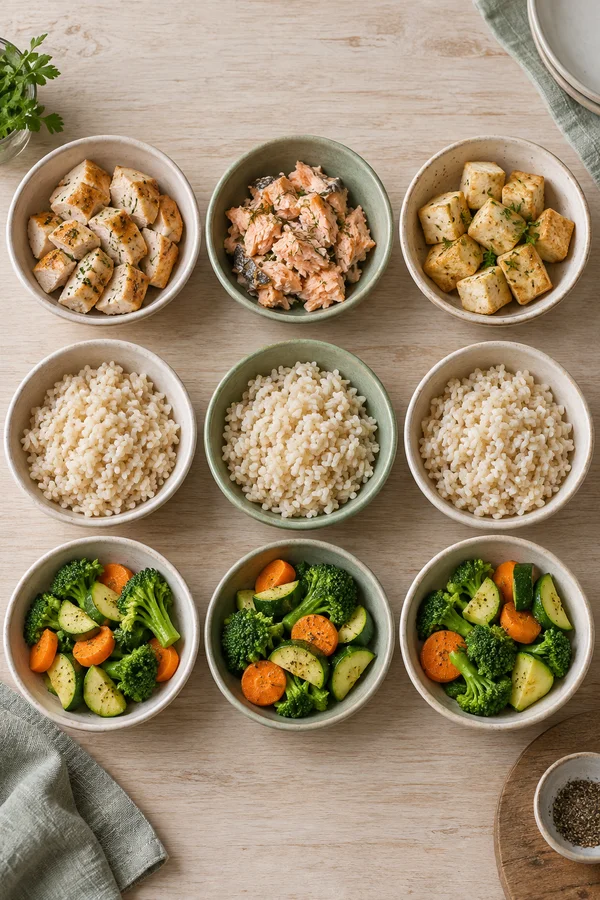
If an ingredient doesn’t suit you, keep the meal and swap that component
| Ingredient that doesn’t fit | A substitution for the plan |
|---|---|
| Regular milk when you have diagnosed lactose intolerance | Cook oats with water or suitable lactose-free milk. Lactose-free dairy still isn’t suitable for a milk allergy. |
| Fish or eggs | Use chicken or tofu you already tolerate, in an appropriate amount. |
| Tofu or soy | Use a familiar tolerated protein; if you eat a vegetarian diet, choose a plant protein that fits your needs. |
| Bread or oats | Use rice or porridge and keep the meal’s protein and vegetables. With celiac disease, replacements must meet your prescribed gluten-free requirements. |
| Banana or a vegetable in the table | Choose a familiar fruit or vegetable you already tolerate. You don’t need to retry an uncomfortable food to follow the menu. |
Substitutions are not automatically equivalent in calories or nutrients. If you follow a low-FODMAP or another specialized diet, adjust ingredients and portions with the professional guiding you.
Do this tonight: write down rice, chicken, and carrots, mark what’s missing, and choose when to cook Day 1 breakfast. After eating, note the amount and how you felt. Preparing a meal that fits your day is a useful first step; the seven-day menu isn’t a deadline for symptoms to disappear.
Our banana ripeness guide explores another detail to consider when selecting fruit. If a professional has already recommended a low-FODMAP plan, these low-FODMAP meal ideas offer additional examples to review with them.
Choose One Change and Keep a Simple Food Note
Plan your next meal in under five minutes
For any meal you choose, keep the plan to three decisions:
- Choose a meal. Pick breakfast, lunch, or dinner that you can realistically prepare.
- Name one change. Write something specific, such as “same breakfast, different milk.”
- Keep a fallback. Note the familiar option you’ll use if the ingredient isn’t available or doesn’t fit your needs.
Five minutes is planning time, not a promise about cooking speed or symptom relief. Don’t use this exercise to stop medication, challenge an allergy, or override a prescribed diet.

Record observations without calling them proof
NIDDK notes that a food-and-symptom diary can help a doctor or dietitian assess possible dietary contributors. Keep your notes descriptive rather than scoring your “spleen strength.”
| Date and meal | Ingredients and approximate amounts | What changed | What you noticed, and when | Other context |
|---|---|---|---|---|
| ______ | ______ | ______ | ______ | ______ |
Record comfortable meals too, so your notes show more than the foods you suspect. Look for patterns to discuss with a professional. A few entries alone can’t establish a cause or show that a TCM pattern has changed.
Use the 5-Day Workday Gut Trigger Journal to keep your meal notes together, or copy this row into a notebook you already use.
What the Evidence Can—and Cannot—Tell You
When you see a food recommendation, ask what kind of source supports it. Traditional guidance, nutrition advice, and a clinical trial each tell you something different.
| Source type | What it contributes | What it doesn’t establish |
|---|---|---|
| Traditional food guidance | How TCM describes foods and eating patterns. | That every classification predicts your digestive response. |
| Nutrition guidance | Ways to consider food tolerance and eating habits. | A diagnosis of spleen qi deficiency. |
| A clinical trial | Findings about the particular intervention and participants studied. | That a different food or an entire diet produces the same result. |
For example, a 2024 randomized trial by Wang and colleagues studied a specific herbal porridge, Hou Gu Mi Xi, in 64 adults with functional dyspepsia. The researchers reported improvements in some outcomes. It was a small, single-center study of a particular preparation, not a trial of ordinary rice porridge or every spleen qi diet recommendation.
The NCCIH overview of TCM also makes clear that evidence and safety vary across approaches. An interesting study is a reason to read carefully, not a reason to buy an herbal product for your breakfast.
When Digestive Symptoms Need Medical Attention
Don’t assume persistent symptoms are simply a sign that you chose the wrong TCM food. NIDDK advises medical attention for indigestion that doesn’t improve.
Seek help right away for concerning symptoms such as severe ongoing abdominal pain, difficulty swallowing, repeated vomiting, blood in vomit, black tarry stools, or unintended weight loss. Chest pain or shortness of breath also needs immediate attention.
You do not need to finish a food journal before seeking care. Bring whatever observations you already have, and let a healthcare professional decide what evaluation is appropriate.
Frequently Asked Questions
What is a good breakfast for spleen qi deficiency?
Rice porridge with suitable additions or cooked oats can be practical options when exploring traditional food ideas. Choose ingredients you already tolerate, and include enough variety to make breakfast work for you. There is no single breakfast established by the evidence here as best for this TCM pattern.
Do I need to avoid all cold or raw foods?
The sources here do not establish a universal need to avoid them. TCM classifications and serving temperature mean different things. Consider your own dietary needs, preferences, and professional advice rather than turning a traditional food list into a blanket ban.
Can I follow these ideas if I have IBS or food intolerances?
Some meal ideas may fit your current plan, but adapt them with your clinician or dietitian. NIDDK emphasizes that dietary changes for IBS vary by person. A cooked meal is not automatically low-FODMAP, lactose-free, or suitable for an allergy. Check its ingredients and amounts.
How long should I follow a spleen qi deficiency diet?
The evidence discussed here does not establish a standard duration or a recovery deadline. Avoid extending restrictions indefinitely because an online list says you should. If symptoms persist or your food choices keep narrowing, seek help reviewing the symptoms and whether your diet still meets your needs.
Choose Your Next Meal
Choose tomorrow’s breakfast before you close this page. Day 1 gives you a recipe and a short ingredient list; the swap table gives you alternatives. Set a time to cook, then write one line after the meal about how it went.
For broader reading, explore our food-first approach to gut health and foods for gut health guides. Our acupressure for digestion guide offers another introduction to TCM practices. Keep today’s practical step simple: decide what you will eat next.
Health disclaimer: I am trained in traditional medicine in Vietnam, but I am not currently practicing medicine. This article is educational and is not personalized medical advice. It should not replace assessment or care from a licensed healthcare professional. Seek professional advice for persistent, worsening, or concerning symptoms.
References & Inspiration
- this discussion of TCM organ concepts in The Hong Kong Practitioner
- guide to food in Chinese medicine
- NIDDK’s guidance on diet and gas
- nutrition guidance for lactose intolerance
- IBS nutrition guidance
- CDC recommends it over raw milk for food safety
- USDA specifies an internal temperature of 165°F (74°C) for poultry
- 2024 randomized trial by Wang and colleagues
- NCCIH overview of TCM
- NIDDK advises medical attention for indigestion that doesn’t improve

About Mr. Anh
We turn solid evidence into everyday habits Americans can actually do—plain English, cups/oz, grocery-aisle swaps, and routines that fit real life. Our editorial process: Experience—we road-test tips in real schedules…