Resistant Starch in Oatmeal: Overnight Oats vs Hot Oats
Resistant starch in oats depends on temperature: raw and overnight-soaked oats keep the most, while hot cooking drops it sharply. Soaked vs cooked vs overnight — plus the cold-soak hack.
Millions of people start their day with a steaming, comforting bowl of hot oatmeal, genuinely believing it is the ultimate breakfast for their digestive health. While oats are undeniably healthy, there is a shocking truth that most oatmeal lovers don’t realize: boiling water just cooked away almost all of its resistant starch.
If your goal is to support your gut lining, ease inflammation, and feed your microbiome, the difference between raw oats and cooked oatmeal isn’t even close.
Let’s dive into the fascinating science of resistant starch in oats, why raw is vastly superior to cooked, and how a simple “Overnight Oats” hack can transform your morning routine into a daily probiotic feast.
Quick answer: Raw rolled oats hold the most resistant starch — about 11% of their carbohydrate. Overnight-soaked (cold) oats keep nearly all of it because there is no high heat, while boiling or microwaving drops it to roughly 0.1–0.2%. Cooking then cooling restores some, but never as much. For gut-friendly resistant starch, soak your oats overnight instead of cooking them hot.
New to the topic? Start with our complete guide to resistant starch.
The Science: Why Oats are a Gut Health Superfood
Oats have earned their reputation as a nutritional powerhouse primarily because they contain a massive amount of Beta-Glucan. This unique soluble fiber forms a thick, soothing gel as it travels through your digestive tract, helping to lower cholesterol and stabilize blood sugar levels.
But Beta-Glucan is only half the story. The true secret weapon hiding inside an oat grain is Resistant Starch.
Unlike regular carbohydrates that break down quickly into sugar, resistant starch literally resists digestion in the small intestine. It arrives completely intact in your colon, where it acts as a prebiotic that feeds your microbiome before you ever need a supplement. When these bacteria feast on resistant starch, they produce a short-chain fatty acid called Butyrate—a compound that nourishes the cells lining the gut and may help ease inflammation.
The Great Debate: Raw Oats vs. Cooked Oatmeal
Here is where the morning routine goes wrong for so many people. The amount of resistant starch you get from oats is entirely dependent on temperature.
Raw Oats: The Most Resistant Starch
According to nutritional analyses, raw rolled oats contain an incredibly high concentration of resistant starch—approximately 11% of their total carbohydrate weight. This makes raw oats one of the most potent natural sources of prebiotics on the planet.
Hot-Cooked Oatmeal: Where Resistant Starch Drops
The moment you pour boiling water over your oats or blast them in the microwave, a catastrophic molecular shift occurs. The intense heat permanently breaks down the starch matrix. As a result, the resistant starch content plummets from 11% down to a microscopic 0.1% to 0.2%.
Yes, your hot oatmeal still has beneficial Beta-Glucan fiber, but you have effectively boiled away the resistant starch.
(Note: If you cook your oatmeal and then let it sit in the fridge to cool down, some of the resistant starch will return via a process called retrogradation. However, it will never reach the massive levels found in the raw state).
| How you prepare the oats | Resistant starch | Notes |
|---|---|---|
| Raw / dry rolled oats | ~11% of carbs | Highest, but hard to eat dry and tough to digest |
| Overnight-soaked (cold) | High (close to raw) | Soaking softens the oats without heat |
| Hot-cooked (boiled or microwaved) | ~0.1–0.2% | High heat breaks down the resistant starch |
| Cooked, then cooled in the fridge | Partly restored | Retrogradation returns some, not all |
The Solution: Overnight Oats (The Cold Soak Hack)
Eating dry, raw oats straight out of the box sounds like a terrible and difficult-to-digest breakfast. Fortunately, there is a perfect solution: Overnight Oats.
By soaking raw rolled oats in liquid (like almond milk or yogurt) and leaving them in the refrigerator overnight, you achieve the perfect texture without ever touching a stove. The oats absorb the moisture and soften completely, making them delicious and easy to eat, all while preserving 100% of that precious 11% resistant starch. Start with the gut-friendly overnight oats method that keeps the starch intact without wrecking your stomach.
The Microbiome Booster Recipe
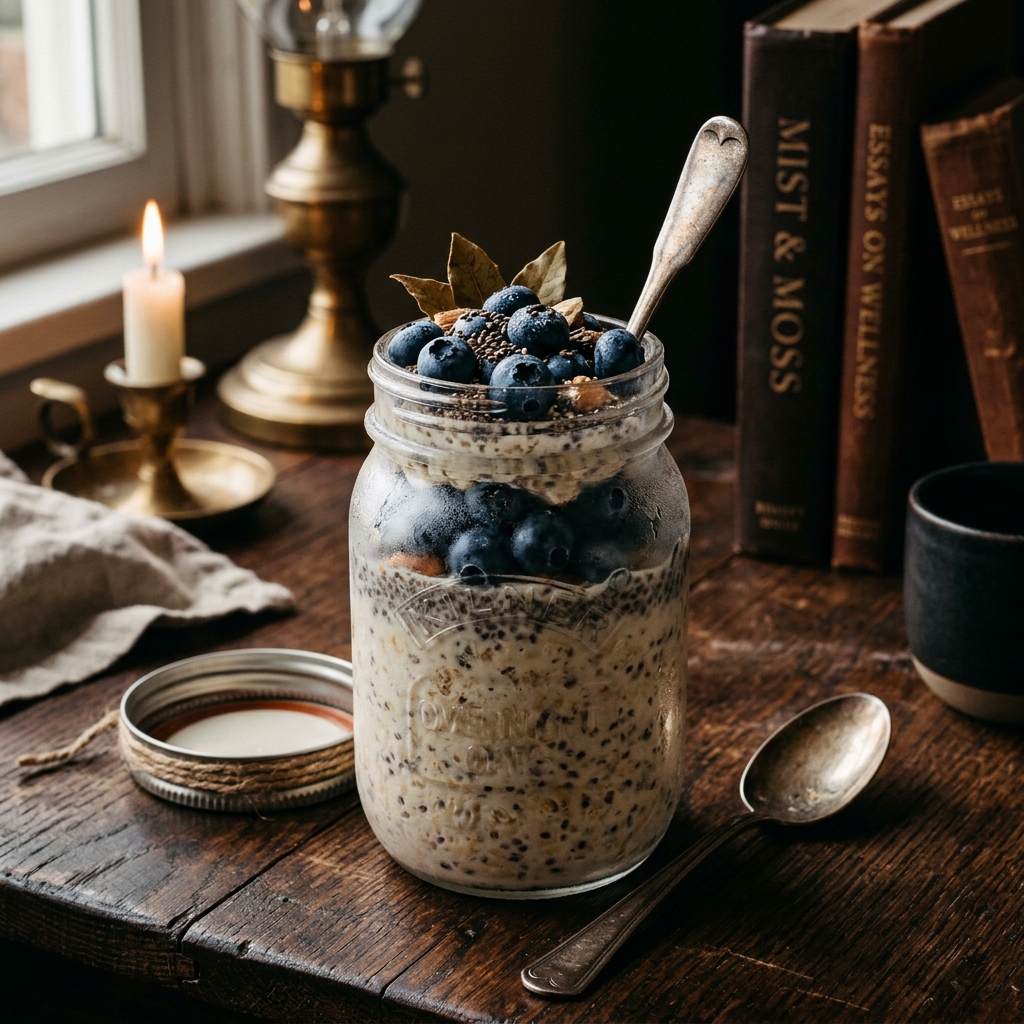
Want to build the ultimate gut-friendly breakfast? Try this simple ratio before you go to bed, or use the chia-seed overnight oats version if you want an even stronger synbiotic breakfast.
- 1/2 cup of raw Rolled Oats
- 1/2 cup of unsweetened Almond Milk (or Kefir for an extra probiotic kick)
- 1 tablespoon of Chia Seeds (for added gel-forming fiber)
- A handful of fresh Blueberries (for polyphenol antioxidants)
Stir it in a jar, put the lid on, and let the fridge do the work overnight.
For more morning options, see our resistant starch breakfast ideas. If oats tend to make you gassy, the more practical next read is resistant starch foods for bloating.
Frequently Asked Questions
Do soaked oats have more resistant starch than cooked oats?
Yes. Soaked (overnight) oats keep the resistant starch that raw oats naturally have — about 11% of their carbohydrate — because there is no high heat involved. Hot-cooked oatmeal drops to roughly 0.1–0.2%. Cooking and then cooling restores some through retrogradation, but not to raw or soaked levels.
Do I use steel-cut, rolled, or instant oats?
For overnight oats, rolled oats (often called old-fashioned oats) are the absolute best choice. They soften perfectly. Instant oats are overly processed and naturally have lower resistant starch levels, while steel-cut oats are too dense and will remain dangerously hard even after soaking. If you insist on steel-cut oats, read why steel-cut oats need a different hot-soak method or they stay too hard on digestion.
Will eating raw soaked oats cause bloating?
If your current diet is very low in fiber, suddenly introducing 11% resistant starch might shock your microbiome, leading to temporary gas and bloating. The key is to start small! Begin with just 1/4 cup of overnight oats and let your gut bacteria adjust over a few weeks. If you need the deeper explanation, see why resistant starch can trigger bloating at first and how to scale it up more gently.
Can I warm up my overnight oats in the morning?
Yes, but you must be gentle! If you hate cold breakfasts, you can pop your overnight oats in the microwave for just 15 to 20 seconds to take the chill off. As long as you don’t make them piping hot, the resistant starch bonds will survive.
Conclusion
Save your steaming hot bowl of oatmeal for a freezing winter day when you just need some comfort. But if you want to support your gut lining, reduce bloating, and cultivate a thriving microbiome, it is time to embrace the cold soak.
Switching to overnight oats is arguably the easiest, cheapest, and most delicious dietary tweak you can make for your digestive health.
Want to know what other everyday foods are secretly packed with prebiotics? Don’t forget to download the resistant starch foods chart and grocery list for everyday prebiotic foods beyond oats.
The Best Oat Method Depends on Your Goal
| Oat method | Best for | Gut note |
|---|---|---|
| Hot oatmeal | Comfort, beta-glucan, warm breakfast | Still useful, but lower in resistant starch than soaked oats |
| Cooked then cooled oats | Meal prep, gentle texture | Cooling can reform some resistant starch |
| Overnight oats | Higher resistant starch, no-cook prep | Start with a small portion if you bloat easily |

About Mr. Anh
We turn solid evidence into everyday habits Americans can actually do—plain English, cups/oz, grocery-aisle swaps, and routines that fit real life. Our editorial process: Experience—we road-test tips in real schedules…