How to Quickly Get Rid of Constipation: A Fast Troubleshooting Guide
Disclaimer: The author is trained in traditional medicine in Vietnam but is not currently practicing. This site shares personal research,...
Disclaimer: The author is trained in traditional medicine in Vietnam but is not currently practicing. This site shares personal research, food-first wellness experiments, and evidence-informed notes. It is educational and not a substitute for professional medical care.
If you are reading this, you are likely feeling backed up, bloated, and looking for relief. You probably don’t want to read a long-winded lecture on eating more vegetables right now—you just want to know how to quickly get rid of constipation and soothe the discomfort.
I understand exactly how you feel. Constipation is physically exhausting and mentally draining. As someone who explores traditional digestive healing, I view severe constipation as a temporary mechanical block. We cannot focus on long-term gut health while there is a physical blockage causing you intense discomfort. First, we troubleshoot the blockage. Then, we gently support the environment so it becomes less likely to happen again.
Skip the generic advice. Here is a step-by-step troubleshooting guide to support fast constipation relief, starting from the moment you sit on the toilet.
The T-Zero Protocol: What to Do Right Now (Minutes 0 to 60)
If you are currently sitting in the bathroom and feeling stuck, do not strain. Straining forces the pelvic muscles to tighten further. Instead, try these three gentle, mechanical triggers immediately.
Step 1: The Squatting Alignment & Somatic Relaxation
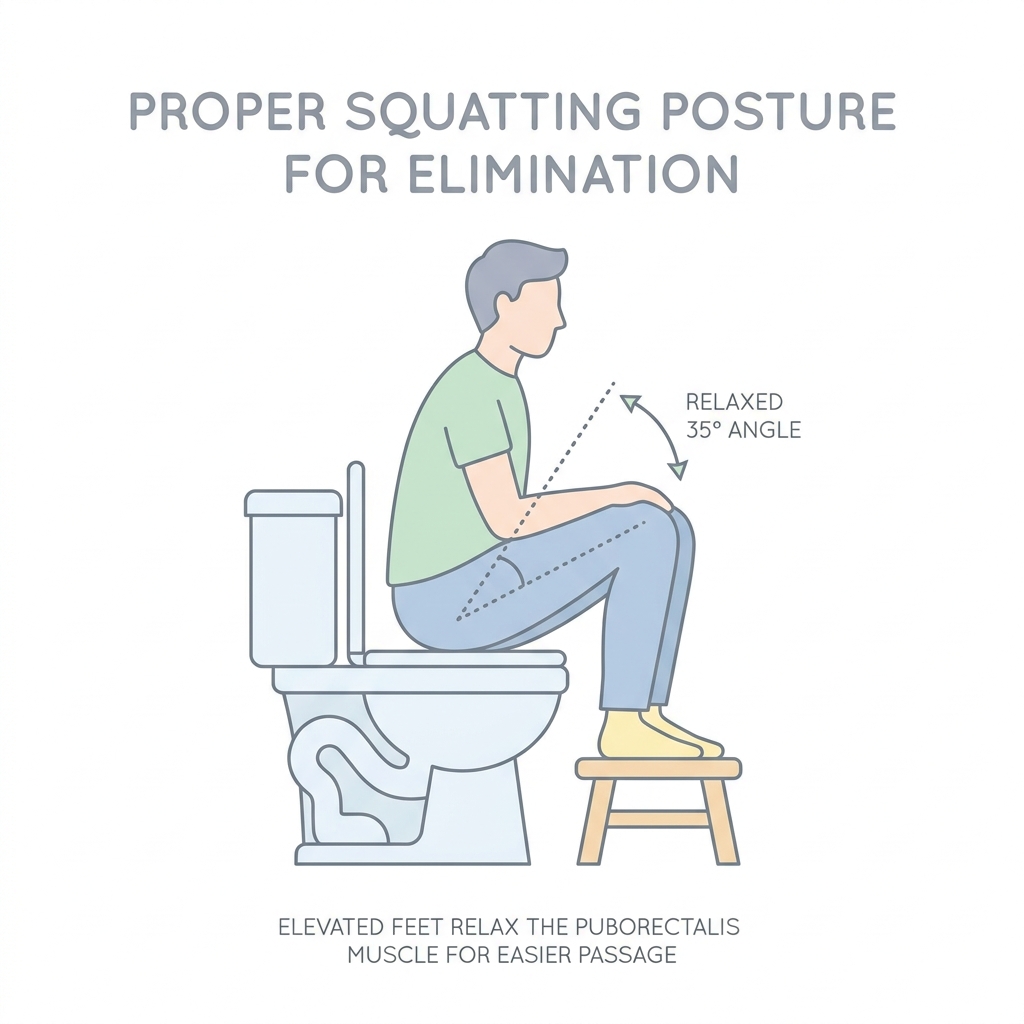
Humans were not biologically designed to eliminate sitting at a perfect 90-degree angle. Sitting upright on a modern toilet actually kinks your colon because a muscle called the puborectalis remains partially contracted.
To open the passageway, try mimicking a natural squatting position:
- Use a Squatty Potty (or a stack of books, or an overturned bucket) to elevate your feet so your knees are slightly higher than your hips.
- Lean forward slightly and rest your forearms on your thighs. This physical shift straightens the lower colon and allows the puborectalis muscle to relax.
Somatic Relaxation: Anxiety tightens the pelvic floor. When you are stressed about being blocked, your sphincter locks up. Practice the 2-minute Diaphragmatic Breathing exercise: Inhale deeply into your belly (not your chest), allowing your stomach to expand fully like a balloon. As you exhale, imagine the air gently pushing down toward your pelvic floor, consciously relaxing the area. Do not push; just relax the barrier.
Step 2: The Warm Liquid Trigger (The Coffee Advantage)
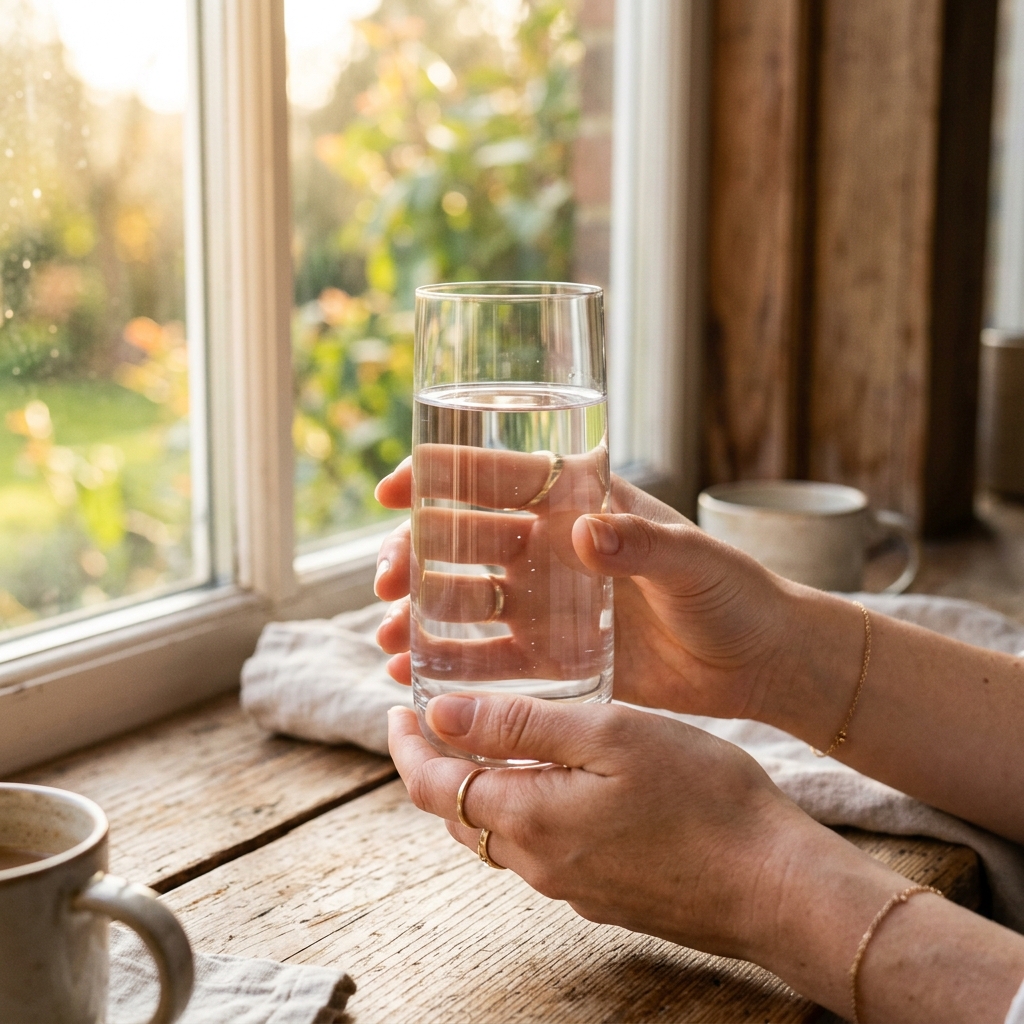
If you haven’t already, try sipping 16 ounces of hot liquid—specifically warm coffee or hot lemon water. If coffee tends to irritate you, use warm drinks that stimulate digestion without shocking the gut instead.
Heat naturally helps relax tissues, but coffee holds a unique traditional use. Caffeinated (and even decaf) coffee is known to stimulate the gastrocolic reflex—the natural signal your stomach sends to your colon to make room for new food—much faster than cold water. The warmth combined with the natural acidity of coffee can often gently trigger peristalsis (the muscle contractions of the gut) within 15 to 30 minutes.
Step 3: Traditional Acupressure & ILU Massage
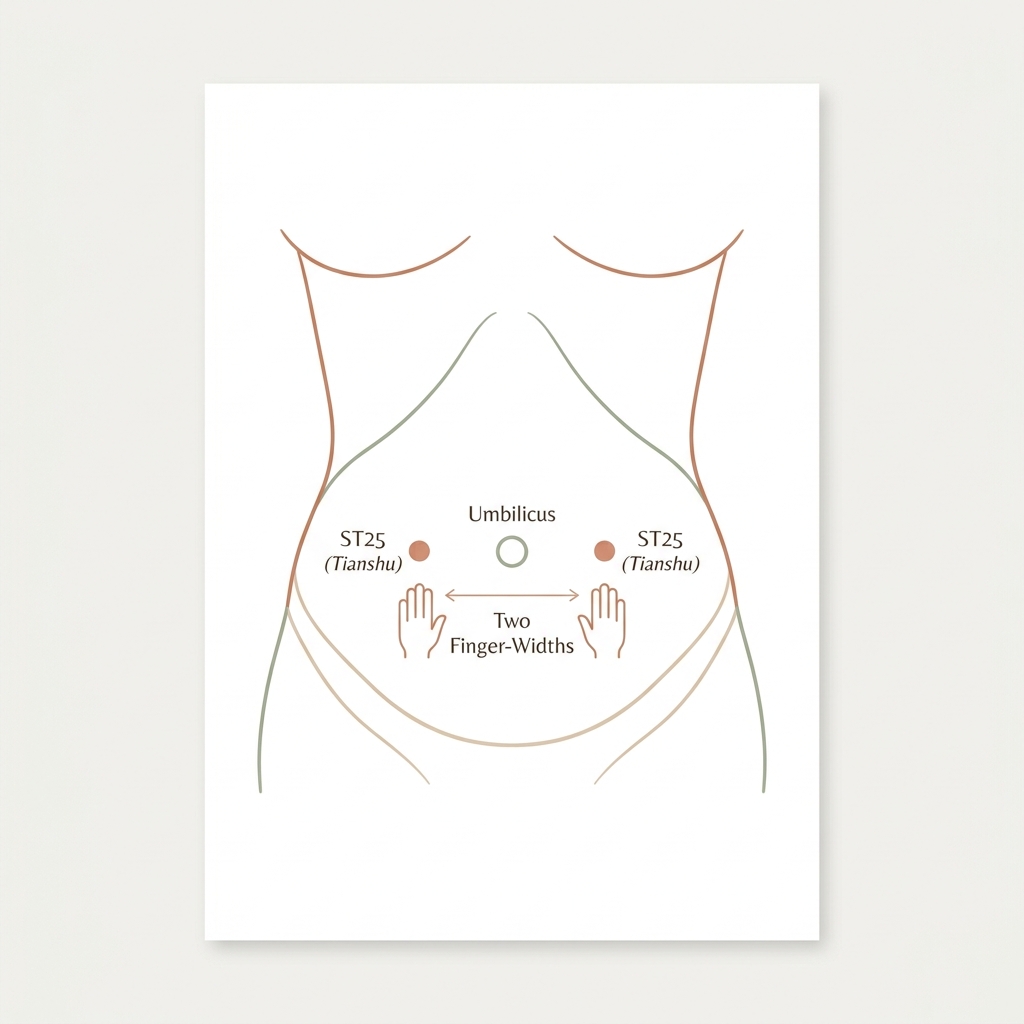
While you wait for the warm liquid to help, you can use gentle physical manipulation.
- The ST25 (Tianshu) Acupressure Point: In traditional Eastern wellness, this point is heavily relied upon to soothe bowel blockages. Locate the points exactly two finger-widths to the left and right of your belly button. Apply gentle, steady pressure with your index fingers for two minutes while breathing deeply.
- The ILU Massage: Lie down or lean back. Using gentle pressure, massage your abdomen following the path of the large intestine. Start at the bottom right of your abdomen, move straight UP (I), go ACROSS the top under your ribs (L), and then push DOWN the left side (U). This physically encourages trapped gas and matter to move toward the exit. If you want the step-by-step version, learn how to do a stomach massage for constipation safely.
Understanding Pharmacy Options (Hours 2 to 12)
If 60 minutes have passed and the mechanical triggers haven’t worked, many people visit the pharmacy. If you do, it is helpful to understand how the three main categories of over-the-counter (OTC) options work, rather than grabbing the first box you see.
1. Suppositories and Enemas (Fast-Acting)
How they work: Products like glycerin suppositories or saline enemas work directly at the site of the problem. They draw water locally into the hardened stool, softening it and lubricating the canal.
Why people use them: They are typically used when the blockage feels very low (in the rectal area) but is too hard and dry to pass. Because they are localized, they do not disrupt the upper digestive tract and usually take effect within 15 to 60 minutes.
2. Osmotic Laxatives (Medium-Acting)
How they work: Osmotic options (like Miralax or Milk of Magnesia) act like a sponge. They pull water from the rest of your body into your intestines to soften the entire bowel movement.
The Hydration Caveat: Because their mechanism relies on pulling water into the gut, taking them while dehydrated can cause them to simply sit in your gut, leading to severe cramping. If you choose this route, robust water intake is required.
3. Stimulant Laxatives (The Aggressive Option)
How they work: Products containing Senna, Bisacodyl, or many “detox teas” are stimulant laxatives. They work by aggressively forcing your intestinal muscles to contract.
The Caveat: While effective, they often cause significant cramping. Health professionals generally advise that if overused, your colon may forget how to contract on its own, leading to dependency.
Always consult a pharmacist or healthcare provider before starting new OTC treatments, especially if you have an underlying health condition.
The “Fiber Fallacy” (What NOT to Do)
When people are backed up, well-meaning friends often say, “Just eat a huge salad” or “Eat some dry bran cereal.” In traditional wellness, this is considered a critical mistake.
Adding massive amounts of dry, rough fiber (insoluble fiber) to an already hardened blockage is like pouring dry sand into a clogged pipe. The roughage cannot easily get past the blockage; it simply ferments, produces massive amounts of gas, and makes the discomfort worse. This is also why dry fiber can cause more bloating after eating.
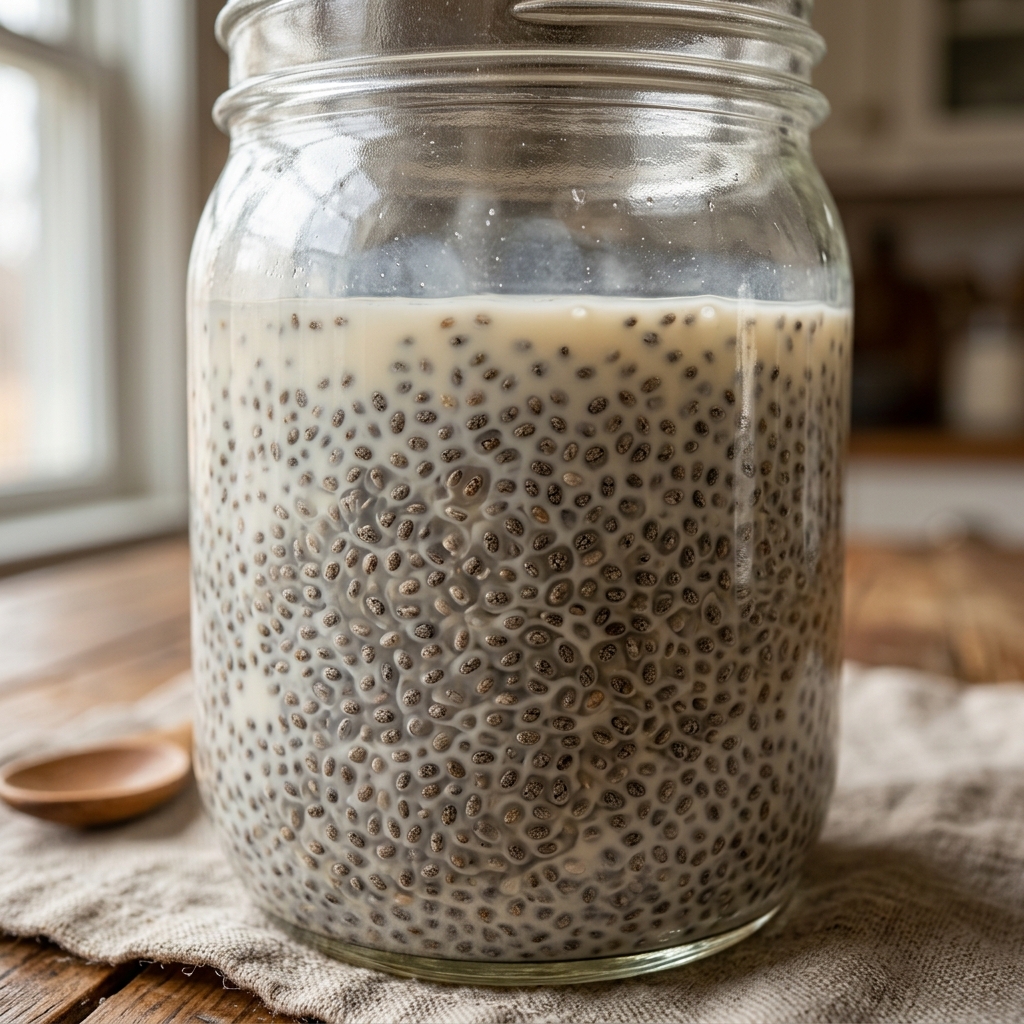
Right now, your gut needs lubrication, not roughage. Instead of raw vegetables, focus on mucilaginous, soothing foods. foods that lubricate constipation instead of adding roughage include fully hydrated chia seeds (which form a slippery, soothing gel called mucilage), warm oatmeal, or prune juice. Prunes contain a natural element called sorbitol, which gently draws water into the colon without the harsh friction associated with dry roughage.
The Hydration & Maintenance Phase (Hours 24 to 48)

Once you have successfully cleared the blockage, it is important to gently support your gut environment so the issue does not immediately return. The next step is to build meals that make constipation less likely to come back.
- Gentle Hydration: You just lost a significant amount of water. Sip water infused with a pinch of sea salt and lemon consistently for the next 48 hours to support the hydration of the colon wall.
- The Post-Meal “Fart Walk”: Digestion requires movement. Going straight to the couch after a heavy dinner allows the gastrointestinal tract to become sluggish. Try implementing a gentle 10-minute why a short walk after meals helps move gas and stool. The light physical oscillation of walking supports normal peristalsis and physically helps move trapped gas out of the system.
When to Seek Professional Care
While occasional irregularity is a normal part of life, you should consult a doctor or seek immediate medical attention if you experience:
- Severe, sharp, and unrelenting abdominal pain.
- Blood in your stool or bleeding from your rectum.
- Inability to pass gas.
- Vomiting.
- No bowel movement for more than a week.
Occasional constipation is often a signal that your body’s rhythm is out of sync. Use these traditional troubleshooting steps to soothe the immediate discomfort, but let it serve as a gentle reminder to support your daily hydration, movement, and mindful eating habits.
Frequently Asked Questions
Can I use my finger to manually remove impacted stool?
Attempting manual disimpaction yourself without proper medical training or clinical lubrication can cause severe injury, tearing (fissures), or infection in the delicate rectal tissue. If standard OTC options fail, you should visit an urgent care clinic where a professional can safely assist you.
Why does travel cause sudden constipation?
Travel irregularity is incredibly common because it disrupts your body’s three main rhythms: circadian rhythm (time zones and sleep), dietary rhythm (eating strange foods at odd hours), and hydration (air travel is dehydrating). When your brain is slightly stressed by a new environment, it triggers a mild “fight or flight” response, which temporarily suppresses the “rest and digest” parasympathetic nervous system.
How long is too long to go without pooping?
While “normal” bowel habits vary wildly from person to person (from three times a day to three times a week), many health professionals suggest that going longer than three consecutive days without a bowel movement is a sign to pay attention. After three days, the colon has absorbed so much water from the stool that it becomes increasingly hard, dry, and difficult to pass.

About Mr. Anh
We turn solid evidence into everyday habits Americans can actually do—plain English, cups/oz, grocery-aisle swaps, and routines that fit real life. Our editorial process: Experience—we road-test tips in real schedules…