Bloating After Eating Fiber? The 2 PM Desk Bloat Pattern Explained
Bloating after eating is easier to figure out when you stop blaming random foods and start looking at timing. Here is how to read the pattern and choose a better first step.
- Before you buy another probiotic, find the pattern.
- Why Fiber Can Make You Bloated Even When You Are Eating Healthy
- The 2 PM Desk Bloat Pattern
- A Traditional Eastern Medicine View: Your Digestion Needs Warmth and Rhythm
- Common Workday Fiber Triggers
- Symptom Pattern: What Your Bloating May Be Telling You
- The Real Cost of Ignoring Desk Bloat
- The 5-Day Workday Gut Trigger Journal
- A 5-Workday Reset for Bloating After Eating Fiber
- Should You Take Digestive Enzymes or Probiotics?
- When Bloating Is Not Just a Workday Annoyance
- The Bottom Line
- FAQs
You tried to do the healthy thing.
You grabbed oatmeal before work, ordered the salad bowl, added beans because fiber is supposed to be good for your gut, or ate the protein bar that said “high fiber” on the label.
Then 2 PM hits.
Your stomach feels tight. Your waistband feels rude. You are sitting in a meeting trying to look focused while your belly feels like it is expanding under the desk.
The worst part is not only the bloating. It is trying to act normal while your body feels unpredictable. You want to stay sharp, professional, and calm, but half your attention is on your stomach.
If bloating after eating fiber keeps showing up during your workday, the problem may not be that healthy food is “bad” for you. It may be that your gut is being asked to digest a high-fiber meal under the worst possible conditions: stress, coffee, speed, sitting, shallow breathing, and no movement after lunch.
This guide is for the busy desk professional who wants a practical answer, not another vague “just reduce stress” lecture.
In the next few minutes, you will learn how to spot your 2 PM Desk Bloat pattern, reduce the most common workday trigger stacks, and run a simple 5-workday experiment before buying another probiotic, enzyme, or gut supplement.
The short version: Fiber can feed your good gut bacteria, but if you add too much too fast, eat it cold or raw, stack several high-FODMAP foods together, then sit through back-to-back meetings, gas can build faster than your body can move it.
Essential Wellness AZ
Why Fiber Can Make You Bloated Even When You Are Eating Healthy
Fiber is not the enemy. In fact, many fiber-rich foods support bowel regularity, feed beneficial gut bacteria, and help you feel full.
But fiber is also work for your digestive system.
Your body does not break down all fiber the way it breaks down protein, fat, or simple carbohydrates. Some fiber reaches your large intestine, where gut bacteria ferment it. That fermentation can produce helpful compounds, but it can also produce gas.
That is normal. The issue is when gas production outruns gas movement.
For a desk worker, that often happens when several small triggers stack together:
- You suddenly increase fiber after eating lower fiber for a long time.
- You eat a large raw salad, beans, lentils, cruciferous vegetables, onions, garlic, or a high-fiber bar in one meal.
- You eat fast while reading email or rushing into a call.
- You drink coffee, sparkling water, or chew gum, which may increase air or irritation for some people.
- You sit for hours after lunch, so gas has fewer chances to move.
- Your nervous system is already in stress mode, which can change gut motility and sensitivity.
So when you ask, “Why am I bloated after eating fiber?” a better question may be:
What was happening before, during, and after that high-fiber meal?
The 2 PM Desk Bloat Pattern
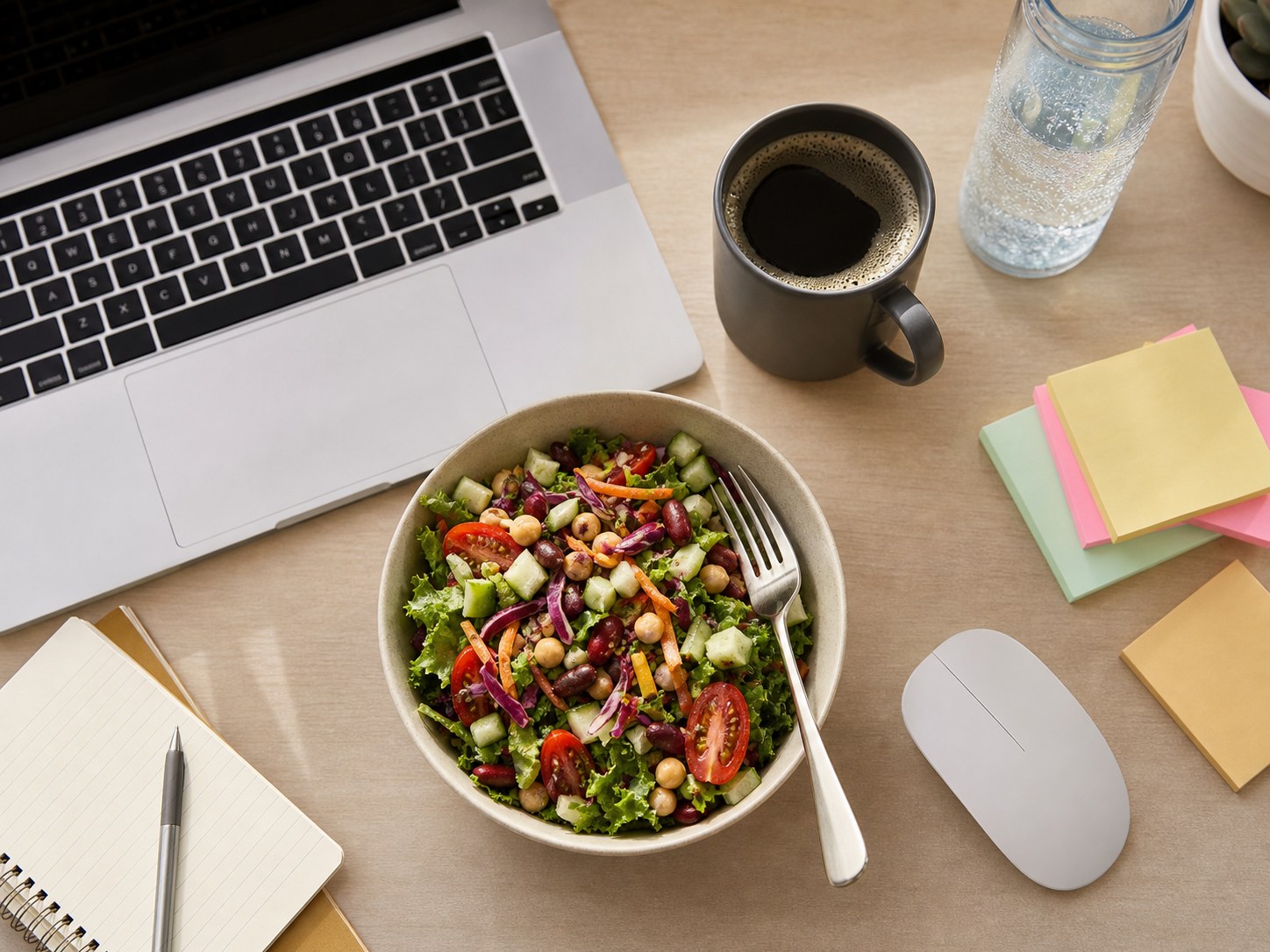
For many office workers, bloating is not random. It follows a pattern.
It might look like this: 8:10 AM coffee while checking Slack. 11:47 AM salad bowl between calls. 12:05 PM lunch eaten at the desk. 1:00 PM client meeting. 2:18 PM tight stomach, pressure, and brain fog. 3:00 PM second coffee because you still have work to finish.
On paper, you made healthy choices. In real life, your body was trying to digest while your nervous system was still working like the day was an emergency.
| Time | What happens | Why it can affect bloating |
|---|---|---|
| Morning | Coffee first, breakfast rushed or skipped | Caffeine on an empty stomach may irritate some people, and skipping breakfast can lead to a bigger, faster lunch. |
| Late morning | Meetings, email, deadlines, shallow breathing | Stress can change the gut-brain response and make normal gas feel more intense. |
| Lunch | Salad bowl, beans, raw veggies, protein bar, smoothie, or “healthy” takeout | Large fiber load, raw/cold foods, FODMAP stacking, dairy, sugar alcohols, or fast eating can increase gas. |
| After lunch | Sitting through calls or deep work | Gas has less help moving through the intestines. |
| 2-3 PM | Belly tightness, pressure, gas, brain fog, discomfort | Fermentation plus trapped gas plus stress sensitivity can show up as desk bloat. |
This is why two people can eat the same salad and have totally different experiences. One person eats slowly, walks afterward, and has a gut that is used to fiber. Another person eats at a desk while answering Slack messages, then sits through a tense meeting. Same meal. Different body context.
A Traditional Eastern Medicine View: Your Digestion Needs Warmth and Rhythm
Western science explains much of this through fermentation, gut bacteria, motility, and the gut-brain axis. Traditional Eastern Medicine looks at the same problem through a different language: digestive strength, warmth, and flow.
From that perspective, a cold smoothie, raw salad, iced drink, and stressful workday can be a hard combination. It is not that raw vegetables are morally bad. It is that a stressed, tired, tense body may not handle cold, rough, fast food very well.
A simple traditional principle is this: when digestion feels weak, make food easier to process.
- Choose warm meals more often than cold meals.
- Cook vegetables instead of relying only on raw salads.
- Drink warm tea or room-temperature water with meals instead of iced drinks if cold drinks seem to worsen symptoms.
- Eat with less speed and less screen pressure when possible.
You do not have to choose between science and traditional wisdom. For desk bloat, both point toward the same practical idea: make digestion easier and give your body a chance to move.
Common Workday Fiber Triggers
Here are the patterns to check before assuming you need a stronger probiotic or another supplement.
1. The “Healthy Salad Bowl” Trap
Salad bowls can be nutritious, but they can also become a perfect bloating stack: raw greens, beans, lentils, onion, garlic, cruciferous vegetables, dairy-based dressing, and a large portion eaten quickly.
If your bloating shows up after salad lunches, try a cooked bowl for a week: rice or potatoes, cooked carrots or zucchini, a protein you tolerate, olive oil, and a smaller portion of one higher-fiber food instead of five at once.
For a more structured meal approach, see our guide to low FODMAP diet meals.
2. High-Fiber Protein Bars
Many protein bars look perfect for busy professionals: fast, portable, high protein, high fiber. But some contain fibers and sweeteners that can trigger gas for sensitive people, especially when eaten quickly with coffee.
Check the label for ingredients such as inulin, chicory root fiber, large amounts of sugar alcohols, or a very high fiber count for one small bar. You may tolerate these fine, or they may be the exact reason your stomach complains every afternoon.
3. Oatmeal Plus Coffee Plus Stress
Oatmeal can be gentle for many people. But a large bowl of oats, rushed eating, strong coffee, and immediate work stress can still cause pressure or urgency.
Try reducing the portion, eating more slowly, adding protein, and delaying coffee until after a few bites of food. The goal is not to fear oatmeal. The goal is to notice timing and dose.
4. Smoothies That Are Too Cold, Too Fast, Too Much
A smoothie can pack a lot of fiber into a drink that disappears in three minutes. Frozen fruit, greens, protein powder, nut butter, dairy, and added fiber can be a lot for a stressed stomach.
If smoothies bloat you, test a warmer breakfast for five workdays. Cooked oats, eggs with toast, soup leftovers, or a simple warm bowl may feel less glamorous but more realistic for your gut.
5. Sitting Right After Eating
This one is boring, but it matters.
When you eat and then sit for hours, gas can feel more trapped. Gentle movement after meals can help your gut move things along. That does not mean a hard workout. A short walk may be enough to notice a difference.
We explain this more in our guides on why you fart when you walk and the fart walk.
Symptom Pattern: What Your Bloating May Be Telling You
| If you notice… | Possible pattern | First experiment to try |
|---|---|---|
| Bloating 1-3 hours after a salad or bean-heavy lunch | Fiber load or FODMAP stacking | Reduce the number of high-fiber ingredients in one meal and switch to cooked vegetables for five workdays. |
| Bloating after protein bars | Added fibers or sugar alcohols | Switch to a simpler snack and compare symptoms. |
| Urgency after coffee | Caffeine sensitivity, empty stomach, stress response | Eat a few bites first, reduce coffee size, or delay coffee 30-60 minutes. |
| Gas feels trapped after lunch | Sitting, shallow breathing, low movement | Take a 7-10 minute walk or stand and move gently after eating. |
| Bloating gets worse before meetings | Gut-brain stress response | Add a bathroom buffer and 60 seconds of slow breathing before the call. |
| Bloating plus constipation | Too much fiber without enough fluid or movement | Increase water gradually and add short movement breaks. |
The Real Cost of Ignoring Desk Bloat
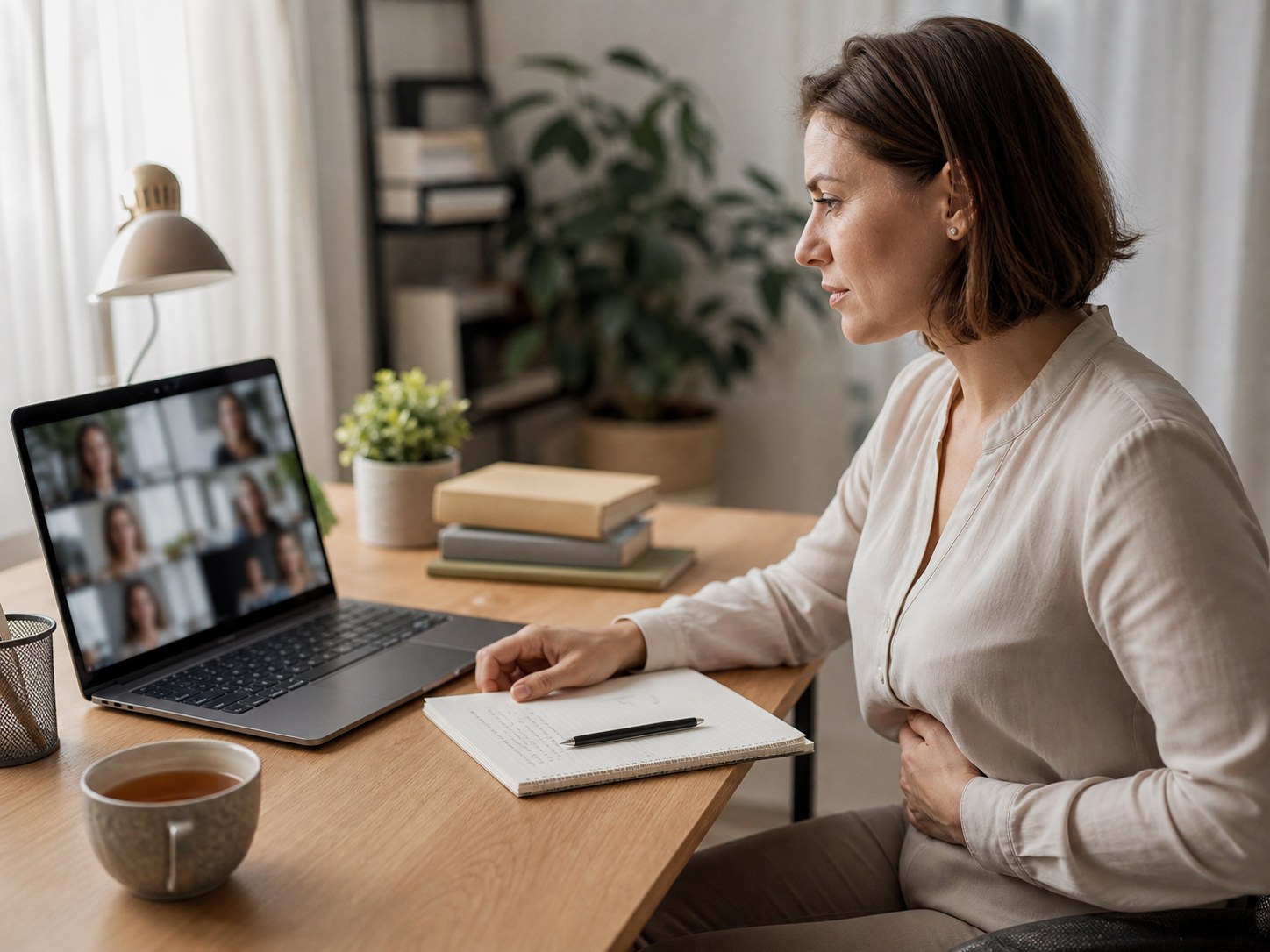
If you ignore the pattern, the cost is not just a tight stomach after lunch.
Over time, you may start planning your workday around your gut without even noticing it: avoiding certain meetings, worrying before presentations, choosing clothes based on how bloated you might get, skipping lunch because you do not trust your stomach, or buying another supplement because you want control back fast.
That is the emotional job underneath the digestive symptom. You are not only trying to reduce gas. You are trying to feel reliable in your own body during the hours when other people expect you to be focused, competent, and available.
The goal is not perfection. The goal is to stop letting your gut quietly steal your focus, confidence, and sense of control.
The 5-Day Workday Gut Trigger Journal
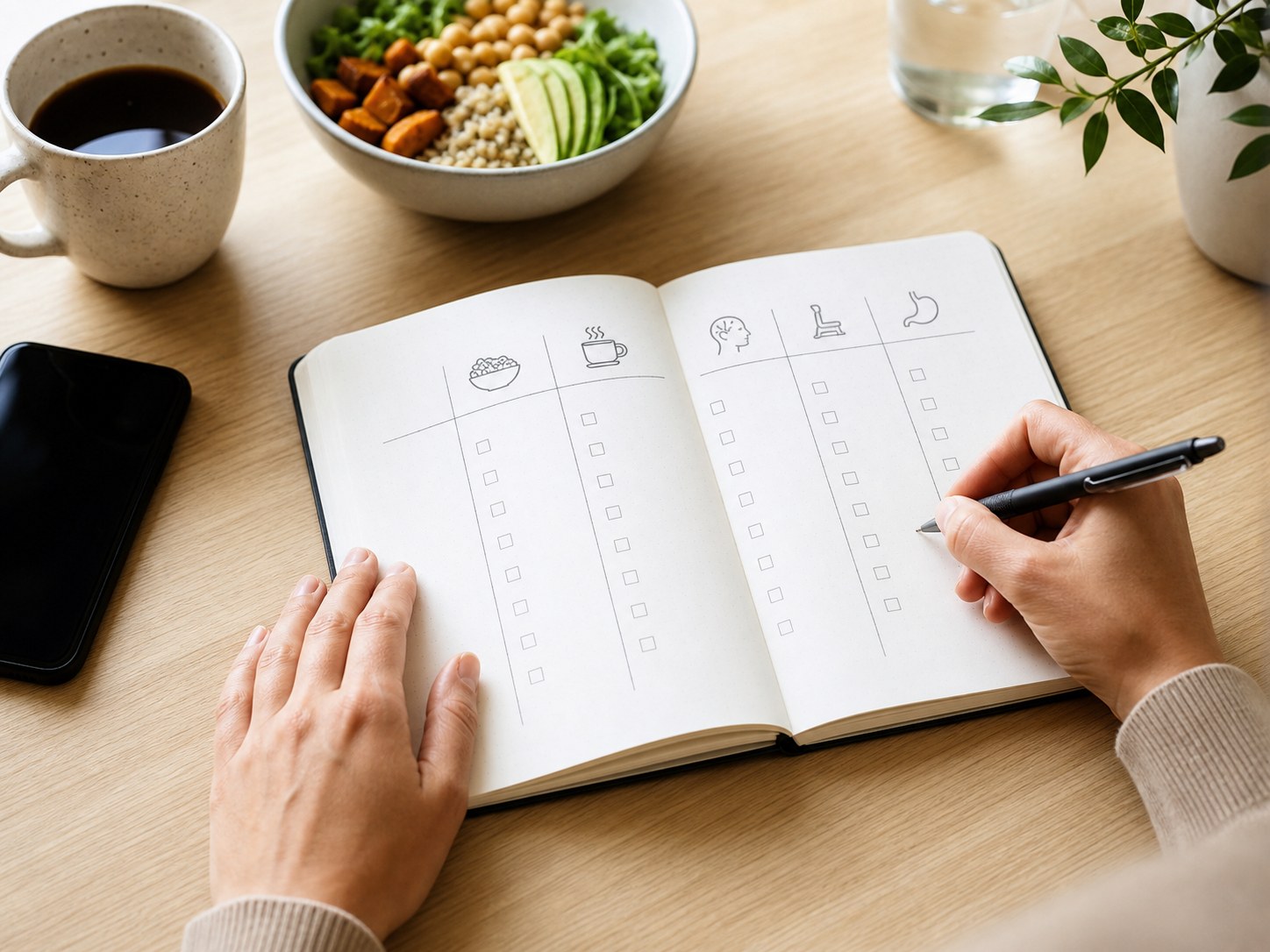
Before buying another supplement, track the pattern for five workdays. You are not trying to become obsessive. You are trying to stop guessing and get your workday confidence back.
Use this simple journal after breakfast, lunch, and dinner:
| Track | What to write |
|---|---|
| Meal | What did you eat and drink? |
| Speed | Slow, normal, or rushed? |
| Stress | Low, medium, or high before eating? |
| Post-meal posture | Walked, stood, or sat? |
| Symptoms | Bloating, gas, reflux, urgency, constipation, brain fog? |
| Timing | When did symptoms start? |
After five workdays, look for the repeated combination. For many desk professionals, the answer is not one food. It is a pattern like:
- coffee on empty stomach + rushed lunch + sitting
- high-fiber bar + second coffee + afternoon meeting
- raw salad + beans + sparkling water + no walk
- stress meeting + bathroom delay + trapped gas
That pattern is gold. Once you see it, you can change the smallest part first.
Try this tomorrow: keep your lunch mostly the same, but change only one thing. Take a 7-minute walk before sitting down again. If the bloating drops, your food was not the whole story. Sitting was part of the pattern.
A 5-Workday Reset for Bloating After Eating Fiber

Try this for one workweek. Do not overhaul your entire life. Change the conditions around digestion.
Day 1: Lower the Fiber Load
Do not remove fiber completely. Just stop stacking it. Choose one main fiber source per meal instead of combining raw greens, beans, whole grains, cruciferous vegetables, and a high-fiber bar in the same day.
Day 2: Cook Your Lunch
Swap the cold salad for a warm cooked meal. Try rice, potatoes, cooked vegetables, and a protein you tolerate. If you miss raw greens, add a small side instead of making them the whole meal.
Day 3: Protect the First 10 Minutes After Lunch
Walk for 7-10 minutes if you can. If you cannot leave your workspace, stand, tidy your desk, take a slow lap around the office, or do gentle movement at home. The point is to help gas move before you lock yourself into another chair session.
Day 4: Change Coffee Timing
If coffee seems connected to urgency, reflux, or a nervous stomach, experiment with timing. Eat something first, reduce the size, or wait until after your morning bathroom routine. Notice whether your gut feels less reactive.
Day 5: Add a Meeting Buffer
Before an important call, give yourself a two-minute buffer: bathroom, warm sip of water or tea, slow exhale breathing. This is not dramatic wellness theater. It is a nervous-system cue that tells your body it does not have to fight the calendar.
Should You Take Digestive Enzymes or Probiotics?
Maybe. But do not let supplements become a way to avoid listening to the pattern.
Digestive enzymes may help some people with certain meals. Probiotics may help some people, but they can also cause more gas at first or simply be the wrong fit. The smartest move is to track your triggers first, then choose a product based on the pattern you actually see.
If you are considering enzymes, start with label education before buying. Our guide on how to read digestive enzyme labels can help you avoid buying based only on hype.
A good rule for the Stressed Desk Professional: track first, supplement second.
That rule protects two things at once: your money and your confidence. When you know your pattern, you are no longer shopping from panic. You are choosing from evidence.
When Bloating Is Not Just a Workday Annoyance
Most occasional bloating is not an emergency. But you should not ignore red flags.
Talk with a licensed healthcare professional if bloating is severe, persistent, getting worse, or comes with symptoms such as unexplained weight loss, blood in stool, black stools, persistent vomiting, fever, dehydration, severe abdominal pain, difficulty swallowing, anemia, or a major change in bowel habits.
If your gut symptoms are disrupting work, sleep, travel, or daily life, it is also reasonable to get evaluated. You deserve more than guessing.
The Bottom Line
Bloating after eating fiber does not mean you failed at being healthy.
It also does not mean you have to choose between being productive and taking care of your body.
It may mean your gut needs a slower fiber increase, warmer and more cooked meals, fewer trigger stacks, less rushed eating, and more movement after lunch. And if your gut already feels irritated and inflamed, this gentle guide on how to reduce gut inflammation quickly walks through the same calm, food-first approach.
For the busy professional, the goal is not a perfect gut routine. The goal is a reliable body during the moments that matter: meetings, deep work, presentations, commutes, and the end of the day when you still want energy left for your life.
Do not wait until your gut starts deciding how your workday goes. Track the pattern, protect your energy, and make your body reliable again.
FAQs
Why do I get bloated after eating fiber?
Fiber can be fermented by gut bacteria, which may produce gas. Bloating is more likely when you increase fiber too quickly, eat large portions, stack several high-fiber foods together, eat fast, or sit for long periods after meals.
Why does my stomach bloat after salad at work?
A salad can combine raw vegetables, beans, onion, garlic, dairy-based dressing, and a large portion of roughage. If you eat it quickly at your desk and sit afterward, gas may build and feel trapped.
Should I stop eating fiber if it makes me bloated?
Not usually. Many people do better by reducing the amount temporarily, increasing fiber gradually, cooking vegetables, drinking enough fluids, and walking after meals. If symptoms are severe or persistent, ask a healthcare professional.
Can stress make fiber bloating worse?
Yes, stress can affect the gut-brain axis, change gut motility, and make normal digestive sensations feel more intense. That is why bloating may feel worse before meetings, deadlines, or high-pressure conversations.
What is the fastest workday habit to reduce bloating?
A short walk after lunch is one of the easiest habits to test. Even 7-10 minutes of gentle movement may help gas move and reduce the trapped feeling that happens after sitting.
Disclaimer: I am trained in traditional medicine in Vietnam, but I am not currently practicing medicine or providing personal diagnosis or treatment advice through this website. I write from personal experience, ongoing research, and my own food-first wellness experiments. My work explores digestion, daily energy, traditional self-care, movement, breathwork, meditation, and simple habits that support everyday well-being. Everything I share here is educational and reflective, not medical advice. It should not replace diagnosis, treatment, or care from a licensed healthcare professional.

About Mr. Anh
We turn solid evidence into everyday habits Americans can actually do—plain English, cups/oz, grocery-aisle swaps, and routines that fit real life. Our editorial process: Experience—we road-test tips in real schedules…