Best Probiotics for Bloating and Gas: Why Pills Fail and Foods Work
Not every bloating problem needs the same probiotic. This guide shows which probiotic lane fits constipation, post-antibiotic, stress-related, and reactive bloating.
- The "Probiotic Pill" Illusion
- Can Probiotics Actually Help Gas and Bloating?
- The Traditional Paradigm: Living Foods over Dead Pills
- How Fermented Foods Fix Bloating (The 3 Mechanisms)
- The Best Probiotic for Bloating, Gas and Constipation Depends on Your Pattern
- The Best Natural Probiotics to Start With
- Frequently Asked Questions
- The Bottom Line
You are painfully bloated. Searching for relief, you walk into a health food store or browse online, eventually spending $50 on a plastic bottle of “premium probiotics” containing 50 billion CFUs. But after a week of diligently swallowing these capsules, you notice something frustrating: your stomach is actually more distended, and you are experiencing more gas than before. If that is happening, start with why probiotics can make bloating worse before buying a stronger bottle.
If this has happened to you, you are not alone. The modern supplement industry has convinced us that we can simply “buy” a healthy microbiome in a bottle. But a capsule is only one side of the story; you also need to understand the difference between probiotics and prebiotics. When it doesn’t work—or makes you worse—it feels incredibly discouraging.
A Traditional Perspective: “We try to heal our guts with isolated, freeze-dried bacteria in plastic bottles, treating the body like a math equation where more CFUs equal better health. True healing doesn’t happen with isolated pills; it happens when we return to the vibrant, living energy of traditional fermented foods.”
— Mr. Anh, Founder of Essential Wellness AZ
Today, we are going to look past the supplement marketing. I will show you why dumping billions of freeze-dried bacteria into an inflamed gut can backfire, why the answer changes depending on whether your main problem is gas, constipation, or both, and why the absolute best probiotics for bloating are not found in a pharmacy aisle, but rather sitting quietly in a glass jar in your kitchen.
The “Probiotic Pill” Illusion
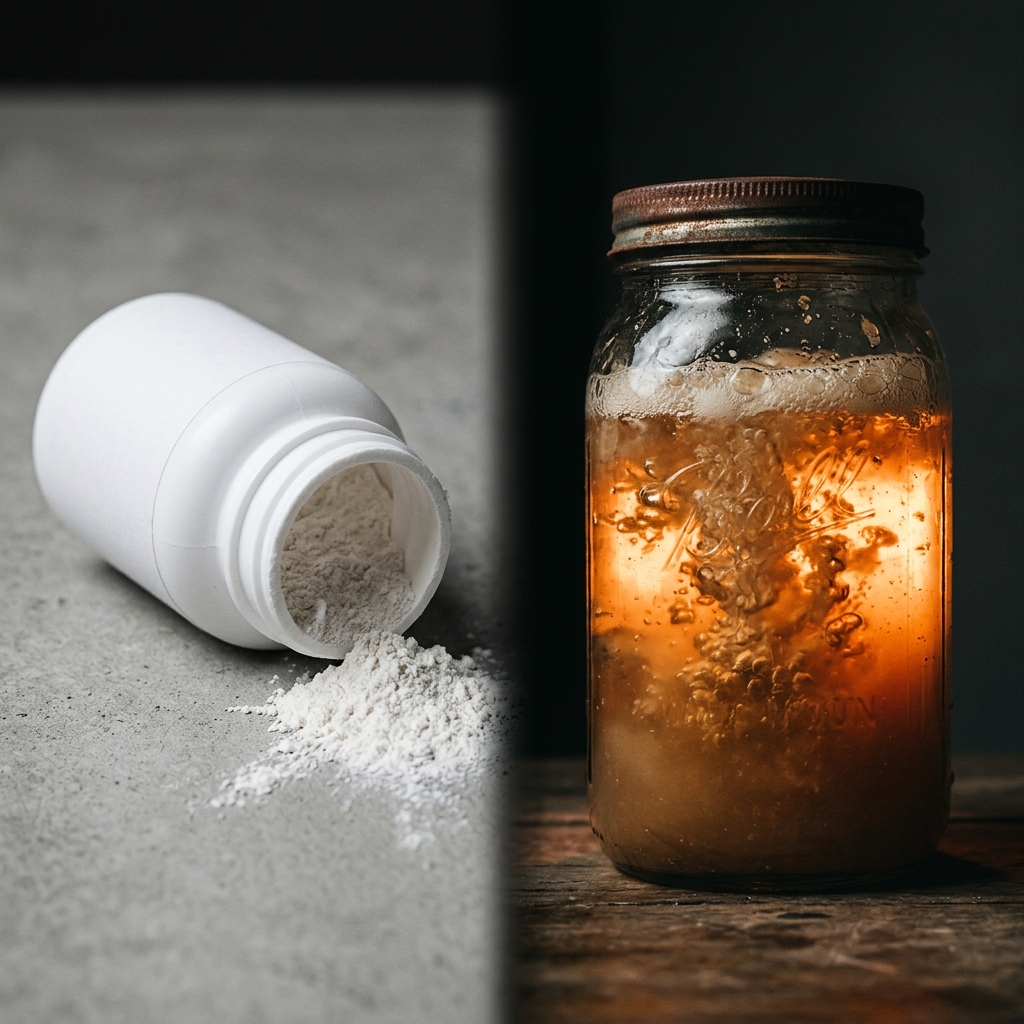
To understand why your expensive probiotic might be causing more bloating, we need to look at the gap between marketing and biological reality.
When you take a high-dose probiotic capsule, you are introducing a massive, concentrated dose of alien bacteria into your digestive system. If your gut is already inflamed or dominated by certain bacteria, dropping a “bomb” of 50 billion new microbes can trigger a fierce competition for resources. In that situation, it is often smarter to calm the gut before adding more microbes. This sudden influx often leads to rapid fermentation, producing an overwhelming amount of gas. This is commonly known as the “Die-Off” effect or a Herxheimer reaction.
Furthermore, there is the reality of how these pills are made. Bacteria in capsules are often freeze-dried. They are removed from their natural environment and stripped of their protective food sources. Many of these naked microbes simply die upon hitting the harsh, acidic environment of your stomach acid before they even reach your intestines to do any good.
Can Probiotics Actually Help Gas and Bloating?
Yes — for some people, some of the time. But that answer deserves more honesty than the supplement aisle gives it.
The National Institutes of Health notes that probiotics appear to work through a mix of shared and strain-specific mechanisms in the gastrointestinal tract. Practically, that means two bottles labelled “probiotic” can do completely different things in your gut. One category, one label, many different outcomes.
This is why I dislike the laziest advice in the whole category: “just take the highest CFU count you can find.” A bigger number on the bottle is a marketing decision, not a measure of how much relief you will feel. If gas is your dominant symptom, the strain and the delivery matter far more than the dose.
There are situations where reaching for a probiotic genuinely makes sense:
- Your bloating and gas started after a course of antibiotics.
- You almost never eat fermented or probiotic-rich food.
- You want gentle support for mild digestive discomfort alongside regularity.
- Your routine is chaotic and preparing food consistently is unrealistic right now.
And there are situations where I would slow down before opening another bottle:
- Your bloating got noticeably worse after a sudden jump in fiber.
- You have severe constipation that has never been properly evaluated.
- You have pain, blood in the stool, fever, vomiting, or unexplained weight loss.
- Your digestion is so reactive that nearly every food feels like a trigger.
Can a probiotic make gas and bloating worse before it gets better? Yes, sometimes. The NCCIH notes that side effects are usually minor but can include digestive symptoms. In real life, people often notice more gas or puffiness in the first few days, especially if they start aggressively or pick a product that does not match their pattern.
This is where people talk themselves into trouble. They assume more symptoms mean the probiotic is “working.” Sometimes it just means the fit is wrong. If gas and pressure are the loudest part of your symptoms, it is worth understanding what is actually producing the gas after you eat before you keep spending money on bacteria.
The Traditional Paradigm: Living Foods over Dead Pills
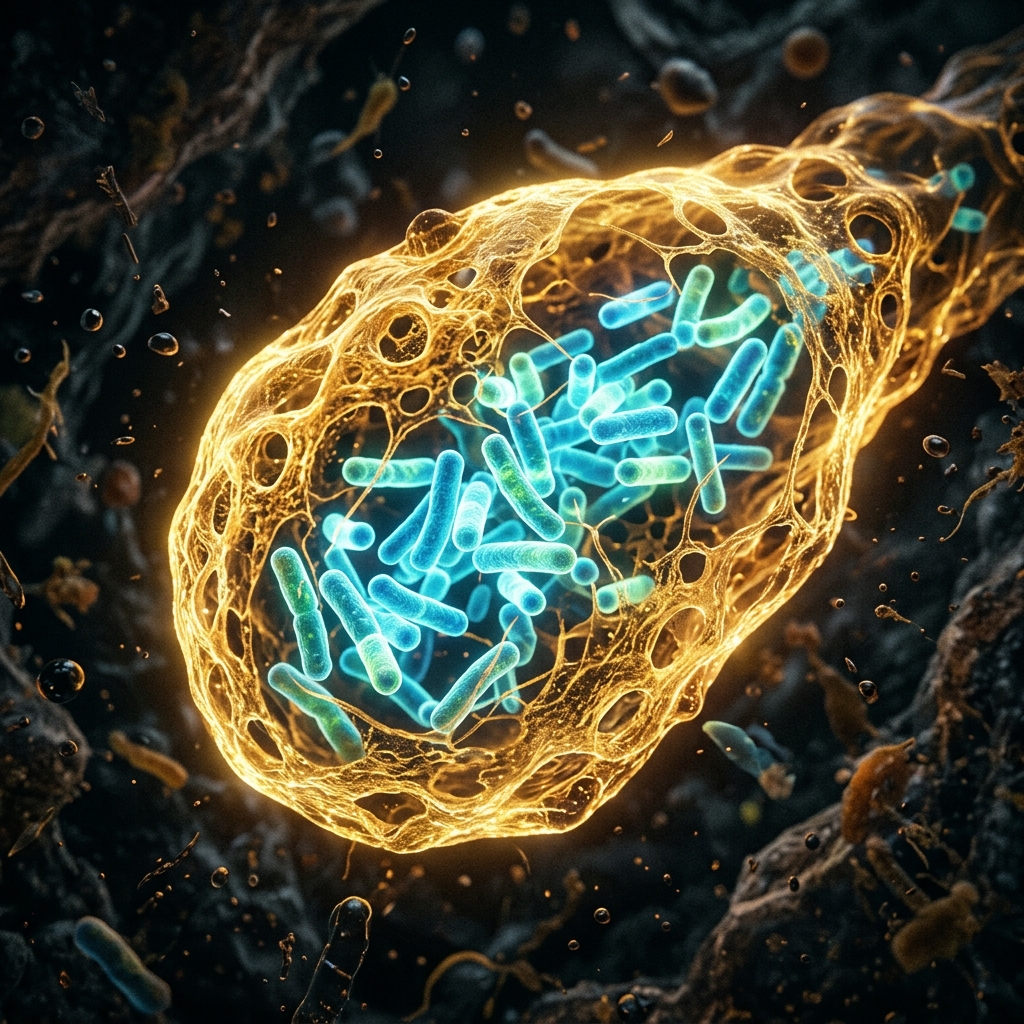
For thousands of years, long before probiotic capsules existed, traditional cultures maintained immaculate gut health. They didn’t do it with pills; they did it with the “Qi” (vital energy) of living, fermented foods.
A pill is a processed, lifeless object. Fermented foods, on the other hand, contain bacteria that are alive, active, and swimming in their natural environment.
This brings us to the Bioavailability Advantage. The beneficial bacteria in fermented foods like milk kefir or sauerkraut are shielded by natural biofilms and accompanied by the very acids they produced during fermentation. Because they travel with their own food source and protective barriers, they survive your stomach acid much more effectively than freeze-dried bacteria, arriving in your gut ready to heal.
How Fermented Foods Fix Bloating (The 3 Mechanisms)
Eating real fermented food is far superior to popping a pill when it comes to resolving gas and bloating. Here is exactly why:
1. Pre-Digestion (The Heavy Lifting is Done)

The bacteria in a jar of kimchi or sauerkraut have already “eaten” the tough, bloat-causing starches and sugars in the cabbage during the fermentation process. When you eat it, the food is essentially pre-digested. This gives your digestive fire (your stomach’s energy) a much-needed rest, allowing you to absorb nutrients without the heavy, gas-producing work of breaking down raw fibers.
2. The Acidic Shield
Lactic acid bacteria, which thrive in fermented foods, create an acidic environment in your gut. Pathogenic, gas-producing bacteria absolutely hate this acidity. By eating fermented foods, you naturally repress the bad bacteria that are causing your stomach to balloon.
3. Gentle Integration
When you eat food, you naturally consume it in small, manageable doses. You don’t eat 50 billion CFUs of sauerkraut in one bite. This slow, natural integration allows your gut to adapt gently without the violent, bloating reaction caused by massive supplement doses.
The Best Probiotic for Bloating, Gas and Constipation Depends on Your Pattern

Here is the part almost every “top 10 probiotics” list skips: bloating is not one problem. The best probiotic for bloating and gas is rarely the same choice as the best probiotic for bloating and constipation — because the two patterns are driven by different things.
Before you buy anything, work out which of these you actually have.
Pattern 1: Gas-Dominant Bloating
You feel pressure, rumbling, and audible movement. The bloating builds through the day and eases somewhat overnight. You pass gas frequently.
This is fermentation happening in the wrong place, or too fast. Adding billions more fermenting organisms is exactly the wrong instinct here — that is why so many people with gas-dominant bloating feel worse on a high-CFU capsule.
The food-first move: start with the brine, not the vegetable. One teaspoon of sauerkraut juice gives you the lactic acid bacteria and the acidity without the fermentable fiber load of the cabbage itself. Build up over two to three weeks before eating the solids.
Pattern 2: Constipation-Dominant Bloating
You feel slow, heavy, and backed up. The bloating is a constant, dull fullness rather than sharp pressure, and it does not resolve overnight. Stools are infrequent or hard.
Here, the bloating is largely a transit problem. A probiotic can support digestive balance, but it should sit next to better hydration, more consistent meal timing, gentle daily walking, and a slow fiber increase — not replace them. If you skip the basics, no capsule will rescue the situation.
The food-first move: milk kefir is the better starting point than sauerkraut for this pattern. If the heaviness is also showing up on the scale, what a probiotic really does to your weight is worth reading before you draw conclusions from it. It is liquid, gentle, and carries a wide strain diversity. Pair it with the practical basics in foods that help constipation, and give it three to four weeks before judging.
Pattern 3: Bloating, Gas AND Constipation Together
This is the combination people search for most, and it is the trickiest — because the two halves pull in opposite directions. The constipation makes you want more fiber and more bacteria; the gas makes both of those backfire.
The sequence matters enormously here. Move things first, then add bacteria. When stool is sitting still, anything you ferment on top of it simply produces more gas in a system that cannot clear it. Hydration, movement, and magnesium-rich foods come before the kefir, not after.
The food-first move: spend one week purely on transit — water, a daily walk, consistent meal times, no new supplements. If things are genuinely stuck right now, how to get things moving again is the better first step. Only once you are moving regularly do you introduce one teaspoon of kefir a day.
Pattern 4: Post-Antibiotic Bloating
Your digestion was fine, then you took antibiotics, and it has never been the same since. This is the cleanest case for a probiotic trial of any kind, because there is a genuine gap to refill rather than a system to override.
The food-first move: daily kefir or plain live yogurt, small and consistent, for at least a month. Consistency beats intensity in this pattern more than any other.
Pattern 5: Stress-Sensitive or Reactive Bloating
Your bloating tracks with deadlines, poor sleep, rushed meals, and general chaos more than with any specific food. Or every new “gut health” thing you try seems to make you worse.
The American Gastroenterological Association’s guideline on probiotics in gastrointestinal disorders is clear that the evidence is inconsistent across strains and conditions. Probiotics are not broadly proven for every digestive complaint simply because they are probiotics. For this pattern, honestly, the best probiotic may be not yet.
The food-first move: simplify before you add. Fewer variables, quieter routine, one change at a time. Signs of poor gut health is a useful read here. And if your bloating seems to track a monthly pattern rather than your meals, why your cycle decides whether a probiotic works explains what you are actually looking at. People rarely need a bigger stack — they need a calmer one.
The Best Natural Probiotics to Start With

If you want to ditch the pills and support your gut the traditional way, start with food-first probiotic options for beginners, then choose one simple food from this list:
- Milk Kefir or Coconut Kefir: This is a soothing, liquid probiotic. It coats the stomach lining and delivers a massive diversity of bacterial strains. Best first choice if constipation is part of your picture.
- Sauerkraut or Kimchi: Naturally fermented cabbage (unpasteurized, found in the refrigerated section) is packed with resilient enzymes. Start with the brine alone if gas is your dominant symptom.
The Golden Rule: Start with just ONE teaspoon a day. Treat it like a potent medicine, not a side dish. To understand why moderation is crucial when introducing these potent foods, explore the full benefits of fermented foods and how to integrate them safely. As your gut heals, you can slowly increase the amount.
Frequently Asked Questions
What is the best probiotic for bloating and gas?
There is no single best product for everyone, and the highest CFU count is usually the wrong thing to optimise for. If gas is your dominant symptom, a small daily dose of sauerkraut brine tends to be gentler than a concentrated capsule, because you get the lactic acid bacteria and the acidity without a heavy load of fermentable fiber.
What is the best probiotic for bloating, gas and constipation together?
Sequence matters more than product choice here. Address transit first — hydration, daily movement, consistent meal times — for about a week, because fermenting anything on top of stalled stool just produces more gas. Once you are moving regularly, introduce one teaspoon of milk kefir a day and build slowly.
Can probiotics make bloating and gas worse at first?
Yes. The NCCIH notes side effects are usually minor but can include digestive symptoms. Many people notice more gas in the first few days, particularly when starting too aggressively. More symptoms do not mean it is “working” — sometimes it just means the fit is wrong.
How long does a probiotic take to help bloating?
Some people notice a change within days; others need three to four weeks. If you feel clearly worse, or nothing has shifted after a fair trial, it is probably not the right fit for your pattern.
Should I completely stop taking my probiotic supplement?
If your supplement is currently making you bloated, pause it. Give your gut a break and try introducing a teaspoon of natural fermented food instead to see how your body responds.
What if fermented foods make me bloat too?
You are likely eating too much too soon, or you may have a histamine intolerance. Scale back to just the brine (the liquid juice of the sauerkraut) before eating the solid cabbage.
The Bottom Line
The best probiotic for bloating cannot be patented, bottled in plastic, and sold for $50. It is the simple, traditional practice of fermenting real food — matched to the kind of bloating you actually have. If gas is loudest, go slower and start with brine. If constipation is the bottleneck, fix transit before you add bacteria. If both are present, sequence them rather than stacking them.
By stepping away from the supplement aisle and returning to your kitchen, you can gently rebuild your gut without the painful side effects of concentrated pills. To understand the deeper mechanics of your gut bacteria and how to feed them properly, read our foundational guide on the gut microbiome.
One last thing worth saying plainly: if you have severe pain, vomiting, blood in the stool, ongoing constipation that will not move, or unexplained weight loss, skip the probiotic experiment entirely and speak to a clinician instead.
Disclaimer: I’m trained in traditional medicine in Vietnam, but I’m not currently practicing medicine or providing personal diagnosis or treatment advice through this website. I write from personal experience, ongoing research, and my own food-first wellness experiments. My work explores digestion, daily energy, traditional self-care, movement, breathwork, meditation, and simple habits that support everyday well-being. Everything I share here is educational and reflective, not medical advice. It should not replace diagnosis, treatment, or care from a licensed healthcare professional.

About Mr. Anh
We turn solid evidence into everyday habits Americans can actually do—plain English, cups/oz, grocery-aisle swaps, and routines that fit real life. Our editorial process: Experience—we road-test tips in real schedules…