The Living Food Secret: True Fermented Foods Benefits (Without the Bloat)
Think fermented foods benefits start and end with yogurt? The real story is diversity. Discover the Postbiotic Revolution and why rotating your ferments is the key to gut-brain health.
Disclaimer: I’m trained in traditional medicine in Vietnam, but I’m not currently practicing medicine or providing personal diagnosis or treatment advice through this website. I write from personal experience, ongoing research, and my own food-first wellness experiments. My work explores digestion, daily energy, traditional self-care, movement, breathwork, meditation, and simple habits that support everyday well-being. Everything I share here is educational and reflective, not medical advice. It should not replace diagnosis, treatment, or care from a licensed healthcare professional.
Millions of people force themselves to eat sour, vinegary pickles every single day in the name of gut health—only to realize they’ve been eating “dead” food the entire time.
The wellness industry heavily promotes the benefits of fermented foods. But there’s a massive secret hiding in plain sight at your local grocery store: The Pasteurized Trap. If the sauerkraut or pickles you bought were sitting on a warm, dry shelf, the bacteria inside have been heat-killed. You’re getting zero probiotic benefits.
Furthermore, those who do find *real* fermented foods often make a critical error. They eat a massive bowl of raw kimchi on day one, triggering horrific bloating and mistakenly concluding that “fermentation is bad for my stomach.”
In this guide, we’re going completely beyond the basic “eat kimchi” advice. We’ll reveal how to identify truly living foods, explain why fermentation is actually “nature’s pre-digestion,” and show you exactly how to introduce them into your diet without spending a single day feeling painfully bloated.
- The Pasteurized Trap: Why 90% of supermarket pickles are completely useless for your gut.
- Nature’s Pre-Digestion: How bacteria chew up your food so your stomach doesn’t have to.
- The “Die-Off” Bloat: Why eating too much on day one causes severe gas, and how to start safely.
The “Pasteurized Trap”: Are You Eating Dead Food?
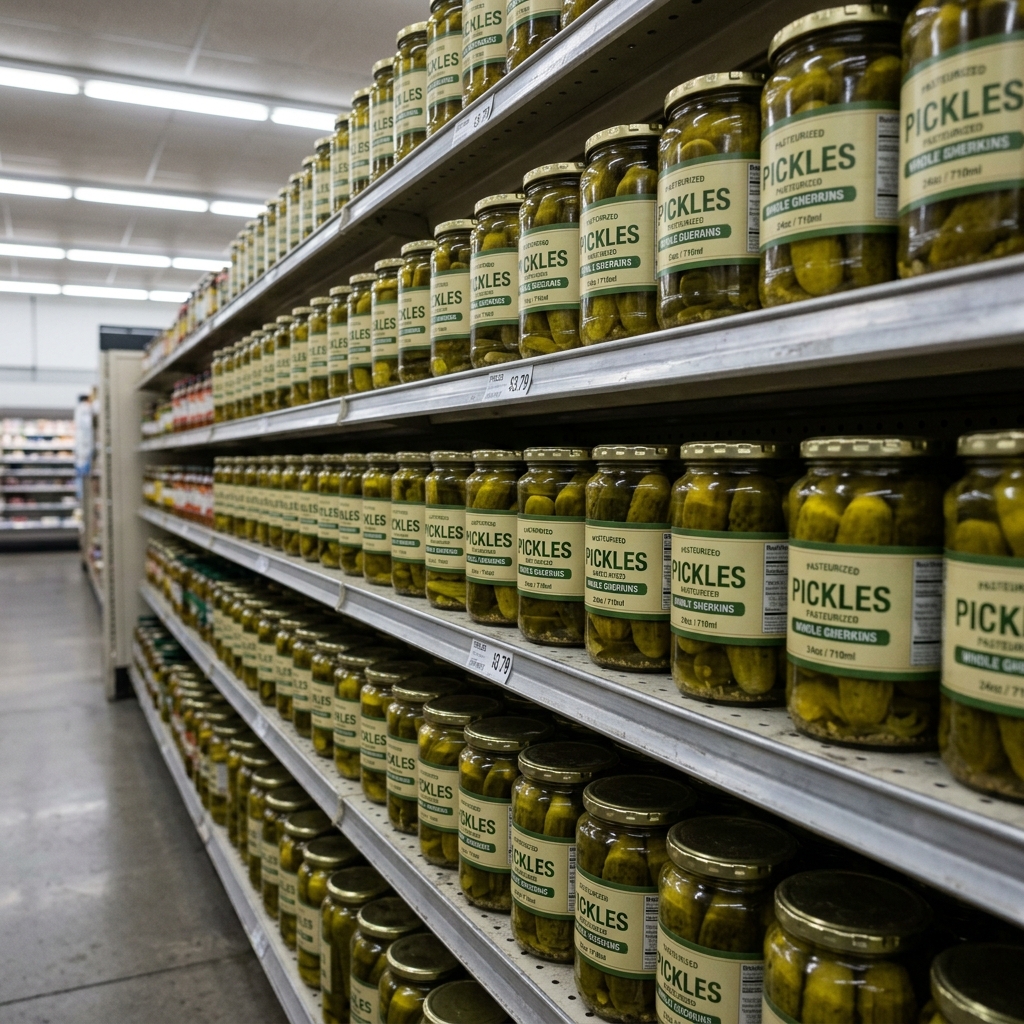
The biggest tragedy in the gut-health world is the sheer amount of money spent on “fake” fermented foods. You must understand the difference between preservation and living fermentation.
Vinegar Pickling vs. Lacto-Fermentation
Most commercial pickles and jarred vegetables are preserved using vinegar and high heat. This process extends shelf life and creates a sour taste, but it completely sterilizes the food. Lacto-fermentation, on the other hand, relies on natural bacteria (like *Lactobacillus*) breaking down the sugars in the vegetables over weeks, creating lactic acid and a massive colony of living, beneficial probiotics.
The Refrigerator Rule
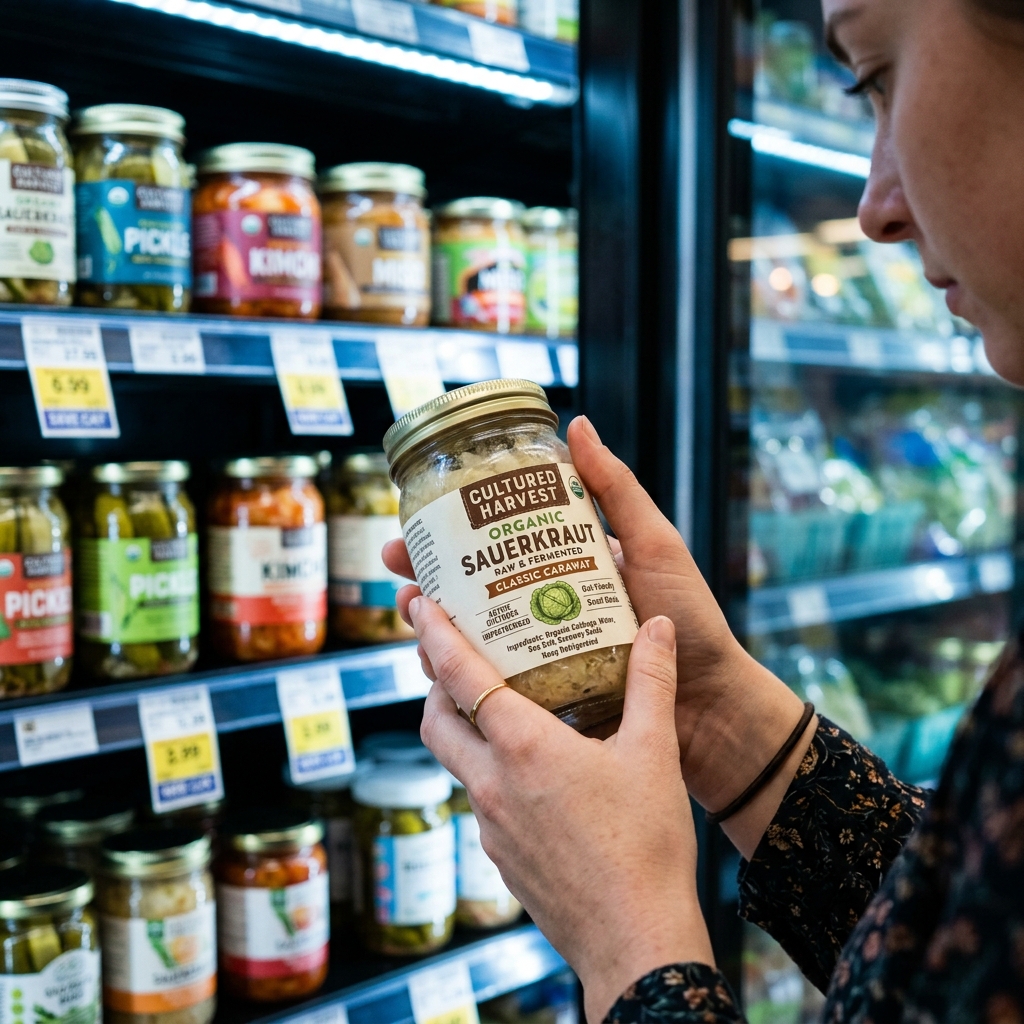
If you want true fermented foods benefits, you must follow the Refrigerator Rule. True, living fermented foods must be kept cold to pause the fermentation process. If you find a jar of sauerkraut sitting on a room-temperature shelf in the middle aisle of the grocery store, it’s been pasteurized (heated to extreme temperatures). The probiotics are dead. Always look for fermented foods in the refrigerated section, usually near the tofu or fresh produce.
What I noticed:
“Years ago, when I first learned about gut health, I bought the cheapest jar of sauerkraut I could find on the dry shelves of my local supermarket. I ate a bowl every day for two months to ‘heal my gut.’ I felt absolutely no difference. It wasn’t until I started making my own fermented cabbage in clay crocks—and saw the bubbles of active, living bacteria—that my digestion completely transformed. I had been eating ‘dead’ cabbage for months.”
Nature’s Pre-Digestion: How It Actually Works
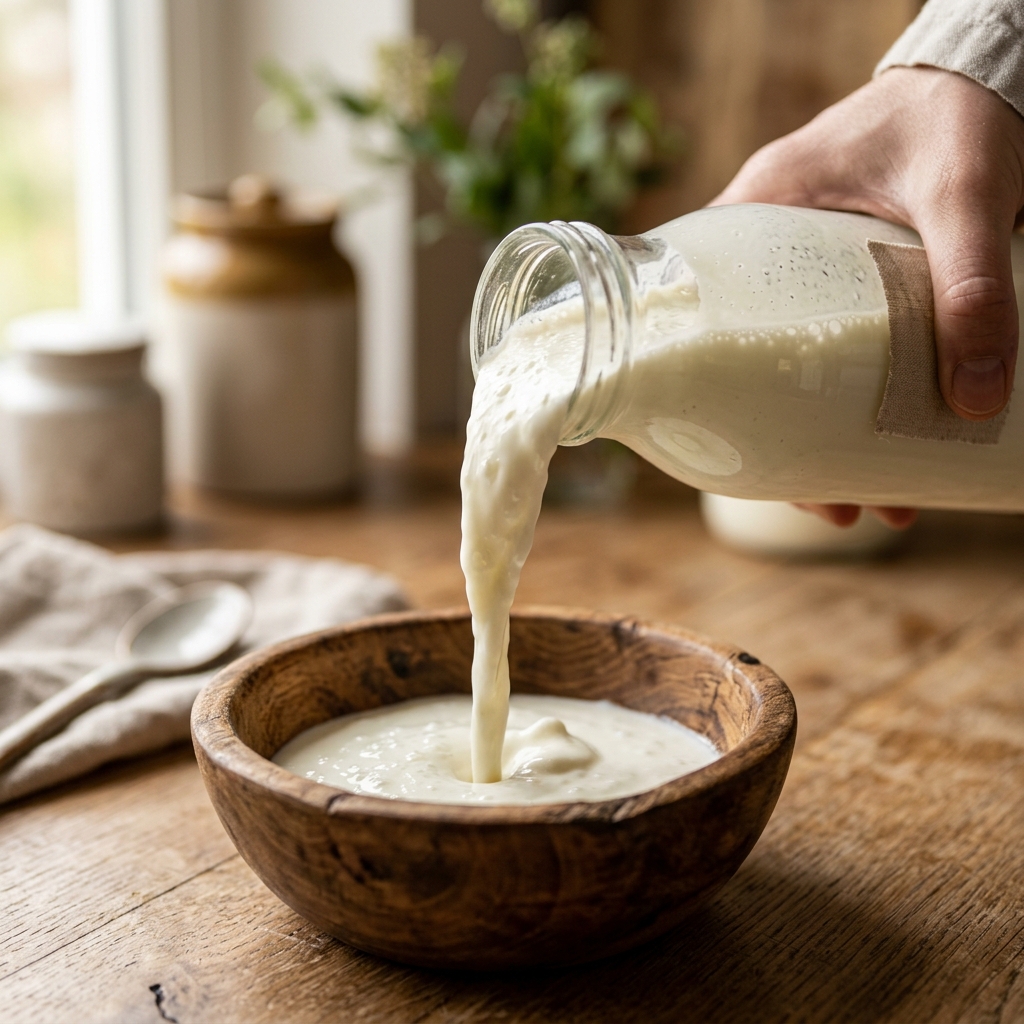
When you eat living fermented foods, you aren’t just eating probiotics; you’re eating food that has already been partially digested for you.
Breaking Down the Tough Stuff
Raw vegetables, grains, and dairy contain tough, complex compounds like phytic acid, gluten, and lactose. If your gut is already sluggish, breaking these down requires immense energy. During the fermentation process, the bacteria do the heavy lifting. They literally “chew up” and break down the lactose in milk (creating kefir) or the tough cellular walls of cabbage (creating sauerkraut). By the time the food reaches your stomach, it’s incredibly easy to digest.
Increased Bioavailability
According to nutritional research published by Zoe Science, fermentation doesn’t just make food easier to digest; it actually unlocks nutrients. The bacteria synthesize new vitamins (especially B-vitamins and Vitamin K2) and break down anti-nutrients that normally block mineral absorption. You extract significantly more nutrition from fermented vegetables than you do from their raw counterparts. Once you understand this, here is the full food-first probiotic foods list to choose from.
The “Die-Off” Bloat: Why It Hurts
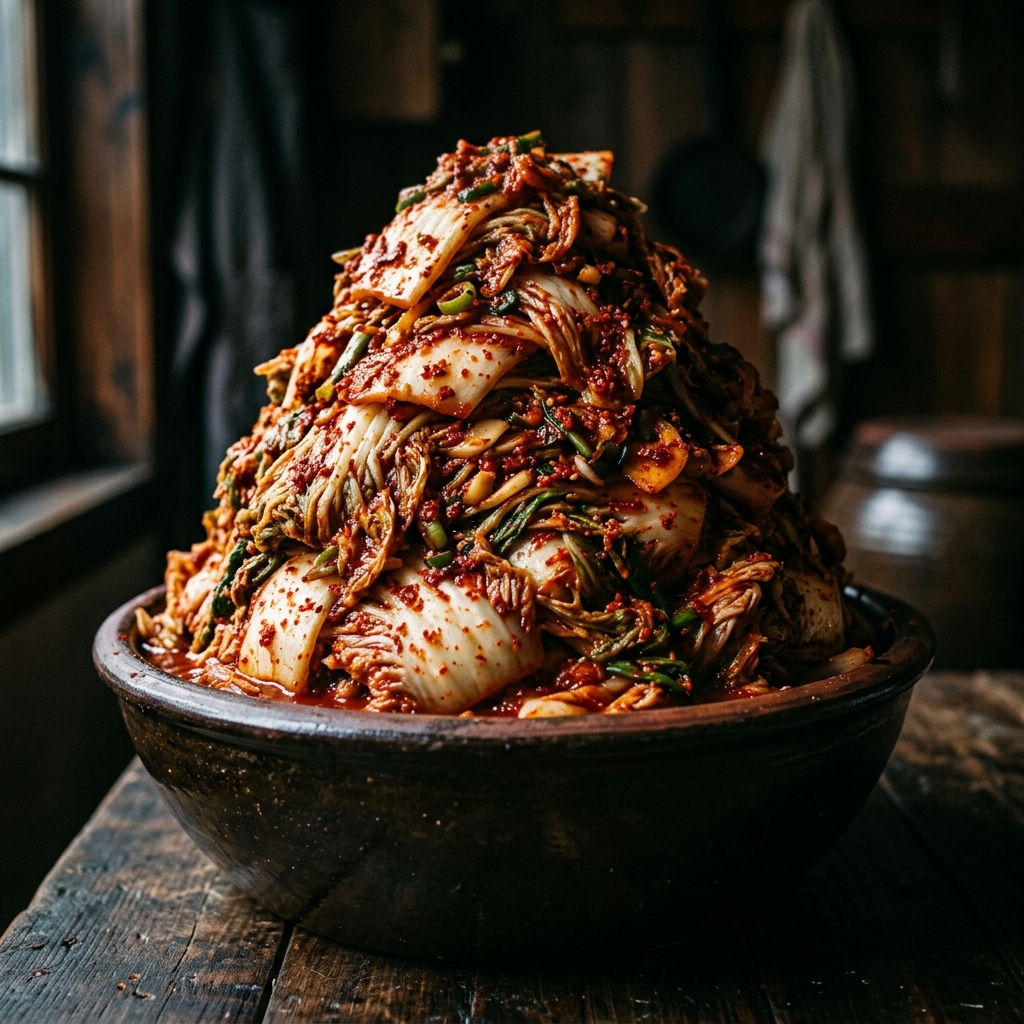
So, if fermented foods are pre-digested, why do they cause so much bloating for beginners?
The War in Your Microbiome
When you introduce a massive dose of living probiotics into a gut that has been running on processed foods, you initiate a microscopic war. The new, beneficial bacteria begin displacing the old, unhealthy microbes (the bigger picture of how a healthy gut microbiome forms over time). As the unhealthy microbes die off, they release gas. This is a natural process, but if it happens too quickly, your stomach inflates like a balloon. This is why die-off bloating after eating feels just like fermentation bloat from food.
The Mistake of the “Massive First Dose”
The biggest mistake people make is treating fermented foods like a side dish. Eating half a jar of raw kimchi on your first day is a recipe for disaster. Your digestive system simply isn’t equipped to handle that much living bacterial activity at once.
The Safe Integration Strategy
To get all the fermented foods benefits without the painful bloating, you must treat them with respect.
Start with the “Condiment Method”
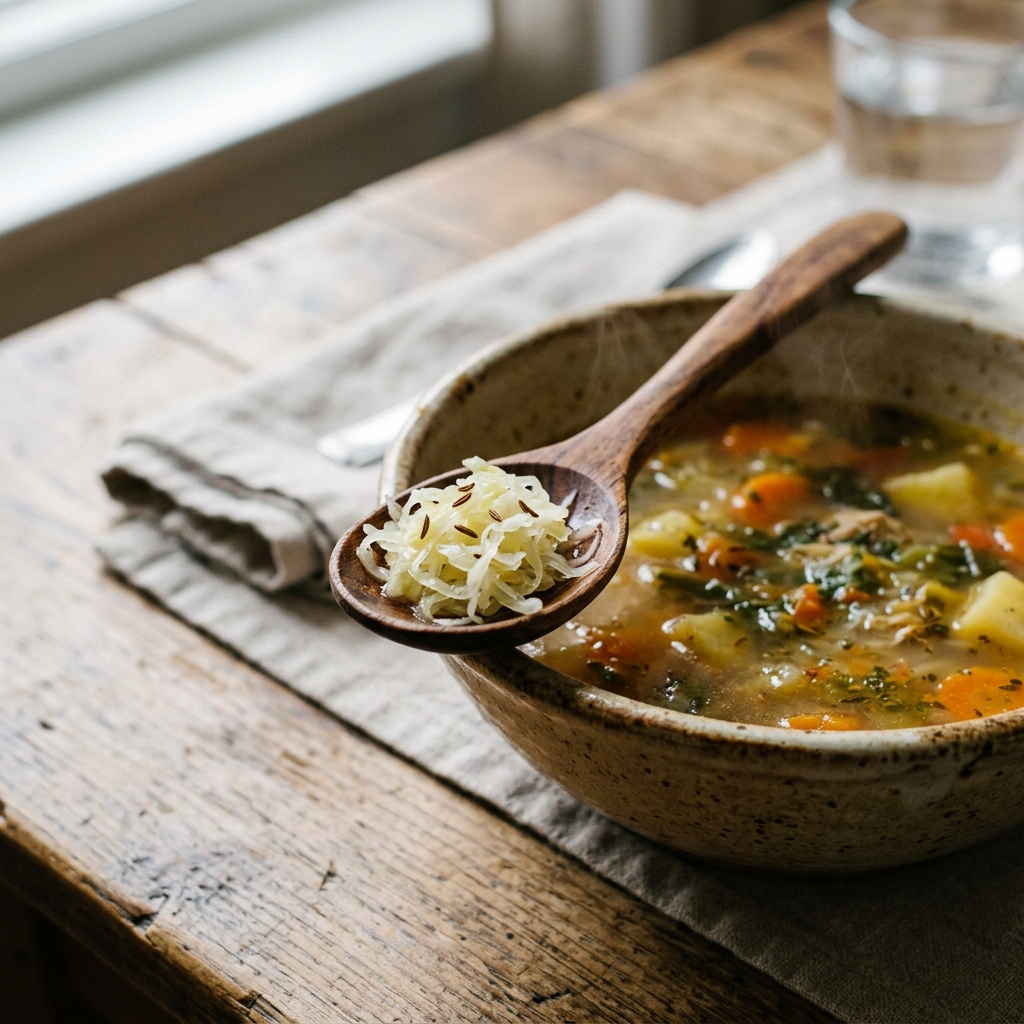
Don’t treat sauerkraut as a vegetable; treat it as a condiment. For the first two weeks, eat exactly one tablespoon per day. Mix it into a warm bowl of soup just before eating (don’t boil it, or you’ll kill the bacteria), or serve a tiny forkful alongside your eggs. This micro-dosing allows your gut to adapt without triggering severe gas.
Pair with Prebiotics (The Fertilizer)
Probiotics are the seeds; prebiotics are the fertilizer. To ensure the beneficial bacteria from your fermented foods actually survive and thrive in your gut, pair them with prebiotic fibers. A bowl of warm, cooked oats alongside a small glass of kefir is the perfect synergy. Here is more on prebiotic and probiotic foods that complete this synergy, and on how kefir compares to yogurt as a daily fermented choice.
Frequently Asked Questions
What happens to your body when you eat fermented foods every day?
When consumed consistently in appropriate amounts, fermented foods help populate your gut with diverse bacterial strains, lower chronic inflammation, improve nutrient absorption, and make your daily bowel movements significantly more predictable.
Are store-bought pickles actually fermented?
Usually, no. Unless they’re specifically labeled “naturally fermented” and are found in the refrigerated section, most store-bought pickles are just cucumbers soaked in vinegar and heat-pasteurized. They offer zero probiotic benefits.
Can fermented foods cause gas and bloating?
Yes, absolutely. If you introduce a large amount of living bacteria into an unprepared gut, the rapid shift in your microbiome will cause “die-off” gas. This is why you must start with just one tablespoon a day.
The Bottom Line
Fermented foods aren’t just a wellness trend; they’re an ancient method of preserving food and easing the digestive workload. But you must buy the right kind, and you must start slow.
Don’t let a bad experience with bloating stop you from utilizing nature’s pre-digestion. Treat living foods with respect. Start with just one forkful of real, refrigerated sauerkraut tomorrow, and let the beneficial bacteria do the heavy lifting for your digestion.
If you want to know exactly how to structure your daily meals around fermented foods, see the daily meal-plan structure that integrates living foods safely.
Disclaimer: The information provided on EssentialWellnessAZ is for educational purposes only. It is not intended as a substitute for professional medical advice, diagnosis, or treatment.

About Mr. Anh
We turn solid evidence into everyday habits Americans can actually do—plain English, cups/oz, grocery-aisle swaps, and routines that fit real life. Our editorial process: Experience—we road-test tips in real schedules…