Probiotic vs Prebiotic: What’s Better for Gut Health?
If your probiotic has not done much, the missing piece may be prebiotic foods. This guide explains the difference and shows how to use both together in real life.
- What Is the Difference Between Probiotics and Prebiotics?
- Probiotic vs Prebiotic Comparison Table
- When Prebiotics Usually Deserve More Attention First
- When Probiotics Can Be Especially Useful
- The Smartest Approach Is Usually Synbiotic
- Food vs Supplements: Do You Need Both?
- Which Is Better for Bloating, Constipation, and Everyday Gut Support?
- Frequently Asked Questions
- The Bottom Line
If you’ve ever bought a probiotic, taken it for a week, and thought, “Okay… why do I feel exactly the same?” you’re not imagining things. That’s usually where the confusion around probiotic vs prebiotic starts.
Here’s the cleanest way to think about it: probiotics are the live microbes, and prebiotics are the food that helps those microbes thrive. And that’s actually why so many gut routines feel incomplete. In this guide, I’ll break down the real difference between probiotics and prebiotics, when each one matters most, what foods count, and how to use both together in a way that actually fits real life.
Quick Takeaways:
- Probiotics are live beneficial microorganisms, while prebiotics help feed beneficial gut microbes
- Most people do better with both, not one or the other
- If your probiotic is not doing much, your daily diet may be too low in prebiotic foods
- Fermented foods help, but fiber diversity still matters
- The easiest place to start is one simple synbiotic meal a day
What Is the Difference Between Probiotics and Prebiotics?

The fastest way to understand probiotic vs prebiotic is this: probiotics seed, prebiotics feed.
According to the National Center for Complementary and Integrative Health, probiotics are live microorganisms intended to have health benefits when consumed. They’re found in some fermented foods and in dietary supplements. NCCIH also points out that different probiotic strains can have different effects, which is why a random probiotic product does not automatically mean a useful result for you.
Prebiotics are different. Harvard Health explains that prebiotics are ingredients in certain foods your body doesn’t fully digest, and those compounds act as fuel for gut bacteria. So practically, we’re talking about foods like oats, onions, garlic, bananas, asparagus, beans, lentils, and other fiber-rich plant foods.
Why does this matter? Because people often treat probiotics and prebiotics like they compete with each other. They don’t. They do different jobs. Probiotics add helpful organisms. Prebiotics help create the conditions those organisms need. When you use both together, that’s often called a synbiotic approach.
What I’ve found is that this one distinction instantly makes gut-health advice feel less random. Once you see the two roles clearly, a lot of supplement confusion starts to fall away.
Probiotic vs Prebiotic Comparison Table

Most comparison articles get vague right when readers need the most clarity. So here’s the short version.
| Category | Probiotic | Prebiotic |
|---|---|---|
| What it is | Live beneficial microorganisms | Fiber-like compounds that feed beneficial microbes |
| Main job | Add helpful bacteria or yeast | Help beneficial bacteria grow and stay active |
| Common food sources | Kefir, yogurt, kimchi, sauerkraut, miso, tempeh | Oats, onions, garlic, beans, lentils, bananas, apples, asparagus |
| Best real-life use | Fermented foods or targeted supplements | Daily plant diversity and fiber support |
| Common mistake | Taking a random supplement and expecting a miracle | Increasing fiber too fast and getting gassy or bloated |
| Best mental model | The seeds | The fertilizer |
That last row is the one I’d keep in your head. Probiotics are the seeds. Prebiotics are the fertilizer. If you only throw down seeds and never support the environment, the outcome is pretty predictable.
And yes, that’s a big reason a probiotic can feel disappointing when the rest of your meals are low in plant diversity and fiber.
Harvard Health also notes that starting slowly matters, because more prebiotic food is not automatically better for every gut, especially all at once.
When Prebiotics Usually Deserve More Attention First

If your diet is low in oats, beans, fruit, vegetables, seeds, and other fiber-rich foods, prebiotics may be the missing piece. This is especially true if you’re taking a probiotic every morning but your meals still look pretty low in plant variety.
In real life, that usually looks like someone trying to “fix their gut” with a capsule while the rest of the day is still built around convenience food, rushed meals, or a very repetitive menu. That doesn’t make probiotics useless. It just means the base layer is weak.
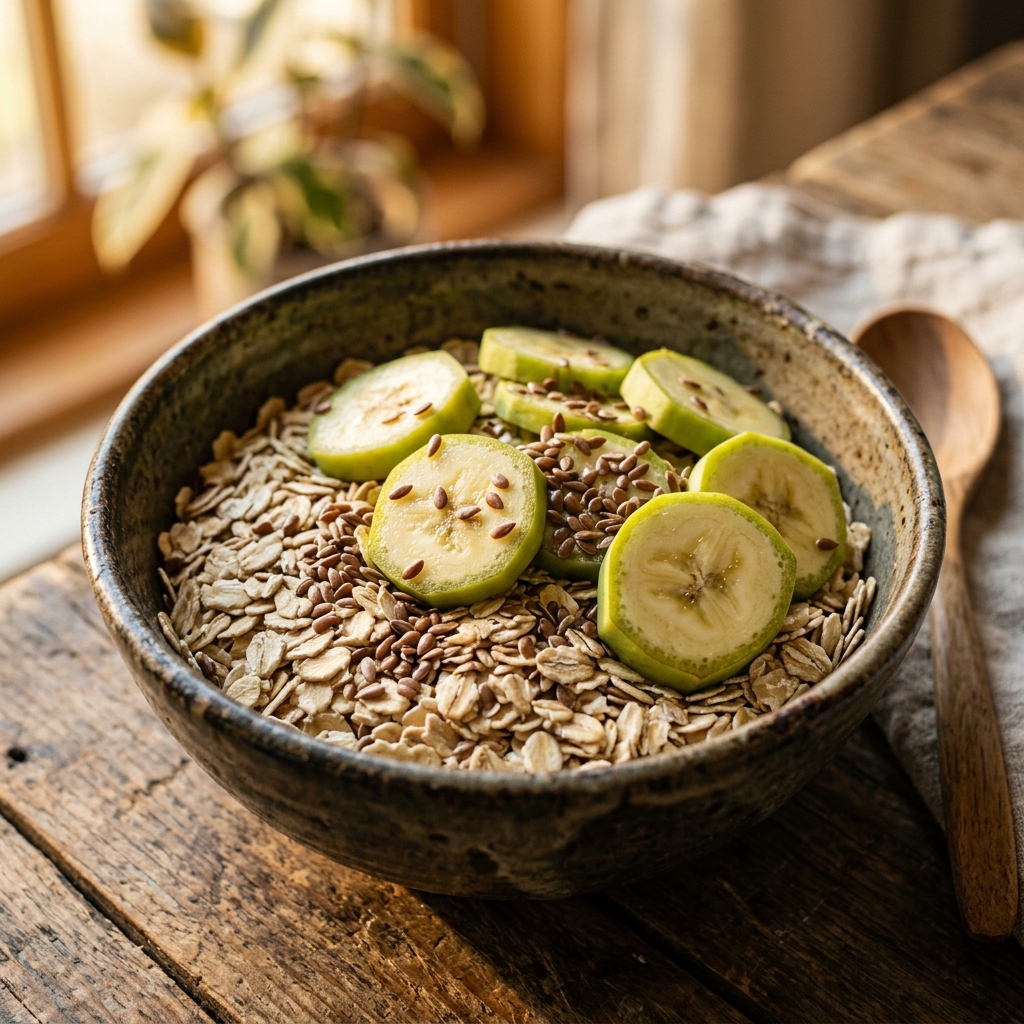
Some of the easiest prebiotic foods to build into a regular routine are oats, chia, flax, onions, garlic, beans, lentils, bananas, apples, asparagus, and whole grains. You do not need all of them every day. Breakfast is usually the easiest place to start. Oats, berries, and chia are far easier to repeat than a perfect lunch you only make twice a week.
Harvard Health also notes that people dealing with constipation may benefit from prebiotic foods, while people with diarrhea-predominant IBS may need a slower, more careful ramp. And that’s important, because this is where a lot of people accidentally make themselves feel worse. They go from very little fiber to a giant smoothie, beans at lunch, and a scoop of prebiotic powder by dinner. Sound familiar? That’s a lot for one day.
I’ve found that gut support usually works better when you make the change boring enough to repeat. Add one prebiotic-heavy breakfast. Keep it steady. Then expand from there.
If you need an easier way to keep staples around, Thrive Market is a practical pantry option for basics like oats, chia, beans, and fermented-food staples. For more food ideas, best high fiber foods list and best fruits for digestion are the strongest next reads.
When Probiotics Can Be Especially Useful

Probiotics make the most sense when you want to add live beneficial microbes through food or a more consistent supplement routine. The best food-first options are plain kefir, plain yogurt with live cultures, refrigerated kimchi, raw sauerkraut, miso, and tempeh.
And here’s the part many people miss: not every fermented food is automatically probiotic. Heat, pasteurization, and processing can wipe out live cultures. So a food can sound fermented and still offer very little in terms of live microbial support.
NCCIH makes another important point here: we still do not know exactly which probiotics help which people in every situation. That is a lot less exciting than supplement marketing, but it’s much more honest. So if you have ever felt frustrated by a probiotic that didn’t seem to do much, that doesn’t automatically mean probiotics “don’t work.” It may just mean the product, strain, dose, or context wasn’t right for you.
There are a few situations where probiotics tend to make more practical sense. After antibiotics is one. Travel weeks are another. Low fermented-food intake is another.
There are also times when going slower is the smarter move. NCCIH notes that probiotics can pose more risk for people with severe illness or compromised immune systems, and it advises against using probiotics as a reason to delay medical care. So if your symptoms are severe, unusual, or getting worse, this is where you bring in a clinician instead of guessing your way through it.
If you want the food side first, probiotic foods list is the cleanest next internal read after this one.
The Smartest Approach Is Usually Synbiotic

The most useful answer to probiotic vs prebiotic is usually not “pick one.” It’s pair both.
That pairing is sometimes called a synbiotic approach. A review article in Journal of Food Science and Technology describes synbiotics as combinations of probiotics and prebiotics that can improve probiotic viability and support intestinal balance.
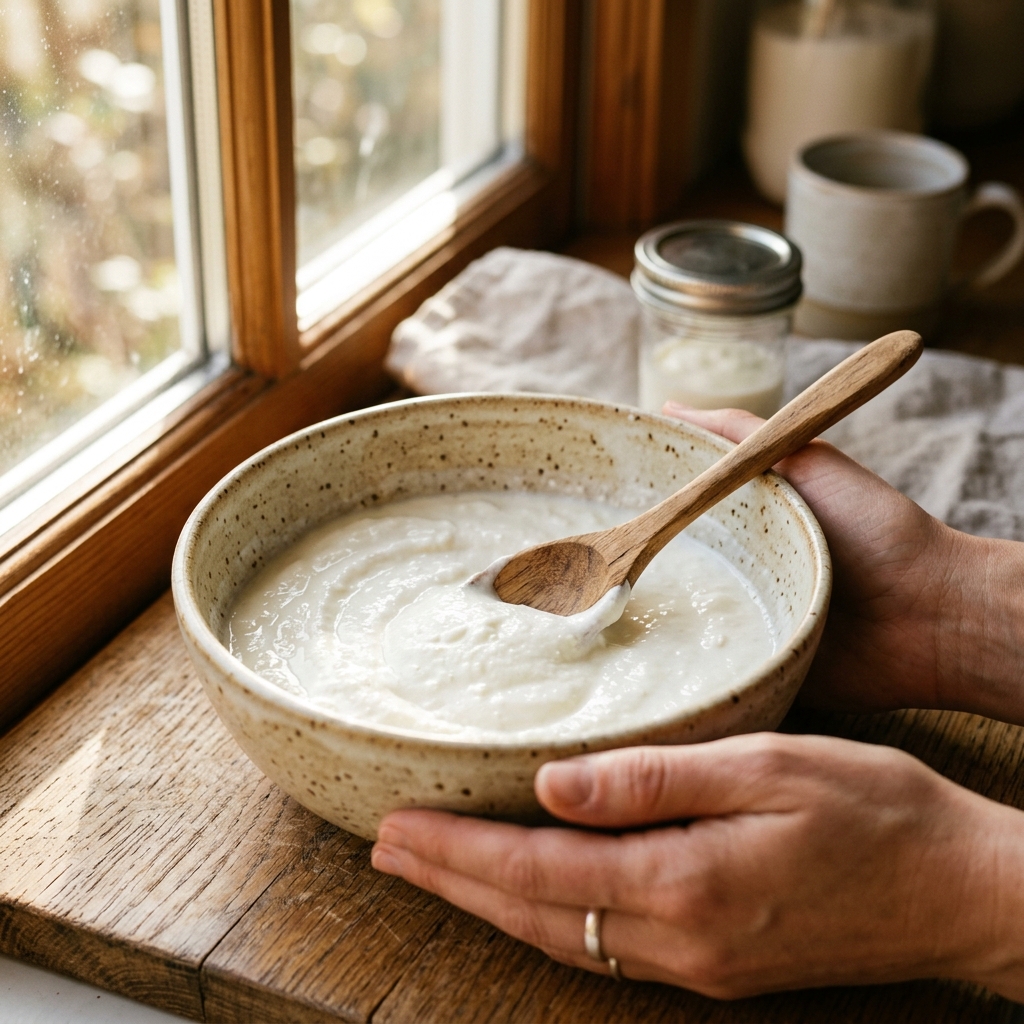
So what does that mean for you practically? It means a plain yogurt bowl with oats, berries, and chia is doing more than checking a wellness box. The yogurt gives you probiotic cultures. The oats and seeds help feed the microbiome. A bowl with kimchi, brown rice, beans, and sauteed onions works the same way. Miso soup with tofu, leeks, and mushrooms works too. So does tempeh with asparagus and onions.
The easiest formula I use is this:
- Pick one probiotic food.
- Add two prebiotic foods.
- Add protein or healthy fat so the meal actually fills you up.
That’s it. No complicated system required.
This is also where the 2021 Stanford fermented-foods study helps make the point clearer. Stanford Medicine reported that adults assigned to a high-fermented-food diet for 10 weeks increased microbiome diversity and reduced several inflammatory proteins. That does not mean fiber stopped mattering. It means fermented foods and microbiome-supportive eating work better together than most people assume.
If you want practical meal ideas that fit that pattern, easy anti-inflammatory meals and gut-healthy meal plan are the most natural next steps.
Food vs Supplements: Do You Need Both?

You do not automatically need both. A lot of readers can get a lot done with smarter meals, more plant diversity, and one fermented food they actually enjoy enough to repeat.
Food is often enough when your goal is general gut support and your meals are already fairly consistent. That means regular fiber, a few fermented foods each week, hydration, and a routine that is not constantly built around convenience snacks and sugar-heavy drinks.
Supplements make more sense when consistency is hard. Travel, irregular meals, low fermented-food intake, or the stretch after antibiotics are the most obvious examples.
If you go that route, the filter should stay simple: clear labeling, sensible formulation, no miracle claims, and a role that supports your routine instead of pretending to replace it. Life Extension is the approved brand I’d look at first for probiotic support if you want a simpler supplement path, and iHerb is the most practical category-style fallback if you’re comparing digestive-support options.
What I would not do is treat a supplement like permission to ignore food quality. A probiotic on top of a chaotic, low-fiber diet is still sitting on a weak foundation.
This works for most people, but if you have a diagnosed digestive condition or you’re actively flaring, it’s worth checking with your healthcare provider before making your supplement stack bigger.
Which Is Better for Bloating, Constipation, and Everyday Gut Support?

This is where probiotic vs prebiotic turns into a real-life question instead of a definition question.
For everyday gut support, prebiotics usually deserve more daily attention because they are part of the meals you repeat. If your gut is not dealing with major symptoms, a fiber-rich pattern plus a few fermented foods each week is usually a better strategy than obsessing over the “perfect” capsule.
For constipation and sluggish digestion, prebiotics often matter more first. That means fiber rhythm, water, movement, and plant variety before supplement stacking. Harvard Health specifically notes that prebiotic foods may help bowel function for people struggling with constipation, but it also emphasizes gradual increases so you do not overshoot and make yourself miserable.
For bloating, the answer is more careful. Too much fiber too fast can absolutely make bloating worse. Some people tolerate yogurt or kefir better than raw fermented vegetables at first. Others do better with calmer, cooked meals before they add much fermentable fiber. In my experience, bloating responds best to slower layering, not aggressive “gut reset” behavior.
If bloating is your main issue, go slower than you think you need to. How to debloat in 7 days and green foods for gut health are both worth reading next if that is the symptom driving your search.
The answer, again, is rarely probiotic or prebiotic. It’s usually prebiotic base, probiotic support, slower ramp.
Frequently Asked Questions
Which is better, probiotic or prebiotic?
Neither is automatically better. Probiotics add beneficial microbes, while prebiotics help support those microbes. For most people, the best everyday strategy is using both rather than treating them like a contest.
Can you take probiotics and prebiotics together?
Yes. Using them together is common and is often called a synbiotic approach. In food terms, that can be as simple as yogurt with oats and berries or kimchi with beans and rice.
Is yogurt a probiotic or a prebiotic?
Plain yogurt with live active cultures is a probiotic food. It is not a prebiotic food by itself, which is why pairing it with oats, chia, berries, or fruit makes more sense than eating it alone.
What foods are highest in prebiotics?
Oats, onions, garlic, leeks, beans, lentils, bananas, apples, asparagus, and other high-fiber plant foods are among the easiest prebiotic choices to use consistently.
Can prebiotics make bloating worse at first?
Yes. If you increase fiber too quickly, your gut can push back with gas and bloating. That usually means you need a slower ramp, not that prebiotic foods are bad for you.
Do I need a probiotic supplement if I eat healthy?
Not always. If you already eat fiber-rich meals and include fermented foods regularly, you may not need one. Supplements make more sense when food consistency is low or fermented foods are hard to keep in your routine.
The Bottom Line
The easiest way to understand probiotic vs prebiotic is to stop asking which one wins. They do different jobs.
Probiotics seed. Prebiotics feed. Your best move is usually building the base with fiber-rich foods, adding probiotic foods you can actually repeat, and pairing both in one simple meal whenever possible. That’s what tends to work in real life.
If you want the next practical step, start with one synbiotic meal a day for a week. Then build from there. If your meals need easier structure, read best high fiber foods list next. If your gut feels irritated right now, go to how to debloat in 7 days. And if you want a simple supplement backstop after the food basics are in place, Life Extension or iHerb are the approved directions I’d personally compare first.
About Jane Smith
We turn solid evidence into everyday habits Americans can actually do—plain English, cups/oz, grocery-aisle swaps, and routines that fit real life. Our editorial process: Experience—we road-test tips in real schedules…