Foods for Gut Health: A Simple, Real-World Strategy (No Cleanses Required)
Looking for the best foods for gut health? This food-first guide covers fiber-rich foods, fermented foods, gentle proteins, everyday meal ideas, and practical tips for better digestion.
*Disclaimer: I’m not a doctor; I’m a researcher and self-experimenter. This isn’t medical advice or a diagnostic tool—just practical, food-first strategies that support digestion. If you have a specific condition, always check with your healthcare provider first.*
When you start noticing the everyday signs of poor gut health to watch for, searching for answers online usually leads you straight into two frustrating extremes. You either hit dense, confusing medical articles that read like textbooks, or you stumble into influencers pushing expensive, restrictive 7-day cleanses.
But trying to overhaul your entire diet overnight usually just leads to more stress—and stress is terrible for your gut. If you browse community forums where real people share what actually works, you won’t find extreme diets. You’ll find simple, sustainable habits.
In this guide, we are bypassing the clinical jargon and skipping the expensive protocols. We’re going to look at everyday foods for gut health that you can easily integrate into your current meals to support your digestion, without turning your grocery list upside down.
The Quick Takeaway: – Focus on adding small amounts of food, rather than constantly restricting your life. – Use the “Tiny Army” rule: A small spoonful of fermented foods consistently beats eating a massive bowl once a month. – Keep your daily metrics simple: Aim to add just 1/4 cup of beans and 1 cup of leafy greens to your day.
Why “Food-First” Beats Expensive Cleanses
We often look for a quick fix when we’re feeling bloated or sluggish. The health industry knows this, which is why the market is flooded with high-dose supplements and intense reset programs. The problem with overcomplicating gut health is that it ignores the foundation. Your microbiome—the vast community of bacteria living in your digestive tract—doesn’t need a massive shock to the system. It needs steady, consistent nourishment.
Consistency always beats perfection. Throwing a high-end probiotic at a diet that lacks basic fiber is like planting expensive seeds on solid concrete. You need the soil to be ready first.
**What I noticed:** “I used to buy $50 probiotic pills hoping they would be the magic bullet for my digestion. But I realized quickly that the expensive supplements didn’t do much of anything until I fixed my daily food foundation. Once I started focusing on real foods first, my digestion naturally settled down, and the expensive pills became completely unnecessary.”
The Breakfast Powerhouse: Oats & Seeds
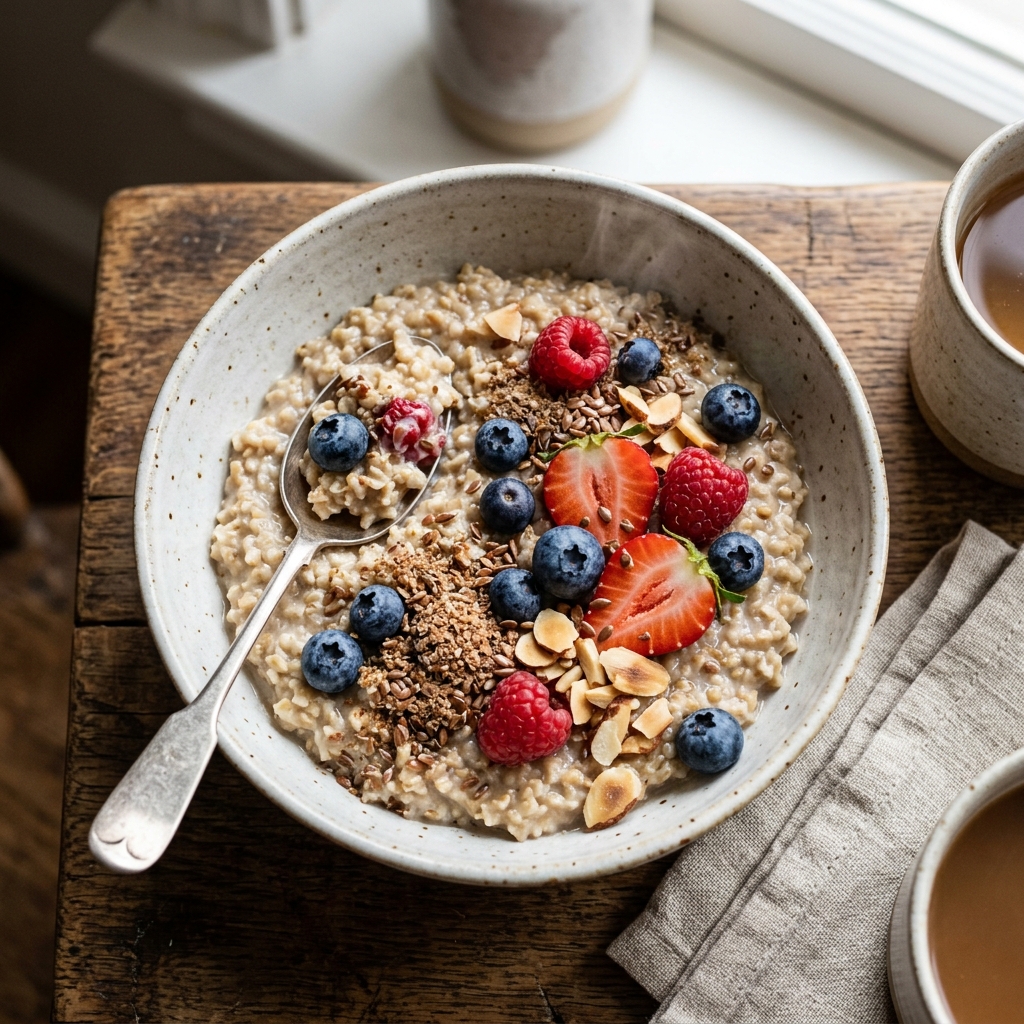
If you want to support your gut, start with the first meal of the day. Gentle high-fiber foods that feed beneficial bacteria are the primary fuel for your good bacteria, and breakfast is the easiest time to get a massive head start.
Steel-cut oats provide one of the best foundations for gut comfort. Try the steel-cut overnight oats recipe built for sensitive stomachs to make this practical. They are packed with beta-glucan, a specific type of soluble fiber that acts as a prebiotic. A study published in the *Journal of Nutrition* found that consuming whole grain oats can significantly support the growth of beneficial gut microbiota. [(Source)](#)
To boost this powerhouse even further, add a tablespoon of ground flaxseeds or chia seeds. This simple addition introduces healthy fats and even more prebiotic fiber, keeping your digestion moving gently without causing immediate spikes in blood sugar.
“Tiny Armies of Good Bacteria”: Probiotics Without the Overwhelm
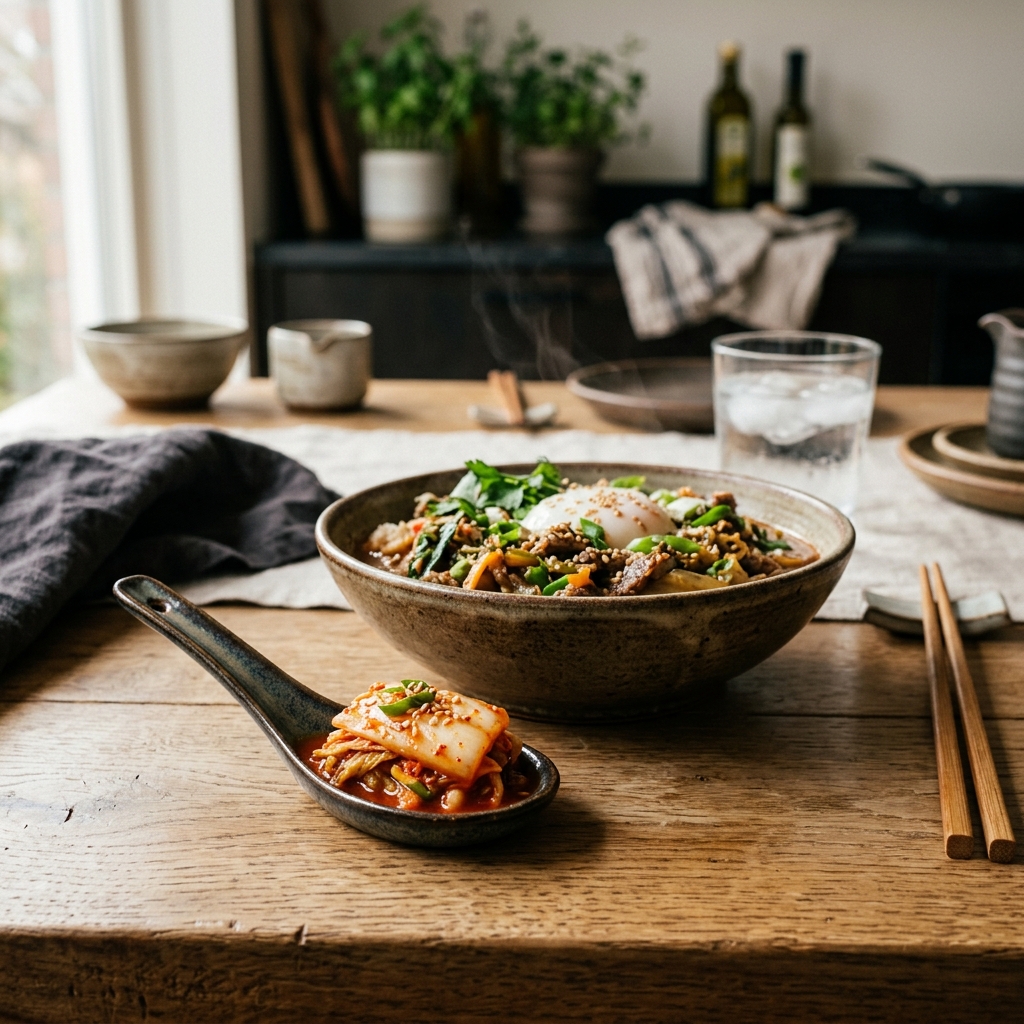
You already know that food-first probiotic foods to choose from and fermented foods contain beneficial bacteria—the live bacteria that support your microbiome. But many people make the mistake of thinking they need to eat entire jars of kimchi or drink massive bottles of kombucha to see a benefit.
Instead, use the “Spoonful Approach.” Think of probiotics as tiny armies of good bacteria. Here is more on the difference between probiotics and prebiotics and why both matter. You don’t need a million at once; you just need a steady reinforcement. – Unsweetened Yogurt or Kefir: A few spoonfuls mixed into your morning oats or a smoothie. – Sauerkraut or Kimchi: A small forkful on the side of your eggs or mixed into a lunch bowl. – Miso: Stirred into a warm broth or used as a base for a salad dressing.
**What I noticed:** “I love the sharp taste of sauerkraut, but it can easily overpower a meal. I’ve found that mixing just a small spoonful of kimchi or unpasteurized sauerkraut into a savory dinner bowl adds that probiotic benefit without taking over the entire dish. It’s a low-effort habit that pays off immensely.”
Supporting the Gut Lining: Glutamine-Rich Foods
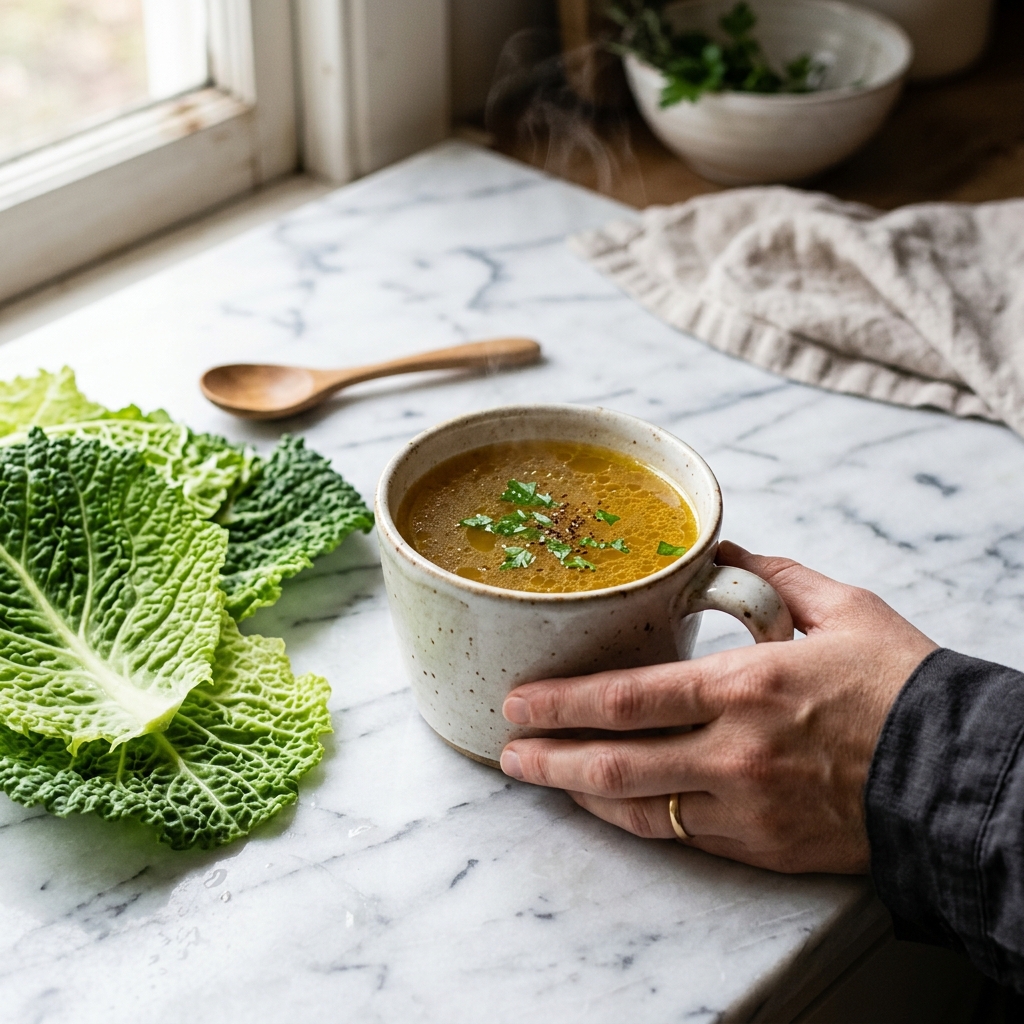
While fiber feeds the bacteria, your gut lining itself also needs support. This is where glutamine comes into play. Glutamine is an amino acid that helps maintain the integrity of the intestinal wall.
Bone Broth: Simplicity is key here. A warm mug of high-quality bone broth provides a gentle, easily digestible source of amino acids that soothe the digestive tract.
Cabbage: Raw cabbage is naturally rich in glutamine. If eating raw cabbage feels too tough on your stomach, lightly steaming it or drinking a small amount of raw cabbage juice is a traditional, food-first way to support your gut lining.
The Dead-Simple Daily Gut Metric (No Calorie Counting)
You don’t need a spreadsheet to track your gut health. Real-world success comes down to dead-simple metrics. Try adopting these two basic rules into your daily food journal:
1. The 1/4 Cup Rule: Add just 1/4 cup of beans or legumes (like lentils or chickpeas) to your lunch or dinner. This provides a dense hit of fiber that feeds your microbiome. 2. The 1 Cup Rule: Ensure you have at least 1 cup of leafy greens (like spinach or kale) cooked or raw every day. When you want to compose these rules into actual meals, see the full daily meal-plan structure that puts these rules together.
| **Meal** | **Food-First Addition** | **Gut Benefit** | | :— | :— | :— | | **Breakfast** | 1 bowl of steel-cut oats + 1 tbsp flaxseed | Prebiotic fiber to feed good bacteria | | **Lunch** | 1/4 cup black beans added to a salad | Sustained energy and digestion support | | **Dinner** | 1 small spoonful of kimchi on the side | Live probiotics to reinforce the microbiome |
Frequently Asked Questions
What foods soothe your gut naturally? Foods like bone broth, ginger, plain unsweetened yogurt, and slightly underripe bananas are incredibly gentle and can help soothe an upset stomach while providing necessary nutrients.
Do I need a 7-day gut reset? No. While a “reset” sounds appealing, extreme dietary shifts often cause more digestive distress. You will get much better, long-lasting results by simply adding prebiotic fiber and small amounts of fermented foods to your normal routine.
What are the worst foods for digestion? Highly processed foods, excessive artificial sweeteners, and deep-fried items tend to disrupt the balance of your microbiome. You don’t have to eliminate them forever, but reducing their frequency gives your gut a chance to rest and balance itself.
Gut health isn’t about clinical perfection; it’s about simple, daily additions. Start tomorrow by adding just 1/4 cup of beans to your lunch or a spoonful of yogurt to your breakfast. Your gut responds to what you do consistently, not what you do occasionally.
*Want more simple meal ideas and wellness routines? Join our newsletter to get food-first strategies sent straight to your inbox.*

About Mr. Anh
We turn solid evidence into everyday habits Americans can actually do—plain English, cups/oz, grocery-aisle swaps, and routines that fit real life. Our editorial process: Experience—we road-test tips in real schedules…