Cooked or Raw? It Depends on the Nutrient, Not the Food
Raw is not automatically better. Heat costs you vitamin C but frees carotenoids locked in cell walls. Which nutrients go, which arrive, and what to do.
Raw food gets treated as the purer option. Cooking is what you do to it afterwards, and something is assumed to be lost along the way.
Half of that is true.
Heat does destroy some nutrients. It also unlocks others that you would barely absorb otherwise — and in a few cases the cooked version delivers several times more than the raw one.
So the question isn’t whether cooking is good or bad. It’s which nutrient you’re asking about.
Quick Takeaways:
– Vitamin C is the main loss. Heat-sensitive and water-soluble — it leaves in the steam and the cooking water
– Method matters more than heat itself: steamed broccoli lost about 14% of its vitamin C, boiled lost about 55%
– Carotenoids go the other way. Heat breaks cell walls and releases them
– Lycopene from cooked tomato products was measured roughly 2.5× more bioavailable than from fresh
– But released carotenoids still need fat in the meal, or the release goes nowhere
This is about how absorption works, not about diagnosing anything.
What heat takes away
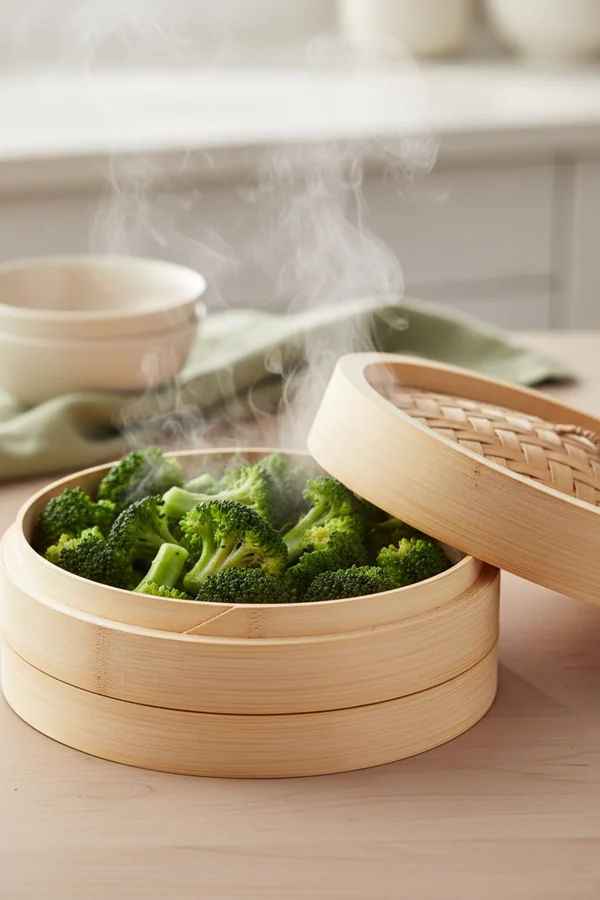
Vitamin C is the clearest casualty. It’s both heat-sensitive and water-soluble, which means cooking attacks it twice — some degrades, and some simply dissolves into the water and gets poured down the sink.
How much depends heavily on method. Across studies the range is wide, and honestly reported it looks like this: vitamin C losses of roughly 6–93% from boiling and 5–92% from steaming, depending on the vegetable, the duration and the study.
That spread is too wide to plan around, so here’s a cleaner single comparison. In one set of measurements on broccoli, vitamin C loss was about 14.3% when steamed and about 54.6% when boiled.
The pattern that survives across the literature is consistent even when the numbers aren’t:
| Method | Vitamin C retention |
|---|---|
| Microwaving | Generally highest |
| Steaming | High |
| Boiling | Lowest |
The mechanism is simple. The more water the food sits in, and the longer it sits, the more of a water-soluble vitamin ends up in the water rather than the food.
Which points to the easiest fix in this entire article: if you boil vegetables, use the water. Soup, sauce, gravy, cooking grain. The vitamin C isn’t destroyed in that scenario — it just moved.
What heat gives back
Now the other direction, and it’s the part that gets left out.
Many plant compounds are locked inside cell walls that your digestive system doesn’t fully break down. Chewing helps a little. Heat helps a lot — it ruptures the structure and releases what was trapped.
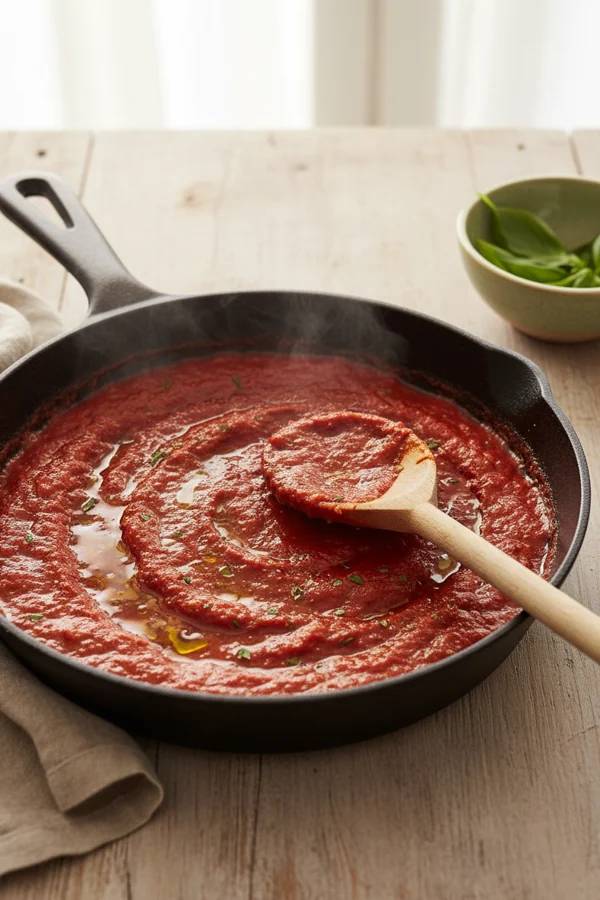
Lycopene is the standard example. Lycopene from cooked tomato products was measured as roughly 2.5× more bioavailable than lycopene from fresh tomatoes, with total absorption in some measures reaching around 3.8×. (Gärtner et al., 1997)
Later work on tomato purées has pointed the same way for both lycopene and beta-carotene. (Nutritional preparation of tomato purées and blood bioavailability)
So a raw tomato salad and a cooked tomato sauce are not the same food nutritionally. The sauce delivers considerably more of the compound most people are eating tomatoes for.
The condition everyone forgets
Releasing a carotenoid isn’t the same as absorbing it.
Carotenoids are fat-soluble. Heat gets them out of the cell wall, but without fat in the meal they still can’t cross into you — I went through those numbers in why a fat-free salad wastes them, where adding avocado raised beta-carotene absorption more than fifteen-fold.
Cooked tomatoes with no oil is half a solution. Cooked tomatoes with olive oil is the whole one — which is what a Mediterranean sauce has been doing accidentally for centuries. Several of these Mediterranean anti-inflammatory recipes already stack both steps without calling attention to it.
Why the numbers disagree so much
Look back at that vitamin C range — 6% to 93% from boiling — and you might reasonably ask why the science can’t be more specific.
Several reasons, and they’re worth knowing because the same problem shows up across nutrition research.
The vegetable matters. A dense carrot and a thin spinach leaf behave completely differently in hot water. Studies using different vegetables aren’t measuring the same thing.
The duration matters more than the temperature. Three minutes of boiling and fifteen minutes of boiling are different interventions, and papers often report the method without emphasising the clock.
Cutting matters. More cut surface means more contact with water and faster losses. Whole versus chopped can shift results substantially before any heat is applied.
And starting levels vary. Fresh produce differs in vitamin C by season, storage time and variety, so “percentage retained” depends on what it started with.
None of that makes the research useless. It means the direction is reliable — boiling loses more than steaming — while any single percentage is a snapshot of one setup. (Cooking method and vitamin C losses in leafy greens)
Cooling counts as processing too
Heat isn’t the only transformation on the list. Cooling does its own work.
When cooked starchy foods cool down, some of their starch reorganises into a form your small intestine can’t digest — it travels to the colon instead and behaves more like fibre. That’s a different kind of change from either loss or release, and I covered it in cooking and cooling changes food.
The general point holds: processing doesn’t have a direction. It rearranges what’s available, and which direction it moves depends entirely on the compound.
What I noticed:
“I ate a lot of raw salads for a stretch, on the assumption that less intervention meant more nutrition. What I’d actually done was maximise one nutrient and minimise another, without ever deciding to.”
A practical way to think about it
You don’t need to memorise which vegetable goes which way. Two questions cover it.
| Ask | If yes |
|---|---|
| Am I eating this mainly for vitamin C? | Favour raw, or steam briefly. Don’t boil and discard the water |
| Am I eating this mainly for colour compounds — red, orange, deep green? | Cook it, and put fat in the meal |
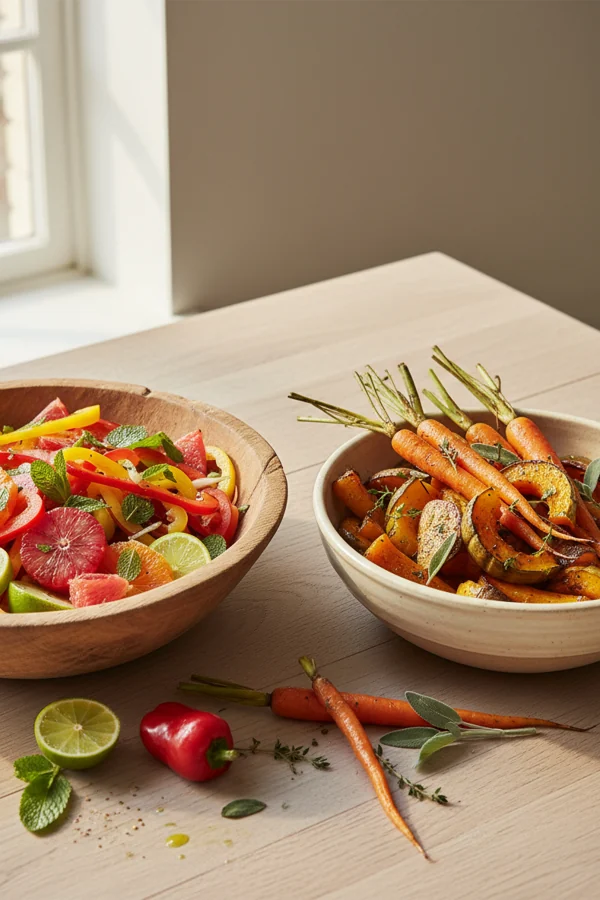
Peppers, citrus and berries sit in the first group. Tomatoes, carrots and squash sit in the second. Leafy greens are genuinely split, which is a good argument for eating them both ways rather than picking a side.
That last point is the honest conclusion here. The most robust strategy isn’t raw or cooked — it’s both, across the week. Variety in preparation does the same job as variety in ingredients, and requires no additional decisions.
If you batch-cook beans and whole grains, you’re already applying heat to things that need it. Adding a raw component to the same meal covers the other half.
This whole area is one of three mechanisms that explain food pairing — the framework is in the three rules behind every food pairing.
Frequently Asked Questions
Is raw food more nutritious than cooked?
Not as a general rule. Heat destroys some vitamin C but releases carotenoids that are otherwise locked in cell walls. Which is better depends on the nutrient you care about, not on cooking itself.
Which cooking method preserves the most vitamin C?
Microwaving and steaming generally retain more than boiling. In one broccoli comparison, steaming lost about 14% of vitamin C while boiling lost about 55%.
Are cooked tomatoes really better than raw?
For lycopene, yes. Lycopene from cooked tomato products was measured at roughly 2.5 times the bioavailability of fresh tomatoes — provided there is fat in the meal to carry it.
Does boiling destroy nutrients or just move them?
Both. Some vitamin C degrades from heat, and some dissolves into the cooking water intact. Using that water in a soup or sauce recovers the part that only moved.
Should I eat vegetables raw or cooked?
Both, across the week. Raw favours vitamin C, cooked favours carotenoids, and alternating captures more of each than committing to either.
The Bottom Line
Cooking takes and cooking gives. Vitamin C leaves in the heat and the water; carotenoids only arrive once the cell walls break.
So steam rather than boil when vitamin C is the point, use the cooking water when you do boil, cook the tomatoes and carrots, and put fat in the meal when you do.
And then stop optimising. Eating vegetables both ways across a week beats getting either method perfectly right.
You can read more about how I work through this on the about the author page.
References
- Gärtner C, Stahl W, Sies H. Lycopene is more bioavailable from tomato paste than from fresh tomatoes. AJCN 1997. — https://ajcn.nutrition.org/article/S0002-9165(23)15679-6/fulltext
- Nutritional Controlled Preparation and Administration of Different Tomato Purées Indicate Increase of β-Carotene and Lycopene Isoforms, and of Antioxidant Potential in Human Blood Bioavailability. — https://www.ncbi.nlm.nih.gov/pmc/articles/PMC8073136/
- Effect of Cooking Method on Vitamin C Losses and Antioxidant Activity of Indigenous Green Leafy Vegetables. — https://www.ncbi.nlm.nih.gov/pmc/articles/PMC8791706/
Everything I share here is educational and reflective, not medical advice. It should not replace diagnosis, treatment, or care from a licensed healthcare professional. See the full medical disclaimer.

About Mr. Anh
We turn solid evidence into everyday habits Americans can actually do—plain English, cups/oz, grocery-aisle swaps, and routines that fit real life. Our editorial process: Experience—we road-test tips in real schedules…