Resistant Starch Sweet Potato: Cook, Cool, and Reheat for Gut Health
If you’re only eating sweet potatoes for weight loss or because they’re a “low glycemic index” carb, you are missing...
If you’re only eating sweet potatoes for weight loss or because they’re a “low glycemic index” carb, you are missing out on their most profound health benefit.
When prepared correctly, a sweet potato stops being just a simple carbohydrate and transforms into a powerful prebiotic powerhouse rich in resistant starch that may help soothe inflammation and support your gut lining. The secret? It all comes down to a simple kitchen hack involving your refrigerator.
Let’s dive into the fascinating science of the resistant starch sweet potato and why you need to stop eating them piping hot.
Quick answer: A sweet potato has very little resistant starch when eaten piping hot. Cook it (bake or boil), let it cool completely, then refrigerate for 12–24 hours — cooling triggers a process called retrogradation that forms resistant starch, a prebiotic that may support gut health. Eat it cold, or reheat it gently. Cold or gently reheated both work; scorching-hot does not.
This page is part of our complete guide to resistant starch.
Related: the cook-and-cool trick is what makes cold sweet potato higher in resistant starch.
The Anatomy of a Gut-Friendly Sweet Potato
Sweet potatoes have long been praised as a superfood, primarily because they are packed with Vitamin A, beta-carotene, and potassium. But when it comes to digestive health, the magic lies in their unique fiber profile.
First, sweet potatoes are rich in soluble fiber, which absorbs water in your digestive tract, helping to soften stool and promote regular, comfortable bowel movements. But while regular fiber is fantastic, it’s the resistant starch that is the true superstar of gut health.
Unlike regular starches that break down into sugar in your small intestine, resistant starch resists digestion. It travels completely intact all the way to your colon (large intestine). Once there, it acts as a premium food source for the beneficial bacteria living in your gut microbiome.
The Butyrate Factory
When your good bacteria feast on resistant starch, they undergo a fermentation process. The byproduct of this fermentation is a short-chain fatty acid called Butyrate.
Why is butyrate so important? Clinical studies show that butyrate is the primary energy source for the cells lining your colon. It actively reduces intestinal inflammation, strengthens the gut barrier (helping to support a healthier gut lining), and even improves insulin sensitivity.
By eating a resistant starch sweet potato, you are directly fueling this butyrate factory.
How to Maximize Resistant Starch in Sweet Potatoes (The Hack)
Here is the catch: eating a sweet potato straight out of the oven while it’s still burning hot gives you minimal resistant starch. To unlock its true gut-friendly potential, you have to use The Cooling Hack.
This process, known scientifically as retrogradation, alters the molecular structure of the starch.
- Bake or Boil: Cook your sweet potatoes exactly as you normally would. (Boiling actually retains slightly more moisture and can aid in the retrogradation process, but baking works beautifully too).
- Cool Completely: Do not eat them yet! Let them cool down to room temperature, and then place them in an airtight container in the refrigerator for 12 to 24 hours.
- Eat Cold or Reheat Gently: During that chilling period, the starches reorganize themselves into resistant starch. You can now eat the sweet potato cold, or gently reheat it.
(Want to learn more about how this kitchen trick works for rice and bread? Check out our deep dive into The Cooling Hack).
Start Slow If Sweet Potatoes Make You Bloated
Resistant starch is fermented by gut bacteria, which is part of why it can be useful. But fermentation can also mean gas, pressure, or bloating if you jump from very little fiber to a large chilled starch portion overnight.
- Start with 1/4 to 1/2 cup cooked-and-cooled sweet potato.
- Eat it with protein and fat, not as a giant plain carb bowl.
- Give your gut a few days before increasing the portion.
- If you have IBS or frequent painful bloating, treat this as an experiment, not a rule.
For a gentler food list organized around tolerance, see our guide to resistant starch foods for bloating.
| How you serve it | Resistant starch | Notes |
|---|---|---|
| Piping hot, fresh from the oven | Low / minimal | The starch hasn’t retrograded yet |
| Cooled 12–24h in the fridge | High | Best for cold salads and meal prep |
| Gently reheated after cooling | High (retained) | Keep the heat low — don’t scorch it |
| Raw | Very high, but hard to digest | Not recommended — can cause gas and cramping |
3 Delicious Ways to Eat “Cooled” Sweet Potatoes
Eating a cold sweet potato might sound unappealing at first, but with a little creativity, it can become your favorite gut-friendly meal.
1. The Gut-Friendly Cold Salad
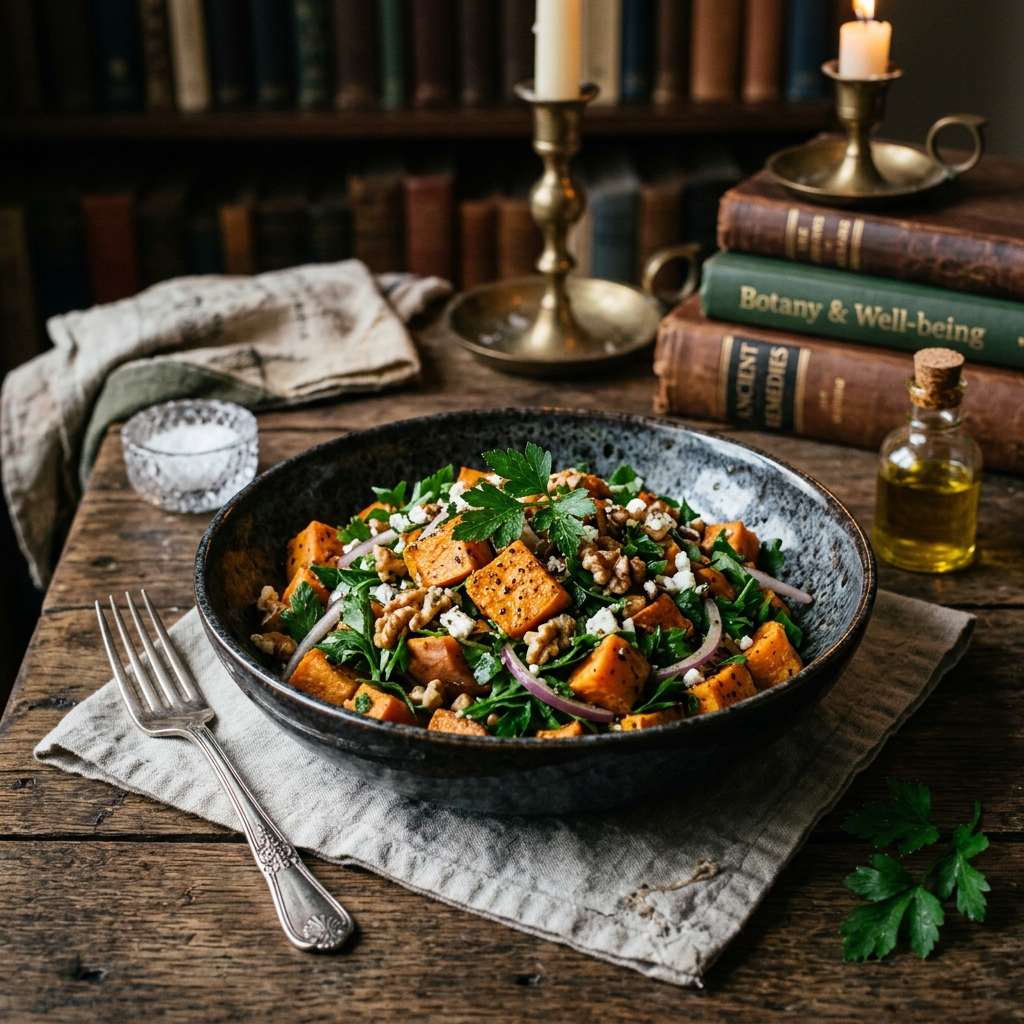
Cube your cooked, cooled sweet potatoes and toss them in a bowl with extra virgin olive oil, a splash of apple cider vinegar, a pinch of sea salt, and fresh herbs like parsley or dill. The olive oil adds healthy fats, while the vinegar provides a subtle probiotic boost.
2. The Morning Smoothie Booster
If you struggle with the texture of cold potatoes, try blending half a skinless, cooled sweet potato into your morning protein smoothie. It acts as a natural thickener, making your smoothie incredibly creamy while delivering a massive dose of prebiotics.
3. The Gentle Hash
If you prefer your food warm, dice the cooled sweet potatoes and gently warm them in a skillet with a teaspoon of coconut oil. Important: Do not fry them on high heat or blast them in the microwave, as extreme heat can break down the newly formed resistant starch bonds. Keep the heat low and slow.
Frequently Asked Questions
Does purple sweet potato have resistant starch?
Yes. Like all sweet potatoes, purple ones form resistant starch when you cook them and then cool them in the fridge. Purple varieties add anthocyanin antioxidants on top. For the bigger picture, see our guide to gut-friendly foods.
Is resistant starch good for bloating and gut inflammation?
Resistant starch is a prebiotic that feeds beneficial gut bacteria, which may support digestion over time. Introduce it gradually — adding fiber too fast can cause temporary gas. If bloating is your main concern, see the best probiotics for bloating and how to calm gut inflammation.
Are purple sweet potatoes better for gut health?
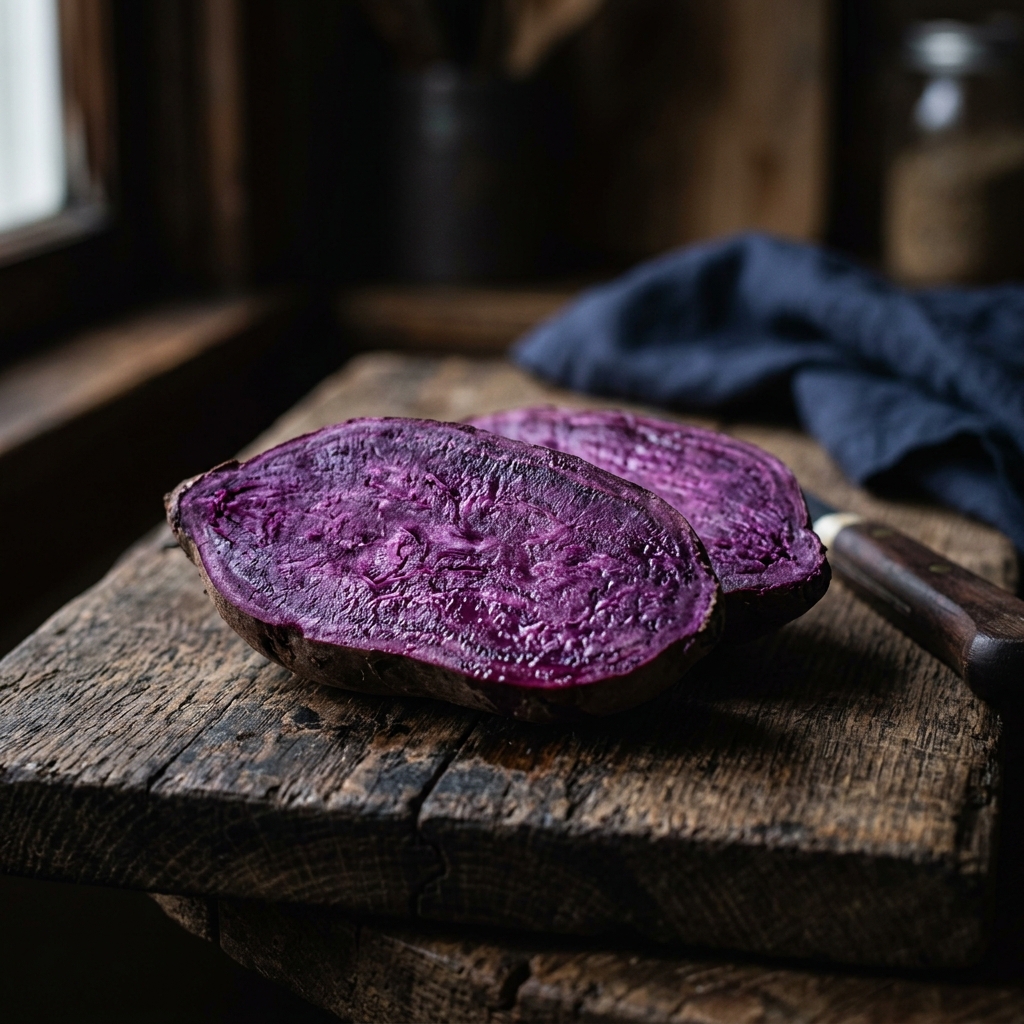
While all sweet potatoes are great for your gut, purple sweet potatoes contain high levels of anthocyanins—powerful antioxidants that have been shown to further promote the growth of beneficial gut bacteria like Bifidobacteria.
Does reheating a sweet potato destroy the resistant starch?
As long as you reheat the sweet potato gently (like warming it in a pan on low heat or a quick, low-power zap in the microwave), the resistant starch survives. Just avoid scorching it.
Can I eat raw sweet potatoes to get resistant starch?
Technically, raw sweet potatoes contain very high amounts of resistant starch. However, they are incredibly difficult for the human body to digest and can cause severe bloating, gas, and cramping. Cooking and then cooling them is the safest and most effective method.
Are sweet potatoes hard to digest?
Cooked sweet potatoes are generally easy to digest and gentle on the stomach for most people. The hard-to-digest version is raw sweet potato, which can cause gas, bloating, and cramping. If even cooked sweet potatoes bother you, introduce resistant starch slowly — adding fiber too fast can cause temporary gas.
If you want to compare sweet potatoes with other daily options, start with resistant starch in oatmeal, the cook-and-cool trick, and our resistant starch foods list.
Conclusion
It’s time to rethink how you eat your carbohydrates. By simply utilizing your refrigerator, you can turn a humble sweet potato into a powerful tool for digestive wellness. Stop eating them burning hot, and start cooling them down to support your gut.
Want more gut-friendly food ideas? Don’t forget to download our comprehensive Resistant Starch Foods Chart & Grocery List to stick right on your fridge!
If cooling changes what your body gets from a food, so does what you eat alongside it. I covered the three rules behind every food pairing separately.

About Mr. Anh
We turn solid evidence into everyday habits Americans can actually do—plain English, cups/oz, grocery-aisle swaps, and routines that fit real life. Our editorial process: Experience—we road-test tips in real schedules…