Resistant Starch Foods for Bloating: The Tolerance Ladder
Resistant starch can support gut bacteria, but it can also cause gas if you add too much too fast. Use this tolerance ladder to choose gentler foods, smaller portions, and a simple 7-day food journal test.
- Quick Answer: Can Resistant Starch Help or Cause Bloating?
- Why Resistant Starch Foods for Bloating Can Backfire at First
- The Resistant Starch Tolerance Ladder
- The 7-Day Resistant Starch Food Journal Test
- What Not to Stack When You Are Testing Resistant Starch
- Is Resistant Starch Low FODMAP?
- Best Resistant Starch Foods for Bloating-Prone Readers
- When Bloating Is Not a DIY Food Experiment
- Frequently Asked Questions
- The Bottom Line
Affiliate disclosure: This guide is food-first education. Any resource links are secondary and don’t change the advice.
You tried to eat more gut-friendly carbs. Now your stomach feels tighter, louder, and harder to predict.
That’s the confusing thing about resistant starch foods for bloating. The same foods that may feed helpful gut bacteria can also create gas if your gut isn’t ready for the amount you gave it.
So the real question isn’t, “Which food has the most resistant starch?”
The better question is, “Which food can I test first without turning breakfast or lunch into a gas experiment?”
In this guide, you’ll learn why resistant starch can feel helpful for one person and heavy for another, how to use a simple tolerance ladder, and how to test one food at a time instead of blaming your whole diet.
Quick Takeaways:
– Resistant starch can support gut bacteria, but fermentation can also create gas.
– If you bloat easily, rank foods by tolerance, not by maximum resistant starch.
– Start with small portions of cooked-and-cooled sweet potato, rice, potato, or overnight oats.
– Delay resistant starch powders, large bean bowls, and fiber stacking.
– Track dose, timing, stress, coffee, and sitting before blaming one food.
Quick Answer: Can Resistant Starch Help or Cause Bloating?
Yes. It can do both.
Resistant starch is a type of carbohydrate that resists digestion in your small intestine. Instead of breaking down quickly like regular starch, it reaches your colon, where gut bacteria can ferment it.
That fermentation is part of the benefit. It can help produce short-chain fatty acids, including butyrate, that are involved in gut barrier function and metabolic health. But fermentation can also produce gas. If you suddenly add a big bowl of overnight oats, beans, cooled potatoes, and a high-fiber snack in the same day, your gut may complain before it adapts.
That doesn’t make resistant starch bad. It means dose and timing matter.
If your bloating is frequent, painful, or tied to workday meals, zoom out first. Our guide to bloating after high-fiber meals explains how coffee, rushed lunch, stress, and sitting can stack together.
For this article, keep one rule in mind: tolerance first, dose second, benefits third.
That rule protects you from forcing a “healthy” food your body isn’t ready to handle yet.
Why Resistant Starch Foods for Bloating Can Backfire at First
A 2023 meta-analysis in Food & Function found that resistant starch intake was linked with changes in gut microbes, including higher relative abundance of several bacteria involved in carbohydrate fermentation. (PubMed)
So what does that mean in plain English?
When you feed gut bacteria something fermentable, they do work. That work can create useful metabolites. It can also create gas.
Another review on resistant starch and the microbiome emphasized that people don’t all respond the same way. The type of resistant starch, the structure of the food, and your starting microbiome can all change the response. (PMC)
So if your friend loves overnight oats and you feel bloated by 10 AM, you aren’t broken. You may need a smaller portion, a different food, or a slower increase.
What I pay attention to: When I test resistant starch foods, I look at dose before I judge the food. A small amount can feel steady. A large amount can feel like too much. Same food, different lesson.
The Resistant Starch Tolerance Ladder
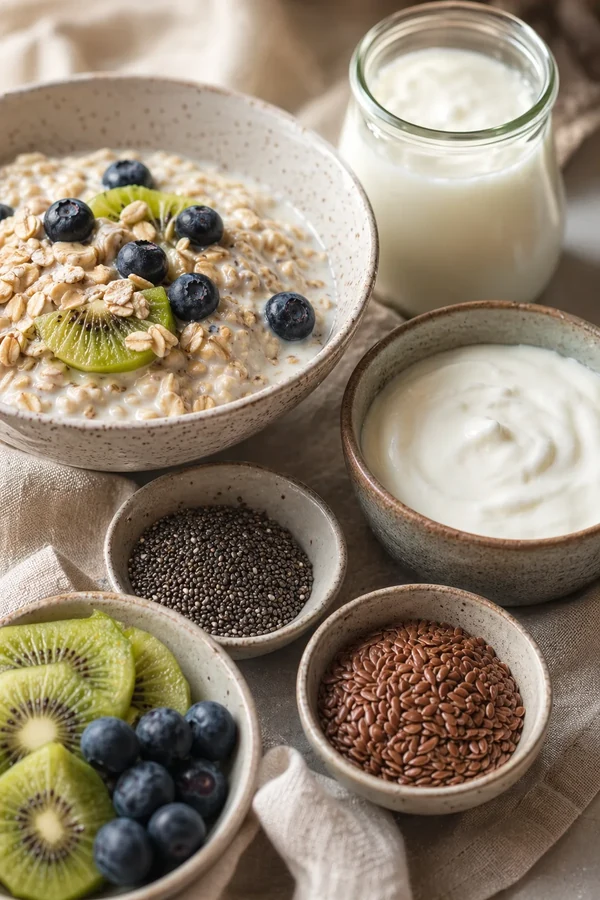
Most resistant starch lists rank foods by how much resistant starch they contain. That’s useful for science. It’s not always useful for a bloating-prone stomach.
This ladder ranks foods by how gently you can test them.
| Level | Food | Starting portion | Why it may help | Why it may bloat | Best first test |
|---|---|---|---|---|---|
| 1 | Cooked-and-cooled sweet potato | 1/4 to 1/2 cup | Gentle starch, easy meal prep | Too much fiber too fast | Add to lunch with protein |
| 1 | Cooked-and-cooled rice or potato | 1/4 to 1/2 cup | Simple base, easy to portion | Cold leftovers may bother some people | Reheat gently and eat slowly |
| 1 | Overnight oats | 1/4 cup dry oats | Easy breakfast test | Oats plus coffee can be too much | Small jar, no fiber stacking |
| 2 | Cooled pasta or rice bowl | 1/2 cup | Practical lunch option | Big portions can feel heavy | Pair with protein and cooked veg |
| 2 | Lentils or beans | 2 to 3 tbsp | Fiber and resistant starch | Higher gas potential | Rinse canned beans and start tiny |
| 3 | Green banana or RS powder | Very small amount | Concentrated resistant starch | Easy to overdo | Delay until tolerance improves |
Level 1: Gentlest Starter Foods
Start with foods that are easy to portion and easy to pair with a normal meal. A small serving of cooled sweet potato resistant starch works well because you can stop at 1/4 cup. Cooked-and-cooled rice or potato is also simple. For breakfast, a small jar of resistant starch in oats can be useful, but keep it plain at first.
Level 2: Build Slowly After 3 to 4 Comfortable Days
If Level 1 feels fine, build slowly. You might increase oats from 1/4 cup to 1/3 or 1/2 cup, use cooled rice in a lunch bowl, or test a few tablespoons of well-cooked lentils or beans.
This is where people rush.
Don’t turn one good signal into five new variables.
Level 3: Delay If You Bloat Easily
Delay the most concentrated or gas-prone options: resistant starch powders, large bean bowls, green banana smoothies, and loaded “gut health” breakfasts.
These may fit later. They just aren’t the best first test if bloating is already your main concern.
For the full background method, see our cook-and-cool resistant starch method.
The 7-Day Resistant Starch Food Journal Test

You don’t need a perfect protocol. You need a clean signal.
For one week, test one resistant starch food at a time and keep the rest of your routine steady.
| Day | What to do | What to track |
|---|---|---|
| 1 | Choose one Level 1 food | Food, portion, meal timing |
| 2 | Repeat the same portion | Bloating timing and stool comfort |
| 3 | Repeat or pause | Coffee, stress, sitting, movement |
| 4 | Keep the easiest food | Gas, pressure, energy, hunger |
| 5 | Check timing | During meal, 1 hour, 2-4 hours, evening |
| 6 | Increase only if comfortable | Portion change and response |
| 7 | Decide your next step | Keep, reduce, swap, or delay |
Here is a simple journal line:
| Date | Food | Portion | Coffee/stress/sitting | Bloating timing | Stool/comfort notes |
|---|---|---|---|---|---|
| Monday | Cooled sweet potato | 1/4 cup | Coffee after breakfast, sat 2 hours | Mild pressure at 3 PM | Better than oats |
The point is observation.
If 1/4 cup cooled sweet potato feels fine but 1/2 cup overnight oats plus coffee doesn’t, you haven’t “failed” at gut health. You found your current dose.
What I noticed in my own breakfast: At first, my usual breakfast was one sweet potato and two eggs. In my head, that covered the basics: protein, carbohydrate, and resistant starch. But I still felt bloated, especially about 30 minutes after my morning coffee.
Once I noticed that pattern, I reduced coffee and the bloating improved. But it still bothered me. So I adjusted the food too: half a sweet potato, three eggs, and I remove one yolk. That combination feels much calmer in my stomach, so it has become my regular breakfast for now.
With coffee, I’m testing it again slowly and increasing the amount gradually. I’ll update this article if I notice anything useful or interesting.
What Not to Stack When You Are Testing Resistant Starch
The easiest way to confuse your gut is to add every “gut healthy” food at once.
Avoid these stacks during your first test week:
- Overnight oats plus chia plus flax plus berries plus strong coffee.
- Beans plus raw salad plus onion or garlic plus sparkling water.
- Resistant starch powder plus a high-fiber protein bar.
- Fermented foods plus a large fiber increase on the same day.
If you’re also experimenting with probiotics, keep that separate. Our guide to best probiotics for bloating explains why some people feel more gas at first. For food-first options, use the probiotic foods list.
The rule is simple: one new variable per week.
Slow is what gives you clean feedback.
Is Resistant Starch Low FODMAP?
Resistant starch is not the same thing as a FODMAP. FODMAPs are certain fermentable carbohydrates that can trigger bloating and abdominal discomfort in sensitive people. Johns Hopkins describes the low-FODMAP diet as a short-term, structured approach used for IBS, SIBO, or related conditions under guidance. (Johns Hopkins Medicine)
Because resistant starch is a different category, don’t assume every resistant starch food is automatically low FODMAP or high FODMAP. A small amount of cooled potato may feel very different from a large bowl of beans.
If you already follow a low-FODMAP plan, use your clinician or dietitian’s serving guidance.
Best Resistant Starch Foods for Bloating-Prone Readers
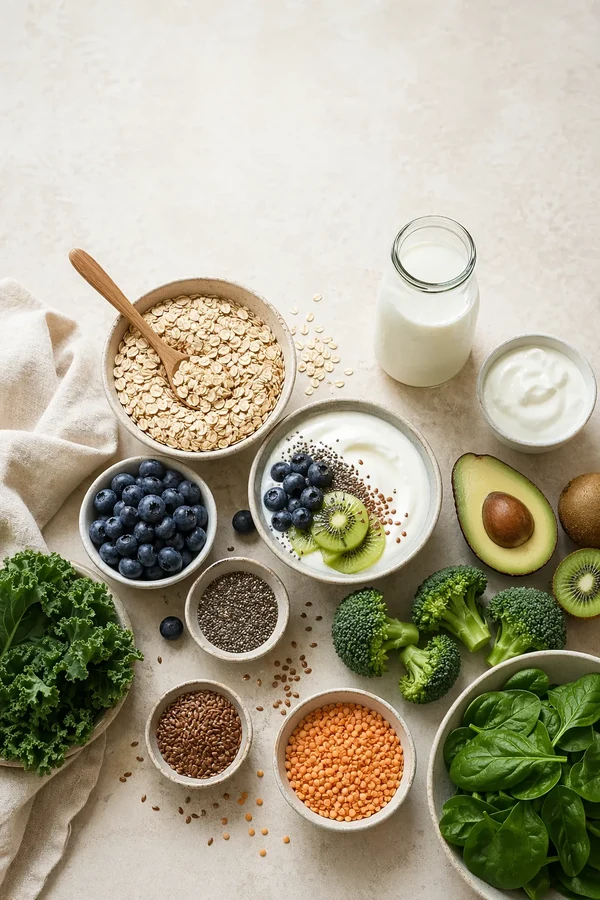
If bloating is your main concern, start with the foods that are easiest to control: cooled sweet potato, cooled rice or potato, and small overnight oats.
Build toward lentils and beans only after your gut handles the starter foods well. Keep green banana and powders for later because they’re more concentrated and easier to overdo.
For a broader food overview, use our resistant starch foods list. This article is the tolerance version; that one is the general food list.
When Bloating Is Not a DIY Food Experiment
Most mild bloating is not an emergency. But some symptoms deserve medical attention.
Talk with a licensed healthcare professional if bloating is severe, persistent, getting worse, or comes with blood in stool, unexplained weight loss, vomiting, fever, dehydration, severe abdominal pain, or a major change in bowel habits.
Also get individual guidance if you have IBS, SIBO, GERD, endometriosis, inflammatory bowel disease, recent surgery, pregnancy, or another condition that makes digestion more complicated.
Frequently Asked Questions
Can resistant starch cause bloating?
Yes. Resistant starch can be fermented by gut bacteria, and fermentation can produce gas. It may be more noticeable if you add too much too quickly or stack it with other high-fiber foods.
What resistant starch food should I try first if I bloat easily?
Start with a small portion of cooked-and-cooled sweet potato, cooked-and-cooled rice or potato, or a small overnight oats jar. Keep the portion modest and test one food at a time.
Is resistant starch low FODMAP?
Not automatically. Resistant starch and FODMAPs are different categories, but food choice and serving size still matter. If you are following a low-FODMAP plan, use your clinician or dietitian’s guidance.
The Bottom Line
Resistant starch is not automatically good or bad for bloating. It depends on dose, food form, baseline tolerance, and what is happening around the meal.
You don’t need to quit every high-fiber food. You need a calmer test: choose one food, start small, repeat it, and track timing, coffee, stress, and sitting.
Start small enough that your gut can give you useful feedback.
If you need the broader workday pattern, read bloating after eating fiber and use it as a food journal companion.
Disclaimer: I am trained in traditional medicine in Vietnam, but I am not currently practicing medicine or providing personal diagnosis or treatment advice through this website. I write from personal experience, ongoing research, and my own food-first wellness experiments. My work explores digestion, daily energy, traditional self-care, movement, breathwork, meditation, and simple habits that support everyday well-being. Everything I share here is educational and reflective, not medical advice. It should not replace diagnosis, treatment, or care from a licensed healthcare professional.

About Mr. Anh
We turn solid evidence into everyday habits Americans can actually do—plain English, cups/oz, grocery-aisle swaps, and routines that fit real life. Our editorial process: Experience—we road-test tips in real schedules…