Phytates: The One Iron Blocker You Can Actually Remove
Phytate is the one iron blocker you can remove rather than avoid. Soaking, sprouting and fermenting each cut it, and combining them cuts the most. The numbers.
Across this whole topic, most of what blocks mineral absorption is something you work around.
Tannins in tea and coffee you handle by timing. Calcium turns out to matter far less than it’s given credit for. Neither of those can be taken out of the food itself.
Phytate is different. You can remove a lot of it before the food reaches the table — with water, time, and nothing else.
Quick Takeaways:
– Phytate binds iron and zinc. At 2 mg in a meal it cut iron absorption ~18%; at 250 mg, ~82%
– Soaking reduced phytate anywhere from 2% to 58%, depending on conditions
– Sprouting cut it by around 60% in several studies
– Fermenting reached about 52% spontaneously, and up to 85.6% with specific cultures
– Stacking soak → sprout → ferment cut the phytate-to-iron ratio by about 85%
– Phytate is not a toxin. This is kitchen technique, not damage control
This is about how absorption works, not about diagnosing anything.
What phytate actually is
Phytate — phytic acid — is how seeds store phosphorus. Beans, lentils, whole grains, nuts and seeds all contain it, because they’re all seeds or seed-adjacent.
It carries a strong negative charge, which lets it grab positively charged minerals — iron, zinc, calcium, magnesium — and hold them in a form your gut can’t take up.
The effect scales steeply with dose:
| Phytate in the meal | Iron absorption reduced by |
|---|---|
| 2 mg | ~18% |
| 250 mg | ~82% |
There’s an obvious irony here, and it’s worth stating plainly. Beans, lentils and whole grains are among the best plant sources of iron and zinc — and they arrive with the compound that limits those same minerals. The package contains both the delivery and the obstacle.
Why this isn’t a reason to avoid beans
Before the methods, a correction to a framing that’s become popular.
Phytate gets called an “antinutrient”, and the word does a lot of unearned work. It suggests something harmful that food would be better without.
That isn’t the picture. Phytate has antioxidant activity, it’s under investigation for several protective roles, and populations eating high-phytate diets for generations are not the ones with the worst health outcomes. Beans and whole grains remain, by almost any measure, food worth eating more of — see beans and whole grains and resistant starch foods.
So read what follows as getting more out of good food, not as defusing something dangerous.
Method 1 — Soaking
The simplest, and the one most people already half-do.
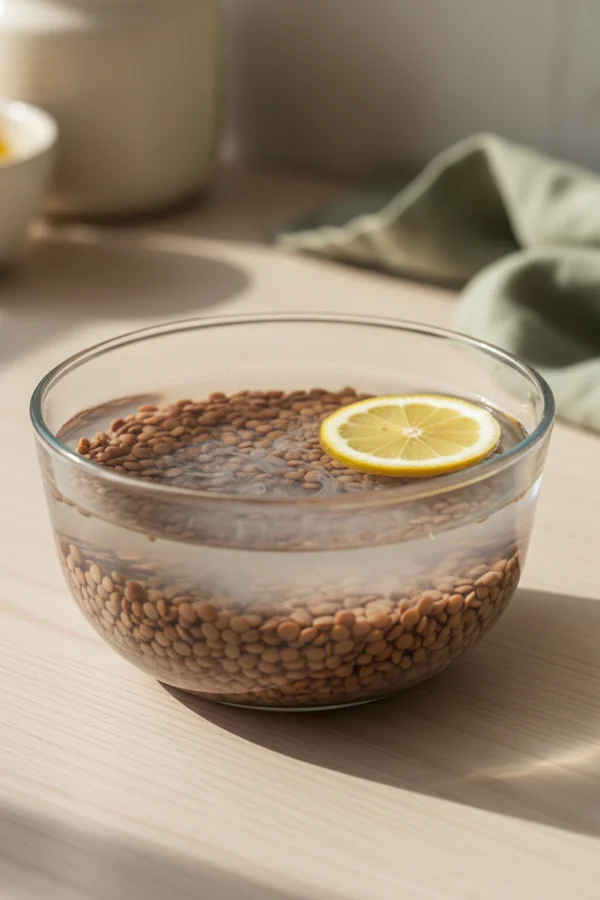
Soaking activates phytase, an enzyme naturally present in the seed that breaks phytate down. Give it water and time and it goes to work on its own.
Reported reductions range from 2% to 58%, which is a wide spread because conditions matter enormously. In faba beans specifically, soaking cut phytate by 26.9–32.5%. (Effect of soaking and sprouting on iron and zinc availability in faba bean)
The conditions that push it toward the top of that range are specific: soaking at 45–65°C and a slightly acidic pH of 5.0–6.0 produced enzymatic hydrolysis of anywhere from 26% to 100% of the phytate.
In a home kitchen that translates to two easy adjustments:
- Warm water rather than cold. Not hot — warm enough to stay comfortable to the touch
- A splash of something acidic in the soaking water. Lemon juice, a spoon of yoghurt whey, a little vinegar
Then discard the soaking water and rinse. The phytate you’ve broken down is in that water.
Method 2 — Sprouting
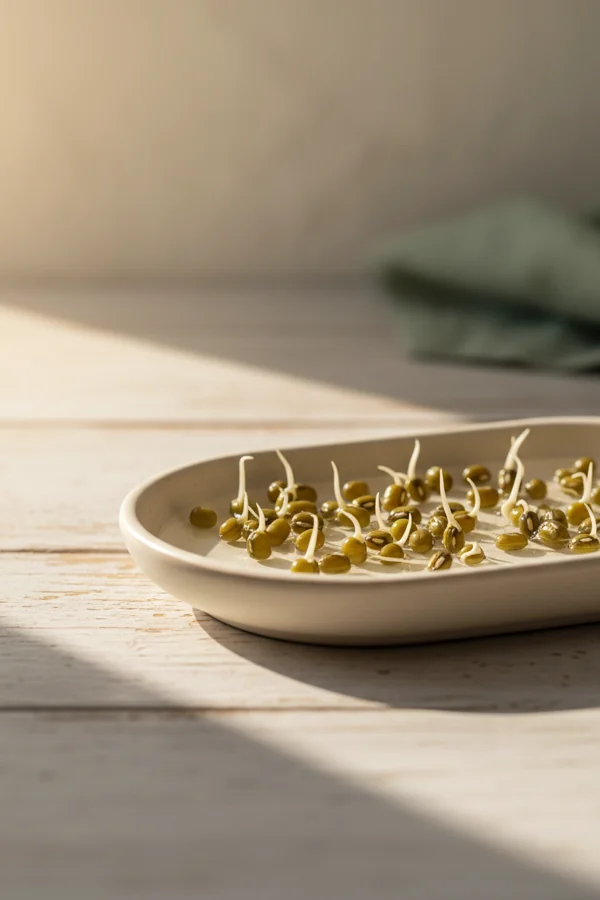
Take soaking one step further and let the seed actually begin to germinate, and phytase activity increases considerably.
Sprouting reduced phytate by around 60% across studies of seeds, grains and legumes. In faba beans it ran 28.0–34.9%; malting wheat or barley reached 57%. (Can sprouting reduce phytate and improve nutrient bioaccessibility?)
It costs more attention than soaking — rinsing twice a day for two or three days — which is why most people won’t do it routinely. Worth knowing it exists rather than treating it as a daily practice.
Method 3 — Fermenting
The most effective single method, and the oldest.
Spontaneous fermentation reduced phytate by about 51.8%. Fermentation using specific cultures, applied to grain that had already been soaked and germinated, reached up to 85.6%. (Enhancing iron and zinc bioavailability in maize through phytate reduction)
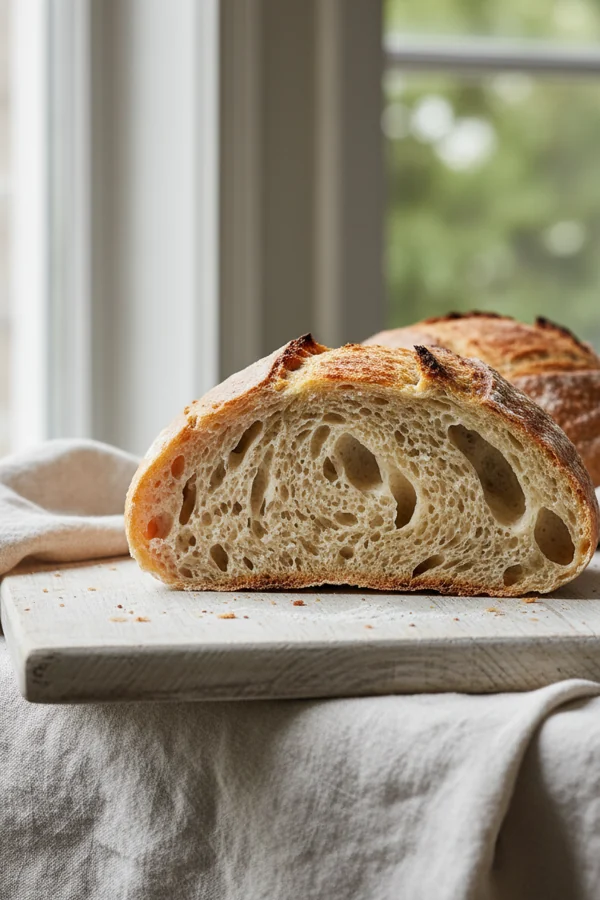
This is why sourdough bread differs from bread made with commercial yeast, why traditional grain porridges are often soured overnight, and why so many cuisines ferment legumes before eating them. None of those practices were designed around phytase. They just worked, and got kept.
Stacking them
The methods aren’t alternatives. They compound.
When soaking, germination and fermentation were applied in sequence, the phytate-to-iron ratio dropped by around 85% from the raw grain, and the phytate-to-zinc ratio by about 81%.
| Approach | Rough phytate reduction |
|---|---|
| Soaking | 2–58% |
| Sprouting | ~60% |
| Fermenting | ~52%, up to 85.6% with cultures |
| All three in sequence | ~85% of the phytate-to-iron ratio |
What I noticed:
“I soaked beans for years purely because it shortened cooking time. Learning that the same step was doing something to mineral availability didn’t change what I did — it changed whether I bothered on the nights I was tempted to skip it.”
And the shortcut that beats all of them
Here’s the honest ranking, and it isn’t what the effort suggests.
Vitamin C in the same meal counteracts phytate’s effect directly, and it takes no planning at all. Squeeze lemon over the lentils, put peppers in the bean stew, finish the dal with tomato. The numbers on that are in vitamin C and iron in the same meal.
So the practical order for most people:
- Put vitamin C in the meal. Free, instant, largest single effect
- Soak, warm and slightly acidic. Almost free, needs forethought the night before
- Buy fermented versions where they exist — sourdough, tempeh, traditionally soured porridges
- Sprout if you enjoy it. Real effect, real effort
And keep the drinks away from the meal, which handles the inhibitor that technique can’t touch — that one’s in tea and coffee follow opposite timing rules.
This is the last of the obstacles in this cluster. The full framework — three mechanisms that help, one category that hinders — is in the three rules behind every food pairing, and the other two obstacles are covered in calcium and iron and what heat takes and gives.
Frequently Asked Questions
Does soaking beans really reduce phytate?
Yes. Reported reductions range from about 2% to 58% depending on conditions. Warm water around 45–65°C and slightly acidic conditions push it toward the higher end.
How long should I soak beans to reduce phytate?
Overnight is the practical standard. Duration matters less than temperature and acidity — warm, slightly acidic water does more in the same time than cold plain water.
Is fermenting better than soaking for phytate?
Generally yes. Spontaneous fermentation reached about 52% reduction, and cultured fermentation after soaking and germination reached up to 85.6%. Soaking is easier; fermenting is more effective.
Are phytates actually bad for you?
Not in the way the word “antinutrient” implies. Phytate reduces mineral absorption, but it also has antioxidant activity, and high-phytate foods are among the most nutritious available. It’s a trade-off to manage, not a hazard to eliminate.
Do I need to worry about phytate if I eat a varied diet?
Much less than the internet suggests. Pairing vitamin C with plant iron offsets a large part of the effect, and soaking handles more. For most varied diets this is optimisation, not repair.
The Bottom Line
Phytate is the one mineral blocker you can genuinely reduce rather than route around. Soaking cuts it, sprouting cuts more, fermenting cuts the most, and stacking all three cuts about 85%.
But the shortcut still wins. A squeeze of lemon in the same meal costs nothing and offsets a good part of what the soaking was for.
Do both when you can. Do the lemon when you can’t.
You can read more about how I work through this on the about the author page.
References
- Enhancing iron and zinc bioavailability in maize (Zea mays) through phytate reduction: the impact of fermentation alone and in combination with soaking and germination. Frontiers in Nutrition, 2024. — https://www.frontiersin.org/journals/nutrition/articles/10.3389/fnut.2024.1478155/full
- Elliott H, et al. Can sprouting reduce phytate and improve the nutritional composition and nutrient bioaccessibility in cereals and legumes? Nutrition Bulletin, 2022. — https://onlinelibrary.wiley.com/doi/10.1111/nbu.12549
- Effect of soaking and sprouting on iron and zinc availability in green and white faba bean. — https://pmc.ncbi.nlm.nih.gov/articles/PMC4252429/
- Iron absorption in man: ascorbic acid and dose-dependent inhibition by phytate. — https://pubmed.ncbi.nlm.nih.gov/2911999/
Everything I share here is educational and reflective, not medical advice. It should not replace diagnosis, treatment, or care from a licensed healthcare professional. See the full medical disclaimer.

About Mr. Anh
We turn solid evidence into everyday habits Americans can actually do—plain English, cups/oz, grocery-aisle swaps, and routines that fit real life. Our editorial process: Experience—we road-test tips in real schedules…