Alcohol and Diarrhea: How Long It Lasts and When to Worry
It is Saturday morning. You are in the bathroom for the fourth time, you feel wrung out, and the question...
It is Saturday morning. You are in the bathroom for the fourth time, you feel wrung out, and the question in your head is not really why.
It is how long is this going to last.
So you search it. And you get two kinds of answers. One explains osmotic gradients and intestinal motility in the voice of a textbook, then never tells you when it ends. The other quietly suggests you might want to look into a treatment program.
You had four drinks at a friend’s place.
Let me give you the thing nobody seems to lead with: a timeline, and a line. How long this normally takes, what your gut is doing at each stage, and the specific point where it stops being ordinary and starts being worth a doctor’s opinion.
Quick takeaways:
- Alcohol-related diarrhea usually clears within 24 to 72 hours
- Alcohol pulls water into your intestines and speeds your colon up — your gut is not damaged, it is reacting
- Symptoms arriving the next morning rather than during drinking is normal
- Beer and sugary drinks are usually harder on your gut than plain spirits
- Past 72 hours, or blood, black stools, or fever → see a doctor
What Alcohol Actually Does to Your Gut
Four things happen at once, and none of them mean something is broken.
It pulls water into your intestines
Alcohol changes the balance of fluid across your intestinal wall, drawing water into the gut. The effect is close to an osmotic laxative. More water in the bowel means looser stools — which is why the result can be so watery rather than simply soft.
It speeds your colon up
Your colon’s main job on the way out is reclaiming water. That takes time. Alcohol increases the rate of contractions moving everything along, so stool arrives at the exit before your colon has finished drawing water back out.
Faster transit plus extra water is the whole recipe. This is also why the urgency feels so sudden — it is not that more is coming, it is that it is coming faster.
It interferes with absorption
On top of moving things along too quickly, alcohol inhibits the absorption of water and electrolytes and can stimulate their secretion into the bowel. You lose sodium, potassium and magnesium alongside the fluid, which is a large part of why you feel so flattened the next day.
It irritates the gut lining
Alcohol is an irritant to the mucosal lining of your digestive tract. If you have ever had a burning sensation alongside the diarrhea, that is this — not something you should ignore forever, but not an emergency on its own either.
If you want the fuller picture of how this population of bacteria and this lining work together day to day, our guide to your gut microbiome covers the foundations. And if you want to know why the urge can hit you while you are still drinking rather than the morning after, that is a slightly different mechanism — I cover it in why alcohol makes you go right away.
A Traditional Perspective: “In the tradition I trained in, alcohol is read as warm and damp in nature — it drives heat downward into the large intestine, and the intestine responds by emptying. Different vocabulary, same observation people have been making for a very long time. Your gut is not punishing you. It is doing exactly what alcohol tells it to do.”
— Mr. Anh, Founder of Essential Wellness AZ
The 72-Hour Rule: How Long It Actually Lasts
Here is the part you came for.
For most people, alcohol-related diarrhea resolves within 24 to 72 hours — commonly two to three days. Here is what is happening at each stage, and what actually helps.
| Stage | What your gut is doing | What to do |
|---|---|---|
| 0–6 hours | Motility is elevated, water is being pulled into the bowel | Stop drinking, start replacing electrolytes |
| 6–24 hours | The next-morning wave — transit still fast, you are dehydrated, sleep was poor | Bland food, fluids with electrolytes rather than plain water |
| 24–72 hours | The tail end — the lining is settling, stools firming up | Soft foods, skip coffee and spicy food |
| Past 72 hours | No longer matches the alcohol mechanism | Talk to a clinician |
That last row is the important one, and it works in both directions.
If you are inside the 72-hour window, the timeline is behaving normally. That is genuinely reassuring information, and almost nobody states it plainly.
If you are outside it, the reason to get checked is not that you drank. It is that alcohol’s effect on the gut does not typically last that long, so something else deserves an explanation.
Why the timeline varies
Four things move it:
- How much, how fast. More drinks in less time means more irritation and more fluid shift.
- Empty stomach. Drinking without food speeds absorption and raises the concentration hitting your gut lining.
- What you were drinking. More on this below — it matters more than most people expect.
- Your baseline gut health. If your digestion is already reactive, alcohol lands harder.
Why It Hits You the Next Day
This is the part that confuses people most, and the part almost no article explains properly.
You drank on Friday night and felt fine. You woke up Saturday and could not leave the house.
Several things typically stack up overnight.
Alcohol keeps working after you stop. The effects on motility and fluid balance do not switch off when you put the glass down. They continue through the hours you are asleep, which is why the result presents in the morning.
Poor sleep slows recovery. Alcohol fragments sleep even when it helps you fall asleep. Your gut does a meaningful amount of repair and regulation overnight, and broken sleep interferes with it.
What you ate while drinking matters more than you think. Late, greasy, or heavily spiced food arrives in a gut that is already irritated and moving too fast. The meal often gets blamed on its own, when really it was the combination.
You are dehydrated. Fluid loss overnight concentrates everything and leaves you feeling far worse than the diarrhea alone would explain.
None of this means the delay is a bad sign. A next-morning onset is one of the most ordinary patterns there is.
Why Beer Hits Harder Than Liquor
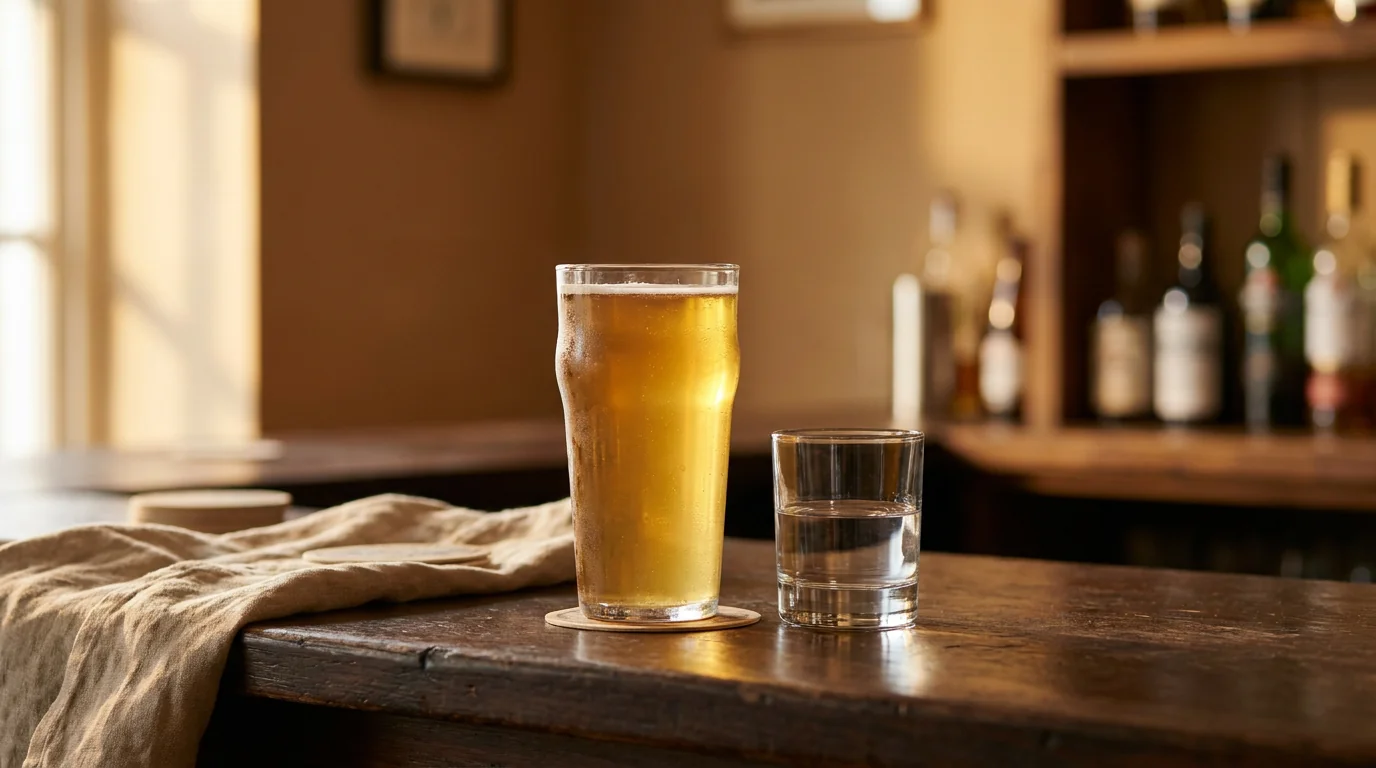
If beer wrecks you but a couple of whiskies do not, you are not imagining it.
Beer carries several things spirits do not. Carbonation adds gas and distension. There are residual sugars and unfermented carbohydrates that arrive in the colon and ferment. There is gluten, which matters if you are sensitive to it. And there are hops and other compounds that can irritate an already-unhappy gut. Volume compounds all of it — people drink beer in pints, not measures.
Sweet drinks and mixers work through sugar. Sugar draws water into the intestine through exactly the same osmotic mechanism as alcohol, so a sugary cocktail applies the effect twice. Artificial sweeteners in diet mixers can do it too, and some are notorious for it.
Wine has its own contributors — sulfites and tannins — and red wine comes up more often than white in people’s experience.
Caffeine mixers are the quiet culprit. Coffee liqueurs, energy-drink mixers, or a nightcap espresso all add a stimulant that increases gut motility and acts as a diuretic. You are pushing the same two buttons alcohol is already pushing.
The practical read: plainer, less sweet, less carbonated drinks — consumed more slowly — are easier on your gut than the alternatives.
What Actually Helps
In the first few hours
Replace electrolytes, not just water. You are losing sodium, potassium and magnesium along with the fluid, and drinking plain water alone can leave you feeling worse. An oral rehydration solution, a broth, or a low-sugar electrolyte drink all work. If you want the full recovery protocol in order — including the gut-bacteria step that has to come last — see how to stop diarrhea after drinking alcohol.
Then stop drinking for the night. Continuing gives your gut nothing to work with.
The next day
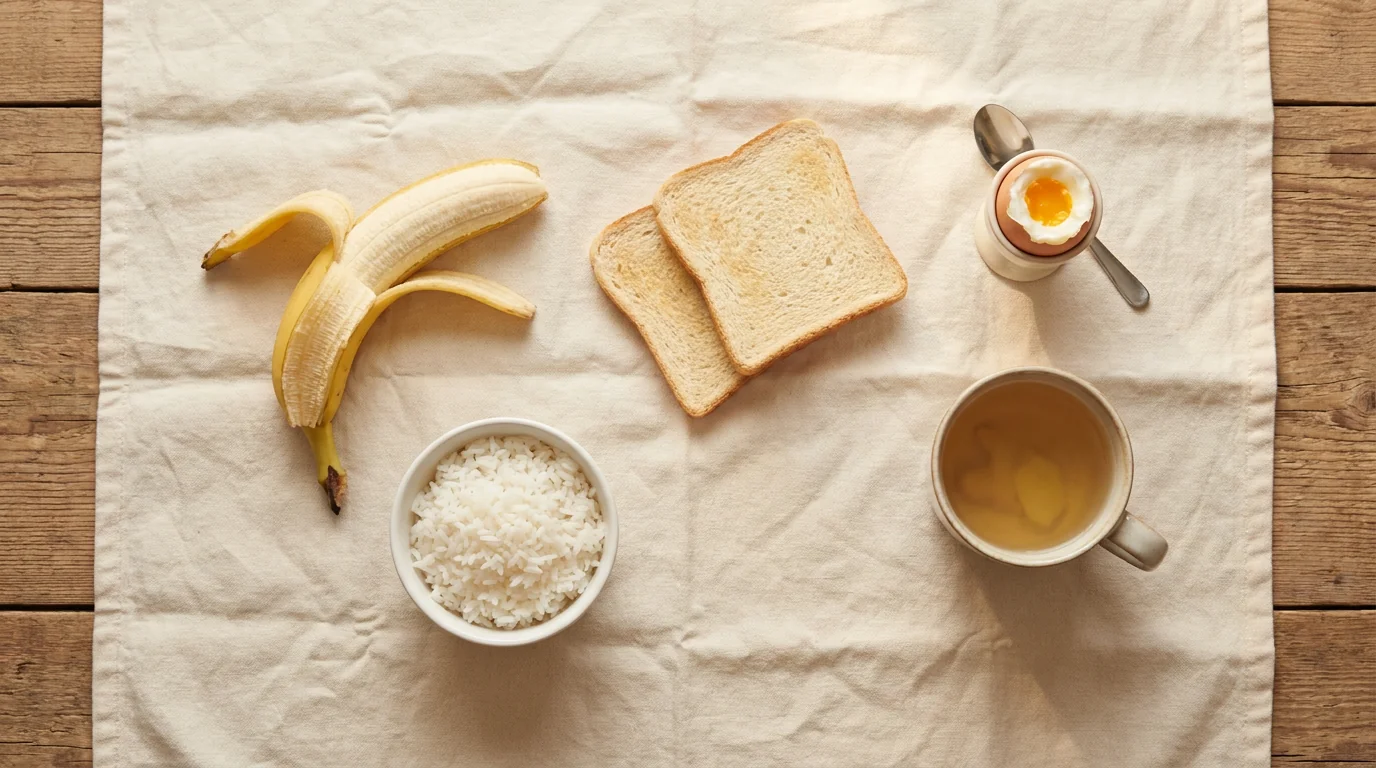
Eat gently. The old advice holds up because it is easy on an irritated system:
| Food | Why it works |
|---|---|
| Bananas | Potassium, gentle, adds bulk |
| Plain rice | Easy to digest, low residue |
| Toast | Simple starch, no irritants |
| Eggs | Protein without heaviness |
| Ginger or chamomile tea | Soothing, adds fluid |
Once things have genuinely settled — usually a few days later, not the same afternoon — fermented and probiotic foods are a reasonable way to help your gut population get back to normal. Not during the acute phase, though. Adding fermentation to a gut that is already moving too fast is the wrong sequence.
If you want a broader set of options for a stomach that stays unsettled, foods that calm a nervous stomach covers it in depth.
What to skip for 48 hours
Coffee, spicy food, dairy, and anything greasy. Each of these pushes on a system that is already irritated. If the burning sensation has been part of your picture, reducing gut inflammation is worth reading.
Next time
- Do not drink on an empty stomach — eat something with fat and protein first
- Slow the pace; the same number of drinks over more hours is easier on your gut
- Skip sugary mixers and caffeine combinations
- Choose plainer drinks if beer reliably causes you problems
Is This Normal? The Honest Answer
Now the question underneath the question.
Occasionally, yes — this is ordinary physiology. A healthy person who drinks moderately can absolutely get diarrhea afterwards. The mechanisms above are not signs of disease; they are what alcohol does to a normal digestive tract. Getting it after a heavy night does not mean you have a problem with alcohol.
What matters is the pattern, not the episode.
Worth paying attention to:
- It happens every single time you drink, even small amounts
- It lasts longer than 72 hours
- It keeps coming back for days after you have stopped
- It comes with significant pain rather than just urgency
That pattern is worth a conversation with a clinician — not because it proves anything, but because a recurring digestive response deserves an actual answer rather than a search result. Alcohol intolerance, an underlying gut condition, or something unrelated could all be sitting behind it.
When to see a doctor
Do not wait on any of these:
- Diarrhea lasting more than 72 hours
- Blood in your stool, or black, tar-like stools
- Fever, persistent vomiting, or signs of significant dehydration — dizziness, very dark urine, not passing urine
- Severe abdominal pain
- Unexplained weight loss
And one more, said plainly and without judgment: if you find that you cannot cut back even when your body is clearly asking you to, that is worth raising with a doctor too. It is a medical question, not a moral one.
Frequently Asked Questions
How long does alcohol diarrhea last?
Usually 24 to 72 hours, most commonly two to three days. The timeline depends on how much you drank, how quickly, whether you had food, and your baseline digestive health. Past 72 hours, it no longer fits the pattern alcohol typically produces and is worth getting checked.
Can alcohol cause diarrhea the next day?
Yes, and this is one of the most common patterns. Alcohol’s effects on gut motility and fluid balance continue through the night after you stop drinking. Add fragmented sleep, dehydration, and whatever you ate while drinking, and the result often presents in the morning rather than the evening.
Does diarrhoea flush out alcohol?
No. Alcohol is processed by your liver, and that pace is not changed by what is happening in your bowel. Losing fluid through diarrhoea makes dehydration worse and can make you feel considerably rougher — it does not shorten how long alcohol stays in your system.
Is it normal to have diarrhea from alcohol?
Occasionally, yes. It is a normal physiological response, not a sign of disease. What is worth attention is the pattern — every time you drink, lasting beyond 72 hours, or accompanied by pain or blood.
What types of alcohol are worst for diarrhea?
Beer tends to be hardest, because of carbonation, residual sugars, gluten, and the volume people drink it in. Sugary cocktails and mixers are next, since sugar draws water into the intestine the same way alcohol does. Caffeine-containing mixers add stimulation to motility. Plainer spirits, in moderation and slowly, are usually gentler.
Is diarrhea a symptom of alcohol intolerance?
It can be. Alcohol intolerance often shows up as facial flushing, nasal congestion, headache and a rapid heartbeat alongside digestive symptoms, frequently after only small amounts. If small quantities reliably cause a strong reaction, mention it to a doctor.
How can I stop diarrhea after drinking alcohol?
Stop drinking, replace electrolytes rather than plain water, and eat bland, low-residue food for a day. Skip coffee, spicy food, dairy and greasy meals for about 48 hours. Most of the work here is time — the goal is to avoid making it worse while your gut settles.
The Bottom Line
In most cases your gut is not damaged. It is reacting exactly the way a normal digestive tract reacts to alcohol: more water in, faster transit, an irritated lining, and a day or two to settle.
The number to remember is 72 hours. Inside it, the timeline is behaving as expected. Outside it — or with blood, black stools, fever or severe pain at any point — stop searching and talk to a doctor.
And when things have properly calmed down, that is the moment to think about the longer game. Improving your gut health day to day will not make you immune to a heavy night, but a gut with a stronger baseline handles one considerably better.
Disclaimer: I’m trained in traditional medicine in Vietnam, but I’m not currently practicing medicine or providing personal diagnosis or treatment advice through this website. I write from personal experience, ongoing research, and my own food-first wellness experiments. My work explores digestion, daily energy, traditional self-care, movement, breathwork, meditation, and simple habits that support everyday well-being. Everything I share here is educational and reflective, not medical advice. It should not replace diagnosis, treatment, or care from a licensed healthcare professional.

About Mr. Anh
We turn solid evidence into everyday habits Americans can actually do—plain English, cups/oz, grocery-aisle swaps, and routines that fit real life. Our editorial process: Experience—we road-test tips in real schedules…