How to Stop Diarrhea After Drinking Alcohol: A 3-Phase Reset
You have read three articles already. All of them said drink plenty of water and get some rest. You are...
You have read three articles already. All of them said drink plenty of water and get some rest.
You are still in the bathroom.
The problem is not that you lack information. The problem is that every list you found is flat. It tells you what helps without telling you what to do first, and it stops at exactly the point where you need to know what comes next.
Here is the same advice, in order, with the reasoning attached — and a third phase that almost nobody writes about.
Quick takeaways:
- STOP (first 6 hours): stop drinking, replace electrolytes — plain water alone can leave you feeling worse
- SETTLE (the next day): bland food, skip coffee, dairy and grease for 48 hours
- REBUILD (days 2–5): now add fermented foods — doing this too early makes things worse
- Past 72 hours, or blood, black stools or fever → see a doctor
First, Which Phase Are You In?
Jump to where you actually are:
| If this is you | Go to |
|---|---|
| Just finished drinking, it is happening now | Phase 1 — Stop |
| It is the next morning and it is still going | Phase 2 — Settle |
| Mostly over, you want to recover properly | Phase 3 — Rebuild |
| You want to not have this happen again | Next Time |
Very briefly, on why this is happening at all: alcohol pulls water into your intestines and speeds your colon up, so stool arrives before water has been reabsorbed. If you want that explained properly, I have written it up in how long alcohol diarrhea lasts. For now, let’s deal with what is in front of you.
Phase 1 — STOP (the first 6 hours)
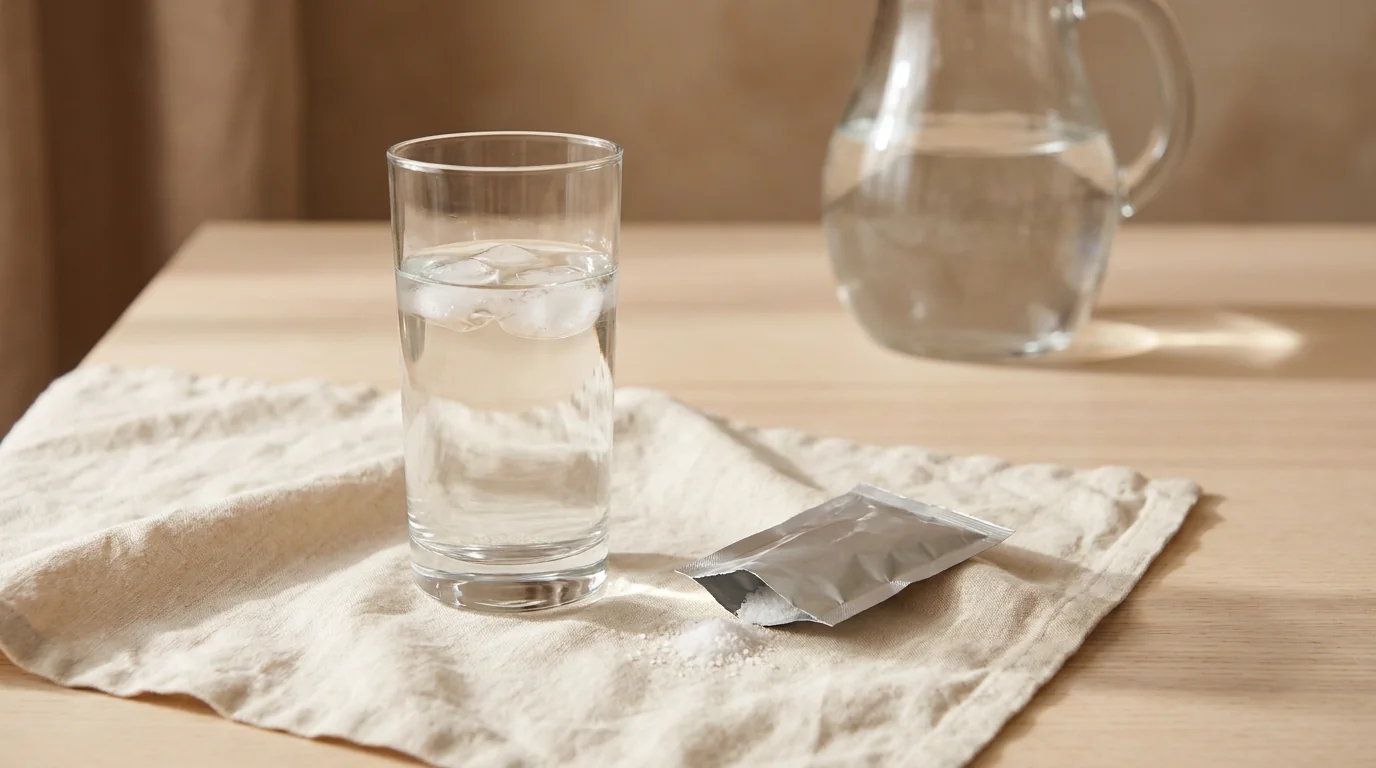
Electrolytes, not just water
This is the one thing most people get wrong, and it is the reason “drink lots of water” sometimes makes you feel worse rather than better.
When you lose fluid this quickly, you are not only losing water. You are losing sodium, potassium and magnesium with it. If you then pour in a large volume of plain water, you dilute what is left. That is why some people drink two litres, feel bloated and shaky, and conclude that hydration was useless.
Use something with salt and minerals in it:
- An oral rehydration sachet from a pharmacy — the most reliable option
- A clear salted broth
- A low-sugar electrolyte drink
Sip steadily rather than gulping a lot at once. A gut that is already moving too fast does not handle volume well.
Stop drinking — including the “one more to settle it”
There is a folk belief that another drink calms the stomach down. It does the opposite. You would be adding more of the exact compound that started this.
What to skip right now
For the next few hours, leave out coffee, fruit juice and anything fizzy. Caffeine speeds up gut motility, which is already too fast. Fruit juice adds a sugar load that pulls even more water into the bowel. Carbonation adds gas to a system that is already uncomfortable.
About anti-diarrheal tablets
I am not going to tell you to take one, and I am not going to tell you not to. There are situations where they are not appropriate, and I cannot see your situation from here.
What I would say is: ask the pharmacist rather than guessing. They are free, they are right there, and it takes two minutes. If your symptoms include fever or blood, that is a doctor question, not a pharmacy one.
Phase 2 — SETTLE (the next day)
The morning after is usually when this peaks. If you want to know why it arrives late rather than during the night, why alcohol makes you go right away covers the timing side of it.
What to eat
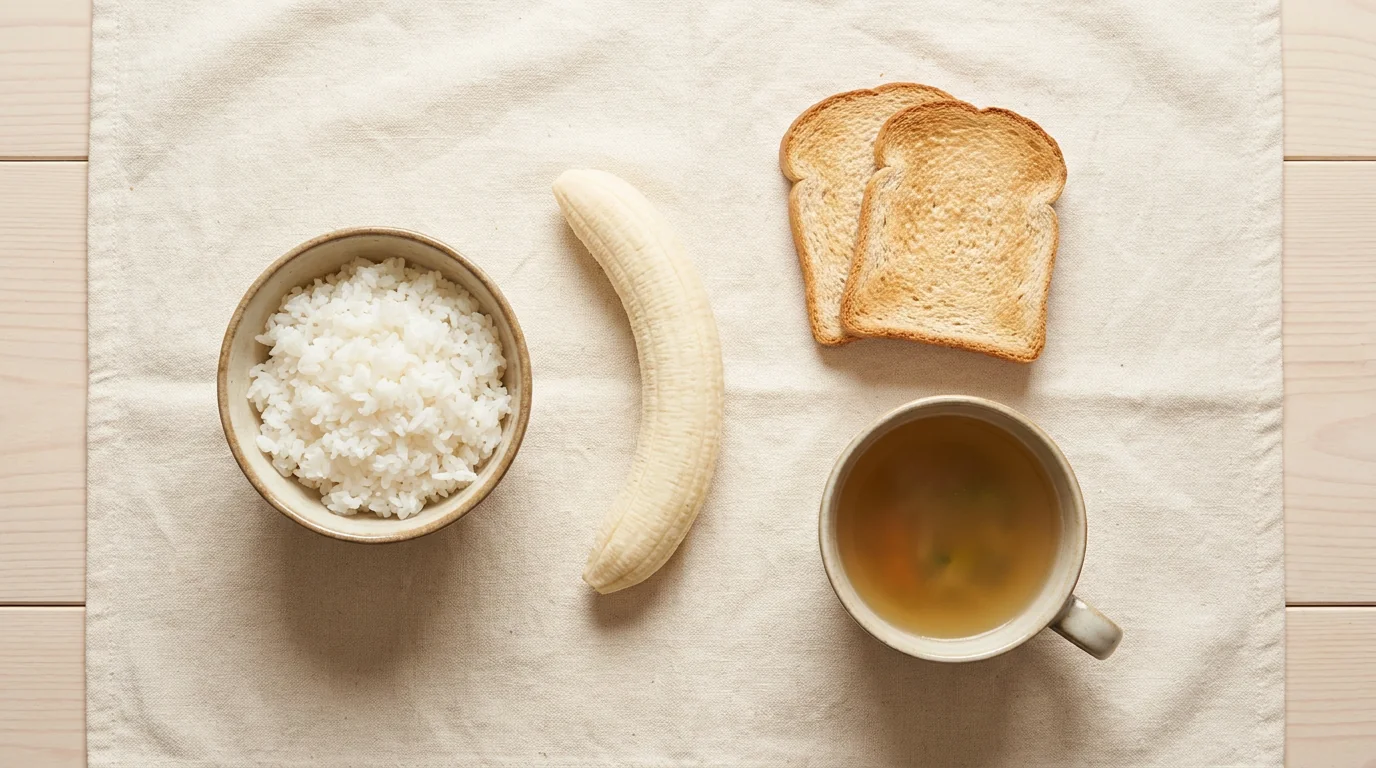
Keep it plain and low-residue. The old advice survives because it works on an irritated system:
| Food | Why it helps |
|---|---|
| Bananas | Potassium you have lost, gentle, adds a little bulk |
| Plain white rice | Easy to digest, very low residue |
| Dry toast | Simple starch, nothing to irritate |
| Eggs, softly cooked | Protein without heaviness |
| Clear broth | Fluid and salt at the same time |
| Ginger or chamomile tea | Settling, and more fluid |
Small portions, more often. A large meal asks a lot of a gut that is still recovering.
What to skip for 48 hours
Coffee, spicy food, dairy, and anything fried or greasy. Each one pushes on a system that is already irritated. Dairy is worth singling out — your ability to digest lactose drops temporarily when the gut lining is inflamed, so milk can cause a second round of trouble that has nothing to do with the alcohol.
If your stomach stays unsettled beyond the food you are eating, foods that calm a nervous stomach goes deeper on this.
Warm over cold
This is where I depart from most of what you will read.
In the tradition I trained in, a gut in this state is described as having lost its warmth — the digestive fire is low, and cold food asks it to work harder before it is ready. Practically, this means warm broth over a cold smoothie, warm rice over a salad, room-temperature water over iced.
I am not going to claim a mechanism I cannot support. But it costs nothing to try, and in my own experience the difference between warm and cold food on a bad morning is not small.
Phase 3 — REBUILD (days 2 to 5)
Here is the part that gets left out.
Most articles end at Phase 2. You feel better, you go back to normal eating, and you assume it is over. Then three weeks later the same thing happens after a similar night, slightly worse, and you put it down to bad luck.
What alcohol does to your gut bacteria
Alcohol disturbs the balance of your gut microbial population, not just the movement of your intestines. A heavy night does not wipe it out, but it does knock things off balance, and that population takes days to settle rather than hours.
This is why Phase 3 exists. Phase 1 and 2 stop the symptom. Phase 3 is what makes the next time less severe.
Why timing matters more than the food
Here is the counterintuitive bit, and it is the thing I most want you to take away.
Do not add fermented foods or a probiotic while things are still moving fast.
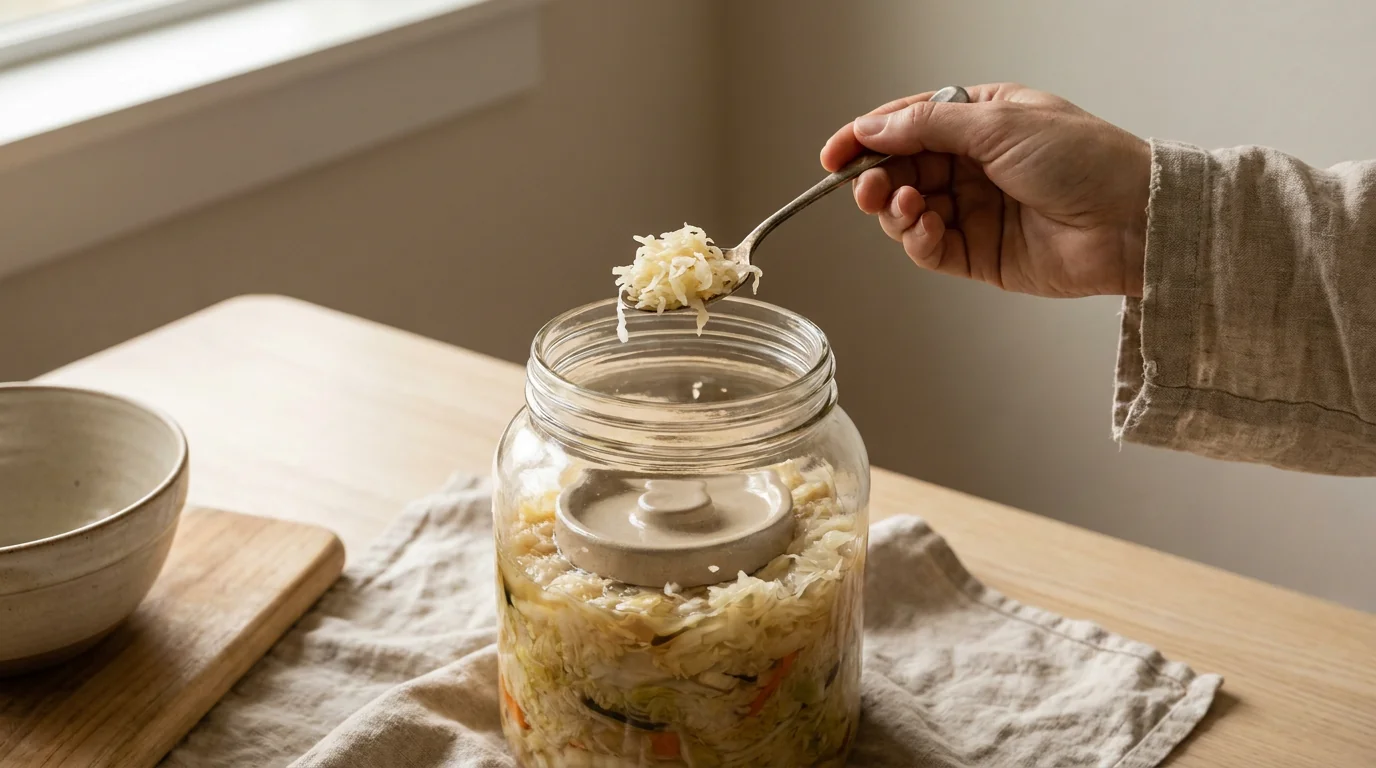
The instinct is understandable — your gut bacteria took a hit, so replace them immediately. But fermentation in a gut that is already over-active adds gas and speed to a system that needs neither. People do this on day one, feel worse, and conclude that fermented foods do not agree with them.
Wait until your stools have been normal for at least a day. Then start.
I have written about this ordering problem in more depth in why timing matters with probiotics — it is the same mistake people make when they try to fix bloating.
The order to reintroduce
- Fermented foods first, and small. One teaspoon of live yogurt, kefir or sauerkraut brine per day. Not a bowl. This list of probiotic foods covers the gentle options.
- Then fibre, gradually. Cooked vegetables before raw ones. Whole grains after that.
- Build over a week, not a day. If a step causes discomfort, drop back one level and hold there.
A Traditional Perspective: “We treat the gut like a machine that needs refilling, so we rush to put things back the moment it empties. But a field that has just flooded is not ready for planting. You wait for the water to drain first. The seed is not wrong — the timing is.”
— Mr. Anh, Founder of Essential Wellness AZ
Next Time — How to Drink Without This Happening
This is a different question from how to stop it, so it gets its own section.
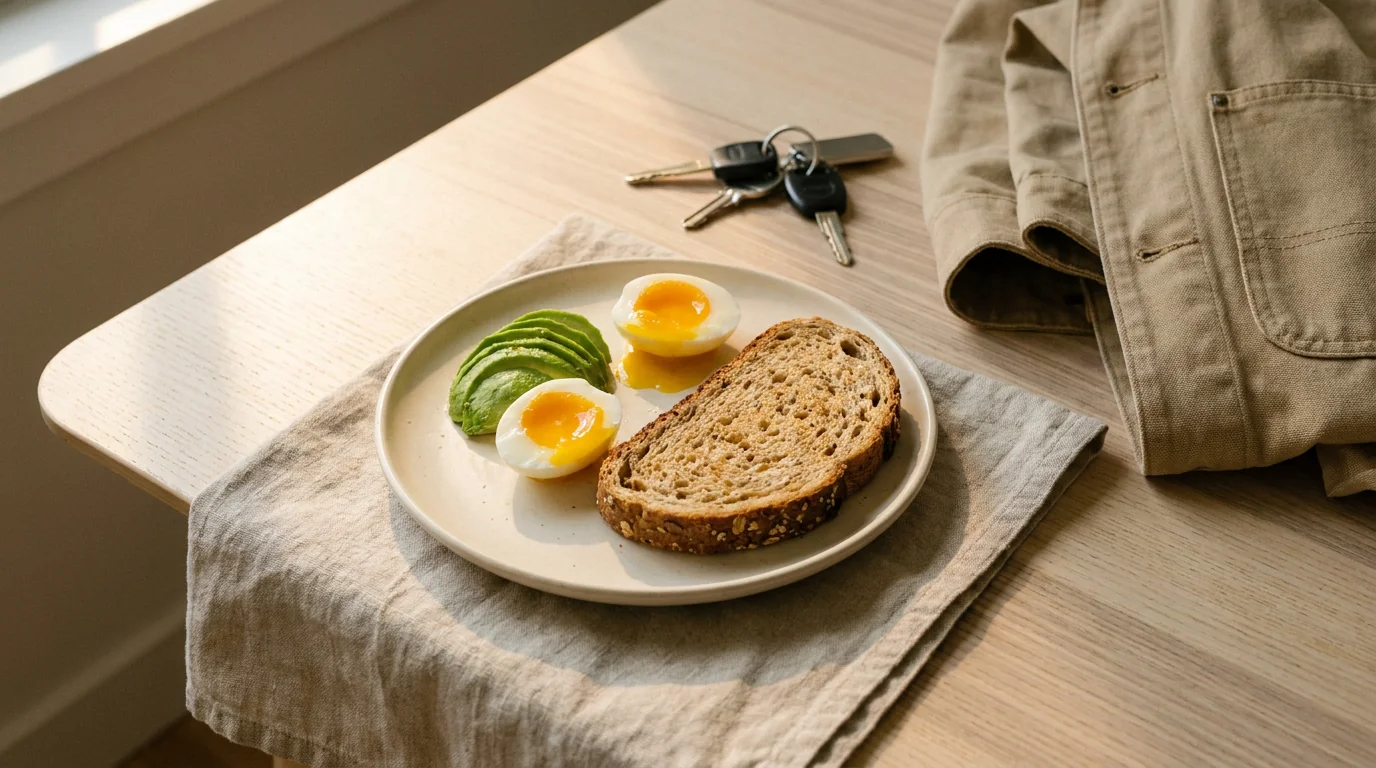
Never on an empty stomach. Eat something with fat and protein first. Food slows absorption and lowers the concentration of alcohol reaching your gut lining. This is the single highest-return change on the list.
Pace and volume. The same number of drinks spread over more hours is significantly easier on your gut than the same number in ninety minutes.
Skip sugary mixers and caffeine combinations. Sugar draws water into the intestine through the same route alcohol does, so a sweet cocktail applies the effect twice. Caffeine mixers add motility on top of motility.
If beer is your trigger. Beer carries carbonation, residual sugars and gluten alongside the alcohol, and people drink it in larger volumes. If beer reliably causes this and spirits do not, that is useful information rather than a coincidence.
Two Things People Get Wrong
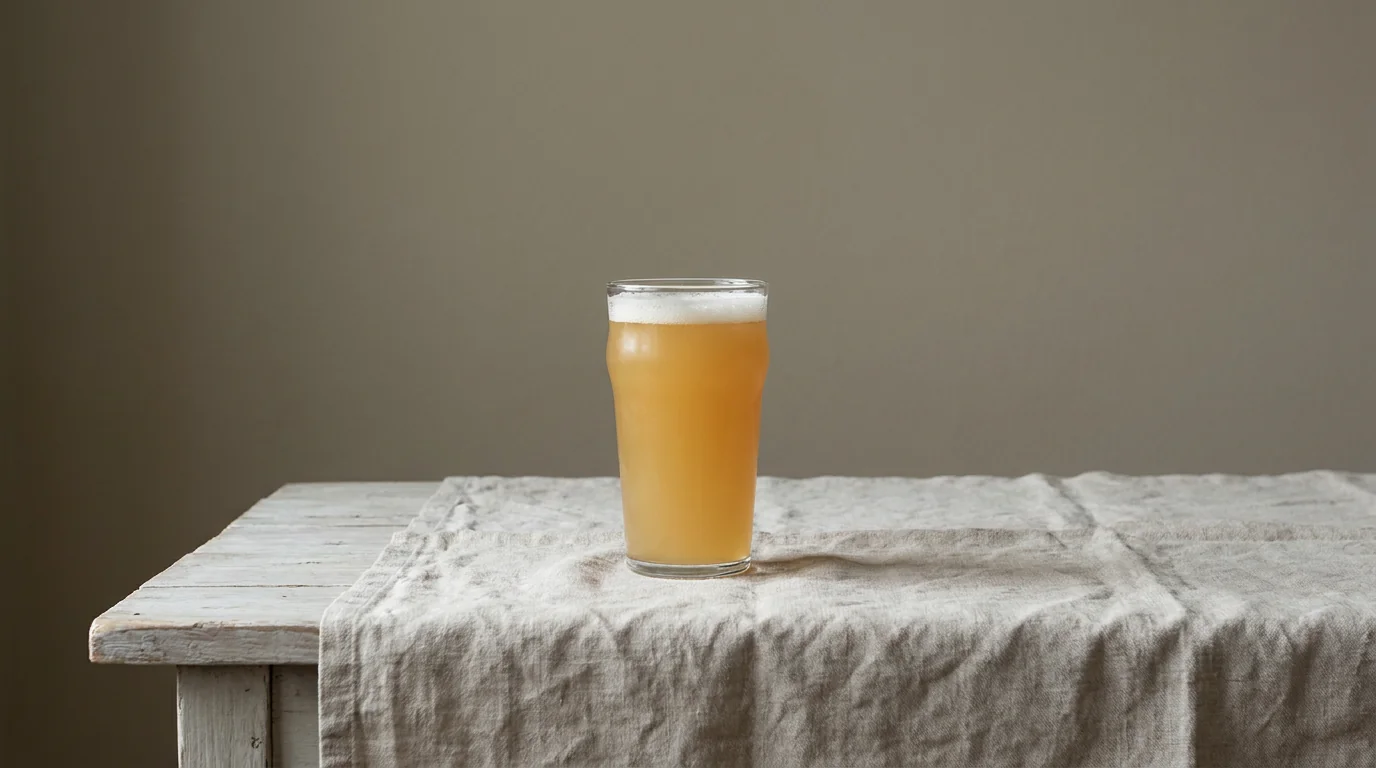
“Is beer good to stop diarrhea?”
No. This one comes up often enough that it is worth stating plainly. Beer contains alcohol, carbonation, residual sugars and often gluten — four things that each independently make diarrhea more likely, not less. There is no version of this that helps.
“Does diarrhea flush out alcohol?”
No, and this belief can get you into trouble. Alcohol is processed by your liver at a pace your bowel has no influence over. What diarrhea does is worsen dehydration, which makes you feel considerably rougher and takes longer to recover from. Treating it as a shortcut leads people to drink more water than they can absorb, or to keep drinking.
When to See a Doctor
Do not wait on any of these:
- Diarrhea lasting more than 72 hours
- Blood in your stool, or black, tar-like stools
- Fever, persistent vomiting, or signs of significant dehydration — dizziness, very dark urine, not passing urine
- Severe abdominal pain
- Unexplained weight loss
And one more, said plainly and without judgment: if you find you cannot cut back even when your body is clearly asking you to, that is worth raising with a doctor. It is a medical question, not a moral one.
Frequently Asked Questions
What settles diarrhea quickly?
Fluid with electrolytes rather than plain water, and plain low-residue food — rice, bananas, dry toast, clear broth. Stop coffee, dairy and greasy food for 48 hours. Most of the work is time; the goal is to avoid making it worse while your gut settles.
How can I firm up my loose stools?
Small, frequent, low-residue meals rather than large ones, steady fluid with salt in it, and no caffeine or alcohol while you recover. Stools usually firm up over one to three days. Once you have had a normal day, gentle soluble fibre from cooked vegetables and oats helps hold it.
What should I eat after diarrhea from alcohol?
Start plain — banana, white rice, dry toast, softly cooked eggs, clear broth. Warm food is easier than cold. After a day of normal stools, add one fermented food in a small amount, then reintroduce fibre gradually over the following week.
Does alcohol wipe out good gut bacteria?
It disturbs the balance rather than wiping it out. A heavy night knocks your microbial population off balance, and it takes days rather than hours to settle. That is exactly why the rebuild phase exists — and why adding fermented foods too early backfires instead of helping.
How long does post-alcohol diarrhea last?
Usually 24 to 72 hours, most commonly two to three days. Past 72 hours it no longer fits the pattern alcohol typically produces. I have covered the full timeline in how long alcohol diarrhea lasts.
Is beer good to stop diarrhea?
No. Beer contains alcohol, carbonation, residual sugars and often gluten, each of which makes diarrhea more likely rather than less.
How can I stop alcohol from giving me diarrhea next time?
Eat before you drink, slow the pace, avoid sugary mixers and caffeine combinations, and pay attention to whether one type of drink is consistently the trigger. Beer causes this more often than plain spirits for most people.
The Bottom Line
Three phases, in order. Most people do the first two and stop, which is why the same thing happens again a month later.
Stop the fluid loss. Settle the lining. Then, once things are genuinely normal again, rebuild the population that took the hit — gently, and not a day too early.
You are not fixing something broken. You are helping a system that is already recovering, in the order it can actually use. If you want to give that system a stronger baseline so a heavy night lands more softly next time, improving your gut health day to day is where that work happens.
Disclaimer: I’m trained in traditional medicine in Vietnam, but I’m not currently practicing medicine or providing personal diagnosis or treatment advice through this website. I write from personal experience, ongoing research, and my own food-first wellness experiments. My work explores digestion, daily energy, traditional self-care, movement, breathwork, meditation, and simple habits that support everyday well-being. Everything I share here is educational and reflective, not medical advice. It should not replace diagnosis, treatment, or care from a licensed healthcare professional.

About Mr. Anh
We turn solid evidence into everyday habits Americans can actually do—plain English, cups/oz, grocery-aisle swaps, and routines that fit real life. Our editorial process: Experience—we road-test tips in real schedules…