Foods That Calm a Nervous Stomach: A Workday Guide
📅
June 18, 2026 ⏱
11 min read
💬
0 comments
✍️
By Mr. Anh
What to eat (and when) to calm a nervous stomach during a busy workday — quick calmers, foods to skip, a 5-minute pre-meeting reset, and how to find your own gut triggers.
Food-first note from Mr. Anh: This is an educational, food-first guide. It isn’t medical advice, and it isn’t about diagnosing or treating anxiety, IBS, or any condition. It’s about everyday ways to eat that may help a stressed stomach feel calmer.
Five minutes before a big meeting, your stomach knots up. Maybe it churns. Maybe you feel a little sick. It’s not in your head, and you’re not weak — your gut just feels stress before your brain has finished thinking about it.
Sound familiar? If you’ve searched for foods that calm a nervous stomach before, you’ve probably hit the same generic lists. Ginger. Bananas. Avoid coffee. All useful — but hit-or-miss, because those lists skip the two things that matter most for busy people: when you eat around stress, and which foods calm your stomach in particular.
Here’s what you’ll get in this guide: the short list of calming foods, the ones that quietly make things worse, a simple timing playbook for the workday, and a 5-minute reset for your next meeting. By the end, you’ll also know how to find your own triggers instead of guessing.
Quick Takeaways:
Fast calmers: ginger, peppermint, chamomile, and bland “anchor” foods like oatmeal and banana.
Common irritants under stress: caffeine, alcohol, fried or fatty foods, and excess sugar.
The hidden lever is timing — don’t eat in full fight-or-flight mode.
Your real triggers are personal. A few days of tracking beats any generic list.
Why stress hits your stomach first
Your gut and brain talk to each other constantly through what researchers call the gut–brain axis. When you’re stressed, your body flips into “fight-or-flight” and quietly switches off “rest-and-digest.” Blood moves away from digestion. Your stomach tightens. That’s why a nervous stomach shows up before you’ve said a single word.
Then it loops. Your anxious brain tightens your gut. Your tight gut fires worry signals right back up. Round and round. Harvard Health describes this close link in the gut–brain connection.
So here’s the practical part: calming a nervous stomach isn’t only about what lands on your plate. It’s also about lowering the stress signal so your digestion can switch back on.
What I noticed:
“For years I blamed specific foods. When I finally slowed down and paid attention, the bigger pattern was how I ate — fast, tense, between calls. That did more for my stomach than any single food ever did.”
The gut and brain talk both ways.
Foods that calm a nervous stomach (the short list)
Think in two buckets: quick calmers for a tense moment, and gentle daily support.
Quick calmers (for a tense day)
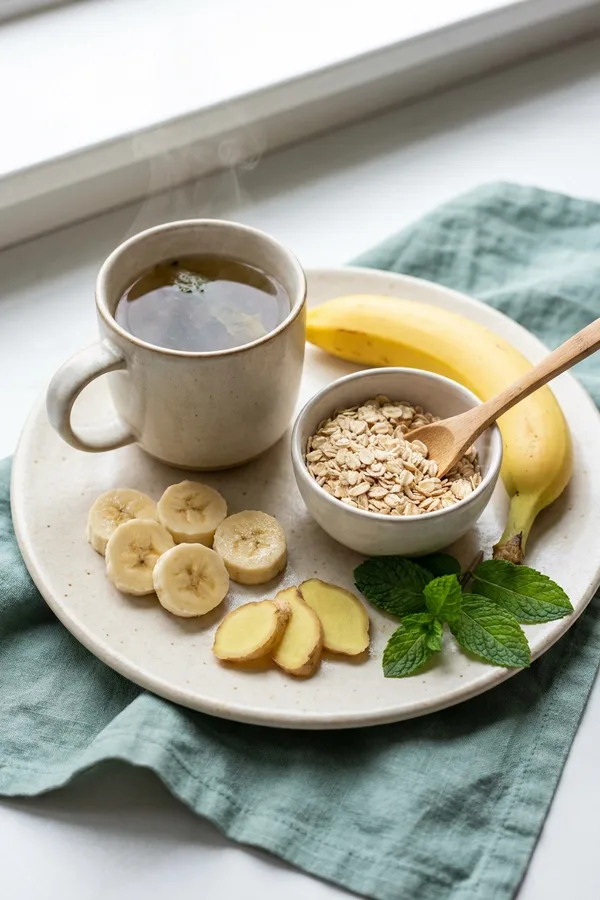
Ginger. It’s a long-used remedy for nausea and queasiness, and it may help your stomach empty more comfortably. The NCCIH summarizes its traditional digestive use here. Sip ginger tea, or chew a small piece.
Peppermint. It contains compounds that relax the gut and may ease cramping and bloating (NCCIH on peppermint oil). A warm peppermint tea does the job.
Chamomile. A warm, calming tea many people reach for to settle both the mind and the belly.
Bland “anchor” foods. Oatmeal, banana, plain rice, toast. They’re easy to digest and give a nervous stomach something gentle to hold onto when richer food feels like too much.
Honestly? I keep ginger tea bags in my desk drawer. On a heavy day, that one small ritual is half the battle.
Gentle daily support (the long game)
Probiotic foods, added slowly — yogurt, kefir, sauerkraut. A friendlier gut handles stress better over time. New to them? Start small. Here’s our probiotic foods guide, added slowly.
Green tea, which contains L-theanine — an amino acid linked to a calmer, more focused state.
Fatty fish (salmon, sardines) for omega-3s.
Magnesium-rich foods like pumpkin seeds, almonds, and leafy greens. Magnesium plays a role in the body’s stress response, and a lot of busy people run low. A small handful of seeds is an easy daily add.
Gentle fiber and broadly gut-friendly foods. For the bigger picture, here’s our guide to gut-friendly foods.
One quiet rule: warm beats cold and raw on an anxious day. A warm bowl is easier on a tense gut than a cold salad. For more soothing sips, see these calming gut drinks.
Quick calmers to keep on hand.
Foods that quietly make it worse
Go easy on these when you’re tense.
You don’t have to give these up forever. You just want to notice them on high-stress days.
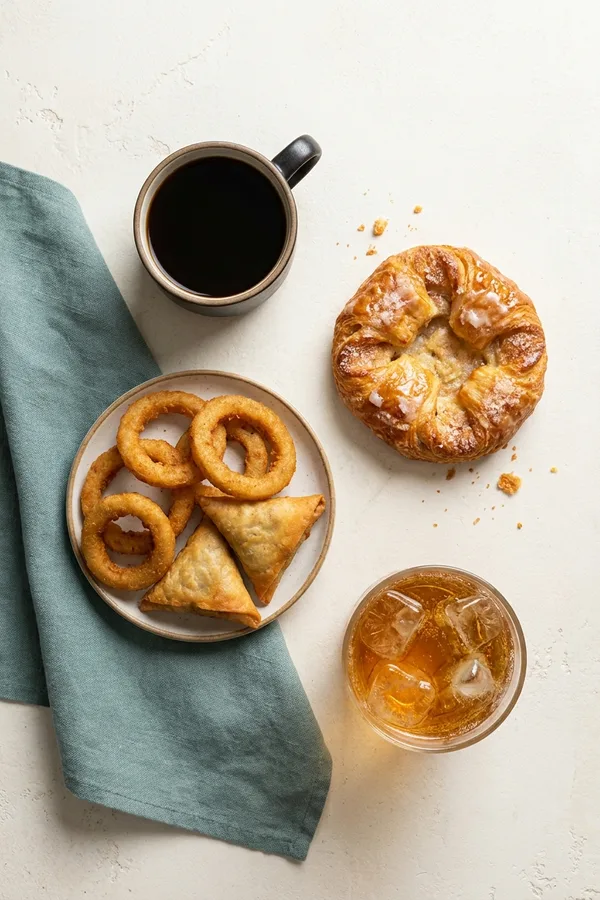
Caffeine. Coffee can raise stomach acid and add to that jittery, nervous feeling — especially on an empty stomach.
Alcohol. It might feel relaxing at first, but it tends to irritate digestion and wreck your sleep.
Fried and very fatty foods. They sit heavy and slow things down when your gut is already tense.
Excess sugar. Big sugar swings can leave you more wired and more uneasy.
Your own hidden triggers. For some people, certain high-FODMAP foods (onion, garlic, a few fruits) pile on bloating. These are deeply individual — which is exactly why a food list alone is never enough. If bloating is your main complaint, our breakdown of the real root causes of bloating goes deeper.
It’s not just WHAT — it’s WHEN
Light and bland beats heavy and greasy.
Here’s the part most articles skip, and it matters more than any single food.
Don’t eat in full fight-or-flight
If you’re wound up, your digestion is half-off. Eating fast in that state usually leads straight to bloating. So before you eat, take one slow breath out — a longer exhale than inhale. It’s a small nudge back toward “rest-and-digest.”
Around a stressful meeting
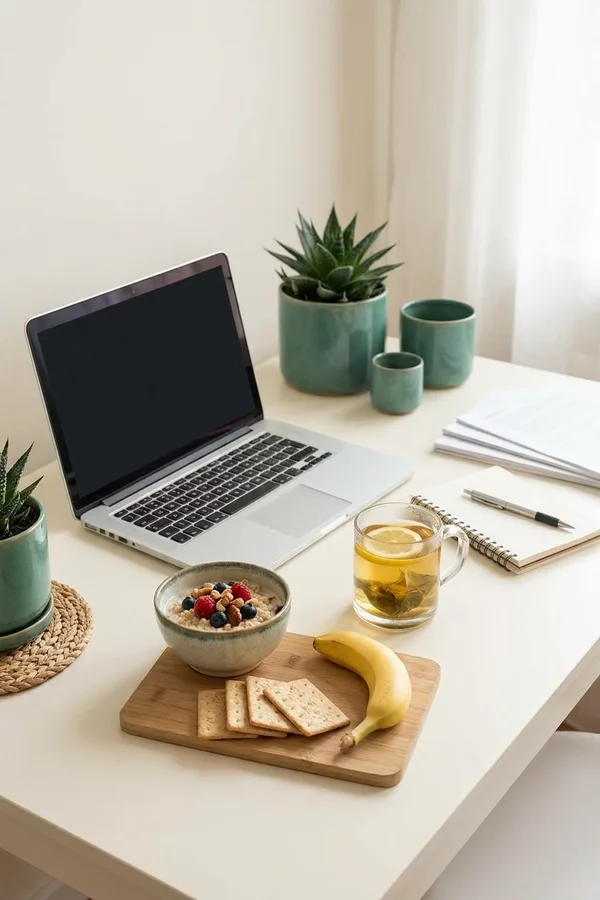
In the hour before, keep it light and bland. A banana, a few plain crackers, or oatmeal sits better than a heavy, greasy lunch. Skip the third coffee. Sip water or a warm herbal tea instead.
The 2 PM dip and empty-stomach coffee
The afternoon slump is a classic trigger window. Coffee on an empty, stressed stomach is a common culprit. Pair caffeine with a little food, and walk for a few minutes after lunch instead of dropping straight back to the screen. (Sitting hunched for hours can also worsen bloating after eating.)
What I noticed:
“My worst stomach days were never about one ‘bad’ food. They were the days I ate lunch in six minutes between calls, then dropped straight back to a screen. Slowing the meal down — even by two minutes — plus a short walk after, did more for me than swapping any single ingredient.”
The 5-minute before-a-meeting reset
When your stomach turns right before something important, try this.
Breathe out, slowly. Make the out-breath longer than the in-breath for about a minute. It gently tells your body to ease out of stress mode.
Sip something warm and calming. Ginger or peppermint tea, or just warm water. Cold and fizzy can make a tense gut worse.
Eat a small, bland anchor. A few bites of banana, oatmeal, or plain toast. Enough to settle the stomach, not enough to weigh you down.
It’s not a magic fix. But it gives your body a small off-ramp from the loop — and that’s often enough to walk in steadier.
Tracking beats guessing.
Why generic lists fail — find YOUR triggers in 5 days
Here’s the honest truth. Ginger helps a lot of people and does nothing for others. One person bloats from onions, another from dairy, another mostly from eating too fast under stress. The “best” foods that calm a nervous stomach are simply the ones that calm yours.
And you find them by noticing patterns, not by guessing. For five days, jot down four things after meals: what you ate, your stress level, the time, and how your stomach felt an hour later. Patterns show up faster than you’d think. Suddenly it’s not “food is the enemy” — it’s “2 PM coffee on an empty stomach is my trigger.”
That’s actually why I built a simple tracker for this. If you want a done-for-you version, grab my free 5-Day Workday Gut Trigger Journal — it walks you through spotting your personal pattern in under ten minutes a day. Get the free journal here.
And if your gut feels inflamed or sluggish day to day, this guide on how to reduce gut inflammation pairs well with the journal. (One caveat: this all assumes everyday stress. If your symptoms are severe or constant, check with your doctor first.)
Frequently Asked Questions
Why does stress give me a nervous or upset stomach? Stress flips your body into fight-or-flight and pauses normal digestion. Your gut is packed with nerves, so it reacts fast — tightening, churning, or feeling queasy. The brain and gut signal each other both ways, which is why worry and stomach upset tend to feed each other.
What should I eat before a stressful meeting or event? Keep it light and bland about an hour before — a banana, oatmeal, or a few plain crackers. Skip heavy, greasy, or very sugary food, and go easy on coffee. A warm ginger or peppermint tea can settle things without weighing you down.
What drinks calm a nervous stomach? Warm and non-caffeinated wins. Ginger tea, peppermint tea, chamomile tea, or just warm water are gentle choices. Cold, fizzy, caffeinated, or alcoholic drinks tend to make a tense stomach feel worse.
What foods make a nervous stomach worse? Most often: caffeine, alcohol, fried or very fatty foods, and excess sugar — especially on a high-stress day. Some people also react to specific high-FODMAP foods like onion or garlic. Tracking helps you spot your own.
The Bottom Line
A nervous stomach is your body talking, not a sign that you’re broken. Reach for gentle calmers like ginger, peppermint, and bland anchor foods. Go easy on caffeine, alcohol, and heavy meals when you’re tense. And don’t forget the quiet lever most people miss: when and how you eat matters as much as what. Most of all, your real triggers are personal — a few days of simple tracking beats any generic list.
Want to take this further? Grab my free 5-Day Workday Gut Trigger Journal — a simple tracker that helps you find your own gut triggers in under ten minutes a day. Get it here.
To start tonight: after dinner, write down what you ate, your stress level, the time, and how your stomach felt an hour later. That one line is the beginning of your pattern.
Disclaimer: I am trained in traditional medicine in Vietnam, but I am not currently practicing medicine or providing personal diagnosis or treatment advice through this site. Everything I share here is educational and reflective, intended to support everyday well-being. It is not medical advice and should not replace diagnosis, treatment, or care from a licensed healthcare professional. Please talk with a licensed healthcare professional if your symptoms are severe, persistent, getting worse, or come with red flags such as unexplained weight loss, blood in your stool, black stools, trouble swallowing, or ongoing vomiting.
🌟 Want personalized nutrition guidance?
Join our newsletter for weekly evidence-based nutrition
tips, meal plans, and exclusive recipes.
About Mr. Anh
We turn solid evidence into everyday habits Americans can
actually do—plain English, cups/oz, grocery-aisle swaps, and routines that fit real life. Our
editorial process: Experience—we road-test tips in real schedules…
Try a gentle two-minute seated qigong practice or an eight-minute beginner routine, with honest evidence limits, meal timing options, and clear reasons to stop.
Explore TCM food ideas with a seven-day meal plan, a chicken congee recipe, shopping and preparation steps, and flexible swaps. Learn how traditional food categories…