Best Probiotic for Bloating and Gas in Women: Why Your Cycle Decides
Walk down the supplement aisle and you will find two bottles sitting side by side. One says “Probiotic — Digestive...
- What "For Women" Usually Means on a Probiotic Label
- Why Women's Bloating Really Is Different
- The Estrobolome: Your Gut Bacteria Handle Your Hormones
- The Timing Trap That Makes Probiotics Look Useless
- When You Are 45 and the Rules Changed Without Warning
- The Food-First Approach That Actually Fits a Cycle
- When Bloating Is Not a Gut Problem At All
- Frequently Asked Questions
- The Bottom Line
Walk down the supplement aisle and you will find two bottles sitting side by side. One says “Probiotic — Digestive Support.” The other says “Probiotic for Women.” The second one costs eight dollars more.
Turn them over and compare the labels. In most cases the digestive strains are nearly identical. What you paid the extra eight dollars for is cranberry extract, a strain aimed at vaginal health, some biotin, and a pink label.
Here is what frustrates me about that. Women’s bloating genuinely is different from men’s bloating. It really does need a different approach. But the reason has almost nothing to do with what is printed on that bottle — and because nobody explains the real reason, thousands of women conclude that probiotics simply “don’t work for them” when the truth is that they measured the wrong thing at the wrong time.
A Traditional Perspective: “Your bloating is not random. It has a calendar. Traditional medicine watched women’s digestion move with the moon long before anyone could name a hormone — and it never treated the same belly the same way in every week of the month.”
— Mr. Anh, Founder of Essential Wellness AZ
What “For Women” Usually Means on a Probiotic Label
Let me be precise, because I am not saying these products are frauds. A women’s formula typically adds:
- Cranberry extract — aimed at urinary tract support, not digestion.
- Lactobacillus strains for vaginal flora — a legitimate use, and completely separate from bloating and gas.
- Biotin or folate — general supplementation, unrelated to fermentation in your gut.
Every one of those may be worth having. None of them addresses why your stomach is distended. For the specific problem of bloating and gas, a “women’s” formula and a standard formula are usually doing the same job at different prices.
The actual difference lives somewhere the label never mentions.
Why Women’s Bloating Really Is Different

Two hormones change how your digestive tract behaves, and they change it on a schedule.
Progesterone slows everything down
Progesterone relaxes smooth muscle — including the smooth muscle that moves food through your intestines. In the second half of your cycle, when progesterone rises, transit slows measurably.
Slower transit means food sits longer. Food sitting longer means bacteria have more time to ferment it. More fermentation time means more gas. This is why the identical lunch can feel completely fine on day 9 and leave you distended on day 22 — same food, same gut bacteria, different transit speed.
Estrogen affects fluid retention
Estrogen influences how much water your tissues hold. Layer premenstrual fluid retention on top of slowed transit and extra fermentation gas, and you get the specific pre-period bloat that so many women describe as feeling “three months pregnant by Friday.”
That is not a digestive failure. That is your endocrine system doing exactly what it is built to do.
The Estrobolome: Your Gut Bacteria Handle Your Hormones
This is the part that genuinely justifies a women-specific conversation about probiotics, and it is the part the supplement industry never bothers to explain.
A subset of your gut bacteria — researchers call it the estrobolome — produces an enzyme called beta-glucuronidase. Your liver packages up used estrogen for disposal. Beta-glucuronidase can unpackage some of it in the intestine, allowing that estrogen to re-enter circulation instead of leaving your body.
Read that again, because the implication is unusual: your gut bacteria are not merely affected by your hormones. They participate in regulating them.
I want to be careful here. This is an active research area, not a solved one, and anyone promising to “rebalance your hormones” with a capsule is selling well beyond the evidence. What it does establish is that gut health and hormonal health are one conversation for women, not two — and that a food-first approach to your microbiome is doing more than settling your stomach. Regular fiber and foods traditionally used to support hormone balance support this clearance pathway in a way no isolated capsule replicates.
The Timing Trap That Makes Probiotics Look Useless
Now the most practical thing in this entire article.
Here is how it usually goes. You buy a probiotic. You start it on a Monday. Seven or ten days later you feel more bloated than when you started, so you decide it does not agree with you and stop.
But look at the calendar. If you began just after ovulation, your trial ran straight through the luteal phase — the exact window when progesterone was already slowing your transit and estrogen was already increasing fluid retention. You would have been more bloated that week whether you took anything or not.
You did not test a probiotic. You tested your cycle, and blamed the capsule.
Two rules follow from this, and they cost nothing:
- Start in the follicular phase — the week after your period ends, when transit is naturally at its fastest. Introducing new bacteria into a well-moving system is far gentler than introducing them into a slow one.
- Judge nothing before a full cycle has passed. Anything shorter compares one hormonal week against a different hormonal week, which tells you nothing. Compare day 22 of this month against day 22 of next month.
Most women who believe probiotics “don’t work” for them have never actually completed a fair trial.
When You Are 45 and the Rules Changed Without Warning
Perimenopause deserves its own section, because this is where I see the most confusion and the least useful advice online.
You are eating what you always ate. Nothing about your diet has changed. And yet somewhere in your forties, bloating became a daily feature rather than a monthly one.
During perimenopause, estrogen does not decline in a tidy line — it fluctuates unpredictably, sometimes swinging higher than it ever did in your thirties before dropping. Your digestive transit, your fluid retention, and your gut bacterial composition all shift alongside it. The predictable monthly pattern you had learned to work around dissolves, and what replaces it feels random.
It is not random, but it is genuinely less predictable. Two adjustments help more than any product:
- Stop chasing the old pattern. Advice built around a regular 28-day cycle will frustrate you. Track symptoms rather than dates for a couple of months and let the actual pattern show itself.
- Go slower than you think you need to. A gut adapting to shifting hormones tolerates change poorly. The teaspoon-per-day approach matters more now than it did at 30, not less.
The Food-First Approach That Actually Fits a Cycle
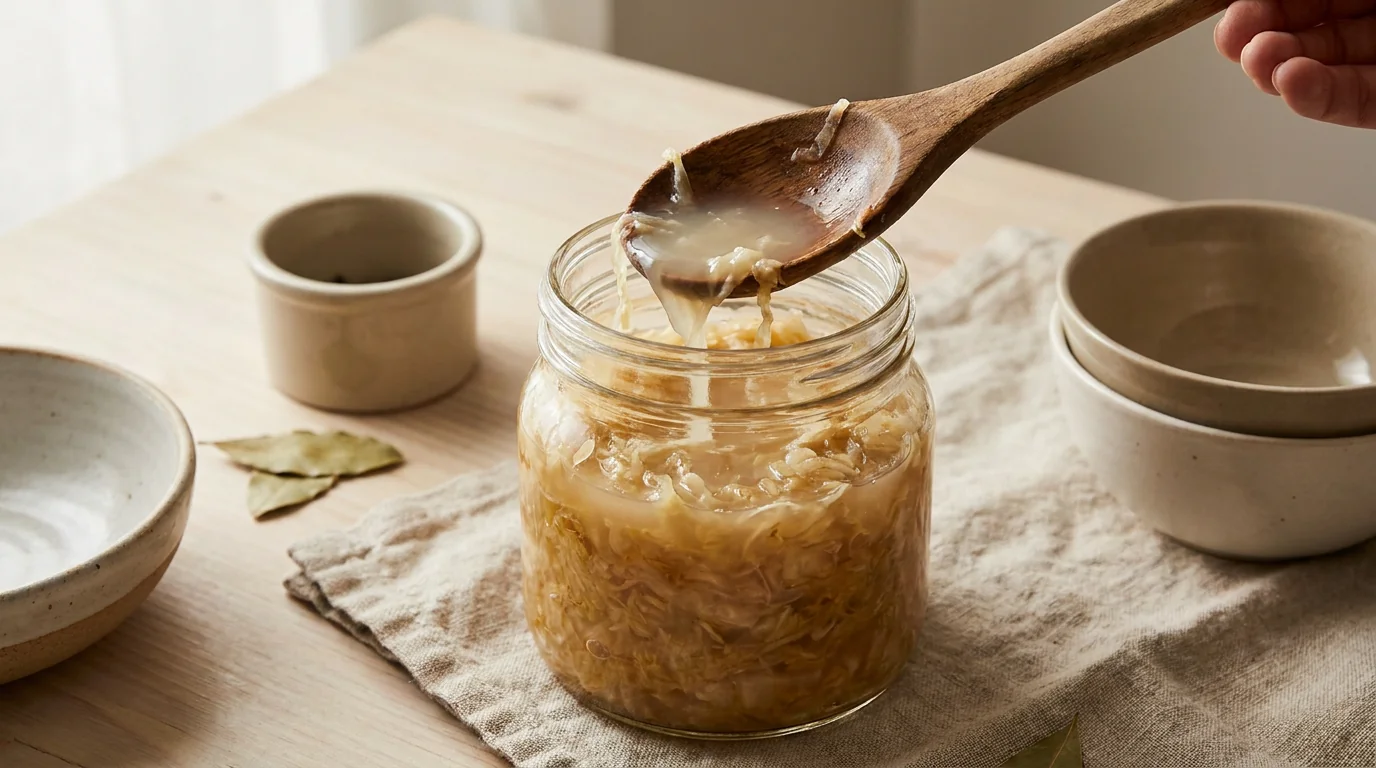
As I cover in depth in the guide to the best probiotics for bloating, fermented foods generally outperform capsules because the bacteria arrive with their own acidity and their own food source. For women, they carry one more advantage: you can adjust the dose week by week. A capsule delivers the same fixed load every single day regardless of where you are in your cycle. A spoonful of kefir does not.
- Follicular phase (roughly days 1-14): transit is faster and tolerance is higher. This is the window to introduce a new fermented food, or to build your dose up.
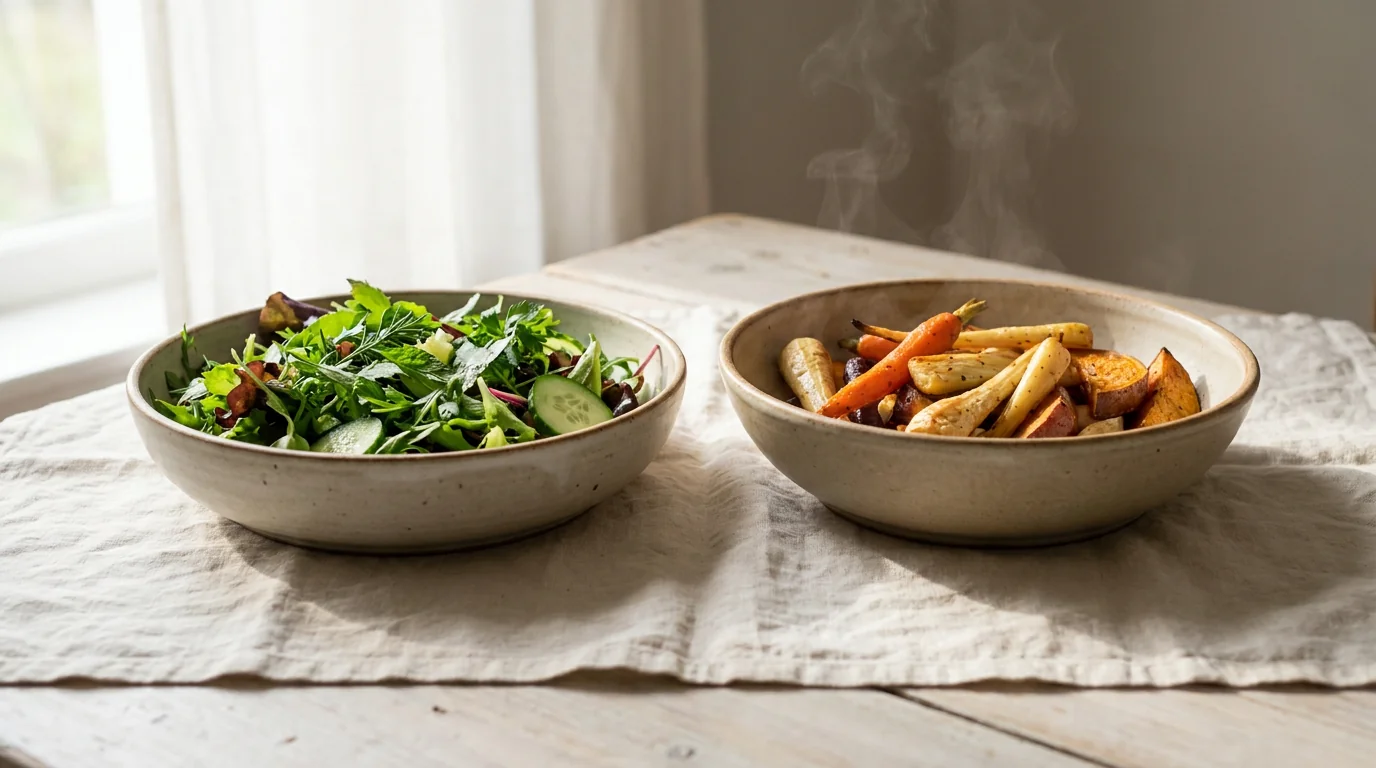
- Luteal phase (roughly days 15-28): transit is slower and gas builds more easily. Hold your dose steady rather than increasing it, prioritise warm and cooked foods over large raw salads, and keep moving — a short walk after meals does more for luteal bloating than any capsule.
Start with one teaspoon a day of milk kefir or sauerkraut brine, chosen from this list of gentle probiotic foods, and build across two or three cycles rather than two or three weeks. If you want to understand the mechanism more deeply, the benefits of fermented foods covers why living cultures behave so differently from freeze-dried ones.
When Bloating Is Not a Gut Problem At All
I would be doing you a disservice if I ended without this, and you will notice that the pages trying to sell you capsules rarely include it.
Persistent bloating in women is one of the most commonly overlooked symptoms in medicine, because it looks exactly like ordinary digestive bloating — the kind every woman has learned to dismiss. Ovarian cancer in particular is frequently missed for this reason.
Please see a doctor rather than reaching for another probiotic if you have:
- Bloating that is present nearly every day for three weeks or more, rather than coming and going with your cycle
- Bloating alongside feeling full very quickly when you eat
- New pelvic or abdominal pain that does not resolve
- Needing to urinate more often or more urgently, with no other explanation
- Unexplained weight loss, or a change in bowel habit lasting more than a few weeks
The pattern that matters is persistent and non-cyclical. Bloating that tracks your cycle is behaving the way hormonal bloating behaves. Bloating that ignores your cycle entirely and simply stays deserves a professional opinion, quickly. This is not a reason to panic — it is a reason to book an appointment instead of buying a bottle.
Frequently Asked Questions
What is the best probiotic for bloating and gas for women?
For digestive bloating and gas specifically, a “women’s” formula rarely offers an advantage — the added cranberry and vaginal-health strains address different concerns. A small daily serving of a fermented food such as milk kefir or sauerkraut brine, started in your follicular phase and built up over two to three full cycles, is the more reliable approach.
Are women’s probiotics actually different from regular probiotics?
For urinary and vaginal support, yes — those formulas add genuinely different strains. For bloating and gas, usually not. The digestive strains are typically comparable to a standard formula at a higher price point.
Why am I more bloated the week before my period?
Rising progesterone relaxes intestinal smooth muscle, which slows transit and gives bacteria longer to ferment your food into gas. Estrogen’s effect on fluid retention adds to it. The same meal genuinely produces more bloating on day 22 than on day 9.
How long should a woman try a probiotic before deciding it works?
At least one full cycle, ideally two. A seven- or ten-day trial compares one hormonal week against a different hormonal week and tells you very little. Compare the same day of one cycle against the same day of the next.
Why did bloating start in my forties when nothing about my diet changed?
Perimenopausal estrogen fluctuates unpredictably rather than declining smoothly, and transit, fluid retention, and gut bacterial composition shift with it. Your diet did not change — the system processing it did. Slower introduction of any new food or supplement matters more now, not less.
The Bottom Line
The best probiotic for bloating and gas in women is not the one with the pink label and the cranberry. It is the gentlest living food you can take consistently, introduced in the right week, and judged over a full cycle instead of a rushed ten days.
Your digestion moves on a schedule that men’s does not. Once you stop fighting that schedule and start working with it, the results get considerably less mysterious. And if your bloating ignores the calendar entirely and simply persists — trust that signal, and get it looked at.
If you want to understand what is triggering the bloat in the first place, bloating after eating is the next thing I would read.
Disclaimer: I’m trained in traditional medicine in Vietnam, but I’m not currently practicing medicine or providing personal diagnosis or treatment advice through this website. I write from personal experience, ongoing research, and my own food-first wellness experiments. My work explores digestion, daily energy, traditional self-care, movement, breathwork, meditation, and simple habits that support everyday well-being. Everything I share here is educational and reflective, not medical advice. It should not replace diagnosis, treatment, or care from a licensed healthcare professional.

About Mr. Anh
We turn solid evidence into everyday habits Americans can actually do—plain English, cups/oz, grocery-aisle swaps, and routines that fit real life. Our editorial process: Experience—we road-test tips in real schedules…