Flax Seeds for Hormone Balance: Benefits, Dose, and Safety
Flax seeds work on your hormone balance at three distinct biological levels — and cost about $6 a bag. Discover the 3-Lock System, right dose, and daily habits for women at every life stage.
- Why Flax Seeds for Hormone Balance Work Differently Than Other Foods
- An Eastern Lens: Why Liver and Kidney Hold the Real Key
- Who Actually Benefits — Flax Seeds Mapped to Your Life Stage
- Ground vs. Whole vs. Oil — The Real Difference
- 5 Simple Ways to Use Flax Seeds for Hormone Balance Every Day
- What About Seed Cycling — Is It Worth It?
- Frequently Asked Questions About Flax Seeds for Hormone Balance
- The Bottom Line on Flax Seeds for Hormone Balance
- References & Inspiration
- Who Should Be Careful With Daily Flaxseed?
- How to Pair Flax With Gut-Friendly Breakfasts
Why Flax Seeds for Hormone Balance Work Differently Than Other Foods
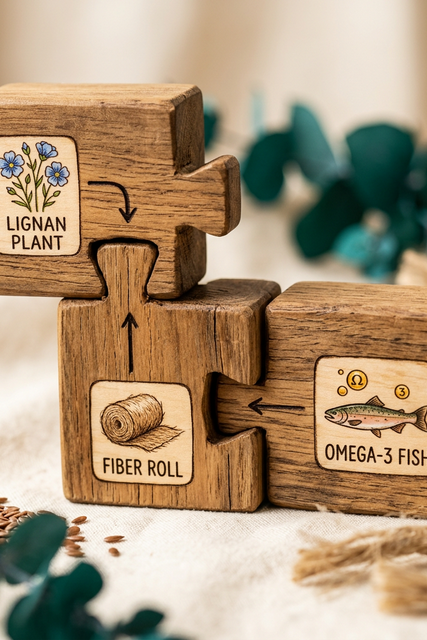
Lock 1 — Lignans: How Flax Seeds for Hormone Balance Regulate Estrogen
Flaxseed contains up to 800 times more lignans than any other plant food. That number genuinely surprised me when I first looked it up. Sesame seeds and whole grains also have small amounts, but flaxseed isn’t even in the same conversation. Lignans are phytoestrogens — plant compounds that interact with your estrogen receptors. What makes flaxseed lignans special is their adaptogenic effect: they can gently raise estrogen activity when your levels are low, and soften the impact of stronger estrogens when levels run too high. They do this by triggering your liver to produce more Sex Hormone Binding Globulin (SHBG), a protein that binds circulating estrogen and reduces how aggressively it acts on your tissues. A landmark study by Phipps et al. published in the American Journal of Clinical Nutrition found that eating ground flaxseed daily significantly shifted urinary estrogen metabolite ratios, specifically increasing 2-hydroxyestrone, a form linked to lower breast cancer risk and healthier hormonal metabolism. You can read the full study on PubMed. When your gut bacteria break down those lignans, they produce two compounds — enterolactone and enterodiol — that are the actual hormonal workhorses. Your gut microbiome isn’t just a digestion thing. It’s a hormone management system. (More on that in Lock 2.) If you’re building a full approach around foods to support hormone balance naturally, flaxseed belongs right at the foundation.Lock 2 — Soluble Fiber: The Estrogen Clearance System
Here’s something most people don’t realize: your body processes estrogen every single day through your liver, then sends it to your gut for elimination. If your gut’s sluggish even a little a specific set of gut bacteria called the “estrobolome” can reactivate that estrogen and send it right back into your bloodstream. That’s estrogen dominance. And it can happen even when your body is producing perfectly normal hormone levels. Soluble fiber acts like a physical escort. It binds excess estrogen in the gut and pulls it out through your bowel movements before it can be reabsorbed. Two tablespoons of ground flaxseed adds roughly 4 grams of fiber. That’s not your full daily 25 grams, but it’s a consistent daily contribution that adds up. I’ve found that supporting gut health is one of the most underrated levers for hormone balance. Women who struggle with chronic constipation almost always report worse PMS — and now you know why. The gut-hormone connection is biological, not a coincidence.Lock 3 — Omega-3 ALA: The Anti-Inflammatory Smoother
Hormone imbalance and inflammation almost always travel together. Prostaglandins — inflammatory compounds your body releases during menstruation — drive most of the cramping, bloating, and mood swings that define bad PMS. Flaxseed is one of the best plant sources of alpha-linolenic acid (ALA), an omega-3 fat. ALA competes directly with pro-inflammatory omega-6 fats inside your cells, dialing down prostaglandin production over time. That’s a meaningful shift when you’ve been dealing with brutal cycles month after month. A 2021 review in Frontiers in Nutrition which pooled data from 34 separate studies — found increased ALA intake consistently correlated with reduced inflammatory markers and better cardiovascular outcomes. Both are closely tied to long-term hormonal health. ALA also improves insulin sensitivity, and that matters more than most people realize. Insulin is a hormone. When it’s dysregulated, it drags cortisol, testosterone, and estrogen into chaos with it. This is especially relevant for women with PCOS — which we’ll get to in a moment. And if you want to understand how food supports digestion and absorption — since gut health is central to how lignans get activated — our guide on foods for gut health is a great companion read.An Eastern Lens: Why Liver and Kidney Hold the Real Key
I want to share the framework I grew up with. In traditional Vietnamese and Chinese medicine, the body that we call “hormonal” in the West maps almost entirely onto two organ systems: the Liver (Can) and the Kidney (Thận). This isn’t anatomical Liver and Kidney — it’s a functional system. The Liver is responsible for the free flow of Qi and stores blood; when Liver Qi stagnates, you feel exactly what modern medicine calls PMS: breast tenderness, mood swings, irregular cycles, irritability. The Kidney holds your “essence” (Jing), the deep store that governs every reproductive milestone — first menstruation, pregnancy, perimenopause, menopause. Western hormones rise and fall around what TCM has been calling Kidney essence transitions for two thousand years. Flax seeds, in this framework, do three things that align almost perfectly with the 3-Lock System above:- Move Liver Qi. The slight bitter-sour quality of ground flax encourages downward elimination — exactly how TCM says Liver Qi should flow. The lignans interacting with your liver’s detox pathway is the modern version of the same idea.
- Nourish Yin. Flax is cool and moist in nature. During perimenopause, when Yin declines and “false heat” rises (hot flashes, night sweats, dry skin), cool-moist foods like flax, sesame, black beans, and pear are textbook Yin-nourishing choices.
- Clear damp-heat from chronic inflammation. The omega-3 ALA quieting inflammation is, in TCM language, “clearing damp-heat” — exactly what happens when chronic inflammation drives bad cycles.
Who Actually Benefits — Flax Seeds Mapped to Your Life Stage

Stage 1 — PMS & Menstrual Irregularity (Ages 25–35)
Bad PMS — the mood swings, bloating, breast tenderness, and erratic cycles — is usually a luteal phase problem. Specifically, estrogen is running too high relative to progesterone in the second half of your cycle. Research by Phipps et al. (NIH, 1993) found that women who ate ground flaxseed daily showed significantly higher luteal phase progesterone-to-estradiol ratios compared to control cycles. In plain terms: better hormonal balance, right during the window when PMS hits hardest. Where to start with flax seeds for hormone balance: 1 tablespoon of ground flaxseed from Day 1 of your cycle, stirred into morning yogurt or oatmeal. Track your PMS symptoms month-to-month with any period app. Most women notice something shifting around weeks 6–10. For easy daily use, pre-ground organic flaxseed (around $6 at Walmart, Target, Whole Foods, or any well-stocked grocery store) is what I’d reach for first. No grinding tools, no measuring fuss — just one tablespoon stirred into your bowl.Stage 2 — PCOS & Fertility Concerns (Ages 28–40)
PCOS is driven by two main factors: elevated androgens (testosterone, DHEA-S) and insulin resistance. Both disrupt ovulation and make cycles unpredictable. An NIH-reviewed clinical study found that daily flaxseed supplementation reduced free testosterone and DHEA-S levels in women with PCOS, with improvements in hirsutism (unwanted hair growth) documented after 4 months. The omega-3 ALA adds an insulin-sensitizing effect on top of that — hitting both root drivers at once. Where to start: Blend 1 tablespoon of ground flax into a morning smoothie daily. Frozen banana + almond milk + a handful of spinach masks the earthy taste completely. Consider aligning your flax intake with the follicular phase (Days 1–14) if you’re experimenting with seed cycling.Stage 3 — Perimenopause (Ages 40–50)
Perimenopause doesn’t mean low estrogen — it means erratic estrogen. Your levels spike and crash unpredictably, and your body loses the feedback loops that used to keep things smooth. Lignans work as a buffer here: they gently occupy estrogen receptors during high-estrogen days, and provide subtle estrogenic nudges when levels dip. Flaxseed also contains tryptophan and magnesium. Both support serotonin production — which estrogen normally helps regulate. This is why sleep, mood, and anxiety tend to deteriorate during perimenopause. Flaxseed doesn’t fix it, but it genuinely takes the edge off. I’ve heard this from readers over and over. Where to start: 1 tablespoon of ground flax mixed into 1 cup of kefir at breakfast. Kefir’s probiotics feed the gut bacteria that convert lignans into active enterolactone. That’s a one-two punch — better gut + better lignan activation at the same time.What I noticed in my own family:
My mother is now in her early sixties, deep into post-menopause, and she had a rough perimenopausal stretch a decade ago — hot flashes that woke her four times a night, sudden mood drops, joints that ached out of nowhere. She wouldn’t touch hormone replacement therapy. What she did do, almost without realizing it, was lean back into the traditional Vietnamese diet she grew up with: morning warm congee with black sesame and flax, more cooked greens, less coffee, less sugar. Within roughly four months she described it as “the floor coming back under my feet.” She has been keeping 2 tablespoons of ground flax in her morning bowl ever since. I don’t claim flax alone did it. I do think the combination of cooling-moist foods, gentle warmth at breakfast, and consistency — over months, not weeks — gave her body the conditions it needed to settle. The same kind of slow shifts also show up in skin tone and hair through this transition; if you’ve noticed your skin changing through perimenopause, our guide on a skin-supportive daily diet walks through the food side of that.
Stage 4 — Menopause (Ages 50+)
After menopause, estrogen drops and doesn’t bounce back. NIH-published research shows that consistent flaxseed intake reduces circulating estradiol and estrone sulfate in postmenopausal women — which can quiet the estrogen fluctuations behind hot flashes and night sweats. The most studied protocol for symptom relief: 2 tablespoons per day for 3+ months. Shorter trials show inconsistent results. Consistency is everything here. There’s also emerging evidence that phytoestrogens — including flaxseed lignans — may help support bone mineral density. Given that osteoporosis risk accelerates sharply after menopause, that’s worth paying attention to even if the data is still building.Ground vs. Whole vs. Oil — The Real Difference
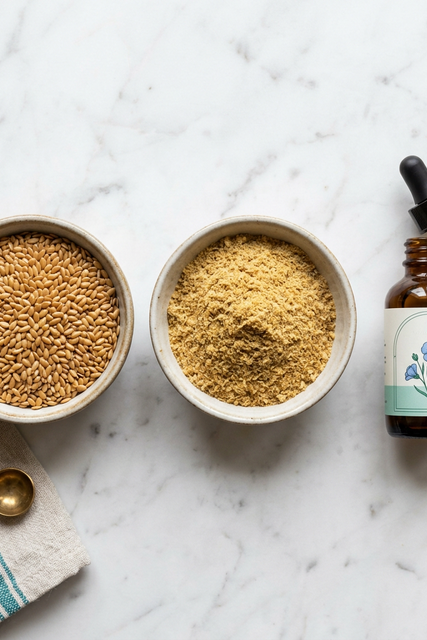
| Form | Daily Dose | Lignans | Hormone Benefit | Best Use |
| —— | ———– | ——— | —————- | ——— |
| Ground Flaxseed | 1–2 tbsp | ✅ High absorption | ✅ Full: estrogen + fiber | Yogurt, oatmeal, smoothies |
| Whole Flaxseed | Not recommended | ❌ Largely undigested | ❌ Near zero | Texture only |
| Flaxseed Oil | 1 tbsp | ❌ Removed in processing | ⚠️ Omega-3 ALA only | Salad dressings, drizzling |
5 Simple Ways to Use Flax Seeds for Hormone Balance Every Day
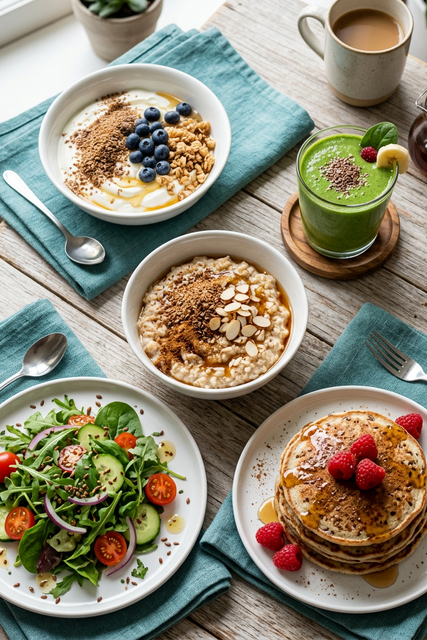
- Morning Yogurt Bowl — Stir 1 tbsp ground flax into ¾ cup Greek yogurt. Add ½ cup blueberries and a drizzle of honey. Takes under 2 minutes. Gives you protein, probiotics, lignans, and fiber in one bowl.
- Smoothie Add-In — Blend 1 tbsp ground flax with a frozen banana, 1 cup unsweetened almond milk, and a handful of frozen spinach. The banana completely neutralizes the earthy taste. This is my go-to on rushed mornings.
- Oatmeal Topping — Sprinkle 1 tbsp over a bowl of steel-cut oats with cinnamon and sliced almonds. That combo alone delivers around 8 grams of fiber — a third of your daily target.
- Salad Dressing — Whisk 1 tsp flaxseed oil into olive oil, fresh lemon juice, and Dijon mustard. Note: this gives you omega-3 ALA without lignans — good for variety, not a replacement for ground.
- Egg Replacer in Baking — Mix 1 tbsp ground flax with 3 tbsp water and wait 5 minutes. It gels up into a binding agent that works as a 1:1 egg substitute in pancakes, banana bread, or muffins. Nobody will know it’s in there.
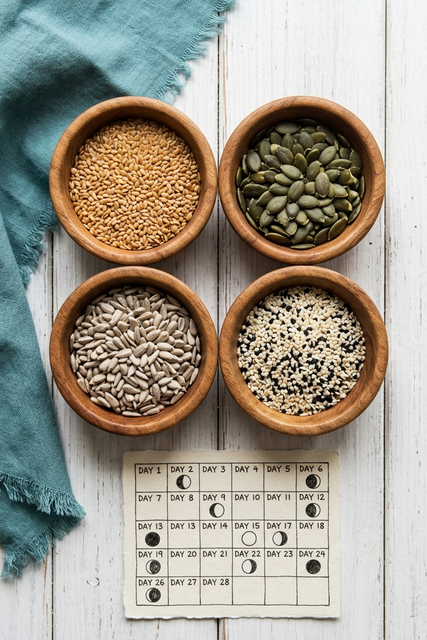
What About Seed Cycling — Is It Worth It?
Frequently Asked Questions About Flax Seeds for Hormone Balance
How much flaxseed should I eat per day for hormone balance? Start with 1 tablespoon of ground flaxseed. After a week or two, you can move to 2 tablespoons — most hormonal research used that range over 2–4 months. Going above 2 tbsp daily isn’t better and tends to cause digestive discomfort, especially if your fiber intake is low to start. Do flax seeds increase or decrease estrogen? Actually, both — depending on what your body needs. Lignans are adaptogenic: they provide mild estrogenic activity when your levels are low, and block more potent estrogens from binding when levels are high. They do this through SHBG modulation in the liver, not by directly adding estrogen to your system. For the full mechanism — including why flaxseed contains no estrogen at all and your gut bacteria decide the outcome — see the detailed breakdown. Are flaxseeds safe for estrogen dominance? For most women, yes. The soluble fiber clears excess estrogen from the gut before it can be reabsorbed, and lignans compete with stronger estrogens for receptor binding. If you’re on hormone replacement therapy or have a hormone-sensitive condition — particularly ER+ breast cancer — talk to your doctor before significantly increasing flaxseed intake. Can flax seeds help with PCOS? There’s real promise here. NIH-reviewed research found reduced free testosterone and DHEA-S in women with PCOS who supplemented daily. The ALA omega-3 addresses insulin resistance — the other major PCOS driver. Expect to give it 3–4 months before evaluating results. Ground vs. whole flaxseed — which one actually works for hormones? Ground. Full stop. Whole seeds have a hard outer shell that your digestive tract can’t break down. Lignans and fiber pass right through. You want ground flaxseed — either freshly ground in a coffee grinder, or a pre-ground bag like Bob’s Red Mill. How long before I notice a difference? Most clinical studies measuring hormonal outcomes checked results at 8–12 weeks. For PMS, track your luteal phase symptoms month-to-month — look for reduced bloating, steadier mood, and more predictable timing. For menopause symptoms, give it a full 3 months at 2 tbsp/day before making a judgment.The Bottom Line on Flax Seeds for Hormone Balance
Flax seeds are one of those rare foods where the science is actually interesting. The 3-Lock System — lignans that support estrogen metabolism adaptively, soluble fiber that clears what your body doesn’t need, and omega-3 ALA that reduces the inflammation driving your worst symptoms — works together in a way that no single supplement can replicate. The barrier is low. Six dollars. Two minutes. One tablespoon a day. Give it 8–12 weeks of consistency and track what shifts. Want to build a full hormone-supportive diet around this? Our guide on foods to support hormone balance naturally shows you a complete day of eating — breakfast, lunch, dinner — built around the same principles. Ready to start? Pick up a bag of organic ground flaxseed next time you’re at the grocery store — Walmart, Target, Whole Foods, or your local market all carry it for around $6. Add a tablespoon to your breakfast tomorrow. That’s the whole plan. And if you want to layer on anti-inflammatory support: pairing homemade anti-inflammatory drinks with your daily flax habit covers both hormonal and cardiovascular health at the same time.References & Inspiration
- Phipps WR et al. (1993). Effect of flaxseed ingestion on the menstrual cycle. J Clin Endocrinol Metab. PubMed
- Phipps WR et al. (1994). Flaxseed supplementation and estrogen metabolism. Am J Clin Nutr. PubMed
- Pan A et al. (2021). ALA intake and cardiovascular outcomes — 34-study review. Frontiers in Nutrition. Full text
- Nowak DA et al. (2023). Flaxseed supplementation and sex hormone profile — systematic review. Nutrients (NCBI). PubMed
- Strom SS et al. NCI/NIH. Flaxseed and breast cancer protective metabolite ratio. NIH
Who Should Be Careful With Daily Flaxseed?
Ground flaxseed is a food, not a hormone treatment. Still, it is active enough that some readers should be thoughtful before turning it into a daily protocol.
- If you are pregnant, trying to conceive, or breastfeeding, ask your clinician first.
- If you have a hormone-sensitive condition or use hormone therapy, get individualized guidance.
- If you take blood thinners or have a scheduled surgery, check whether daily flaxseed fits your plan.
- If you are prone to bloating, start with 1 teaspoon of ground flaxseed and increase slowly with water.
How to Pair Flax With Gut-Friendly Breakfasts
The easiest habit is not a supplement stack. It is one small breakfast upgrade: ground flaxseed stirred into yogurt, kefir, a smoothie, or overnight oats.
If you want a prebiotic-style breakfast base, see our guide to resistant starch in oatmeal and our list of resistant starch breakfast ideas.

About Mr. Anh
We turn solid evidence into everyday habits Americans can actually do—plain English, cups/oz, grocery-aisle swaps, and routines that fit real life. Our editorial process: Experience—we road-test tips in real schedules…