Best Foods to Balance Hormones Naturally
A note before we begin: I trained in traditional Vietnamese medicine but I don’t practice clinically or treat patients. Everything...
- Why Foods to Balance Hormones Matter
- Best Foods to Balance Hormones Every Day
- Protein, Fiber, and Gut Health for Hormone Support
- An Eastern Lens: Liver Qi, Cycle Smoothness, and Hormone Flow
- Foods That Can Work Against Hormone Balance
- Simple Ways to Eat More Hormone-Balancing Foods
- FAQ About Foods to Balance Hormones
A note before we begin: I trained in traditional Vietnamese medicine but I don’t practice clinically or treat patients. Everything below is a researcher’s notes — what I’ve read in the modern hormone literature, what my wife and I have lived through, and how the Western view fits with the traditional Liver-Qi framework I grew up reading about. If you have a hormone-sensitive condition (PCOS, thyroid disease, endometriosis, hormone-receptor cancer history), please loop in your doctor before significantly changing your diet. This is education, not medical advice.
Hormones control many everyday functions in the body from energy levels and mood to metabolism and sleep. When hormones are out of balance, people may notice fatigue, cravings, irregular cycles, or stubborn weight gain. The good news is that nutrition plays an important role in supporting hormone health. Choosing the right foods to balance hormones can help stabilize blood sugar, support gut health, and provide the nutrients the body needs to regulate hormone production.
Below, you’ll find practical, science-informed guidance on which foods to prioritize and how to incorporate them into daily meals.
Why Foods to Balance Hormones Matter
Hormones are chemical messengers that coordinate many processes throughout the body. Because they respond to nutrition, lifestyle, and stress, the foods you eat every day can influence hormone activity more than many people realize.
What hormones do in the body and why foods to balance hormones help
Hormones regulate metabolism, appetite, sleep cycles, and reproductive health. For example, insulin controls blood sugar, cortisol manages stress responses, and estrogen helps regulate reproductive systems and bone health. Even small changes in hormone levels can affect how you feel throughout the day.
Eating the right foods to balance hormones helps provide the nutrients required for hormone production and regulation. Healthy fats help build hormone structures, while protein supports enzymes and metabolic functions. Fiber-rich foods help remove excess hormones such as estrogen from the body.
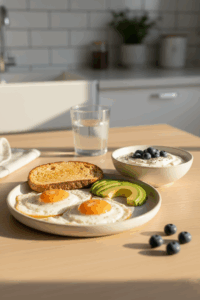
For example, a breakfast with 2 eggs, ½ avocado, and a slice of whole-grain toast provides protein, healthy fat, and fiber—three elements known to support stable hormone signaling and blood sugar levels.
How foods to balance hormones influence energy and metabolism
Hormone balance is closely tied to energy levels and metabolism. When blood sugar fluctuates dramatically, insulin spikes and crashes can occur, which may increase hunger and fatigue.
Foods to balance hormones help stabilize these fluctuations. Whole foods such as oats, berries, salmon, and leafy greens release energy slowly and support insulin sensitivity. In contrast, highly refined foods like sugary cereal or pastries—can spike blood sugar within 30–60 minutes.
For instance, swapping a sugary breakfast pastry for ½ cup steel-cut oats, 1 tbsp chia seeds, and fresh blueberries provides fiber, omega-3 fats, and antioxidants that support steady energy and hormonal stability.
Best Foods to Balance Hormones Every Day
Now that we understand why diet matters, let’s explore the most effective foods to balance hormones that can easily fit into everyday meals.
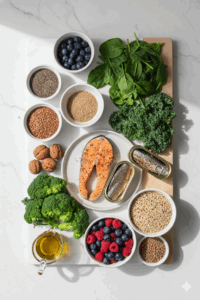
Fatty fish, seeds, and healthy fats as foods to balance hormones
Healthy fats are essential building blocks for many hormones. Omega-3 fatty acids, in particular, support inflammation control and hormone signaling.
Some of the best foods to balance hormones in this category include:
- Salmon
- Sardines
- Chia seeds
- Flaxseeds
- Walnuts
A 3-oz (85 g) serving of salmon provides roughly 1.5–2 grams of omega-3 fatty acids, which research suggests may support hormone regulation and cardiovascular health.
Seeds are also powerful additions. Just 1 tbsp ground flaxseed provides fiber and lignans that may help regulate estrogen levels — we walk through the three biological mechanisms in detail in our flax seeds for hormone balance guide. Many people sprinkle ground flaxseed on oatmeal, yogurt, or smoothies to add hormone-supportive nutrients with minimal effort.
Leafy greens, berries, and fiber-rich foods to balance hormones
Fiber helps remove excess hormones from the body and supports gut bacteria that influence hormone metabolism.
Some excellent foods to balance hormones through fiber include:
- Spinach
- Kale
- Broccoli
- Blueberries
- Lentils
For example, 1 cup cooked lentils contains about 15 grams of fiber, which helps maintain healthy digestion and may support how the liver clears excess hormones — a process explored more fully in our deep dive on flax seeds for hormone balance, where lignans + soluble fiber together do most of the work.
Berries are also beneficial. Blueberries contain antioxidants that reduce oxidative stress, which may influence hormone balance over time. Adding ½ cup blueberries to yogurt or oatmeal is a simple way to increase both fiber and antioxidants.
Protein, Fiber, and Gut Health for Hormone Support
Beyond individual foods, the balance of macronutrients in meals plays an important role in maintaining hormone stability.
Why protein helps stabilize hormones and blood sugar
Protein supports hormone balance by stabilizing blood sugar and promoting satiety. When meals lack protein, blood sugar may rise quickly and then drop, triggering hunger and fatigue.
Including protein-rich foods to balance hormones helps prevent these swings. Some convenient options include:
- Eggs
- Greek yogurt
- Chicken breast
- Tofu
- Beans
For instance, ¾ cup Greek yogurt provides around 15–17 grams of protein, which can help stabilize morning blood sugar when paired with fruit and nuts.
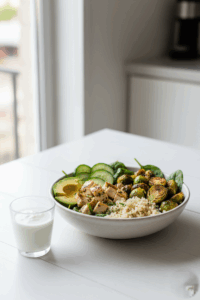
Another example is a lunch bowl with 4 oz grilled chicken, ½ cup quinoa, and roasted vegetables. This combination offers protein, fiber, and micronutrients that support balanced energy and hormone function throughout the afternoon.
How fiber and gut health support estrogen balance with foods to balance hormones
The gut microbiome plays a significant role in hormone metabolism. Certain gut bacteria help regulate how estrogen is processed and removed from the body.
Foods to balance hormones that support gut health include:
- Fermented foods such as yogurt and kefir
- Fiber-rich vegetables
- Whole grains
- Legumes
For example, 1 cup kefir provides probiotics that support beneficial gut bacteria. These bacteria may help regulate estrogen metabolism and inflammation.
Adding 1 cup roasted Brussels sprouts and ½ cup brown rice to dinner also increases fiber intake, which helps remove excess hormones through digestion and supports microbiome diversity.
An Eastern Lens: Liver Qi, Cycle Smoothness, and Hormone Flow
There’s a framework I keep returning to from traditional Vietnamese and Chinese medicine. In TCM, what Western medicine calls “hormone imbalance” lives largely in one organ system: the Liver (Can). The Liver’s job is to keep Qi moving freely through the body. When Liver Qi gets stuck — usually from stress, repressed emotion, poor sleep, too much sugar or alcohol, or simply the modern pace of life — the textbook PMS picture shows up: breast tenderness, mood swings, irritability for no clear reason, irregular cycles, headaches before menstruation. TCM has been describing this “Liver Qi stagnation” pattern for two thousand years.
The foods that move Liver Qi in this framework happen to be almost identical to the Western evidence-based recommendations above:
- Cruciferous vegetables (broccoli, kale, Brussels sprouts, cabbage, radish) — slightly bitter, strongly moving. They contain the indole-3-carbinol compounds Western research links to estrogen clearance, and they’re also TCM’s textbook Liver-Qi-moving foods.
- Citrus peel, sprouts, fresh ginger, fresh mint — bitter and aromatic flavors that disperse stagnation. A small cup of warm ginger-lemon water in the morning is one of the oldest Liver-Qi habits in Vietnamese kitchens.
- Flax, sesame, walnuts, dark leafy greens — nourish Liver Blood, which the Liver needs in order to move Qi smoothly. Western medicine sees the same effect through SHBG modulation and lignan-driven estrogen metabolism.
- Less sugar, less coffee, less alcohol — all three “burn through” Liver resources faster than the body can replenish, in both frameworks.
The overlap is uncanny. The Mediterranean-style hormone-balancing diet that modern research keeps validating is, in plain Vietnamese kitchen terms, a Liver-Qi-moving and Liver-Blood-nourishing diet.
What I noticed in my own family:
My wife has dealt with fairly heavy PMS for years — mood swings, breast tenderness, and that low-grade dread starting five to seven days before her cycle. We tried a small experiment together: during her luteal phase (roughly days 15–28), she cut sugar and afternoon coffee almost entirely, added a daily side of cruciferous vegetables (broccoli or kale with dinner), and stirred 1 tablespoon of ground flax into her morning yogurt. Two cycles in, the heavy mood drops were noticeably softer. By the third cycle she described the symptoms as “maybe 60% of what they used to be.” I’m careful to say I don’t claim food alone fixed it — she also slept earlier and walked more during that stretch. But the Liver-Qi-stagnation framework predicted exactly which foods would help, and the modern hormone research predicted the same. Both pictures pointed at the same plate.
Foods That Can Work Against Hormone Balance
While some foods support hormone health, others may disrupt it when consumed frequently.
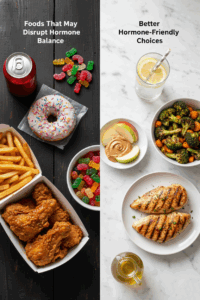
Added sugar and ultra-processed foods vs foods to balance hormones
Ultra-processed foods are often high in refined sugar, unhealthy fats, and additives. These ingredients may contribute to blood sugar instability and inflammation.
Common examples include:
- Sugary sodas
- Candy and desserts
- Packaged snack cakes
- Sweetened breakfast cereals
A 12-oz soda contains roughly 35–40 grams of sugar, which may cause rapid spikes in blood glucose and insulin levels. Frequent spikes may contribute to hormonal stress over time.
Replacing sugary snacks with foods to balance hormones—like apple slices with almond butter—can help stabilize energy levels and reduce sugar intake.
Alcohol, low-fiber diets, and trans fats affecting foods to balance hormones
Excess alcohol consumption may affect hormone metabolism, particularly in the liver. The liver plays a critical role in processing hormones like estrogen and cortisol.
Additionally, low-fiber diets reduce the body’s ability to eliminate excess hormones. Trans fats, commonly found in fried fast foods or shelf-stable baked goods, may increase inflammation.
For example, replacing deep-fried fast food with grilled chicken, roasted vegetables, and olive oil significantly reduces inflammatory fats while providing nutrients that support hormone balance.
Simple Ways to Eat More Hormone-Balancing Foods
Making dietary changes does not require complicated meal plans. Small adjustments can gradually increase foods to balance hormones in your routine.
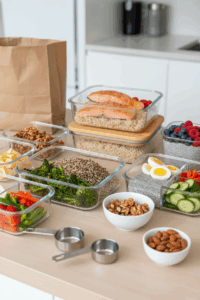
Easy meal ideas featuring foods to balance hormones
Here are simple meal ideas that emphasize hormone-supportive ingredients:
- Breakfast: Greek yogurt bowl with ½ cup berries, 1 tbsp chia seeds, and ¼ cup granola
- Lunch: Quinoa salad with 4 oz grilled salmon, spinach, cucumber, and olive oil
- Dinner: Roasted chicken with 1 cup broccoli and ½ cup brown rice
- Snack: Apple slices with 1 tbsp peanut butter
Each meal includes protein, fiber, and healthy fats—three elements that help support stable hormone signals.
Smart grocery swaps for foods to balance hormones
Small grocery swaps can make a big difference in long-term hormone health.
Tips & swaps
- Replace sugary cereal with oatmeal + chia seeds.
- Swap soda for sparkling water with lemon.
- Choose olive oil instead of vegetable shortening.
- Add flaxseed to smoothies or yogurt.
- Replace white bread with whole-grain bread.
- Snack on nuts instead of packaged chips.
Over time, these swaps increase nutrient density while reducing ingredients that may interfere with hormone balance.
FAQ About Foods to Balance Hormones
What are the best foods to balance hormones naturally?
Some of the best foods to balance hormones include fatty fish, leafy greens, berries, whole grains, and seeds. These foods provide nutrients such as omega-3 fats, fiber, antioxidants, and protein that support hormone regulation. For example, a meal with salmon, quinoa, and roasted vegetables offers multiple nutrients that help stabilize blood sugar and reduce inflammation.
How long does it take for foods to balance hormones to make a difference?
Diet changes typically influence hormone health gradually rather than instantly. Some people notice improved energy or reduced cravings within 2–4 weeks of consistently eating balanced meals. However, hormone regulation is complex and may also depend on sleep, stress levels, and physical activity.
Can foods to balance hormones help with fatigue?
Yes, nutrient-dense foods to balance hormones can help support steady energy levels. Meals that combine protein, fiber, and healthy fats help prevent blood sugar crashes that lead to fatigue. For example, a snack of Greek yogurt and almonds provides sustained energy compared to sugary snacks.
Are there specific foods to balance hormones for women?
Many foods to balance hormones support hormone health for everyone, but women may benefit particularly from fiber-rich vegetables, flaxseeds, and omega-3 fats. These nutrients may help support estrogen balance and reduce inflammation. Including foods like salmon, spinach, lentils, and berries regularly can support overall hormone health.
Do foods to balance hormones replace medical treatment?
Foods to balance hormones can support overall health but do not replace medical care when hormone disorders are present. Conditions like thyroid disease or PCOS may require medical evaluation. Nutrition works best as part of a broader approach that includes sleep, exercise, and professional guidance.
Want to support your energy, mood, and metabolism naturally? Start by adding a few hormone-supportive foods to your daily meals — salmon, leafy greens, berries, seeds — and build consistent, nutrient-rich habits over time. Hormonal balance also tends to show up visibly on the outside: our companion guides on a skin-supportive daily diet and foods that build stronger nails walk through how the same nutrients show up across skin, hair, and nails.
Disclaimer: I’m trained in traditional Vietnamese medicine but I don’t practice clinically. This guide reflects modern research, traditional Liver-Qi frameworks I grew up with, and what I’ve observed in my own family — all educational, not medical advice. Conditions like PCOS, thyroid disease, endometriosis, or hormone-receptor cancer history deserve direct conversation with your physician before significant dietary changes.

About Mr. Anh
We turn solid evidence into everyday habits Americans can actually do—plain English, cups/oz, grocery-aisle swaps, and routines that fit real life. Our editorial process: Experience—we road-test tips in real schedules…