Resistant Starch for Weight Loss: The Protein-First Plate Method
Learn how to use resistant starch for weight management without treating carbs as free food: protein first, resistant starch second, toppings last.
- Quick Answer: Does Resistant Starch Help With Weight Loss?
- What Resistant Starch Does Not Do
- What the Research Actually Says
- The P.R.T. Plate Method
- Best Resistant Starch Foods for Weight Management
- 5 Fast Workday Meals That Use Resistant Starch Without Calorie Creep
- Topping and Portion Mistakes That Ruin the Benefit
- The 3-Day P.R.T. Test
- Supplement vs Food: Which Should You Choose?
- Who Should Be More Careful
- FAQ
- Bottom Line
Affiliate disclosure: This guide is food-first education. Any resource links are secondary and do not change the advice.
Resistant starch is not a fat-burning carb.
That sounds less exciting than the viral version, but it is the part that keeps this useful.
You may have seen cooled rice, cold potatoes, overnight oats, or frozen bread described as weight-loss hacks. The promise is tempting: eat the carb, cool it, and somehow the carb becomes safer.
Real life is messier.
If cooled rice makes you build a bigger rice bowl, it is not helping your goal. If overnight oats become oats plus chia plus flax plus granola plus honey plus nut butter, the ingredients may look healthy while the bowl quietly gets too heavy. If frozen toast is covered in jam and eaten with a sweet coffee, the freezer did not solve breakfast.
Resistant starch can still be useful, but only if it changes the structure of the meal.
The better method is:
Protein -> Resistant Starch -> Toppings.
I call this the P.R.T. Plate Method.
Choose protein first. Add one controlled resistant starch food second. Add toppings last.
That is how resistant starch becomes a weight-management tool instead of another carb loophole.
Quick takeaways:
– Resistant starch may support weight management for some people, but it is not a fat-burning shortcut.
– Research on direct weight loss is mixed. Some studies show metabolic, appetite, or gut-microbiota benefits, while others do not show clear body-weight changes.
– The practical win is meal design: protein first, controlled resistant starch second, toppings last.
– Good starter foods include cooled potatoes, cooled rice, overnight oats, sweet potato, beans or lentils if tolerated, and frozen/toasted bread.
– Resistant starch can cause gas or bloating if you increase it too quickly.
– Do not use resistant starch to make rice, potatoes, oats, bread, or beans unlimited.
– Food-first is the best starting point. Supplements require more caution.
Quick Answer: Does Resistant Starch Help With Weight Loss?
Resistant starch may help some people with weight management, but it is not a guaranteed weight-loss food.
The possible benefits are indirect.
Resistant starch may help through:
- fullness
- lower energy density in some food patterns
- steadier glucose and insulin response in some settings
- fermentation in the gut
- appetite-related signals
- better meal structure when it replaces more refined, less filling carbs
But human evidence is mixed, especially when the question is direct body-weight loss.
One systematic review on resistant starch, obesity, and metabolic profiles found no direct effect on body weight or body composition across reviewed human studies, although some glucose, insulin, and gut-hormone findings looked more promising. (PubMed)
That is why the better question is not:
“Can resistant starch burn fat?”
The better question is:
“Can resistant starch help me build meals that keep me full and easier to control?”
That is a much more useful question for a workday routine.
If you want a broader food list, start with the resistant starch foods list.
What Resistant Starch Does Not Do
Before we talk about food choices, it helps to remove the hype.
Resistant starch does not:
- make carbs calorie-free
- make rice, potatoes, bread, oats, or beans unlimited
- burn belly fat by itself
- replace a calorie-aware eating pattern
- replace protein
- treat obesity, diabetes, or insulin resistance
- make a bloating-prone gut tolerate a big fiber jump overnight
This does not make resistant starch useless.
It makes the role more precise.
Resistant starch is a way to make some carb choices more strategic. It is not permission to ignore portions, protein, toppings, sleep, stress, or total intake.
What the Research Actually Says

The research is interesting, but it is not a simple “eat resistant starch, lose weight” story.
Reviews Show Promise, but Not a Simple Weight-Loss Guarantee
Several reviews suggest resistant starch may help certain metabolic markers, especially glucose and insulin-related measures in specific groups. A 2019 systematic review and meta-analysis in overweight or obese adults found improvements in several glucose and insulin-related markers, but the authors also emphasized individual differences and gut microbiota variation. (PubMed)
Another meta-analysis looking at people with type 2 diabetes and obesity found improvements in insulin resistance measures in some groups, but did not show a simple BMI improvement across the board. (PubMed)
The practical translation:
Resistant starch may support the metabolic side of weight management for some people, but it is not a stand-alone weight-loss treatment.
Appetite and Food Intake Evidence Is Mixed
Some appetite research is promising.
A systematic review and meta-analysis of acute appetite trials found resistant starch was associated with lower appetite ratings in pooled analysis, but the results were highly variable. Dose, type of resistant starch, meal design, and the person all mattered. (PubMed)
In one randomized crossover trial in overweight and obese men, resistant starch consumed across breakfast and lunch reduced intake at an ad libitum dinner, but did not reduce total 24-hour intake or subjective satiety. (PMC)
Another acute trial found resistant starch reduced food intake without changing appetite ratings. (PMC)
That matters because your hunger feeling and your actual eating behavior may not always match.
The practical takeaway is not “resistant starch kills appetite.”
It is:
Test whether the meal changes your hunger, snack urge, and next-meal behavior.
Protein Pairing Is the Strongest Practical Bridge
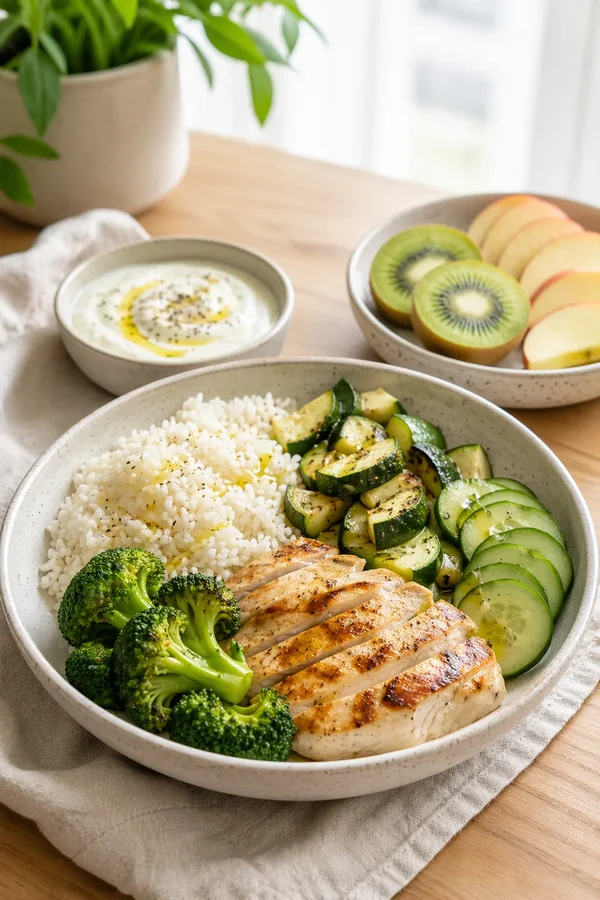
For EWA readers, this is the useful part.
Several resistant starch studies become more practical when you notice the protein context. In one study in women, resistant starch combined with whey protein increased fat oxidation and PYY, while fullness and hunger benefits were strongly influenced by protein-containing conditions. (PMC)
Another study in men found resistant starch plus whey protein increased thermogenesis and fat oxidation and lowered glucose and insulin responses in an acute pancake-meal setting, although appetite ratings did not differ. (PMC)
Do not turn that into a fat-loss promise.
Use it as a practical hint:
Resistant starch works better as part of a protein-forward meal than as a carb-only experiment.
Gut Microbiota Evidence Is Promising, but Not a Shortcut
A 2024 randomized placebo-controlled crossover trial in 37 overweight or obese participants found that resistant starch supplementation supported mean weight loss and improved insulin resistance, with changes linked to gut microbiota. (PMC)
That is promising.
But it was a supplementation study, not proof that one bowl of cooled rice or one cold potato will cause weight loss.
The realistic interpretation is:
Resistant starch may be one tool in a larger pattern, especially when the meal is filling, protein-forward, portioned, and tolerated by your gut.
Harvard’s Nutrition Source also explains that blood sugar response depends on carbohydrate type, processing, fiber, fat, and meal composition. That is exactly why the whole plate matters. (Harvard Nutrition Source)
The P.R.T. Plate Method
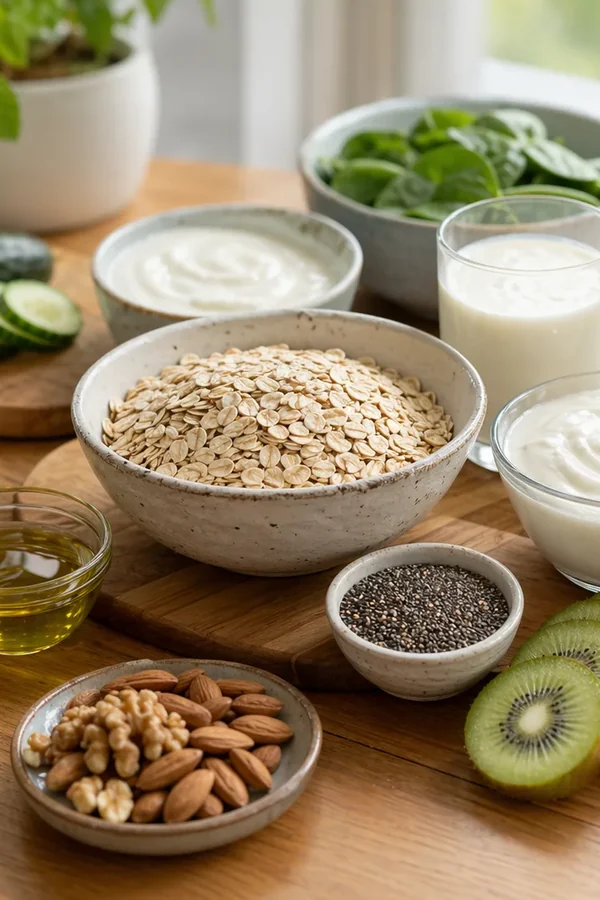
Use the P.R.T. Plate Method when you want resistant starch to support weight control without turning into a bigger carb meal.
P.R.T. = Protein -> Resistant Starch -> Toppings.
| P.R.T. step | Do this | Why it helps | Common mistake | Better fix |
|---|---|---|---|---|
| Protein | Pick a visible protein anchor | Supports fullness | Carb first, protein forgotten | Decide protein first |
| Resistant Starch | Add one controlled portion | Gives a smarter carb base | Bigger bowl because it is “resistant starch” | Start with a modest serving |
| Toppings | Add measured flavor | Keeps the meal enjoyable | Oil + nut butter + granola + honey | Choose one main topping |
Step 1: Protein First
Choose the protein anchor before choosing the carb.
Good options include:
- eggs
- Greek yogurt
- cottage cheese
- chicken
- fish
- tofu
- tempeh
- turkey
- lentils or beans if you tolerate them
Protein is not there to make the meal look more disciplined. It is there because most weight-management meals fail when they are low in protein and easy to digest quickly.
If your resistant starch meal is mostly rice, oats, bread, or potatoes, you may still find yourself looking for food later.
Step 2: Resistant Starch Second
After protein, choose one controlled resistant starch base.
Examples:
- cooled potatoes
- cooled rice
- overnight oats
- cooled sweet potato
- beans or lentils
- frozen and toasted bread
This is the carb base, not the whole meal.
That sentence matters.
Cooled rice is still rice. Cold potatoes are still potatoes. Overnight oats are still oats. Frozen toast is still bread.
The goal is to use a better carb structure, not to make the portion disappear.
Step 3: Toppings Last
Toppings are where many “healthy” meals quietly change.
Watch:
- oils
- butter
- nut butter
- granola
- honey
- dried fruit
- creamy sauces
- cheese
- avocado
- sweet coffee drinks
None of these are automatically bad.
But if you stack them, the meal can become too calorie-dense for your goal before you notice.
Build the structure first. Add flavor last.
Best Resistant Starch Foods for Weight Management
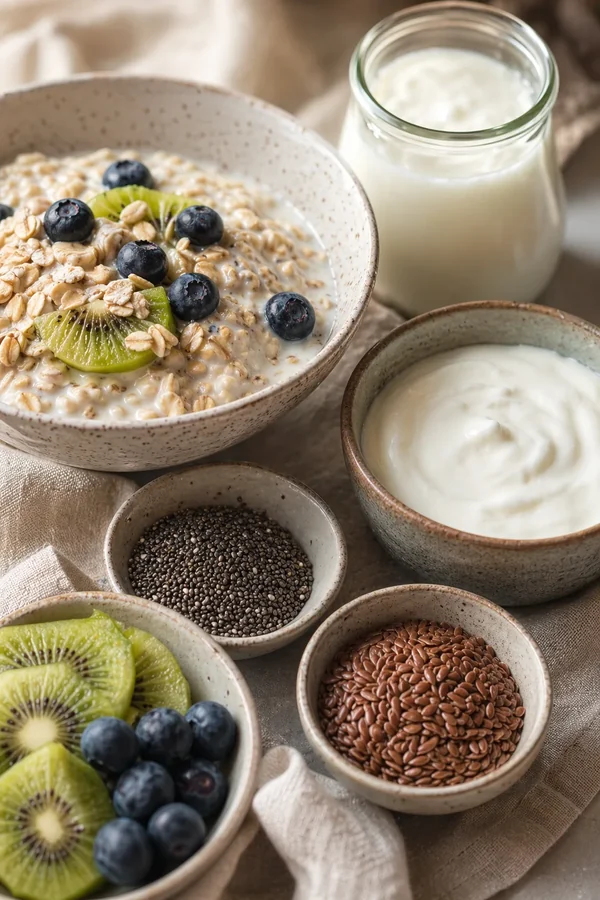
This is not a ranking by the highest possible resistant starch number.
It is a ranking by practical usefulness: portion control, prep time, fullness, and bloat risk.
| Food | Best use-case | Weight-friendly risk | Bloat risk | Best pairing | Internal guide |
|---|---|---|---|---|---|
| Cooled potatoes | Savory lunch or breakfast | Butter/oil creep | Low-medium | Eggs, chicken, tofu | Potatoes guide |
| Cooled rice | Familiar meal prep | Portion drift | Low-medium | Chicken, fish, tofu | Rice guide |
| Overnight oats | Fast breakfast | Nut butter/granola stack | Medium | Greek yogurt | Oatmeal guide |
| Sweet potato | Gentle breakfast base | Full potato may be too large | Medium | Eggs, yogurt | Sweet potato guide |
| Frozen toast | Convenience | Sweet toppings | Wheat-sensitive | Eggs, cottage cheese | Bread guide |
| Beans/lentils | Fiber-rich meals | Large portions | Medium-high | Rice, vegetables, protein | Foods list |
Best Beginner: Cooled Potatoes
Cooled potatoes can be a good starter because they are easy to portion and feel satisfying.
The mistake is turning them into a butter-heavy or oil-heavy meal.
Use cooled potatoes with eggs, chicken, fish, tofu, or cooked vegetables. Keep the sauce measured.
For the full workflow, read how to make resistant starch potatoes.
Best Familiar Lunch Base: Cooled Rice
Rice is useful because it fits normal meal prep.
The main risk is portion drift. A “healthy cooled rice bowl” can still become mostly rice if protein and vegetables are not obvious.
Use cooled and reheated rice with chicken, fish, tofu, eggs, or another protein.
For the full method, read how to make resistant starch rice.
Best No-Cook Breakfast: Overnight Oats
Overnight oats are fast, realistic, and easy to make before work.
But they can also become a calorie-dense bowl if you stack oats, chia, flax, granola, honey, nut butter, and dried fruit all at once.
The better version is small oats plus Greek yogurt plus berries.
For more detail, read resistant starch oatmeal.
Best Gentle Breakfast Base: Cooled Sweet Potato
Cooled sweet potato can work well if you tolerate it.
Pair it with eggs or Greek yogurt. Start with half if you are bloating-prone or if a full sweet potato feels heavy.
For the full guide, read resistant starch sweet potato.
Best Convenience Option: Frozen Toast
If bread is the breakfast you can actually repeat, use it wisely.
Freeze the bread, toast one planned slice, and add protein first. Do not turn it into jam toast with a sweet coffee and expect the freezer to carry the meal.
For the full method, read freezing bread for resistant starch.
Best Advanced Fiber Option: Beans and Lentils
Beans and lentils can be useful, but they are not always the best starting point for bloating-prone readers.
They bring more fiber, and more fiber can mean more fermentation.
Start small. If bloating is already a problem, use the resistant starch foods for bloating guide before increasing portions.
5 Fast Workday Meals That Use Resistant Starch Without Calorie Creep
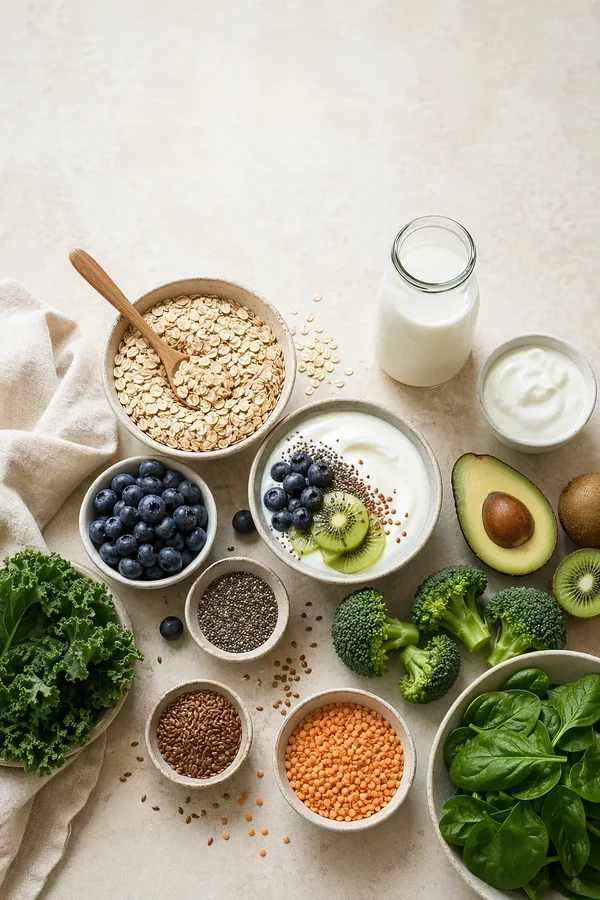
These are meal templates, not strict recipes.
Pick the one that fits your morning or lunch routine.
1. Cooled Potato + Eggs + Cooked Greens
Use a modest portion of cooked-and-cooled potato, then add eggs and cooked greens.
This works for breakfast or lunch because the protein is obvious and the potato is easy to portion.
2. Cooled Rice + Chicken or Tofu + Cooked Vegetables
This is the classic lunch box.
Use cooled and reheated rice, a clear protein portion, and cooked vegetables. Keep sauce measured.
If you want more detail on reheating, read does reheating destroy resistant starch.
3. Overnight Oats + Greek Yogurt + Berries
This is the easiest no-cook breakfast.
Keep the oat portion modest. Add Greek yogurt for protein. Use berries for sweetness.
Avoid building the “everything bowl” unless you know it fits your goal and your stomach.
4. Cooled Sweet Potato + Eggs
This is simple, filling, and practical.
Use half a cooled sweet potato if you are testing tolerance. Add eggs or another protein source.
5. Frozen Toast + Cottage Cheese or Eggs
This is the practical bread option.
Use one slice, add cottage cheese or eggs, and keep sweet toppings measured.
For more fast ideas, use resistant starch breakfast ideas.
Topping and Portion Mistakes That Ruin the Benefit
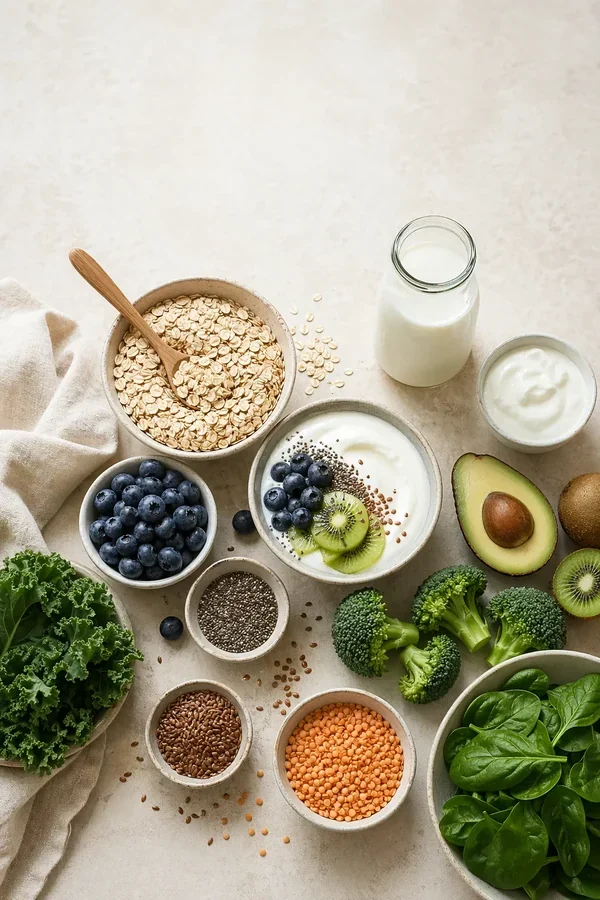
Resistant starch meals usually fail in simple ways.
Mistake 1: Treating Resistant Starch as Unlimited
Cooled rice and potatoes still count as food energy.
The method should support portion control, not bypass it.
If the portion gets bigger because you believe the starch is now “resistant,” the meal can move in the wrong direction.
Mistake 2: Forgetting Protein
Carb-only resistant starch meals often fail satiety.
That does not mean carbs are bad. It means the meal is unfinished.
Protein should be visible.
Mistake 3: Stacking Healthy Calories
Healthy ingredients can still stack quickly.
Common examples:
- oats plus nut butter plus granola plus honey
- potatoes plus butter plus oil plus cheese
- rice plus creamy sauce plus avocado
- toast plus jam plus butter plus sweet coffee
Choose one main flavor/topping first. Add more only if it truly helps the meal.
Mistake 4: Changing Everything at Once
If you change the starch, protein, topping, coffee timing, and portion size all at once, you will not know what worked.
Weight-management meals need feedback.
Test the pattern before rewriting the whole diet.
The 3-Day P.R.T. Test

Do not guess. Test.
Weight-management meals have to work with your real hunger, schedule, digestion, and snack behavior.
Use this simple 3-day test:
| Day | Meal | Protein | Resistant starch portion | Toppings | Hunger 3h later | Bloating | Snack urge |
|---|---|---|---|---|---|---|---|
| 1 | Baseline usual breakfast/lunch | Track | Track | Track | Track | Track | Track |
| 2 | P.R.T. meal | Fixed | Modest portion | One topping | Track | Track | Track |
| 3 | Same P.R.T. meal | Same | Same | Adjust one variable | Compare | Compare | Compare |
What to change first:
- If you are hungry, increase protein before increasing starch.
- If you are bloated, reduce the resistant starch portion or total fiber load.
- If calories creep, reduce toppings before blaming the carb.
- If energy crashes, check sweet drinks, sleep, and total meal balance.
If bloating is part of the pattern, read bloating after eating and compare your meal variables.
Supplement vs Food: Which Should You Choose?

Food-first is the better starting point for most people.
Whole foods give you meal context. You chew them. You see the portion. You can pair them with protein. You can notice whether they make you full or bloated.
Supplements can be useful in research settings, but they are also easy to increase too quickly. That can lead to gas, bloating, or confusion about what is causing symptoms.
Start with one food-based resistant starch meal before adding powders.
Be more cautious with supplements if you have diabetes, take medications, are pregnant, have a GI disorder, have had recent surgery, have an eating disorder history, or follow a strict medical nutrition plan.
If any of those apply, work with a clinician or dietitian before using resistant starch supplements.
Who Should Be More Careful
This article is food-first education, not medical nutrition therapy.
Talk with a licensed healthcare professional if you have diabetes, insulin resistance, obesity under medical treatment, pregnancy, immune compromise, IBS, SIBO, GERD, inflammatory bowel disease, celiac disease, wheat allergy, recent surgery, eating disorder history, or a prescribed medical nutrition plan.
Also get care if digestive symptoms are severe, persistent, getting worse, or come with red flags such as vomiting, fever, blood in stool, unexplained weight loss, dehydration, severe abdominal pain, persistent diarrhea, persistent constipation, or a major change in bowel habits.
Resistant starch is a food tool. It should not become a rule that makes you afraid of normal meals.
FAQ
Does resistant starch help you lose weight?
Resistant starch may support weight management for some people, but research is mixed and direct weight loss is not guaranteed. It is best used as part of a protein-forward, calorie-aware meal pattern.
What is the best resistant starch food for weight loss?
The best starter is the one you can portion and pair with protein. Cooled potatoes, cooled rice, overnight oats, cooled sweet potato, and frozen toast can all work if the meal is structured well.
Does resistant starch burn belly fat?
No. Resistant starch should not be framed as a belly-fat burner. It may support fullness, glucose/insulin response, or gut fermentation in some people, but it does not target belly fat by itself.
Does resistant starch reduce calories?
Do not use resistant starch as a calorie-cancellation strategy. Preparation can change starch digestibility in some contexts, but rice, potatoes, oats, bread, and beans still count as food energy.
Is cooled rice good for weight loss?
Cooled rice can fit a weight-friendly meal if it is portioned and paired with protein. It is not unlimited, and the bowl still needs vegetables and measured sauce.
Are cold potatoes good for weight loss?
Cold or cooled potatoes can be filling and easy to portion, but toppings and total intake matter. Butter, oil, cheese, and creamy sauces can quickly change the meal.
Are overnight oats good for weight loss?
Overnight oats can be useful if protein is included and toppings are measured. Small oats plus Greek yogurt plus berries is usually a better starter than a large bowl with several calorie-dense add-ons.
How much resistant starch should I eat per day?
Avoid universal dosing. Start small with food, increase slowly if tolerated, and pay attention to bloating, hunger, and snack behavior.
Can resistant starch cause bloating?
Yes. Resistant starch can be fermented by gut bacteria, and fermentation can produce gas. Bloating is more likely if you increase resistant starch quickly or stack it with several other high-fiber foods.
Should I take resistant starch supplements for weight loss?
Food-first is the better starter. Supplements require more caution, especially if you have medical conditions, take medications, are pregnant, or have a history of digestive issues.
Is resistant starch safe for diabetics?
Do not assume it is automatically safe. People with diabetes should work with their clinician or dietitian and monitor individual glucose response.
What is the easiest resistant starch breakfast for weight management?
Good starters include overnight oats with Greek yogurt, cooled sweet potato with eggs, or frozen toast with eggs or cottage cheese.
Bottom Line
Resistant starch is not a weight-loss loophole.
It does not make carbs free, unlimited, or magical.
But it can help you build better meals if you use it correctly.
Use the P.R.T. Plate Method:
Protein -> Resistant Starch -> Toppings.
Protein first so the meal is filling. Resistant starch second as a controlled carb base. Toppings last so flavor does not quietly become calorie creep.
That is the practical win: not fear of carbs, not blind faith in a hack, but a repeatable meal pattern that helps weight control feel less chaotic during real workdays.

About Mr. Anh
We turn solid evidence into everyday habits Americans can actually do—plain English, cups/oz, grocery-aisle swaps, and routines that fit real life. Our editorial process: Experience—we road-test tips in real schedules…