Gut Health and Skin: What Actually Connects Them
The gut-skin connection is real, and the mechanism is more concrete than most articles make it sound. But four things matter more than any capsule.
You have been taking a probiotic for three months because you read that a healthy gut means clear skin. Your skin looks the same.
The connection is real. The research behind it is genuinely interesting. But the capsule is the smallest part of it — and it is the only part anyone is selling you.
Here is what actually links your gut to your face, the four things that matter more than any supplement, and the two popular ideas you can safely ignore.
Quick takeaways:
- Your gut and skin communicate through inflammatory signals in your bloodstream — this is not a metaphor
- Four things matter more than a capsule: fibre, movement, sleep, and stress
- Your skin’s own microbial population settles by about age three — changing it later runs through your gut
- The research shows association, not proven cause and effect
- Colon cleansing and “7-day gut resets” have no basis. Skip both
What Actually Connects Your Gut to Your Skin
The pathway, in one sentence
When the intestinal barrier becomes more permeable than it should be, compounds that were meant to stay in your gut cross into circulation. A clinical review of this puts it plainly: a leaky gut leads to “leaky metabolites in the bloodstream with resulting cytokines and inflammatory mediators that can be transported to other organs and subsequently accumulate in the skin.”
That is the whole mechanism. Not mystical, not marketing — a barrier, a bloodstream, and inflammatory signalling that ends up somewhere it was not invited.
Your gut and your skin have more in common than most people realise. Both are barrier organs. Both are in constant contact with the outside world. Both carry their own microbial populations. When one barrier is struggling, the other tends to hear about it.
Butyrate and the tight junctions
Here is the part that turns this from an abstraction into something you can act on.
Bacteria in your colon ferment fibre and produce short-chain fatty acids — butyrate, acetate and propionate. Butyrate in particular repairs the tight junction proteins that hold your intestinal barrier closed.
Two details worth sitting with:
- Short-chain fatty acids supply roughly ten percent of your daily energy needs. These are not a footnote in your metabolism.
- People with psoriasis show depleted levels of Faecalibacterium prausnitzii — one of the main butyrate producers in the human gut.
So the chain runs: fibre → bacteria → butyrate → a tighter gut barrier → less inflammatory signalling reaching your skin.
Notice what is not in that chain. A capsule does not appear anywhere in it.
If the microbial side of this is new to you, your gut microbiome covers the foundations, and reducing gut inflammation covers the practical side of calming an irritated one.
Why topical products can only reach so far
Your skin has its own microbial population, separate from your gut. It largely settles into its adult pattern by around the age of three.
That is not a reason for despair — it stays modifiable throughout life. But the research suggests the more reliable route to changing it runs through your gut, not through what you apply on top.
Which is an awkward finding for an industry built on what you apply on top.
The Signs People Actually Notice
What the research finds in specific conditions
The pattern turns up consistently enough to be worth knowing:
- Acne — reduced gut microbial diversity, with lower Firmicutes and higher Bacteroides
- Atopic dermatitis (eczema) — lower levels of Akkermansia, Bacteroidetes and Bifidobacterium
- Psoriasis — a raised risk of intestinal immune disorders including IBD, ulcerative colitis and celiac disease
There are softer signals too. Rosacea shows associations with SIBO and H. pylori. Hidradenitis suppurativa turns up alongside Crohn’s disease more often than chance would explain.
What this does and does not mean
I want to be precise here, because this is exactly where most articles overreach.
These are associations. People with certain skin conditions tend to show certain gut patterns. That is not the same as saying the gut pattern caused the skin condition — it could run the other way, or both could follow from something else entirely.
What the association justifies is this: if your skin is struggling and your digestion is also struggling, approaching them as one problem is more sensible than approaching them as two.
If you are trying to work out whether your digestion is part of the picture, signs of poor gut health goes through what to look for.
The Four Things That Matter More Than a Probiotic

This is the section the supplement industry would rather not write.
1. Fibre
This is the lever with the most direct mechanism behind it. Fibre feeds the bacteria that produce butyrate, and butyrate is what repairs your gut barrier.
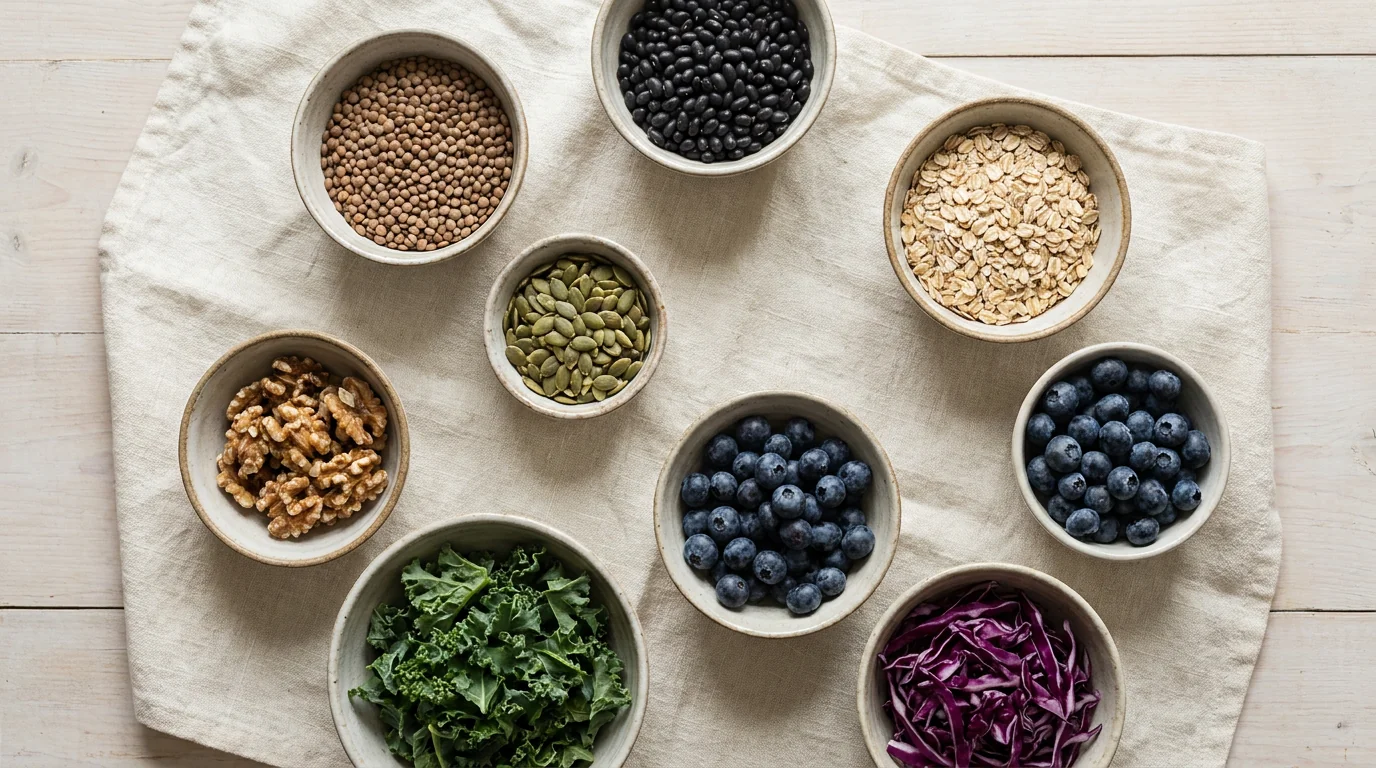
The practical version is variety rather than volume. Thirty different plants across a week does more for microbial diversity than a large serving of the same vegetable every day. Beans, lentils, whole grains, nuts, seeds, and as many colours of vegetable as you can manage.
Increase gradually. A sudden jump in fibre on an unprepared gut produces gas and discomfort, and people abandon the whole idea a week in.
2. Movement
This one surprises people, and it has genuine research behind it.
Aerobic exercise measurably changes the composition of gut microflora — studies comparing elite and non-elite athletes find different microbial profiles. Exercise also shortens transit time, which changes how long material sits fermenting in your colon.
You do not need to train like an athlete. Regular movement, most days, is the version that matters.
3. Sleep
You spend roughly thirty percent of every day asleep, and it is not passive time for your gut.
Melatonin does double duty — regulating sleep and modulating the gut microbiome. Broken sleep interferes with both jobs at once. This is also why a stressful, under-slept month often shows up on your face two months later rather than immediately.
4. Stress
The gut microbiome produces more than thirty hormone-like compounds, including GABA, dopamine and serotonin. This is why the gut–brain–skin connection keeps appearing in the literature rather than being dismissed.
Chronic stress changes gut motility, barrier permeability and microbial composition. You cannot supplement your way around it.
A Traditional Perspective: “We want the answer to be a bottle, because a bottle can be bought on a Tuesday and finished by Friday. But the four things that actually move this — what you eat, how you move, how you sleep, how you carry your worry — cannot be purchased. They can only be practised. That is why nobody advertises them.”
— Mr. Anh, Founder of Essential Wellness AZ
Where Probiotics Actually Fit
I am not against probiotics. I am against the order they are usually presented in.
What the evidence supports
There are real signals. A meta-analysis supports probiotics for atopic dermatitis in infants, though the benefit appears to come mainly from prevention rather than management. Studies on oral probiotics in acne have produced promising results. One trial using a Lactobacillus paracasei strain showed meaningful improvement in moderate to severe dandruff.
But the same reviews are candid about the limitations: high heterogeneity in the products tested, and shortcomings in study design. Different strains, different doses, different outcomes measured.
Why “which probiotic is best for skin” is the wrong question
Because the honest answer is that it depends on the strain, the condition, and the person — and no product on a shelf is matched to your particular situation.
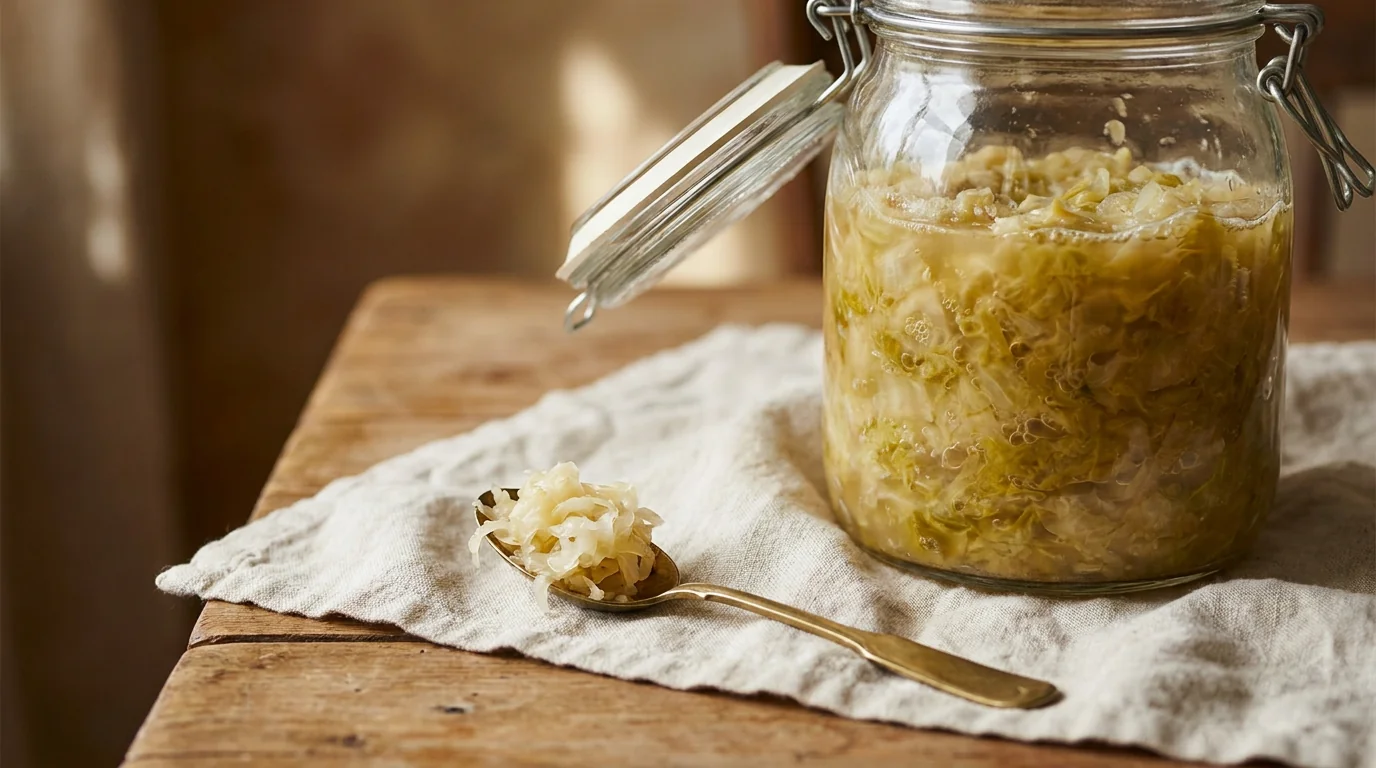
Food first is the more defensible position. Fermented foods deliver living bacteria alongside the acids and food sources they produced during fermentation, in doses small enough for your gut to adapt to. This list of probiotic foods covers the gentle starting points, and the benefits of fermented foods explains why the living version behaves differently from a freeze-dried one.
Start with one teaspoon a day. Build slowly. If a capsule turns out to be a useful addition on top of that, fine — but it is an addition, not a foundation.
Two Things You Can Skip
Colon cleansing and hydrotherapy
You will find pages promoting colon irrigation as a route to clear skin. There is no credible evidence supporting this, and there are documented risks — electrolyte disturbance, bowel injury, and disruption of the microbial population you were trying to help.
Your colon does not need to be flushed. It is not storing anything that a functioning digestive system has not already dealt with.
“7-day gut resets”
A microbial population does not restructure itself in a week. It can shift somewhat — but a shift produced by seven days of unusual eating reverts almost immediately when normal eating resumes.
The idea sells because it fits a week-long content format. Your gut did not read the schedule.
What actually works is unglamorous and slow, which is precisely why it does not get packaged.
How Long This Takes

Longer than you want.
Two clocks are running, and neither is fast.
Your gut microbiome shifts over weeks once you change what you feed it consistently. Not days.
Your skin then needs its own cycle on top of that. Skin renews roughly every 28 days, and a spot visible today began forming weeks ago — which is why dietary changes take one to three months to show. I go through that timeline in detail in the clear skin diet guide.
For a sense of scale from the research side: trials on cocoa polyphenols and on soy isoflavones both measured skin outcomes at 24 weeks. That is roughly six months, in studies designed to find an effect.
Give any change eight to twelve weeks minimum before you judge it.
When to See a Doctor
Food and lifestyle support your skin. They do not replace medical care, and the researchers working closest to this are the first to say so. As one gut health specialist puts it, there is currently no clinical evidence that diet can “cure” any of these conditions.
See a doctor rather than adjusting your diet again if you have:
- Moderate to severe eczema or psoriasis
- Cystic acne, or acne leaving scars
- Any suspicion of an autoimmune condition
- Persistent digestive symptoms — blood, ongoing pain, unexplained weight loss
- Skin that has not improved after several months of consistent effort
The gut angle is worth pursuing. It is not worth pursuing instead of a diagnosis.
Frequently Asked Questions
Can gut health improve skin?
The two are connected through inflammatory signalling in the bloodstream, and people with acne, eczema and psoriasis show measurable differences in gut microbial composition. That is an association rather than proven cause. Supporting your gut is a reasonable thing to do — just not the only thing.
What are the signs of poor gut health on skin?
Persistent redness, breakouts that track with digestive flare-ups, and skin conditions that improve when digestion improves. None of these is diagnostic alone. The pattern worth noticing is skin and gut moving together over time.
How do I improve gut health for clearer skin?
Four things, in this order: eat more plant variety for fibre, move most days, protect your sleep, and reduce chronic stress where you can. Add fermented foods in small amounts once those are in place. A supplement is the last item on this list, not the first.
Do probiotics help your skin?
Sometimes, for some people, with some strains. Research supports probiotics for atopic dermatitis in infants and shows promising results for acne, but the reviews note high variability between products and weaknesses in study design. Consider it a reasonable experiment, not a guarantee.
Which probiotic is best for skin?
There is no single best one, because effects are strain-specific and no shelf product is matched to your situation. Fermented foods are a more defensible starting point — living bacteria, gentler doses, and no marketing claim attached.
Is a 7-day gut reset real?
No. Your gut microbial population does not restructure in a week, and any shift produced by seven days of unusual eating reverts when normal eating resumes. The format sells; the biology does not cooperate.
How long does it take for gut health to affect skin?
Expect one to three months. Your microbiome shifts over weeks, and your skin needs a renewal cycle of about 28 days on top of that. Research trials measuring skin outcomes from dietary compounds often run 24 weeks.
The Bottom Line
The gut–skin connection is real, and the mechanism is more concrete than most articles make it sound: a permeable barrier, inflammatory signals in circulation, and skin on the receiving end.
But the order of operations has been rearranged by people with something to sell. Fibre, movement, sleep and stress sit above any capsule — and none of them can be bought, which is exactly why none of them are advertised.
You do not need a better supplement. You need more plants, more movement, more sleep, and more patience than the internet suggests.
If you want the food side of this in detail, the clear skin diet guide covers what to eat, what to skip, and how long each change takes to show.
Disclaimer: I’m trained in traditional medicine in Vietnam, but I’m not currently practicing medicine or providing personal diagnosis or treatment advice through this website. I write from personal experience, ongoing research, and my own food-first wellness experiments. My work explores digestion, daily energy, traditional self-care, movement, breathwork, meditation, and simple habits that support everyday well-being. Everything I share here is educational and reflective, not medical advice. It should not replace diagnosis, treatment, or care from a licensed healthcare professional.

About Mr. Anh
We turn solid evidence into everyday habits Americans can actually do—plain English, cups/oz, grocery-aisle swaps, and routines that fit real life. Our editorial process: Experience—we road-test tips in real schedules…