Does Flaxseed Increase Estrogen? Why Your Gut Decides the Answer
You have probably read both answers by now. One article says flaxseed raises estrogen and warns you off it. The...
- "Contains Estrogen" and "Increases Estrogen" Are Two Different Questions
- Your Gut Bacteria Decide Whether Flaxseed Does Anything
- So Does It Increase or Decrease Estrogen?
- Why You Could Not Find a Straight Answer
- What This Means for You in Practice
- When to Check With a Doctor First
- Frequently Asked Questions
- The Bottom Line
You have probably read both answers by now. One article says flaxseed raises estrogen and warns you off it. The next says flaxseed lowers estrogen and recommends it for exactly the same reason. Neither one explains how both can be true.
Let me give you the short version first, then show you why it works that way.
Flaxseed contains no estrogen at all. Not a trace. And whether it ends up raising or lowering estrogen activity in your body depends less on the seed than on the bacteria living in your gut.
A Traditional Perspective: “We keep asking what a food contains, as though the answer were printed inside the seed. But a seed is only half the equation. The other half is the gut that receives it — and no two guts read the same seed the same way.”
— Mr. Anh, Founder of Essential Wellness AZ
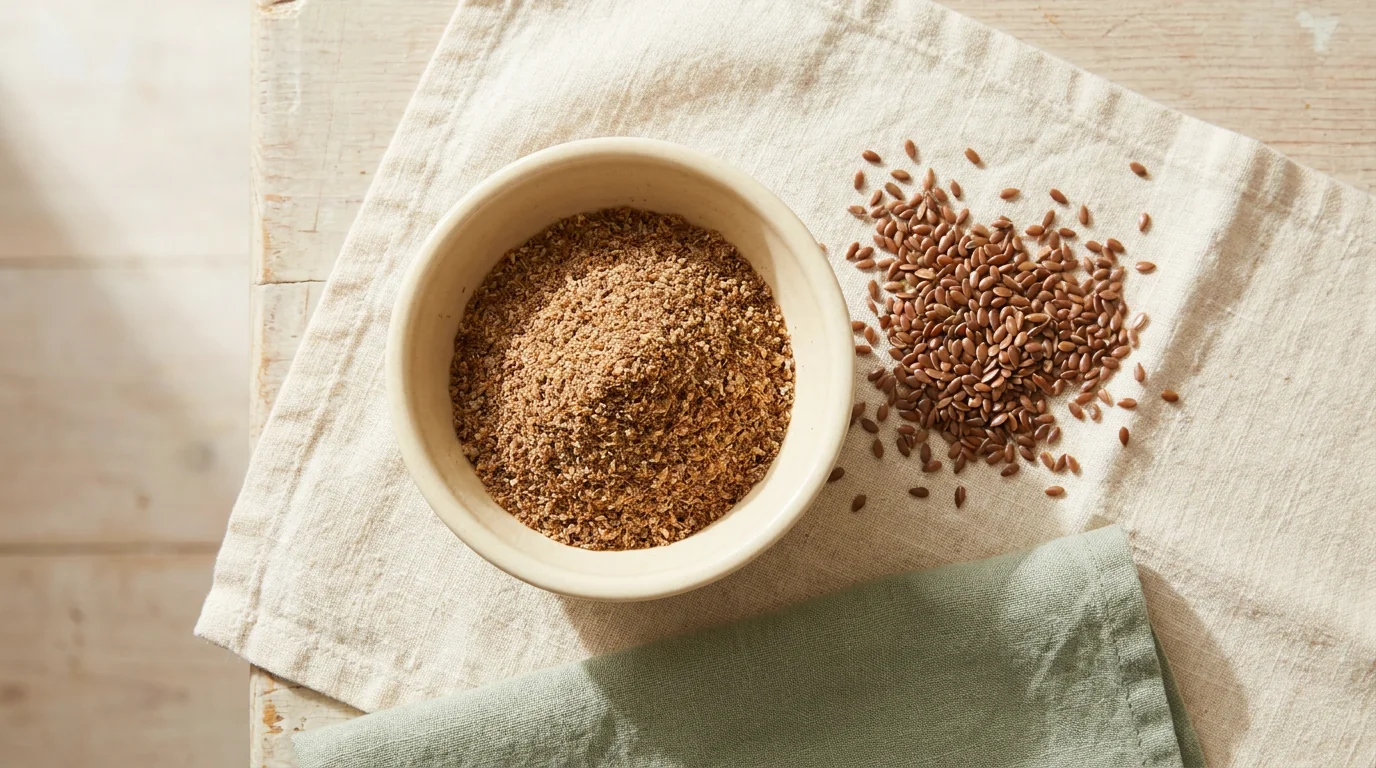
“Contains Estrogen” and “Increases Estrogen” Are Two Different Questions
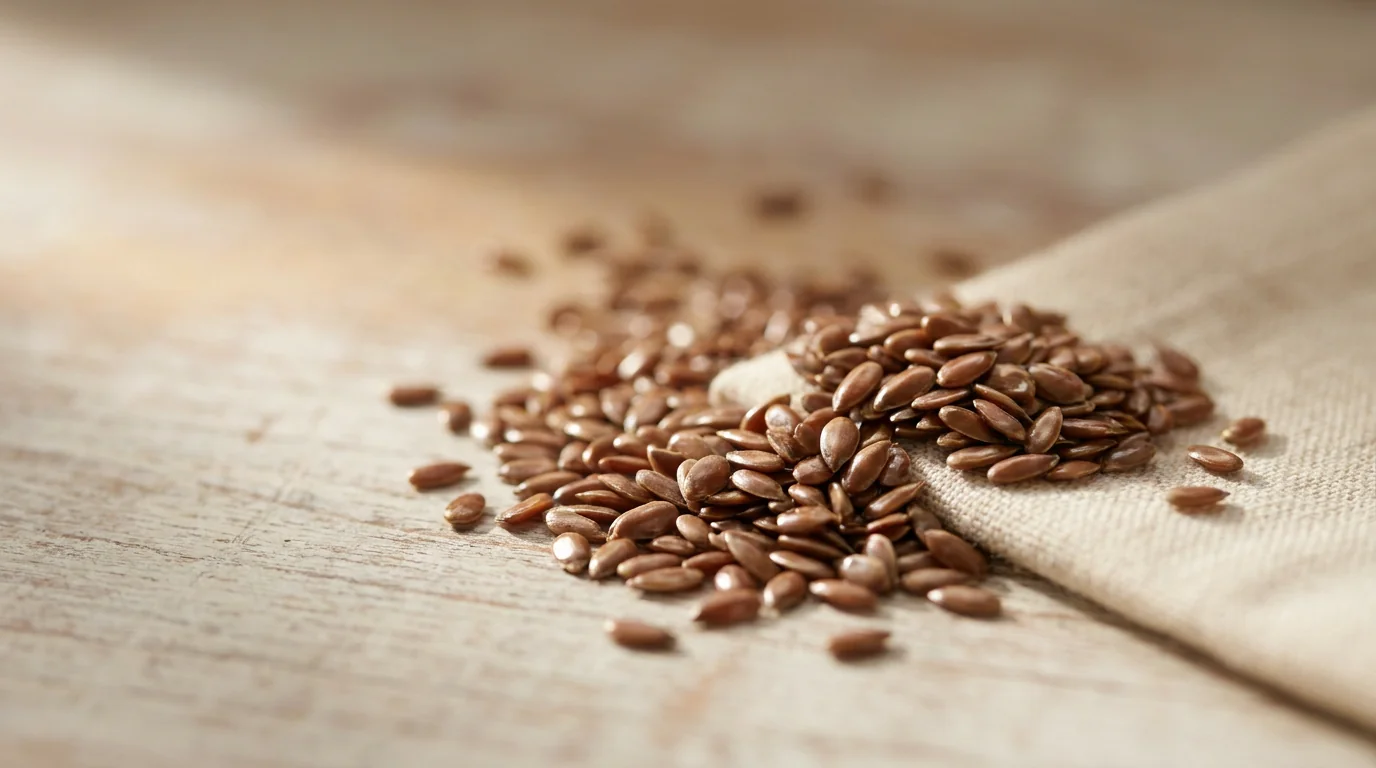
People search for both of these, and they are not the same thing. Sorting them out clears up most of the confusion by itself.
Does flaxseed contain estrogen? No. What flaxseed contains is a compound called secoisolariciresinol diglucoside — SDG — which belongs to a family called lignans. Flaxseed is the richest known food source of them by an enormous margin.
Lignans are classed as phytoestrogens, and that word is where the trouble starts. “Phytoestrogen” sounds like “plant estrogen,” so people reasonably assume they are swallowing a plant version of the hormone. They are not. A lignan is not estrogen, does not look much like estrogen, and on its own does essentially nothing hormonally.
It is a raw material. Something else has to act on it first.
Your Gut Bacteria Decide Whether Flaxseed Does Anything

This is the step almost every article skips, and it is the one that actually answers your question.
When SDG reaches your colon, specific gut bacteria convert it in two stages — first into enterodiol, then into enterolactone. Those two compounds, not the lignan you ate, are what interact with your estrogen receptors.
No conversion, no effect. And here is the part that matters for you personally: how much you convert varies enormously from person to person. Two people can eat the identical tablespoon of ground flaxseed and end up with substantially different enterolactone levels, because they are carrying different bacteria.
Several things suppress that conversion:
- Recent antibiotics. Courses of antibiotics measurably reduce enterolactone production, sometimes for months afterwards.
- Low microbial diversity. A narrow microbiome may simply not carry the species that perform the conversion.
- Very fast transit. The conversion happens in the colon and takes time. If things move through too quickly, less gets converted.
- Whole seeds instead of ground. An intact flaxseed hull often passes through undigested — your bacteria never get access to the SDG inside.
So when someone tells you flaxseed did nothing for them, that may be literally true — and it may have nothing to do with the flaxseed. If you want to understand the system doing the converting, our guide to the gut microbiome covers how that population is built and maintained.
This is also why I keep steering people toward feeding the gut rather than chasing single compounds. A varied, fibre-fed microbiome is what makes flaxseed work at all. Fermented and probiotic foods support the same population that performs this conversion.
So Does It Increase or Decrease Estrogen?
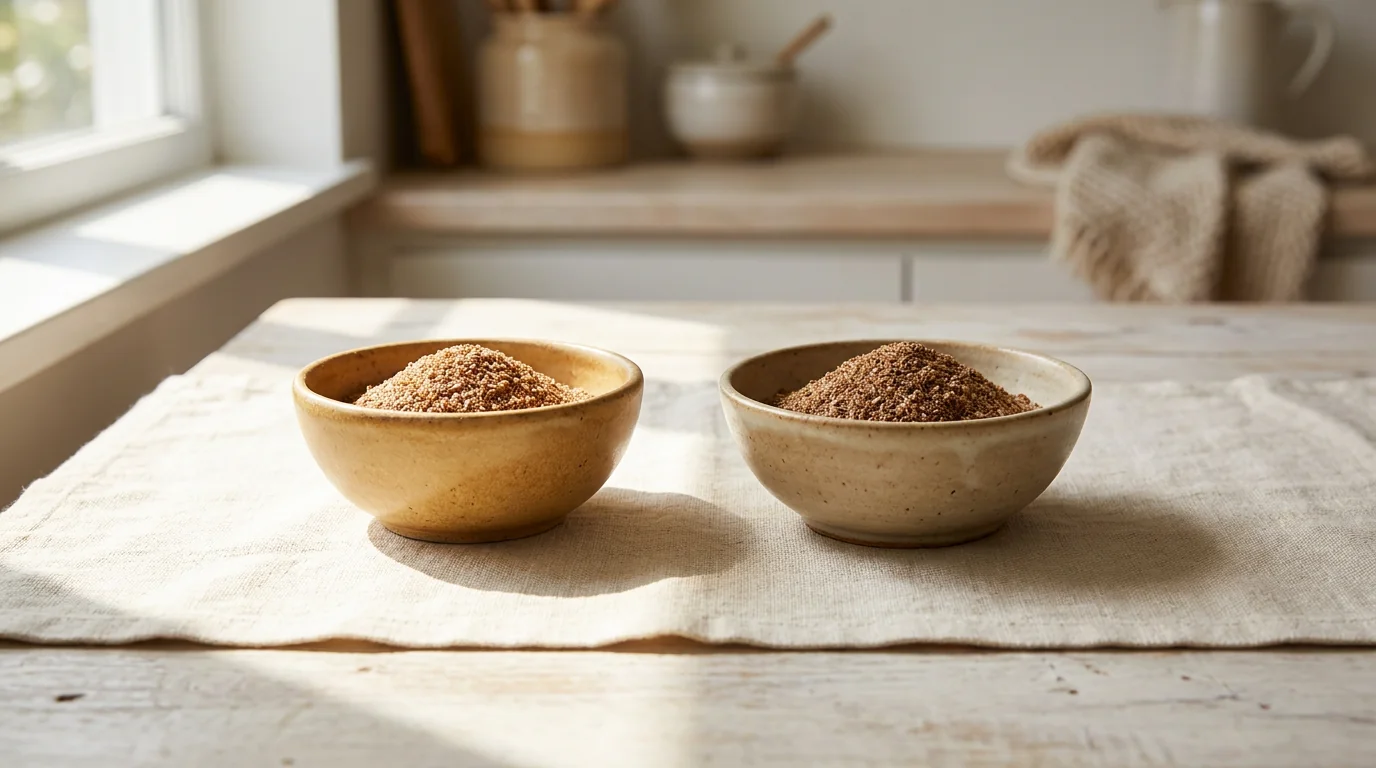
Both, depending on the state you are already in. This is not a dodge — there is a specific mechanism behind it.
Enterolactone binds to your estrogen receptors, but far more weakly than your own estrogen does. That single fact produces two opposite outcomes:
- When your own estrogen is low — after menopause, for instance — many receptors sit empty. A weak compound occupying an empty receptor produces a small amount of estrogenic signal where there was none. The net effect leans upward.
- When your own estrogen is high — the luteal phase, or a generally estrogen-dominant pattern — those receptors are already occupied by the real thing. Enterolactone competes for the same sites, and every receptor it takes is one your stronger estrogen cannot use. The net effect leans downward.
This competitive-binding explanation is the widely accepted account of how phytoestrogens behave, though research is still refining the details. Flaxseed lignans also appear to preferentially engage one receptor subtype (ERβ) over the other, which is part of why their effects are gentler and more tissue-specific than a hormonal dose would be.
There is a second route as well: flaxseed appears to increase sex hormone binding globulin, the protein that binds circulating estrogen and reduces how forcefully it acts on your tissues. More binding protein, less free estrogen doing work — regardless of how much estrogen you are producing.
Why You Could Not Find a Straight Answer
Now the most useful thing in this article, and the reason your search felt so frustrating.
In most human trials, flaxseed barely changes the amount of estrogen circulating in your blood at all. Measure estradiol before and after, and the number often sits roughly where it started.
What does change is how your body processes that estrogen — which metabolites it produces, how much is bound versus free, and how strongly the signal lands on your tissues. Flaxseed is not a volume knob on estrogen production. It is closer to an adjustment in how the existing signal is handled.
Which means the question “does flaxseed increase or decrease estrogen” was built on a premise that does not quite hold. You were looking for a number to move. The thing that moves is a pattern. No wonder every article gave you a different answer — they were all answering a question that does not have a single number attached to it.
It is also worth being straight about the limits of the evidence. For the outcome most people actually care about — menopausal hot flashes — trial results are genuinely mixed. Some studies show benefit, others show no more than placebo. Anyone telling you flaxseed reliably fixes hot flashes is ahead of what the research supports.
What This Means for You in Practice
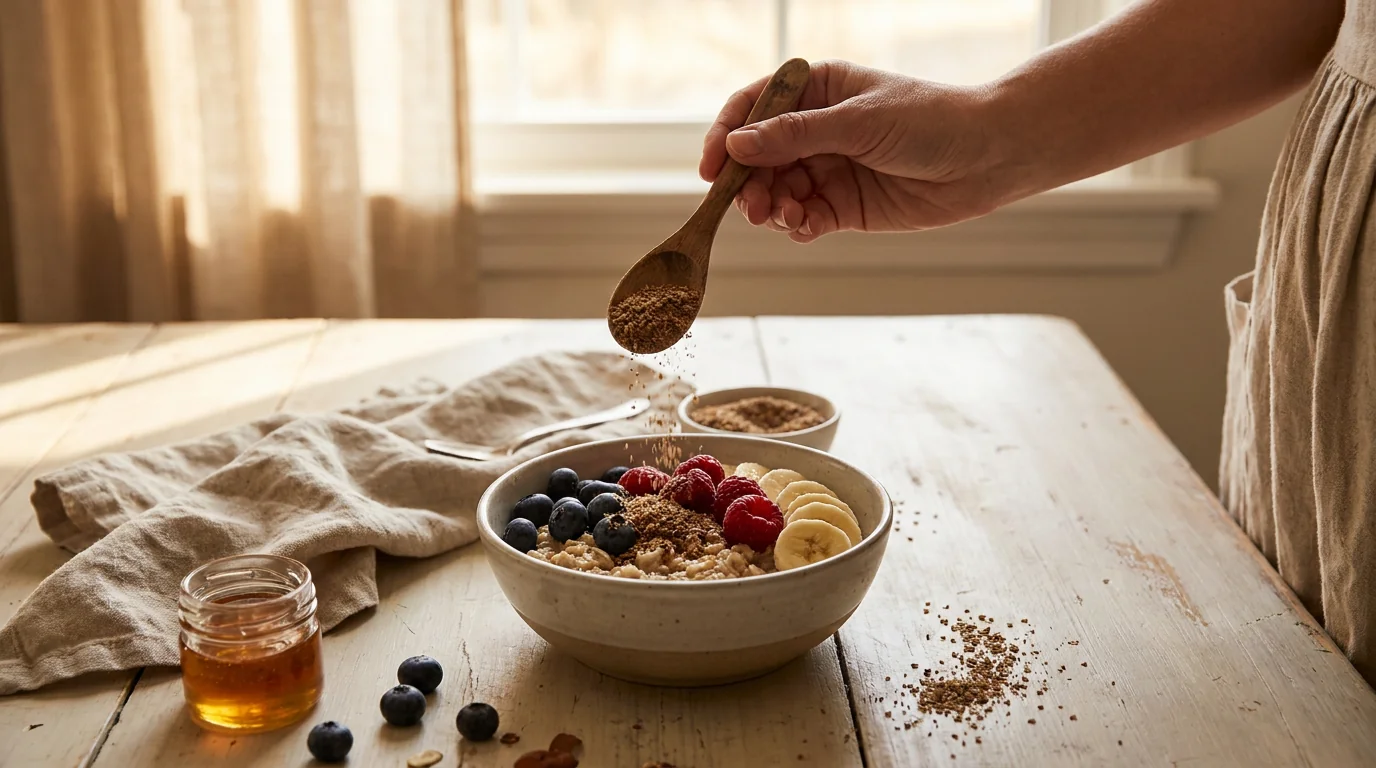
Three things follow from the mechanism, and they are more useful than any dosage chart:
- Grind it, or it does nothing. Whole seeds frequently pass through intact and your bacteria never reach the SDG. This is the single most common reason flaxseed fails to do anything.
- Give it weeks, not days. You are not taking a hormone; you are supplying a precursor to a bacterial process that then shifts how estrogen is metabolised. That sequence takes time.
- Feed the converters. If your microbiome is thin — after antibiotics, or on a low-fibre diet — fixing that comes before adding more flaxseed. More raw material does not help if nothing is processing it.
For how much to take, when to take it, and how it fits each life stage from PMS through menopause, our full guide to flax seeds for hormone balance covers the practical side in detail. If you want the wider food approach, foods to balance hormones is the next step.
And if the idea of gut bacteria influencing your hormones is new to you, it goes further than flaxseed — a group of gut microbes helps regulate how much estrogen your body recycles rather than eliminates. I cover that in why your cycle decides whether a probiotic works.
When to Check With a Doctor First
Flaxseed is a food, and for most people it is an unremarkable one. A few situations genuinely warrant a conversation before you make it a daily habit:
- You are being treated for a hormone-sensitive cancer, or taking tamoxifen or an aromatase inhibitor. The interaction question here is real and belongs with your oncologist, not a blog.
- You take anticoagulant or antiplatelet medication.
- You are pregnant or breastfeeding.
- You have a bowel condition where a sudden fibre increase is a problem.
The hub guide has a fuller section on who should be careful with daily flaxseed.
Frequently Asked Questions
Does flaxseed increase estrogen?
Not in the way most people mean. Flaxseed contains no estrogen. It contains lignans, which your gut bacteria convert into compounds that bind estrogen receptors weakly. When your own estrogen is low those compounds add a small estrogenic signal; when it is high they compete with it and reduce the effect. In most trials the amount of estrogen circulating in your blood changes very little.
Does flaxseed contain estrogen?
No. Flaxseed contains lignans — specifically secoisolariciresinol diglucoside — which are plant compounds, not hormones. They are called phytoestrogens because of how their metabolites interact with estrogen receptors, not because they are a form of estrogen.
Does flaxseed increase or decrease estrogen?
It can lean either way depending on your existing hormone levels, because its metabolites bind estrogen receptors far more weakly than your own estrogen. With low estrogen the net effect leans up; with high estrogen the competition for receptors makes it lean down. More accurately, flaxseed changes how estrogen is handled rather than how much of it you have.
Why does flaxseed work for some people and not others?
Because the active compounds are produced by your gut bacteria, not by the seed. People vary widely in how much they convert. Recent antibiotics, low microbial diversity, very fast transit, or eating whole rather than ground seeds can all mean little conversion happens at all.
Is flaxseed oil the same as ground flaxseed for estrogen?
No. The lignans sit largely in the seed material, not the oil. Standard flaxseed oil contains very little of them unless it is specifically sold as high-lignan. For anything to do with estrogen activity, ground seed is the relevant form.
Does flaxseed help with menopause symptoms?
The evidence is mixed. Some trials show improvement in hot flashes, others find no advantage over placebo. It is reasonable to try as part of a wider food approach, but it should not be presented as a reliable treatment.
The Bottom Line
Flaxseed contains no estrogen. It contains a precursor that your gut bacteria turn into weak estrogen-receptor binders — which nudge the signal up when yours is low, and damp it down when yours is high. And in most people the actual quantity of estrogen in the blood barely moves.
Which is why the internet could not give you a straight answer: the honest one is “it depends,” and the thing it depends on is not the seed. It is what is living in your gut.
Disclaimer: I’m trained in traditional medicine in Vietnam, but I’m not currently practicing medicine or providing personal diagnosis or treatment advice through this website. I write from personal experience, ongoing research, and my own food-first wellness experiments. My work explores digestion, daily energy, traditional self-care, movement, breathwork, meditation, and simple habits that support everyday well-being. Everything I share here is educational and reflective, not medical advice. It should not replace diagnosis, treatment, or care from a licensed healthcare professional.

About Mr. Anh
We turn solid evidence into everyday habits Americans can actually do—plain English, cups/oz, grocery-aisle swaps, and routines that fit real life. Our editorial process: Experience—we road-test tips in real schedules…