How to Make Resistant Starch Rice for Workday Meal Prep
Learn the 4R Workday Rice Method: cook, cool, refrigerate, reheat, and rebalance rice with protein so it fits meal prep without feeling heavy.
- Quick Answer: How Do You Make Resistant Starch Rice?
- The 4R Workday Rice Method
- What Research Says About Cooling and Reheating Rice
- Food Safety: The Part Most Rice Hacks Skip
- White Rice or Brown Rice for Resistant Starch?
- Should You Add Coconut Oil to Rice?
- How Much Resistant Starch Rice Should You Eat?
- Can Resistant Starch Rice Cause Bloating?
- 5 Workday Meal Ideas With Resistant Starch Rice
- The 3-Day Resistant Starch Rice Test
- Who Should Be More Careful
- Frequently Asked Questions
- The Bottom Line
Affiliate disclosure: This guide is food-first education. Any resource links are secondary and do not change the advice.
You probably do not need to quit rice.
You need a better rice system.
That matters if you work at a desk, eat lunch between tasks, or want something filling without feeling heavy for the next three hours. Fresh hot rice is easy to over-serve. It is also easy to eat as the main event, with a little protein on the side and sauce doing too much of the work.
The problem is not always rice itself.
The problem is often the pattern: fresh-hot, oversized, low-protein rice meals that are hard to portion and easy to repeat on autopilot.
Rice can still be cheap, familiar, comforting, and useful for meal prep. The difference is how you prepare it and how you build the plate around it.
This guide shows you how to make resistant starch rice with a simple workday method: cook it, cool it, store it safely, reheat it, and pair it with protein. I call it the 4R Workday Rice Method: Rice cooker, Refrigerate, Reheat, Rebalance.
This is not a magic rice hack. It does not make rice carb-free, calorie-free, or unlimited. It is a practical way to keep rice in your routine while making the meal more controlled, more balanced, and easier to test.
Quick takeaways:
– Cook rice normally, then cool it safely and refrigerate it.
– Research suggests cooked rice cooled for 24 hours and reheated can contain more resistant starch than freshly cooked rice.
– Reheating does not automatically erase the point.
– Start with 1/3 to 1/2 cup cooked rice if bloating or portion control is a concern.
– Pair rice with protein before adding sauces, oils, or extras.
– Do not leave cooked rice sitting out for hours. Safe cooling and reheating matter.
Quick Answer: How Do You Make Resistant Starch Rice?
To make resistant starch rice, cook rice normally, let it steam off briefly, portion it into shallow containers, refrigerate it for 12 to 24 hours, then reheat it thoroughly before eating. Build the meal around protein and cooked vegetables instead of eating a large plain rice bowl.
The rice is not the whole trick.
The workflow is.
Cooling cooked starch can encourage retrogradation, a process where starch molecules reorganize into a structure that resists digestion more than freshly cooked starch. That is why cooked-and-cooled rice can be different from rice eaten straight from the cooker.
For beginners, keep the portion modest: about 1/3 to 1/2 cup cooked rice. If that feels calm and satisfying, adjust later.
The goal is not to ask, “How much rice can I get away with?”
Ask the better question: “Can I keep rice in the meal without making the meal heavy, sleepy, or easy to overeat?”
If you want the broader science behind this method, read the cook-and-cool resistant starch method.
The 4R Workday Rice Method
Use this as your simple meal-prep system.
| Step | What to do | Why it matters | Common mistake | Better fix |
|---|---|---|---|---|
| Rice cooker | Cook rice normally | Keeps the method realistic | Trying a complicated protocol first | Start with your usual rice |
| Refrigerate | Cool and store safely | Cooling can increase resistant starch | Leaving rice out for hours | Portion into shallow containers and refrigerate |
| Reheat | Warm until hot throughout | Reheating does not automatically ruin the benefit | Eating questionable leftovers | Reheat only safely stored rice |
| Rebalance | Add protein and vegetables | Turns rice into a real meal | Giant rice bowl with little protein | Protein first, rice second |
1. Rice Cooker: Cook Rice Normally
Start with rice you already eat.
White rice, brown rice, jasmine rice, long-grain rice, or another familiar type can all be tested. You do not need to optimize every variable on day one.
Rice variety, water ratio, and cooking method can affect resistant starch levels. One study found that resistant starch content varied by rice variety and cooking method, especially after refrigeration. (PubMed)
That is useful, but it should not make the method feel like a lab project.
For a first test, cook rice the way you normally cook it. The upgrade happens after cooking: cooling, storage, reheating, and pairing.
If the system is too complicated, you will not repeat it. And if you cannot repeat it, you cannot learn what your body actually does with it.
2. Refrigerate: Cool and Store Safely
This is the step most people rush.
After the rice finishes cooking, let it steam off briefly. Then move it into shallow containers so it cools faster. Once it is no longer steaming hot, refrigerate it promptly.
Do not leave cooked rice sitting out for hours.
Food safety matters here because cooked rice can become unsafe if it is held at room temperature too long. The point is not to panic about rice. The point is to treat leftover rice with respect.
A safer home workflow looks like this:
- Cook the rice.
- Let steam escape briefly.
- Portion into shallow containers.
- Refrigerate promptly.
- Reheat only what you plan to eat.
- Avoid reheating the same container again and again.
If the rice smells off, sat out too long, or you are not sure how it was stored, skip it.
No wellness hack is worth questionable leftovers.
3. Reheat: Warm It Without Panic
You do not have to eat cold rice to get the point.
One study compared freshly cooked white rice with rice cooled for 10 hours at room temperature and rice cooled for 24 hours at 4 C, then reheated. The cooled-and-reheated rice had more resistant starch than freshly cooked rice in that study. The reported resistant starch values were 0.64 g/100 g for freshly cooked rice, 1.30 g/100 g for rice cooled at room temperature, and 1.65 g/100 g for rice cooled 24 hours at 4 C and reheated. (Nutrition Evidence, PubMed)
That does not mean every rice, rice cooker, refrigerator, and home kitchen will produce the same number.
But it does answer the big fear:
Reheating does not automatically erase the entire benefit.
For everyday meals, reheat rice until it is hot throughout. Food safety comes first. The goal is a meal you can actually use on a Tuesday, not a fragile protocol that falls apart the first time you need lunch quickly.
4. Rebalance: Make It a Meal
This is the part that matters most for office workers.
If you cool and reheat rice but still eat a giant rice bowl with little protein, the meal may still feel heavy. It may also leave you hungry later, especially if sauce and oil are doing more work than protein.
Use this order:
- Protein first.
- Rice portion second.
- Cooked vegetables next.
- Sauce and oil last.
Good protein anchors include eggs, tofu, chicken, fish, shrimp, lean beef, Greek yogurt sauce, cottage cheese, or another protein you tolerate well.
Rice is the base.
It should not be the whole meal.
What Research Says About Cooling and Reheating Rice
The most useful human study for this topic looked at cooked white rice, cooling, reheating, resistant starch, and glycemic response.
The study found that cooling cooked white rice increased resistant starch compared with freshly cooked rice. The rice cooled for 24 hours at 4 C and then reheated had the highest resistant starch value among the three tested conditions. (PubMed)
The same study also reported a lower glycemic response for the cooled-and-reheated rice meal compared with freshly cooked rice in that study setting.
That is interesting.
It also needs careful interpretation.
It does not mean resistant starch rice is a diabetes treatment. It does not mean rice becomes safe in unlimited portions. It does not mean every person will respond the same way.
It means food preparation can change how starch behaves, and cooling rice is a practical method worth testing.
Other research also suggests rice variety, cooking method, refrigeration, and reheating can influence starch digestibility. Microwave reheating and cold storage have been studied in cold-chain cooked rice, showing that reheating is more nuanced than the idea that heat simply destroys everything. (PubMed)
The practical takeaway is simple:
Cook, cool, reheat, and test your own response.
Food Safety: The Part Most Rice Hacks Skip
This section is boring on purpose.
Boring is good when we are talking about leftovers.
Rice content online often jumps straight to “cool rice to increase resistant starch.” That misses the part that matters most in real kitchens: cooked rice must be cooled and stored safely.
Do not leave a pot of cooked rice sitting out all afternoon because you are waiting for resistant starch. That is not the tradeoff you want.
Use this safer home workflow:
- Cook rice.
- Move it out of the hot cooker if you are meal-prepping.
- Portion into shallow containers.
- Let steam escape briefly.
- Refrigerate promptly.
- Reheat thoroughly before eating.
- Discard rice if storage was uncertain.
The goal is not maximum resistant starch at any cost.
The goal is a practical, safe meal you can repeat.
White Rice or Brown Rice for Resistant Starch?
The best rice is the rice you can portion, store safely, and pair with protein.
White rice is familiar, easy to digest for many people, and practical for meal prep. The key cooled-and-reheated rice study used white rice, so it is reasonable to use white rice for your first experiment.
Brown rice has more fiber and minerals, but it can feel heavier for some people. If your digestion is sensitive, brown rice is not automatically better.
Start with the rice you already tolerate.
Then test:
- portion size
- cooling time
- reheating method
- protein pairing
- bloating response
- hunger three hours later
Your best rice is not always the one that looks healthiest on paper.
It is the one that works in your real meal.
Should You Add Coconut Oil to Rice?
You may have heard about adding coconut oil to rice to increase resistant starch or reduce the glycemic impact.
There is research interest around rice cooked with oils, acids, herbs, and specific processing methods. Some studies suggest these additions can affect resistant starch in certain rice preparations. (PMC)
But I would not make coconut oil the headline move.
For a beginner, the main method is:
cook, cool, portion, reheat, pair with protein.
Adding coconut oil makes the method more complicated and adds calories. If your goal is weight-friendly eating, adding oil just to chase a hack may work against the plate you actually need.
Treat coconut oil rice as an optional advanced experiment, not the default.
How Much Resistant Starch Rice Should You Eat?
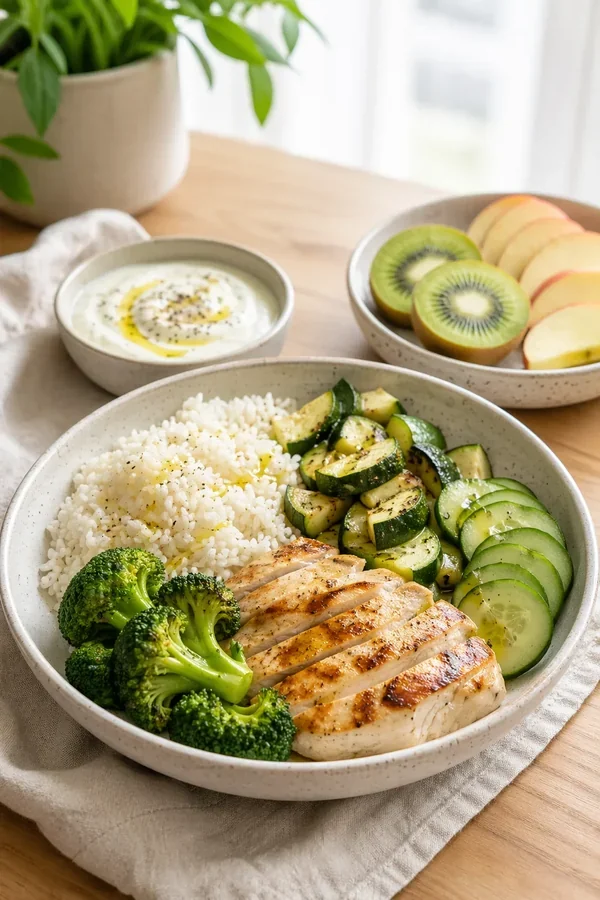
Start smaller than your normal rice bowl.
For many readers, a useful first portion is 1/3 to 1/2 cup cooked rice. Pair it with a clear protein anchor and cooked vegetables.
| Goal | Rice portion | Protein anchor | Add-on | Watch-out |
|---|---|---|---|---|
| Low-bloat test | 1/3 cup cooked | Egg, tofu, chicken, fish | Cooked vegetables | Do not add beans and raw salad on day one |
| Workday lunch | 1/2 cup cooked | Chicken, tofu, fish, eggs | Cooked greens or soup | Sauce and oil creep |
| Higher-energy day | 1/2 to 3/4 cup cooked | Protein first | Vegetables | Avoid making rice the whole meal |
| Weight-friendly plate | 1/3 to 1/2 cup cooked | Strong protein anchor | Herbs, vinegar, light sauce | Do not turn it into fried rice by default |
This is not a low-calorie rule.
It is a feedback rule.
Start with a portion small enough that your body can tell you something useful. A calmer test beats a heroic portion.
Can Resistant Starch Rice Cause Bloating?
Yes, it can.
Resistant starch can be fermented by gut bacteria. Fermentation can be beneficial in the right context, but it can also create gas. If you add too much too quickly, or stack rice with beans, raw salad, sparkling drinks, and strong coffee, bloating becomes hard to interpret.
Use a low-bloat rice test:
- Keep the rice portion modest.
- Pair with protein.
- Use cooked vegetables instead of a huge raw salad.
- Avoid beans as the same-meal add-on on the first test.
- Keep coffee timing consistent.
- Repeat the same meal before changing everything.
Timing matters too. Bloating 30 minutes after a meal may not mean the same thing as bloating 4 hours later.
If bloating is your main issue, use the resistant starch foods for bloating guide. If bloating happens after many different meals, read bloating after eating and look at meal speed, stress, coffee, and sitting.
5 Workday Meal Ideas With Resistant Starch Rice
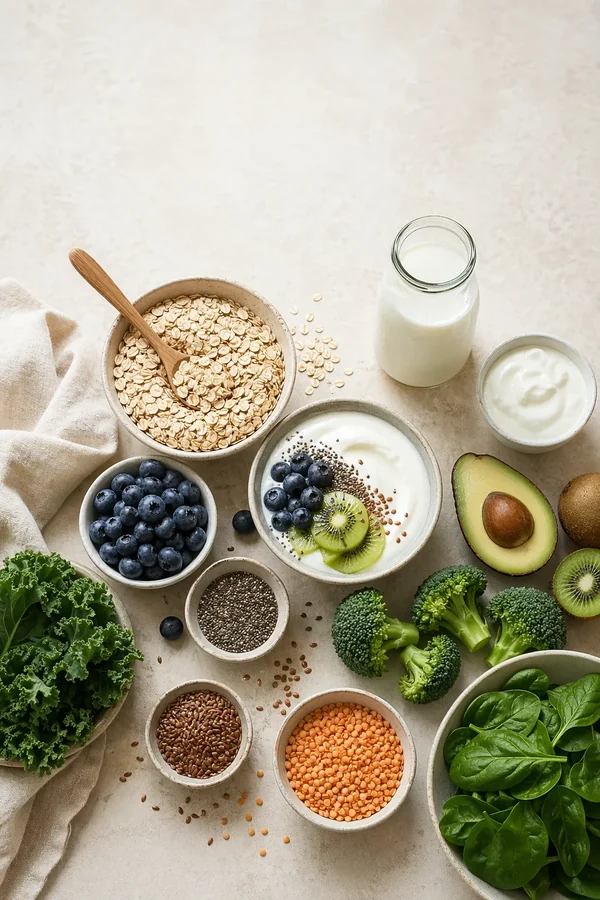
These are templates, not strict recipes.
Pick the one that sounds easiest to repeat.
1. Egg Rice Bowl
Use a small portion of cooled-and-reheated rice, two eggs, and cooked greens. Add herbs, scallions, or a small amount of sauce.
This works well for people who prefer savory breakfast or a quick lunch.
2. Chicken Rice Lunch Box
Use cooled-and-reheated rice with chicken and cooked vegetables. Keep sauce measured so the bowl does not quietly become a calorie-heavy lunch.
This is one of the easiest office meals because it is familiar, reheats well, and does not need many ingredients.
3. Tofu Rice Bowl
Pair rice with tofu, ginger, scallion, and cooked vegetables. This is useful if you want a plant-forward option without relying on beans right away.
If beans bloat you, tofu may be a gentler first protein test.
4. Salmon or Tuna Rice Bowl
Use rice as a small base, then add salmon, tuna, cucumber, avocado if tolerated, and a simple sauce. If raw vegetables bloat you, use cooked vegetables instead.
Keep the rice measured. The fish should carry the meal.
5. Small Rice Side With Soup
If large rice bowls feel heavy, keep rice as a small side with soup and protein.
This is often easier than forcing a big “healthy bowl.” You still get the comfort of rice without building the whole meal around it.
For more food comparisons, see the resistant starch foods list.
The 3-Day Resistant Starch Rice Test

Do not overhaul your entire lunch routine at once.
Test rice cleanly.
| Day | Rice type | Portion | Protein | Reheat method | Hunger after 3h | Bloating/gas | Keep/change |
|---|---|---|---|---|---|---|---|
| 1 | Fresh hot rice | 1/2 cup | Same as usual | Fresh | Track | Track | Baseline |
| 2 | Cook and refrigerate rice | Prep only | Same as usual | Not test day | Track normal meal | Track | Prep |
| 3 | Cooled and reheated rice | 1/2 cup | Same protein | Reheated hot | Compare | Compare | Keep/change |
Keep protein, vegetables, sauce, and coffee timing as similar as possible. If you change everything, you will not know what worked.
If cooled-and-reheated rice feels steadier, keep it. If it bloats you, reduce the portion or test a different starch like cooled sweet potato.
For another gentle starter, see resistant starch sweet potato. If breakfast is the easier place to test, use resistant starch breakfast ideas.
Who Should Be More Careful
This is food-first education, not medical nutrition therapy.
Talk with a licensed healthcare professional if you have diabetes, pregnancy, immune compromise, IBS, SIBO, GERD, inflammatory bowel disease, eating disorder history, recent surgery, or a prescribed medical nutrition plan.
Also get care if digestive symptoms are severe, persistent, getting worse, or come with red flags such as vomiting, fever, blood in stool, unexplained weight loss, dehydration, severe abdominal pain, or a major change in bowel habits.
And from a food safety standpoint: if the rice was left out too long or storage was uncertain, discard it.
Frequently Asked Questions
How do you make resistant starch rice?
Cook rice normally, cool it safely, refrigerate it for 12 to 24 hours, then reheat thoroughly before eating. Pair it with protein and vegetables.
How long should cooked rice cool for resistant starch?
Many practical methods use overnight refrigeration. One study tested rice cooled for 24 hours at 4 C and then reheated, which had more resistant starch than freshly cooked rice in that study.
Can you reheat resistant starch rice?
Yes. Reheating does not automatically erase the point. Cooled-and-reheated rice can still contain more resistant starch than freshly cooked rice in some study settings. Reheat it thoroughly for food safety.
Does cooling rice reduce calories?
Do not rely on that claim. Cooling rice may increase resistant starch and may affect glycemic response, but it does not make rice calorie-free or unlimited.
Does adding coconut oil to rice increase resistant starch?
Some specific research methods suggest oil and other additions can affect resistant starch formation, but it is not necessary for beginners. Adding oil also adds calories.
Is cold rice better than hot rice?
Not automatically. The useful comparison is freshly cooked hot rice versus cooked rice that has been cooled, stored safely, and reheated. You do not have to eat it cold.
Can resistant starch rice cause bloating?
Yes. Resistant starch can be fermented by gut bacteria, and fermentation can produce gas. Start with a modest portion and avoid stacking several high-fiber foods in the same test meal.
Is resistant starch rice safe for diabetes?
This article is not diabetes advice. Some studies look at glycemic response, but people with diabetes should follow guidance from their clinician or dietitian.
What is the best rice for resistant starch?
There is no single best rice for everyone. Rice variety, cooking method, cooling, and reheating can all affect resistant starch. Start with a rice you tolerate and can meal prep safely.
The Bottom Line
Rice is not automatically the problem.
The problem is often the pattern: fresh-hot, oversized, protein-poor rice meals that are hard to portion and easy to repeat on autopilot.
Use the 4R method:
- Rice cooker.
- Refrigerate.
- Reheat.
- Rebalance.
Keep rice if it works for your life. Make the rice work harder for your goal.
If you want the bigger food map, use the resistant starch foods list. If you want the full cook-and-cool explanation, read the resistant starch cooling hack. If rice makes you bloated, start with the resistant starch tolerance ladder.
Disclaimer: I am trained in traditional medicine in Vietnam, but I am not currently practicing medicine or providing personal diagnosis or treatment advice through this website. I write from personal experience, ongoing research, and my own food-first wellness experiments. My work explores digestion, daily energy, traditional self-care, movement, breathwork, meditation, and simple habits that support everyday well-being. Everything I share here is educational and reflective, not medical advice. It should not replace diagnosis, treatment, or care from a licensed healthcare professional.

About Mr. Anh
We turn solid evidence into everyday habits Americans can actually do—plain English, cups/oz, grocery-aisle swaps, and routines that fit real life. Our editorial process: Experience—we road-test tips in real schedules…