The 28-Day Gut Reset Meal Plan: A Week-by-Week Guide to Better Digestion
Seven-day gut plans never give your body enough time. This 28-day gut-healthy meal plan runs you through four targeted phases: Eliminate, Repopulate, Rebuild, Maintain, each with real meals, pantry lists, and the science behind why the order matters.
- Why 28 Days? The Science Behind a Gut Reset Timeline
- Week 1 — Eliminate: Clear the Path for Gut Healing
- Week 2 — Repopulate: Feed Your Gut the Bacteria It Needs
- Week 3 — Rebuild: Diversify Your Gut's Inner Ecosystem
- Week 4 — Maintain: Turn Gut Health Into a Lasting Habit
- 5 Signs Your Gut Reset Is Working
- Frequently Asked Questions
- The Bottom Line
You’ve cleaned up your diet. You’re drinking more water. You’ve cut back on junk food.
So why does your stomach still feel like it’s fighting you every single day?
That familiar bloat after lunch. The afternoon energy crash that no amount of coffee fixes. The brain fog that sits on you like a damp blanket. Sound familiar? If so, your gut is trying to tell you something — and another list of “15 foods to eat for gut health” isn’t going to solve it.
Here’s what I figured out after trying every 7-day gut plan I could find: the order of things matters more than any individual food. What you eat, when you introduce it, and how consistently you stick to it all determine whether your microbiome actually shifts — or just temporarily improves before reverting to its old self.
I put this 28-day gut-healthy meal plan together precisely because seven-day plans don’t give your body enough runway. Real, measurable microbiome changes take at least three to four weeks of consistent eating. This guide walks you through four weekly phases — each with its own mission, real meal ideas, and a targeted pantry guide — so you always know what to do next.
Quick Takeaways:
- Your gut microbiome needs 28 days to change in meaningful, lasting ways
- This plan runs 4 phases: Eliminate → Repopulate → Rebuild → Maintain
- Each week has specific meals, grocery categories, and a gut-health goal
- Every phase is tied to published microbiome research — not guesswork
- Built to be sustainable — no crash dieting, no extreme restrictions
Why 28 Days? The Science Behind a Gut Reset Timeline
Let’s be honest about something most meal plan articles quietly skip: one week of clean eating doesn’t undo years of gut disruption.
Your gut bacteria are genuinely adaptable. A 2014 study by David and colleagues, published in Nature found that diet can shift gut microbiota composition within just three to five days. That’s the encouraging part. The catch? Structural, meaningful changes to microbiome diversity — the kind that affect your digestion, immunity, and mood long-term — take closer to three to four weeks of sustained dietary change.
That’s why 28 days isn’t arbitrary. It’s the minimum runway you actually need.
How Fast Can Your Gut Microbiome Change?
Here’s what the real timeline looks like:
- Days 1–5: You remove gut disruptors. Harmful bacteria start losing their food supply. Mild symptoms (fatigue, cravings) are normal — and actually a sign things are shifting.
- Days 6–14: You introduce probiotics and prebiotics. Beneficial bacteria populations begin to grow. Bloating often decreases noticeably by the end of Week 2.
- Days 15–21: You diversify plant intake. Microbiome diversity expands. Energy and mood tend to lift during this phase — this is usually when people text me to say “something is actually working.”
- Days 22–28: You build lasting habits. The new microbiome composition becomes more resilient. The goal shifts from “reset” to “maintenance.”
Trying to rush this is like planting seeds and then digging them up after a week because you don’t see flowers yet.
The 4 Phases of Gut Healing — and Why Sequence Matters
Most gut health diets fail because they try to do everything at once. This plan sequences phases deliberately:
| Week | Phase | Your Mission |
|---|---|---|
| 1 | Eliminate | Remove the foods actively disrupting your gut environment |
| 2 | Repopulate | Introduce probiotics and prebiotic foods to feed them |
| 3 | Rebuild | Diversify plant intake to build microbiome resilience |
| 4 | Maintain | Turn these habits into a permanent system |
You can’t repopulate a gut that’s still under attack from processed foods. And you can’t rebuild diversity before you’ve established a base of beneficial bacteria. The order is the strategy.
If you’ve tried anti-inflammatory eating before and felt like it wasn’t quite clicking, this phased approach is likely what was missing.
Week 1 — Eliminate: Clear the Path for Gut Healing

Before you can build anything new, you have to stop tearing it down.
Week 1 is about removing the foods that actively harm your gut — the ones that feed harmful bacteria, increase intestinal permeability (sometimes called “leaky gut”), and prevent your microbiome from stabilizing long enough to change.
Quick note: None of this is permanent. Week 1 is about creating a clean slate, not a new identity. You can reintroduce some of these foods in moderation once the reset is done.
The 6 Gut Disruptors to Remove in Week 1
1. Ultra-processed foods — chips, packaged snacks, fast food, anything with a 15+ ingredient label. These often contain emulsifiers that research has linked to disruption of the gut’s protective mucus layer.
2. Refined sugar — sodas, candy, store-bought pastries, flavored yogurts. Sugar feeds harmful bacteria like Candida while suppressing Lactobacillus populations you actually want.
3. Artificial sweeteners — particularly sucralose and saccharin. A 2022 study published in Cell found these compounds significantly alter gut microbiota composition, even in small daily amounts.
4. Excess alcohol — aim for 1–2 drinks maximum during Week 1 if needed. Alcohol reduces gut microbiome diversity and temporarily impairs the gut’s barrier function.
5. Refined vegetable oils — the kind found in most restaurant food and packaged snacks. The high omega-6 content promotes gut inflammation when it consistently dominates your diet.
6. Gluten (optional, sensitivity-based) — if you notice bloating specifically after bread or pasta, trying a week without gluten can help you identify whether sensitivity is part of your picture. Not everyone needs this step.
What to Eat in Week 1 (Sample Meal Ideas)
The goal is simple, whole, easy-to-digest food. Think: nothing that challenges a gut that’s already irritated.
Breakfast ideas:
- Steel-cut oats with sliced banana and a tablespoon of ground flaxseed
- Scrambled eggs with spinach and avocado on sourdough (or sweet potato toast)
- Plain Greek kefir smoothie with frozen blueberries and chia seeds
Lunch ideas:
- Large leafy green salad with lemon-tahini dressing, roasted chickpeas, and cucumber
- Lentil soup with carrots, celery, and a squeeze of fresh lemon
- Grilled chicken with roasted sweet potato and a generous pile of steamed broccoli
Dinner ideas:
- Baked salmon with steamed broccoli and brown rice
- Turkey and vegetable stir-fry with olive oil, garlic, and fresh ginger over quinoa
- Baked cod with asparagus and a simple olive oil and herb dressing
Fill your plate with naturally anti-inflammatory foods at every meal — colorful vegetables, healthy fats, and clean protein are your foundation all week. Ginger tea between meals is also a personal favorite of mine during Week 1; ginger has well-documented soothing effects on an irritated digestive tract.
Week 1 Gut-Reset Pantry List
Grains: steel-cut oats, brown rice, quinoa, sourdough bread
Proteins: wild salmon, canned sardines, chicken breast, eggs, lentils, chickpeas, black beans
Vegetables: spinach, broccoli, asparagus, sweet potato, zucchini, carrots, beets, leafy greens
Fats & staples: extra virgin olive oil, avocado, tahini, ground flaxseed, chia seeds, turmeric, fresh ginger
Gut-health staples: bone broth, apple cider vinegar, lemon, garlic, fresh herbs
Building this pantry from scratch can feel like a lot. I’ve pointed a lot of readers toward Thrive Market for this reason — they carry organic versions of almost everything on this list at 20–40% below typical store prices, delivered to your door. It genuinely takes the friction out of getting started.
Week 2 — Repopulate: Feed Your Gut the Bacteria It Needs

Now that your gut environment is cleaner, you can start introducing the beneficial bacteria your microbiome needs. The point isn’t to eat yogurt for a week. You’re building a daily practice of probiotic and prebiotic foods that work together as a system — and that system is what sticks.
Probiotic Foods to Add in Week 2
A landmark 2021 study from Stanford University (Wastyk et al., Cell) found that a high-fermented-food diet significantly increased microbiome diversity compared to a high-fiber diet alone. Results were visible within the four-week mark. That research genuinely changed how I think about this phase — fermented foods aren’t just a nice add-on, they’re the engine.
The best food-based probiotics to add this week:
- Plain Greek yogurt — live and active cultures; always check the label
- Kefir — drinkable fermented milk with up to 12 bacterial strains
- Kimchi — fermented cabbage rich in Lactobacillus and natural prebiotics
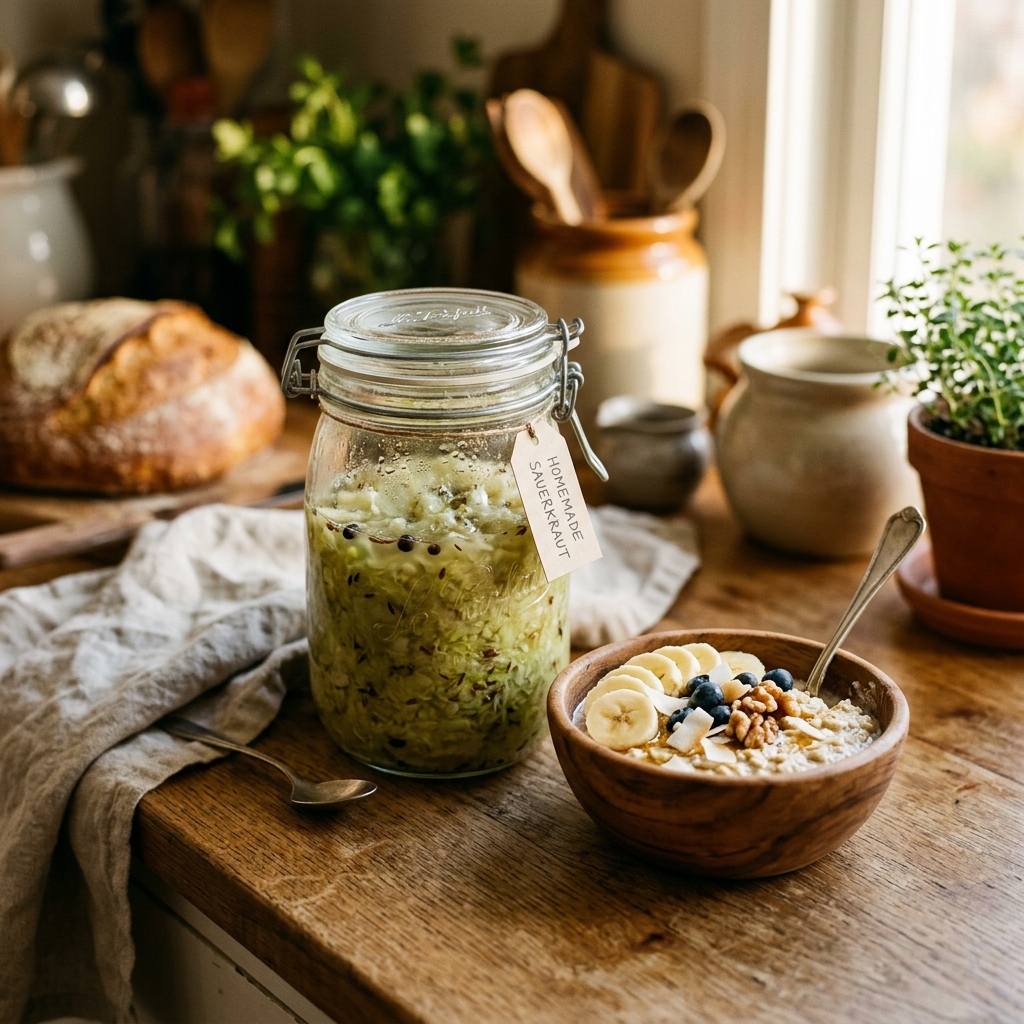
- Sauerkraut — choose unpasteurized versions only; heat kills the live cultures
- Miso — fermented soybean paste; dissolve in warm (not boiling) water to preserve bacteria
- Kombucha — fermented tea; look for varieties under 6g of sugar per serving
For a deeper breakdown of what each of these offers your gut — strains, sourcing, and label red flags — check out our complete probiotic foods guide.
Prebiotic Foods That Help Probiotics Thrive
Here’s a distinction worth committing to memory: probiotics are the beneficial bacteria. Prebiotics are what feed them.
You can eat all the yogurt you want — if you’re not giving those bacteria the fiber they need to survive, they won’t stick around long. Prebiotic foods are rich in specific fiber types (inulin and FOS) that beneficial bacteria ferment for fuel.
Top prebiotic foods to add in Week 2:
- Garlic and onion — start using them as the base of every cooked dish
- Leeks and asparagus — high-inulin vegetables, especially effective lightly cooked
- Green bananas — surprisingly powerful because of their resistant starch content (ripe bananas have far less)
- Oats — beta-glucan fiber specifically feeds Bifidobacterium
- Jerusalem artichoke — highest inulin concentration of any common food; go easy at first
The garlic-onion combination is something I genuinely use every single night cooking dinner. It’s the easiest prebiotic habit to build because it just becomes part of how you cook.
Week 2 Sample Meal Plan
Monday:
- Breakfast: Kefir smoothie blended with frozen berries, a green banana, and chia seeds
- Lunch: Garlic-roasted vegetable bowl over quinoa
- Dinner: Miso-glazed baked salmon with asparagus
Wednesday:
- Breakfast: Greek yogurt parfait — berries, oats, a drizzle of flaxseed
- Lunch: Lentil soup with a heavy garlic and onion base, served with sourdough
- Dinner: Chicken stir-fry with kimchi, broccoli, and brown rice
Friday:
- Breakfast: Overnight oats soaked with kefir, chia seeds, and cinnamon
- Lunch: Big salad with sauerkraut, roasted chickpeas, cucumber, and tahini dressing
- Dinner: Baked salmon with asparagus; kombucha alongside
Simple rule for every day this week: at least one probiotic food + at least one prebiotic food. They work as a team. One without the other is like hiring staff and forgetting to pay them.
Week 3 — Rebuild: Diversify Your Gut’s Inner Ecosystem

By Week 3, you’ve cleared the environment and begun repopulating it. Now it’s time to build resilience — and resilience in the gut comes from diversity.
Microbiome diversity is arguably the single best predictor of long-term gut health. Research from the American Gut Project — the largest human microbiome study ever conducted — found that people eating 30 or more different plant foods per week had significantly more diverse microbiomes than those eating 10 or fewer. And that held true regardless of whether they were vegan, vegetarian, or omnivore.
Thirty plants sounds overwhelming. But here’s the thing: herbs count. Spices count. Seeds count. A grain bowl with romaine, cucumber, tomato, red onion, lemon dressing, and tahini is already 6 plants in one sitting.
Why Diversity Is the Real Gut Superpower
Different gut bacteria specialize in fermenting different fiber types. More plant variety = more bacterial species fed = a wider, more resilient microbiome. And that wider microbiome produces:
- More short-chain fatty acids (SCFAs) like butyrate, which directly protect the gut lining
- Better mood regulation — the gut-brain axis connects microbiome diversity to serotonin and dopamine production
- Stronger immune response — roughly 70% of your immune system lives in gut-associated tissue
The Diversity Plate Method (Week 3 Framework)
For every meal this week, use this approach:
- ½ plate → vegetables (aim for 2–3 different types per meal minimum)
- ¼ plate → whole grain or legume
- ¼ plate → protein (plant or animal)
- + 1–2 herbs, spices, or seeds on top
How it plays out in real meals:
- Rainbow grain bowl: brown rice + roasted beets + purple cabbage + edamame + carrots + sesame seeds + miso-ginger dressing = 8 plants
- Lentil-walnut tacos: lentils + walnuts + corn tortilla + salsa + onion + cilantro + lime = 7 plants
- Fermented veggie wrap: hummus + roasted peppers + cucumber + spinach + kimchi in a whole grain wrap = 6 plants
One of the easiest ways to actually hit these diversity numbers is by batch cooking on Sundays. When roasted vegetables and cooked grains are already in the fridge, building a diverse plate takes five minutes instead of forty-five.
Week 3 Plant Diversity Tracker
Keep a simple tally. Each unique plant type = 1 point. Aim for 25–30 by Sunday.
| Day | Plants Eaten | Running Total |
|---|---|---|
| Mon | — | — |
| Tue | — | — |
| Wed | — | — |
| Thu | — | — |
| Fri | — | — |
| Sat | — | — |
| Sun | — | Week total: |
Week 3 Shopping List Highlights
Your cart this week should be noticeably more colorful. Think purple cabbage, beets, orange sweet potato, dark leafy greens, plus rotating legumes (lentils, black beans, chickpeas, edamame) and whole grains (brown rice, farro, quinoa, oat groats).
If going full-organic every week feels expensive, Thrive Market is the most practical solution I’ve found for this specific problem — organic ancient grains, a solid legume selection, and clean pantry staples at 20–40% off typical prices. I stock up there before every big reset week.
Week 4 — Maintain: Turn Gut Health Into a Lasting Habit
Week 4 is the most underrated phase of any gut reset and the one most people skip.
The pattern I see constantly: three weeks of clean eating, then a slow drift back to old habits. The microbiome inches back toward its previous state. The bloating returns. And the conclusion is “gut health diets just don’t work for me” when actually, the missing step was just this one: making the habits stick.
The 5 Daily Gut-Health Habits to Lock In
1. Hit 25–35g of fiber every day. “Eat vegetables” is too vague. You need to track this for a week or two until you calibrate your eye for it. Apps like Cronometer make it painless.
2. Include at least one fermented food daily. It doesn’t have to be complicated. A spoonful of sauerkraut with dinner, a splash of kefir in a morning smoothie, miso broth in the afternoon — all count.
3. Drink enough water, and make it a ritual. Water moves food through your digestive tract and supports the mucus layer that lines your gut. Most adults need 2–2.5 liters daily.
4. Actively manage stress. Chronic stress elevates cortisol, which directly disrupts gut bacteria balance via the gut-brain (HPA) axis. Even 10 minutes a day of intentional breathing, walking outside, or journaling makes a measurable difference over time.
5. Protect your sleep. Your gut runs on a circadian rhythm. Inconsistent sleep schedules reduce microbiome diversity. Seven to nine hours of consistent sleep is one of the most powerful gut health habits — and it has nothing to do with food.
Your Post-Reset Weekly Meal Template
You don’t need a rigid meal plan anymore. Just follow this flexible framework:
- Sunday: Batch cook 2 grains, roast a full tray of mixed vegetables, prep one protein
- Weekday formula: protein + 2–3 diverse vegetables + 1 probiotic element + 1 whole grain
- Weekend: More intuitive, but still gut-friendly — choose restaurants with whole food options, or make simpler versions of the meals you love
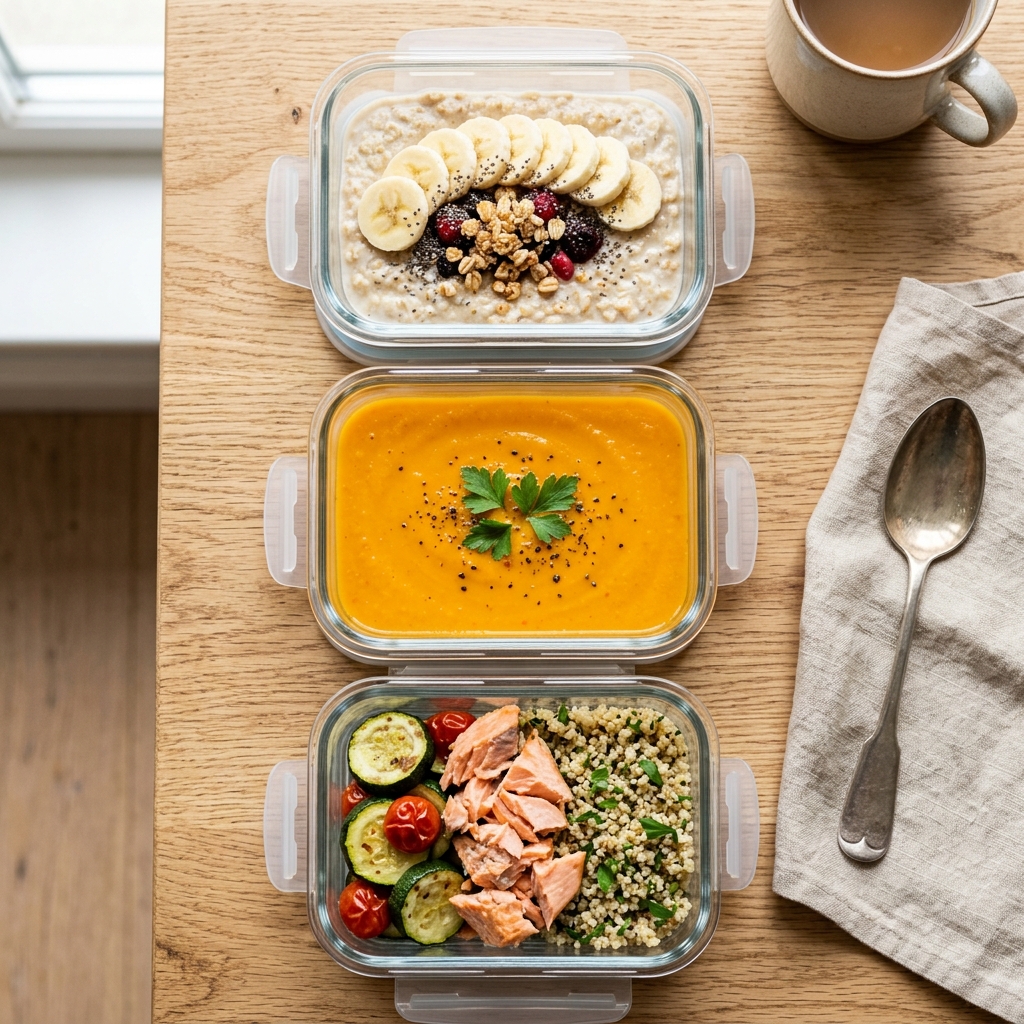
This Mediterranean-style weekly meal prep approach is what makes gut-healthy eating genuinely sustainable for busy people. Two hours on Sunday buys you decision-free eating all week.
When to Consider a Probiotic Supplement
If you’ve recently finished a course of antibiotics, fermented foods are hard to access consistently, or you’re not seeing the Week 4 improvements you expected — a supplement may help bridge the gap.
What to look for:
- CFU count: At least 10–50 billion
- Strains: Multi-strain formulas with Lactobacillus acidophilus, L. rhamnosus, and Bifidobacterium longum are the most researched
- Third-party tested: Look for NSF or USP certification
- Storage: Some strains require refrigeration — always check the label
5 Signs Your Gut Reset Is Working
You don’t need lab tests to know something is shifting. Here’s what typically shows up — and when:
1. Less bloating within 7–10 days ✅
As you remove gut disruptors in Week 1, gas-producing bacteria lose their food supply. Most people notice a real reduction in that “stuffed tight” feeling by the end of the first week.
2. More regular bowel movements by Week 2 ✅
Increased fiber plus fermented foods support faster, smoother digestive transit. “Regular” means once or twice daily with minimal discomfort.
3. Better afternoon energy around Days 12–14 ✅
As your microbiome stabilizes, many people report a clear lift in afternoon energy — without the 3pm crash that used to be automatic.
4. Clearer skin during Week 3 ✅
Gut inflammation often shows up on the skin first. As the microbiome diversifies and gut barrier integrity improves, mild acne, eczema, and dullness tend to improve perceptibly.
5. Fewer sugar cravings by Week 4 ✅
Harmful bacteria actually signal your brain to crave more sugar — it’s their food source. As beneficial bacteria crowd them out, those cravings quiet down without any willpower required.
Important: If your digestive symptoms significantly worsen at any point during this reset, please stop and consult your healthcare provider. This plan is not a treatment for any medical condition.
Frequently Asked Questions
What foods are in a gut-healthy meal plan?
A gut-healthy meal plan centers on high-fiber vegetables, fermented foods (plain yogurt, kimchi, kefir, sauerkraut), whole grains, legumes, and prebiotic foods like garlic, onion, and green bananas. These foods feed beneficial bacteria, build microbiome diversity, and reduce intestinal inflammation.
How long does it take to heal your gut with diet?
Most people notice real improvements in bloating and digestion within 7–10 days of removing gut disruptors. Structural microbiome changes — the type that affect energy, mood, and immunity — take 3–4 weeks of consistent gut-healthy eating. A 28-day reset gives you enough runway to actually feel the difference.
What foods should I avoid on a gut health meal plan?
Avoid ultra-processed foods, refined sugar, artificial sweeteners (sucralose and saccharin especially), excess alcohol, and refined vegetable oils. These disrupt gut microbiome balance, feed harmful bacteria, and promote intestinal inflammation that undoes your progress.
Can meal planning actually improve gut health?
Yes — and consistently is the key word. Planning ensures you actually eat gut-friendly foods every day instead of defaulting to convenient processed options when you’re busy or tired. Structure removes decision fatigue and keeps your microbiome building rather than backsliding.
What are the best probiotic foods for gut health?
The most effective food-based probiotics are plain Greek yogurt, kefir, kimchi, sauerkraut, miso, and kombucha — each containing live cultures that populate your gut with beneficial bacteria. If supplementing, look for at least 10 billion CFU with Lactobacillus and Bifidobacterium strains, and always choose third-party tested products.
Do I need a probiotic supplement if I’m eating well?
Not necessarily. If you eat fermented foods regularly and get consistent dietary fiber, food-based support may be sufficient. Supplements are most useful when recovering from antibiotics, dealing with significant digestive distress, or when fermented foods are genuinely hard to include in your routine.
The Bottom Line
Your gut is one of the most powerful systems in your body — and it responds remarkably well to consistent, intentional eating. But it needs the right amount of time and a plan that works in the right sequence.
This 28-day gut-healthy meal plan gives you exactly that. Week 1 clears the environment. Week 2 repopulates with beneficial bacteria. Week 3 builds diversity and resilience. Week 4 locks in the habits so you don’t lose the ground you’ve gained.
You don’t need to be perfect. You need to be consistent. Even 80% adherence over 28 days will produce results you can feel.
The information on this site is for educational purposes only and is not intended as medical advice. Always consult a qualified healthcare provider before making any changes to your diet, exercise routine, or supplement use.
About Jane Smith
We turn solid evidence into everyday habits Americans can actually do—plain English, cups/oz, grocery-aisle swaps, and routines that fit real life. Our editorial process: Experience—we road-test tips in real schedules…