Good Fruits for Kidneys: The Stage-by-Stage Guide
Some fruits protect your kidneys. Others quietly strain them — depending on your kidney stage. This guide breaks down which fruits are safe, which need awareness, and why the same banana can be healthy for one person and a risk for another.
- How Your Kidneys Actually Process Fruit — And Why "Healthy" Isn't Universal
- Good Fruits for Kidneys: The Green Light List (Safe at Every Stage)
- The Kidney Fruit Tier System — A Stage-by-Stage Reference
- A 5-Day Kidney-Support Fruit Protocol
- An Eastern Lens: The Kidney Stores Your Essence
- Frequently Asked Questions: Good Fruits for Kidneys
- The Bottom Line on Good Fruits for Kidneys
This post contains affiliate links. If you purchase through these links, I may earn a small commission at no extra cost to you. I only recommend products I personally believe in.
A note before we begin: I trained in traditional Vietnamese medicine but I don’t practice clinically or treat patients. This guide is especially careful because kidney health is YMYL territory — if you have CKD or any concern about your kidney function, your nephrologist and renal dietitian are the right anchors. Everything below is a researcher’s notes on the food side, paired with the traditional framework I grew up reading about. Please don’t use it as a substitute for personalised medical guidance.
Your doctor tells you to eat healthier. So you grab a banana and a glass of OJ — two things you’ve always considered safe bets. Then your next blood panel comes back with elevated potassium, and suddenly you’re staring at your fruit bowl like it’s the problem.
Here’s what no one actually explains: there’s no such thing as a universally “kidney-safe” fruit. A banana is a genuinely excellent food for someone with healthy kidneys — it supports heart rhythm, blood pressure, the works. For someone in CKD Stage 3, that exact same banana can push potassium into a range that creates a completely different kind of cardiac stress. Same fruit. Different body. Opposite outcome.
In this guide, you’ll learn exactly which good fruits for kidneys help regardless of your stage — and which ones need a second look depending on where your kidney function actually sits. You’ll walk away with a full tier table, a 5-day fruit protocol, and plain-English answers to the questions most doctors run out of time to cover.
⚡ Quick Takeaways:
- ✅ Always safe: Cranberries, blueberries, red grapes, apples, strawberries — low potassium, active kidney benefit at every stage
- ⚠️ Stage-dependent: Bananas, oranges, kiwi, avocado — excellent for healthy kidneys, risky for CKD Stage 3+
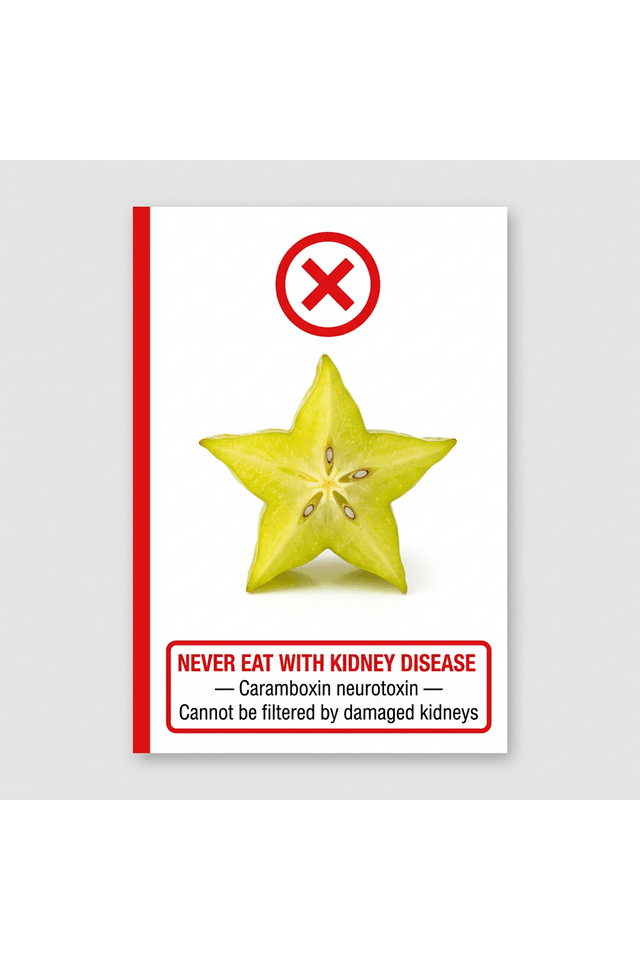
- 🚨 Never with kidney disease: Starfruit — contains a neurotoxin that damaged kidneys cannot filter out
- 💡 Shortcut: Screenshot the Kidney Fruit Tier Table in Section 3. Bring it to your next nephrology appointment
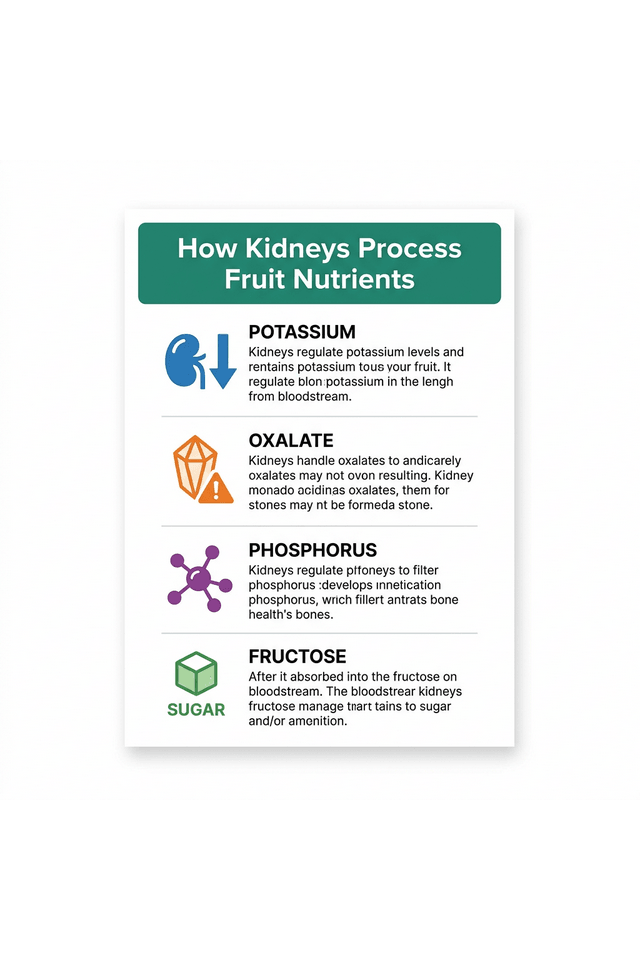
How Your Kidneys Actually Process Fruit — And Why “Healthy” Isn’t Universal
Your kidneys filter roughly 200 liters of blood every single day. Most people know kidneys are the body’s filtration system. What fewer people realize is that kidneys also regulate blood potassium with extreme precision — automatically, continuously, without you thinking about it. That’s where fruit gets complicated.
The Potassium Problem Nobody Explains Properly
Potassium is essential. It keeps your heart beating in rhythm, supports nerve and muscle function, and helps regulate fluid balance. Healthy kidneys filter out any excess potassium effortlessly — it goes into urine and leaves your body. The whole process is invisible to you.
When kidneys are damaged, that filtering capacity drops. Potassium starts accumulating in the bloodstream instead of being cleared. Elevated blood potassium — called hyperkalemia — can trigger heart arrhythmias. In severe cases, it’s life-threatening.
The National Kidney Foundation recommends that CKD Stage 3–4 patients limit potassium to 2,000–3,000mg per day total. A single medium banana? Around 422mg. That’s up to 21% of the entire daily budget in one snack. Sound manageable? It is — until you add the OJ, the tomatoes on your lunch salad, and the potatoes from dinner.
When I first started tracking potassium for my own health, I was genuinely shocked at how quickly it adds up across a normal day. The math catches a lot of people off guard.
This connection between kidneys and broader organ health runs deep. The same dietary patterns that strain kidney function also strain the gut — and a struggling gut sends more uremic toxins back into circulation for the kidneys to filter. Our guide on a food-first daily plan for gut health walks through the absorption side of this picture.
Oxalate, Phosphorus, and Sugar — Three More Variables Worth Knowing
Potassium gets most of the attention. But three other compounds matter depending on your situation:
Oxalate is a naturally occurring acid found at very high concentrations in some fruits — starfruit and rhubarb in particular. In people prone to kidney stones, oxalate binds to calcium and crystallizes in the urinary tract. Harvard Health has well-documented the link between high-oxalate diets and kidney stone recurrence. The good news: low-oxalate fruits like cranberries, blueberries, grapes, and apples sidestep this entirely.
Phosphorus is mostly a dialysis-stage concern. Healthy kidneys handle dietary phosphorus without issue. At Stage 5 and on dialysis, when kidneys can no longer excrete it, phosphorus from all food sources starts accumulating. Fruit is generally low-phosphorus compared to dairy or meat, but it enters the calculation at that stage.
Fructose excess raises uric acid — the compound behind gout — and elevated uric acid has been linked directly to accelerated CKD progression. This isn’t a reason to fear fruit sugar. It’s a reason not to use fruit juice as a daily drink. Whole fruit is very different from juice in terms of fructose delivery and fiber buffering.
The takeaway is simple: focus on low-potassium, low-oxalate whole fruits. The five in the next section hit exactly that mark.
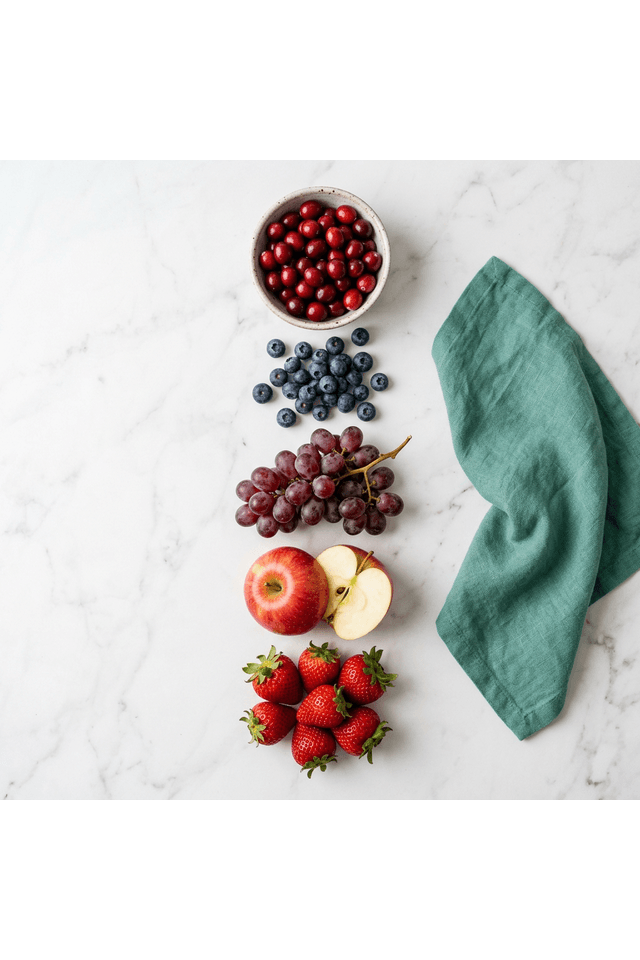
Good Fruits for Kidneys: The Green Light List (Safe at Every Stage)
These five fruits aren’t just “kidney-neutral.” Each one has specific compounds that actively support kidney function. They’re the bedrock of any kidney-focused fruit strategy — and they work whether you’re proactively protecting healthy kidneys or actively managing CKD.
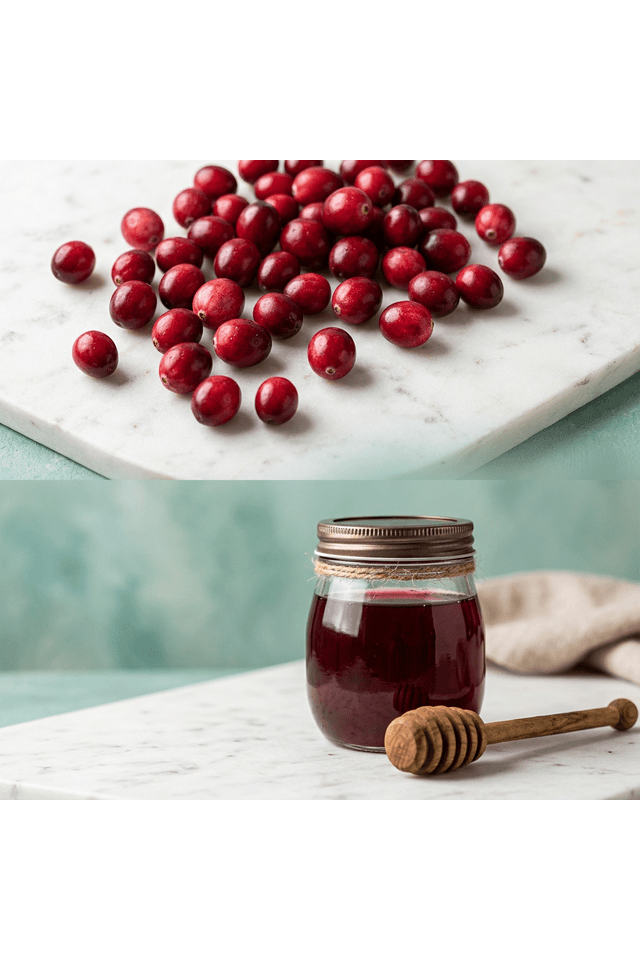
Cranberries — The Kidney’s Most Studied Defender
Cranberries are the single most-researched fruit in kidney and urinary tract health. Their two key compounds — D-mannose and proanthocyanidins (PACs) — work by preventing harmful bacteria from adhering to urinary tract walls. Bacteria that can’t grip can’t colonize. That’s the mechanism behind decades of clinical focus on cranberries.
A Cochrane Review of 24 randomized controlled trials confirmed cranberry products meaningfully reduce UTI incidence, particularly in women with recurrent infections. That’s not one small study — it’s the gold standard of systematic evidence.
Potassium? Around 80mg per half-cup. One of the lowest of any common fruit. Even Stage 5 patients on fluid restriction usually find cranberries on their nephrologist-approved list.
The honest caveat: unsweetened cranberry juice is intensely tart. Genuinely hard to drink consistently. If that’s your reality, a concentrated cranberry extract capsule — standardised for D-mannose and proanthocyanidins (PACs) — delivers the same active compounds in a form you’ll actually stick with. The detail to look for on any label is a documented PAC count; that’s what separates the marketing word “cranberry” from a dose that matches what the clinical studies actually used.
Blueberries — Antioxidant Shield for Kidney Tissue
Blueberries are the most antioxidant-dense fruit you can buy at any grocery store. Their primary compounds — anthocyanins — reduce oxidative stress in kidney tubule cells, which are among the first structures damaged when kidney inflammation takes hold.
A 2021 study published in Nutrients (NCBI) found that higher anthocyanin intake was associated with significantly slower CKD progression over a 5-year tracking period. The mechanism appears to involve suppression of NF-κB — a master inflammatory signal that drives kidney fibrosis (the scarring that makes CKD irreversible).
Potassium: ~77mg per half-cup. Phosphorus: negligible. Oxalate: low. There’s almost no downside to eating blueberries daily at any stage of kidney disease. That’s a rare combination.
Practical note: frozen blueberries are nutritionally equivalent to fresh. They’re usually cheaper, they last longer, and you can stir them directly into oatmeal or yogurt from frozen — no thawing required. I’ve kept a bag in my freezer for years. It’s the lowest-lift kidney habit I know of.
Red Grapes — Resveratrol and Kidney Filtration Support
Red grapes contain resveratrol, a polyphenol with a well-documented anti-inflammatory effect on kidney tissue. Animal model studies have shown resveratrol reduces renal fibrosis markers — the same scarring process that drives CKD from manageable to serious. Human data is still emerging, but the signal is consistent across studies.
At ~88mg of potassium per half-cup, red grapes are comfortably within kidney-safe ranges at every stage. And they require literally zero prep. Pop them in a bowl and go. That matters when you’re trying to actually build a daily habit versus just intending to.
There’s also a gut-kidney connection worth mentioning here. Emerging research on the gut-kidney axis shows that probiotic-rich foods reduce uremic toxin production — which directly reduces the filtration burden on your kidneys. What you do for your gut actually helps your kidneys work less hard. Our food-first guide on the gentle probiotic foods list walks through what to add and where to start.
Apples — Quercetin and Pectin Fiber for Everyday Protection
Apples work on two separate mechanisms for kidney support. First, quercetin — a flavonoid found in the skin — has documented protective effects against nephrotoxicity, meaning damage to kidney cells from medication exposure, environmental toxins, and oxidative stress. Research has consistently found quercetin attenuates kidney cell injury across multiple studied models.
Second: pectin fiber, also concentrated in the skin. Pectin binds to uremic toxins in the gut and carries them out through the colon — rather than allowing them to absorb into the bloodstream, where your kidneys would then have to filter them out. For CKD patients working with reduced filtration capacity, this is a meaningful reduction in daily kidney workload.
The rule: eat the skin. That’s where both quercetin and pectin actually live. Peeled apple is fine. Apple with skin is better.
Potassium sits at ~195mg per medium apple. Well within safe range across all CKD stages.
Strawberries — Vitamin C Without Triggering Kidney Stones
Most high-vitamin-C fruits come with a catch. Oranges? High potassium. Kiwi? High oxalate. Grapefruit? Interacts with common CKD medications. Strawberries are the clean exception. They deliver real vitamin C alongside ellagic acid — a well-documented anti-inflammatory compound — at just ~127mg of potassium per cup.
For anyone prone to kidney stones, this distinction matters. High-dose vitamin C supplements have been linked to calcium oxalate stone formation (because the body converts excess vitamin C to oxalate). Whole strawberries deliver the vitamin C without that oxalate load.
Frozen strawberries are nutritionally equal to fresh. The anthocyanins and ellagic acid survive freezing with minimal degradation. Worth knowing when fresh berries are out of season or out of budget.
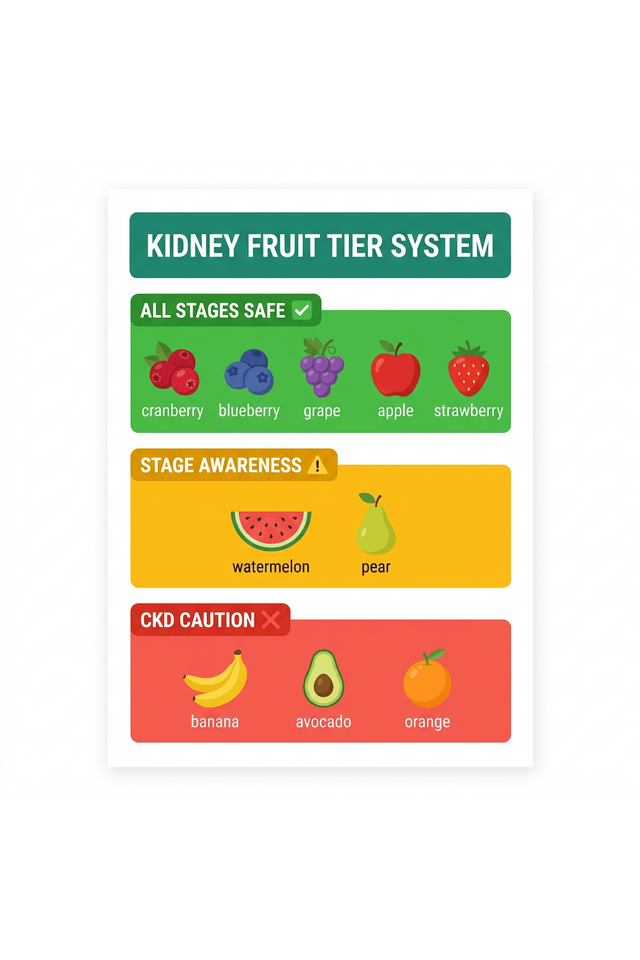
The Kidney Fruit Tier System — A Stage-by-Stage Reference
Here’s the core problem with most kidney fruit guides: they treat “good for kidneys” as a single answer. It’s not. The same fruit can be genuinely protective for one person and quietly problematic for another — depending entirely on kidney stage.
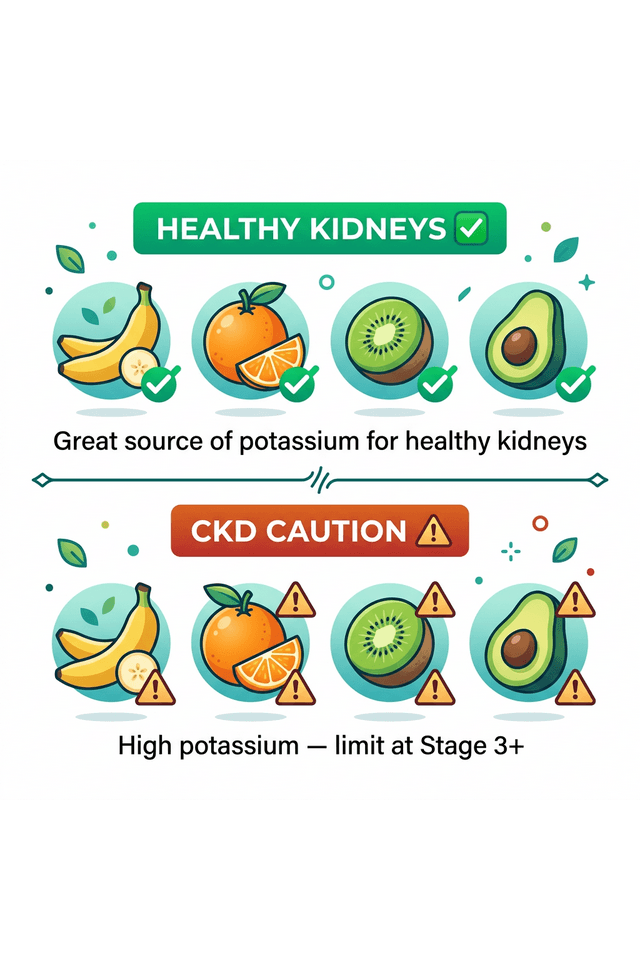
A study published in the Journal of the American Society of Nephrology (2019) found that dietary potassium management is one of the most impactful modifiable factors in slowing CKD progression — in some cases more accessible than medication-level interventions. What you eat matters, at a clinical level.
This table is the stage-by-stage cheat sheet. Screenshot it. Bring it to your next nephrology or renal dietitian appointment. Use it as a starting point for a real conversation about your specific numbers.
| Fruit | Potassium (per ½ cup) | Oxalate | Healthy Kidneys | CKD Stage 1–2 | CKD Stage 3–4 | CKD Stage 5 / Dialysis |
|---|---|---|---|---|---|---|
| Cranberries | ~80mg | Low | ✅ Ideal | ✅ Ideal | ✅ Ideal | ✅ With guidance |
| Blueberries | ~77mg | Low | ✅ Ideal | ✅ Ideal | ✅ Ideal | ✅ With guidance |
| Red Grapes | ~88mg | Low | ✅ Ideal | ✅ Ideal | ✅ Ideal | ✅ With guidance |
| Pineapple | ~90mg | Low | ✅ | ✅ | ✅ | ✅ With guidance |
| Pears | ~116mg | Low | ✅ | ✅ | ✅ | ⚠️ Moderate |
| Strawberries | ~127mg | Low-Med | ✅ | ✅ | ✅ Moderate | ⚠️ Limit |
| Watermelon | ~170mg | Low | ✅ | ✅ | ✅ Small portions | ⚠️ Limit |
| Apples | ~195mg | Low | ✅ | ✅ | ✅ | ⚠️ Moderate |
| Cherries | ~260mg | Low | ✅ | ✅ | ⚠️ Moderate | ❌ Restrict |
| Kiwi | ~280mg | High | ✅ | ⚠️ | ⚠️ Limit | ❌ Avoid |
| Oranges | ~370mg | Medium | ✅ | ✅ | ⚠️ Limit | ❌ Avoid |
| Banana | ~422mg | Low | ✅ | ⚠️ | ❌ Limit | ❌ Avoid |
| Avocado | ~487mg | Low | ✅ | ⚠️ | ❌ Restrict | ❌ Avoid |
| Starfruit | Very high | Extreme | ❌ ALL stages | ❌ | ❌ | ❌ NEVER |
⚠️ These are reference figures, not prescriptions. Your actual potassium tolerance depends on your eGFR, serum potassium levels, and current medications. Use this as a conversation starter with your nephrologist or renal dietitian — not as a replacement for personalized lab-based guidance.
Bananas: Not Always a Good Fruit for Kidneys — Here’s Why
Let me give you the honest version of the banana conversation — because it causes more confusion than almost anything else in kidney nutrition.
Your nephrologist tells you to avoid bananas. Your cardiologist tells you to eat them for heart health. They’re both right. They’re just talking about completely different people.
A medium banana carries ~422mg of potassium. For someone with healthy kidney function, that potassium actively supports blood pressure regulation and heart rhythm. Genuinely beneficial. For someone in CKD Stage 3 with a 2,000mg daily potassium ceiling, that single banana is 21% of the entire budget before they’ve eaten anything else that day.
It’s not that bananas are bad. It’s that what’s protective at one kidney stage is a legitimate risk at another. And nobody connects those two conversations.
If you’re navigating both kidney and cardiovascular dietary guidelines simultaneously — which many people are, since heart disease and CKD frequently co-occur — anti-inflammatory choices are usually where the two diets agree most cleanly. Our guide on homemade anti-inflammatory drinks walks through gentle daily options that fit both pictures at once.
Starfruit — The One Fruit No Kidney Patient Should Ever Eat
This one isn’t about potassium or oxalate. It’s about a neurotoxin.
Starfruit (carambola) contains a compound called caramboxin. In people with healthy kidneys, caramboxin is filtered out of the bloodstream before it can accumulate to harmful levels. In people with damaged kidneys — including early-stage CKD — it isn’t. It builds up rapidly.
Documented cases of starfruit toxicity in CKD patients have appeared in nephrology journals since the late 1990s. Symptoms include persistent hiccups, confusion, muscle weakness, seizures, altered consciousness, and in some cases death. These weren’t people who consumed unusual quantities. Some reported cases involved a single serving of starfruit or juice.
If you have any level of kidney function reduction — including CKD you may not yet know about — starfruit is completely off the table. No portion makes it safe. No exceptions.
A 5-Day Kidney-Support Fruit Protocol
Knowing which fruits to eat is one thing. Actually building the habit is another — and the gap between those two things is where most good intentions stall out.
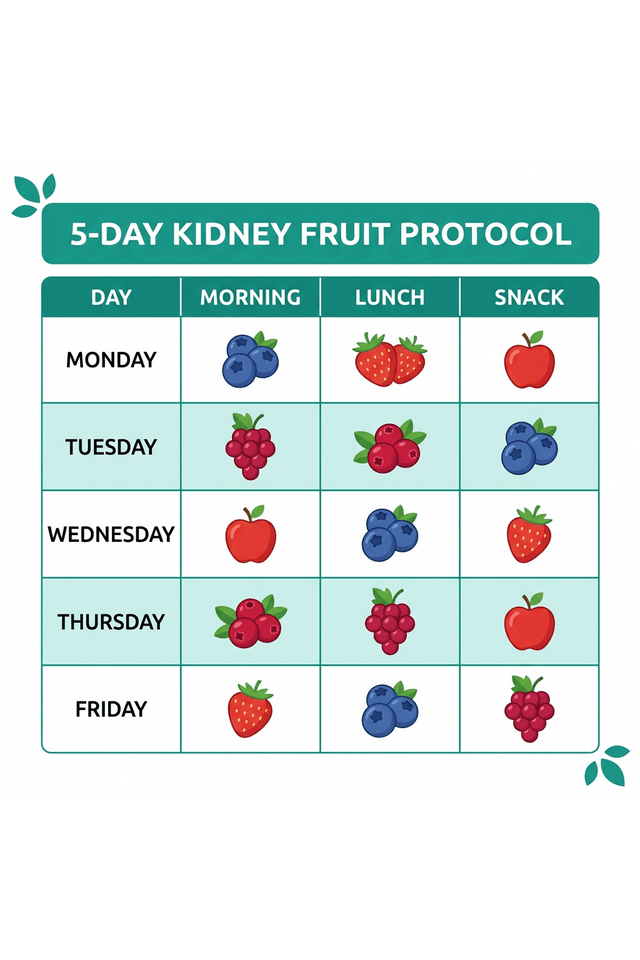
Here’s a simple 5-day framework using only Green Tier fruits. Varied enough that you won’t get bored, specific enough that you don’t have to think. Each day is built around the distinct kidney benefits of the fruits in it.
| Day | Morning | With Lunch | Snack / Dessert | Primary Benefit |
|---|---|---|---|---|
| Mon | Blueberries + plain Greek yogurt | Apple slices (skin on) | 4oz unsweetened cranberry juice | Antioxidant load + UTI protection |
| Tue | Strawberry smoothie, almond milk base | Handful red grapes | Pear | Ellagic acid + resveratrol |
| Wed | Blueberries stirred into oatmeal | Apple + almond butter | Cranberry extract capsule (if no fresh) | Quercetin + pectin fiber |
| Thu | Pineapple chunks + cottage cheese | Strawberries | Red grapes | Anti-inflammatory variety |
| Fri | Apple slices with cinnamon | Blueberry + walnut salad topper | Sparkling water + cranberry splash | Full Green Tier coverage |
A note on stages: This protocol is designed for people supporting kidney health or managing Stage 1–3 CKD. If you’re Stage 4 or 5, or on dialysis, bring this list to your renal dietitian — the fruit choices remain appropriate, but portion sizes may need calibrating to your specific potassium and fluid targets.
One thing I do consistently alongside fruit: a daily serving of plain kefir or Greek yogurt. It’s not just a gut habit. The emerging gut–kidney axis research is increasingly clear that a well-supported gut microbiome produces fewer uremic toxins — which means your kidneys have less to filter. Less burden in, less wear over time. It’s the compound interest version of kidney care.
An Eastern Lens: The Kidney Stores Your Essence
There’s a framework I keep coming back to from traditional Vietnamese and Chinese medicine. In TCM, the Kidney (Thận) isn’t just a filter — it’s the deep storehouse of Essence (Jing), the inherited reserve that governs how gracefully you age, how well your bones hold, how steady your sleep is, and how strong your hearing, hair, and stamina remain over decades.
The classic line is “Thận tàng tinh” — the Kidney stores Essence. The Kidney also governs the bones and marrow, opens to the ears, and shows up on the head hair. So when an aging body presents with low back ache, knees that feel weak going up stairs, tinnitus, thinning hair, broken sleep, or that “running on fumes” feeling — TCM reads that as a Kidney pattern long before anyone tests creatinine.
Western and Eastern views converge here. Modern medicine measures kidney decline in eGFR and creatinine. Traditional medicine measures it in how much Essence has been preserved or depleted. Both arrive at the same conclusion: protect what you have, eat to nourish what’s running low, and avoid what burns through the reserve faster than it can refill.
The foods that nourish Kidney in this framework are mostly black, dark-coloured, and gently warming:
- Black sesame, black beans, black wood ear (mộc nhĩ đen) — the classic Kidney-Essence-tonifying trio in Vietnamese kitchens. Black sesame ground into morning oats or congee is one of the simplest daily Kidney habits.
- Goji berries, mulberries, dark grapes, blueberries — deep-coloured berries nourish Yin and the blood store. These overlap almost perfectly with the Green Tier list above.
- Walnuts — TCM uses walnut as a Kidney-Yang tonic. A small handful daily, or simmered into porridge.
- Sea kelp, seaweed (in moderation) — the salty taste enters the Kidney channel. Moderation is key, since most CKD guidance also asks for lower sodium.
- Bone broth, fish with bones (sardines) — the “bone supports bone” principle. Slow-simmered broths nourish Marrow, which TCM links directly to Kidney.
What you avoid in this framework matters as much as what you add: excessive cold-raw foods, too much salt, late nights (which “burn through Essence” in a way TCM has been describing for two thousand years), heavy alcohol, and chronic fear or overwork — Kidney is uniquely vulnerable to chronic stress in this system.
The modern Western fruit list (cranberries, blueberries, grapes, apples, strawberries) and the Vietnamese Kidney-nourishing foods (black sesame, goji, walnut, mulberry) describe the same underlying biology — antioxidant-rich, gentle on filtration, naturally low in the things that wear the system down. The two pictures fit together without contradiction.
What I noticed in my own family:
My father is now in his late sixties. A routine blood panel a few years ago flagged his eGFR sliding into the early CKD range — common at his age, but the kind of warning you don’t want to ignore. He didn’t want medication if he could avoid it. What he changed, slowly, over about eighteen months: he cut soda and sweetened iced tea completely, switched to brewed cranberry water and a daily handful of blueberries from the freezer, started having black sesame stirred into morning congee a few times a week, kept his salt low, and stopped staying up late watching news. He never touched starfruit again. His last three lab panels have been stable — not reversed, but no longer sliding. I’m careful to say: I don’t claim food alone did that. He is also walking thirty minutes most days and sleeping earlier. What I do believe is that the combination of low-burden fruits, Kidney-supporting traditional foods, and the lifestyle pieces TCM has always emphasised for aging well — early sleep, gentle warmth, less alcohol, less fear — gave his body the conditions to hold steady. He’s the reason I keep coming back to write about this.
Frequently Asked Questions: Good Fruits for Kidneys
Are bananas good for your kidneys?
For healthy kidneys, yes — bananas’ potassium supports blood pressure and heart rhythm, both of which have downstream kidney benefits. But for CKD Stage 3 and above, one medium banana delivers ~422mg of potassium. When you’re managing a daily ceiling of 2,000–3,000mg, that’s a significant chunk before you’ve eaten anything else. Whether a banana works for you isn’t a general nutrition question — it’s a labs question. Check your eGFR and serum potassium before making it a daily habit.
What is the best fruit for kidney disease?
Cranberries top the clinical list consistently. Low potassium (~80mg per half-cup), documented D-mannose for UTI protection, and proanthocyanidins that reduce kidney tissue inflammation — they check every box. Blueberries and red grapes are close seconds: both are low potassium, low oxalate, and backed by specific published research on kidney tissue protection. If you’re only going to add two fruits to your routine this week, make it blueberries and cranberries.
Can I eat blueberries if I have kidney disease?
Yes — blueberries are one of the most kidney-safe fruits across all CKD stages. Low potassium (~77mg per half-cup), low phosphorus, low oxalate, and their anthocyanins have been linked to slower CKD progression in clinical research. Most nephrologists have no hesitation recommending blueberries even at more advanced kidney disease stages. Frozen counts. Eat them daily if you can.
What fruits help cleanse the kidneys naturally?
Your kidneys don’t need cleansing — they filter continuously, 24 hours a day, without any assistance. What specific fruits do accomplish is reducing the burden on that filtration: cranberries keep UTI bacteria from colonizing the urinary tract, blueberries lower oxidative stress on kidney tubule cells, and apple pectin fiber helps carry uremic toxins out through the gut before they reach the bloodstream. These aren’t detox claims. They’re documented physiological mechanisms with research behind them.
Is watermelon good for kidneys?
Yes, with a portion note. Watermelon’s high water content actively promotes urine production — excellent for flushing the urinary tract and preventing kidney stones. Potassium is around 170mg per cup, well within kidney-safe range. For Stage 3+ patients where fluid intake itself is sometimes restricted, portion size matters more than the potassium number. One cup is a safe, practical serving for most people at most stages.
What fruits should be avoided with kidney disease?
The highest-risk fruits for CKD patients: starfruit (neurotoxic at any stage — no exceptions), bananas (422mg+ potassium), avocado (487mg potassium per half-cup), oranges and orange juice (high potassium plus phosphorus), and kiwi (high oxalate — kidney stone risk). Whether “limit” or “avoid” applies to you specifically depends on your CKD stage and lab values. Stage 1–2 patients may tolerate moderate amounts of most of these. Stage 3+ should have a direct conversation with their renal dietitian before making them regulars.
The Bottom Line on Good Fruits for Kidneys
Not all fruit is equal for kidney health. The answer changes depending on where your kidney function sits — and that’s the thing most guides don’t tell you clearly enough.
Your Green Tier foundation: cranberries, blueberries, red grapes, apples, and strawberries. Low potassium. Low oxalate. Documented kidney-protective compounds. These are safe and actively beneficial at every stage — start here.
Bananas, avocados, oranges, and kiwi aren’t the enemy. They’re stage-dependent. A healthy kidney handles their potassium effortlessly. A damaged kidney can’t — and that distinction is exactly what most fruit lists skip.
Starfruit is the one non-negotiable. Not a “limit carefully” situation. Not a “small portions” situation. Zero, always, if your kidney function is anything less than fully intact.
Start with the Green Tier this week. Run the 5-day protocol. Notice how built-in and low-effort it actually feels once you have a framework. Your kidneys don’t need perfection — they need consistency and direction.
If the symptoms you’re managing also overlap with fatigue, poor sleep, or unexplained energy dips, it’s worth knowing that the same nutrient patterns shaping kidney health connect directly to absorption and overall inflammation. We look at the gut side of this picture in our guide to improving gut health, and at how the same nutrients show up in beauty markers in our article on foods for healthier nails — the same building blocks keep surfacing across both pictures.
Want consistent daily support without overhauling everything at once? A concentrated cranberry extract capsule — standardised for D-mannose and proanthocyanidins — can deliver what a glass of cranberry juice often can’t: a calibrated, daily dose that matches what the clinical studies actually used. The detail to look for on the label is a documented PAC count; that’s what separates a real, study-grade dose from the marketing word “cranberry.”
Health Disclaimer: I’m trained in traditional Vietnamese medicine but I don’t practice clinically. This guide reflects modern research, traditional frameworks I grew up with, and what I’ve observed in my own family — all educational, not medical advice. Kidney disease is YMYL territory: please anchor your decisions with your nephrologist, renal dietitian, or qualified healthcare provider, especially for stage-specific potassium, phosphorus, and fluid targets. Individual results from dietary changes vary.

About Mr. Anh
We turn solid evidence into everyday habits Americans can actually do—plain English, cups/oz, grocery-aisle swaps, and routines that fit real life. Our editorial process: Experience—we road-test tips in real schedules…