Does Dairy Cause Acne? What the Numbers Actually Say
Skim milk scores worse than whole. Yogurt is contested. And two weeks is not a fair test. What the largest review of 78,529 people actually found.
You cut out dairy for two weeks. Your skin looked exactly the same. So you decided dairy was not your problem and went back to your coffee the way you like it.
That conclusion might be right. But there are three reasons it might be wrong, and all three are sitting inside the research that everybody quotes and nobody reads past the abstract of.
The question is not does dairy cause acne. The question is which dairy, how much of it, and how long you actually gave it.
Quick takeaways:
- Skim milk shows a stronger association than whole milk — 1.32 versus 1.22. Most people with acne are avoiding the wrong one
- There appears to be a dose threshold. Under one glass a day, the signal is not statistically significant
- Yogurt is genuinely contested. Two large reviews from the same year reached opposite conclusions
- The effect is small — an odds ratio around 1.3, not a smoking gun
- Test it for eight weeks, not two. Two weeks is not long enough for the answer to exist yet
What the Largest Review Actually Found
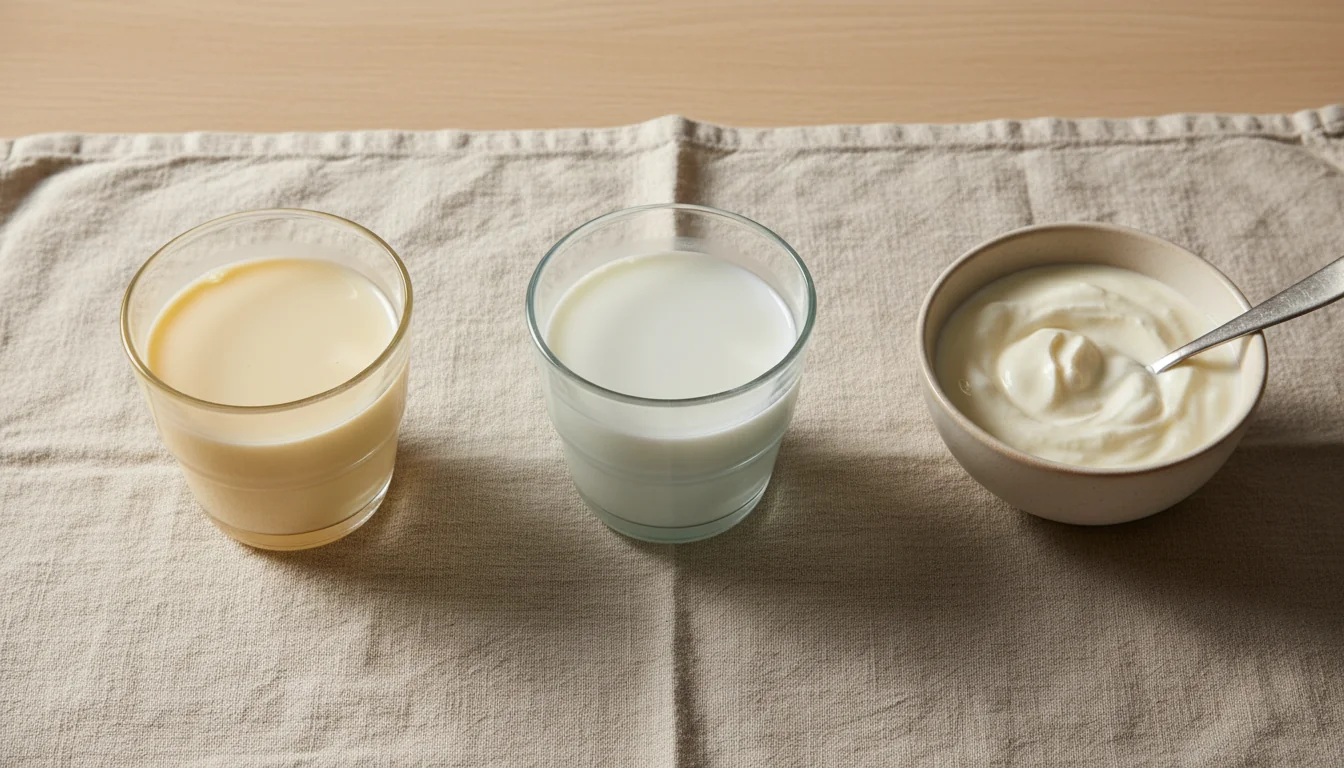
Most articles on this topic say some version of “studies suggest a link”. Here are the actual numbers, because the detail is where this gets interesting.
The largest analysis of this question pooled 14 studies covering 78,529 people aged seven to thirty. What it reported, as odds ratios:
| Dairy type | Odds ratio | Statistically significant? |
|---|---|---|
| Whole milk | 1.22 | Yes |
| Low-fat / skim milk | 1.32 | Yes |
| Yogurt | 1.36 | Yes (p = 0.022) |
Read that table again, because two things in it contradict what you have probably been told.
What an odds ratio of 1.3 actually means
An odds ratio of 1.3 means the odds of acne were about thirty percent higher in the group consuming that food. It does not mean thirty percent of people will break out, and it does not mean dairy caused anything.
For scale: this is a modest association. It is real enough to appear consistently across studies, and small enough that plenty of people drink milk daily with clear skin.
There is a second limitation that matters more than the first. These are observational studies. They record what people ate and whether they had acne. They cannot separate cause from coincidence — teenagers who drink a lot of milk may also eat differently in a dozen other ways, and adolescence itself does most of the work here.
So the honest framing is: dairy is a reasonable suspect worth testing on yourself, not a proven cause worth panicking about. If you want the wider picture of what food does and does not do for skin, I go through the whole evidence base in the clear skin diet guide.
The Skim Milk Paradox
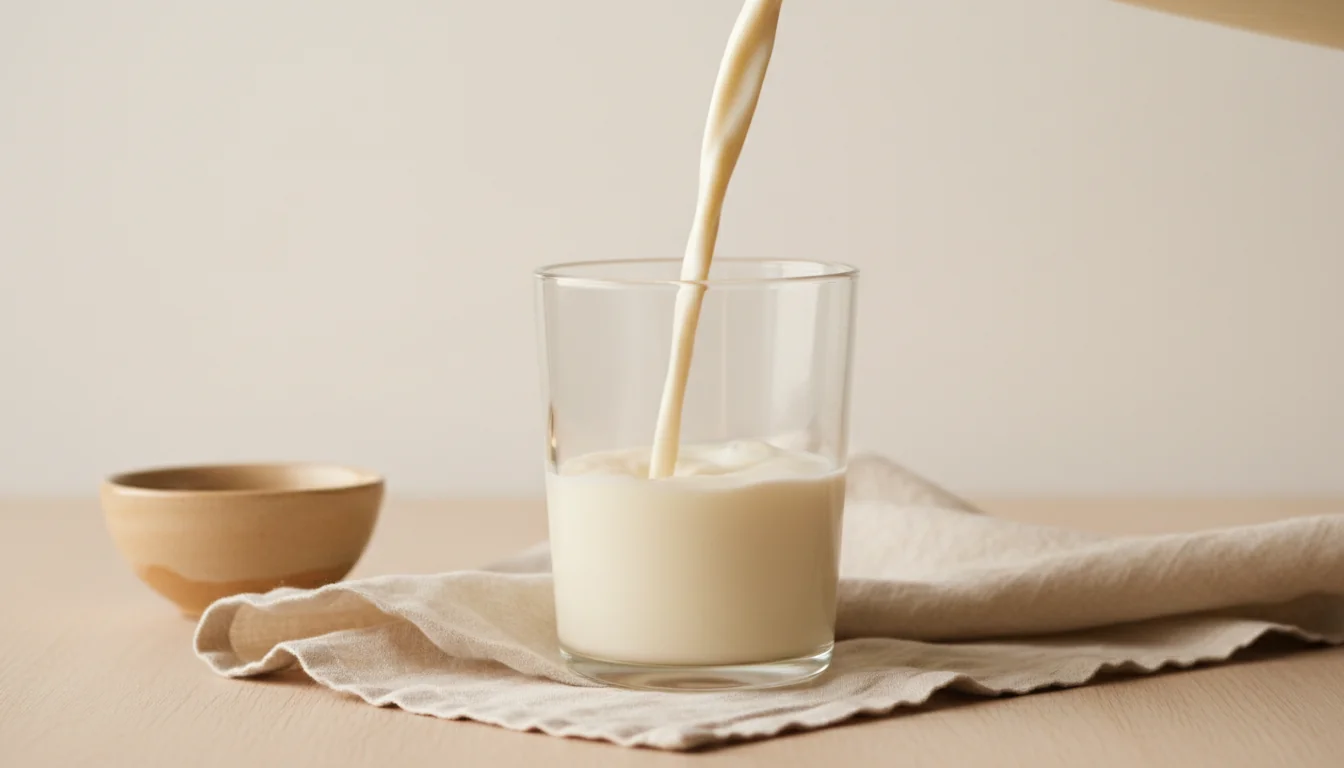
Here is the first thing in that table that should stop you.
Skim milk scored worse than whole milk. 1.32 against 1.22.
Almost everyone with acne who cuts back on dairy reaches for the low-fat option, on the reasonable assumption that less fat means less of whatever is causing the problem. The data points the other way.
Why removing the fat might make it worse
The mechanism people usually blame for milk and acne is hormonal, and it is not really about the hormones in the milk. It is about what milk does to your own hormones.
Milk protein prompts insulin release and drives production of insulin-like growth factor 1 (IGF-1). IGF-1 stimulates the sebaceous glands and increases keratin production in the follicle — which is the two-part recipe for a blocked pore. One review of the mechanism describes it directly: milk-derived amino acids promote insulin secretion and induce hepatic IGF-1 synthesis.
Now add the fat back in. Fat slows gastric emptying. A glass of whole milk delivers its sugars and amino acids into your bloodstream more gradually than a glass of skim milk does. Take the fat out, and you get a sharper insulin response from the same protein load.
There is a second possibility that may compound it: skim milk is often fortified, and the processing concentrates the protein fraction relative to the volume.
Neither explanation is proven. But the pattern in the data is consistent enough that if you are drinking skim milk because of your skin, that decision deserves a second look.
This is also the point where dairy stops being a separate topic and becomes part of the glycemic picture — the same insulin pathway that makes white bread and sugary drinks the best-evidenced dietary trigger for acne.
How Much Actually Matters
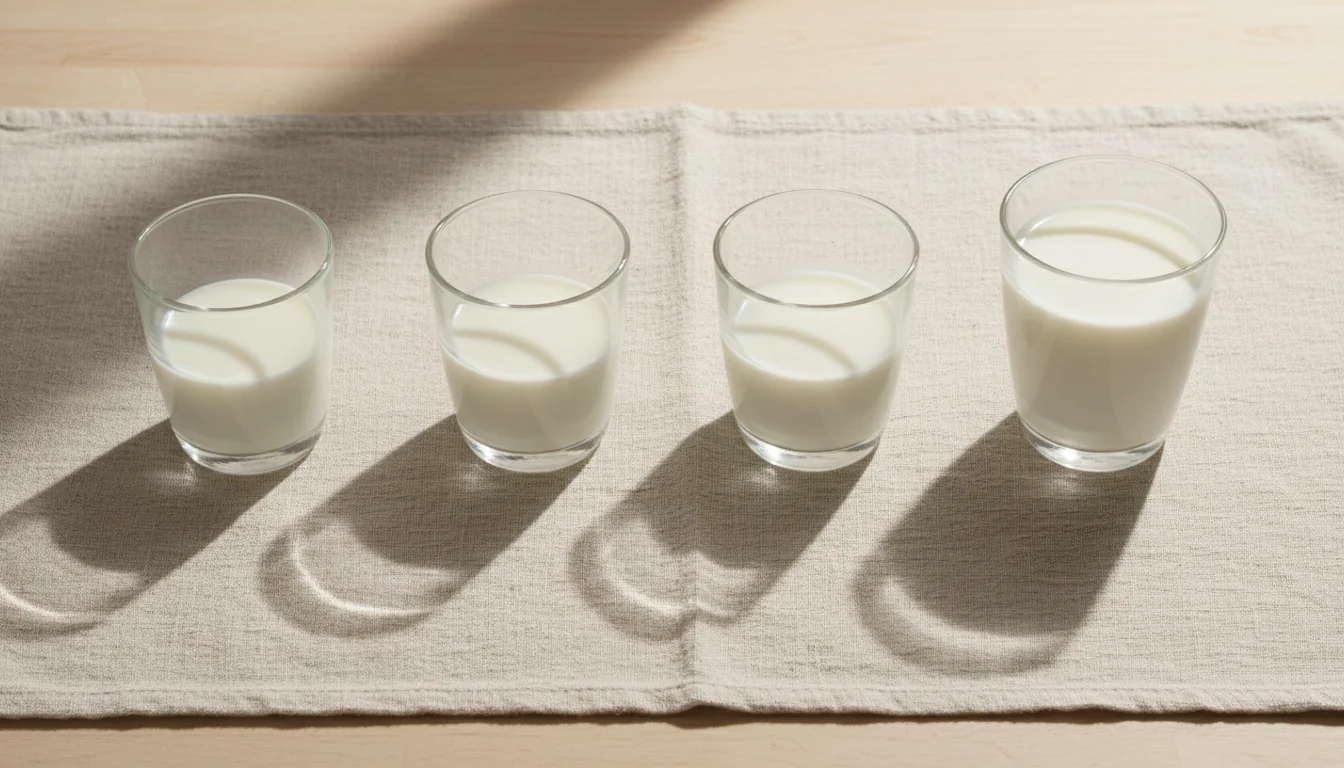
Every article tells you to “cut out dairy”. Almost none of them tell you that the research measured how much, and found that the amount changes the answer.
Broken down by milk intake:
| Amount | Odds ratio | What it means |
|---|---|---|
| 2–6 glasses per week | 1.24 | Not statistically significant |
| 1 glass per day | 1.41 | Significant |
| 2 or more glasses per day | 1.43 | Significant |
The interesting line is the first one. At a few glasses a week, the association was not strong enough to distinguish from chance. It becomes clear once you reach about a glass a day, and then largely flattens — going from one glass to two barely moves it.
That is a much more workable piece of advice than “cut out dairy.”
If you drink two or three coffees with milk a day, you are in the range where the signal exists. Dropping to a few servings a week may put you outside it, without eliminating an entire food group, losing a calcium source, or making every restaurant menu a negotiation.
Total abstinence is one option. It is not the only one, and the data does not demand it.
The Yogurt Question Nobody Answers Honestly
This is the part where I have to disagree with a source most health writers treat as final.
What the AAD says
The American Academy of Dermatology’s position is that cow’s milk is associated with acne, while no studies have found that yogurt or cheese lead to breakouts. You will find that sentence, or a paraphrase of it, on a large share of the pages ranking for this topic. I have quoted it myself.
What the largest review found
The same analysis of 78,529 people that produced the milk numbers also looked at yogurt. It reported an odds ratio of 1.36, with a p-value of 0.022.
That is a statistically significant association — and it is higher than whole milk.
A second meta-analysis published the same year found no significant association for yogurt or cheese, which is the finding the AAD position reflects.
So: two large analyses of broadly the same literature reached opposite conclusions, and the guidance you have been reading picks one of them without mentioning the other exists.
Why two reviews can disagree
This is not a scandal. It is what happens with observational data.
The two analyses did not include the identical set of studies, and they handled the numbers differently. There is also a confounding problem that is genuinely hard to escape: people who eat yogurt usually also drink milk. Untangling the effect of one dairy food from another, in a population where they travel together, is close to impossible without a controlled trial nobody has run.
What fermentation does change
There are real reasons fermented dairy might behave differently, even if the current evidence cannot confirm it.
Fermentation consumes much of the lactose, partially breaks down the milk proteins, and produces bacterial metabolites and organic acids that were not in the original milk. Those are meaningful changes to what actually arrives in your gut — which is why fermented foods are discussed so differently from plain milk everywhere else in nutrition, and why kefir and yogurt are not interchangeable either.
The practical conclusion: if you are going to test one thing, test milk first. That is where the evidence is most consistent and least argued over. Testing everything at once tells you nothing, and yogurt is the item where you are most likely to give up a food for no reason.
A Traditional Perspective: “People want a list of forbidden foods, because a list can be obeyed. But the body does not respond to lists — it responds to amounts, and to time. A little of something most days is a different question from a lot of it every day, and two weeks of anything answers nothing at all.”
— Mr. Anh, Founder of Essential Wellness AZ
If You Cut Milk, What Should You Drink?
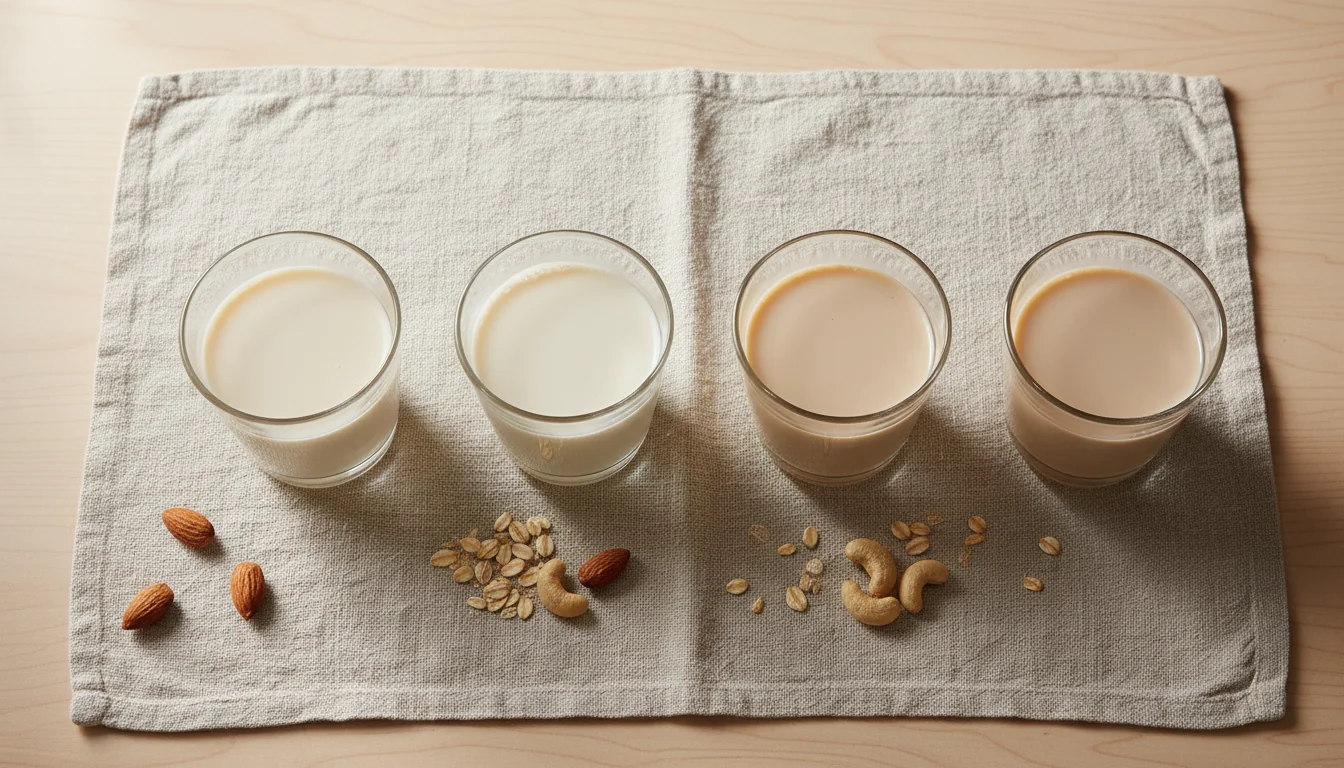
This is where a lot of people accidentally trade one problem for another.
The oat milk trap
Oat milk is the current favourite, and it is the one worth thinking about hardest.
The process that makes oat milk creamy uses enzymes to break oat starch into simpler sugars. That is what gives it the mild sweetness and body people like — and it also means oat milk carries a high glycemic load relative to other plant milks.
Given that high-glycemic eating is the dietary factor with the strongest evidence for acne, swapping cow’s milk for oat milk is not automatically a step forward. You may have removed the IGF-1 question and introduced a blood-sugar one.
This does not make oat milk bad. It makes it a poor choice for the specific goal of testing whether dairy is affecting your skin.
Unsweetened almond, soy and coconut
- Unsweetened almond milk — very low in sugar and carbohydrate. The cleanest option for a testing period, though also low in protein
- Unsweetened soy milk — the closest match to cow’s milk for protein. Some people avoid it over phytoestrogen concerns; the evidence for harm at normal intakes is weak
- Coconut milk beverage — low in carbohydrate, low in protein, largely a texture choice
What to check on the label
The single most useful habit: read the sugar line, not the front of the carton.
“Original” or “classic” versions of most plant milks contain added sugar. An unsweetened almond milk and a sweetened one are different products for this purpose, and the word on the front will not tell you which you are holding.
Whey Protein and Breakouts
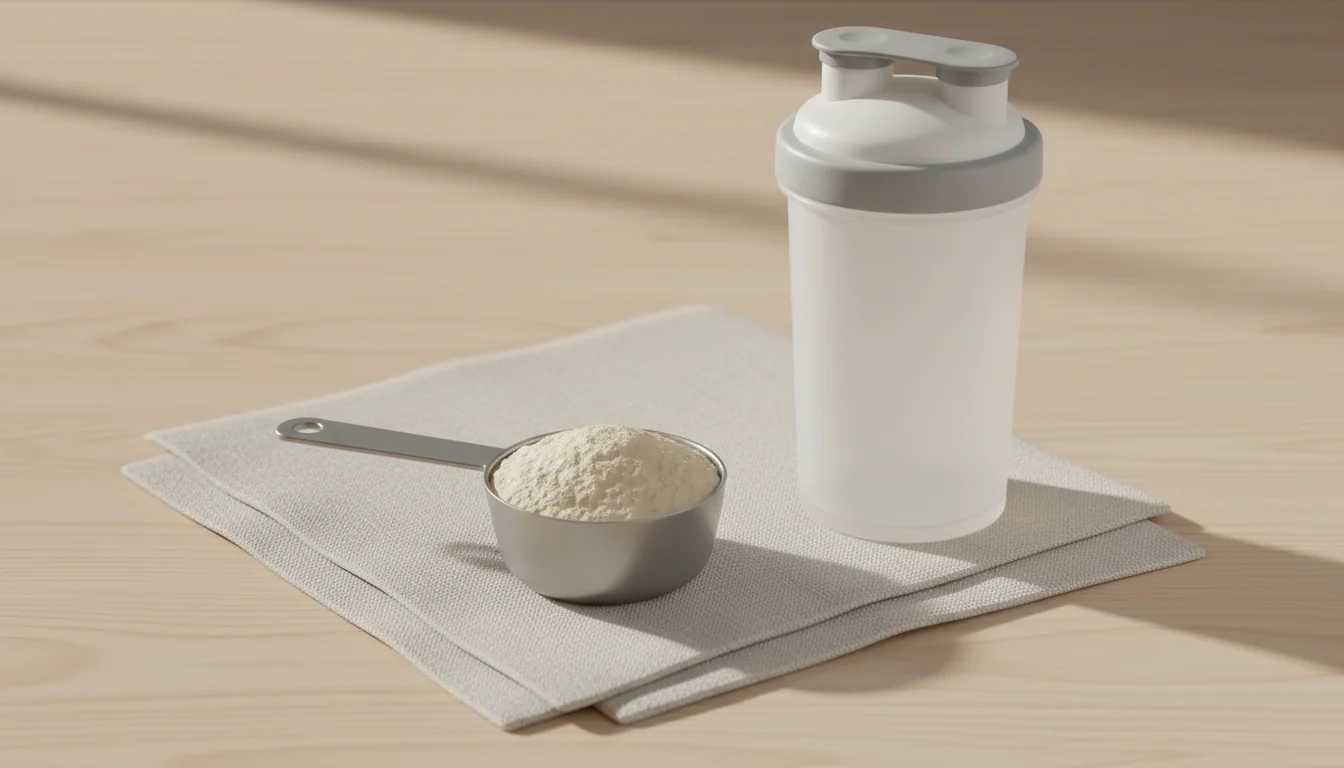
If your acne arrived around the same time you started lifting, this section is the one you came for.
Whey is the fraction of milk protein most strongly linked to insulin release. A whey shake delivers a concentrated dose of exactly the amino acids that drive the IGF-1 response — without the fat, without the fluid volume, and often alongside added sugars.
In other words, it is closer to a concentrated version of the skim milk problem than to a glass of milk.
If you lift and you break out
The usual pattern is breakouts along the jawline, chest, back and shoulders, appearing within a couple of months of starting a whey supplement.
The experiment is straightforward: switch to a different protein source for eight weeks and see what happens. Casein is also dairy but digests far more slowly, which blunts the insulin spike. Pea, rice or blended plant proteins remove the dairy question entirely. Keep your total protein intake the same so you are only changing one variable.
How long whey acne takes to settle
The same timeline as any dietary change — eight to twelve weeks, not days. Spots surfacing next week were already forming before you switched.
How to Test This Properly
Almost everyone who “tried cutting dairy” ran the experiment badly. Here is the version that actually produces an answer.
- Cut one thing. Milk only. Keep yogurt and cheese. If you remove everything at once and your skin improves, you have learned nothing about which item mattered
- Give it eight weeks. This is the step people get wrong. A visible spot began forming as a microcomedone weeks before it appeared, so the first two to three weeks of any change are showing you a backlog, not a result. Advice to judge after three or four weeks is too short
- Change one variable at a time. If you cut dairy and start a new cleanser in the same week, whatever happens is uninterpretable
- Write it down. Take a photo in the same light once a week. Memory for skin is remarkably unreliable — people recall the timeline that matches what they already believe
- Replace the calcium and vitamin D. If you drop dairy, cover it deliberately: fortified plant milks, tinned fish with bones, tofu set with calcium, leafy greens. Cutting a food group without replacing what it provided is a bad trade even if your skin improves
Week three and four can look worse. That is the backlog surfacing, and it is the point at which most people quit. Expect it.
When to See a Dermatologist
Food is a supporting factor here, not a treatment. Diet is one of several inputs, and for many people it is not the dominant one.
See a dermatologist rather than adjusting your diet again if you have:
- Cystic or nodular acne — deep, painful lesions under the skin
- Acne that is leaving scars. Scarring is permanent; waiting out a diet experiment costs you something you cannot get back
- Acne that is affecting your mood, confidence or social life
- Skin that has not improved after several months of consistent effort
- Sudden severe acne alongside other changes — irregular periods, unusual hair growth — which is worth investigating properly
Effective medical treatments for acne exist and work considerably faster than dietary change. Testing dairy is a reasonable thing to do alongside treatment. It is not a reason to delay one.
Frequently Asked Questions
Does dairy cause acne?
Dairy is associated with acne in observational research, with odds ratios around 1.2 to 1.4 depending on the type. That is a modest link, not proof of cause, and studies of this kind cannot rule out that something else about high-dairy diets explains it. It is worth testing on yourself; it is not worth treating as settled.
Does cutting out dairy help acne?
For some people, yes — but the test has to be run properly. Cut milk only, keep everything else constant, and give it at least eight weeks. Most people who report that cutting dairy “did nothing” stopped at two or three weeks, which is before the answer is visible.
Which milk is worst for acne?
Based on the pooled data, skim and low-fat milk show a slightly stronger association than whole milk — 1.32 against 1.22. That runs against intuition. The likely reason is that fat slows absorption, so removing it produces a sharper insulin response from the same protein.
What does dairy acne look like?
There is no distinctive appearance. Dairy-related breakouts are typically inflammatory papules and pustules along the jawline, chin and lower cheeks — the same as hormonally driven acne generally, which is consistent with the proposed mechanism. Nobody can identify the cause by looking at your skin, including a dermatologist.
Is almond milk or oat milk better for acne?
Unsweetened almond milk is the safer choice for a testing period. Oat milk’s production converts starch into simpler sugars, giving it a high glycemic load — and high-glycemic eating has stronger evidence for acne than dairy does. Whichever you choose, buy the unsweetened version.
Can whey protein cause acne?
Plausibly. Whey drives the insulin and IGF-1 response more sharply than whole milk, in a concentrated dose. If breakouts began within a couple of months of starting whey, switch to casein or a plant protein for eight weeks, keeping total protein constant.
How long should I cut out dairy to know if it works?
Eight weeks minimum, twelve if you can manage it. Skin renews on roughly a 28-day cycle and today’s spots were forming weeks ago, so anything under a month is measuring the past rather than the change.
The Bottom Line
Dairy and acne is a real association with a plausible mechanism and a modest effect size. It is not a myth, and it is not the answer either.
What the research supports is narrower and more useful than the advice you usually get:
- Milk is the best-supported suspect. Yogurt and cheese are contested, so test milk first
- Skim is not the safe option. If anything, the reverse
- Amount matters. A few servings a week sits outside the range where the signal is clear
- Eight weeks, one variable, written down. Anything less is not a test
Not “cut dairy”. Cut the right one, in the right amount, for long enough to find out.
For everything else that affects skin from the plate — the glycemic pattern that outranks dairy, what to actually eat more of, and how long each change takes to show — start with the clear skin diet guide. If you are approaching this from the gut side, probiotic foods is a gentler place to begin than a supplement aisle.
Disclaimer: I’m trained in traditional medicine in Vietnam, but I’m not currently practicing medicine or providing personal diagnosis or treatment advice through this website. I write from personal experience, ongoing research, and my own food-first wellness experiments. My work explores digestion, daily energy, traditional self-care, movement, breathwork, meditation, and simple habits that support everyday well-being. Everything I share here is educational and reflective, not medical advice. It should not replace diagnosis, treatment, or care from a licensed healthcare professional.

About Mr. Anh
We turn solid evidence into everyday habits Americans can actually do—plain English, cups/oz, grocery-aisle swaps, and routines that fit real life. Our editorial process: Experience—we road-test tips in real schedules…