Anti-Inflammatory Tips: The Traffic Light System for Your Daily Habits
Your doctor said reduce inflammation — but no one handed you a checklist for what that means on a Monday morning. The Traffic Light System categorizes every daily habit into RED (remove first), YELLOW (optimize), and GREEN (build more) — giving you a clear sequence, not an overwhelming list.
Your doctor said “reduce inflammation.” Maybe your bloodwork came back flagged. Maybe your hands have been puffy every morning for the past six months and you’re finally taking it seriously. Maybe you read something about chronic disease and inflammation and realized the two are more connected than you thought.
Whatever brought you here: you’ve probably already seen the lists. Fifteen anti-inflammatory tips, presented in equal weight, no guidance on where to start. So you either try everything on Monday, overwhelm yourself by Wednesday, and quietly stop — or you do nothing because you don’t know which tip actually matters.
Here’s what I want to give you instead: a sequence, not a list.
The Traffic Light System categorizes every daily habit — food, sleep, movement, stress, even your morning coffee — into one of three buckets:
- 🔴 RED — actively triggers inflammation. These come out first.
- 🟡 YELLOW — neutral or context-dependent. Small tweaks, real payoff.
- 🟢 GREEN — actively fights inflammation. Build more of these deliberately.
By the end of this guide, you’ll know exactly which anti-inflammatory tips to act on first, what to expect in your body, and how to build from one change at a time. Because that’s how durable change actually works — not 15 things at once.
Quick Takeaways:
- 🔴 Remove just ONE RED habit this week — most people notice a difference in 5–7 days
- 🟡 YELLOW habits aren’t bad — how you do them matters more than whether you do them
- 🟢 Add at least 2 GREEN habits and build from there
- Most people feel early changes in energy and bloating within 2 weeks
- This naturally pairs with the full anti-inflammatory meal plan for a structured 4-week reset
The Traffic Light System: RED triggers inflammation, YELLOW is upgradeable, GREEN fights it actively
What Chronic Inflammation Actually Does to Your Body
Before the tips — a quick frame. Because “chronic inflammation” sounds clinical and abstract until you connect it to things you actually feel.
Acute vs. Chronic — the Difference That Changes Everything
Acute inflammation is the immune system working correctly. You cut yourself, the area swells and turns red, and within days it heals. That’s inflammation as your body’s repair system — doing exactly what it’s designed to do.
Chronic inflammation is when that same immune response runs at a low, persistent level without a specific injury to resolve. The immune system stays on alert — not because of a wound, but because of daily inputs it reads as threats: the wrong cooking oils, repeated blood sugar spikes, sleep deprivation, unresolved stress. It never fully stands down.
The symptoms most people recognize: Stiff, puffy hands first thing in the morning. A 2pm energy crash that hits regardless of how much you slept. Persistent bloating after meals that used to be fine. Brain fog that doesn’t lift with caffeine. Skin that won’t settle. Sleep that leaves you unrested.
You don’t need all of these. Two or three regularly is enough to flag chronic inflammation as a likely contributing factor.
The Disease Connection — Why This Actually Matters
Chronic inflammation isn’t a vague wellness problem. Harvard T.H. Chan School of Public Health has documented its role in 7 of the 10 leading causes of death in the United States — including heart disease, type 2 diabetes, Alzheimer’s, and certain cancers.
The part that matters for this guide: most of the inputs driving chronic inflammation are modifiable. Diet, sleep, movement, stress response — these are all adjustable. That’s exactly what anti-inflammatory tips address: the daily inputs your life is currently sending to your immune system.
For the detailed cellular breakdown of which specific foods fight inflammation and why, the anti-inflammatory foods guide covers the science behind each category.
One concrete takeaway: Chronic inflammation is the underlying state. The Traffic Light System is your daily management tool for changing the inputs that drive it.
🔴 RED Habits — Remove These First
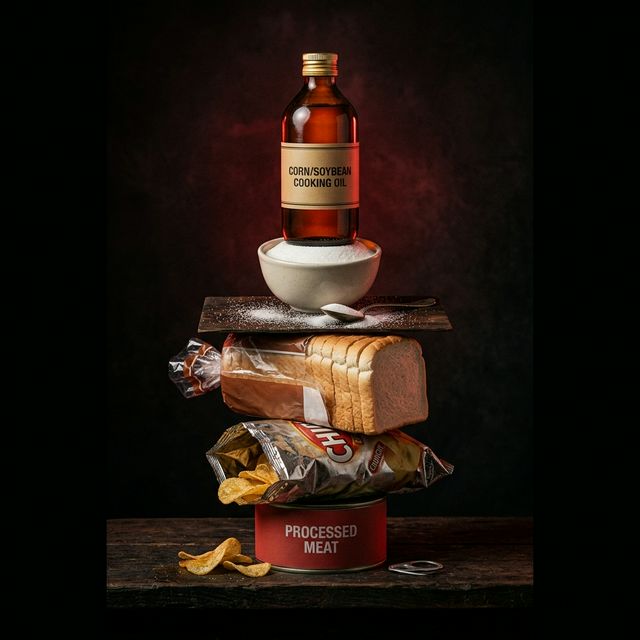
These five habits deliver the most inflammatory load of anything in the average American daily routine. They’re not the only RED habits, but they’re the highest-leverage ones — meaning removing just one of them typically produces a noticeable change.
The rule I give people starting out: Pick your single biggest RED habit from this list. Remove it for 7 days. Pay attention to your body. Most people notice a difference in bloating and morning energy before the week is up. Then address the next one.
🔴 RED #1 — Seed Oils (The Hidden Inflammation Driver No One Talks About)
If you only make one change from this entire article, make it this one.
Seed oils — soybean oil, corn oil, sunflower oil, cottonseed oil — are the default fat in the vast majority of processed foods, restaurant cooking, and bottled salad dressings. They’re cheap, flavorless, and therefore invisible. They’re also in almost everything.
Here’s the problem: they have an extreme omega-6 to omega-3 ratio. Seed oils are almost entirely omega-6 fatty acids, which push your body toward arachidonic acid — the direct precursor to the prostaglandins and COX-2 signaling that drive inflammatory pain. The typical US diet currently runs an omega-6:omega-3 ratio of about 15–20:1. The anti-inflammatory target is closer to 4:1.
The swap is simple: Extra virgin olive oil (EVOO) for all low-to-medium heat cooking and for all dressings, sauces, and finishing. Avocado oil for anything high-heat (stir-frying, searing) due to its higher smoke point.
For eating out or packaged foods: If you can’t see where the oil came from, assume it’s a seed oil. This is almost never a wrong assumption for restaurants, bottled dressings, crackers, and granola bars.
I replaced my household cooking oils a few years ago and it was genuinely the single change with the most obvious downstream effect on how I felt. Restocking quality EVOO consistently is where Thrive Market saves me the most — their EVOO and avocado oil run 25–50% below grocery retail, and the quality is noticeably better than most store-brand options.
🔴 RED #2 — Added Sugar (The Inflammation Accelerant)
The average US adult eats approximately 77 grams of added sugar per day, according to NHANES data. The anti-inflammatory guideline is no more than 25 grams (women) or 36 grams (men) per day. Most people eating a standard American diet are at double the upper limit before accounting for any intentional treats.
The mechanism is direct: repeated blood sugar spikes trigger NFκB — the master switch for pro-inflammatory cytokine production. Every major glucose spike, every day, activates this pathway.
Where it hides that surprises people: Flavored Greek yogurt (up to 24g per container — the same bowl you might think is healthy), bottled juices and smoothies, granola bars, salad dressings, bread, ketchup, and most condiments.
The fastest label check: If sugar appears in the first three ingredients, or if the added sugars line shows more than 8g per serving, treat it as a RED food regardless of what the front panel says about it being “natural” or “wholesome.”
🔴 RED #3 — Chronic Sleep Debt (The Most Underrated Trigger of All)
I put this third, but it might actually be first in terms of systemic impact.
A controlled NIH trial restricting sleep to 6 hours per night — versus 8 hours — showed IL-6 elevated by 40% and serum CRP elevated by 25% in the restricted group. Every consistent hour of sleep deficit produces a measurable inflammatory result. And unlike dietary choices, nothing you eat or supplement fully compensates for it.
The approach that actually works: Don’t try to add an hour of sleep. Identify your single biggest sleep interrupter. For most people, it’s one of three things: screen light after 9pm (suppresses melatonin production), caffeine after 2pm (half-life of 5–7 hours, meaning a 3pm coffee is still 50% active at 10pm), or eating a large meal within 2 hours of bed (elevates core body temperature, which disrupts sleep architecture).
Fix that one thing. Just that one. One consistent hour of sleep quality improvement will move inflammatory markers faster than most supplements.
Meal timing and evening eating directly affect sleep quality — the anti-inflammatory meal plan includes specific guidance on both in a structured 4-week format.
🔴 RED #4 — Chronic Stress Without Any Release
Cortisol is designed for 20-minute acute bursts. It’s the run-from-the-predator hormone — brilliant at what it does, but never meant to stay elevated all day. When it does, immune function shifts from repair mode to inflammatory mode. Inflammatory gene expression increases. Immune tolerance decreases.
There’s a second effect worth knowing: chronic, unresolved stress reliably creates cravings for ultra-processed, high-sugar, high-fat foods. Stress creates its own inflammatory compounding loop — the stress drives the food choices that drive more inflammation that drives more stress response.
A 5-minute intervention with real data: Box breathing — inhale 4 seconds, hold 4, exhale 4, hold 4, repeated 4 times — has been shown to measurably reduce salivary cortisol in a single session. It’s not a substitute for addressing the stress source, but it breaks the physiological loop in the moment.
🔴 RED #5 — Refined Carbohydrates (White Flour, Instant Foods, Processed Snacks)
White bread, white rice, instant oatmeal, crackers, most standard breakfast cereals — these spike blood glucose rapidly because the fiber and bran have been processed out. What should be a slow digestive process becomes a fast one, and that speed has consequences.
The inflammation mechanism here is glycation: excess glucose bonds to proteins and fats to form Advanced Glycation End-products (AGEs). AGEs bind to RAGE receptors — yes, that’s actually the name — and trigger direct inflammatory signaling cascades. This compounds over years of daily refined carbohydrate consumption.
The swap rule that actually sticks: Whole grain versions of the same foods. Farro or quinoa instead of white rice. Whole grain sourdough instead of white bread (sourdough fermentation specifically reduces glycemic response). Steel-cut oats instead of instant. The rule: if it’s white and came in a box or bag, find the whole-grain version.
🟡 YELLOW Habits — Optimize, Don’t Eliminate
These aren’t automatically inflammatory or anti-inflammatory. Whether they work for or against you depends on how you do them, how much, and when.
🟡 YELLOW — Exercise (The Green Habit That Can Turn Red)
Consistent moderate exercise is one of the most powerful anti-inflammatory interventions in clinical research — 30 to 45 minutes, 4–5 times per week, with adequate recovery days specifically reduces CRP, IL-6, and TNF-α measurably over time. This is well-established.
Overtraining without recovery produces the opposite: chronic exercise-induced inflammation that compounds rather than resolves. If you’re still significantly sore 48 hours after a training session, your body hasn’t recovered — and continuing to train on top of that accumulation is a RED behavior.
The specific upgrade: Add one full rest or active-recovery day per week (walking, gentle stretching, yoga). Prioritize 25–30g of protein within 45 minutes post-session, which supports muscle repair and specifically reduces training-induced inflammatory signaling.
🟡 YELLOW — Dairy
Fermented dairy — Greek yogurt, kefir, aged hard cheeses like parmesan or pecorino — is generally anti-inflammatory. The fermentation process produces beneficial bacteria, bioactive peptides, and short-chain fatty acids that support gut microbiome diversity and suppress systemic inflammatory signaling.
Conventional dairy (regular milk, processed cheese, sweetened dairy products) is broadly neutral for most people. For individuals with gut sensitivity, it can trend RED — not always due to lactose, but sometimes casein, meaning lactose-free versions don’t resolve the issue.
The cleanest test: Remove all dairy for 14 days. Note changes in bloating, joint stiffness, skin, and digestion. Reintroduce Greek yogurt or kefir first and observe for 3–4 days. Your own response data beats any general guideline.
🟡 YELLOW — Alcohol
Red wine at 1–2 glasses per week sits in neutral-to-mild-GREEN territory for most adults — primarily due to resveratrol, a polyphenol with well-documented anti-inflammatory properties. Some cohort data suggests modest cardiovascular benefit at this level.
Past 2–3 drinks per week, alcohol becomes clearly RED: it stresses the liver, elevates CRP, disrupts sleep architecture (even when it feels like it helps you fall asleep — it actually fragments sleep in the second half of the night), and elevates next-day cortisol and sugar cravings.
The upgrade: If you drink, red wine is the best choice from an anti-inflammatory standpoint. Always with food, never on an empty stomach. Keep to 1–2 per week maximum to stay out of inflammatory territory.
🟡 YELLOW — Coffee
Black coffee, 1–3 cups before noon: genuinely anti-inflammatory. The polyphenols and chlorogenic acid in coffee have measurable effects on inflammatory markers in multiple cohort studies. Coffee made it onto my personal GREEN list years ago and has stayed there.
The same drink with flavored syrups, added sugars, or highly sweetened creamers becomes a RED drink. The sugar load at that point surpasses and negates the polyphenol benefit entirely.
Simple upgrade rule: Coffee is GREEN when consumed black or with only full-fat milk, unsweetened cream, or a small amount of coconut milk — and consumed before noon. Post-noon coffee is YELLOW-to-RED for sleep-sensitive individuals due to its 5–7 hour half-life.
🟢 GREEN Habits — Build More of These
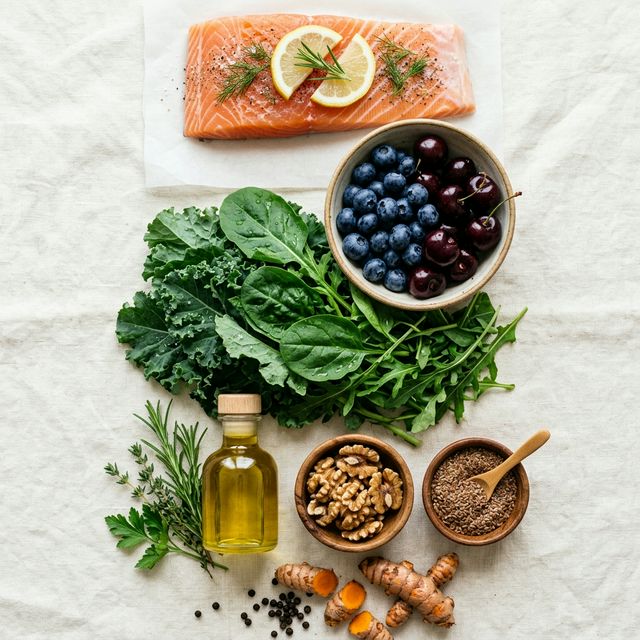
These are the daily habits that actively work against inflammation at the biochemical level. You don’t need all five starting this week. Pick one, make it automatic, then add the next.
🟢 GREEN #1 — Eat the Omega-3 Trio Daily
Wild fatty fish, ground flaxseed, and walnuts are your three most reliable daily anti-inflammatory inputs. They deliver EPA and DHA — the specific omega-3 fatty acids that directly inhibit the COX-2 enzyme pathway. This is the same pathway NSAIDs (ibuprofen, aspirin) target — but without the gastrointestinal side effects with consistent dietary intake.
The practical daily framework:
- Fatty fish (salmon, sardines, mackerel) 3–4 times per week as a protein source
- 1 tablespoon ground flaxseed (ground, not whole — whole passes through undigested) into oatmeal, yogurt, or any smoothie
- A small handful of walnuts daily — about 14 walnut halves, or 1 oz
On days when fatty fish doesn’t happen — which is most days for most people — an NSF-certified omega-3 supplement reliably fills the gap. I’ve used Nordic Naturals Ultimate Omega for this: third-party tested, EPA and DHA content confirmed on the label (not just “fish oil,” which tells you almost nothing), and no oxidized fish aftertaste. Certification matters in this category because unverified fish oil can be oxidized and counter-productive.
🟢 GREEN #2 — Build the Anti-Inflammatory Plate Formula at Every Meal
This is the meal-level version of the Traffic Light System — a four-part plate structure that ensures every meal consistently delivers anti-inflammatory inputs rather than accidentally delivering RED ones.
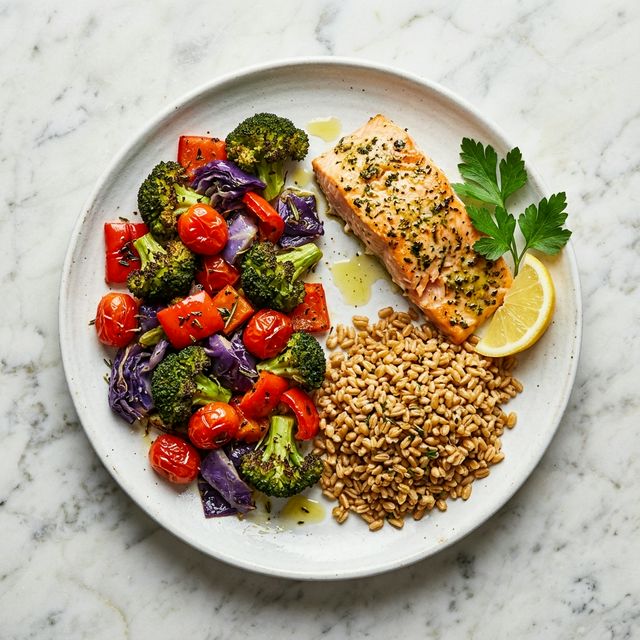
The formula:
- ½ plate: colorful vegetables — at least one dark leafy green (spinach, kale, arugula, bok choy)
- ¼ plate: protein from wild fish, legumes (chickpeas, lentils, white beans), or poultry
- ¼ plate: whole grain or fiber-rich carbohydrate (farro, quinoa, brown rice, oats)
- Healthy fat: a drizzle of EVOO over everything, or a small handful of walnuts on the side
- Anti-inflammatory spice: turmeric + black pepper (piperine in black pepper increases curcumin bioavailability by 2,000%), OR fresh ginger, OR garlic
You don’t need to cook elaborately. The plate formula works with the simplest ingredients possible — canned salmon, pre-washed spinach, canned chickpeas, a drizzle of EVOO. The combination and proportions matter more than culinary complexity.
The anti-inflammatory meal plan provides a full 4-week daily version of this formula with grocery lists and body checkpoints. The mediterranean meal prep guide shows how to prep all the components in one 90-minute Sunday session so assembling this plate takes under 5 minutes Monday through Friday.
🟢 GREEN #3 — Drink the Anti-Inflammatory Trio
What you drink throughout the day quietly compounds or undermines everything else you’re doing with food. Three beverages consistently appear across anti-inflammatory research:
Green tea, 2–3 cups/day: EGCG — the primary polyphenol in green tea — directly inhibits NF-κB, which is the master switch for inflammatory cytokine production. This is among the most studied anti-inflammatory beverage mechanisms in clinical literature. Drink it plain; adding sugar neutralizes the mechanism.
Golden milk / turmeric latte: 1 teaspoon turmeric + a good pinch of black pepper + heated milk or milk alternative. Curcumin’s anti-inflammatory effect is comparable to low-dose ibuprofen for managing mild chronic inflammation, per a 2021 review in Nutrients (NCBI). The black pepper and dietary fat are non-negotiable for absorption — curcumin without them is largely excreted unabsorbed.
Water, 80+ oz/day: This one isn’t exciting, but it’s foundational. Chronic mild dehydration — common in people who drink mostly coffee and nothing else — maintains a low-level cortisol elevation throughout the day. Elevated cortisol is inflammatory. No supplement or green tea will fully compensate for habitual dehydration.
🟢 GREEN #4 — Move for 10 Minutes Before Your First Meal

This is the easiest GREEN habit to add and delivers disproportionate benefit for minimal effort.
Even 10 minutes of gentle movement before breakfast — a walk, light stretching, yoga — reduces fasting blood glucose and specifically decreases the inflammatory response to the first meal of the day. Research published in the Journal of Applied Physiology found that morning movement before eating reduced post-meal inflammatory markers by approximately 18% compared to sedentary waking.
You don’t need equipment. Walk around the block while your coffee brews. Do 10 minutes of stretching in your living room. The key is that movement happens before the first meal, which sets both metabolic and inflammatory tone for the rest of the day.
The habit stack: Put your shoes by the coffee maker. Press the button, walk. By the time you’re back, coffee is ready. Net time cost over your current routine: zero.
🟢 GREEN #5 — Feed Your Gut Microbiome Daily
The gut-inflammation connection is one of the most important discoveries in chronic inflammation research of the last decade. Here’s the simplified version: beneficial gut bacteria consume soluble dietary fiber and produce short-chain fatty acids called butyrate. Butyrate directly suppresses inflammatory signaling at the gut lining — it’s one of the primary mechanisms through which a healthy microbiome maintains low systemic inflammation.
The problem: the average US adult eats approximately 16 grams of fiber per day. The anti-inflammatory minimum is 25–38 grams. Most people are feeding their gut bacteria about half of what those bacteria need to keep inflammation down.
The three easiest daily fiber additions:
- Chia seeds — 1 tablespoon = 5g fiber + omega-3s. Stir into oatmeal, yogurt, or any smoothie. Invisible in texture, meaningful in fiber.
- Beans or lentils — ½ cup cooked = 6–8g fiber. Sub into any meal as a protein or side.
- Cooked-then-cooled resistant starch — rice or potatoes cooked and refrigerated overnight develop resistant starch, which bypasses normal digestion and feeds gut bacteria directly. Yesterday’s leftover rice is more anti-inflammatory than freshly cooked rice.
For the full breakdown of how gut health connects to inflammation reduction, including which specific bacterial strains matter most, that guide covers the gut-inflammation axis in much more depth.
Anti-Inflammatory Tips for Specific Goals
For Joint Pain
Joint inflammation responds fastest to two specific interventions used together: removing seed oils (which directly fuel the prostaglandin pathway that drives joint inflammation) and adding omega-3s daily (which counterbalance that pathway).
A 2022 systematic review published in PMC found that curcumin supplementation showed comparable anti-inflammatory effects to NSAIDs for managing joint pain — without the gastrointestinal side effects that make long-term NSAID use problematic.
Priority RED to remove this week: Seed oils first, then added sugar.
Priority GREEN to add: Omega-3 trio (fatty fish 3–4×/week or certified supplement), then turmeric with black pepper daily.
Timeline: Morning joint stiffness typically improves within 2–4 weeks of consistently removing the top RED habits and adding the omega-3 and curcumin inputs.
For Beginners — A 4-Week Sequence
Here’s what I’d actually tell a friend starting from zero:
Week 1: Remove one RED habit only. Don’t add anything yet. Just choose: seed oils, added sugar, or sleep debt — whichever feels most doable — and remove it for 7 days. Notice what changes.
Week 2: Add the anti-inflammatory plate formula to one meal per day. Lunch usually works best. One meal, one formula. Don’t change everything else yet.
Week 3: Audit your YELLOW habits. Add the 10-minute morning movement routine. Swap one YELLOW habit (sugar in your coffee, or alcohol frequency).
Week 4: Add omega-3 daily — either 3–4 fish meals that week or start a certified supplement. Begin building the full GREEN foundation.
The 4-Week Anti-Inflammatory Meal Plan is the fully structured version of this progression — with daily menus, weekly grocery lists, and body checkpoints for what to expect each week.
On a Budget
Many of the most powerful anti-inflammatory tips cost nothing at all: the 10-minute morning walk, box breathing for cortisol, sleep hygiene improvements, drinking more water. These are free, and they work.
For food, the cheapest high-impact GREEN options: canned sardines (~$1.50–2/can, more omega-3 per dollar than almost anything else), frozen wild salmon (~$6–8/lb frozen), frozen blueberries, dried lentils and chickpeas, raw rolled oats, cabbage, garlic, ground flaxseed.
The items where grocery pricing is genuinely unfair: quality EVOO, wild-caught canned fish, and clean pantry staples. Thrive Market consistently prices these at 25–50% below retail. The membership (~$5/month billed annually) typically saves members around $267/year on exactly these categories — worth it if you’re building the anti-inflammatory pantry seriously.
Frequently Asked Questions
What is the fastest way to reduce inflammation in the body?
Remove your #1 RED habit. For most people that’s seed oils (swap every cooking oil at home to EVOO or avocado oil) or added sugar (label-check everything for one week). Either change typically produces a noticeable shift in bloating and afternoon energy within 5–7 days. For joint inflammation specifically, adding certified omega-3 supplementation alongside seed oil removal shows the most rapid joint marker response — typically within 2–3 weeks.
What are the best anti-inflammatory foods to eat daily?
The five highest-impact daily choices: wild salmon or sardines (EPA/DHA omega-3s, direct COX-2 inhibition), extra virgin olive oil (oleocanthal + polyphenols), dark berries — blueberries, tart cherries, blackberries (anthocyanins reducing NF-κB), leafy greens — arugula, spinach, kale (lutein, zeaxanthin, magnesium), and walnuts with ground flaxseed (plant omega-3s + soluble fiber). You don’t need all five every day. Rotating across them throughout the week gives you full nutrient breadth.
What are the worst foods for inflammation?
Five worst by mechanism: (1) Seed oils — extreme omega-6:omega-3 imbalance driving COX-2 signaling. (2) Added sugar — NFκB activation with every major glucose spike. (3) Refined white flour — glycation end-products from rapid glucose spikes. (4) Processed and deli meats — saturated fat plus nitrate compounds. (5) Ultra-processed snack foods — combine mechanisms 1 through 4 in a single package. Most people are routinely eating 3–4 of these five without realizing it.
What drink reduces inflammation fast?
Green tea (2–3 cups/day) has the strongest clinical evidence — EGCG polyphenols inhibit NF-κB directly. Turmeric golden milk with black pepper delivers curcumin, which has mechanism comparable to low-dose ibuprofen for mild chronic inflammation and shows measurable CRP reduction in trials. Plain water (80+ oz/day) is non-negotiable baseline — chronic dehydration elevates cortisol throughout the day, which drives inflammation. All three can coexist in your daily routine without conflict.
How long does it take for anti-inflammatory diet to work?
Subjective improvements — energy, reduced bloating, better morning joint mobility — typically appear within 5–14 days of removing at least one major RED habit. Most people notice that shift before expecting to. Objective biomarker changes — serum CRP and IL-6 — typically show measurable reduction at 4–8 weeks in NIH-funded dietary intervention studies. You won’t wait 8 weeks to feel anything, but the blood markers take longer to catch up to what your body is already experiencing.
Can exercise reduce inflammation?
Yes — with one critical condition. Moderate consistent exercise, 30–45 minutes, 4–5 times per week with adequate rest days, is one of the most powerful anti-inflammatory interventions available. It specifically reduces CRP, IL-6, and TNF-α measurably over 8–12 weeks. Overtraining without recovery produces the reverse — chronic accumulated exercise-induced inflammation. The rule: if you’re meaningfully sore 48 hours after a session, your body hasn’t recovered. Training on top of that is a RED behavior, not a GREEN one.
What supplements are anti-inflammatory?
Four with the strongest clinical standing: (1) Omega-3 fish oil — NSF-certified, with confirmed EPA + DHA content on label. Directly inhibits COX-2. (2) Curcumin with piperine — comparable mechanism to NSAIDs for mild chronic inflammation; requires black pepper and dietary fat for absorption or it’s largely wasted. (3) Vitamin D3 — only supplement based on confirmed deficiency from bloodwork; unsupervised high-dose D3 carries real risk. (4) Magnesium glycinate — low dietary intake is common in the US; impacts sleep quality, cortisol regulation, and inflammatory gene expression. Confirm all supplementation with your healthcare provider.
What daily habits cause the most inflammation?
Five highest-impact daily inflammation drivers: chronic sleep under 7 hours, daily cooking with or consuming seed oils, regular added sugar above 25–36g/day, sustained unmanaged psychological stress without cortisol release, and sedentary behavior with sporadic intense exercise and no consistent recovery. Most people engage in 3–4 of these daily — which is exactly why removing just one produces a dramatic and quickly noticeable shift in how the body feels.
The Bottom Line
The right anti-inflammatory tips aren’t complicated — they’re just not in the right order on most lists.
The Traffic Light System gives you that order: RED first, YELLOW optimized, GREEN added. Remove one RED habit this week — not five, not the whole list. One. Most people feel a difference within 5–7 days, and that early result is what makes this sustainable.
You’re not overhauling your entire life on a Monday. You’re removing one specific inflammatory input, paying attention to your body’s response, and building from real feedback. That’s how lasting change works — one well-chosen move at a time.

About Jane Smith
We turn solid evidence into everyday habits Americans can actually do—plain English, cups/oz, grocery-aisle swaps, and routines that fit real life. Our editorial process: Experience—we road-test tips in real schedules…