Anti-Inflammatory Meal Plan: Your 4-Week Inflammation Reset (With Grocery Lists)
Most meal plans hand you 30 days of recipes and call it a system. This 4-week anti-inflammatory plan is built differently — with a clear weekly progression, real grocery lists, and a Sunday prep blueprint that makes it sustainable past Day 3.
- What Is an Anti-Inflammatory Meal Plan — and Why Is It Different from a Diet?
- The 4-Week Inflammation Reset: How This Plan Is Structured
- Week 1: CLEAR — Remove Before You Add
- Week 2: BUILD — Bring In the Big Hitters
- Week 3: LAYER — Build the System That Makes This Automatic
- Week 4: SUSTAIN — This Is Just How You Eat Now
- Anti-Inflammatory Meal Plan for Specific Goals
- Frequently Asked Questions
- The Bottom Line
- References
This anti-inflammatory meal plan guide was built for exactly that moment: when you know you need to eat differently, but aren’t sure where to start. Your doctor says “eat anti-inflammatory.” A nutritionist hands you a list of foods. Then you go home, open the fridge — and have no idea what to actually make tonight.
That’s the gap most plans miss. They hand you 30 days of recipes with no roadmap: no sense of what changes when, no structure to keep you going past Day 3. I’ve worked with hundreds of patients navigating this exact frustration, and the pattern is always the same — the information isn’t the problem. The system is.
This anti-inflammatory meal plan is built differently. Instead of dumping a month of meals on you upfront, it gives you a 4-week progression — each week with one clear goal, a real grocery list, a Sunday prep plan, and honest body checkpoints so you know what’s actually happening.
By Week 4, eating this way isn’t a “plan” anymore. It’s just what you do.
What’s inside this guide:
- ✅ Full 4-week meal plan — breakfast, lunch, dinner, snacks
- ✅ Weekly grocery lists by store section
- ✅ Sunday prep guides (30 minutes or less)
- ✅ Body checkpoints — what to feel, and when
- ✅ Versions for joint pain, weight loss, and tight budgets
What Is an Anti-Inflammatory Meal Plan — and Why Is It Different from a Diet?
Let’s clear something up: an anti-inflammatory meal plan isn’t a diet. There are no points, no forbidden foods, no calorie spreadsheets. The idea is simpler than that — you’re replacing, not restricting.
Refined oils become olive oil. White bread becomes lentils or whole grains. Afternoon chips become a handful of walnuts. These swaps compound quickly, and the results usually surprise people with how fast they arrive.
The difference between chronic and acute inflammation
Your body uses acute inflammation for good reasons — when you sprain an ankle and it swells, that’s your immune system doing exactly what it should. Chronic inflammation is completely different. It’s quiet, persistent, and instead of fixing things, it slowly damages them.
The early signs are easy to dismiss: joints that take an hour to loosen up in the morning, an afternoon energy crash that feels like a wall, bloating that comes and goes for no obvious reason. These aren’t just annoyances. They’re signals worth paying attention to — and food is one of the most direct levers you have.
How food actually changes inflammation
The connection to the science: two mechanisms matter most.
NF-κB is a protein complex inside your cells that functions like an inflammation switch. Refined carbs, seed oils, and processed foods flip it on. Anti-inflammatory foods — particularly omega-3s, curcumin, and polyphenols — help shut it off.
The omega-6 to omega-3 ratio is the other lever. Ideally your diet runs at about 4:1. The average American is at 15:1 or higher — almost entirely because of the seed oils in cooking and packaged foods. That imbalance alone drives chronic systemic inflammation. Shifting it doesn’t require a perfect diet. It requires a more intentional one.
Who gets the most out of this plan
This approach works particularly well for people dealing with:
- Joint pain or arthritis — research shows curcumin reduces joint pain comparably to NSAIDs with fewer side effects
- Chronic fatigue and low energy — often driven by elevated inflammatory cytokines
- Gut issues — bloating, IBS-type symptoms, irregular digestion
- Post-workout recovery — omega-3s measurably reduce exercise-induced inflammation
- General prevention — the WHO identifies chronic inflammatory disease as the leading global health threat
If you want a deep dive on the individual foods involved, our anti-inflammatory foods guide breaks down each one with the science behind it.
The 4-Week Inflammation Reset: How This Plan Is Structured
Most anti-inflammatory meal plans fail because they hand you a 30-day meal list and call it a system. That’s not a system — that’s a calendar. Real change happens through progression, not overwhelm.
Each week in this plan has exactly one primary job:
| Week | Phase | Focus | What Changes in Your Body |
|---|---|---|---|
| 1 | CLEAR | Remove the 5 biggest inflammation drivers | Less bloating by Day 5, lighter digestion |
| 2 | BUILD | Add the three most impactful food categories | Energy starts climbing, joint stiffness eases |
| 3 | LAYER | Lock in a meal prep rhythm that removes willpower | Cravings drop, the routine becomes automatic |
| 4 | SUSTAIN | Full anti-inflammatory plate at every meal | CRP and inflammatory markers begin measurable shift |
You don’t need to be perfect. You need to be directional — and this framework keeps you moving the right way even on hard weeks.
Week 1: CLEAR — Remove Before You Add
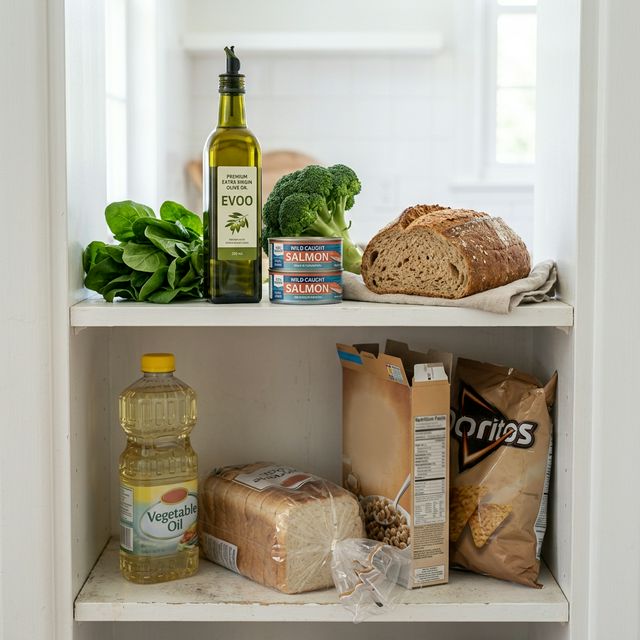
Most people want to start by adding healthy foods. The research — and my clinical experience — consistently suggests faster initial results come from removing the worst offenders first. Your body needs space to respond before it can respond visibly.
The 5 foods to remove this week
1. Refined seed oils — corn, soybean, sunflower, “vegetable” oil. These are the single biggest driver of the omega-6 imbalance. They hide in nearly every packaged food and most restaurant kitchens. Replace every one with extra virgin olive oil or avocado oil.
2. Added sugar and HFCS — directly activates inflammatory signaling and feeds pro-inflammatory gut bacteria. The sneaky sources: salad dressings, flavored yogurts, granola bars, cereals marketed as healthy. Read labels this week.
3. Processed and deli meats — hot dogs, bacon, lunch meats, sausage. They contain AGEs (advanced glycation end-products) and nitrates that measurably raise inflammatory markers. Swap for canned wild salmon, sardines, or rotisserie chicken.
4. White bread and refined carbs — blood sugar spikes trigger inflammatory cascades and drive abdominal fat storage, which itself produces inflammatory compounds. Replace with whole grain bread, oats, brown rice, or lentils.
5. Alcohol — even moderate intake disrupts gut bacteria balance and increases intestinal permeability. Reducing this week noticeably accelerates your Week 1 results.
One thing I tell patients: restocking a pantry the right way gets expensive fast. If you’re buying quality EVOO, organic canned goods, and wild salmon at full retail, the costs add up. A Thrive Market membership gets those same items at 25–50% off consistently. Members average $267 in annual savings on groceries they were already buying.
Full 7-Day Meal Plan
| Day | Breakfast | Lunch | Dinner | Snack |
|---|---|---|---|---|
| Mon | Overnight oats + blueberries + walnuts | Spinach salad + canned wild salmon + olive oil + lemon | Lentil soup + steamed broccoli | Handful walnuts |
| Tue | Greek yogurt + tart cherries + ground flaxseed | Avocado + chickpea wrap + cherry tomatoes | Baked salmon + roasted sweet potato + sautéed kale | Apple + almond butter |
| Wed | Green smoothie (kale, banana, ginger, flax, almond milk) | Roasted veggie + chickpea bowl + tahini | Turkey + quinoa + spinach stir-fry in olive oil | Handful almonds |
| Thu | Turmeric scrambled eggs + whole grain toast | Lentil + tomato soup (made Sunday) | Grilled sardines + brown rice + garlic broccoli | Fresh blueberries |
| Fri | Overnight oats + chia seeds + mixed berries + cinnamon | Arugula salad + walnuts + canned tuna + olive oil + lemon | Chicken thighs + roasted bell peppers + quinoa | Dark chocolate (1 oz, 70%+) |
| Sat | Avocado toast on whole grain + poached egg + turmeric | Tuna + cucumber + whole grain wrap | Shrimp stir-fry + bok choy + ginger + sesame + brown rice | Plain kefir |
| Sun | Smoothie bowl (frozen berries + banana + chia + almond milk) | Leftover lentil soup + side salad | Slow-cooker chicken + white beans + canned tomatoes + garlic | Tart cherry juice (8 oz) |
Grocery List
- Produce: Kale, baby spinach (2 bags), blueberries (fresh or frozen), mixed berries, broccoli (2 heads), cherry tomatoes, sweet potato (2), avocados (3), ginger root, garlic (1 bulb), yellow onions (2), lemons (4), bananas, apples, arugula, bok choy, bell peppers (3), cucumber
- Proteins: Wild salmon fillets (2–3), canned wild salmon (2 cans), canned sardines in olive oil (2 cans), canned tuna (2 cans), eggs (1 dozen), plain Greek yogurt, chicken thighs (4–6), shrimp (1 lb)
- Pantry: Extra virgin olive oil (large bottle), ground flaxseed, chia seeds, walnuts, almonds, almond butter, rolled oats, brown rice, quinoa, red lentils, canned chickpeas (2 cans), canned white beans, canned diced tomatoes (2), turmeric, black pepper, cinnamon, sesame oil, tahini, whole grain bread or wraps
- Fridge/Other: Plain kefir, dark chocolate (70%+ bar), tart cherry juice (unsweetened)
Sunday Meal Prep (30 min)
- Lentil soup: Sauté onion + garlic + turmeric in olive oil. Add red lentils, canned tomatoes, broth. Simmer 25 minutes — makes 4–5 servings for weekday lunches.
- Roast vegetables: Broccoli + sweet potato + bell peppers, 400°F, 25 minutes. Sides for the whole week.
- Overnight oats × 2 jars: Mon and Tue breakfasts, done in 2 minutes.
- Hard-boil 6 eggs.
- Portion snacks: Walnuts and almonds into daily bags.
Body Checkpoint
Days 3–4: Most people notice reduced bloating — particularly if the seed oil and sugar removal is clean. By Day 5–7, morning digestion feels lighter and more regular, and sleep quality often noticeably improves.
Still not feeling it by Day 7? Check your condiments. Seed oils hide in mayonnaise, most bottled dressings, and even some “healthy” snack foods marketed for weight loss. Check every label.
Week 2: BUILD — Bring In the Big Hitters
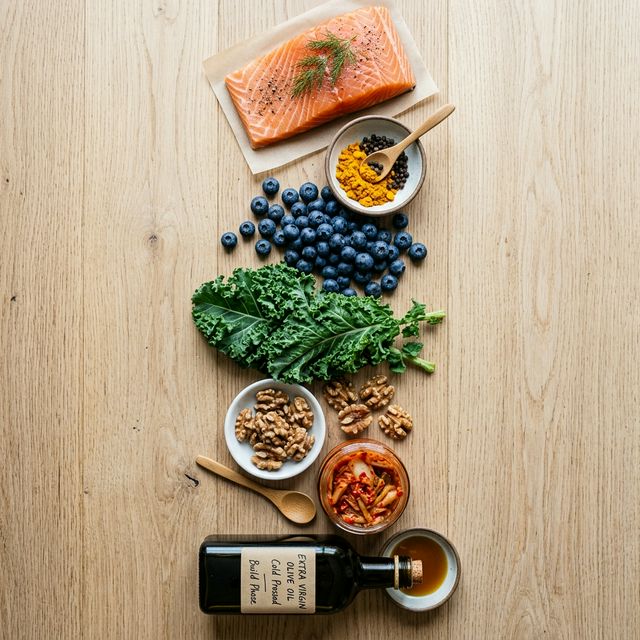
You’ve cleared the floor. Now we move strategically into the foods with the strongest clinical evidence for reducing inflammation.
This week, use the 3-Category framework from our anti-inflammatory foods guide: every day, hit at least one REDUCE food (blocks inflammation signals), one REPAIR food (heals cellular damage), and one PROTECT food (supports the gut lining). You don’t need all three at every single meal — daily is the target.
The foods to prioritize this week
REDUCE (highest clinical evidence):
- Wild fatty fish — 3x minimum this week
- Extra virgin olive oil — your only cooking fat
- Turmeric + black pepper — minimum 2 meals daily
- Walnuts — every day
REPAIR (cellular recovery):
- Blueberries or dark berries — daily
- Dark leafy greens — 2+ cups daily
- Cooked tomatoes — 3–4x this week (cooked increases lycopene bioavailability)
- Broccoli — chop and rest 5 minutes before cooking to activate sulforaphane
PROTECT (gut barrier):
- Kimchi or kefir — a small portion, daily
- Garlic — add to literally everything
- Oats — at least 4 breakfasts this week
- Lentils — at least twice
A note on omega-3s from someone who’s tracked this closely: getting therapeutic EPA and DHA doses from food alone requires eating fatty fish 4–5 times per week. Most people don’t hit that consistently — life gets in the way. On days you can’t, Nordic Naturals Ultimate Omega is the one I trust. It’s NSF-certified, third-party tested for purity and potency, and one of the few supplements with clinical-level concentrations of both EPA and DHA.
Full 7-Day Meal Plan
| Day | Breakfast | Lunch | Dinner | Snack |
|---|---|---|---|---|
| Mon | Oatmeal + turmeric + blueberries + walnuts | Big kale salad + salmon + olive oil + lemon | Baked salmon + broccoli + brown rice | Kefir + walnuts |
| Tue | Smoothie (kale, frozen berries, banana, ginger, flax, kefir) | Lentil + spinach soup + whole grain bread | Chicken stir-fry + broccoli + garlic + sesame + brown rice | Dark chocolate + tart cherries |
| Wed | Greek yogurt + mixed berries + ground flaxseed + walnuts | Sardine + avocado toast + cherry tomatoes | Turmeric salmon cakes + roasted bell peppers + quinoa | Apple + almond butter |
| Thu | Overnight oats + chia seeds + blueberries + cinnamon | Chickpea + roasted veggie bowl + tahini + lemon | Shrimp tacos: whole grain tortilla + slaw + avocado + lime | Almonds + dark chocolate |
| Fri | Turmeric scrambled eggs + sautéed spinach + whole grain toast | Tuna salad (EVOO + lemon + celery) on arugula | Baked cod + roasted sweet potato + kale salad | Tart cherry juice + walnuts |
| Sat | Berry smoothie bowl + chia + no-added-sugar granola | Avocado + egg salad wrap (EVOO-based) | Salmon + quinoa + roasted tomatoes + garlic oil | Kimchi + whole grain crackers |
| Sun | Overnight oats + banana + walnut + light maple syrup | Leftovers bowl: rice + vegetables + sardines + kimchi | Slow-cooker lentil + kale + tomato stew | Greek yogurt + berries |
Grocery List (additions to Week 1 staples)
Kimchi (jar with live cultures), fresh salmon (3 fillets), canned sardines (2 more cans), frozen wild blueberries, tart cherries (frozen or unsweetened juice), cod fillets (2), shrimp (1 lb), whole grain tortillas, celery, fresh tomatoes, cod fillets, no-sugar-added granola (check seed oil content on label)
Body Checkpoint
By Days 10–12, the most consistently reported shifts are:
- Morning energy arrives faster — less of that slow warm-up period in the first hour
- Reduced joint stiffness — hands, knees, and lower back in particular
- Smoother afternoon energy — the 2–3pm crash starts flattening out
- Better sleep depth — tart cherries and the lower inflammatory load help here noticeably
Not noticing anything yet at Day 14? The most common hidden culprits: flavored coffee creamer, bottled salad dressings, “healthy” granola bars with seed oils, or a non-stick pan with a damaged coating leaching compounds into your food. Check all of them.
Week 3: LAYER — Build the System That Makes This Automatic
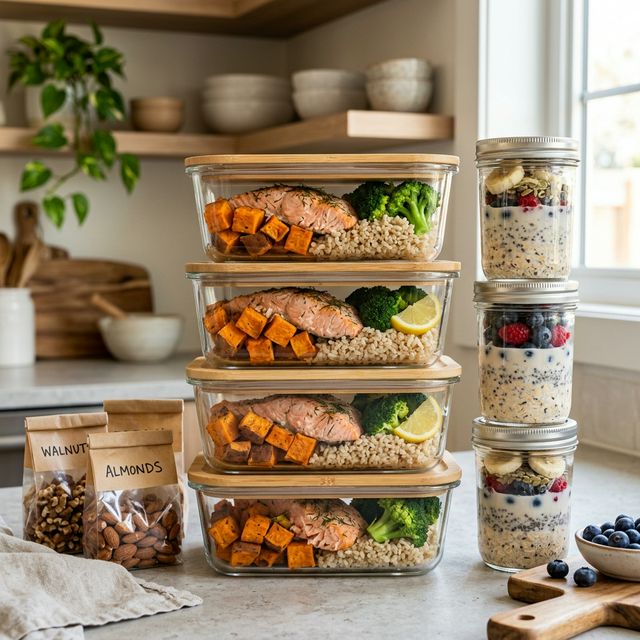
By Week 3, the palate shift is real. Eating anti-inflammatory is starting to feel normal rather than effortful. What we do now is lock in the infrastructure that makes this sustainable without conscious willpower.
The most common reason people fall off by Week 3 isn’t motivation — it’s Wednesday-night decision fatigue. You come home tired, there’s nothing prepped, and the easiest option is whatever’s fastest. The Sunday Blueprint solves that completely.
The 2-Hour Sunday Prep Blueprint
You’re not cooking every meal in advance. You’re prepping the components that let you assemble any anti-inflammatory meal in under 10 minutes on any night of the week.
Proteins (~45 min, mostly oven):
- Bake 2 salmon fillets (400°F, 12–14 min) → Mon/Tue dinners
- Cook a pot of lentils (25 min simmer) → lunches all week
- Hard-boil 6 eggs
Grains (~20 min active):
- Large batch of brown rice or quinoa → bowls, sides, breakfasts
- Big pot of oats → reheat a portion each morning
Vegetables (~25 min):
- Sheet pan 1: broccoli + garlic in olive oil, 400°F
- Sheet pan 2: sweet potato + bell peppers + onion in olive oil
- Wash and spin all leafy greens, ready in containers
Sauces (~10 min):
- Lemon-olive oil dressing: lemon juice + EVOO + minced garlic + pinch of salt → mason jar, lasts all week
- Golden milk concentrate: turmeric + black pepper + coconut oil + honey → stir into morning oats or warm milk daily
Snack prep (~5 min):
- 7 portions of walnuts/almonds in small bags
- 3 overnight oat jars for Mon–Wed
Total active time: 65–75 minutes. Everything else works while you do other things.
Full 7-Day Meal Plan
| Day | Breakfast | Lunch | Dinner | Snack |
|---|---|---|---|---|
| Mon | Reheated oats + golden milk drizzle + blueberries | Lentil bowl + roasted vegetables + olive oil dressing | Prepped salmon + brown rice + garlic broccoli | Kefir |
| Tue | Overnight oats + tart cherry juice | Quinoa bowl + spinach + egg + avocado + lemon dressing | Turkey + roasted bell peppers + roasted sweet potato | Walnuts + dark chocolate |
| Wed | Greek yogurt + berries + walnuts + cinnamon | Sardine + roasted veggie bowl + tahini | Turmeric chicken thighs + brown rice + kale salad | Apple + almond butter |
| Thu | Berry smoothie (prepped packs + kefir + banana) | Leftover lentils + side salad + kimchi | Shrimp + bok choy + sesame + garlic stir-fry + rice | Tart cherry juice |
| Fri | Oats + banana + walnuts + ground flax | Chickpea + roasted tomato bowl + arugula + olive oil | Baked cod + roasted broccoli + quinoa | Greek yogurt + berries |
| Sat | Avocado toast + 2 poached eggs + turmeric | Leftover salmon + big salad + cherry tomatoes | Zucchini noodles + olive-oil pesto + sardines | Dark chocolate + almonds |
| Sun | Berry smoothie bowl + chia + granola | Grain bowl: all leftover roasted vegetables + egg + kimchi + rice | Slow-cooker chicken + white beans + tomatoes + herbs | Handful walnuts |
Grocery List
Mostly restocking this week: salmon (2 fillets), eggs, kefir, Greek yogurt, walnuts, dark chocolate, EVOO, blueberries, leafy greens, garlic, lemons, cherry tomatoes.
New adds: Zucchini (for noodles), olive-oil based pesto (read the label — no seed oils), fresh herbs (parsley, dill), coconut oil for the golden milk concentrate.
For Busy Days: The 3-Ingredient Fallback
Not every night works out. These take under 5 minutes and cover the anti-inflammatory bases:
- Canned sardines + arugula + olive oil + lemon — 2 minutes
- Canned lentils (rinsed) + leftover roasted veg + tahini — 3 minutes
- Greek yogurt + frozen berries + walnuts — 1 minute (honest dinner in a real pinch)
Having these pantry staples in stock consistently is the actual insurance policy. A Thrive Market membership keeps quality canned wild salmon, EVOO, and lentils stocked at home for significantly less than grocery retail — no emergency fast food needed.
Body Checkpoint
End of Week 3 typical picture:
- Eating anti-inflammatory feels like the default, not the effort
- The afternoon energy wall is largely gone
- Sleep quality and depth have measurably improved
- Cravings for processed foods are meaningfully lower
- Joint stiffness is at its lowest point in recent memory
Week 4: SUSTAIN — This Is Just How You Eat Now
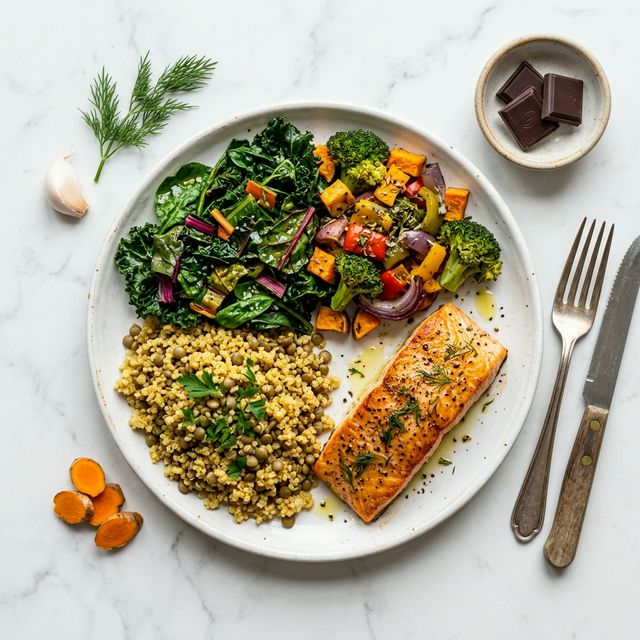
You’ve cleared the kitchen. You’ve added the most impactful foods. You’ve built the prep system. Week 4 is about one thing: making this permanent — not through willpower, but through the simplest mental model I know.
The Anti-Inflammatory Plate Formula
You don’t need to track anything. You need one visual model that applies to every meal, everywhere:
🌿 HALF YOUR PLATE → Vegetables (at least 1 dark leafy green)
🐟 QUARTER PLATE → Protein (fatty fish, legumes, eggs, poultry)
🌾 QUARTER PLATE → Whole grain or fiber source (oats, lentils, quinoa, rice)
🫒 HEALTHY FAT → Drizzle of olive oil, avocado, or a small handful of nuts
🌶️ 1 SPICE → Rotate turmeric, ginger, garlic daily
That’s the entire framework. You can apply this at any restaurant, any cuisine, any season. Once it’s habitual — and it becomes habitual faster than you’d expect — it runs without thinking.
Full 7-Day Meal Plan
| Day | Breakfast | Lunch | Dinner | Snack |
|---|---|---|---|---|
| Mon | Golden milk oatmeal + blueberries + walnuts + chia | Turmeric lentil soup + whole grain bread + side salad | Baked salmon + roasted asparagus + quinoa | Tart cherry juice |
| Tue | Smoothie bowl (berries + banana + kefir + flax + chia) | Anti-inflammatory plate bowl: greens + salmon + avocado + quinoa | Chicken + sweet potato + roasted garlic + broccoli | Greek yogurt + berries |
| Wed | Overnight oats + golden milk + tart cherries | Sardine + avocado + arugula + lemon + whole grain crackers | Shrimp + bok choy + broccoli + ginger + garlic + rice | Walnuts + dark chocolate |
| Thu | Eggs + sautéed spinach + cherry tomatoes + turmeric toast | Chickpea + roasted tomato + kale + olive oil bowl | Cod + roasted bell peppers + black bean salad | Apple + almond butter |
| Fri | Greek yogurt parfait + blueberries + walnuts + flax + cinnamon | Salmon + arugula + spinach + avocado + walnuts — large salad | Turmeric chicken + lentils + roasted broccoli | Kefir |
| Sat | Avocado + 2 eggs + whole grain toast + cherry tomatoes | Grain bowl: brown rice + roasted vegetables + fried egg + kimchi | Sautéed scallops + wilted spinach + garlic + lemon + quinoa | Dark chocolate + tart cherries |
| Sun | Green smoothie: kale + frozen mango + ginger + flax + coconut water | Fridge-clear bowl: whatever’s left + egg + kimchi + sesame oil | Slow-cooker lentil + vegetable + ginger + tomato stew | Walnuts |
Grocery List
By this point, the grocery list is second nature. Focus on restocking your core staples:
- Restock: EVOO, walnuts, ground flax, oats, lentils, canned salmon/sardines, dark chocolate
- Fresh produce: Whatever dark leafy greens look freshest; your preferred berries; seasonal vegetables
- Proteins: 2–3 salmon fillets, or whatever high-omega-3 fish is on sale
- Fermented: Check kimchi jar — still active culture? Restock kefir
What to Expect by the End of Week 4
The research is consistent: 4–8 weeks of sustained anti-inflammatory eating produces measurable changes in CRP, IL-6, and TNF-alpha — the primary blood markers for systemic inflammation.
What most people notice subjectively at 4 weeks:
- Morning energy arrives earlier and feels cleaner
- Sustained mental clarity through the afternoon
- Joint mobility noticeably better
- Digestion regular and comfortable
- Sleep quality and depth improved — falling asleep easier
At your next doctor’s visit, ask about CRP and IL-6 testing. It’s often covered under a standard inflammation panel, and seeing the number move is motivating in a way that feeling better sometimes isn’t.
How to Continue After Week 4
You don’t need a new plan. You need a sustainable ratio.
The 80/20 Rule: Anti-inflammatory at 80% of your meals. The other 20% is your life — a dinner out, a birthday cake, a holiday. That’s sustainable for years. Perfection isn’t.
Keep the plate formula in mind. Continue Sunday batch prep whenever possible. And when you want to deepen the food knowledge — rotate new anti-inflammatory foods in seasonally using our anti-inflammatory foods guide.
For a Mediterranean-style approach that extends naturally from this plan, the Mediterranean meal prep guide is the logical next step.
Anti-Inflammatory Meal Plan for Specific Goals
For Joint Pain
Three foods earn extra emphasis if joint pain is your main motivation:
Curcumin (turmeric): A 2023 meta-analysis found curcumin improved joint pain comparably to NSAIDs with significantly fewer GI side effects. Always pair with black pepper — piperine increases curcumin absorption by up to 2,000%.
EPA and DHA (fatty fish): These omega-3s reduce prostaglandins and leukotrienes — the specific inflammatory compounds most responsible for joint pain and stiffness. Three servings of fatty fish per week is the minimum meaningful target.
Tart cherries: Dense in anthocyanins that reduce uric acid and joint-specific inflammation. 8 oz of unsweetened tart cherry juice daily shows consistent results in the literature and with my patients.
One nuance for autoimmune joint conditions: some people are sensitive to nightshades (tomatoes, bell peppers, eggplant). Consider removing them for the first 2 weeks, then reintroducing one at a time. This is individual — many people with joint issues tolerate nightshades fine.
For more gut-joint connection context, see our gut healthy foods guide.
For Weight Loss
Chronic inflammation and excess body fat form a self-reinforcing cycle: visceral abdominal fat produces inflammatory cytokines, which drives more fat storage. Breaking the cycle addresses both simultaneously.
You don’t need to calorie count. The plate formula displaces calorie-dense processed foods naturally — half a plate of vegetables leaves less room for everything else. Fiber and protein extend satiety, blunting the hunger signals that normally drive overeating.
Most people in the first month lose 3–5 lbs — mainly from reduced water retention and improved gut function — without tracking a single number.
On a Budget
The reputation for anti-inflammatory eating being expensive comes from the premium produce section. It doesn’t apply to the most impactful foods on the list:
- Frozen wild blueberries: $4–6/bag — same polyphenol content as fresh
- Dried red lentils: ~$1.50/lb, 8+ servings
- Canned sardines in olive oil: $2–3/can, two servings of omega-3s
- Rolled oats: $3.50 for 3+ weeks of breakfasts
- Frozen broccoli and spinach: $2–3/bag
- Ground flaxseed: ~$4 for a month’s supply
For items where quality does matter more — EVOO, organic canned tomatoes, wild salmon — Thrive Market cuts the price by 25–50%. The membership pays for itself within one or two grocery orders if you’re buying these regularly.
Frequently Asked Questions
What can I eat on Day 1 of an anti-inflammatory meal plan?
Day 1 is intentionally simple. Breakfast: overnight oats + frozen blueberries + walnuts (2-minute prep the night before). Lunch: spinach salad with canned wild salmon, olive oil, and lemon. Dinner: lentil soup with broccoli and olive oil. Snack: a handful of walnuts. This hits all three anti-inflammatory categories and takes under 20 minutes of actual cooking.
How long does it take for an anti-inflammatory diet to work?
Subjective improvements typically appear within 5–10 days when the major triggers are removed. Measurable changes in blood markers (CRP, IL-6) require 4–8 weeks of consistent eating. The timeline is faster if you had significant seed oil and processed food consumption before — the contrast is more immediate.
Can I drink coffee on an anti-inflammatory meal plan?
Yes. Black coffee contains polyphenols with documented anti-inflammatory properties. Two to three cups of plain black coffee daily is actually associated with lower inflammatory markers in population studies. The problem is what goes in it: flavored creamers, sweetened syrups, and bottled drinks. Unsweetened oat milk or a splash of plain kefir both work fine as additions.
Is dairy allowed?
Fermented dairy — Greek yogurt and kefir with live cultures — is actively beneficial and included throughout this plan. Regular milk is neutral for most people. Hard aged cheeses in moderation are fine. Avoid: processed cheese slices, sugar-sweetened flavored yogurts, ice cream.
What’s the best anti-inflammatory breakfast?
Overnight oats, consistently. Rolled oats + blueberries + ground flaxseed + walnuts + cinnamon. Two minutes to prepare the night before. Hits the REDUCE, REPAIR, and PROTECT categories in a single bowl. Keeps you full until lunch. Nothing else comes close for the effort-to-impact ratio.
Can I lose weight on this plan?
Yes — as a side effect, not the primary goal. Eliminating refined seed oils and processed foods while increasing fiber and protein naturally reduces caloric density without restriction. Most people lose 3–5 lbs in the first month, with continued gradual progress if they stay consistent.
What’s the fastest way to reduce inflammation?
Two changes produce the fastest results: first, remove refined seed oils and replace entirely with EVOO or avocado oil — this shifts the omega-6:omega-3 ratio measurably within 2 weeks. Second, add tart cherry juice and ginger daily — gingerols begin modulating prostaglandins within hours. The full 4-week plan in this guide produces the most consistent, sustained results when both approaches are combined.
The Bottom Line
An anti-inflammatory meal plan doesn’t have to be another rigid routine you maintain perfectly until you suddenly stop. The 4-Week Inflammation Reset is built around one simple idea: progression changes behavior where willpower can’t.
- Week 1: Clear the five biggest inflammation drivers
- Week 2: Build in the foods with the strongest clinical evidence
- Week 3: Lock in the Sunday prep rhythm that removes decision fatigue
- Week 4: The anti-inflammatory plate is just how you eat now
You don’t have to be perfect. You have to be consistent enough to shift your baseline — and that shift, once it sets in, tends to stick.
Start here: Download the free Anti-Inflammatory Foods Checklist and Grocery Guide — a printable PDF organized by the 3-Category framework with budget shopping notes.
Already on the foods? The 20 Anti-Inflammatory Foods guide deepens the food knowledge and gives you the science behind each item so you can rotate in variety with confidence.
References
- Omega-3 fatty acids and inflammatory markers — PMC9751493, NIH (2024)
- Curcumin vs. NSAIDs for joint pain — PMC9742455, NIH (2023)
- High-fermented-food diet and microbiome diversity — Cell, Stanford00754-6) (2021)
- Anti-inflammatory diet overview — Harvard T.H. Chan School of Public Health
⚠️ Health Disclaimer: This article is for informational and educational purposes only. It is not intended to diagnose, treat, cure, or prevent any disease or health condition. Always consult a qualified healthcare provider before making significant changes to your diet, especially if you have a medical condition, are pregnant, or are currently taking medications.

About Jane Smith
We turn solid evidence into everyday habits Americans can actually do—plain English, cups/oz, grocery-aisle swaps, and routines that fit real life. Our editorial process: Experience—we road-test tips in real schedules…