Best Fruits for Digestion: Why Your “Healthy” Fruit Bowl is Making You Bloated
Disclaimer: I’m trained in traditional medicine in Vietnam, but I’m not currently practicing medicine or providing personal diagnosis or treatment...
Disclaimer: I’m trained in traditional medicine in Vietnam, but I’m not currently practicing medicine or providing personal diagnosis or treatment advice through this website. I write from personal experience, ongoing research, and my own food-first wellness experiments. My work explores digestion, daily energy, traditional self-care, movement, breathwork, meditation, and simple habits that support everyday well-being. Everything I share here is educational and reflective, not medical advice. It should not replace diagnosis, treatment, or care from a licensed healthcare professional.
You eat a massive bowl of watermelon, apples, and mangoes because it’s “healthy,” but thirty minutes later, your stomach is visibly distended and you feel incredibly uncomfortable.
For years, we’ve been told that eating more fruit is the ultimate key to better health. But the wellness industry rarely talks about the “Fruit Paradox.” Not all fruits are processed the same way by your digestive system. Many popular fruits contain high levels of fructose and specific fermentable fibers (FODMAPs) that can trigger severe gas and bloating in sensitive stomachs.
You don’t have to give up fruit. In this guide, we’re going to categorize the best fruits for digestion based on exactly how they work in your gut. You’ll learn which fruits bring their own digestive enzymes, which provide gentle fiber, and which “bloat traps” you might want to avoid after a heavy meal.
- The Enzyme Helpers: Papaya, Pineapple, and Kiwi naturally help break down food.
- The Gentle Sweepers: Berries and bananas provide low-gas fiber.
- The Bloat Traps: Apples, watermelon, and mangoes can cause severe bloating due to high fructose/FODMAP levels.
The Fruit Paradox: Why Fruit Can Cause Bloating

We tend to group all fruits into a single “healthy” category, but your stomach sees them very differently.
The Fructose and FODMAP Factor
Many fruits are incredibly high in fructose (fruit sugar) and a type of fiber known as FODMAPs (Fermentable Oligosaccharides, Disaccharides, Monosaccharides, and Polyols). As noted by experts at Johns Hopkins Medicine, while these are natural and generally healthy, they’re notoriously difficult for the small intestine to absorb. When they reach your large intestine undigested, your gut bacteria rapidly ferment them, producing a large amount of gas that causes that painful, balloon-like feeling. If FODMAP is new to you, here is the full low-FODMAP survival strategy for sensitive guts.
The “Dessert vs. Supplement” Mindset
If you treat high-sugar fruits like a massive dessert after a heavy dinner, you’re asking your digestive system to work overtime when it’s already exhausted. Instead, you should view specific fruits as natural digestive supplements.
What I noticed:
“A few years ago, I started eating a huge, crisp apple every night right after dinner. I thought I was making a fantastic dietary choice. Instead, I spent every night feeling painfully bloated and heavy. It wasn’t until I learned about pectin and fructose that I realized timing and fruit choice matter immensely. Once I swapped the post-dinner apple for a few slices of papaya, the evening bloating completely vanished.”
The “Enzyme Helpers” (Nature’s Digestive Aids)
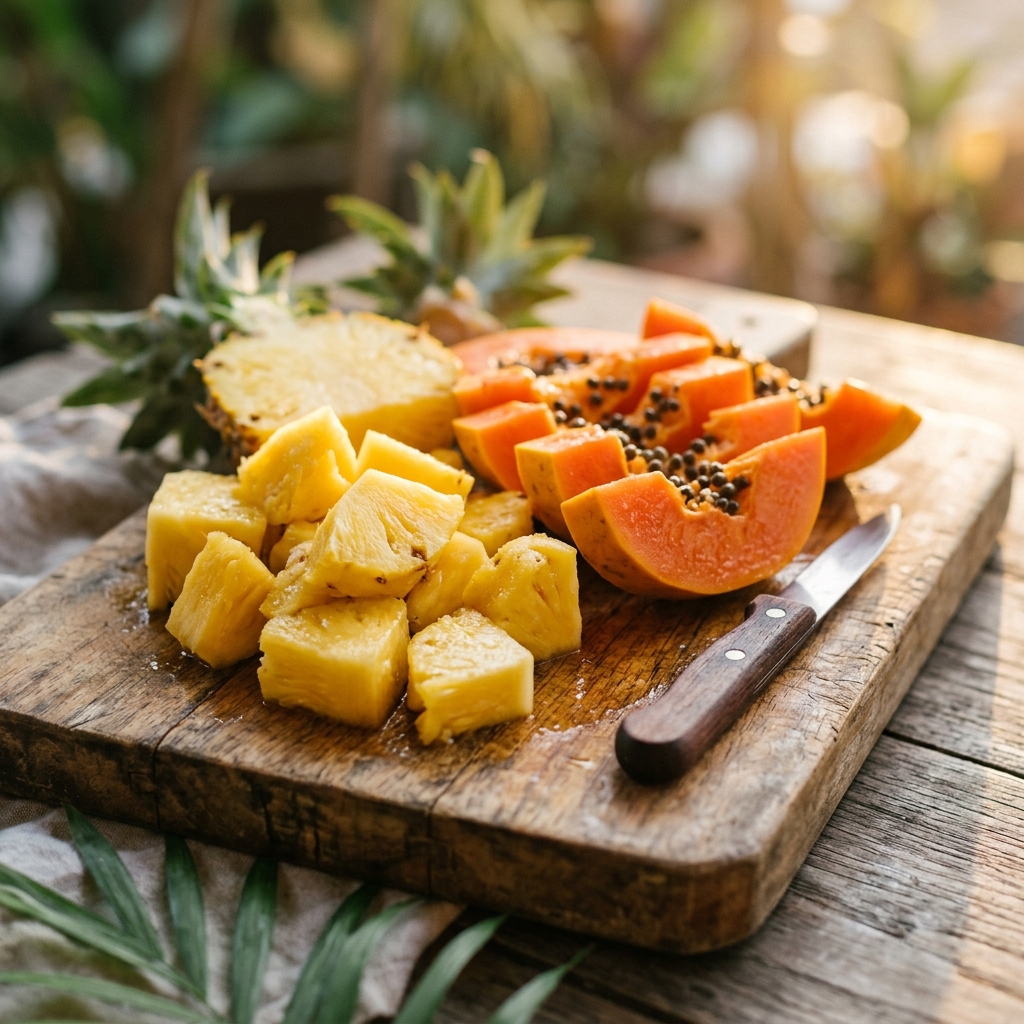
These are the absolute best fruits for digestion because they don’t just sit in your stomach; they actively help break down the food you just ate.
Papaya (The Protein Breakdown Tool)
Papaya is a digestive powerhouse. It contains an enzyme called **papain**. Think of papain as a pair of molecular scissors that specifically targets and breaks down tough protein fibers. If you’ve just eaten a heavy meat dish, eating a few slices of fresh papaya can significantly soothe your stomach and speed up the digestive process.
Pineapple (The Anti-Inflammatory Sweeper)
Similar to papaya, pineapple contains a unique enzyme called **bromelain**. Bromelain is highly effective at breaking down proteins and is also renowned for its natural anti-inflammatory properties, making it an excellent choice for soothing an irritated digestive tract.
Kiwi (The Gentle Mover)
Kiwi contains an enzyme called **actinidin**, which also aids in protein digestion. Furthermore, kiwi is packed with soluble fiber and has been shown in various studies to naturally support regular bowel movements without causing excess gas.
The “Gentle Sweepers” (Low-Gas Fiber)

If you need to increase your daily fiber intake but have a sensitive stomach, these fruits provide the gentlest “sweeping” action for your gut.
Berries (High Antioxidants, Low Fructose)
Strawberries, blueberries, and raspberries are the gold standard for gut health. They’re packed with fiber but are naturally very low in fructose. This means they provide the bulk your digestive system needs without triggering the rapid fermentation that causes bloating.
Bananas (The Resistant Starch Hero)
Bananas are incredibly soothing to the gut lining. Slightly green (unripe) bananas are particularly beneficial because they’re rich in **resistant starch**. This type of starch bypasses early digestion and acts as a pure prebiotic, feeding your good gut bacteria without causing severe gas. Here is more on what the difference between probiotic and prebiotic foods really means and on which banana ripeness stage actually fits your gut today.
Citrus Fruits (Gentle Hydration)
Oranges and grapefruits are mostly water and contain soluble fiber. Because their fructose-to-glucose ratio is well-balanced, they’re generally very well-tolerated by sensitive stomachs.
The “Bloat Traps” (Fruits to Monitor)
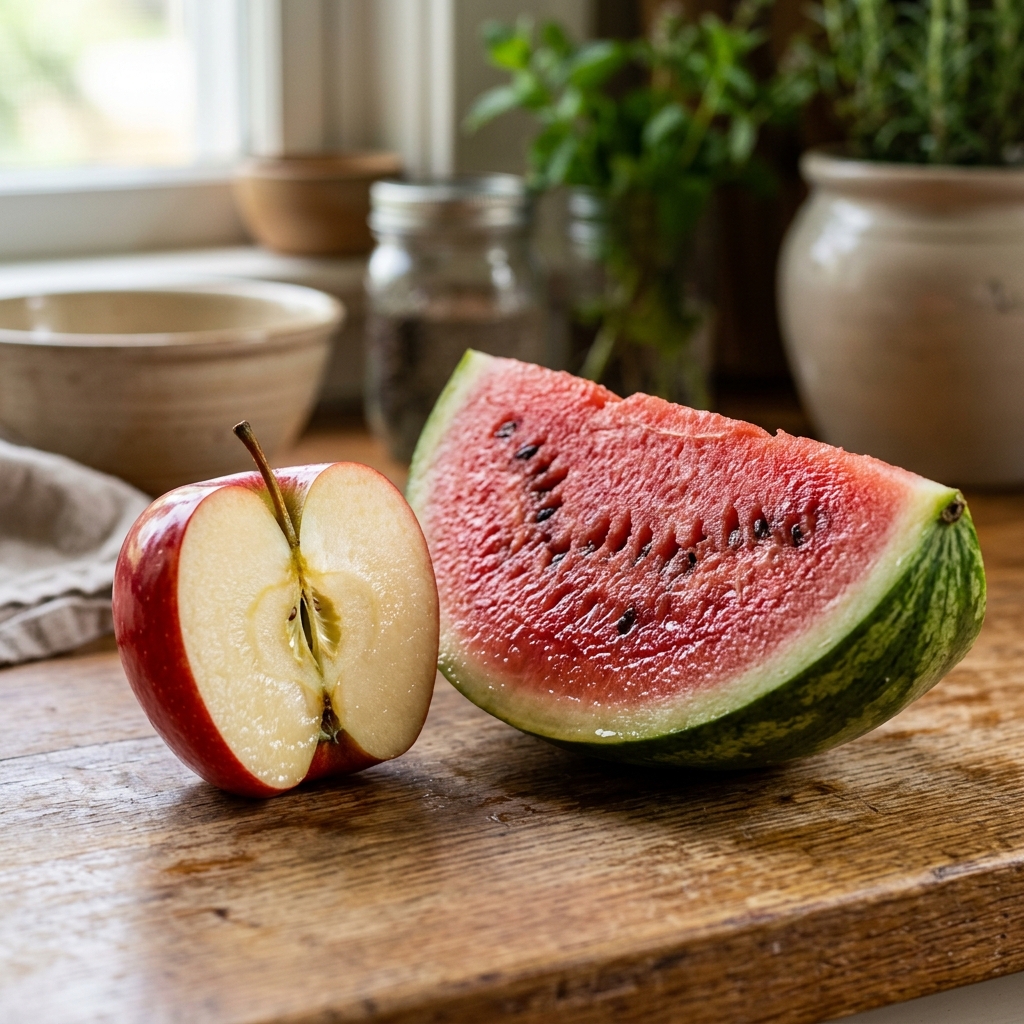
These fruits aren’t “bad,” but if you struggle with digestion, you need to monitor your intake carefully.
Apples and Pears (The Pectin Heavyweights)
Apples and pears are fantastic sources of fiber, specifically pectin. However, they’re also incredibly high in fructose. For someone with a sensitive gut, eating a large apple is like dropping a gas-bomb into their digestive tract. Read more on why fermentable fruit fiber bloats so fast after eating.
Watermelon (The Fructose Overload)
Watermelon is refreshing, but it contains extremely high levels of fructose and polyols (a type of sugar alcohol). This combination is a classic trigger for rapid bloating.
Why You Shouldn’t Ban Them Completely
You don’t need to eliminate these fruits forever. The key is portion control and timing. Instead of eating an entire apple after a heavy meal, try eating half an apple on an empty stomach in the mid-morning, paired with a handful of nuts to slow down the fermentation process.
Frequently Asked Questions
What fruit is easiest to digest?
Bananas and papaya are generally considered the easiest fruits to digest. Bananas are gentle on the stomach lining, while papaya provides active enzymes that assist the digestive process.
Does fruit cause gas and bloating?
Yes, certain fruits absolutely can. Fruits high in fructose and FODMAPs (like apples, pears, watermelon, and mangoes) are common culprits for gas and bloating because they rapidly ferment in the large intestine.
When is the best time to eat fruit for digestion?
For sensitive stomachs, the best time to eat fruit—especially fiber-heavy fruit—is between meals on an empty stomach. However, enzyme-rich fruits like papaya and pineapple can be beneficial when eaten shortly before or after a heavy, protein-rich meal.
The Bottom Line
Fruit is undeniably good for you, but understanding *which* fruits your body tolerates is the key to comfortable digestion.
Start treating fruits like targeted wellness tools. If you just ate a heavy steak, reach for a few slices of enzyme-rich papaya instead of a fructose-heavy apple.
If you want to dive deeper into how to structure your meals for maximum comfort, see the daily meal-level structure that supports better digestion, and the broader gut-friendly food list that pairs with these digestion-friendly fruits.
Disclaimer: The information provided on EssentialWellnessAZ is for educational purposes only. It is not intended as a substitute for professional medical advice, diagnosis, or treatment.

About Mr. Anh
We turn solid evidence into everyday habits Americans can actually do—plain English, cups/oz, grocery-aisle swaps, and routines that fit real life. Our editorial process: Experience—we road-test tips in real schedules…