Does Skim Milk Cause Acne? The Low-Fat Paradox
Skim milk does not cause acne for everyone, but low-fat and skim milk show a stronger acne association than whole milk in several observational studies.
Disclaimer: This article is for educational purposes only and is not a substitute for medical advice. If acne is cystic, painful, scarring, sudden, or affecting your mental health, work with a dermatologist.
Does skim milk cause acne? It does not cause acne for everyone, but skim and low-fat milk have shown a stronger association with acne than whole milk in several studies. That is the skim milk paradox: the “lighter” choice may not be the friendlier choice for acne-prone skin.
This is not proof that one glass of skim milk will break you out. The evidence is mostly observational and the effect size is modest. But if you drink skim milk daily because you think it is better for your skin, the data is worth a second look.
For the full dairy evidence, read does dairy cause acne. This article focuses only on skim and low-fat milk.
The Skim Milk Paradox
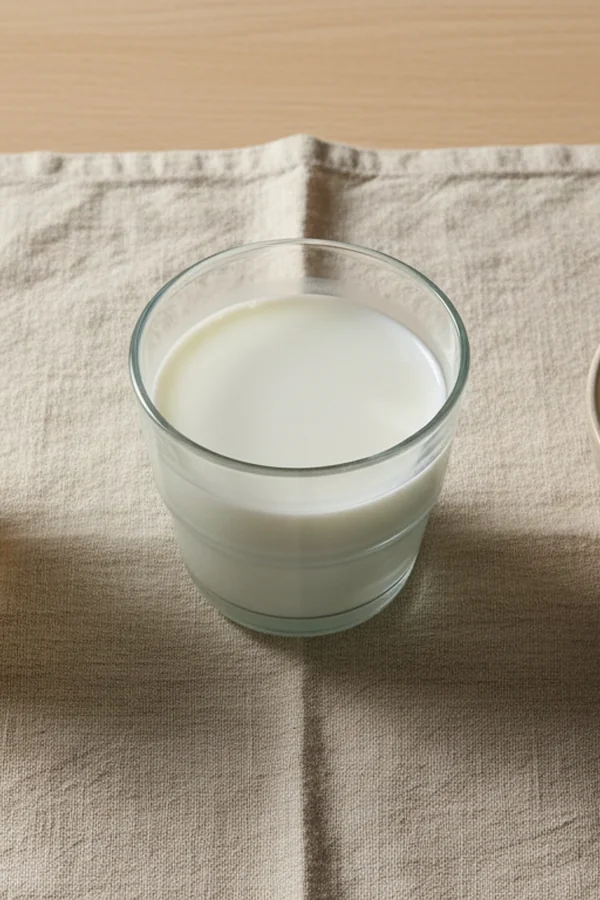
In a large dairy/acne meta-analysis, low-fat or skim milk had an odds ratio of about 1.32, while whole milk was closer to 1.22. Another study in teenagers found low-fat/skim milk intake was higher in participants with acne than in those without acne.
That runs against the usual assumption. Many people with acne avoid fat, choose skim milk, and feel virtuous. But acne biology is not only about dietary fat. It is also about insulin, IGF-1, hormones, and follicle behavior.
Why Skim Milk Might Be Worse
One possible explanation is the insulin and IGF-1 pathway. Milk proteins can stimulate insulin and insulin-like growth factor 1. IGF-1 is relevant to acne because it can influence oil glands and the way skin cells build up inside follicles.
Fat slows gastric emptying. When fat is removed, the same milk sugar and protein may hit faster. That may create a sharper insulin signal for some people. This mechanism is plausible, not fully settled, but it helps explain why “less fat” does not automatically mean “better for acne.”
Skim Milk Versus Whole Milk
| Milk type | What the acne signal suggests |
|---|---|
| Skim / low-fat milk | Stronger association in several observational studies. |
| Whole milk | Still associated in some studies, but often slightly weaker. |
| No daily milk | Cleanest test if you suspect milk is a personal trigger. |
Should You Switch To Whole Milk?
Not automatically. If acne is your reason for testing dairy, the cleaner experiment is to pause fluid cow’s milk for eight weeks, not to switch from skim to whole and hope. Whole milk still shows an association in some research, and it may not solve the problem if milk protein is your trigger.
If you need a replacement, see best milk alternative for acne after it is published.
How To Test Skim Milk Properly
- Stop skim and low-fat milk for 8 weeks.
- Keep skincare stable. Do not change five products at once.
- Track new inflamed spots weekly. Do not judge by old marks.
- Replace calcium and vitamin D. Use fortified plant milk or other food sources.
- Reintroduce carefully. If you test again, use one serving and watch the pattern.
For the full experiment framework, read does cutting out dairy help acne after it is published.
What If You Only Use Skim Milk In Coffee?
A splash of skim milk in coffee is a different exposure than two large glasses a day. Dose matters. In the dairy/acne meta-analysis, the clearer milk signal appeared around daily intake, while lower weekly intake was less convincing.
That means you do not need to panic about tiny amounts. If acne is active and you want a clean test, remove skim milk completely for eight weeks. But when interpreting your results, be honest about dose. A daily protein shake with skim milk is a stronger suspect than a teaspoon in tea.
Skim Milk Is Not The Only Skin Variable
If stopping skim milk does nothing, that is still useful. It means you can shift attention to other higher-probability levers: high-glycemic snacks, sleep, stress, menstrual timing, comedogenic products, or treatment consistency.
Food is one lever, not the whole dashboard. The point of the skim milk test is to answer one question cleanly, not to make dairy responsible for every breakout.
Frequently Asked Questions
Is skim milk bad for acne?
It may be a trigger for some people. Studies have found skim or low-fat milk more strongly associated with acne than whole milk, but this does not prove causation.
Why would skim milk cause acne more than whole milk?
One theory is that removing fat changes how quickly milk sugar and proteins are absorbed, affecting insulin and IGF-1 signaling.
Should I avoid all dairy if skim milk breaks me out?
Not necessarily. Test one category at a time. Milk and whey are better first suspects than every dairy food.
References

About Mr. Anh
We turn solid evidence into everyday habits Americans can actually do—plain English, cups/oz, grocery-aisle swaps, and routines that fit real life. Our editorial process: Experience—we road-test tips in real schedules…