Best Milk Alternative for Acne: What To Choose
The best milk alternative for acne is unsweetened, low in added sugar, and fortified. Compare almond, soy, oat, and coconut milk for clearer testing.
Disclaimer: This article is for educational purposes only and is not a substitute for medical advice. If acne is painful, cystic, scarring, sudden, or affecting your mental health, work with a dermatologist.
The best milk alternative for acne is usually an unsweetened option that keeps sugar low, gives you enough protein or nutrients, and does not replace cow’s milk with a bigger blood-sugar problem. For many acne-prone readers, unsweetened soy milk or unsweetened almond milk is a better first test than sweet oat milk lattes.
This does not mean plant milk clears acne. It means your replacement matters. If cow’s milk was a trigger but your new drink is sugar-heavy, you may swap one possible skin stressor for another.
For the full dairy evidence, read does dairy cause acne. This guide is narrower: what to drink when you are testing milk reduction.
The Quick Ranking
| Milk alternative | Acne-test verdict |
|---|---|
| Unsweetened soy milk | Best protein match if tolerated. |
| Unsweetened almond milk | Low sugar, light, but low protein. |
| Unsweetened coconut milk beverage | Texture choice, usually low protein. |
| Oat milk | Use carefully. Many versions are carb-heavy or sweetened. |
The Oat Milk Trap
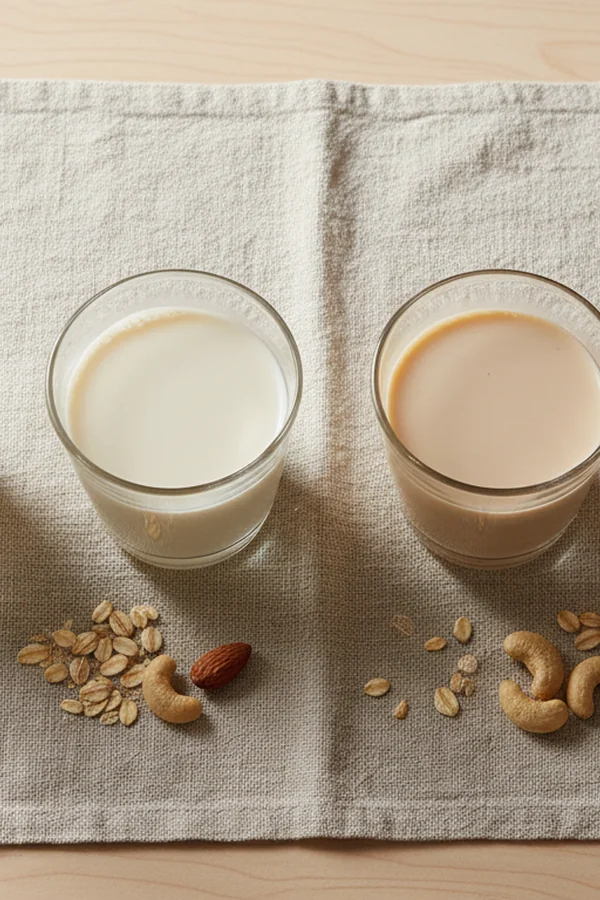
Oat milk feels like the obvious healthy swap. It is creamy, trendy, and dairy-free. The problem is that many oat milks are mostly starch, sometimes with added sugar. If you are testing acne through the insulin/glycemic pathway, a sweet oat milk latte can blur the result.
This matters because the strongest diet/acne evidence is not only about dairy. The AAD also highlights high-glycemic foods as a likely acne trigger for some people. So if you remove cow’s milk but add a sweet drink every morning, your skin experiment gets muddy.
What To Check On The Label
- Added sugar: choose zero or very low added sugar.
- Protein: soy usually has more than almond, oat, or coconut.
- Fortification: look for calcium and vitamin D.
- Serving size: coffee drinks often use more than one serving.
- Gums and thickeners: not an acne issue for everyone, but some sensitive guts notice them.
If you are cutting out dairy for acne, do not accidentally cut out nutrients. Dairy is a major calcium and vitamin D source for many people. Fortified plant milk can help close that gap.
Soy Milk: The Practical Option
Unsweetened soy milk is often the most practical swap because it contains meaningful protein. That makes breakfast easier to balance, especially if milk was part of oatmeal, smoothies, or coffee.
Some readers worry about soy and hormones. For most people, normal food-level soy intake is not the same as taking hormones. If soy bothers your digestion or you are medically advised to limit it, choose another option.
Almond And Coconut Milk
Unsweetened almond milk and coconut milk beverages can work well in coffee or smoothies if your main goal is low sugar. Their weakness is protein. If you use them at breakfast, add protein elsewhere: eggs, tofu, fish, beans, lentils, or a protein powder that does not trigger your skin.
If whey protein is your concern, see whey protein acne after it is published.
How To Test A Milk Swap
Use the same plant milk for eight weeks. Do not rotate almond, oat, soy, coconut, and three new supplements at the same time. Keep your skincare stable and track new inflamed spots weekly.
If you are also removing cow’s milk, read does cutting out dairy help acne after it is published so the experiment stays clean.
Best Choices By Use Case
For coffee, unsweetened almond milk is often the simplest first test because it is low in sugar and does not add much to the drink. If you need creaminess, choose the lowest-sugar version you can tolerate.
For smoothies, unsweetened soy milk is usually more useful because it brings protein. A smoothie made with low-protein plant milk, fruit juice, and sweetened powder can become a sugar drink with a wellness label.
For cereal or oatmeal, check the serving size. It is easy to pour two cups without noticing. If the milk alternative is sweetened, that can add up fast. FDA label rules make added sugar visible, so use the label instead of the front-of-carton claim.
For kids or teens with acne, be more careful. Dairy may provide important calcium, vitamin D, iodine, and protein during growth. A dermatologist or pediatrician can help decide whether a dairy test is reasonable and how to replace nutrients safely.
Frequently Asked Questions
Is almond milk or oat milk better for acne?
Unsweetened almond milk is usually the cleaner acne test because it is lower in sugar and starch. Oat milk can still fit, but choose unsweetened and watch portion size.
Is soy milk good for acne-prone skin?
It can be a practical dairy swap because it has more protein than most plant milks. Choose unsweetened and fortified.
Should I avoid all plant milk additives?
Not necessarily. Added sugar matters more for most acne experiments. If your gut is sensitive, simpler ingredient lists may feel better.
References

About Mr. Anh
We turn solid evidence into everyday habits Americans can actually do—plain English, cups/oz, grocery-aisle swaps, and routines that fit real life. Our editorial process: Experience—we road-test tips in real schedules…