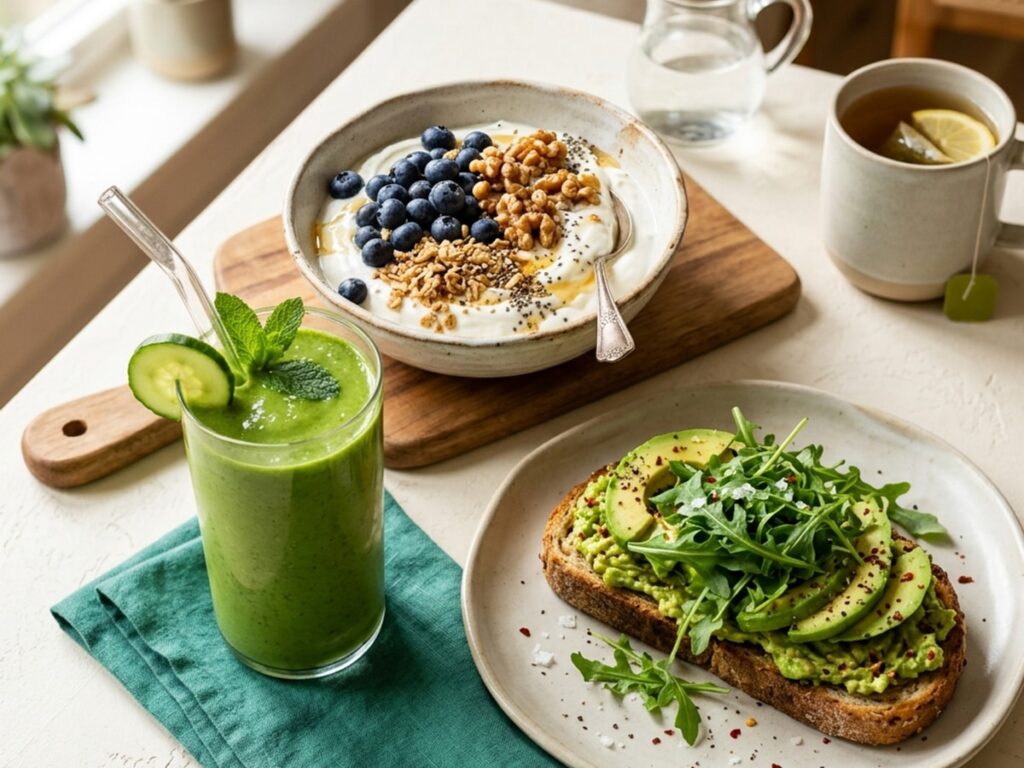
Potassium Rich Foods: The Power Rankings (Plus Why Bananas Aren’t the Best Source)
Think bananas rule for potassium? Not even close. Discover the real potassium rich foods ranked by mg and efficiency plus the sodium ratio strategy that protects your heart.
- What Potassium Actually Does in Your Body (And Why Most People Run Low)
- Potassium Rich Foods Ranked — The Real Power Rankings
- The Sodium-Potassium Ratio Strategy Nobody Talks About
- Potassium Rich Foods by Diet Type
- The One-Day 4,700mg Potassium Challenge
- Food vs. Potassium Supplement — When Diet Falls Short
- Frequently Asked Questions About Potassium Rich Foods
- The Bottom Line
The most common advice for low potassium? Eat more bananas. But a medium banana delivers about 422mg of potassium, which puts it somewhere around #15 on an honest list. A baked potato has over 1,000mg. A cup of cooked beet greens has 1,309mg. Half an avocado beats a whole banana almost two-to-one.
The best potassium rich foods aren’t what most people think, and the strategy behind them goes deeper than hitting a daily milligram target.
Most people know they should eat more potassium. Most people don’t actually know which foods deliver meaningful amounts, or that getting enough isn’t only about the number itself. It’s about the ratio between sodium and potassium in your overall diet. That ratio, not just the absolute milligrams, is what drives blood pressure regulation, heart protection, and long-term fluid balance.
This guide covers the highest-potassium foods ranked by both milligrams and efficiency per calorie, the sodium-to-potassium ratio strategy that most nutrition articles skip completely, and a one-day 4,700mg meal template you can start tonight. No bananas required.
Quick Takeaways:
– Adults need 2,600–3,400mg of potassium daily (2022 NIH update); 4,700mg is the cardiovascular-optimized target
– Bananas rank around #15 on a complete list: beet greens, white beans, and potatoes deliver 2–4x more
– The sodium-to-potassium ratio matters more than total potassium alone for heart and blood pressure health
– Most Americans eat a Na:K ratio of 3:1 or worse; the protective range is 1:1 or better
– A complete one-day 4,700mg meal template is at the bottom of this guide
What Potassium Actually Does in Your Body (And Why Most People Run Low)

Most nutrition conversations treat potassium as a footnote. A thing you need, a number to hit, mostly associated with leg cramps and bananas. That undersells it significantly.
Potassium’s Four Critical Jobs
Electrolyte balance: Potassium is the primary intracellular electrolyte. About 98% of your body’s potassium lives inside your cells, where it regulates fluid pressure and keeps cell membranes working correctly. This is why potassium depletion shows up physically so fast: your cells are the first to feel it.
Blood pressure regulation: This is the one that matters most for long-term health, and it works through a mechanism most people never learn. Your kidneys use potassium to excrete excess sodium in urine. More dietary potassium means more sodium gets flushed out, which directly lowers blood pressure. Low-potassium diets raise blood pressure even when sodium intake stays constant. The two are inseparable.
Muscle and nerve signaling: Every muscle contraction, including your heartbeat, requires a rapid potassium-sodium exchange across cell membranes. This is why low potassium first shows up as cramps, weakness, and fatigue, and in more severe cases, disrupts the electrical signals that keep your heart rhythm regular.
Bone and kidney protection: Higher dietary potassium reduces urinary calcium loss, which protects bone density over time. It also reduces the risk of kidney stone formation by supporting calcium reabsorption in the kidneys. These aren’t minor benefits; they’re among the strongest documented effects of consistent high-potassium eating.
Why Most People Are Chronically Low
The average American consumes only about 2,640mg of potassium per day, well below even the revised 2022 RDA. The reason isn’t ignorance. It’s the structure of a processed-food diet.
Ultra-processed foods are among the highest-sodium foods that exist, and they’re essentially devoid of potassium. Every meal built around packaged, preserved, or restaurant food simultaneously drives sodium up and potassium down. That dual hit is what creates a dangerous mineral imbalance at the population level.
Some groups run especially low: people on diuretics or laxatives (both increase potassium excretion), anyone with Crohn’s disease or celiac disease, heavy exercisers and distance athletes who lose meaningful amounts through sweat, and anyone eating a predominantly processed diet without consistent vegetables and legumes.
Signs You Might Be Running Low
Muscle cramps, particularly at night or after exercise, are the most common early indicator. Persistent fatigue and weakness that sleep doesn’t fully fix. Heart palpitations or a sense that your heartbeat feels irregular. Constipation that doesn’t respond to increased fiber or water. High blood pressure that persists despite other lifestyle efforts. Numbness or tingling in hands and feet.
A standard metabolic panel will catch severe hypokalemia, but mild-to-moderate depletion often sits just inside the “normal” reference range while still causing genuine symptoms. If you recognize several signs above, improving dietary potassium first is a low-risk, high-return first step.
Source: NIH Office of Dietary Supplements — Potassium Fact Sheet
Potassium Rich Foods Ranked — The Real Power Rankings
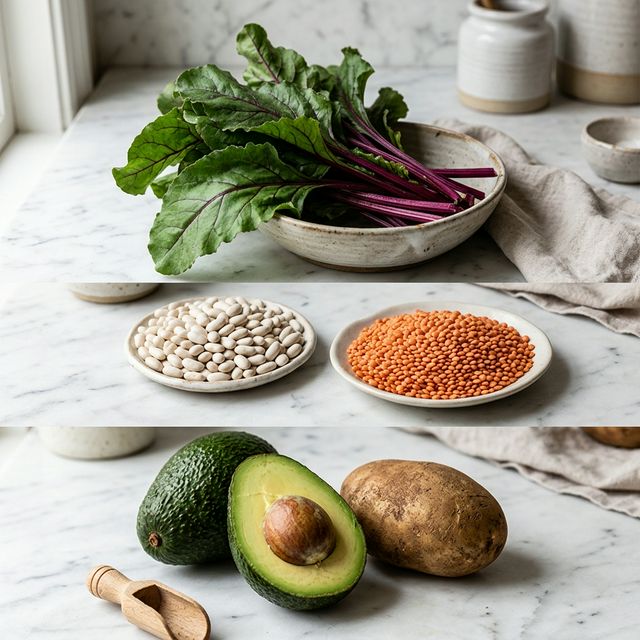
Most lists rank potassium foods by milligrams per serving. That’s a useful starting point. But the efficiency of that potassium delivery — how much you get per calorie — changes the picture significantly, especially for anyone watching calorie intake or eating lower-carbohydrate.
Highest Potassium Per Serving
| Food | Serving | Potassium (mg) | % Daily Value | Notes |
|---|---|---|---|---|
| Beet greens (cooked) | 1 cup | 1,309 mg | 28% | Strongest leafy green source by far |
| White beans (cooked) | 1 cup | 1,189 mg | 25% | High in fiber and iron too |
| Large baked potato (with skin) | 1 medium | 1,081 mg | 23% | The skin is where potassium concentrates |
| Acorn squash (cooked) | 1 cup | 896 mg | 19% | Sweet, filling, and chronically underrated |
| Cooked spinach | 1 cup | 839 mg | 18% | High in oxalates; rotate with other greens |
| Lentils (cooked) | 1 cup | 731 mg | 16% | Iron and potassium in one bowl |
| Avocado (whole) | 1 whole | 728 mg | 15% | Also provides healthy fats and fiber |
| Tomato sauce | 1 cup | 728 mg | 15% | Easy addition to pastas, soups, and eggs |
| Coconut water | 1 cup (240ml) | 600 mg | 13% | Best natural electrolyte drink |
| Sweet potato (baked) | 1 medium | 542 mg | 12% | Slightly lower than regular potato |
| Salmon (cooked) | 3 oz | 534 mg | 11% | Animal source with B12 bonus |
| Plain yogurt (low-fat) | 1 cup | 531 mg | 11% | Potassium plus probiotics |
| Cantaloupe | 1 cup | 427 mg | 9% | One of the most underrated fruit sources |
| Banana (medium) | 1 whole | 422 mg | 9% | Convenient, but significantly overhyped |
| Orange juice | 1 cup | 496 mg | 11% | High in sugar; better to eat the whole orange |
Potassium-Per-Calorie Efficiency Score
This is the column most competing guides skip, and it’s where the real insight lives. For anyone managing calories, eating lower-carb, or trying to maximize nutrient density per meal, efficiency matters just as much as total milligrams.
| Food | Potassium (mg) | Calories | mg per Calorie | Efficiency |
|---|---|---|---|---|
| Beet greens (1 cup cooked) | 1,309 mg | 39 cal | 33.6 | Exceptional |
| Cooked spinach (1 cup) | 839 mg | 41 cal | 20.5 | Exceptional |
| Tomato sauce (½ cup) | 400 mg | 35 cal | 11.4 | Very High |
| Coconut water (1 cup) | 600 mg | 46 cal | 13.0 | Very High |
| White beans (½ cup) | 595 mg | 125 cal | 4.8 | Good |
| Baked potato (medium) | 1,081 mg | 278 cal | 3.9 | Good |
| Banana (medium) | 422 mg | 105 cal | 4.0 | Moderate |
| Avocado (½) | 364 mg | 120 cal | 3.0 | Moderate |
| Salmon (3 oz) | 534 mg | 175 cal | 3.1 | Moderate |
Leafy greens deliver extraordinary potassium for almost no caloric cost. If you’re watching calories or eating lower-carb, beet greens and spinach are the most efficient potassium sources in the food supply. If you’re eating freely and want satiety alongside potassium, white beans and baked potatoes are the highest absolute-value choices.
The Sodium-Potassium Ratio Strategy Nobody Talks About

Here’s the insight that separates an effective potassium strategy from a checkbox approach: hitting your daily potassium milligrams matters, but the ratio between your sodium and potassium intake is a stronger predictor of cardiovascular outcomes than either number measured alone.
Why the Ratio Matters More Than the Number
Most nutrition advice focuses separately on limiting sodium to under 2,300mg or reaching 4,700mg of potassium. These are useful targets, but they miss the underlying relationship between the two.
A landmark study published in the Archives of Internal Medicine followed over 12,000 US adults and found that those in the highest quartile for urinary sodium-to-potassium ratio had 46% higher cardiovascular mortality than those in the lowest quartile. The association with the ratio was stronger than sodium or potassium measured independently.
The typical American Na:K ratio today is approximately 3:1. The protective range in research is 1:1 or better, meaning at minimum below 1.5:1. Getting from 3:1 to 1:1 doesn’t necessarily mean eating less sodium. It often means eating dramatically more potassium-rich whole foods.
What Creates a Bad Ratio
The drivers are straightforward. Ultra-processed foods sit at the extreme: extremely high sodium with essentially zero potassium. Skipping vegetables at meals. Restaurant and takeout meals averaging 1,100mg of sodium per sitting with minimal potassium return. Diuretics, regular alcohol consumption, and excess caffeine all increase potassium excretion and worsen the imbalance.
The “Swap and Stack” Method
You don’t need to calculate a ratio mathematically. Two habits create the shift:
Swap one processed food daily for a potassium-dense whole food. Pasta becomes a baked potato with skin. Chips become plain yogurt. Flavored crackers become avocado on whole grain toast. White rice becomes lentils.
Stack at least one high-efficiency potassium food at every meal. A handful of spinach in morning eggs. Tomato sauce in a lunchtime dish. White beans or lentils at dinner. This single change, adding one potassium-dense ingredient per meal, meaningfully shifts the ratio over days and weeks without any intense tracking.
A rough working check that needs no app: if every meal contains at least one green vegetable or one legume, you are almost certainly improving your sodium-potassium ratio.
Potassium Rich Foods by Diet Type
For Plant-Based Eaters
Plants dominate the top of every potassium list. The challenge for vegans and vegetarians isn’t getting enough; it’s variety and rotating across sources. Spinach and beet greens are powerhouses, but both are high in oxalates. Rotating these with lower-oxalate options like avocado, sweet potato, lentils, and coconut water preserves the potassium benefit without concentrating oxalates unnecessarily.
A plant-based day looks like: a morning smoothie with frozen spinach, half an avocado, and coconut water (roughly 1,800mg). A white bean and tomato soup at lunch (roughly 1,600mg). Stuffed acorn squash with lentils at dinner (over 1,600mg). Total well above 5,000mg without any animal products.
If you want a full week of plant-forward eating built around these same foods, the 7-day anti-inflammatory meal plan covers it in detail.
For Meat-Eaters and Omnivores
Animal foods alone aren’t strong potassium sources, but omnivores have an easy path to hitting daily targets by pairing proteins with potassium-dense sides. Baked salmon (534mg) next to a sweet potato (542mg) gives over 1,000mg in one dinner. A grilled chicken thigh next to roasted beet greens and a cup of lentil soup adds another 1,500mg. Plain yogurt as an afternoon snack adds 531mg with almost no effort.
The omnivore rule: swap starchy sides (rice, pasta, bread) for baked potatoes, roasted squash, or legumes as frequently as possible. That single habit drives potassium intake significantly higher without requiring any other behavior change.
For Athletes and Active People
Sweat contains meaningful amounts of potassium. Distance runners, cyclists, and strength athletes doing multiple sessions per week deplete their stores faster than a standard dietary analysis would suggest. Post-workout, coconut water (600mg per cup) is the most practical whole-food recovery option. A banana and yogurt combination (roughly 950mg) also works well for portable recovery.
Most commercial sports drinks are unhelpful here. Gatorade contains roughly 35–50mg of potassium per serving, which is negligible. Look for electrolyte formats with at least 200mg potassium per serving if supplementing is part of your recovery routine.
Important Note for People with Kidney Disease
If you have chronic kidney disease, are on dialysis, or have reduced kidney function for any reason, this guide does not apply to you. Kidney disease often requires restricting potassium, not increasing it, because impaired kidneys cannot properly excrete excess potassium and hyperkalemia becomes a serious risk.
Anyone with a kidney condition must work with a renal dietitian before acting on high-potassium food guidance. This article is written for generally healthy adults with normal kidney function.
The One-Day 4,700mg Potassium Challenge
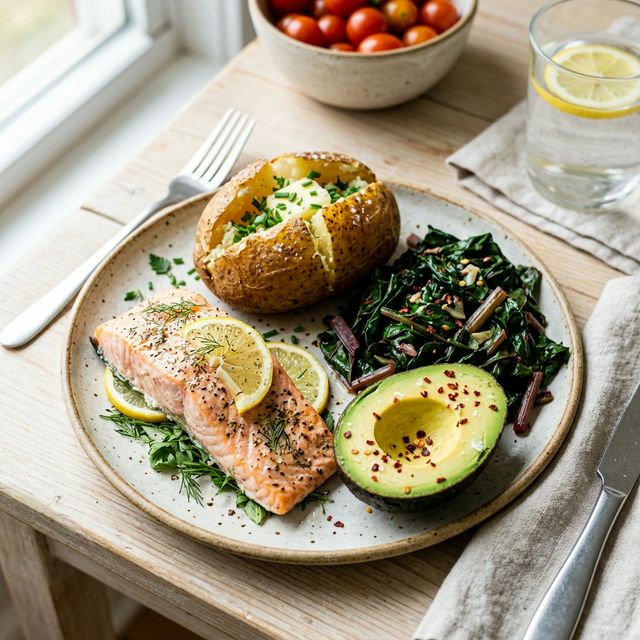
Most people have no real sense of what 4,700mg of potassium looks like as actual food. Here’s a complete day that hits the target using ordinary supermarket ingredients. No supplements, no specialty stores, no bananas.
Breakfast
Smoothie: 1 cup frozen spinach (839mg cooked equivalent) + ½ avocado (364mg) + 1 cup coconut water (600mg) + a handful of frozen mixed berries. Running total: roughly 1,803mg.
Lunch
White bean and tomato soup: 1 cup cooked white beans (1,189mg) + ½ cup tomato sauce stirred in (400mg) + leafy green garnish. Running total: roughly 1,589mg. This meal pairs naturally with the probiotic-rich foods for gut health approach if you add a side of plain yogurt.
Afternoon Snack
1 cup plain low-fat yogurt (531mg) with cinnamon. Running total: roughly 531mg.
Dinner
3 oz baked salmon (534mg) + 1 medium baked sweet potato with skin (542mg) + 1 cup sautéed beet greens (1,309mg). Running total: roughly 2,385mg.
Day Total: approximately 6,308mg. Well above the 4,700mg target, using nothing that requires a specialty store.
💡 You don’t need to hit this every day. Aim for three or four high-potassium days per week. Healthy kidneys regulate potassium excretion efficiently on higher-intake days.
Food vs. Potassium Supplement — When Diet Falls Short
Why Food Comes First
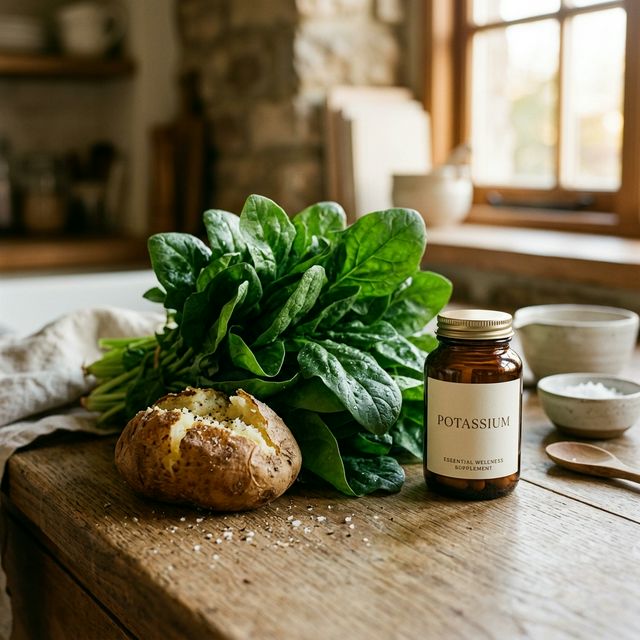
The FDA caps over-the-counter potassium supplements at 99mg per dose. That’s a fraction of what a single serving of white beans or a baked potato delivers in one sitting. The restriction exists for a real reason: high-dose potassium supplementation can cause dangerous hyperkalemia in people with kidney problems or those taking ACE inhibitors, beta-blockers, or potassium-sparing diuretics.
Food-based potassium doesn’t carry this risk for healthy adults. Your digestive system and kidneys regulate it efficiently. Supplements do not offer the same safety buffer.
When Supplements Make Sense
Athletes doing extended endurance training have legitimate electrolyte replacement needs that food alone can’t always address quickly post-session. Keto dieters who eliminate most starchy vegetables and fruits often see potassium intake drop sharply. People with medically documented potassium loss may need supervised prescription potassium chloride, which is a different category entirely from OTC products.
For athletes and active people specifically, Nu-Salt or No-Salt potassium chloride is the most practical food-adjacent option, delivering roughly 650mg per ¼ teaspoon as a direct cooking substitution for regular salt. LMNT Electrolytes provides 200mg potassium per sachet with appropriate sodium and magnesium ratios for athletic recovery. Ultima Replenisher offers a lighter daily-use option for non-athletes who want gentle electrolyte support.
⚠️ If you take ACE inhibitors, ARBs, or potassium-sparing diuretics, or have any level of reduced kidney function, do not take potassium supplements without direct medical guidance. High potassium in these populations can cause life-threatening heart arrhythmias.
Frequently Asked Questions About Potassium Rich Foods
How much potassium do I actually need each day?
The 2022 NIH Adequate Intake is 2,600mg per day for adult women and 3,400mg per day for adult men. The 4,700mg figure, still widely referenced, represents the target associated with maximum cardiovascular and blood pressure benefit in research. Most Americans average only about 2,640mg daily, falling below even the updated AI.
What food has the most potassium?
Beet greens are the most potassium-dense common food at 1,309mg per cup cooked and only 39 calories. White beans come in at 1,189mg per cup. A large baked potato with skin provides about 1,081mg. Bananas, widely cited as the potassium food, deliver about 422mg per medium fruit, placing them roughly 14th on a complete list.
What are the signs of low potassium?
The most recognizable: nighttime muscle cramps, persistent fatigue and weakness, heart palpitations, constipation, high blood pressure that doesn’t budge with other lifestyle changes, and numbness or tingling in the hands or feet. Severe hypokalemia is a medical emergency; seek immediate care for abnormal heart rhythms. Mild deficiency doesn’t always appear on a standard blood test, so symptoms are often more informative than a single serum value.
Can you get too much potassium from food?
For healthy adults with normal kidney function, not in practice. Healthy kidneys efficiently excrete excess dietary potassium. Hyperkalemia from food alone is essentially unheard of in people without underlying kidney disease or relevant medication interactions. The concern applies almost entirely to supplement overuse, not to vegetables, legumes, and whole foods.
Are bananas actually a good potassium source?
Decent, but substantially overrated. A medium banana delivers about 422mg, or 9% of the daily value. A cup of cooked spinach delivers twice as much. A large baked potato delivers nearly four times as much. Bananas are convenient and nutritious, but the association between bananas and potassium has been greatly overstated relative to what leafy greens and legumes actually provide.
What are the best potassium rich foods specifically for high blood pressure?
For blood pressure, the most effective choices are potassium-rich foods that are also naturally low in sodium: beet greens, cooked spinach, white beans, avocado, and sweet potatoes lead this list. The sodium-to-potassium ratio creates the greatest blood pressure benefit. A plain baked potato (no added salt, skin on) is among the most cost-effective blood-pressure foods per calorie.
The Bottom Line
Potassium isn’t about bananas. The real standouts are beet greens, white beans, baked potatoes, avocado, cooked spinach, and coconut water. And the strategy goes beyond a daily number.
The sodium-to-potassium ratio is the critical insight most people never encounter. Moving from a 3:1 Na:K ratio toward 1:1 by consistently eating more potassium-dense whole foods at every meal delivers more cardiovascular protection than managing either mineral separately.
Start with the One-Day Challenge. Pick the three highest-potassium foods on this list that you’ll actually eat this week. Replace one processed side dish with a baked potato or white bean dish. These changes, done consistently, are what move both the ratio and the number.
For a complete eating structure that integrates potassium alongside other anti-inflammatory nutrients, see iron rich foods for women to understand how lentils serve double duty as both an iron and potassium source. And if you’re building a full immune and anti-inflammatory nutrition approach, our zinc rich foods for immunity guide pairs naturally with the potassium and iron strategies covered here.
The information on this site is for educational purposes only and is not intended as medical advice. Always consult a qualified healthcare provider before making changes to your diet or supplement routine, especially if you have kidney disease or take medications that affect potassium levels.

About Jane Smith
We turn solid evidence into everyday habits Americans can actually do—plain English, cups/oz, grocery-aisle swaps, and routines that fit real life. Our editorial process: Experience—we road-test tips in real schedules…