Mediterranean Grocery List: The 5-Day Starter Kit (With Quantities and Budget Breakdown)
Every Mediterranean grocery list guide gives you a 50-item category dump. This one works the other way: start with 5 specific beginner Mediterranean dinners and build the exact grocery list backward — with quantities, estimated prices, and a store aisle flow that takes 30 minutes.
- How This Mediterranean Grocery List Works (3-Layer System)
- An Eastern Lens: Why Mediterranean Aligns with Tỳ-Vị (Spleen-Stomach)
- Week 1 Mediterranean Grocery List: Quantities and Prices by Section
- Mediterranean Grocery List — Pantry Build — Buy Once, Use for Months
- Mediterranean Grocery List by Store Section (Shop in 30 Minutes)
- Mediterranean Grocery List on a Budget (Under $55)
- Mediterranean Grocery List — Upgrade Items — Week 3 and Beyond
- Mediterranean Grocery List — Frequently Asked Questions
- The Bottom Line
- References & Further Reading
A note before we begin: I trained in traditional Vietnamese medicine but I don’t practice clinically or treat patients. Everything below is a researcher’s notes — what I’ve read in the modern literature, what my wife and I have lived through in our own kitchen, and how the Mediterranean way of eating quietly overlaps with the traditional Vietnamese Tỳ-Vị (Spleen-Stomach) framework I grew up with. This is education and reflection, not medical advice.
Every mediterranean grocery list guide gives you the same thing: a 50-item category dump. Produce. Whole grains. Lean protein. Healthy fats. No quantities. No cost. No connection to what you’ll actually cook.
I’ve been there. You end up at the store buying 12 things you’re not entirely sure about, skipping 20 others because you don’t know where to find them, spending $120 when you budgeted $60, and eating grilled chicken over salad all week calling it “Mediterranean eating.” That’s not really it.
This mediterranean grocery list does things the other way: start with 5 specific beginner Mediterranean dinners — the kind that actually taste like something memorable — and build the exact grocery list backward from those meals. With quantities. With estimated prices. With a store aisle flow that gets you in and out in 30 minutes rather than 90.
Quick Takeaways:
- 🛒 Week 1 Core List: ~$65–80 for two people — 5 dinners plus weekday lunches from leftovers
- 📦 Pantry Build: 10 staples to buy once, use for months — the items that actually change your per-meal cost
- 🔼 Upgrade List: Specialty items for Week 3+, when you’re ready to go deeper
- ⏱️ Store flow: Produce → Bulk → Pantry → Dairy → Seafood → Meat (saves 20+ minutes)
- The grocery list pairs directly with our Mediterranean anti-inflammatory recipes guide — practical meal ideas that turn these ingredients into actual dinners
How This Mediterranean Grocery List Works (3-Layer System)
Most grocery guides organize food by category because that’s how nutrition educators think. Produce. Grains. Protein. Healthy fats. It makes academic sense. But it’s not how most of us actually plan a week of eating.
When you’re deciding what to cook on Wednesday night, you think in meals — “what am I making?” — not “which food category am I still missing?” So that’s how I organized this list. Start with the meals. Build the grocery list backward from there.
This mediterranean grocery list has three layers, each with a different job:
This mediterranean grocery list is organized into three layers to match how you actually shop and plan meals:
Layer 1 — The Week 1 Core List: Built backward from 5 specific Mediterranean dinners. Exact quantities for 2 people. Estimated prices you can plan around. Buy this list Saturday, cook Sunday through Thursday, have lunches from leftovers all week.
Layer 2 — The Pantry Build: 10 foundational items that underpin all Mediterranean cooking. You buy these once — they keep 6 months to 2 years — and your per-meal cost drops consistently because the flavor infrastructure stays stocked. This is where the real long-term savings are.
Layer 3 — The Upgrade List: Week 3 and beyond, when the basic meals feel automatic and you want more range. The specialty items (za’atar, harissa, preserved lemons) that take good Mediterranean cooking somewhere genuinely regional and interesting.
Mediterranean Grocery List: The 5 Week 1 Dinners This List Is Built Around
Every single item on the Week 1 Core List serves at least one of these five meals:
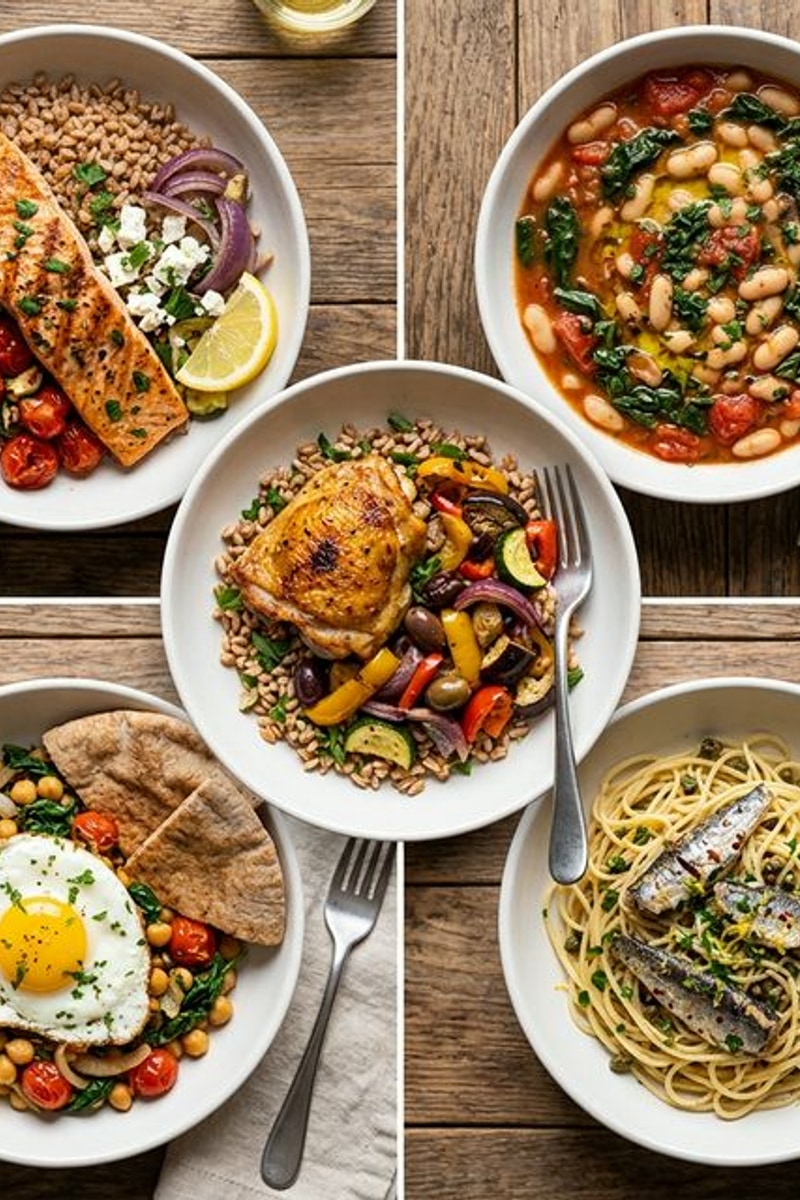
- Greek Salmon Bowl — salmon over farro with cucumber-tomato salad, lemon-herb yogurt sauce, and crumbled feta
- White Bean and Tomato Stew — entirely pantry-based, under $2 per serving, done in 20 minutes
- Roasted Chicken Thighs with Mediterranean Vegetables — bone-in thighs with zucchini, bell peppers, red onion, farro on the side
- Chickpea and Spinach Sauté with Fried Egg and Pita — fastest dinner on the list, fully pantry-based except the eggs
- Sardine Pasta Aglio e Olio — an authentic Italian pantry pasta that takes under 20 minutes and tastes like it took longer
If you’d rather see these dinners as full recipe walkthroughs, our Mediterranean anti-inflammatory recipes guide shows the same flavor logic in step-by-step form.
An Eastern Lens: Why Mediterranean Aligns with Tỳ-Vị (Spleen-Stomach)
There’s a framework I keep returning to from traditional Vietnamese and Chinese medicine. In TCM, digestion lives in the Spleen-Stomach (Tỳ-Vị) organ system — the Earth element at the center of the five-element wheel. Everything you eat is processed and transformed there into the Qi and Blood that feed every other organ. If Tỳ-Vị is happy, the rest of the body has room to do its job. If Tỳ-Vị is overworked, almost everything else slowly degrades.
What surprised me when I started learning Western nutrition seriously is how cleanly the Mediterranean way of eating maps onto the Tỳ-Vị principles I grew up reading about. Both frameworks point to the same conclusions, just from different vocabularies:
- “Eat to 70%” (七分饱) ≈ Mediterranean moderation. Traditional Vietnamese tables don’t pile a plate. Mediterranean tables don’t either. The American supersize default is the unusual one historically.
- Warm, cooked, simply-seasoned ≈ gentle on Spleen-Stomach. Soups, stews, sautés, simple oil-and-herb dressings — both cuisines lean cooked over raw, gentle over harsh.
- Plant-forward (80%) ≈ supports the Earth element. Vegetables, beans, whole grains, herbs, olives — Mediterranean staples are the same plant-base TCM uses to “nourish the middle.”
- Bitter green herbs (rosemary, oregano, thyme, parsley, sage) are explicit “damp-clearing” foods in TCM. They’re also the Mediterranean herb cabinet.
- Olive oil ≈ unctuous-moistening. A small amount of good fat nourishes Yin in TCM and protects the stomach lining without overburdening it. Same principle, different word.
- Fish over heavy red meat ≈ cooling lean protein. Sardines, salmon, white fish — easier on the Spleen-Stomach than four-legged meat eaten daily.
The overlap isn’t coincidence. Both cuisines evolved in coastal cultures that lived close to seasonal produce, ate simply most days, kept the special-occasion foods for actual special occasions, and learned through generations what genuinely felt good in the body. The Mediterranean grocery list below is, in plain Vietnamese kitchen terms, a Tỳ-Vị-friendly grocery list.
What I noticed in my own kitchen:
My wife and I made the deliberate switch from a Western default (lots of processed snacks, big portions, late dinners, heavy meat) to a Mediterranean-style rhythm about a year ago. Nothing dramatic — we just kept rebuying the same basic list: olive oil, sardines, beans, tomato, garlic, herbs, whole grain, plenty of vegetables, fruit instead of dessert most nights. Within two or three months the things we noticed were quiet but consistent: energy more stable through the afternoon, sleep deeper, her joint stiffness from a desk job easing off, my own waistline finally moving the right direction without trying. We don’t count calories. We just keep the kitchen stocked with foods that match this list. The Tỳ-Vị framework I grew up with, framed in Mediterranean-shaped meals, has been the easiest sustainable change either of us has ever made.
Week 1 Mediterranean Grocery List: Quantities and Prices by Section
Quantities here serve 2 people for 5 dinners, plus 4–5 weekday lunches from leftovers. Prices are estimated from a standard US grocery chain — not Whole Foods, not a warehouse club. A typical regional supermarket.
Mediterranean Grocery List Fresh Produce (~$18–24)
| Item | Quantity | Est. Cost | Used In |
|---|---|---|---|
| Cherry or grape tomatoes | 1 pint | $3–4 | Salmon bowl, chickpea sauté |
| English cucumber | 2 medium | $2–3 | Salmon bowl salad + yogurt sauce |
| Baby spinach | 2 bags (5 oz each) | $5–6 | Chickpea sauté + lunch salads |
| Zucchini | 2 medium | $2 | Roasted chicken vegetable tray |
| Red bell peppers | 2 | $3–4 | Roasted chicken vegetable tray |
| Red onion | 2 medium | $2 | Multiple meals — roasted veg + salads |
| Garlic | 1 head | $1 | Every meal, no exceptions |
| Lemons | 5 | $3 | Finishing every dish |
| Flat-leaf parsley | 1 bunch | $1.50 | Garnish + flavor base |
A note on lemons: Mediterranean cooking depends on a squeeze of acid at serving time the same way French cooking depends on a knob of butter. One squeeze of fresh lemon transforms a grain bowl from flat to vibrant in about 10 seconds. Buy five. You’ll use every single one.
What to skip in produce for Week 1: Eggplant (requires salting and extra technique), avocado (browns within hours and wastes money), fresh artichokes (labor-intensive for a starter week). Add those once the five core meals feel automatic.
Mediterranean Grocery List Proteins (~$20–28)
| Item | Quantity | Est. Cost | Used In |
|---|---|---|---|
| Wild salmon fillets | 1–1.5 lb (~4 fillets) | $12–16 | Greek Salmon Bowl |
| Chicken thighs, bone-in skin-on | 2 lb | $5–7 | Roasted Chicken Dinner |
| Eggs | 1 dozen | $4–5 | Chickpea sauté + breakfasts |
| Sardines in EVOO | 2 tins | $3–5 | Sardine Pasta Aglio e Olio |
| Canned chickpeas | 2 cans (15 oz) | $2–3 | Chickpea sauté + backup pantry protein |
| Canned white beans | 1 can (15 oz) | $1.50 | White Bean Tomato Stew |
On bone-in, skin-on chicken thighs: They cost 30–40% less than boneless chicken breasts, are nearly impossible to overcook — which makes them genuinely beginner-friendly — and taste dramatically better when roasted with Mediterranean herbs and vegetables. This is what Greek and Italian home cooks actually use. Boneless breasts are a US gym-culture substitution. Not wrong, just not the original.
On sardines: If you’ve never cooked with them, the Pasta Aglio e Olio in this list is the ideal first introduction. The sardines essentially melt into the olive oil and garlic sauce as they cook, creating a deeply savory, briny base that doesn’t taste “fishy” in the way most people fear. Buy sardines packed in EVOO — they’re richer and less sharp than those in spring water.
Mediterranean Grocery List Whole Grains (~$6–9)
| Item | Quantity | Est. Cost | Used In |
|---|---|---|---|
| Farro | 1 lb bag | $4–5 | Salmon Bowl + Roasted Chicken base |
| Whole wheat pasta | 12 oz box | $2–3 | Sardine Pasta Aglio e Olio |
| Whole grain pita | 1 pack (6 count) | $3–4 | Chickpea Sauté + snacking |
On farro: It’s an ancient Italian grain available in most well-stocked grocery stores near quinoa and brown rice. Tastes nutty and slightly chewy, holds its texture beautifully for several days of refrigerated storage, and has more fiber than brown rice. If your store doesn’t carry it, substitute quinoa (cooks faster, similar nutrition) or brown rice. All three work for every meal on this list.
Mediterranean Grocery List Fresh Dairy and Refrigerated (~$8–11)
| Item | Quantity | Est. Cost | Used In |
|---|---|---|---|
| Plain Greek yogurt, full-fat | 16 oz container | $4–5 | Salmon Bowl lemon herb sauce + breakfasts |
| Feta cheese, block in brine | 4 oz | $3–4 | Salmon Bowl + lunch salads |
| Parmesan wedge | 2 oz small | $2–3 | Sardine Pasta (grated at the table) |
On block feta versus pre-crumbled: Block feta packed in brine tastes cleaner, has a better texture, and typically costs less per ounce. Pre-crumbled feta contains anti-caking agents that dry it out and mute the flavor considerably. This is one of the few food categories where the format genuinely changes what ends up on your plate. Buy the block.
On full-fat Greek yogurt: The Mediterranean diet has never been a low-fat diet. Full-fat Greek yogurt contains conjugated linoleic acid and fat-soluble vitamins the reduced-fat versions don’t. It also holds its texture better when mixed with lemon juice and fresh herbs for the salmon bowl sauce. Get the full-fat — this is one of the places where the original is actually better.
Week 1 Core List Total: approximately $52–72 (fresh groceries only, not including pantry build items you may already have)
Mediterranean Grocery List — Pantry Build — Buy Once, Use for Months
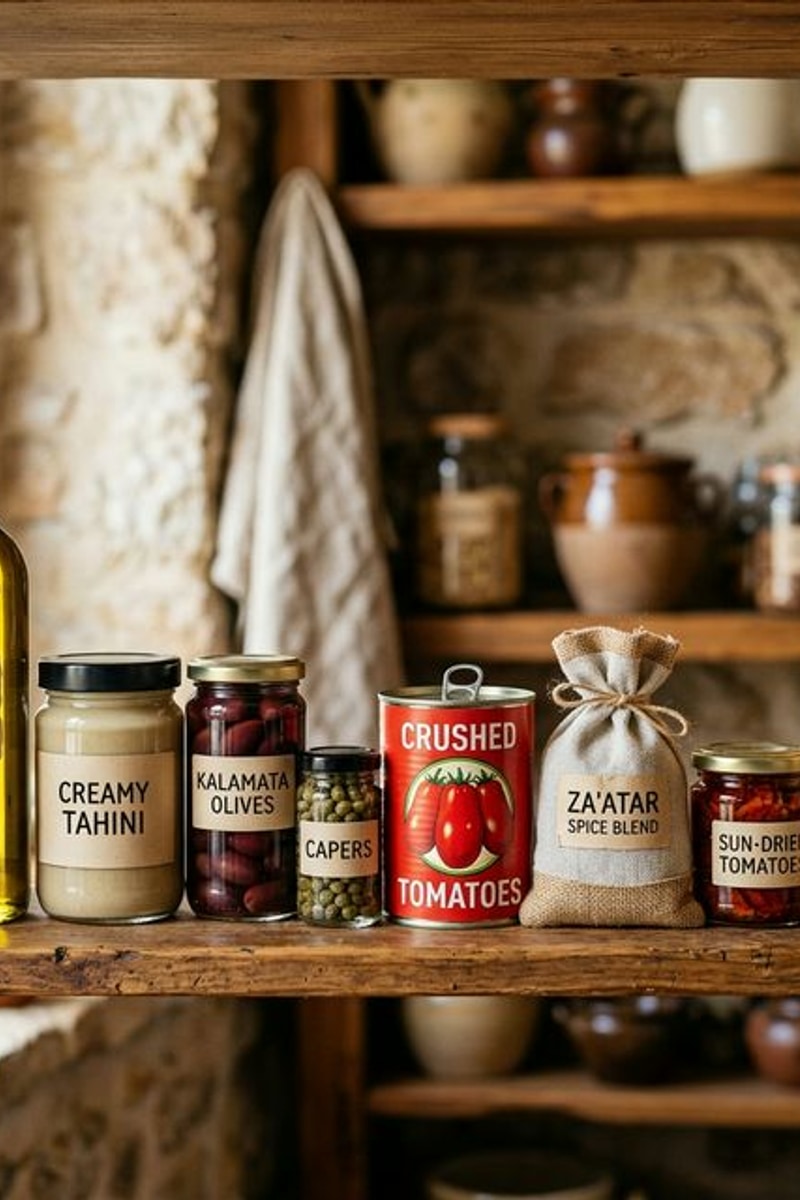
These items are fundamentally different from your weekly fresh groceries. They don’t expire in five days. They’re the flavor infrastructure of all Mediterranean cooking — once you have them, every meal gets easier and less expensive to pull together.
Here’s the part I was surprised by when I first built this pantry: the grocery store is where the quality-to-price ratio is worst for these items. Cheap “extra virgin olive oil” that’s actually cut with industrial seed oils — and why that matters for inflammation. Tahini that’s already going rancid. Sardines packed in synthetic vegetable oil. The pantry build is where sourcing matters more than anywhere else on the list.
For sourcing, look beyond the standard grocery aisles — online specialty grocers and warehouse clubs typically run 25–50% below regular retail on these pantry items, with noticeably better EVOO, tahini, and sardine selection. The savings add up quickly once you’re buying real Mediterranean staples on a regular cycle.
10 Mediterranean Grocery List Pantry Must-Haves Items
| Item | Why It Matters | How Long It Lasts |
|---|---|---|
| Extra virgin olive oil (750ml+) | The foundational fat — cooking, dressing, finishing. Used in every single meal. Quality here determines flavor more than anywhere else. Look for cold-pressed with a harvest date. | 18+ months sealed |
| Tahini | Base for grain bowl sauces, dressings, and dips. Three-ingredient lemon tahini covers 80% of Mediterranean sauce needs. | 6+ months refrigerated |
| Kalamata olives (jar) | Instant Mediterranean flavor. Add to salads, pasta, or eat alongside any plate. Brininess forms the backbone of several regional dishes. | 12+ months sealed |
| Capers | Secret ingredient in sardine pasta, salmon dishes, and any sauce needing a briny, slightly sharp counterpoint. A $3 jar lasts many meals. | 12+ months refrigerated |
| Canned crushed tomatoes | Base for White Bean Stew, pasta sauces, shakshuka. Keep 3–4 cans at all times. | 2+ years |
| Sun-dried tomatoes in oil | Concentrated Mediterranean flavor — add to pasta, grain bowls, dressings, sandwiches. One jar is 15+ uses. | 12+ months |
| Red wine vinegar | Acid for vinaigrettes and sauce finishing. Different flavor profile from lemon — both needed long-term. | 2+ years |
| Dried oregano | Used on fish, chicken, tomato salads, grain bowls. Greek dried oregano is noticeably more aromatic than Italian. | 18+ months |
| Cumin + za’atar | Cumin for legume dishes and roasted vegetables; za’atar (thyme-oregano-sumac blend) for anything Middle Mediterranean. | 18+ months |
| Low-sodium broth (vegetable or chicken) | Grain cooking, stew base, sauce deglazing. Keep 4 cartons. | 1+ year |
First-time pantry build total: approximately $55–75. After that first purchase, your weekly grocery bill drops by $25–35 because you’re only refreshing fresh produce and protein — the entire flavor infrastructure is already there.
Mediterranean Grocery List by Store Section (Shop in 30 Minutes)
Here’s the same Week 1 list reorganized by store section so you move through the store in one clean loop instead of backtracking three times because the list was organized by nutrition category.
Average time with this flow: 25–35 minutes. With a category-organized list: 50–70 minutes.
Store Aisle Flow — In Order
1. Produce Section (Always First)
- Cherry tomatoes × 1 pint
- English cucumber × 2
- Baby spinach × 2 bags (5 oz each)
- Zucchini × 2 | Red bell peppers × 2 | Red onion × 2
- Garlic × 1 head | Lemons × 5 | Flat-leaf parsley × 1 bunch
2. Bulk Bins / Whole Grains Aisle
- Farro × 1 lb (or quinoa as backup)
- Whole wheat pasta × 12 oz
3. Canned Goods / Pantry Aisle
- Chickpeas × 2 cans (15 oz each)
- White beans × 1 can (15 oz)
- Sardines in EVOO × 2 tins
- Crushed tomatoes × 2 cans
- Kalamata olives × 1 jar
- Capers × 1 small jar
4. Bread / Bakery
- Whole grain pita × 1 pack (6 count)
5. Dairy and Refrigerated
- Plain full-fat Greek yogurt × 16 oz
- Block feta in brine × 4 oz
- Parmesan wedge × small (2 oz)
- Eggs × 1 dozen
6. Seafood Counter or Refrigerated Fish
- Wild salmon fillets × 1–1.5 lb
7. Meat Section (Last — stays coldest until checkout)
- Bone-in, skin-on chicken thighs × 2 lb
Add pantry build items to step 3 on your first trip — most of them are in the same canned goods / oils aisle. The EVOO goes in the specialty oils section at most stores.
Mediterranean Grocery List on a Budget (Under $55)
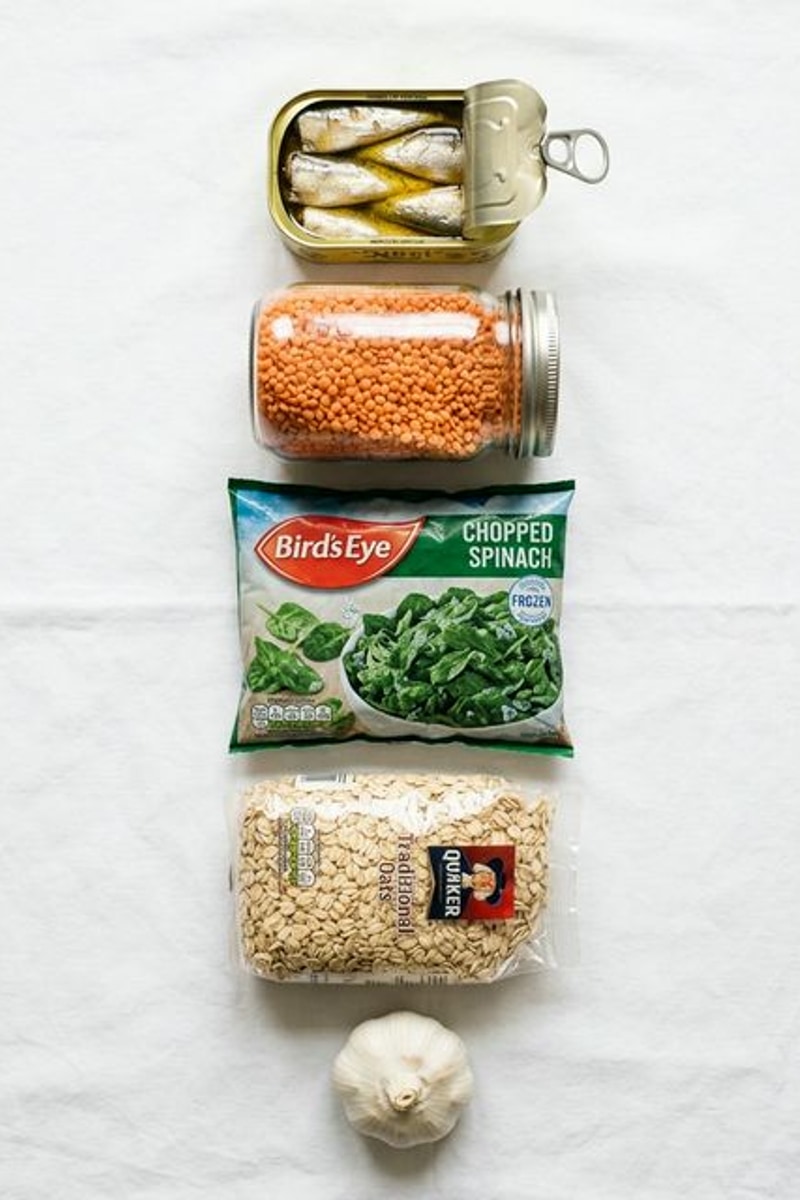
Something worth understanding: the Mediterranean diet is historically a peasant diet. It came from resource-constrained coastal communities in Greece, Italy, and North Africa who needed to eat well on very little. The expensive restaurant versions — lobster, imported porcini mushrooms, Chilean sea bass — are modern impositions. The actual diet runs on dried legumes, seasonal vegetables, olive oil, and the sea’s most affordable fish.
You can execute a genuinely Mediterranean week on $50–58 for two people with these specific swaps.
Mediterranean Grocery List: Smart Budget Swaps
| Full Version | Budget Version | Weekly Saving |
|---|---|---|
| Fresh wild salmon fillets | Canned wild salmon × 2 cans ($4–5 total) | $8–12 |
| Farro | Dried red lentils ($1.80/lb) or brown rice ($1.50/lb) | $2–3 |
| Bone-in chicken thighs | Eggs as primary protein — shakshuka or veggie frittata variation | $3–5 |
| Fresh herbs throughout | Dried for cooking; fresh only for garnish on 1 meal | $3 |
| Block feta ($3–4) | Reduced amount + kalamata olives as flavor substitute | $2 |
| Fresh zucchini and bell pepper | Frozen Mediterranean vegetable mix | $2–3 |
Budget Week 1 total: $50–58 for two people — same five dinners.
Mediterranean Grocery List: 5 Cheapest Mediterranean Ingredients by Nutritional Value
- Dried lentils (~$1.80/lb, 8 generous servings) — more plant protein per dollar than almost any other food. Red lentils cook in 15 minutes with zero soaking.
- Canned sardines (~$1.50–2/tin) — the highest omega-3 content per dollar of any protein source. Nutritionally superior to most fresh fish options at a fraction of the cost.
- Frozen spinach (~$2/bag, 8+ servings) — identical iron, folate, and magnesium content to fresh. No wilting timeline, no waste from forgotten produce.
- Rolled oats (~$2–3/lb, 14+ breakfasts) — anti-inflammatory soluble fiber and the historical breakfast grain of Mediterranean coastal communities.
- Garlic (~$0.80/head, 8–10 meals) — allicin content plus oleic acid make garlic one of the highest value-per-dollar anti-inflammatory ingredients. Every meal on this list uses it.
For pantry staples specifically — EVOO, tahini, canned sardines, and organic legumes — online specialty grocers and warehouse clubs typically price these 25–50% below standard grocery stores. The savings pay for any membership fees quickly when you’re building and maintaining a Mediterranean pantry.
For the detailed science behind why these budget Mediterranean ingredients work at the cellular level, our guide on the anti-inflammatory diet for weight loss maps each food category to its specific mechanism — useful context when you’re deciding where to prioritize spending.
Mediterranean Grocery List — Upgrade Items — Week 3 and Beyond
Once the five Week 1 dinners feel completely automatic — you’re not consulting the recipe for the sardine pasta, you’re just making it — these specialty items open up significant range without requiring new kitchen skills.
None of these are mandatory
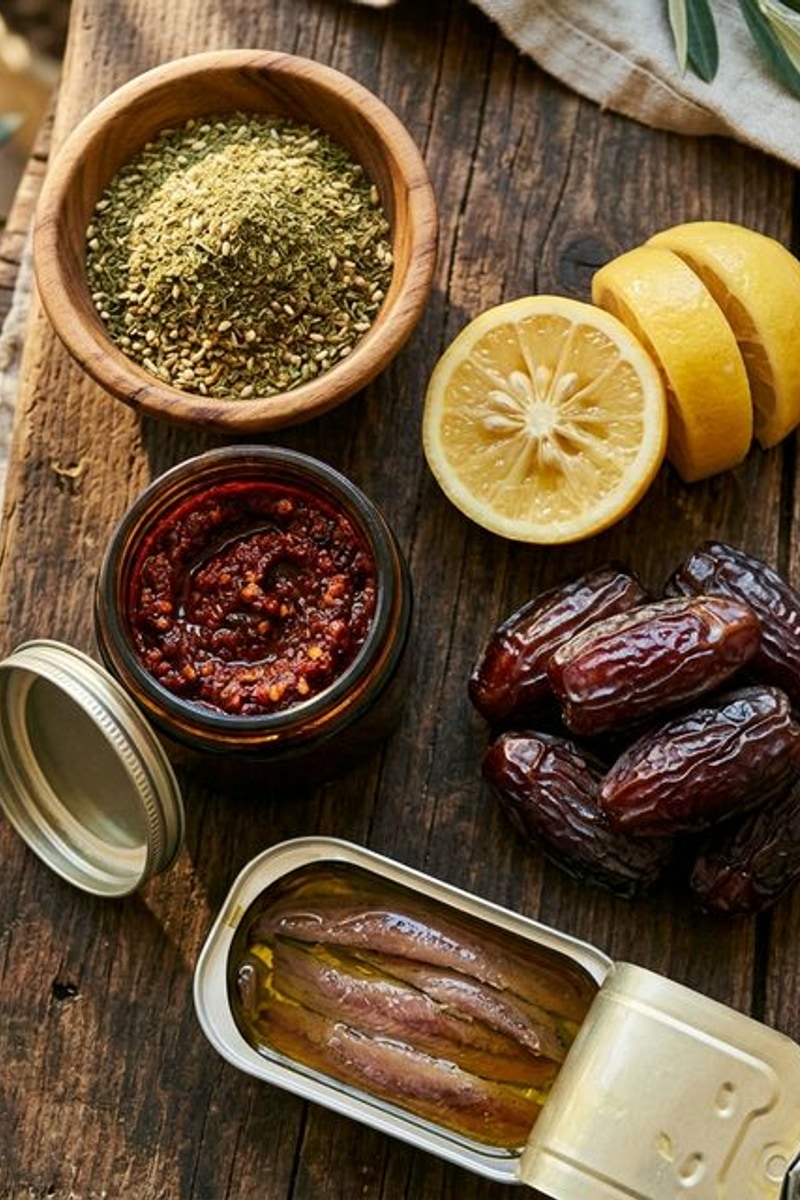
.The Mediterranean diet works perfectly without a single one of them. But if you want to cook food that tastes genuinely regional rather than generically “Mediterranean,” this is the list.
Mediterranean Grocery List Upgrade: 10 Items That Take Mediterranean Cooking from Good to Authentic
| Item | What It Adds | Where to Find |
|---|---|---|
| Za’atar | Lebanese-Israeli herb blend (thyme, oregano, sumac, sesame) — transforms roasted vegetables, flatbread, and yogurt instantly | Middle Eastern aisle or specialty grocers |
| Harissa paste | North African chili condiment — heat, depth, complexity. Use like a flavor concentrate in any stew, grain bowl, or egg dish | International aisle or online |
| Preserved lemons | Moroccan fermented lemon rinds — briny, intensely citrusy, adds dimensions fresh lemon simply can’t. One jar lasts months | Online specialty grocers |
| Pomegranate molasses | Syrian-Lebanese condiment — thick, sour, fruity. Works in dressings, meat glazes, and dips | Middle Eastern grocers or online |
| Sumac | Ground berry with a sour, fruity taste. Finishing spice for salads, fish, flatbread. The Levantine equivalent of lemon | Middle Eastern aisle |
| Pearl barley | Ancient Mediterranean grain — nuttier and chewier than farro, historically more common in Greek cooking for soups and stews | Bulk bins or health food store |
| Medjool dates | Natural sweetener and energy-dense snack — pair with almond butter, walnuts, or eat alongside cheese | Fresh produce section, refrigerated |
| Calabrian chilis in oil | Southern Italian pepper — concentrated heat and smoky depth for pasta, stews, and sauces. One small jar equals 20+ uses | Italian specialty aisle |
| Whole labneh | Strained Greek yogurt cheese — richer and denser than Greek yogurt, used as a spread, dip, and breakfast component | Middle Eastern grocers or Whole Foods |
| Flat anchovies in oil | The umami backbone of authentic pasta sauces, dressings, and Southern Italian braises. Melts completely into anything when cooked | Canned fish section |
How to introduce these without feeling overwhelmed: Pick one per week and experiment with it in an existing meal before it becomes its own cooking project. Za’atar first just sprinkle it over plain Greek yogurt with a drizzle of EVOO and eat with pita. Harissa second — stir one teaspoon into your white bean stew the next time you make it. Preserved lemons third — add half a preserved lemon, finely chopped, to your chicken marinade instead of fresh lemon. That’s three weeks of genuine expansion with no new recipes required.
Our guide on homemade anti-inflammatory drinks walks through how a few of these pantry items (turmeric, ginger, lemon, olive oil) become daily anti-inflammatory habits — useful context before purchasing.
Mediterranean Grocery List — Frequently Asked Questions
What foods do I need to buy for the Mediterranean diet?
The five most essential purchase categories for Week 1: (1) Extra virgin olive oil — the foundational fat for all cooking, dressing, and finishing; (2) Canned chickpeas and white beans — the most versatile pantry proteins on the list; (3) Wild salmon or sardines — primary omega-3 source; (4) Fresh leafy greens, cherry tomatoes, garlic, and lemons — the color, brightness, and flavor backbone; (5) A whole grain (farro, quinoa, or brown rice) for the meal base. From these five categories, you can cook 10–15 genuinely Mediterranean meals in Week 1 without needing anything else.
What is a basic Mediterranean grocery list?
A functional one-week mediterranean grocery list for two people: cherry tomatoes (1 pint), cucumber (2), baby spinach (2 bags), garlic (1 head), lemons (5), parsley (1 bunch), salmon (1 lb) or sardines (2 tins), eggs (1 dozen), chickpeas (2 cans), white beans (1 can), farro or quinoa (1 lb), whole grain pita (6 count), plain Greek yogurt (16 oz), block feta (4 oz), kalamata olives (1 jar), capers (1 jar), and canned crushed tomatoes (2 cans). Estimated total: $65–80 for two people when pantry basics are included.
How much does a Mediterranean diet grocery list cost per week?
For two people: $65–80 at a standard US grocery store for fresh items plus consumed pantry items. If you already have a stocked Mediterranean pantry, weekly shopping drops to $45–55 because you’re only refreshing fresh produce and protein. Budget version using canned fish, frozen vegetables, and lentils as primary proteins: $48–58 per week. Per-person per-dinner cost: approximately $6–9 — lower than fast-casual restaurant meals for comparable nutrition.
What are Mediterranean pantry staples?
The 10 must-have Mediterranean pantry items: extra virgin olive oil (750ml minimum), tahini, kalamata olives (jar), capers, canned crushed tomatoes, sun-dried tomatoes in oil, red wine vinegar, dried oregano, za’atar or cumin, and low-sodium broth. These keep 6 months to 2 years and underpin every Mediterranean meal. First-purchase total: approximately $55–75. After the first build, they’re replaced individually as each item runs out — never all at once.
Can you eat Mediterranean diet on a budget?
Yes — and the Mediterranean diet is one of the most budget-friendly of any healthy eating pattern when structured correctly. Build meals around cheap staples first: dried lentils ($1.80/lb, 8 servings), canned sardines ($1.50–2/tin, more omega-3 per dollar than almost any other food), frozen spinach ($2/bag, identical nutrition to fresh), and rolled oats ($2–3/lb, 14+ breakfasts). Use more expensive proteins (fresh salmon, chicken) for 2 meals per week, not daily. Budget target: $50–60 per week for two people eating genuinely Mediterranean all week.
What to buy at the grocery store to start the Mediterranean diet?
First trip strategy: split your cart into two jobs. Job 1 — pantry build (EVOO, dried oregano, kalamata olives, capers, canned tomatoes, canned chickpeas). These don’t expire in days and form the flavor foundation. Job 2 — fresh weekly items (salmon or sardines, eggs, spinach, cherry tomatoes, garlic, lemons, a grain, Greek yogurt, feta). Spend 80% of your decision-making energy on fresh quality. The pantry section is a one-time investment. Total first trip: $90–110. Every trip after: $55–70.
What is the #1 food on the Mediterranean diet?
Extra virgin olive oil — by a significant margin. It appears in every Mediterranean meal as the cooking fat, dressing medium, and finishing drizzle. If only one food from this entire list, it’s this one. Look for bottles labeled “cold first pressed” or “cold extracted” with a harvest date (not just an expiration date) — a harvest date within the past 18 months indicates active polyphenol content. The oleocanthal compound in quality EVOO has an anti-inflammatory mechanism comparable to low-dose ibuprofen, which is precisely why it’s at the center of the landmark PREDIMED trial showing cardiovascular benefit.
What should I not buy on a Mediterranean diet?
Skip these on your Mediterranean grocery list: seed oils (soybean, corn, sunflower, cottonseed — replace with EVOO and avocado oil); white bread and refined flour crackers; processed deli meats and packaged lunch meats; flavored yogurt with added sugar (15–24g per container); bottled salad dressings (they default to seed oils and sugar); ultra-processed snack foods. You don’t need to ban all of them in one trip. But they don’t belong on the Mediterranean list. Once you have EVOO, tahini, and a lemon in your kitchen, making a proper dressing takes 60 seconds — and you genuinely won’t miss the bottled versions.
The Bottom Line
The best mediterranean grocery list should be a tool you can take to the store, not a reference document you read and then forget. This one is organized around meals, not categories. It has quantities you can actually use, prices you can plan around, and a store flow designed to get you in and out efficiently.
Week 1 is the foundation: 5 dinners, 5 days of lunches from leftovers, approximately $65–80. Print the list, cross off pantry items you already have, and go on Saturday morning.
The pantry build is the investment: $55–75 one time, and your per-meal cost drops noticeably for every shopping trip after that.
The upgrade list is the payoff: Once the five starter meals feel automatic, za’atar and harissa and preserved lemons take those same dishes somewhere genuinely interesting.
References & Further Reading
The following peer-reviewed studies and authoritative sources support the nutritional claims in this mediterranean grocery list guide:
- PREDIMED Trial — Estruch R et al. New England Journal of Medicine, 2013. Primary prevention of cardiovascular disease with a Mediterranean diet. Read on PubMed PMC
- Harvard T.H. Chan School of Public Health — Mediterranean Diet overview and evidence summary. Read at HSPH.harvard.edu
- U.S. News & World Report — Best Diets Overall Rankings, 2025. Mediterranean diet ranked #1 for the 8th consecutive year. Read at USNews.com
- USDA Thrifty Food Plan — Cost-per-nutrient analysis of plant-based Mediterranean staples. Read at USDA.gov
- Omega-3 Fatty Acids & Inflammation — Calder PC. Nutrients, 2017. Omega-3 fatty acids and inflammatory processes: from molecules to man. Read on PubMed PMC
Disclaimer: I’m trained in traditional Vietnamese medicine but I don’t practice clinically. This guide reflects modern research, traditional Tỳ-Vị frameworks I grew up with, and what I’ve lived through in my own kitchen — all educational, not medical advice. If you have specific dietary needs (allergies, kidney disease, diabetes, blood-thinning medication), please consult a registered dietitian or your healthcare provider for personalised guidance.

About Mr. Anh
We turn solid evidence into everyday habits Americans can actually do—plain English, cups/oz, grocery-aisle swaps, and routines that fit real life. Our editorial process: Experience—we road-test tips in real schedules…