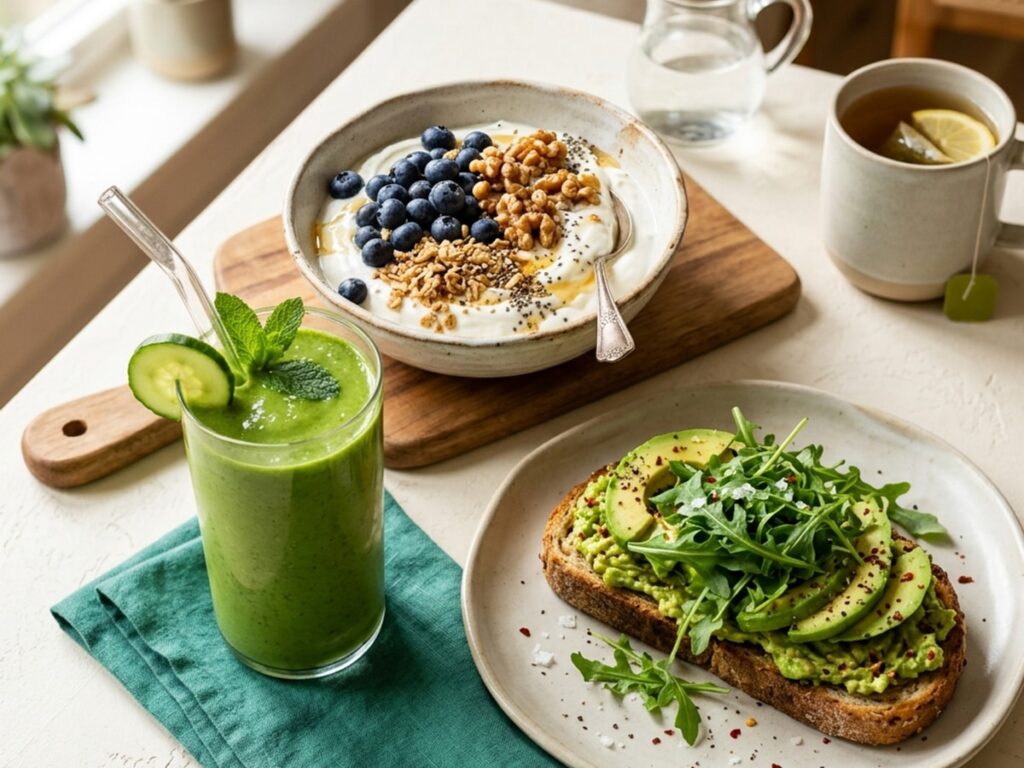
Mediterranean Anti-Inflammatory Recipes: 12 Meals That Target 3 Inflammation Pathways
Your doctor said "eat Mediterranean" — but nobody told you which recipes actually move the needle on inflammation. This guide organizes 12 Mediterranean anti-inflammatory recipes by the 3 inflammation pathways they target, so you can choose based on what you're trying to fix.
- The 3 Anti-Inflammatory Pathways Targeted by Mediterranean Recipes
- Mediterranean Anti-Inflammatory Recipes for Gut Health (Pathway 1)
- Mediterranean Anti-Inflammatory Recipes for Joints (Pathway 2)
- Mediterranean Anti-Inflammatory Recipes for Brain Health (Pathway 3)
- The 3-Ingredient Anti-Inflammatory Upgrade for Any Mediterranean Recipe
- Frequently Asked Questions About Mediterranean Anti-Inflammatory Recipes
- The Bottom Line on Mediterranean Anti-Inflammatory Recipes
Mediterranean anti-inflammatory recipes are not all created equal — and that’s the problem no recipe guide addresses. Your doctor said “eat Mediterranean.” You Googled it, got a list of 30 recipes, cooked once, and ordered pizza on Thursday.
Here’s what no one told you: it wasn’t a motivation problem. It was an information problem. Which recipes actually move the needle on inflammation? Why do some work dramatically better than others? Which one should you prioritize for your specific symptoms?
This guide answers all three. I’ve organized 12 Mediterranean anti-inflammatory recipes around the three inflammation pathways they target — gut-derived inflammation, joint and oxidative stress, and neuroinflammation — so you can choose based on what you’re actually trying to fix.
- 12 Mediterranean anti-inflammatory recipes rated Good / High / Exceptional by inflammation pathway
- The science behind why each dish works — not just “olive oil is healthy”
- The fastest high-impact recipe you can make tonight (20 minutes, 4 ingredients)
- A 3-ingredient upgrade that boosts any Mediterranean meal’s anti-inflammatory powerHow Mediterranean Anti-Inflammatory Recipes Fight Inflammation
Before we get to the recipes, here’s the 90-second science explanation that actually makes everything click.
Chronic low-grade inflammation isn’t the same as the redness from a cut. It’s a slow, systemic process where your immune system stays in a low-level “on” state, continuously releasing C-reactive protein (CRP), IL-6, and TNF-α. Over years, this damages tissues, disrupts hormones, and drives weight gain, joint pain, and brain fog.
The evidence is strong and specific. The PREDIMED trial (NEJM, 2013) — one of the largest dietary studies ever conducted, following 7,447 adults — found the Mediterranean diet reduced CRP by up to 37% vs. a low-fat control group over five years. That’s a clinically documented, peer-reviewed result.
What the research shows, though, is that not all Mediterranean foods are equally anti-inflammatory. Some drive dramatic reductions in specific pathways. Others are just Mediterranean-flavored food with modest benefits. Knowing the difference is where the real results come from.
The 3 Anti-Inflammatory Pathways Targeted by Mediterranean Recipes
Most recipe guides mix ingredients with no logic. This guide organizes by pathway:
- Pathway 1 — Gut-Derived Inflammation: Leaky gut or microbiome disruption triggers systemic inflammation. High-fiber legumes, fermented foods, and prebiotic vegetables directly repair this pathway.
- Pathway 2 — Joint & Oxidative Stress: Arachidonic acid overload and free radical damage drive joint inflammation. Omega-3s from fatty fish and polyphenols from EVOO counter this at the molecular level.
- Pathway 3 — Neuroinflammation: Microglial activation in the brain causes brain fog, mood changes, and fatigue. Antioxidant-rich foods, magnesium, and B vitamins reduce this type of inflammation.
For the full anti-inflammatory food rankings, see our anti-inflammatory foods guide.
Mediterranean Anti-Inflammatory Recipes for Gut Health (Pathway 1)
Who this is for: Bloating, IBS, food sensitivities, digestive discomfort, or anyone post-antibiotic. Gut-derived inflammation is the upstream driver of systemic inflammation — fix the gut, and downstream symptoms often improve on their own.
When I focused on gut-pathway recipes specifically, the first change I noticed wasn’t dramatic — it was the absence of the 3pm bloat I’d accepted as normal. Give these two weeks before judging them.
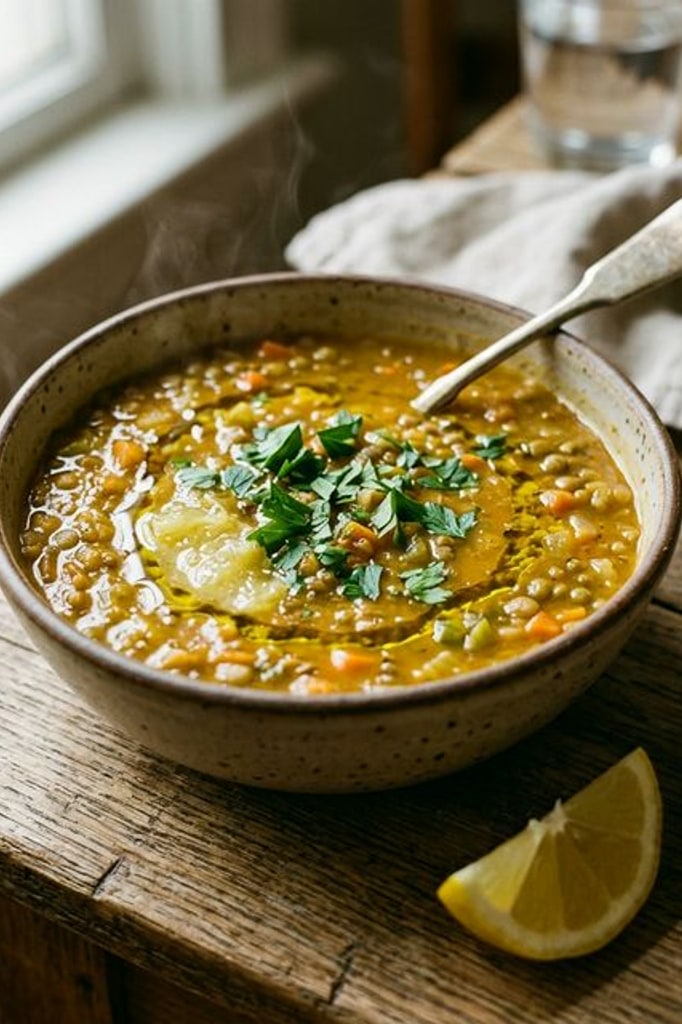
Recipe 1 — Mediterranean Lentil Soup with Lemon & Cumin
Anti-Inflammatory Impact: ⭐⭐⭐ Exceptional
If I had to pick one recipe to make every week without exception, it’s this one. Green lentils contain around 18 grams of fiber per cup — the highest prebiotic fiber density of any common Mediterranean ingredient. That fiber feeds Lactobacillus and Bifidobacterium, which produce butyrate that directly seals the gut lining and reduces intestinal permeability.
Cumin’s volatile oils have antimicrobial activity against pathogenic gut bacteria. Turmeric contributes curcumin, which inhibits NF-κB — the master switch controlling inflammatory gene expression.
Ingredients: 1.5 cups green lentils · 1 yellow onion · 4 garlic cloves · 2 tsp cumin + 1 tsp turmeric + 1 tsp smoked paprika · 4 cups vegetable broth · juice of 1 lemon · 3 tbsp EVOO (finishing) · salt, pepper, fresh parsley
Method: Sauté onion 5 min. Add garlic and spices, 1 min. Add lentils + broth, simmer 30–35 min. Add lemon. Finish with cold EVOO poured directly onto each bowl.
Prep: 10 min / Cook: 35 min / Serves: 4 / Storage: 5 days fridge
Pro tip: Make a double batch Sunday. Lentil resistant starch increases after 24 hours refrigeration — Monday’s leftovers are more therapeutic than the fresh pot.
Recipe 2 — White Bean & Wilted Greens with Garlic EVOO
Anti-Inflammatory Impact: ⭐⭐⭐ Exceptional
This is the fastest gut-pathway anti-inflammatory mediterranean recipe in the guide — 17 minutes from pantry to plate. Cannellini beans contain resistant starch that fuels butyrate-producing bacteria. The cold EVOO finish delivers oleocanthal, which inhibits COX-1 and COX-2 enzymes (same mechanism as ibuprofen). Wilted greens add folate and magnesium — both critical anti-inflammatory cofactors.
Ingredients: 2 cans cannellini beans · 4 cups spinach or kale · 5 garlic cloves, sliced thin · 3 tbsp EVOO + finishing drizzle · red chili flakes · lemon juice · salt and pepper
Method: Heat EVOO, add garlic until golden (90 sec). Add beans, stir. Add greens in batches. Season. Finish with cold EVOO after removing from heat.
Prep: 5 min / Cook: 12 min / Serves: 2
Most important step: The cold EVOO drizzle after cooking is non-negotiable. Oleocanthal degrades at high heat.
Recipe 3 — Roasted Cauliflower Tabbouleh with Parsley & Pomegranate
Anti-Inflammatory Impact: ⭐⭐ High
This version swaps bulgur for roasted cauliflower, dramatically increasing cruciferous glucosinolates (which convert to sulforaphane — same anti-inflammatory compound class behind broccoli’s cancer research). Parsley delivers quercetin and luteolin that reduce histamine-driven gut inflammation. Pomegranate seeds add ellagitannins that gut bacteria convert to urolithin A — now a significant longevity research subject.
Ingredients: 1 head cauliflower · 2 cups flat-leaf parsley, chopped · green onions · 2 tomatoes · ½ cup pomegranate seeds · mint · Dressing: 4 tbsp EVOO + 3 tbsp lemon + garlic + pinch allspice
Method: Roast cauliflower at 425°F, 20–25 min. Cool completely. Toss with all ingredients and dressing. Rest 10 min before serving.
Prep: 15 min / Cook: 25 min / Serves: 4
Recipe 4 — Greek Yogurt Parfait with Walnuts, Raw Honey & Blueberries
Anti-Inflammatory Impact: ⭐⭐ High
This is the daily gut maintenance recipe. Full-fat Greek yogurt carries live Lactobacillus bulgaricus and Streptococcus thermophilus that contribute to microbiome diversity every day you eat it. Walnuts add ALA omega-3s. Blueberries anthocyanins protect the gut lining from oxidative damage.
Ingredients: 1 cup full-fat plain Greek yogurt (check for “live active cultures”) · ½ cup blueberries · ¼ cup raw walnuts, chopped · 1 tsp raw honey · pinch cinnamon
Prep: 3 min / Serves: 1
Mediterranean Anti-Inflammatory Recipes for Joints (Pathway 2)
Who this is for: Morning stiffness, chronic joint pain, autoimmune conditions like RA, athletes with slow recovery, or anyone over 50 with oxidative stress concerns. EPA and DHA omega-3 fatty acids directly inhibit NF-κB — the master inflammatory regulator — and polyphenolic compounds neutralize free radicals driving oxidative joint damage.
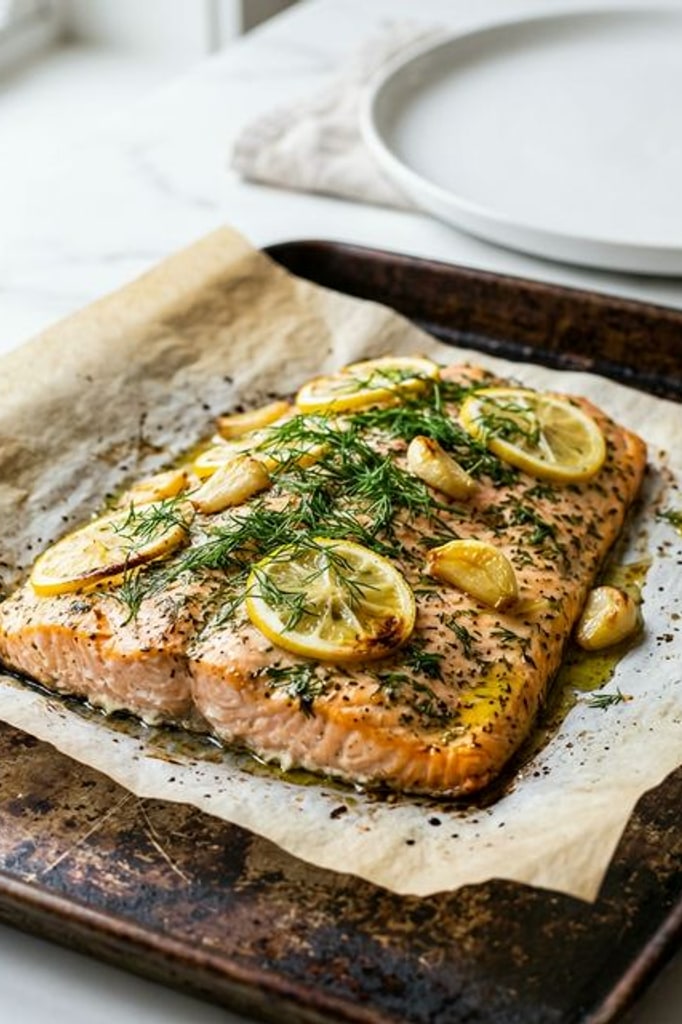
Recipe 5 — Lemon-Herb Baked Salmon (Fastest Anti-Inflammatory Mediterranean Recipe)
Anti-Inflammatory Impact: ⭐⭐⭐ Exceptional
Make this tonight if you make nothing else from this guide.
A 3-ounce serving of wild-caught salmon provides roughly 2 grams of combined EPA and DHA — a clinically meaningful dose. According to Calder, Nutrients 2017, regular fatty fish consumption produces measurable reductions in IL-6 and TNF-α. EPA and DHA replace arachidonic acid in cell membranes, reducing prostaglandin production — the primary driver of pain signaling.
Ingredients: 2 wild-caught salmon fillets (6 oz) · 2 tbsp EVOO · 1 lemon (zest + juice) · 4 garlic cloves, smashed · fresh dill or parsley · salt and pepper
Method: Preheat oven to 400°F. Place salmon on parchment, rub with 1 tbsp EVOO, season. Scatter garlic. Roast 12–14 min. Remove from oven — immediately finish with cold EVOO, lemon juice, zest, and fresh herbs.
Total: under 20 minutes
Important: “Wild-caught” matters — farm-raised salmon has a dramatically worse omega-6 to omega-3 ratio due to grain-based feed, which actually increases inflammatory load.
Recipe 6 — Turmeric-Roasted Chickpeas with Smoked Paprika
Anti-Inflammatory Impact: ⭐⭐ High
Anti-inflammatory Mediterranean snack that requires zero prep and no refrigeration. Turmeric curcumin inhibits COX-2 and 5-LOX inflammatory enzymes. Smoked paprika capsaicin depletes substance P (involved in joint pain signaling). Always combine turmeric with black pepper — piperine increases curcumin absorption by approximately 2,000%. This isn’t wellness lore — it’s documented pharmacokinetics.
Ingredients: 2 cans chickpeas, drained and extremely well dried · 2 tbsp EVOO · 1.5 tsp turmeric + 1 tsp smoked paprika + ½ tsp garlic powder + ½ tsp black pepper + ½ tsp salt
Method: Preheat 400°F. Dry chickpeas completely. Toss with EVOO and spices. Single layer on baking sheet. Roast 25–30 min, shake halfway. Cool completely — they crisp further as they cool.
Stores: 3–4 days in an open container (airtight = soft)
Recipe 7 — Mediterranean Sardine Bruschetta on Whole Grain Crostini
Anti-Inflammatory Impact: ⭐⭐⭐ Exceptional
Sardines are the anti-inflammatory bargain of the Mediterranean diet. Gram for gram, they contain more EPA and DHA than salmon. A single 3.75-oz can provides approximately 1.4g EPA+DHA — equivalent to a full omega-3 supplement dose. Low mercury, inexpensive, shelf-stable.
Ingredients: 2 cans olive oil-packed sardines · 8 slices whole-grain baguette, toasted · 2 ripe tomatoes · ¼ red onion · 2 tbsp capers · fresh parsley · 2 tbsp EVOO + 1 tbsp red wine vinegar · lemon, salt, black pepper, chili flakes
Method: Mix tomatoes, red onion, capers, parsley, EVOO, vinegar. Season with lemon and salt. Let sit 5 min. Flake sardines over crostini. Top with tomato mixture. Finish with chili flakes and lemon.
Prep: 10 min / Serves: 2–4
Recipe 8 — Walnut & Roasted Red Pepper Muhammara
Anti-Inflammatory Impact: ⭐⭐ High
Muhammara is one of the most versatile, underused anti-inflammatory Mediterranean components. Walnuts have the highest ALA omega-3 content of any tree nut (2.5g per ounce) plus vitamin E that protects joint tissue from oxidative damage. Roasted red peppers give vitamin C (cofactor for collagen synthesis in cartilage). Pomegranate molasses adds resveratrol.
Ingredients: 2 cups roasted red peppers (jarred) · 1 cup raw walnuts, lightly toasted · 2 tbsp pomegranate molasses · 2 tbsp EVOO · 1 tbsp lemon juice · 1 tsp Aleppo pepper · 1 tsp cumin · 1 garlic clove · salt
Method: Blend all in food processor until smooth with some texture. Serve with EVOO drizzle.
Storage: 7 days refrigerated
This sauce pairs seamlessly with the Mediterranean Meal Prep guide — add it as Sauce #4 in your Sunday prep. It keeps a full week and transforms any grain bowl.
Mediterranean Anti-Inflammatory Recipes for Brain Health (Pathway 3)
Who this is for: Persistent brain fog, afternoon energy crashes, mood swings, difficulty concentrating, or anyone working on cognitive decline prevention. Neuroinflammation — microglial cell activation — is increasingly recognized as a primary driver of these symptoms, and diet has a more direct influence than most people realize.
This was the section that surprised me most. I didn’t connect my afternoon fog to inflammation until I started eating these foods consistently. It took about three weeks to notice. Worth it.
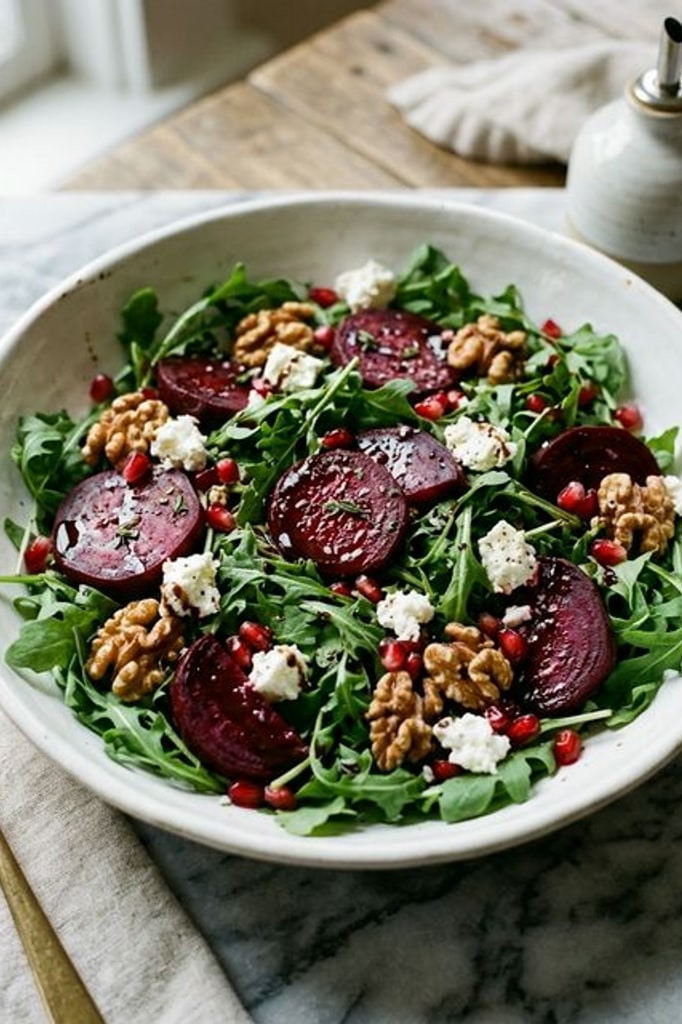
Recipe 9 — Mediterranean Arugula Salad with Roasted Beets, Walnuts & Goat Cheese
Anti-Inflammatory Impact: ⭐⭐⭐ Exceptional
Arugula is the most underappreciated green in the anti-inflammatory kitchen. Its glucosinolates convert to isothiocyanates in the gut (same compound class behind broccoli’s cancer research). Its nitrate content significantly increases cerebral blood flow. Roasted beets provide betaine, which lowers homocysteine — a compound strongly linked to neuroinflammation when elevated. Walnuts deliver DHA, the omega-3 most directly incorporated into brain tissue.
Ingredients: 4 cups packed arugula · 2 medium beets, roasted & sliced · ½ cup raw walnuts · 60g soft goat cheese · ¼ cup pomegranate seeds (optional)
Dressing: 3 tbsp EVOO + 1.5 tbsp balsamic vinegar + 1 tsp Dijon + 1 tsp raw honey + salt + pepper
Prep: 10 min / Serves: 2 as a main
Recipe 10 — Spinach & Feta Frittata with Sun-Dried Tomatoes
Anti-Inflammatory Impact: ⭐⭐ High
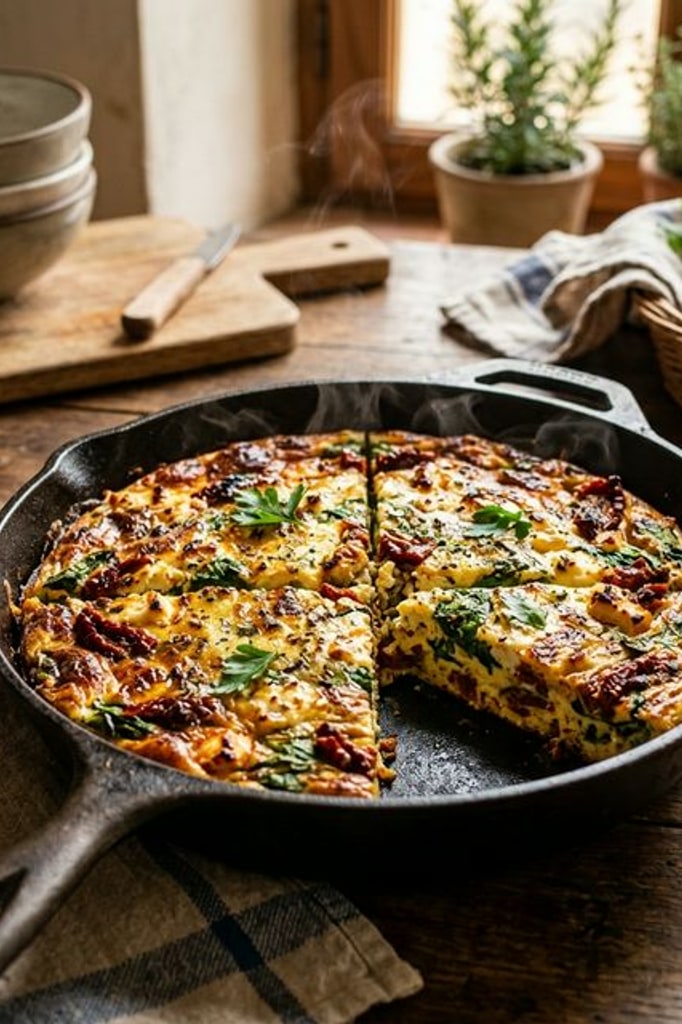
Fastest brain-protective anti-inflammatory Mediterranean breakfast in the guide — 17 minutes total, makes 4 servings for the whole week. Spinach is one of the richest magnesium sources available (157mg per cup cooked) — magnesium regulates NMDA receptors, the neuronal pathway through which excess glutamate triggers neuroinflammation. Most US adults are deficient in magnesium. Eggs contribute choline, precursor to acetylcholine, a neurotransmitter with documented anti-neuroinflammatory roles.
Ingredients: 6 large eggs · 2 cups fresh spinach · ½ cup sun-dried tomatoes · 100g feta cheese, crumbled · 1 tbsp EVOO · salt, pepper, dried oregano
Method: Set broiler to high. Whisk eggs with seasonings. Heat EVOO in oven-safe skillet. Wilt spinach (2 min). Add sun-dried tomatoes. Pour in eggs, stir gently. Cook until edges set (3–4 min). Scatter feta. Broil 2–3 min until golden.
Stores: 4 days fridge / Reheat: 90 seconds microwave
Recipe 11 — Blueberry-Walnut Mediterranean Overnight Oats
Anti-Inflammatory Impact: ⭐⭐ High
Blueberries have the highest antioxidant capacity of any commonly eaten fruit. Their anthocyanins are among the few antioxidant compounds that cross the blood-brain barrier intact, directly reducing microglial activation. Oat beta-glucan fiber reduces systemic inflammatory load, freeing anti-inflammatory capacity for the brain. Walnuts add DHA precursors and vitamin E for neuroprotection.
Ingredients: ½ cup rolled oats · ½ cup almond milk · ½ cup plain Greek yogurt · ½ cup blueberries · ¼ cup raw walnuts · 1 tsp chia seeds · 1 tsp raw honey · ½ tsp vanilla · pinch cinnamon
Method: Combine all except blueberries and walnuts in a jar. Cover, refrigerate overnight. Top with blueberries and walnuts in the morning.
Prep: 5 min active / Can prep 4 jars Sunday for the whole week
Recipe 12 — Almond-Stuffed Medjool Dates with Sea Salt
Anti-Inflammatory Impact: ⭐ Good (Moderate)
This is less about dramatic anti-inflammatory power and more about what it replaces. Processed snacks fuel neuroinflammation through advanced glycation end-products (AGEs). Replacing them with almond-stuffed dates eliminates the AGE load while adding magnesium (almonds, 76mg per ounce), vitamin E (neuroprotective), and natural sugars that metabolize very differently from refined sugar.
Ingredients: 8 Medjool dates, pitted · 8 raw almonds (or almond butter) · flaky sea salt · 1 square 85%+ dark chocolate per date (optional)
Prep: 3 min / Stores: 1 week
The 3-Ingredient Anti-Inflammatory Upgrade for Any Mediterranean Recipe
Three additions that amplify the anti-inflammatory power of any Mediterranean meal, regardless of which recipe you’re making:
- ① Wild-caught canned sardines or salmon (2 oz added to any bowl) — zero cooking, instantly adds 1–1.5g EPA+DHA
- ② Cold-pressed EVOO as a finishing drizzle (not cooked in) — heat above 375°F degrades oleocanthal; add after the pan comes off heat
- ③ Fresh-grated turmeric + one pinch black pepper — piperine activates dramatically higher curcumin absorption; the two together are more potent than either alone
These three additions cost under $2 per meal and require zero changes to the recipe.
Frequently Asked Questions About Mediterranean Anti-Inflammatory Recipes
What foods are anti-inflammatory in the Mediterranean diet?
The highest-evidence anti-inflammatory Mediterranean foods: (1) fatty fish like salmon and sardines (EPA/DHA omega-3s inhibit NF-κB); (2) extra virgin olive oil (oleocanthal inhibits COX enzymes); (3) leafy greens — spinach and arugula (magnesium, B vitamins, nitrates); (4) legumes — lentils, white beans, chickpeas (prebiotic fiber → butyrate); (5) walnuts (ALA omega-3 + vitamin E); (6) blueberries (anthocyanins cross the blood-brain barrier); (7) turmeric with black pepper (curcumin + piperine — multi-pathway inhibition).
What is the best anti-inflammatory Mediterranean recipe?
For fastest impact: Lemon-Herb Baked Salmon — clinically meaningful EPA+DHA dose, 20 minutes, 4 ingredients. For sustained long-term effect: Mediterranean Lentil Soup — prebiotic fiber builds gut protection progressively over 2–4 weeks. For daily versatility: White Bean & Wilted Greens — 12 minutes, exceptional polyphenol plus fiber load.
Can a Mediterranean diet reduce inflammation?
Yes, with substantial clinical evidence. The PREDIMED trial documented a 37% CRP reduction over five years vs. a low-fat control diet. Consistent adherence for 12+ weeks produces the most measurable results in clinical settings.
What can I eat for dinner on an anti-inflammatory diet?
Best anti-inflammatory Mediterranean dinners from this guide: Lemon-Herb Salmon with roasted vegetables (Pathway 2); White Bean & Wilted Greens over farro (Pathway 1); Mediterranean Lentil Soup with whole-grain bread (Pathway 1); Sardine Bruschetta with arugula salad (Pathway 2 + 3 combined). All under 35 minutes from start to plate.
How long does it take the Mediterranean diet to reduce inflammation?
The gut microbiome begins shifting within 72 hours of increased fiber intake. Subjective improvements appear at 2–3 weeks. Lab-measurable CRP reductions appear at 8–12 weeks of consistent eating. Full benefit for neuroinflammation generally requires 3–6 months of sustained adherence.
Is olive oil anti-inflammatory?
High-quality extra virgin olive oil — cold-pressed, high-polyphenol — is genuinely anti-inflammatory. Its active compound, oleocanthal, inhibits COX-1 and COX-2 via the same mechanism as ibuprofen. Use extra virgin (not “pure” or “light” olive oil, which are heat-refined), cold-pressed, ideally within 18 months of the harvest date. Add cold whenever possible.
The Bottom Line on Mediterranean Anti-Inflammatory Recipes
Chronic inflammation responds to food — but generic “eat Mediterranean” advice gives you a broad target without telling you where to aim.
These 12 Mediterranean anti-inflammatory recipes are organized around three pathways: gut-derived inflammation, joint and oxidative stress, and neuroinflammation. Start with the pathway most relevant to your symptoms. Add the 3-ingredient upgrade to every meal you already cook. Give it 8–12 weeks.
The Lemon-Herb Salmon tonight. The Lentil Soup this Sunday. Build from there.
Want to turn these recipes into a weekly system? Our Mediterranean Meal Prep guide shows you how to prep five components in 90 minutes on Sunday and assemble any of these meals in under 5 minutes all week.
For a structured 4-week progression that incorporates these recipes with weekly benchmarks, see our 4-Week Anti-Inflammatory Meal Plan.
The information on this site is for educational purposes only and is not intended as medical advice. Always consult a qualified healthcare provider before making any changes to your diet, exercise routine, or supplement use.

About Jane Smith
We turn solid evidence into everyday habits Americans can actually do—plain English, cups/oz, grocery-aisle swaps, and routines that fit real life. Our editorial process: Experience—we road-test tips in real schedules…