Medicinal Teas Benefits — 4 Herbal Teas for Each Body System
Four herbal teas. Four specific body systems. Most guides give you a vague list — this one gives you a protocol, with exact doses, timing, and timelines for each.
- Why Most Medicinal Teas Benefits Lists Miss the Point — And What to Do Instead
- Tea #1 — Ginger Tea for Lungs & Respiratory Health
- Tea #2 — Hibiscus Tea for Heart Health & Blood Pressure
- Tea #3 — Bilberry Tea for Eye Health & Vision
- Tea #4 — Moringa Tea for Bone Strength & Density
- Can You Drink All 4 Teas? Yes — Here’s How to Rotate Them
- Frequently Asked Questions
- The Bottom Line
Understanding medicinal teas benefits at a body-system level is what separates a healthy daily habit from a truly targeted health protocol. You’ve probably had a cup of herbal tea this week. Maybe chamomile before bed, or peppermint after a big dinner. But here’s the thing — if you’ve been reaching for tea mostly out of habit and haven’t noticed much difference in how you actually feel, you might be missing the picture.
There are four herbal teas that don’t just offer vague “wellness.” Each one has a specific job to do in a specific part of your body. Ginger for your lungs. Hibiscus for your heart. Bilberry for your eyes. Moringa for your bones. And the research behind each one is specific enough to actually tell you how much to drink, when, and for how long.
That’s what this guide is about. Not a generic list — a real protocol.
Quick Takeaways:
☑️ Ginger tea → lungs (fights airway inflammation, clears mucus)
☑️ Hibiscus tea → heart (clinically shown to lower blood pressure)
☑️ Bilberry tea → eyes (strengthens retinal blood flow, eases screen fatigue)
☑️ Moringa tea → bones (plant calcium + vitamin K your skeleton needs)
Why Most Medicinal Teas Benefits Lists Miss the Point — And What to Do Instead
The Science Behind Medicinal Teas Benefits

Walk into any health food store and you’ll see a wall of teas — all promising “antioxidants” or “immunity support” in the same cheerful font. That’s not wrong, exactly. But it’s not useful either.
One List Can’t Solve Every Problem
Think about it this way. If you’re a 48-year-old woman whose doctor just flagged elevated blood pressure, and a 65-year-old man who’s noticing his night vision isn’t what it used to be both read the same “Top 10 Herbal Teas” article — they get the exact same recommendation. Chamomile. Peppermint. Green tea.
None of those are the right answer for either of them.
Your body systems have different needs. And that’s the core problem with how most people research herbal tea benefits. And that’s the core problem with how most people research herbal tea benefits. And the teas that address those needs are specific — not interchangeable. This is really the whole idea behind thinking about food as medicine for organ health: the right plant compound, matched to the right system, at the right dose.
How to Use This Guide
Pick the body system you’re most focused on — that’s how to use herbal tea benefits strategically. Start with — lungs, heart, eyes, or bones. Start there. Stick with that tea daily for four to six weeks. Then, once it’s a habit, add a second tea for a second priority. The rotation table later in this article shows you how to run all four through the week without overdoing any single one.
If you’re on prescription medication or have an ongoing condition, check the “Avoid If” note on each Dose Card before you start.
Tea #1 — Ginger Tea for Lungs & Respiratory Health
Ginger is the clearest entry in the medicinal teas benefits category for respiratory support — its active compounds are specific enough to have their own clinical citations.

Body system: Lungs & airways
Ginger is one of the most underrated herbal tea benefits stories. Most people think of ginger tea as a stomach thing — nausea, bloating, morning sickness. That’s fair. But it sells ginger way short.
What Ginger Actually Does for Your Lungs
The compounds that give ginger its kick — gingerols and shogaols — are also what make it genuinely useful for your respiratory system. They dial down two of the main inflammatory signals that drive airway irritation: IL-6 and TNF-α. Those are the same signals at work when you’re dealing with a lingering chest cold, post-viral congestion, or allergy-related breathing issues.
A study from the NIH found that ginger’s compounds directly interrupt these inflammation pathways in lung tissue. On top of that, ginger acts as a mild bronchodilator — it helps relax the smooth muscle around your airways, which explains that slight “opening up” feeling you can get from a strong ginger brew when you’re stuffy.
I started keeping fresh ginger root on hand year-round after one particularly rough allergy season. When someone in my house gets a chest cold, ginger tea is the first thing I reach for — before anything from the medicine cabinet.
📋 Ginger Tea Dose Card
Buying tip: If you’re going the teabag route, look for “whole ginger root extract” on the label, not just “ginger flavor.” A real ginger tea should have actual heat to it when you drink it.
Ginger pairs naturally with a broader food-as-medicine approach. If you want to see how it fits into everyday illness prevention, our guide on best foods for everyday illnesses covers this in depth.
Tea #2 — Hibiscus Tea for Heart Health & Blood Pressure
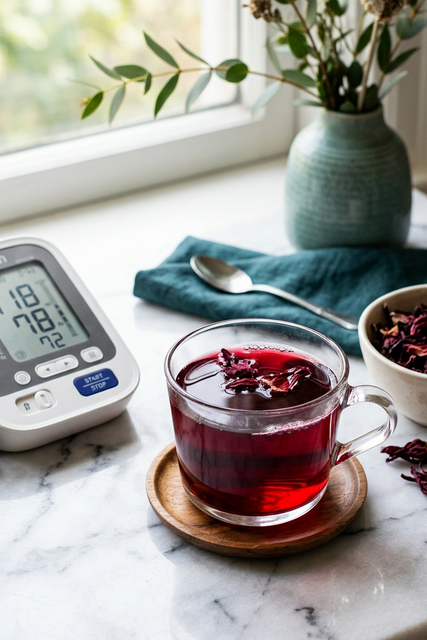
Among the four medicinal teas benefits on this list, hibiscus has the most precisely measured cardiovascular outcome in peer-reviewed trials.
Body system: Cardiovascular (heart + blood vessels)
Among all herbal tea benefits for the cardiovascular system, hibiscus is the one where the research is specific enough to give you an actual number. Not “may support heart health.” An actual, measurable effect with a real timeframe.
The Study That Changed How I Think About Hibiscus
In 2010, researchers ran a randomized controlled trial — the gold standard in nutrition research — with 65 adults who had mild-to-moderate high blood pressure. The group drinking three cups of hibiscus tea daily dropped their systolic blood pressure by an average of 7.2 mmHg in six weeks. That’s not trivial. For some people, that’s the difference between needing medication and not.
The reason it works is that hibiscus is packed with anthocyanins — the same pigments that give it that deep ruby color. Those compounds block an enzyme called ACE (angiotensin-converting enzyme), which is actually the same enzyme that common blood pressure medications target. Hibiscus also acts as a gentle diuretic, helping your body release excess fluid that contributes to pressure on artery walls.
It Does More Than Lower Blood Pressure
Hibiscus also nudges your cholesterol in the right direction — higher HDL, lower LDL and triglycerides. And for women over 40, there’s one more angle worth knowing: hibiscus contains phytoestrogenic compounds that interact mildly with estrogen receptors. If you’re thinking carefully about foods that support hormone balance, hibiscus is worth having on your radar.
📋 Hibiscus Tea Dose Card
Tea #3 — Bilberry Tea for Eye Health & Vision
Body system: Visual system (retina + night vision)
One of the most surprising herbal tea benefits comes from the eyes section. Here’s a story most people haven’t heard: during World War II, British Royal Air Force pilots were given bilberry jam before evening missions — specifically because it improved their night vision. At the time it was based on observation, not science. But it turns out they were onto something real.
Why Bilberry Is Different from Blueberries (It Matters)
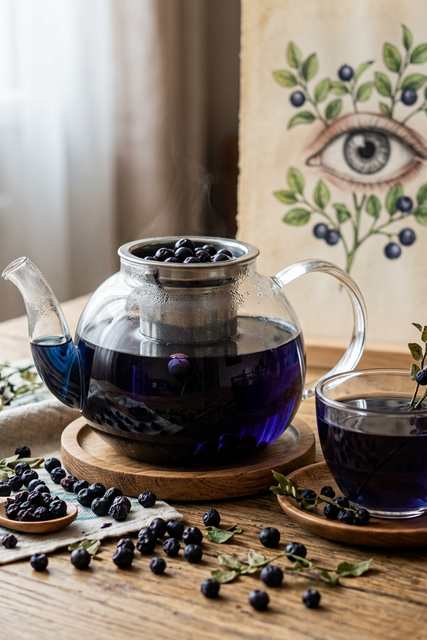
Bilberry (Vaccinium myrtillus) is a close cousin of the common blueberry, but its anthocyanoside concentration is three to five times higher. And unlike blueberries, bilberry’s compounds have a particular affinity for the tissue in your eyes — they accumulate specifically in the retina and strengthen the tiny blood vessels (capillaries) that supply blood to your macula.
Research published via the NIH supports the role of these anthocyanins in protecting retinal function, especially for people showing early signs of age-related macular changes or screen-related eye fatigue.
Bilberry vs. Eye Health Supplements
You’ve probably seen lutein and zeaxanthin marketed as the go-to eye nutrients. Those have value — they filter blue light in the retina. But bilberry does something lutein can’t: it improves the actual blood flow to your eyes. If you spend six or more hours on screens daily, that vascular support is exactly what you need. Lutein filters the light; bilberry keeps the pipes carrying blood to your eyes healthy. Both matter.
If you’re already thinking about supporting your body with plant-based nutrients, bilberry fits naturally into that whole-food approach.
📋 Bilberry Tea Dose Card
Sourcing note: This one varies a lot by brand. Look for Vaccinium myrtillus specifically on the label — not just “blueberry” or “wild berry.” Your bilberry tea should brew to a deep blue-purple, almost inky color. If it’s pale pink, it’s not the real thing.
Tea #4 — Moringa Tea for Bone Strength & Density
Moringa rounds out the medicinal teas benefits protocol by targeting bone density — a system most herbal teas ignore entirely.
Note: Moringa affects thyroid hormone conversion. If thyroid health is your focus, also read our guide on foods for thyroid health.
Body system: Skeletal system (bones)
The herbal tea benefits for bone health often go overlooked — but moringa gets lumped in with every other “superfood” and the label starts to lose meaning. But for bone health — particularly for women over 40 — the numbers here are worth pausing on.
Why Your Bones Need More Than Just Calcium
Here’s a fact most people don’t know: you can absorb plenty of calcium and still lose bone density if you don’t have enough vitamin K to tell your body where to put it. Vitamin K activates a protein called osteocalcin, which is literally what anchors calcium into your bone matrix. No vitamin K, no anchor. The calcium circulates and eventually passes through.
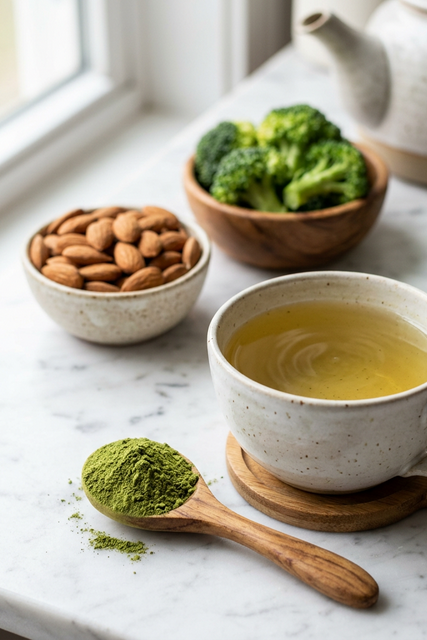
Moringa leaf solves both problems in one cup. It contains around 25mg of bioavailable calcium per gram of dried leaf — and unlike calcium from spinach or almonds, which is often bound to compounds that block absorption, moringa’s calcium is attached to amino acids that your body handles well. Research on moringa’s nutritional profile confirms this makes it one of the most genuinely useful plant sources for skeletal support.
Bone density naturally declines after 40. Most women reach for dairy or a calcium supplement and call it done. Moringa gives you the vitamins and minerals your bones need to actually use what you’re taking in.
📋 Moringa Tea Dose Card
I’ll be honest — moringa tea isn’t the most exciting flavor. It’s grassy and mild. The powder form is more flexible: you can stir it into a morning smoothie or mix it into warm water with lemon and it’s actually pretty good.
Can You Drink All 4 Teas? Yes — Here’s How to Rotate Them
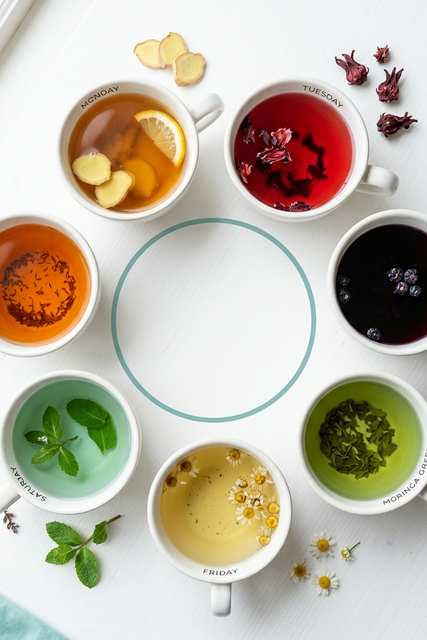
You don’t have to pick just one of these herbal tea benefits. The rotation strategy below lets you capture all four. You can run all four through the week with a little planning.
The Smart Way to Do It
A few practical rules before you start:
- Don’t pile hibiscus and moringa in the same cup if you’re on blood pressure medication. Both lower BP. Separately across the day or week, they’re fine — layered in one high-dose cup, the combination can be unpredictable.
- Ginger + moringa in the morning pair well — both support anti-inflammatory pathways and work through different mechanisms.
- Keep hibiscus to mid-morning or afternoon — it has a mild diuretic effect that you don’t want running through you at 11pm.
Here’s a 7-day rotation that gives you full-system coverage:
This rotation covers all four medicinal teas benefits in one week. Daily ginger coverage (lungs), five moringa doses (bones), four hibiscus doses (heart), and four bilberry doses (eyes) — all within safe daily amounts.
If tracking all four of these medicinal teas sounds like too much, Traditional Medicinals makes an organic herbal variety collection that includes all four in pre-measured teabags. It’s the most straightforward way to start without making tea shopping into a project.
Frequently Asked Questions
What tea is best for lung health?
Ginger tea is the strongest option for respiratory support. Its active compounds (gingerols and shogaols) interrupt the inflammation signals that drive airway irritation — the same signals behind congestion, post-viral breathing issues, and allergy-related tightness. Start with two cups a day and give it at least two to four weeks.
Can hibiscus tea really lower blood pressure?
It can, yes — and there’s a specific clinical trial that shows how much. In 2010, a study published in the Journal of Nutrition found that three cups of hibiscus tea daily lowered systolic blood pressure by 7.2 mmHg on average over six weeks. That’s meaningful. If you’re already on medication, run it by your doctor before adding therapeutic amounts of hibiscus.
What herbal tea is good for eyesight?
Bilberry tea. Its anthocyanoside concentration is three to five times higher than common blueberries, and these compounds specifically accumulate in retinal tissue — strengthening the tiny blood vessels that supply your macula. Especially helpful if you have screen fatigue, are noticing changes in night vision, or have a family history of macular degeneration.
Is moringa tea safe every day?
For most healthy adults, one to two cups daily is fine. Avoid it if you’re pregnant (high vitamin A) or on thyroid hormone medication (it can interfere with conversion). And stick to moringa leaf — the root has a different chemical profile that isn’t recommended for regular use.
Which tea is best for bones?
Moringa is the clear answer here. It’s one of the only plants that delivers both bioavailable calcium and vitamin K1 in a meaningful amount — and you need both for bone matrix formation. It’s a long game: give it three to six months and ideally track your progress with a DEXA scan if bone density is a real concern.
Can I replace supplements with these teas?
For prevention, herbal tea benefits can absolutely fill this role — whole-food plant compounds often absorb better than isolated supplements anyway. For diagnosed deficiencies or conditions like osteoporosis or hypertension, these teas work best alongside medical care, not instead of it. Think of them as a daily investment in the system, not a fast fix.
The Bottom Line
Consider these four medicinal teas benefits as a rotating system, not a single cure — each one does a different job for a different part of your body.
Most herbal tea benefits guides give you a list and wish you luck. This one gives you a protocol.
Real herbal tea benefits are specific: Ginger protects your lungs. Hibiscus supports your heart. Bilberry feeds your retinas. Moringa rebuilds your bones. Each has a different mechanism, a different dose, and a different timeline — and that’s exactly the information you need to actually use them well.
Start with one. Pick the system you care about most right now. Brew a cup tomorrow morning. Commit to a month. Then add the next one.
Bookmark this page — the rotation table and dose cards are the parts you’ll actually come back to.
And if you want to skip the sourcing hassle and start all four at once, Traditional Medicinals’ organic herbal variety pack has you covered. Clean, certified-organic, no fillers — it’s where I’d start if I were beginning this protocol fresh today.
→ Want to go deeper on the food-as-medicine approach? Our piece on best foods for everyday illnesses pairs naturally with this tea guide.
Disclaimer: This article is for informational and educational purposes only and does not constitute medical advice. Always consult a qualified healthcare provider before making changes to your diet or health routine, especially if you have an existing condition or take prescription medications. EssentialWellnessAZ.com is not responsible for any adverse effects from using information in this article.

About Jane Smith
We turn solid evidence into everyday habits Americans can actually do—plain English, cups/oz, grocery-aisle swaps, and routines that fit real life. Our editorial process: Experience—we road-test tips in real schedules…