Vitamin K + Warfarin: Stability Over Avoidance (The Modern Diet Guide)
Old warfarin advice: avoid all greens. The modern approach is steady daily vitamin K — plus a 14-day menu and the other foods (cranberry, grapefruit) to watch.
- Why “avoid all greens” is the wrong advice (and makes life harder)
- How warfarin and vitamin K “push” on each other (in 30 seconds)
- K1 vs K2 — the distinction almost everyone misses
- Your roadmap: “Lock the plate, let the dose move”
- So how much is “a moderate amount”?
- Vitamin K in foods (with portions) — to recognize, not to ban
- A sample 14-day menu — keep vitamin K steady without the boredom
- Beyond vitamin K — other foods and drinks that move your INR
- When life changes your INR — sickness, antibiotics, and big habit shifts
- When to get help FAST — memorize this part
- An honest aside: there’s a medicine that skips the diet question
- FAQ
- Bottom line — three things to carry
You look down at the few green leaves on your plate, and you tense up.
A voice in the back of your head asks: “Is this kale going to wreck my INR — the blood number that warfarin controls through vitamin K? What if one wrong bite sends me toward a stroke — or a bleed?” A meal that should be simple has turned into a quiz you’re scared to fail. And if your INR keeps swinging no matter how carefully you avoid things, there’s a quieter ache underneath it: “Am I just doing everything wrong?”
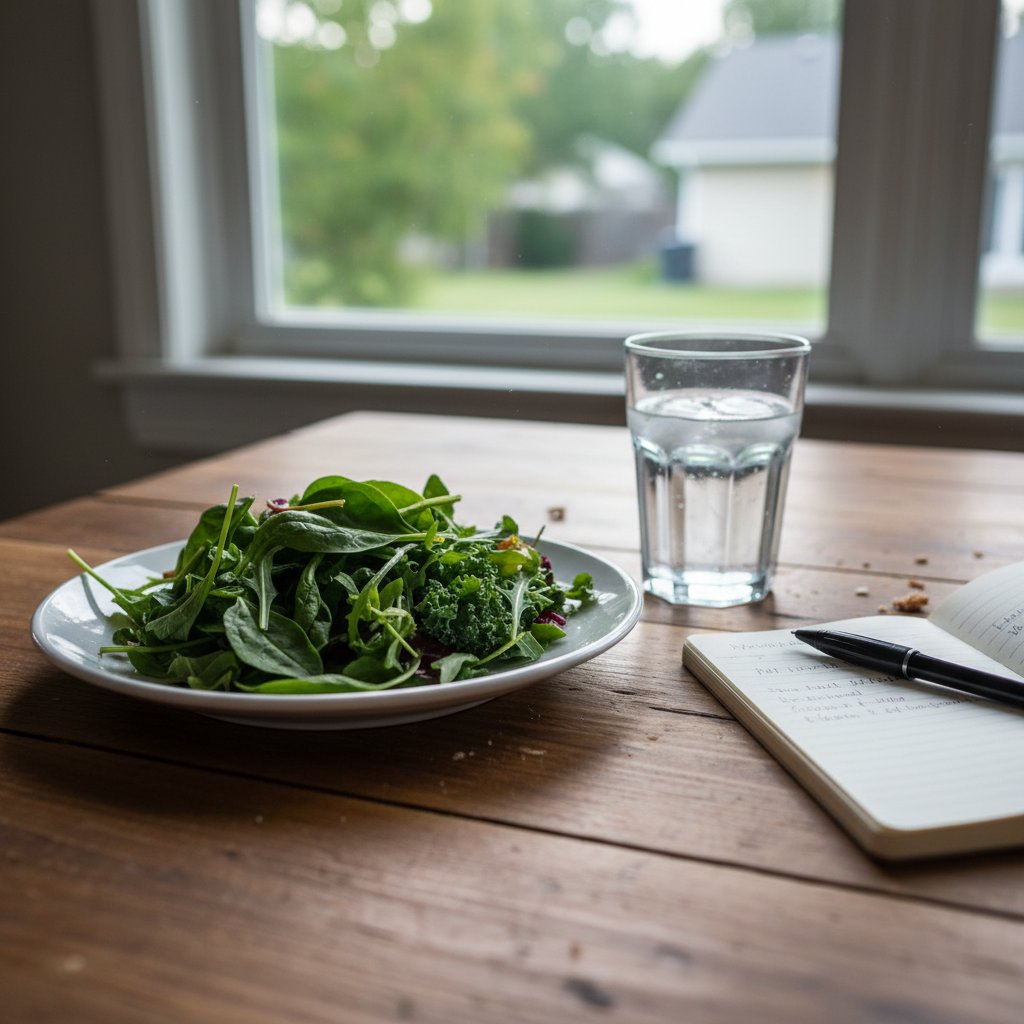
If that’s where you are, take a breath. The fear is real — but most of it is aimed at the wrong target. Once you see what actually matters, eating on warfarin gets a lot lighter. Not because you become more careful. Because you make it simpler.
📌 Quick answer (if you read only one box):
- You do NOT have to give up green vegetables. Cutting them out usually makes your INR less stable, not more.
- Eat a small amount of greens — roughly the SAME amount, EVERY DAY. Same kind, same portion. Steady beats low.
- Tell your pharmacist your eating pattern, so they can dose the warfarin around your plate — instead of forcing your plate to chase the drug.
A note before we begin: I trained in traditional medicine in Vietnam, but I’m not currently practicing, and I’m not a clinician. This isn’t medical advice or a dosing instruction. Two numbers always outrank anything I write: your INR, and the dose your prescriber sets. Please don’t change your diet, your supplements, or your dose because of a blog — including this one — without talking to the pharmacist or anticoagulation clinic who manages your care.
Why “avoid all greens” is the wrong advice (and makes life harder)
For decades, the standard advice on the warfarin diet and vitamin K was basically a list of banned vegetables. The logic looked airtight: vitamin K helps blood clot, warfarin blocks vitamin K, so eating less vitamin K should make things smoother. Bodies don’t follow the logic.
When researchers actually measured what people on warfarin ate, the result flipped the script: the group with unstable INR control ate less vitamin K, not more. One well-known study found the unstable group averaged about 29 micrograms (µg) a day, the stable group about 76 — and people who ate a higher, steadier amount held their INR better (Sconce et al.; ASH, Blood).
Picture it this way. Eating almost no vitamin K is like walking a thin wire. When your body is used to “near zero,” one unexpectedly green meal sends your INR lurching. But when your body is used to a steady, moderate amount, it has a cushion — one slightly-off meal doesn’t knock you down.
There’s a second cost nobody mentions. Greens aren’t only vitamin K — they’re also iron, folate, magnesium, and fiber. People who avoid vitamin K long-term tend to come up short on all of those too (Leblanc et al.) — trading one worry for three deficiencies.
So the target was never zero. It’s steady as a rhythm.
How warfarin and vitamin K “push” on each other (in 30 seconds)
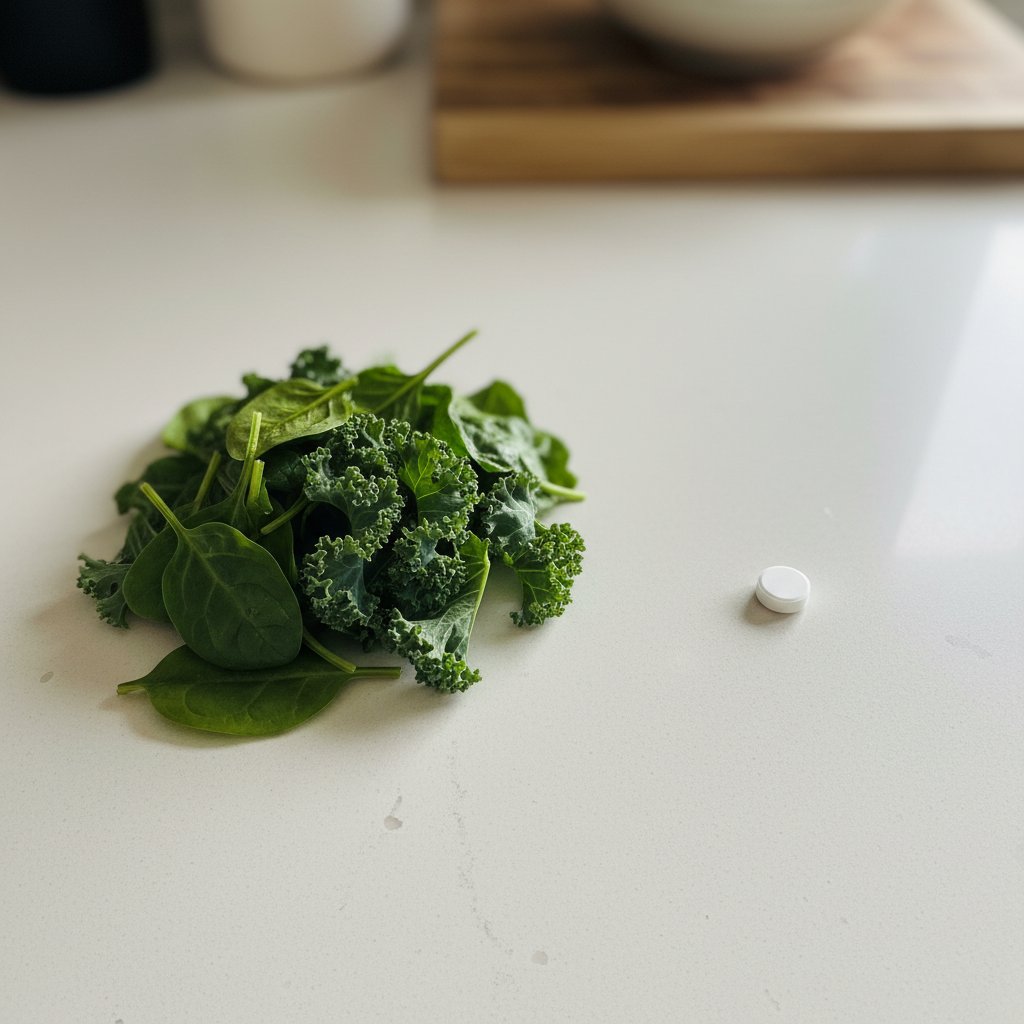
Your body uses vitamin K as an on-switch for a few “clotting workers” (factors II, VII, IX, and X) that seal a wound. Warfarin steps in and turns that switch down, so blood clots more slowly (NIH ODS; StatPearls, NIH).
- More vitamin K than usual → blood clots a bit more easily → INR drifts down (clotting risk).
- Less vitamin K than usual → warfarin hits harder → INR drifts up (bleeding risk).
INR is just the number your clinic uses to track how “thin” your blood is (many people are kept around 2.0–3.0, but the right range for you is your prescriber’s call).
Notice the italics: what moves your INR isn’t the vegetable itself — it’s the CHANGE in how much you eat versus your usual. Keep the amount steady → the seesaw holds still → and the dose can finally be set precisely.
One more thing that trips people up: warfarin works on a delay. A change in your vitamin K today doesn’t fully show on your INR for a couple of days, because the clotting factors already in your blood have to cycle out first. That delay is exactly why one odd meal isn’t a crisis — and why a lasting change (a new daily smoothie, a crash diet) is the thing to flag, since its effect builds and sticks.
K1 vs K2 — the distinction almost everyone misses
“Vitamin K” is really two families, and around warfarin they differ.
- K1 (in green plants — kale, spinach, collards, broccoli, lettuce): the liver grabs K1 first to make clotting factors, so K1 affects your INR most directly (Healthline).
- K2 (in fermented foods — natto, sauerkraut, some cheeses): lingers longer in the blood and heads toward bone and vessels, so on paper it interferes with warfarin less than K1 (U.S. Pharmacist).
But don’t read that as “K2 is free, eat all you want”: a single serving of natto (extremely rich in K2) has shifted clotting measures for up to four days (PMC). The steady rule still applies to K2.
You don’t need to memorize the K1/K2 chart. Just don’t treat any concentrated source as “free” — not a big natto habit, not a K2 capsule, not a new daily green smoothie. Want to add one? Add it steadily, and ask your pharmacist first. (For how vitamin D and K2 work together for bone, see our vitamin D guide.)
Your roadmap: “Lock the plate, let the dose move”
This is the most important part — and here’s the relief: the hardest piece isn’t yours to carry. Split it cleanly into two roles.
🟢 YOUR PART (you control + measure)
1) Choose your green anchor. 2) Keep a 14-day journal (10s/day). That’s it.
🔵 PHARMACIST’S PART (not yours)
They dose the warfarin to fit your plate and schedule the INR recheck. Never DIY the dose.
🟢 Your part — just two things, start tonight
Thing 1 — Choose your “green anchor.” Pick an amount of greens you can genuinely eat every day. Make it concrete — choose one and keep it identical: a small side salad at lunch, one cup of cooked greens at dinner, or one cup of spinach in a morning smoothie. No microgram-counting. Just same kind, same amount, every day (PubMed).
½ cup cooked greens or 1 cup salad — for people who eat few greens.
1 cup cooked greens or 1 cup spinach in a smoothie — most common.
1.5–2 cups cooked greens — for people who already eat a lot.
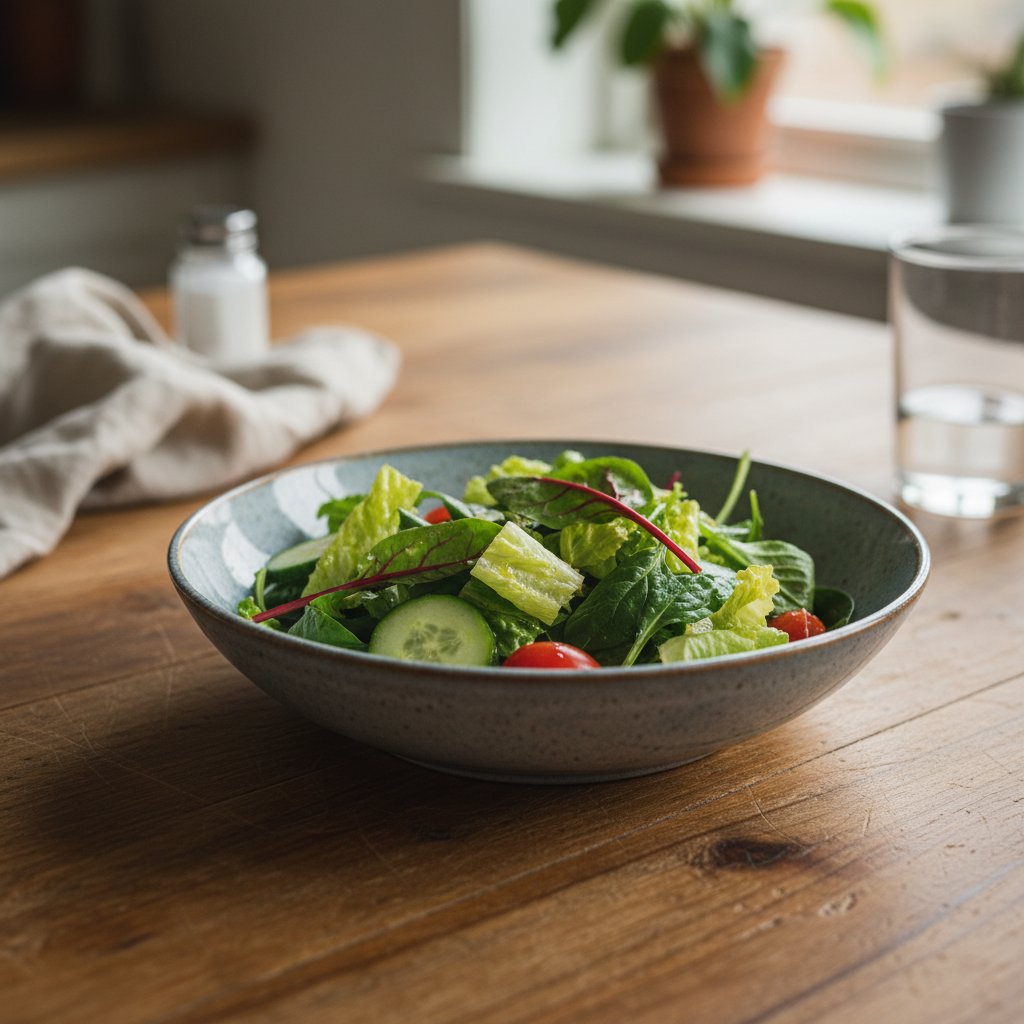
Thing 2 — Keep a 14-day journal (10 seconds a day). Each day, one tick: did I eat my green anchor? (✓/✗) — plus a note if anything concentrated and unusual showed up (natto, a giant green smoothie, cranberry juice). That’s it.

🎯 Your scoreboard
Process: ✓ days out of 14 (aim ≥12/14). · Result: your INR at the next check is the score. A steady plate → a steadier INR.
🔵 The pharmacist’s part — not yours, and don’t DIY it

You bring the 14-day journal in. They put it next to your INR history and dose the warfarin to fit your plate, then schedule a recheck. Your job is to keep the plate steady; their job is to move the dose. Never adjust your own dose. If you later want to change how you eat in a lasting way, do it gradually and let the clinic recheck your INR. Even adding a small, consistent daily vitamin K dose under supervision has steadied INR for some people with stubbornly variable readings (low-dose vitamin K RCT) — but that’s their decision, not a kitchen experiment.
👉 Start tonight: pick your green anchor (salad / cooked greens / smoothie) and write your first journal tick. Done — repeat tomorrow.
⚠️ Three mistakes that quietly wreck stability
- The surprise feast. Almost no greens all week, then a giant salad or hotpot on the weekend — the single biggest INR swinger.
- The crash diet. Suddenly “eating clean” with daily green smoothies, or losing your appetite — both change vitamin K fast.
- The silent supplement. Starting a multivitamin, K2 capsule, fish oil, or herbal product without telling anyone.
What I noticed: Someone close to me, newly on warfarin, did exactly what the old pamphlet said — dropped greens almost entirely, scared of “messing up the blood.” The INR stayed a roller coaster anyway, because now one green-heavy family dinner landed on a body with zero tolerance for it. When they went the other way — a small steady salad most days, logged for a month, shared with the pharmacist — the readings finally calmed down. I share that as one person’s story, not a protocol. Your body, your INR, and your prescriber’s plan are what count.
So how much is “a moderate amount”?
For general health, the “adequate intake” for vitamin K is roughly 120 µg/day for men and 90 µg/day for women (NIH ODS). But on warfarin, the exact number matters less than staying near your own normal, every day. Don’t read “120 µg” as a figure to suddenly jump to; if you want more greens, climb there slowly and tell your clinic so they can watch your INR.
Vitamin K in foods (with portions) — to recognize, not to ban
| Food | Vitamin K (rough) | Note |
|---|---|---|
| Kale, cooked (½ cup) | very high | richest of the group |
| Collard greens, cooked (½ cup) | very high | |
| Spinach (1 cup raw / ½ cup cooked) | high | the smoothie “surprise” |
| Swiss chard (1 cup raw) | high | |
| Brussels sprouts (½ cup cooked) | high | |
| Broccoli (½ cup cooked) | moderate–high | |
| Green leaf / romaine lettuce (1 cup) | moderate | |
| Beef or other liver | moderate | |
| Natto / fermented soy (K2) | very high | long-lasting — keep it steady |
Roughly how much (per serving, approximate — it varies with prep): cooked kale or collards ~500+ µg; cooked spinach ~445 µg (1 cup raw ~145 µg); raw Swiss chard ~300 µg; cooked broccoli or Brussels sprouts ~110 µg; 1 cup romaine ~50 µg; a 1-oz serving of natto ~250+ µg of K2. You don’t need to hit a number — this just shows why a steady portion of the same green keeps your daily total even.
Lower in vitamin K (handy for variety): artichoke, most non-green vegetables, many fruits, grains, and proteins (AHA card, PDF; Medical News Today). For printable, microgram-level tables, the National Blood Clot Alliance handout is worth bringing to your pharmacist. Greens still belong on your plate — warfarin asks for rhythm, not removal.
A sample 14-day menu — keep vitamin K steady without the boredom
This is what makes “eat steady” easy: you don’t have to plan from scratch each day. The whole idea fits in one line — lock the greens, vary the rest.
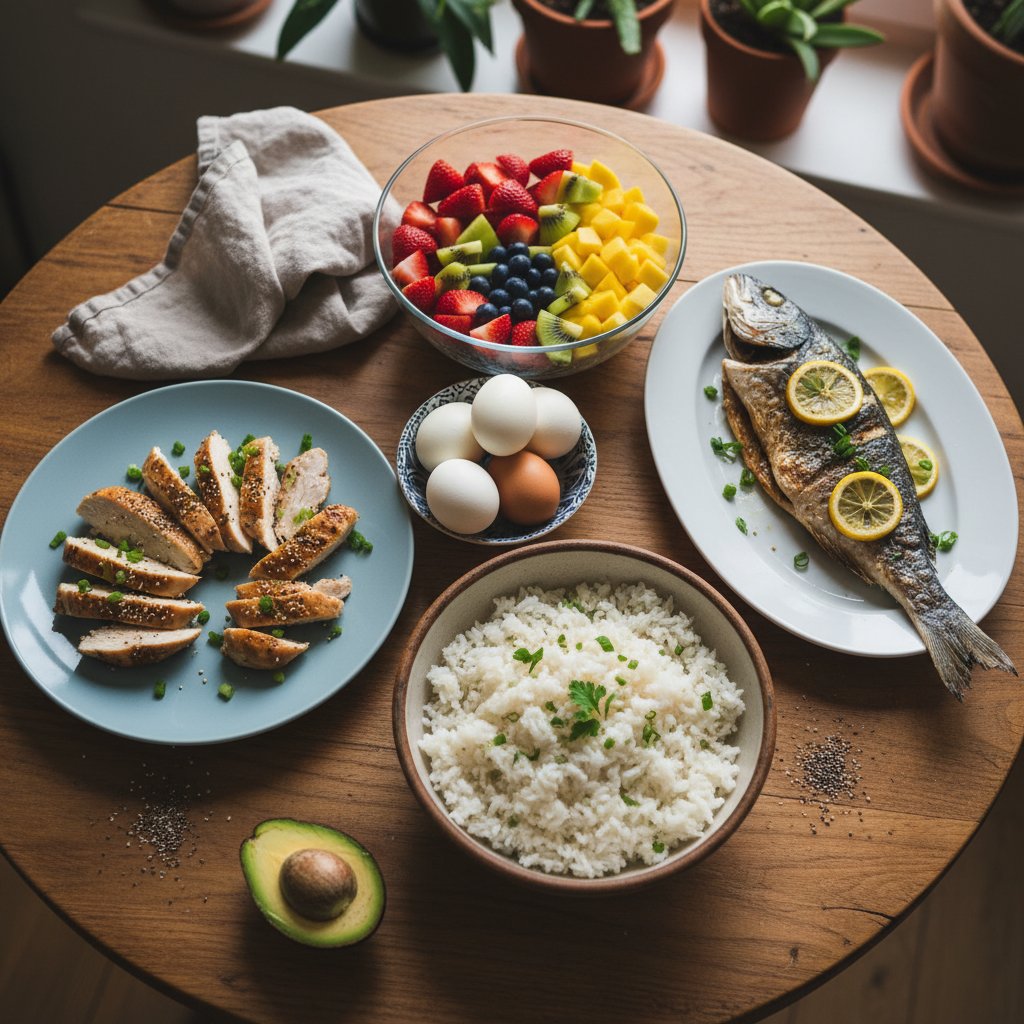
Set-up (do once): Choose your green anchor (Light / Moderate / High above) and keep it identical for all 14 days. In the menu below, the 🟢 cell is your fixed green anchor; everything else is low in vitamin K, so you can swap it freely. (This menu deliberately leaves out cranberry and grapefruit.)
| Day | Breakfast | Lunch | Dinner |
|---|---|---|---|
| 1 | Oats + banana + blueberries | Rice + grilled chicken + tomato, cucumber | 🟢 green anchor + salmon + sweet potato |
| 2 | Fried eggs + toast | Chicken rice-noodle soup | 🟢 green anchor + pork + rice + carrot |
| 3 | Yogurt + mango + oats | Rice + shrimp + sweet corn | 🟢 green anchor + chicken + pasta in tomato sauce |
| 4 | Egg congee | Egg/meat sandwich + cucumber | 🟢 green anchor + fish + mashed potato |
| 5 | Banana + strawberry smoothie | Rice + tofu with mushroom, bell pepper | 🟢 green anchor + beef + rice |
| 6 | Sticky rice / rice rolls | Grilled-pork vermicelli | 🟢 green anchor + braised chicken + rice + tomato |
| 7 | Eggs + boiled sweet potato | Rice + braised fish + pumpkin soup | 🟢 green anchor + shrimp + noodles |
| Day | Breakfast | Lunch | Dinner |
|---|---|---|---|
| 8 | Oats + apple + cinnamon | Rice + chicken + bell pepper, mushroom | 🟢 green anchor + salmon + sweet potato |
| 9 | Greek yogurt + blueberries | Glass-noodle chicken soup | 🟢 green anchor + pork + rice + carrot |
| 10 | Scrambled eggs + toast | Rice + shrimp + corn, tomato | 🟢 green anchor + beef + pasta |
| 11 | Mango + banana smoothie | Chicken congee | 🟢 green anchor + fish + potato |
| 12 | Peanut-butter toast + banana | Rice + tofu + zucchini | 🟢 green anchor + grilled chicken + rice |
| 13 | Chicken rice-noodle soup | Rice + braised fish + squash soup | 🟢 green anchor + sauteed shrimp + rice |
| 14 | Eggs + sweet potato | Pork noodles | 🟢 green anchor + beef + rice + tomato |
Each day, tick ✓ in your journal if you ate your fixed green anchor. After 14 days, take the journal to your INR check — that’s your scoreboard. Craving a higher-green meal (hotpot, a big salad, natto)? Fine — just tell your pharmacist before you make it a regular thing.
Beyond vitamin K — other foods and drinks that move your INR
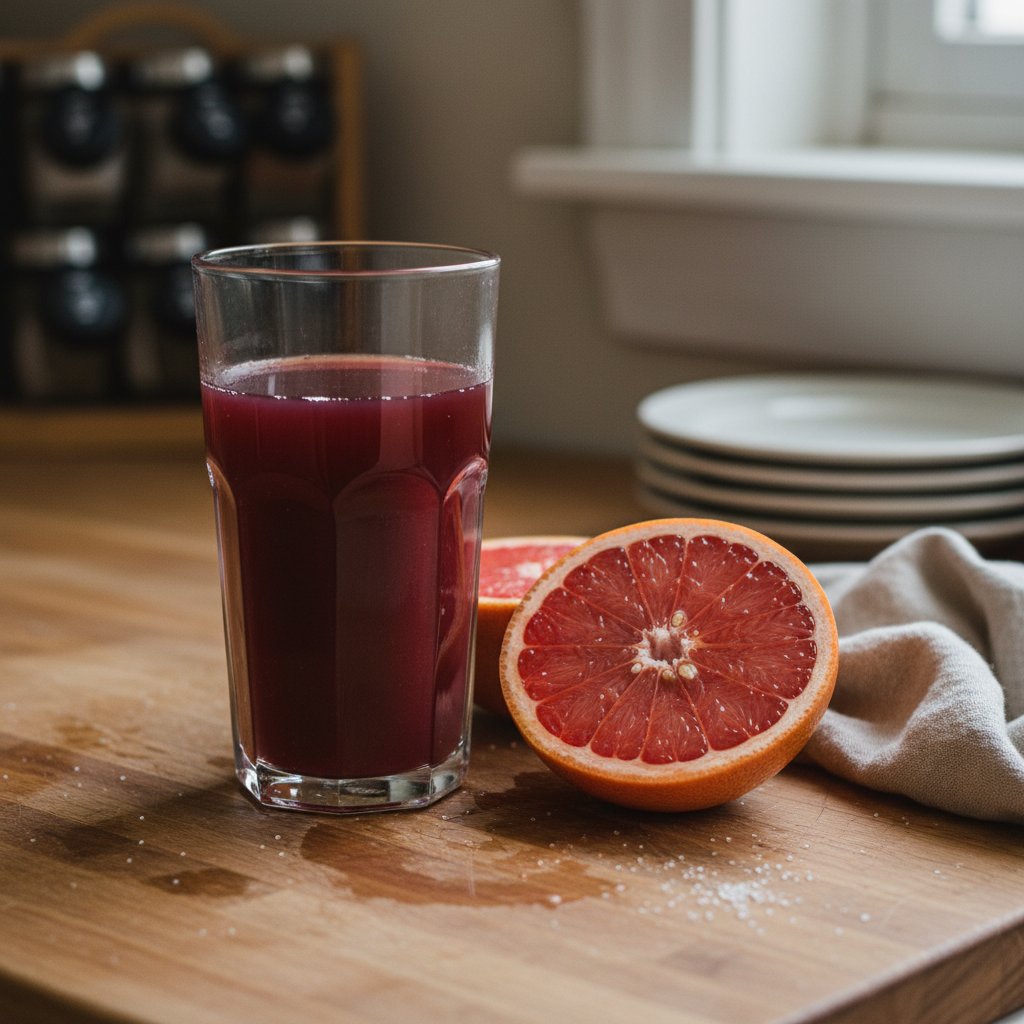
- Cranberry (juice / concentrated supplements): large or regular amounts have been linked to a stronger warfarin effect and more bleeding risk — keep it modest, don’t load up suddenly (Drugs.com; PMC).
- Grapefruit / grapefruit juice: can slow the liver enzymes that clear warfarin → may push its level and your bleeding risk up (U.S. Pharmacist).
- Alcohol: variable; heavy or binge drinking can knock your INR around. Be honest with your clinic.
- Bleeding-risk supplements: high-dose fish oil, ginkgo, garlic capsules, and high-dose vitamin E stack onto bleeding risk — while St. John’s Wort can weaken warfarin (raising clotting risk) (Drugs.com). Clear any new supplement — herbal included — with your pharmacist first.
When life changes your INR — sickness, antibiotics, and big habit shifts
Antibiotics. Many common antibiotics — fluoroquinolones (like ciprofloxacin), macrolides, metronidazole, and trimethoprim-sulfamethoxazole among them — can raise your INR (more bleeding risk), partly by wiping out gut bacteria that make some of your vitamin K and partly by interfering with how warfarin is cleared (Harvard Health; PMC). Prescribed an antibiotic? Tell whoever manages your warfarin — you may need an extra INR check.
Being sick or eating less. A fever, the flu, diarrhea, or a few days with no appetite can push your INR up — even an ordinary infection raises the odds of over-thin blood on its own, before any antibiotic (PMC). When you’re unwell and not eating normally, that’s a good moment to call your clinic.
Green tea — and especially matcha. Steady, normal cups of brewed green tea are usually fine, but the leaves carry vitamin K, and very large intakes have lowered INR (thicker blood, clot risk). Matcha is the bigger concern: it’s powdered whole leaf, so you take in far more vitamin K than a brewed cup (Drugs.com). Same rule as food — a steady habit is fine; a sudden big one isn’t.
Travel, weight change, and new routines. A trip that flips your eating, a deliberate weight-loss plan, or a brand-new exercise-and-smoothie kick all move your vitamin K. None are off-limits — just make the change gradually and loop in your clinic so your INR can be rechecked.
When to get help FAST — memorize this part
🚩 Get help FAST
Signs of too much bleeding (INR may be too high): bleeding gums or frequent nosebleeds · unusual or large bruising · blood in urine or stool (red, or black and tarry) · unusually heavy periods · coughing up or vomiting blood · a sudden severe headache or any head injury (call emergency services).
Signs of a possible clot (also an emergency): new swelling, pain, or warmth in one leg, or sudden shortness of breath.
When in doubt, call your anticoagulation clinic (StatPearls; AHA). That call is exactly what they’re there for.
An honest aside: there’s a medicine that skips the diet question
If juggling every meal is wearing you out, you should know warfarin isn’t the only option. The newer direct oral anticoagulants (DOACs) — apixaban, rivaroxaban, edoxaban, dabigatran — generally don’t need vitamin K monitoring or routine INR testing (PMC review). I’m not recommending them and I’m not the person to weigh them for you — they aren’t right for everyone, and your condition, kidney function, and cost all matter (PMC meta-analysis). I mention it only so you know the question exists, and that it’s fair to ask your prescriber: “Given my situation, is a blood thinner without dietary monitoring an option for me?”
FAQ
Can I eat spinach if I take warfarin?
How much vitamin K can I have on warfarin?
Can I drink cranberry juice on warfarin?
Does broccoli or kale affect warfarin?
Is vitamin K2 safe with warfarin?
Can I eat salad on blood thinners?
How long until my vitamin K is stable?
Should I take a vitamin K supplement to stabilize my INR?
Can I drink green tea or matcha on warfarin?
I just started antibiotics or I’m sick — do I need to do anything?
Can I take a daily multivitamin on warfarin?
Bottom line — three things to carry
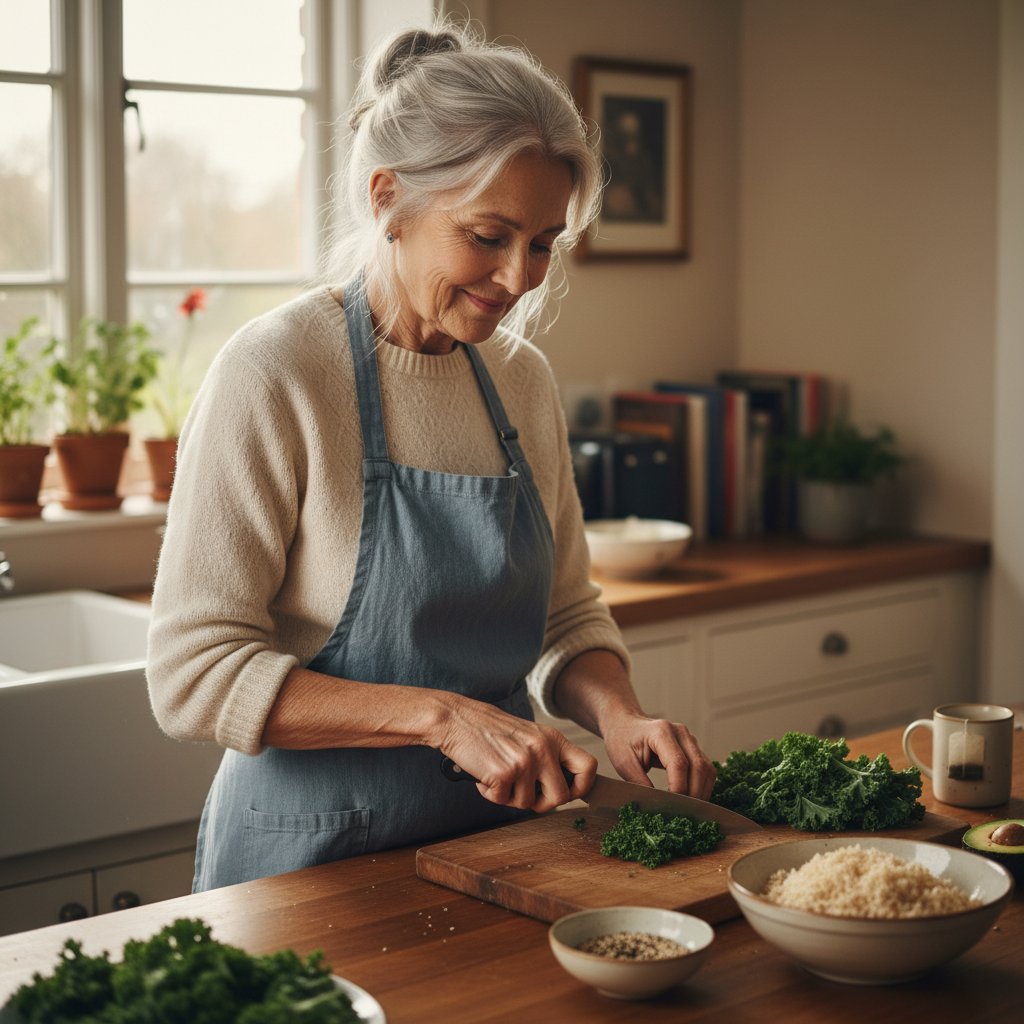
- Don’t avoid greens — be consistent with them. A steady, moderate amount supports a more stable INR than near-zero eating, and keeps the iron and folate your body still needs.
- Lock the plate, let the dose move — with your pharmacist. Your part: pick a green anchor + keep a 14-day journal. Their part: set the dose. Your scoreboard: ✓ days and your next INR.
- Mind the rest: cranberry, grapefruit, alcohol, bleeding-risk supplements — and know the bleeding red flags so you can act fast.
Disclaimer: I’m trained in traditional medicine in Vietnam but I’m not currently practicing, and I’m not a clinician. This article is educational and reflects research plus my own observations — not medical advice, diagnosis, or treatment, and it can’t account for your situation. Your INR and your prescriber’s protocol come first. Always work with the pharmacist or anticoagulation clinic who manages your warfarin before changing your diet, your supplements, or anything else. If you notice signs of serious bleeding or a possible clot, seek emergency care.
For the bigger picture on getting your vitamins from food first, start with our pillar guide on vitamin-rich foods, and see how long-term green avoidance can open other gaps in our piece on subclinical vitamin deficiency.

About Mr. Anh
We turn solid evidence into everyday habits Americans can actually do—plain English, cups/oz, grocery-aisle swaps, and routines that fit real life. Our editorial process: Experience—we road-test tips in real schedules…