Probiotic Foods List: A Food-First Guide for Beginners
A food-first probiotic foods list for beginners, with yogurt, kefir, kimchi, sauerkraut, miso, tempeh, natto, gentle serving ideas, and safety notes.
- What Counts as a Probiotic Food?
- Probiotic Foods List for Beginners
- Top Probiotic Foods to Try First
- Probiotic and Prebiotic Foods Work Better Together
- How to Start Probiotic Foods Gently
- Who Should Be Careful with Probiotic Foods?
- Common Mistakes with Probiotic Foods
- A Simple 7-Day Food-First Experiment
- Frequently Asked Questions
- Bottom Line
- Sources
Quick answer: probiotic foods are foods that contain live microorganisms and may support a healthy gut environment when they are eaten regularly and tolerated well. The most practical probiotic foods list for beginners includes plain yogurt with live cultures, kefir, raw sauerkraut, kimchi, miso, tempeh, natto, and naturally fermented vegetables.
This is a food-first guide, not a supplement roundup. The goal is not to promise an overnight transformation or manage a digestive condition. It is to help you understand which fermented foods are more likely to contain live cultures, how to start gently, and how to notice your own response.
Personal note from Mr. Anh: when I test fermented foods in my own routine, I pay attention to portion size, timing, stool pattern, bloating, energy, and sleep. One person’s response is not proof that the same food will work for everyone, but self-tracking makes the experiment more honest.
What Counts as a Probiotic Food?
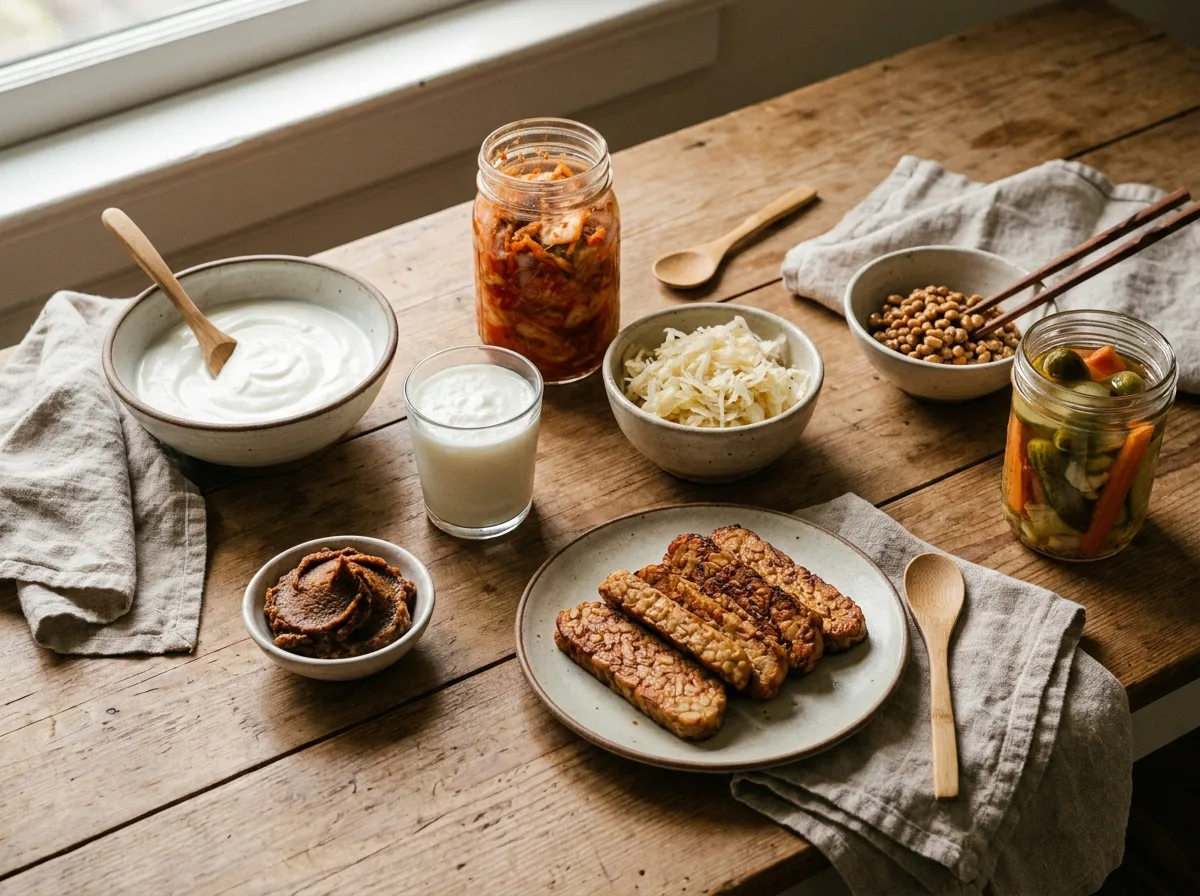
Not every fermented food is automatically probiotic. A food is more likely to function as a probiotic food when it contains live microorganisms at the time you eat it. The National Center for Complementary and Integrative Health explains that probiotics are live microorganisms intended to have health benefits and that they can be found in yogurt, other fermented foods, and dietary supplements.
The practical issue is processing. Heat can reduce or destroy live cultures. Shelf-stable pickles, canned sauerkraut, baked sourdough, and pasteurized fermented products may still be flavorful foods, but they may not provide meaningful live cultures.
When shopping, look for phrases like “live and active cultures,” “raw,” “unpasteurized,” or “naturally fermented.” For refrigerated fermented vegetables, bubbles, brine, and a short ingredient list are often better signs than a loud “gut health” claim on the front label.
Probiotic Foods List for Beginners
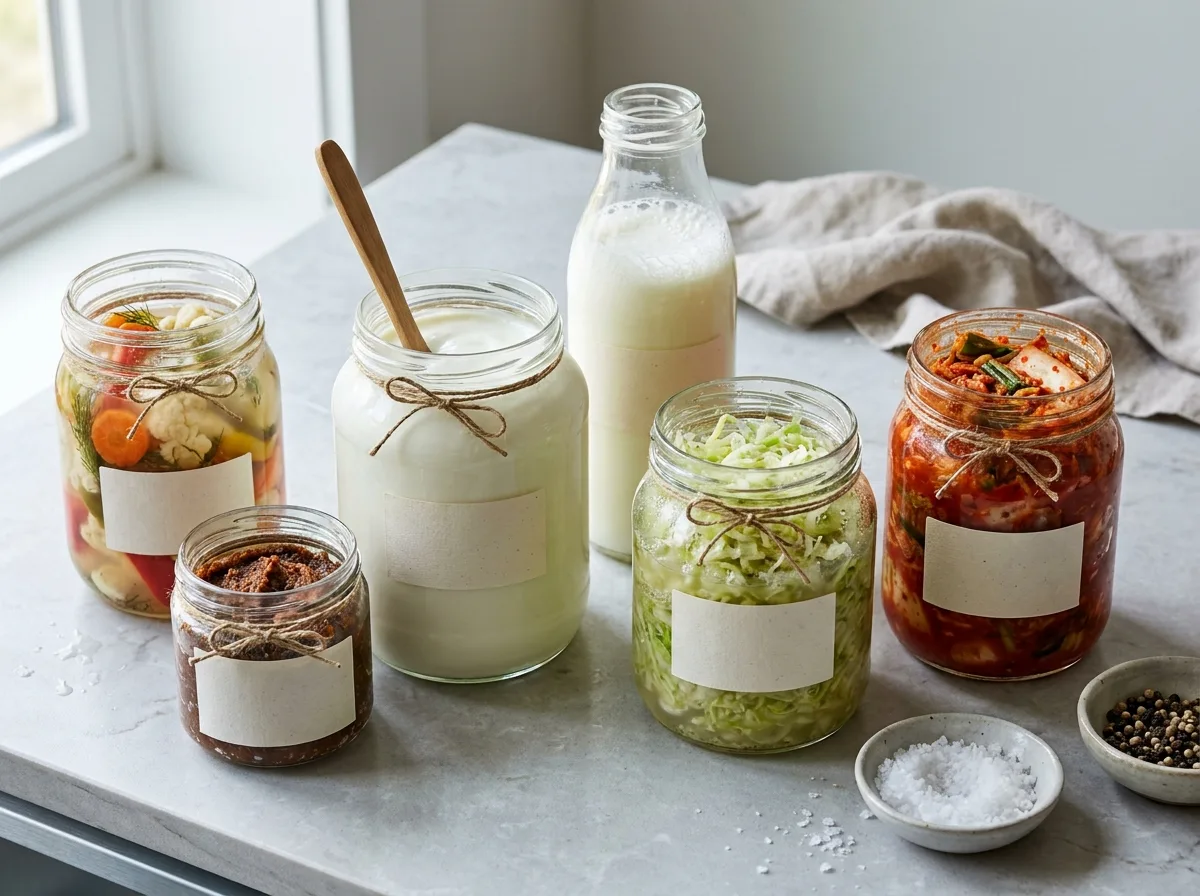
This list is organized by practical use, not by exaggerated potency claims. Different foods contain different microbes, and the effect can vary from person to person. Start with small portions and build slowly.
| Food | How to choose it | Beginner serving idea | Notes |
|---|---|---|---|
| Plain yogurt | Look for “live and active cultures” and low added sugar | 2-4 tablespoons, then increase if tolerated | Easy starting point if you tolerate dairy |
| Kefir | Choose plain kefir with live cultures | 2-4 ounces | Often stronger-tasting and more active than yogurt |
| Raw sauerkraut | Buy refrigerated, raw, unpasteurized versions | 1-2 teaspoons with a meal | Can be salty; start small |
| Kimchi | Choose refrigerated kimchi with live cultures | 1-2 teaspoons with rice, eggs, soup, or vegetables | Spicy versions may not suit everyone |
| Miso | Use unpasteurized miso when possible | Stir into warm, not boiling, liquid | High heat may reduce live cultures |
| Tempeh | Choose traditionally fermented tempeh | A few small slices with a meal | Often cooked, so think of it as fermented food plus protein |
| Natto | Look for traditional natto in frozen or refrigerated form | 1-2 tablespoons | Strong flavor and texture; not for everyone |
| Naturally fermented vegetables | Look for refrigerated brined vegetables, not vinegar-only pickles | 1-2 teaspoons | Good for variety if sodium intake is appropriate for you |
Top Probiotic Foods to Try First
If you are new to fermented foods, do not try everything at once. Pick one food, keep the portion small, and notice how your body responds for several days.
1. Plain yogurt with live cultures
Plain yogurt is one of the easiest probiotic foods to start with because it is widely available and simple to pair with fruit, oats, or seeds. Choose unsweetened yogurt when possible. Added sugar does not make yogurt “bad,” but it can make the food less useful as a simple daily staple.
2. Kefir
Kefir is a fermented dairy drink with a tangy taste. It can be easy to overdo because it is drinkable, so beginners may want to start with a few ounces instead of a full glass. If dairy does not suit you, skip this and start with fermented vegetables instead.
3. Raw sauerkraut
Raw sauerkraut is fermented cabbage. The key word is raw. Shelf-stable sauerkraut is often pasteurized, which makes it less useful if your goal is live cultures. Try a small spoonful with a normal meal rather than eating a large bowl on day one.
4. Kimchi
Kimchi is a Korean fermented vegetable dish, often made with cabbage, radish, garlic, ginger, and chili. It can be a useful food-first option, but spicy kimchi may bother some people. Start small and pay attention to your own tolerance.
5. Miso
Miso is a fermented soybean paste. It is often used in soup, dressings, and sauces. If you want to preserve more live cultures, avoid boiling it aggressively. Stir it into warm liquid after turning off the heat.
6. Tempeh and natto
Tempeh and natto are fermented soy foods. Tempeh is usually easier for beginners because it behaves like a firm protein in meals. Natto has a stronger smell, taste, and texture. Both can fit a food-first routine, but neither needs to be forced if you dislike them.
7. Kombucha (choose low-sugar)
Kombucha is a fizzy fermented tea that can add a light dose of live cultures. The catch is sugar: because sugar feeds the fermentation, many commercial bottles add a lot of extra sugar to taste like soda. Read the label and pick brands with only a few grams of added sugar per serving — or brew your own at home to control it. Treat it as an occasional extra rather than your main probiotic food.
Probiotic and Prebiotic Foods Work Better Together
Probiotics and prebiotics are not the same thing. Probiotic foods contain live microorganisms. Prebiotic foods contain fibers and compounds that help feed beneficial microbes already living in the gut. Mayo Clinic describes prebiotics as parts of food that the body does not digest but that may be used by microorganisms.
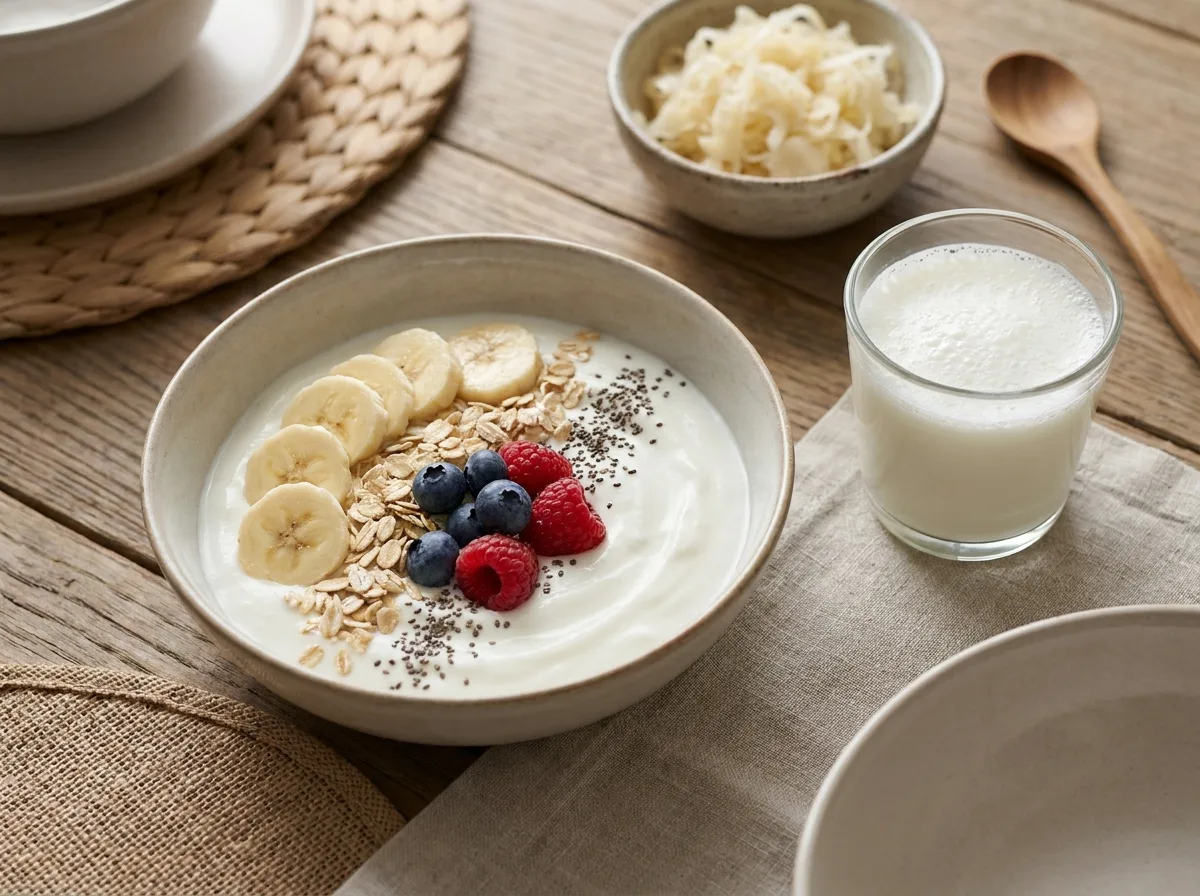
A simple food-first pattern is to pair a small probiotic food with a prebiotic-rich food:
| Probiotic food | Prebiotic pairing | Simple meal idea |
|---|---|---|
| Plain yogurt | Banana, oats, berries, chia | Yogurt bowl with oats and berries |
| Kefir | Oats, ground flax, berries | Small kefir smoothie with berries |
| Kimchi | Rice, vegetables, legumes | Rice bowl with vegetables and a spoon of kimchi |
| Raw sauerkraut | Potatoes, beans, lentils, whole grains | Warm bowl with a small spoon of sauerkraut on the side |
| Miso | Onion, garlic, mushrooms, seaweed | Warm miso soup added after cooking |
If you want a deeper comparison, see the guide on probiotics vs prebiotics. If you are building the fiber side first, start with the best high-fiber foods list.
How to Start Probiotic Foods Gently
Fermented foods can be helpful for some people, but more is not always better. A sudden jump from no fermented foods to multiple servings per day can cause gas, bloating, or discomfort in some people.
- Start with one food. Do not add yogurt, kefir, kimchi, and kombucha all on the same day.
- Use a small portion. A few spoonfuls are enough for the first test.
- Eat it with a meal. This is usually gentler than taking fermented foods on an empty stomach.
- Track your response. Notice digestion, stool pattern, energy, sleep, and cravings without jumping to conclusions.
- Give it time. One meal does not prove much. Look for patterns over several days.
If bananas are part of your breakfast or snack routine, the guide to banana ripeness benefits can help you understand how green, yellow, and brown bananas may feel different in the body.
Who Should Be Careful with Probiotic Foods?
Most common fermented foods have a long history of use, but they are not automatically right for everyone. Go slowly or speak with a licensed healthcare professional first if you:
- are immunocompromised;
- have a serious medical condition;
- are pregnant and unsure what is appropriate for you;
- have persistent digestive symptoms;
- are recovering from surgery or serious illness;
- need to watch sodium intake and want to use salty fermented vegetables;
- react strongly to dairy, histamine-rich foods, spicy foods, or fermented foods.
NCCIH notes that the risk of harmful effects from probiotics may be greater in people with severe illness or compromised immune systems. This is one reason I prefer a gentle, food-first approach and avoid making fermented foods sound more powerful than they are.
Common Mistakes with Probiotic Foods
Assuming all fermented foods are probiotic
Sourdough bread, shelf-stable pickles, vinegar pickles, pasteurized sauerkraut, and many packaged foods may be fermented or fermented-style foods, but that does not mean they contain live cultures when you eat them.
Starting too fast
A large serving of kimchi, kefir, or kombucha may be too much if your diet has not included fermented foods before. Start with small amounts and increase only if your body responds well.
Choosing mostly sugary options
Flavored yogurt and sweetened fermented drinks can still fit some diets, but they should not be your only probiotic foods. Plain options make it easier to notice how the fermented food itself affects you.
Expecting too much from one food
Probiotic foods can be part of a healthy eating pattern, but they are not a replacement for medical care. If symptoms are persistent, severe, or new, do not use fermented foods as a reason to delay proper evaluation.
A Simple 7-Day Food-First Experiment
Think of this as a gentle observation experiment, not a dramatic challenge.

- Choose one probiotic food: yogurt, kefir, raw sauerkraut, kimchi, or miso.
- Eat a small amount with one normal meal each day.
- Pair it with one prebiotic food such as oats, banana, berries, beans, onions, garlic, or vegetables.
- Track digestion, stool pattern, energy, sleep, and discomfort.
- Do not add a second fermented food until the first one feels easy.
This experiment does not prove that a food is “good” or “bad” for you. It simply helps you notice patterns. That is the foundation of food-first self-experimentation.
Frequently Asked Questions
What are the healthiest probiotics to eat daily?
For many beginners, plain yogurt, kefir, raw sauerkraut, kimchi, and miso are practical options. The best choice depends on your taste, tolerance, culture, budget, and whether dairy, sodium, spice, or histamine-rich foods suit you.
Are fermented foods the same as probiotics?
Not always. Some fermented foods contain live cultures, while others are pasteurized, baked, shelf-stable, or made with vinegar. If your goal is live cultures, look for refrigerated products labeled raw, unpasteurized, naturally fermented, or containing live and active cultures.
Are probiotic foods better than supplements?
They are different tools. Probiotic foods come with a food matrix, flavor, and daily habit value. Supplements offer standardized strains and doses but are not necessary for everyone. If you are considering a supplement for a health concern, talk with a licensed healthcare professional first.
Can probiotic foods cause bloating?
Some people notice temporary gas or bloating when they add fermented foods too quickly. Start with small portions, eat them with meals, and pause if discomfort is strong or persistent.
Bottom Line
A useful probiotic foods list does not need to be extreme. Start with simple, real foods: plain yogurt, kefir, raw sauerkraut, kimchi, miso, tempeh, natto, and naturally fermented vegetables. Choose products with live cultures when possible, pair them with fiber-rich prebiotic foods, and observe your own response.
Food-first wellness works best when it is slow enough to notice. Start small, track honestly, and keep fermented foods as one part of a broader daily rhythm that includes meals, movement, sleep, stress, and self-awareness.
Next step: if you want to build the foundation around these foods, read Best High-Fiber Foods for Beginners and Probiotic vs Prebiotic.
Sources
- NCCIH: Probiotics – Usefulness and Safety
- NCCIH: 5 Things To Know About Probiotics
- Stanford Medicine: Fermented-food diet and microbiome diversity
- Harvard Health: Fermented foods for better gut health
- Mayo Clinic: Probiotics and prebiotics
Health disclaimer: This article is for educational purposes only and reflects a food-first wellness perspective. It is not intended to diagnose, treat, cure, or prevent any disease. If you have a medical condition, take medication, are immunocompromised, are pregnant, or have persistent digestive symptoms, speak with a licensed healthcare professional before making major diet changes.

About Mr. Anh
We turn solid evidence into everyday habits Americans can actually do—plain English, cups/oz, grocery-aisle swaps, and routines that fit real life. Our editorial process: Experience—we road-test tips in real schedules…