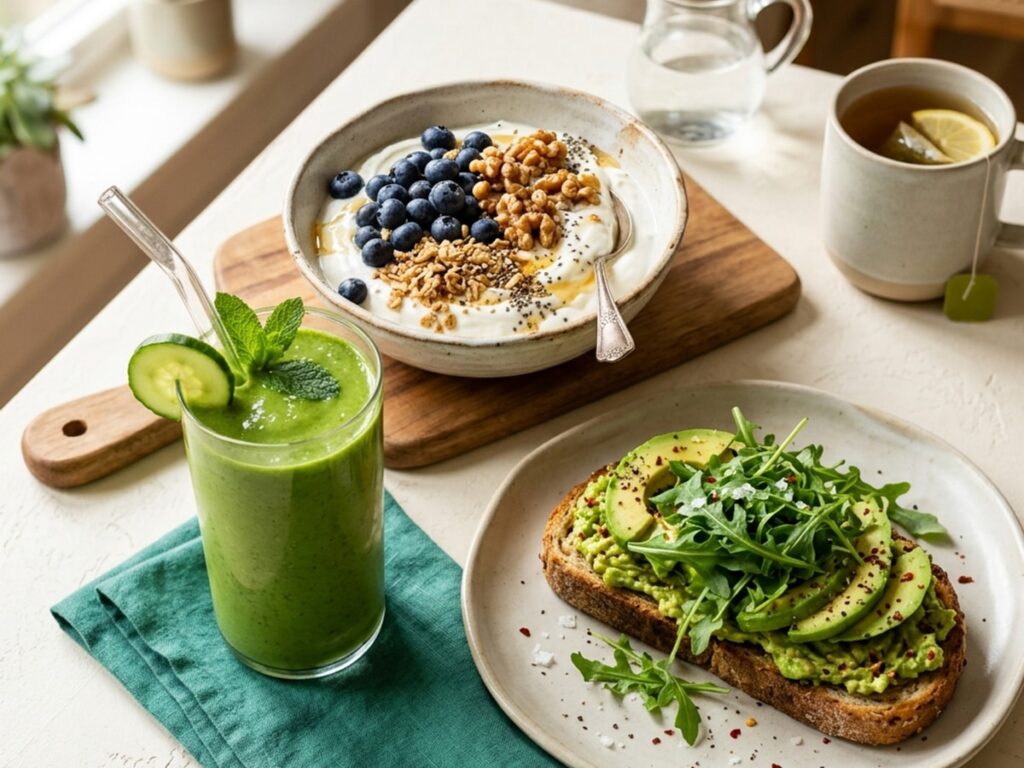
Low Glycemic Index Foods: The 24/7 Steady Energy Blueprint
Tired of the 3 PM energy crash? It's not your willpower — it's your fuel. Low glycemic index foods can help you build steady, all-day energy without overhauling your entire diet. Here is how it actually works.
You’ve felt it. That 3 PM crash where your brain goes foggy, your patience disappears, and suddenly you’re reaching for a bag of chips or a third cup of coffee. You ate a decent lunch. You’re not skipping meals. So why does your energy tank every single afternoon?
Here’s the honest answer: it’s not your willpower. It’s your fuel.
Most of us are stuck on what I call the Glucose Rollercoaster. We eat fast-digesting carbs, our blood sugar spikes, insulin kicks in to clear it, and then we crash below baseline. You don’t just feel tired. You feel foggy, grumpy, and desperate for more carbs.
In this guide, we’re going to look at low glycemic index foods in a completely different way. Forget the old “this is a diet for diabetics” framing. Instead, you’ll learn how to build a Steady Energy Blueprint, a simple way of eating that keeps your brain sharp, your mood stable, and your energy consistent from morning to evening.
Quick Takeaways:
- The Glycemic Index (GI) is a speed measurement, not a strict diet. Low GI foods (0-55) release glucose slowly, so you stay fueled longer.
- The real game-changer is Glycemic Load, which accounts for portion size and makes GI practical for real meals.
- Your brain runs best on stable glucose. Eating low GI is, in effect, eating for focus.
- The “Fiber First” trick alone can lower a glucose spike by nearly 30%, with no other changes.
- How you prepare food matters just as much as which food you choose.
Decoding the Glycemic Index: What It Actually Means
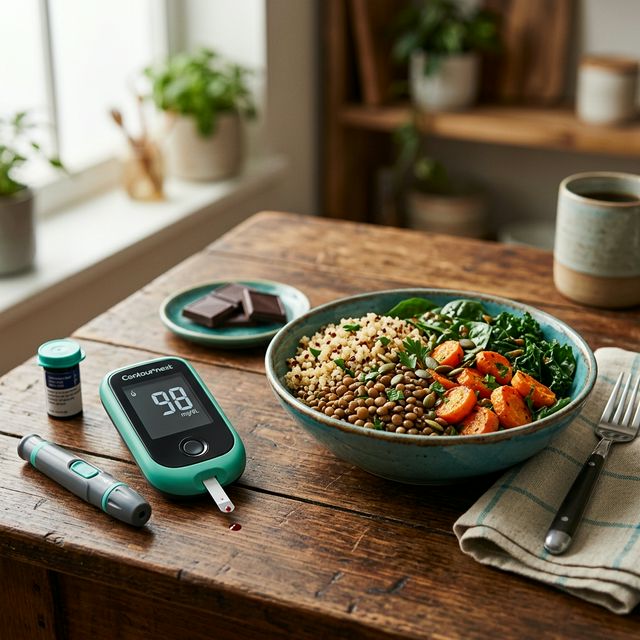
Think of the Glycemic Index as a speed dial for blood sugar. It measures how quickly a food pushes glucose into your bloodstream, rated on a scale from 0 to 100.
- Low GI (0-55): Slow, steady release. Your body stays fueled without spiking.
- Medium GI (56-69): Moderate release. Most people handle this fine in small portions.
- High GI (70+): Fast spike, fast crash.
White bread scores 75. A plain baked potato scores 85. Pure glucose itself is 100.
And yes, most people stop reading about GI right here. But that’s where the real story starts.
What Counts as “Low GI”? The 0-55 Range
The low GI range is wider than most people expect. It includes foods like:
- Lentils (GI: 32)
- Whole milk (GI: 27)
- Quinoa (GI: 53)
- Most non-starchy vegetables (GI: under 15)
- Chickpeas (GI: 28)
- Steel-cut oats (GI: 42)
- Dark chocolate (GI: 40)
Yes, dark chocolate qualifies. That’s not a cheat, it’s proof that GI measures glucose speed, not food “goodness.”
The Carrot Myth: Why GI Alone Can Mislead You
Here’s something that trips up a lot of people. Carrots have a GI of around 71. On the surface, that sounds like they should be avoided. But eat a realistic serving, say a cup of raw carrots, and their Glycemic Load (GL) is just 4 out of a possible 20.
Glycemic Load adjusts for how much carbohydrate is actually in your serving. The formula is: GL = (GI multiplied by grams of carbs per serving) divided by 100.
A GL under 10 is considered low. Most vegetables, even the ones labeled “high GI,” fall into safe GL territory in normal portions.
Harvard Health has published a helpful reference table covering the GI and GL of over 100 foods, and it shows exactly why Glycemic Load is the more practical number for everyday eating.
Take this with you: Don’t cut a vegetable because of its GI number. Ask yourself, “What would the GL be in the amount I’d actually eat?”
How Low GI Foods Keep Your Brain Running Smoothly
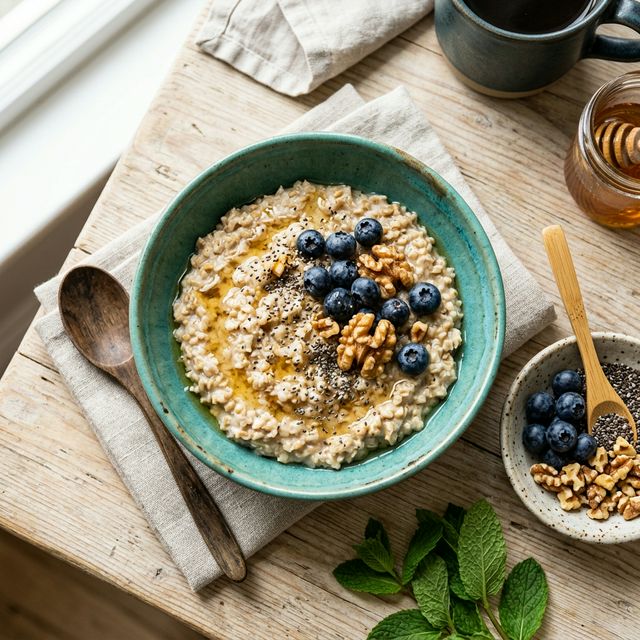
This is the piece that most food lists skip entirely, and it’s the part that actually changed how I eat.
Your brain uses about 20% of your body’s total energy, almost entirely from glucose. But it doesn’t want one giant dump of glucose. It wants a slow, steady trickle.
When you eat high GI foods, you send a flood of glucose into your blood. Insulin rushes in to clean it up. Glucose drops fast. Your brain reads that drop as an emergency and triggers stress hormones, hunger signals, and intense cravings for more quick carbs.
That’s not hunger. That’s your brain sounding an alarm.
Why Blood Sugar Crashes Wipe Out Your Focus
Researchers at the University of Cambridge found that blood sugar dips after high-GI meals directly reduce attention and increase mental fatigue, typically kicking in 30 to 90 minutes after eating. So that mid-afternoon brain fog? It usually traces back to what you had for lunch.
When you eat low GI foods, glucose enters the bloodstream slowly. Your brain gets a reliable supply. Serotonin and dopamine stay stable. Focus holds without needing caffeine to prop it up.
The Gut Connection You Probably Haven’t Heard About
Low GI foods, especially those high in soluble fiber, feed your gut bacteria. Those bacteria break down the fiber into short-chain fatty acids, including something called butyrate. Butyrate travels up to the brain, where it supports focus, reduces inflammation, and helps regulate mood.
So the connection is: low GI food feeds your gut, your gut produces compounds that support your brain, and your brain works better as a result. It’s a full loop.
If you want to go deeper on foods that support this gut-brain connection, our guide on the best foods for brain health covers this whole side of nutrition in detail.
The Best Low Glycemic Index Foods: A Practical Category Breakdown
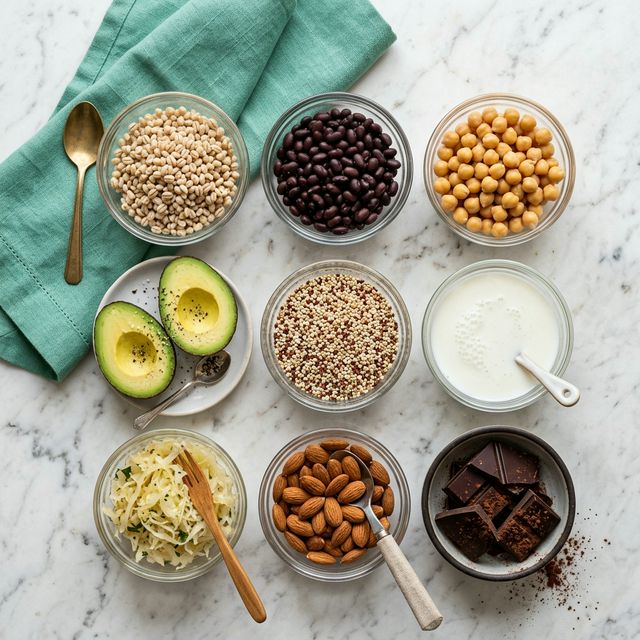
This is not just a list. These foods are grouped by the role they play in keeping your blood sugar stable throughout the day.
Slow-Burn Carbs: Your Foundation
These are the main carbohydrate sources that digest slowly and carry you through a 3 to 4 hour window without a spike:
| Food | GI Score | Why It Helps |
|---|---|---|
| Steel-Cut Oats | 42 | Beta-glucan fiber slows how fast glucose enters the blood |
| Quinoa | 53 | One of the few plant proteins that’s also a complete protein |
| Farro | 40 | High in resistant starch and B vitamins for sustained energy |
| Barley | 28 | The lowest GI grain available, and rich in fiber |
| Lentils | 30-35 | High in protein and fiber, which both slow digestion |
| Chickpeas | 28 | Great fiber-protein combo that keeps you full longer |
| Black Beans | 30 | About 15g of fiber per cup, which really blunts glucose release |
| Bulgur | 46 | Quick to cook, slow to digest |
Simple swap to start with: Replace your morning bagel, instant oats, or white toast with steel-cut oats and a tablespoon of chia seeds. That single change makes a noticeable difference in how you feel by 11 AM.
Healthy Fats: Your Blood Sugar Brake
Fats don’t have a GI score because they contain almost no carbohydrate. But they serve a key role: they slow how quickly your stomach empties, which means carbs eaten alongside fat are absorbed much more gradually.
Think of fat as a natural governor on your glucose response.
- Avocado: Full of oleic acid, which paired with carbs reduces their glucose impact
- Walnuts: Help improve insulin sensitivity over time when eaten regularly
- Chia Seeds: Absorb many times their weight in water, forming a gel that physically slows carb digestion
- Extra Virgin Olive Oil: The polyphenols in good olive oil actually improve how your body responds to insulin
- Almonds: A small handful eaten before a higher-carb meal can reduce your post-meal glucose spike by around 30%
If you’re curious to actually see this effect on your own body, a tool like Nutrisense CGM lets you track your real glucose data. You wear a small sensor for a couple of weeks, and you can literally watch your spikes rise or flatten depending on what you pair together. It’s genuinely interesting, not just for managing diabetes, but for anyone who wants to understand how their body responds to food.
Fermented Foods: The Hidden Multiplier
This is often the missing layer that people overlook.
Fermented foods don’t just have a naturally low GI. Eating them regularly also improves how sensitive your cells are to insulin over time. The same gut bacteria that support your brain also make your body more efficient at using the glucose it gets.
- Kefir (GI: 15-30): Contains 30-plus strains of beneficial bacteria. Regular consumption has been linked to better glucose tolerance.
- Kimchi: Lactic acid bacteria in kimchi have shown in 12-week studies to help lower fasting blood sugar markers.
- Tempeh (GI: around 30): Fermented soy with good protein content and Vitamin K2. Causes lower post-meal glucose spikes than regular soy products.
- Plain Greek Yogurt (GI: 11-14): Protein plus live cultures, which makes it one of the best breakfast anchors for stable energy.
- Sauerkraut: The organic acids slow gastric transit, which flattens glucose curves over the course of digestion.
Our fermented foods benefits guide covers the full science on how these foods work together to build metabolic flexibility over time, if you want to go further on this.
Why How You Cook Changes the GI Completely
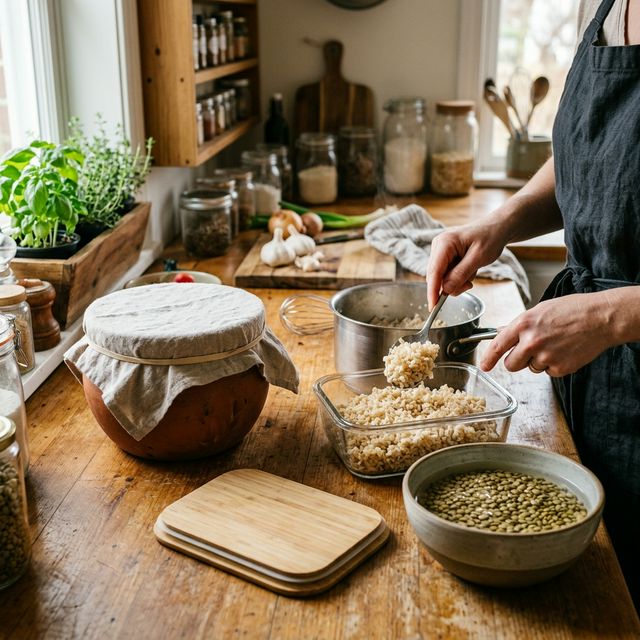
Most low GI articles list foods. Very few explain that the same food can have wildly different GI scores depending on how you prepare it.
This part is practical gold.
Fermentation and Soaking Lower GI in Grains and Legumes
Real sourdough bread, made with a live starter left to ferment for 12 hours or more, has a GI of about 48 to 54. Commercial white bread is 70 to 75.
The fermentation creates lactic and acetic acids. These acids slow how starch is digested in your gut. The difference in glucose impact is significant.
The same principle works for legumes. Dried beans soaked overnight and slow-cooked will have a lower GI than canned beans that have been heat-processed. The physical structure of the bean slows how fast the starch breaks down.
Building this kind of kitchen rhythm takes some trial but becomes second nature. Our anti-inflammatory meal prep guide is built around exactly this kind of practical, stable-energy approach to weekly cooking.
The Cooling Trick for Rice and Potatoes
Cook white rice or boiled potatoes, then refrigerate them overnight before eating.
When starchy foods cool, a portion of their digestible starch converts into resistant starch. Resistant starch behaves more like fiber in your body and moves through digestion more slowly. Cooked-then-cooled white rice drops from a GI of about 73 down to around 53.
And the good news: reheating it still keeps much of the resistant starch intact.
Practical tip: Cook rice in bulk on Sunday, refrigerate it, and reheat portions through the week. That simple habit changes the metabolic impact of every rice-based meal.
3 Practical Tricks to Lower the GI of Any Meal
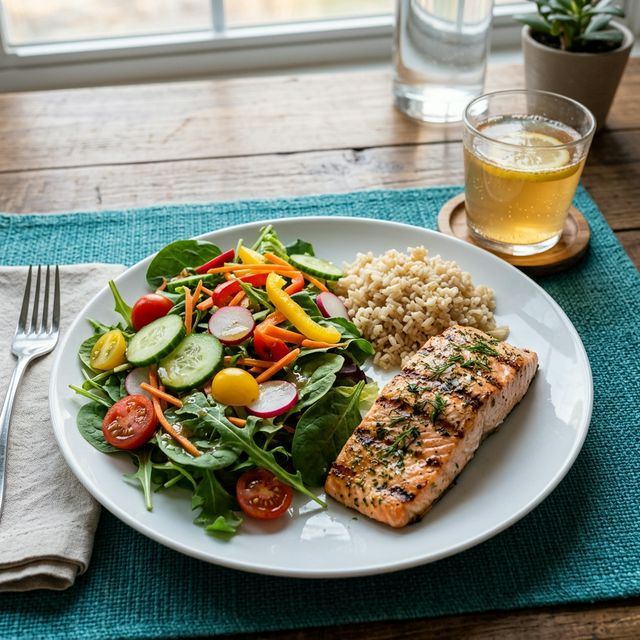
You do not need to change everything you eat. These three approaches work on meals you’re already making.
Trick 1: Eat Fiber Before Your Carbs
Eat vegetables, salad, or anything high in fiber before you eat your carbohydrates. Not alongside. Before.
A 2023 study published in Cell Metabolism found that eating food in this order, fiber first, then protein, then carbs last, reduced post-meal glucose peaks by 28 to 37% compared to eating carbs first.
Fiber already sitting in your stomach physically slows how quickly carbohydrates are absorbed. You’re not changing what you eat. Just the order.
Start here: At your next meal, eat a few bites of salad, broccoli, or sauerkraut before you touch the bread or rice. That’s it.
Trick 2: A Small Amount of Vinegar Before Eating
One to two tablespoons of apple cider vinegar, or any ordinary vinegar, taken before a high-carb meal can reduce post-meal blood glucose by 19 to 34% based on multiple clinical trials.
The acetic acid in vinegar slows an enzyme called alpha-amylase that breaks down starch. Slower breakdown means slower glucose absorption.
Mix it into your salad dressing, dilute it in a small glass of water, or use it as a marinade. The delivery method doesn’t matter much. The chemistry is consistent.
Trick 3: Always Add an Anchor Protein
Every meal should have a solid protein source alongside the carbs. Protein slows gastric emptying, the same way fat does, which means glucose from those carbs enters the blood more gradually.
Zinc-rich proteins are especially helpful here. Zinc plays a direct role in how your body produces and uses insulin. If your zinc levels are low, insulin signaling suffers. When zinc is adequate, the opposite is true.
Frequently Asked Questions
Is rice a low glycemic index food?
Depends on the type. White jasmine rice is high GI, around 68 to 80. Basmati rice is noticeably lower at 50 to 58 because its starch chains are longer and digest more slowly. Brown rice falls around 50 to 55. And as covered above, cooling cooked rice overnight drops the GI further by converting some starch into resistant starch.
Are black beans low GI?
Yes. Black beans have a GI of about 30 and a Glycemic Load of just 7 per 150g serving. They’re packed with soluble fiber and resistant starch, which makes them one of the most reliable carbohydrate choices for blood sugar stability. Even canned beans, drained and rinsed, keep most of their benefit.
Can I eat fruit on a low GI diet?
Absolutely. Most fruit is naturally low to medium GI because fructose is processed differently than glucose. Berries, cherries, green apples, and pears all sit in the 20 to 40 GI range. Tropical fruits like ripe mango, pineapple, and watermelon run higher, around 60 to 72, but their Glycemic Load in a normal portion is still manageable. Just make berries your daily default.
Why do I feel tired even eating low GI foods?
Usually one of three reasons: total calories are too low (slow fuel still needs to be enough fuel), iron or B12 levels are low (both cause fatigue regardless of GI), or you’re simply eating a large portion of slow carbs all at once, which still adds up. If fatigue persists on a well-organized low GI diet, it’s worth getting a basic blood panel done to check iron and B12 before changing anything else.
The Bottom Line
Low glycemic index foods are not a diet for sick people. They’re a tool for anyone who wants their brain and body to work predictably and consistently throughout the day.
The Glucose Rollercoaster is optional. With the right carbohydrate choices, the right fats alongside them, a few simple kitchen habits, and a small plate of vegetables before your rice or pasta, you can build a food rhythm that keeps energy stable from morning to night.
That’s what the Steady Energy Blueprint actually means. Not restriction. Just smarter timing and better food choices made one meal at a time.
Want a practical starting framework? Our anti-inflammatory meal prep guide gives you a full weekly template built around these exact foods, with shopping lists and simple prep steps that fit into a real schedule.
The information on this site is for educational purposes only and is not intended as medical advice. Individual results may vary. Always consult a qualified healthcare provider before making significant changes to your diet, especially if you have a current medical condition such as diabetes, pre-diabetes, or insulin resistance.

About Jane Smith
We turn solid evidence into everyday habits Americans can actually do—plain English, cups/oz, grocery-aisle swaps, and routines that fit real life. Our editorial process: Experience—we road-test tips in real schedules…