Pineapple Digestive Enzymes: Nature’s Meat Tenderizer (And Why Eating It Wrong Ruins Your Gut)
Have you ever eaten fresh pineapple and felt a distinct tingling, or even a burning sensation, on your tongue and...
Have you ever eaten fresh pineapple and felt a distinct tingling, or even a burning sensation, on your tongue and the roof of your mouth?
Many people mistake this for a mild allergy. But let me tell you a fascinating biological truth: That is the pineapple actively trying to digest you back.
Welcome to the world of Bromelain, nature’s most aggressive protein-digesting enzyme. As a wellness researcher trained in Traditional Oriental Medicine, I frequently see clients who read online that “pineapple cures bloating.” They enthusiastically eat a massive bowl of cold, raw pineapple on an empty stomach, only to end up with severe stomach cramps, worsened bloating, and diarrhea.
Why does this happen? Because while the enzymes in pineapple are an absolute powerhouse for digestion, the energetic nature of the fruit is a double-edged sword. If you don’t know how to wield it, it will cut you.
Let me bridge the gap between Western nutritional science and Eastern wisdom to show you exactly how to use pineapple digestive enzymes to your advantage—without destroying your gut in the process.
The Western Science: Meet Bromelain, The Ultimate Protease
In the realm of Western clinical nutrition, pineapple is famous for one primary compound: Bromelain.
Bromelain isn’t just a generic enzyme; it is a highly potent proteolytic enzyme (protease). Its sole biological mission is to cleave and break down complex protein bonds into smaller, easily absorbable amino acids and peptides.
The Meat Tenderizer Phenomenon
To understand how strong Bromelain is, just look at the culinary world. Professional chefs have used pineapple juice for decades to marinate the toughest, cheapest cuts of steak. If you leave meat in pineapple juice for too long, it doesn’t just get tender—it literally dissolves into mush.
When you consume pineapple, that exact same protein-cleaving action happens inside your stomach. For someone suffering from pancreatic insufficiency or someone who simply struggles to digest heavy, meat-laden meals, Bromelain is a godsend. It takes the heavy lifting off your pancreas and ensures proteins don’t sit rotting and fermenting in your digestive tract (which is a primary cause of sulfur-smelling gas and severe bloating) [1].
Where Does Bromelain Live?
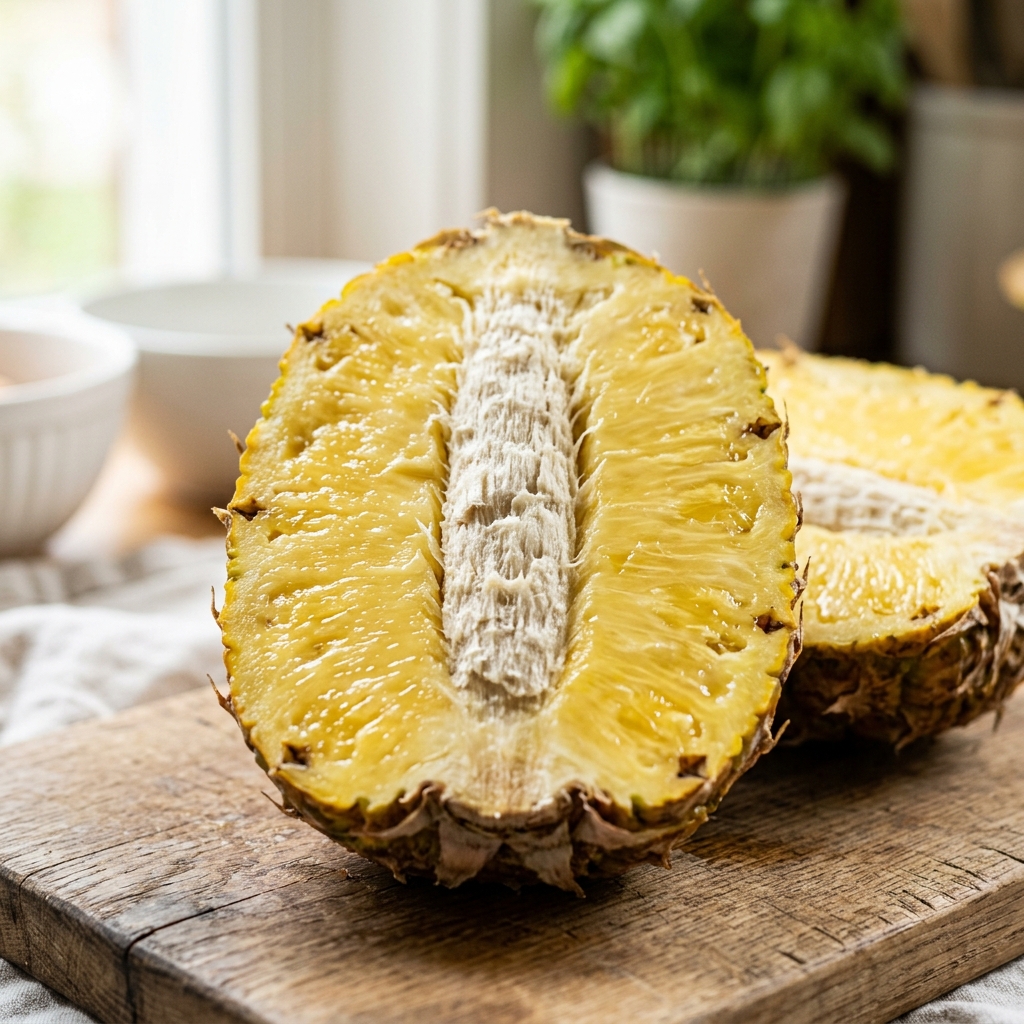
Here is the ironic part: while you can get Bromelain from eating the sweet, juicy flesh of the pineapple, the absolute highest concentration of this enzyme is located in the hard, fibrous, woody stem in the center of the fruit—the exact part you usually throw in the trash.
The Eastern Danger: The “Cold & Damp” Trap of Pineapple
If Bromelain is so incredibly good at breaking down food, why do so many people feel terrible after eating pineapple?
To understand this, we have to step out of the Western biochemistry lab and look through the lens of Traditional Chinese Medicine (TCM). In TCM, digestion is viewed as a warm, active, metabolic fire—known as your Spleen Qi or Digestive Fire (Agni).
Despite growing in blisteringly hot, tropical climates, the energetic nature of pineapple is classified as extremely “Cold” (Hàn) and “Damp” (Thấp).

The Digestion Paradox
Imagine you have a small campfire burning (your digestion). Now imagine dumping a bucket of ice water on it. That is exactly what happens when you eat a large bowl of raw, cold pineapple on an empty stomach.
The Bromelain is ready to work, but the overwhelming “Cold” energy of the fruit paralyzes the stomach. The Spleen Qi is extinguished. Your digestive tract basically “freezes up,” leading to rapid stagnation. This is why eating pineapple at the wrong time leads to sharp stomach aches, a feeling of heaviness, and urgent diarrhea. You paralyzed the very system the enzymes were supposed to help.
How to Eat Pineapple Correctly for Digestion
So, how do we get the benefits of the “Meat Tenderizer” without falling into the “Cold” trap? You have to use culinary strategy. Here are the clinical TCM tricks I teach my clients:
1. Timing is Everything (The BBQ Rule)
Never, ever eat raw pineapple on an empty stomach.
The absolute best time to consume pineapple is immediately after a heavy, warm, protein-dense meal—like a summer BBQ. The intense “Heat” of the roasted meat and heavy oils perfectly neutralizes the “Cold” nature of the fruit. In this environment, the Spleen Fire remains strong, and the Bromelain is unleashed exactly when you need it most to break down that heavy steak.
2. The TCM Neutralizing Tricks (No Cooking Required)
If you want to eat pineapple as a snack but want to protect your gut from its Cold/Damp nature, use these traditional hacks that preserve 100% of the raw enzymes:
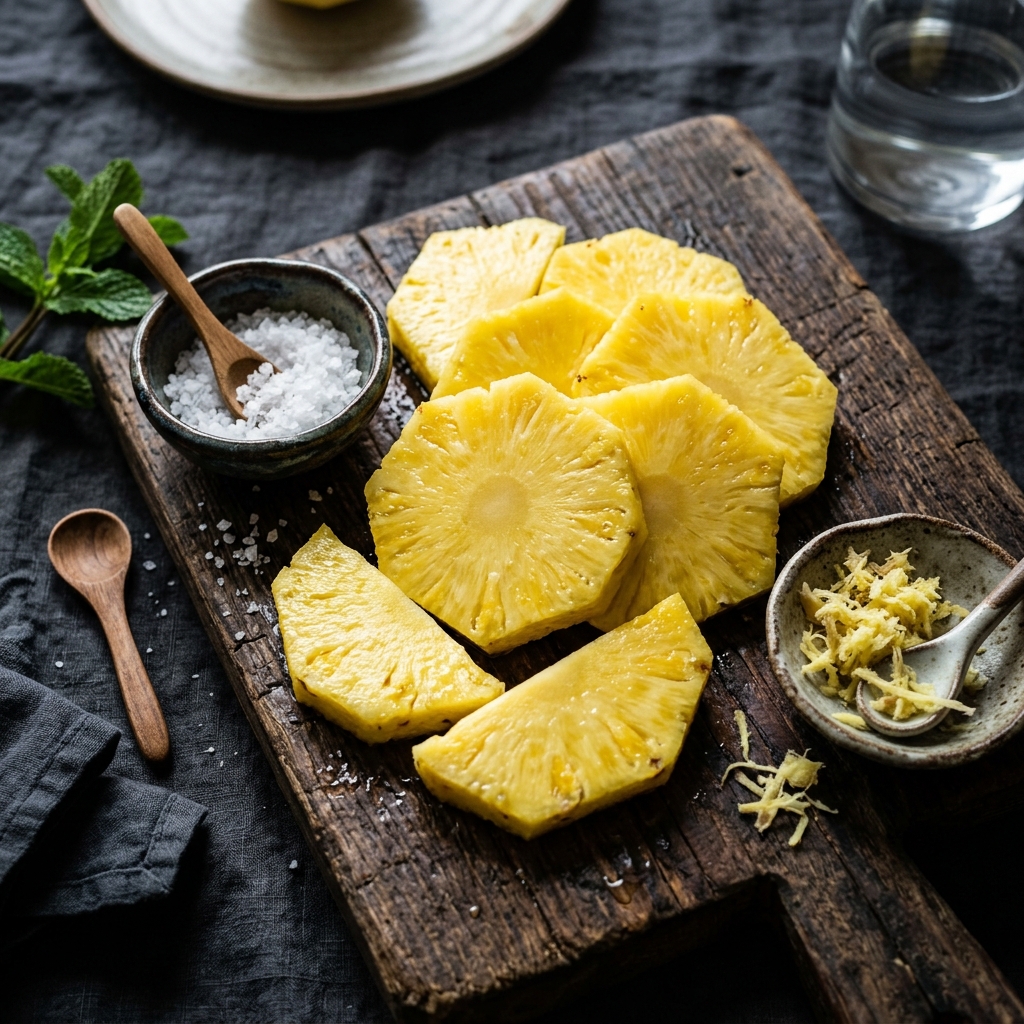
- The Salt Water Soak: Slice your raw pineapple and soak it in lightly salted water for 10 minutes before eating. In TCM, salt “descends fire” and neutralizes slight toxicity. Practically speaking, the salt water temporarily deactivates the enzymes just on the surface of the fruit, preventing the painful “tingling tongue” sensation, while leaving the deep enzymes perfectly intact for your stomach.
- Pair with Ginger: Ginger is highly “Warming” (Ôn). Sprinkling a dash of ginger powder on your pineapple, dipping it in ginger-salt, or drinking a small cup of hot ginger tea alongside it is a masterclass in food pairing. The intense warmth of the ginger directly counteracts the coldness of the pineapple right in your stomach, achieving perfect energetic balance.
3. The Grilling Trick
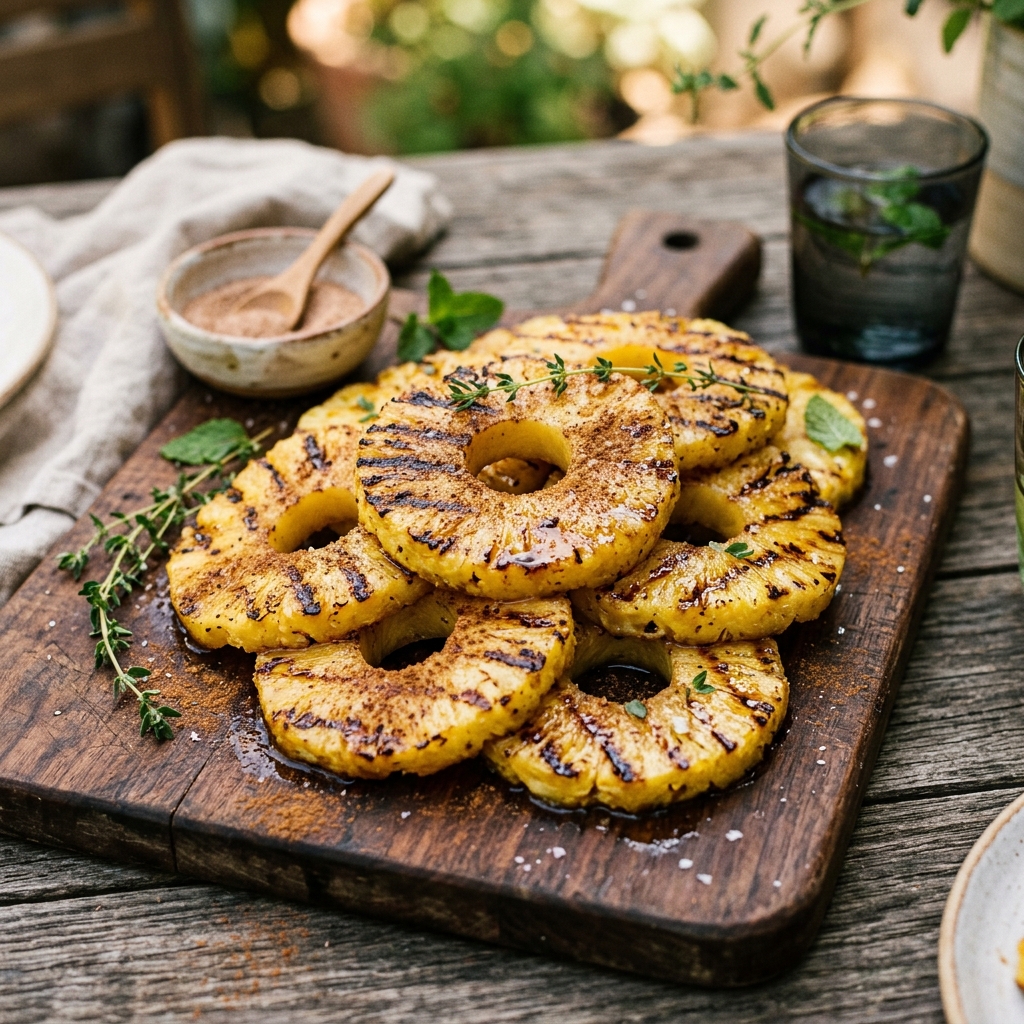
If you don’t mind sacrificing some enzymes for the sake of absolute digestive comfort, grill your pineapple. Lightly grilling or roasting the fruit physically and energetically transforms its nature from Cold to Warm. While high heat (above 158°F / 70°C) will denature some of the Bromelain, a quick sear preserves enough of the enzymes to aid digestion while completely protecting your Spleen Qi.
4. Avoid the Core
Don’t force yourself to chew on the woody, fibrous core just because you read that’s where the most Bromelain is. Unless you are running it through a heavy-duty juicer, swallowing large chunks of that hard fiber will cause physical, mechanical irritation to your stomach lining, doing more harm than good.
Fresh Pineapple vs. Bromelain Supplements
We have to address the elephant in the room: Sugar.
If you are dealing with chronic, severe indigestion, SIBO (Small Intestinal Bacterial Overgrowth), or severe protein malabsorption, trying to get a therapeutic dose of Bromelain exclusively from fresh fruit is a mistake. You would have to eat an enormous amount of pineapple, which would flood your system with a massive fructose (sugar) spike. For a gut already struggling with bacterial overgrowth, that sugar will cause explosive fermentation and gas.
In these clinical scenarios, taking a high-quality, encapsulated Bromelain supplement is the far superior choice. Supplements extract the pure enzyme (usually from the discarded stems), delivering maximum digestive power without the sugar spike and without the “Cold/Damp” energetic baggage of the whole fruit.
(Curious about other enzyme options? Check out our comprehensive guide on foods high in digestive enzymes to find the right protocol for your gut).
The Takeaway
Pineapple is a beautiful, dual-edged sword. It is armed with one of the most powerful digestive enzymes on the planet, but it carries a cold energy that demands respect.
Stop eating it on an empty stomach. Use it strategically as a targeted digestive tool after heavy meals, neutralize it with salt or ginger, and watch how it transforms your digestion.
Have you ever noticed a painful, heavy feeling in your stomach after eating a lot of pineapple? Or do you have a favorite way to prepare it? Share your experiences in the comments below!

About Mr. Anh
We turn solid evidence into everyday habits Americans can actually do—plain English, cups/oz, grocery-aisle swaps, and routines that fit real life. Our editorial process: Experience—we road-test tips in real schedules…