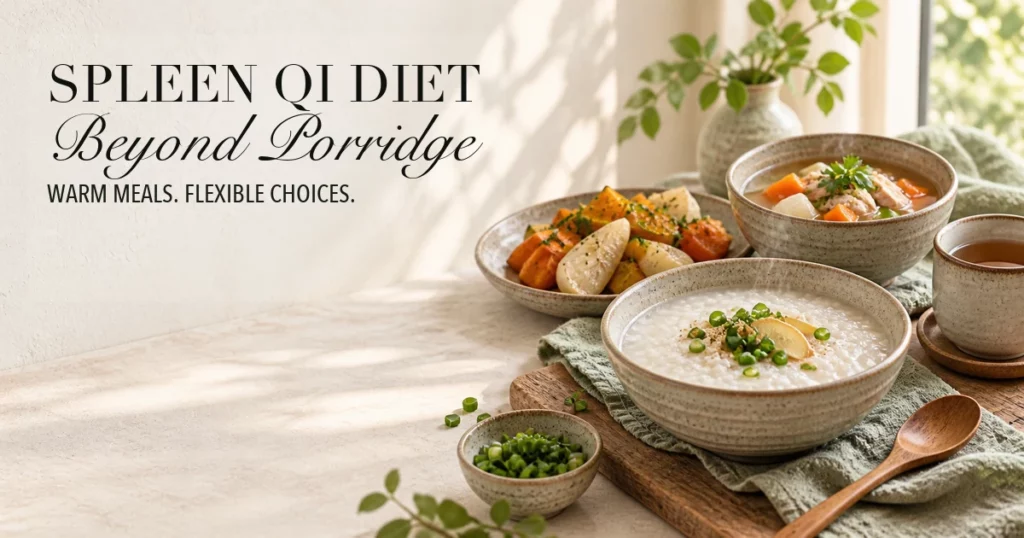
9 Foods High in Digestive Enzymes (And How to Eat Them Correctly)
Have you ever read a health blog that told you to eat a giant bowl of raw pineapple and papaya...
- The Science: How Natural Digestive Enzymes Work
- The Top 9 Foods High in Digestive Enzymes (The Western List)
- The Eastern Secret: Why Raw "Enzyme Foods" Might Be Making You Bloated
- How to Eat Enzyme-Rich Foods Correctly (The "Warm" Way)
- When Food Isn't Enough: Do You Need a Supplement?
- Summary & Key Takeaways
Have you ever read a health blog that told you to eat a giant bowl of raw pineapple and papaya to fix your digestion, only to end up feeling even more bloated than before?
You’re not alone. As someone trained in Traditional Oriental Medicine, I see this “healthy food paradox” all the time in my clinic. Patients come in frustrated, explaining that they are eating the cleanest, most enzyme-rich diets possible, yet their stomachs are constantly swollen.
The truth is, while science is absolutely right about the powerful enzymes found in certain foods, they are missing half the equation. It’s not just about what enzymes you eat; it’s about how those foods interact with your body’s “Digestive Fire.”
In this guide, we are going to bridge the gap. We’ll explore the best foods high in digestive enzymes according to Western science, and then I’ll share the ancient Eastern secret of how to actually eat them without destroying your gut health.
The Science: How Natural Digestive Enzymes Work
In Western functional medicine, we often compare the digestive system to a manufacturing factory. For the factory to break down raw materials (your food) into usable energy (nutrients), it needs specialized workers. These workers are digestive enzymes.
Your pancreas naturally produces these enzymes, but adding them through your diet can significantly reduce the burden on your digestive organs. There are three main types of “workers”:
- Proteases: These enzymes break down tough proteins, like meat and eggs, into absorbable amino acids.
- Amylases: These are responsible for breaking down complex carbohydrates and starches (like pasta, bread, and rice) into simple sugars.
- Lipases: These enzymes break down complex fats and oils into fatty acids and glycerol.
When your body lacks these workers—due to age, stress, or a poor diet—food sits in your stomach fermenting, leading to gas, bloating, and malnutrition.
The Top 9 Foods High in Digestive Enzymes (The Western List)
If we strictly look through the lens of Western nutritional science, the following foods are nutritional powerhouses packed with naturally occurring enzymes.
1. Papaya (Papain)
Papaya is one of the most famous enzyme-rich foods. It contains a powerful protease called papain. If you’ve ever used a meat tenderizer powder from the grocery store, check the ingredients—it’s likely made from papain. It literally dissolves tough protein bonds, making it incredibly helpful after a heavy, meat-centric meal. Clinical studies have shown that papain preparations significantly improve constipation and bloating symptoms.[1]
2. Pineapple (Bromelain)
Similar to papaya, pineapple contains a group of protease enzymes known as bromelain. Bromelain is so effective at breaking down proteins that it’s often used in medical settings to treat inflammation and digestive disorders.[2] (This is also why eating too much fresh pineapple can make your tongue tingle—the enzymes are actively breaking down the proteins in your mouth!)
3. Mangoes (Amylase)
Mangoes are packed with amylase, the enzyme responsible for breaking down carbs. Interestingly, the amylase activity in mangoes increases as they ripen. This is why a ripe mango tastes so much sweeter than a green one; the enzymes have already begun breaking down the complex starches into simple, sweet sugars.
4. Bananas (Amylase & Glucosidase)
Like mangoes, bananas are an excellent source of amylase and glucosidases. They are nature’s pre-packaged, easy-to-digest carb. The riper the banana (look for the brown spots), the more active the enzymes are, making them extremely gentle on an inflamed gut.
5. Avocados (Lipase)
Avocados are unique because they contain lipase. While most enzyme-rich fruits focus on carbs or proteins, avocados bring the fat-digesting workers to the table. This makes them a brilliant “self-digesting” food—they provide healthy fats along with the exact enzyme needed to break those fats down.
6. Kiwifruit (Actinidin)
Kiwifruit is an underrated digestive aid. It contains a protease enzyme called actinidin. Studies have shown that actinidin helps digest proteins from meat, dairy, and soy much faster than the stomach’s natural enzymes alone.
7. Raw Honey
Raw, unpasteurized honey is a complex superfood containing a wide spectrum of enzymes, including diastase (amylase), invertase, and protease. It’s important to note that heating honey destroys these delicate enzymes, which is why raw honey is vastly superior to the commercial squeeze-bottle honey at the supermarket.

8. Sauerkraut & Kimchi (Fermented Cabbage)
Fermentation is a magical process. When cabbage is fermented to make sauerkraut or kimchi, the probiotic bacteria produce a wealth of digestive enzymes as a byproduct. You aren’t just getting enzymes; you are getting a massive dose of probiotics to heal your gut microbiome.
9. Miso
A staple in Japanese cuisine, miso is made by fermenting soybeans with a fungus called koji. This fermentation process creates a dense concentration of lipases, proteases, and amylases.
The Eastern Secret: Why Raw “Enzyme Foods” Might Be Making You Bloated
If you read the list above, you might think: “Great! I’ll just eat a massive bowl of raw pineapple, papaya, and mango every morning, and my bloating will disappear.”
Please do not do this.
Drawing on my study of Oriental Medicine, I must warn you about the “Cold/Damp Trap.”
In Traditional Chinese Medicine (TCM), your digestion is governed by the Spleen and Stomach, which operate like a pot of soup cooking over a fire. This is your “Digestive Fire” (Spleen Qi). For digestion to happen efficiently, the fire must be warm and active.
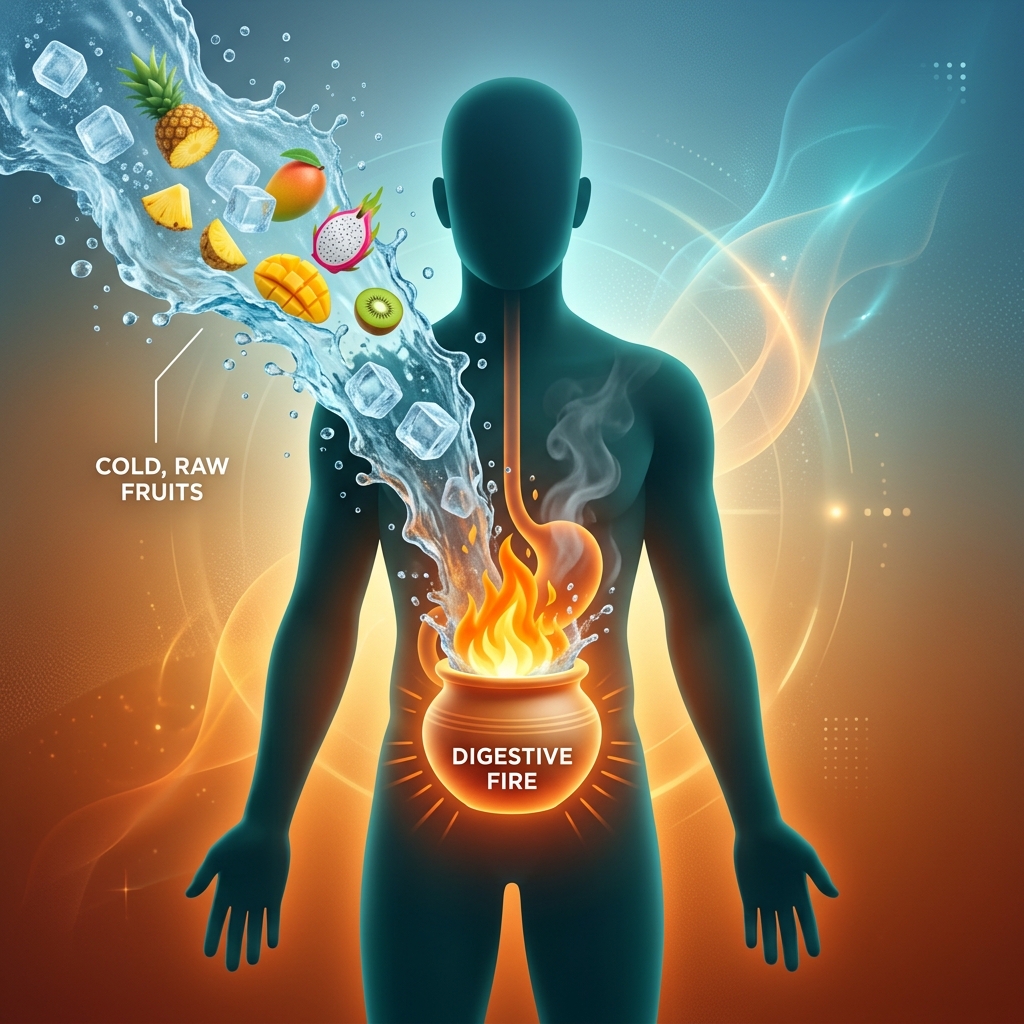
Look closely at the fruits on our list: Pineapple, Papaya, Mango, Banana, Kiwi. What do they have in common? They are tropical fruits, heavily hydrated, usually eaten raw, and energetically very “Cold” (Hàn).
Here is the paradox: While the enzymes inside the fruit want to digest your food, the energetic temperature of a raw, cold bowl of tropical fruit acts like a bucket of ice water poured directly onto your Digestive Fire.
Your body now has to halt digestion and waste immense amounts of energy (Qi) just to warm the fruit up to body temperature. If your Spleen Qi is already weak (which is true for 90% of people suffering from chronic bloating), this cold shock leads to immediate stagnation. The food sits there, ferments, and produces gas.
This is why you can eat the healthiest, most enzyme-rich diet in the world and still look six months pregnant by 3 PM.
How to Eat Enzyme-Rich Foods Correctly (The “Warm” Way)
You don’t have to choose between Western science and Eastern wisdom. You can have the enzymes and protect your digestive fire. Here is how you do it:
1. Add Warming Spices (The Yin-Yang Balance)
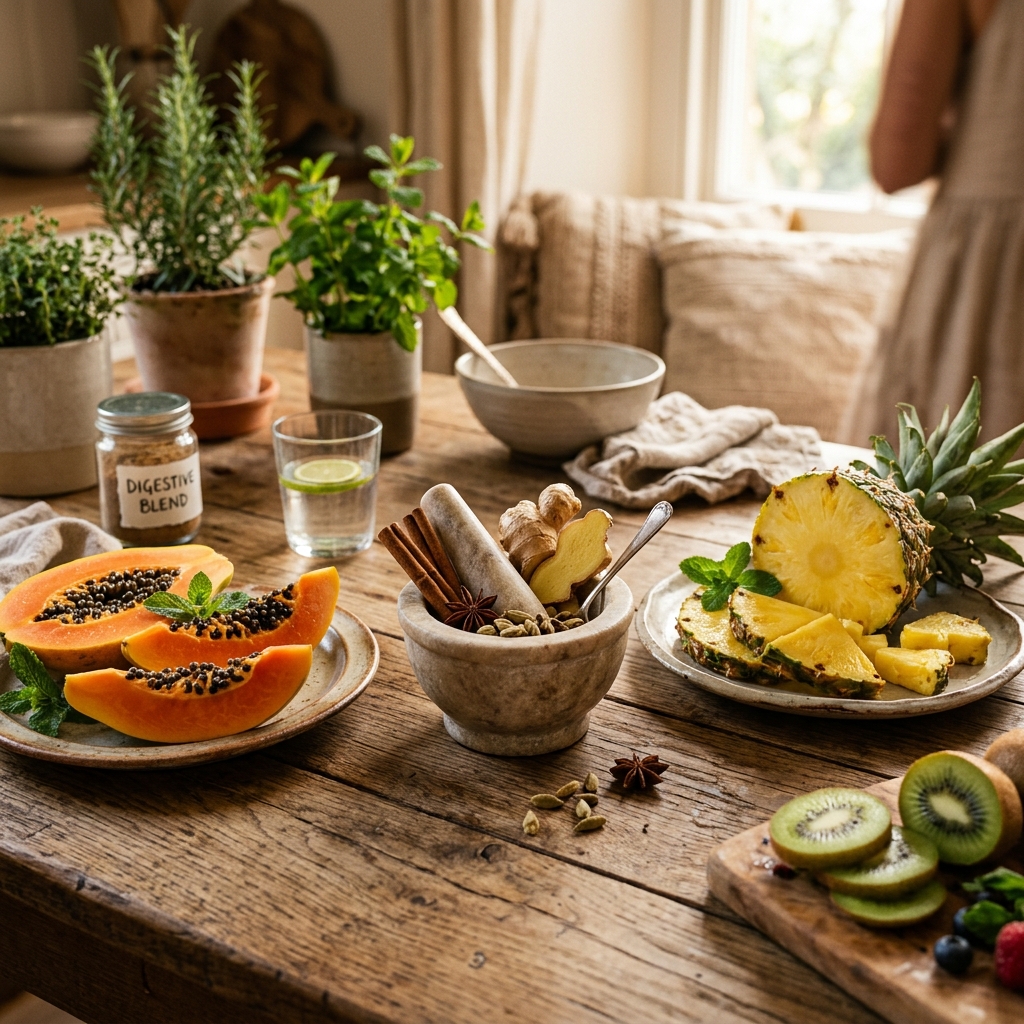
If you want to eat raw papaya or pineapple, balance its cold nature by adding warming spices. Sprinkle a generous amount of cinnamon, ginger powder, or cardamom over your fruit. These spices act as kindling for your digestive fire, neutralizing the coldness of the fruit while leaving the delicate enzymes intact.
2. Room Temperature Only
Never eat fruit straight out of the refrigerator. If you struggle with bloating, the cold physical temperature is just as damaging as the cold energetic nature. Let your avocados, bananas, and mangoes sit on the counter until they reach room temperature before eating them.
3. Lean heavily on Fermented Foods
If your digestive fire is extremely weak, raw fruits might be off the table entirely for a few weeks. Instead, focus on fermented foods. A warm bowl of Miso soup (do not boil the miso paste, as boiling kills the enzymes—stir it in after taking the broth off the heat) is deeply nourishing and incredibly easy to digest. A small spoonful of room-temperature sauerkraut alongside your meals provides powerful enzymes without the cold shock of raw fruit.
4. Chew Like It’s Your Job
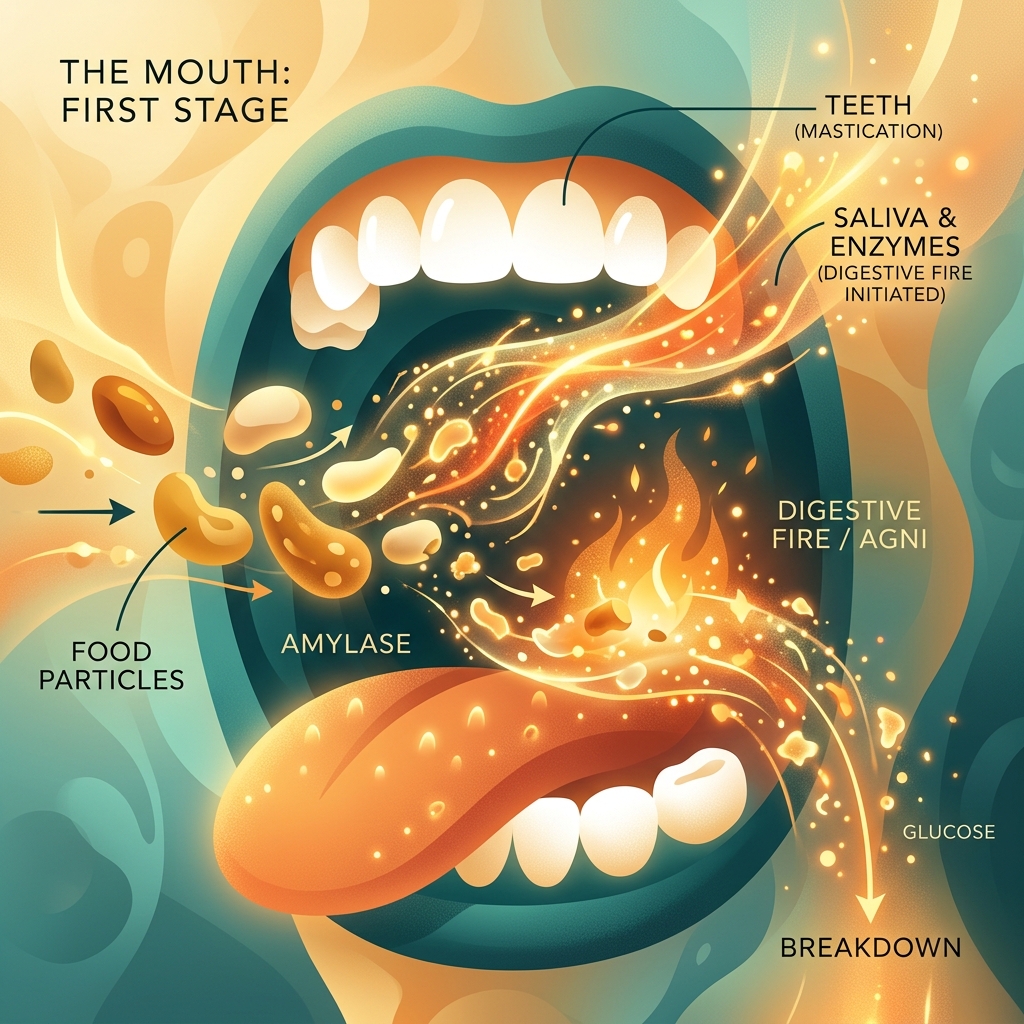
Digestion doesn’t start in the stomach; it starts in the mouth. Your saliva contains potent amylase enzymes. When you eat, chew your food until it is complete liquid. This mechanically breaks down the food and coats it in salivary enzymes, acting as the primary “spark” to ignite your digestive fire.
When Food Isn’t Enough: Do You Need a Supplement?
While eating a diet rich in natural enzymes is the foundation of gut health, sometimes it isn’t enough.
If you are dealing with chronic gut dysfunction, low stomach acid (hypochlorhydria), or conditions like SIBO (Small Intestinal Bacterial Overgrowth), your internal enzyme factory might be severely compromised. In these cases, relying solely on food can be a slow and frustrating process.
This is where high-quality, broad-spectrum enzyme therapy comes in. Taking a concentrated supplement with your meals provides immediate relief and allows your Spleen Qi the time it needs to heal and rebuild its fire. If you want to learn more about how to choose the right formula, read our comprehensive guide on What Are Digestive Enzymes and How to Use Them.
Summary & Key Takeaways
- Western Science teaches us that foods like pineapple, papaya, avocado, and fermented vegetables are incredible sources of natural enzymes that break down proteins, carbs, and fats.
- Eastern Wisdom warns us that eating these foods raw and cold can extinguish your “Digestive Fire,” leading to more bloating.
- The Solution: Eat your enzyme-rich foods at room temperature, balance cold fruits with warming spices like ginger and cinnamon, and chew your food thoroughly to activate your body’s natural saliva enzymes.
What is your favorite way to incorporate these foods into your diet? Have you ever noticed that raw salads or cold fruit make your bloating worse? Let me know in the comments below!
Medical References

About Mr. Anh
We turn solid evidence into everyday habits Americans can actually do—plain English, cups/oz, grocery-aisle swaps, and routines that fit real life. Our editorial process: Experience—we road-test tips in real schedules…