The Ultimate Overnight Oats With Chia Seeds Recipe (Synbiotic Gut Health)
You probably added chia seeds to your overnight oats because they are celebrated as the ultimate superfood. But instead of...
You probably added chia seeds to your overnight oats because they are celebrated as the ultimate superfood. But instead of feeling energized and healthy, you might have ended up feeling intensely bloated, sluggish, and uncomfortably constipated.
Why did this happen?
Generic food bloggers often treat chia seeds like a simple garnish—a crunchy topping to sprinkle over your breakfast. But biologically, chia seeds are a highly complex gentle high-fiber food that needs careful hydration that demands a specific ratio of liquid to digest properly. If you do not hydrate them correctly, they will put out your digestive fire and bring your intestinal motility to a painful halt.
The secret to unlocking their benefits is not just adding water; it is creating a synbiotic environment. In this guide, we will share the ultimate overnight oats with chia seeds recipe, utilizing the crucial combination of yogurt and milk to transform these tiny seeds into a deeply healing balm for your gut.
Why Chia Seeds Can Cause Severe Bloating (The Hydration Mistake)
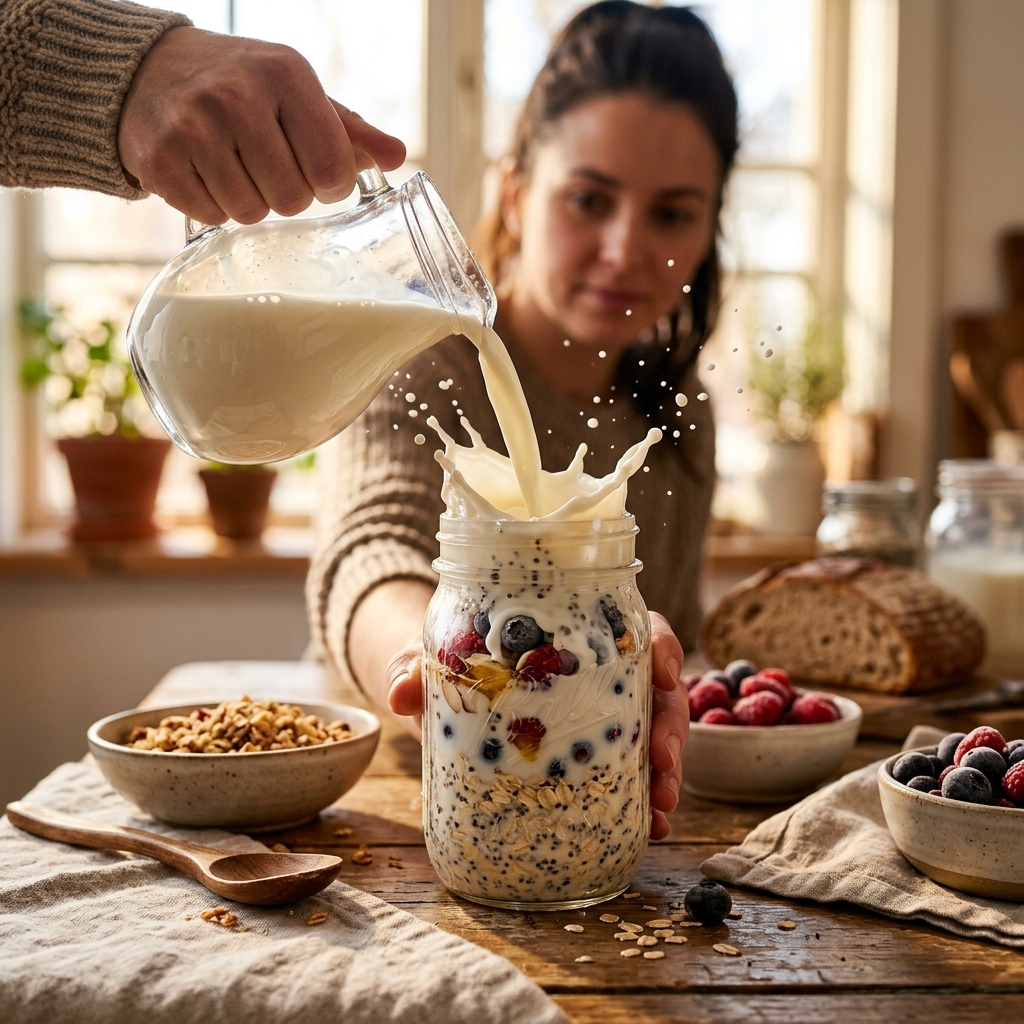
To understand why your stomach hurts, you have to look at the unique biology of the chia seed.
The Moisture-Sucking Nature of Dry Chia
Chia seeds (Salvia hispanica) are intensely hydrophilic, meaning they love water. According to clinical research published by the NIH, a single chia seed can absorb up to 12 to 15 times its own weight in liquid.
When you put chia seeds into a jar of dry oats with only a tiny splash of milk, they don’t have enough liquid to fully expand. When you eat them, they enter your digestive tract in a semi-dry state. Because they still need moisture, they will aggressively pull water directly from your intestinal lining. This sudden loss of moisture in your gut is what causes that heavy, rock-like constipation and the sharp pains of bloating. Here is how to quickly clear that dry-fiber constipation if it has already set in, and why dry-fiber bloat feels so different from fermentation bloat.
The Eastern Perspective: Drying out the Tỳ Vị
In traditional Eastern medicine, the Spleen and Stomach (known as the Tỳ Vị) function as your metabolic furnace.
What I noticed: A healthy Tỳ Vị requires a very delicate balance of moisture to function. When you consume under-hydrated chia seeds, you are essentially throwing a dry sponge into your digestive furnace. The seeds suck up all the vital lubricating fluids, drying out the Spleen and causing extreme stagnation. This is why you feel so incredibly full, yet entirely devoid of energy after eating them improperly.
The “Synbiotic Mucilage Protocol”
To fix this, we don’t remove the chia seeds. Instead, we use the Synbiotic Mucilage Protocol, which requires us to explicitly make overnight oats with yogurt and milk.
What is Mucilage? (The Healing Gel)
When chia seeds are fully and properly hydrated, they form a thick, clear gel around their outer shell. This gel is called mucilage, a type of soluble fiber.
When consumed in this fully gelled state, mucilage acts as a soothing, lubricating balm. Instead of pulling moisture from your gut, it coats the inflamed intestinal mucosa, allowing waste to glide smoothly through your system.
Why You Must Use Yogurt and Milk
Why not just use water to hydrate them? Because we want to create a Synbiotic environment.
A synbiotic is the strategic combination of a prebiotic fiber and a live probiotic working together.
- The chia seeds provide the prebiotic soluble fiber (the food).
- The milk provides the massive volume of liquid required to fully expand the chia into a gel.
- The yogurt (or kefir) provides the live active probiotics (the good bacteria).
When these three ingredients sit together overnight, the live probiotics from the yogurt begin to feed on the prebiotic chia gel. By morning, you have a living, gut-healing ecosystem in a jar that digests effortlessly.
The Gut-Healing Recipe: Overnight Oats with Yogurt and Chia Seeds
If you have a sensitive stomach, it is crucial to follow these exact ratios. Do not eyeball the chia seeds.
Ingredients:
- 1/3 cup Rolled Oats (If you are prone to severe bloating, review our foundational why even gut-friendly overnight oats can still bloat and how to fix it).
- 1 level tbsp Chia Seeds (Do not exceed this amount for one serving).
- 1/2 cup Milk (A2 dairy milk, oat milk, or almond milk—this provides the hydration).
- 1/4 cup Plain Probiotic Yogurt or Kefir (This provides the probiotics).
- 1/2 tsp Cinnamon (Adds necessary metabolic warmth).
- A pinch of sea salt.
Instructions:
- The Initial Mix: In a glass jar, combine the dry rolled oats, chia seeds, cinnamon, and salt.
- The Hydration Layer: Pour in the milk and the yogurt. Stir vigorously until everything is thoroughly combined.
- The 15-Minute Stir (CRUCIAL): Do not put it in the fridge yet. Let the jar sit on the counter for 15 minutes. Chia seeds tend to clump together rapidly as they start absorbing liquid. If they clump, the seeds in the center will remain dry. After 15 minutes, stir it vigorously one more time to break up any clumps.
- The Overnight Rest: Seal the jar and place it in the refrigerator overnight. This allows the synbiotic fermentation to occur and the mucilage gel to fully form.
- The Morning Check: In the morning, the mixture will be very thick. Let it sit at room temperature for 10 minutes to take the chill off. If it is too dense, stir in an extra splash of milk to ensure the texture is creamy and hydrating, not dry.
Troubleshooting Your Digestion
Can I add more than 1 tablespoon of chia seeds?
If you are currently experiencing gut issues, no. One tablespoon provides about 5 grams of intense fiber. More fiber is not always better; it can overwhelm a weak digestive fire. Stick to one tablespoon until your digestion normalizes.
Does it matter what kind of milk I use?
For the purpose of hydration, any milk works. However, if you have chronic inflammation, avoid highly processed, sweetened commercial almond milks full of gums and emulsifiers. Opt for organic A2 dairy milk, organic soy, or a clean, two-ingredient oat milk.
Why do I still feel bloated after eating this?
If you followed the recipe and still feel bloated, you are likely eating it straight out of a freezing cold refrigerator. Ice-cold food shocks the Spleen and halts digestion. Always let your overnight oats sit at room temperature for 10 to 15 minutes before eating. If room-temperature overnight oats still bloat you, switch to a fully warm cooked breakfast option that suits a sensitive Spleen better.
Conclusion
Chia seeds are undeniably a superfood, but they must be respected. By understanding their intense need for hydration and utilizing the Synbiotic Mucilage Protocol, you can stop the bloating and constipation. Combine your chia with the perfect ratio of milk and yogurt, and transform your breakfast into a deeply healing tool for your gut microbiome.

About Mr. Anh
We turn solid evidence into everyday habits Americans can actually do—plain English, cups/oz, grocery-aisle swaps, and routines that fit real life. Our editorial process: Experience—we road-test tips in real schedules…