The Ultimate Steel Cut Overnight Oats Recipe (For Sensitive Stomachs)
If you have ever tried making a steel cut overnight oats recipe by simply soaking the raw groats in cold...
If you have ever tried making a steel cut overnight oats recipe by simply soaking the raw groats in cold milk, you already know the painful outcome. You wake up excited for a healthy breakfast, only to find yourself chewing on what feels like hard little rocks.
Worse than the texture is the aftermath: the intense, cramping stomach ache that inevitably follows.
Food bloggers often describe cold-soaked steel-cut oats as “hearty” or “chewy.” But biologically speaking, forcing your stomach to break down an incredibly dense, raw, unsoftened oat groat is a digestive disaster. If you have a sensitive stomach, it will wreck your morning. This is exactly why this kind of breakfast can leave you bloated and cramping after eating.
But don’t throw your bag of oats away just yet. You can get the dense, nutty flavor and massive nutritional benefits of steel-cut oats without cooking them for 40 minutes on the stove. You just need to change your technique.
Let’s explore why cold-soaking is a problem, and how the “Hot Soak” method will save your digestion.
Why Cold-Soaking Steel Cut Oats is a Digestive Disaster
To understand why your stomach hurts, you have to look at the anatomy of the grain.
The Anatomy of a Groat
If you read our guide on gut-friendly rolled oats recipe that works better for sensitive stomachs, you know that rolled oats have been steamed and flattened. That steaming process partially cooks the oat, making it porous enough to absorb cold milk overnight.
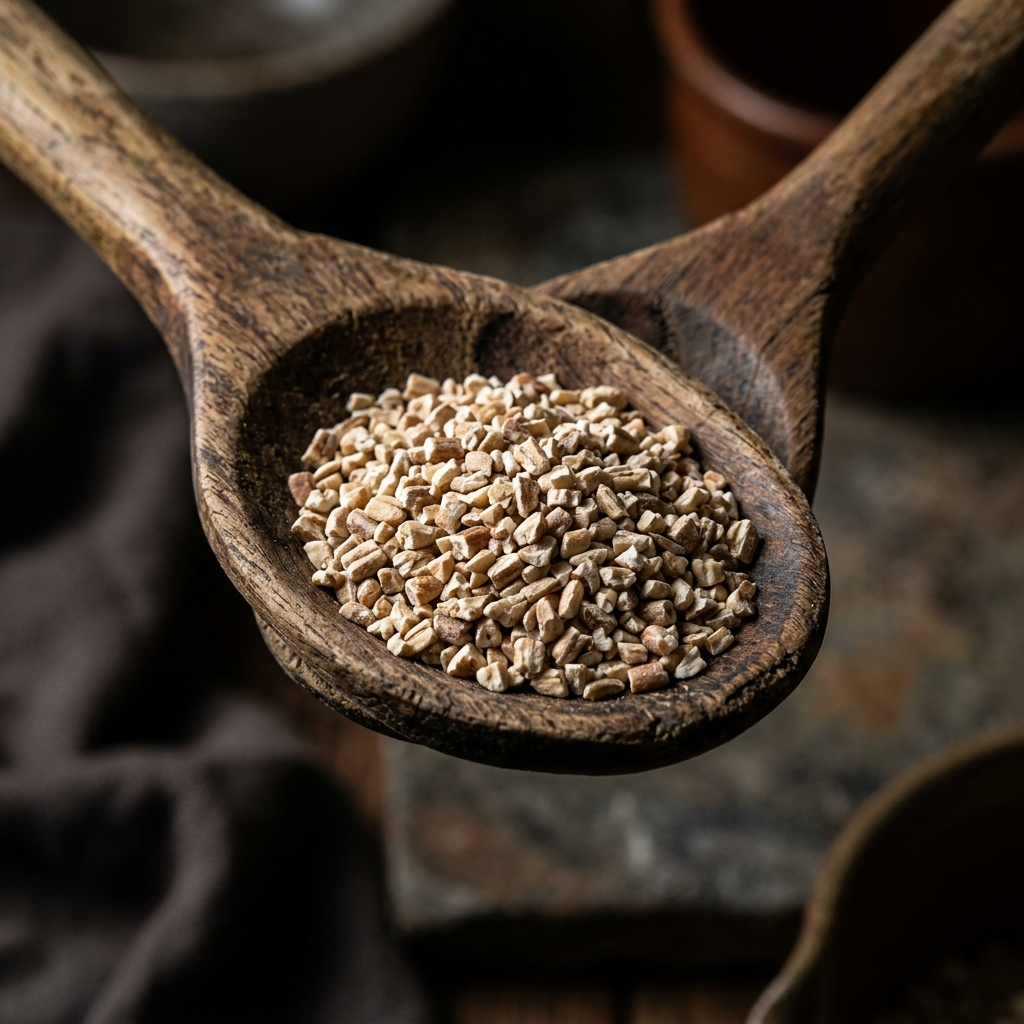
Steel-cut oats are completely different. They are whole, raw oat groats that have simply been chopped into pieces with a steel blade. They have not been steamed. Their outer hull is incredibly dense and fully intact. Cold milk or water cannot penetrate this dense matrix effectively, no matter how long you leave it in the fridge.
The Phytic Acid Trap

Because the hull remains intact during a cold soak, so does its highest concentration of phytic acid.
Phytic acid is a natural compound found in plant seeds. According to clinical studies published by the NIH, phytic acid acts as an “anti-nutrient” in the human digestive tract. It binds to essential minerals like iron, zinc, and calcium, preventing your body from absorbing them. More importantly, when a raw, phytic-acid-dense grain hits a sensitive stomach, it causes severe irritation, gas, and bloating.
The Eastern Perspective: Protecting Your Digestive Fire
In Eastern traditional medicine, we view the digestive system (specifically the Spleen and Stomach, or Tỳ Vị) as a furnace.
What I noticed: When you eat a bowl of cold, raw, rock-hard steel-cut oats, you are dumping a massive load of cold, damp energy directly onto your digestive fire. Your stomach has to expend an enormous amount of metabolic energy just to warm the hard grains up, let alone attempt to break down the unbroken fiber and phytic acid. This energy drain is why you feel so incredibly sluggish, tired, and bloated after eating them.
The “Hot Soak” Method (The Thermos Hack)
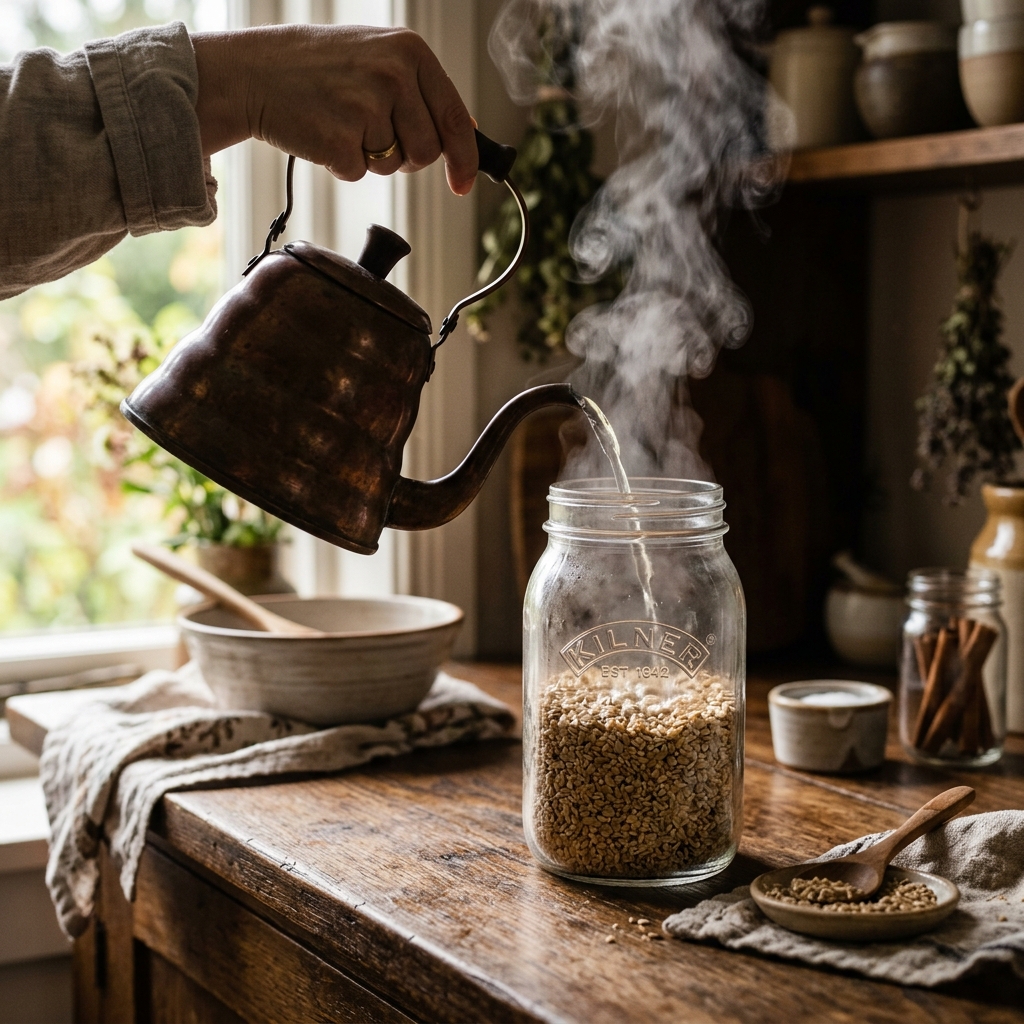
The solution is not to boil them on the stove every morning. The solution is the “Hot Soak” method, also known as the Thermos Hack.
Instead of soaking the oats in cold milk, you pour boiling water over them, seal the container, and let the residual heat do the work overnight.
How Residual Heat Pre-Digests the Hull
When you pour boiling water over the oats and seal them in a thermos or a thick mason jar, you trap the heat. Over the next hour, that slowly dissipating heat acts like a gentle slow cooker. It softens the tough fiber and begins to break down the phytic acid, doing the heavy digestive lifting for your stomach before you take your first bite.
The Magic of Retrogradation (Resistant Starch)
Why is this better than just boiling them on the stove? Because of a chemical process called retrogradation.
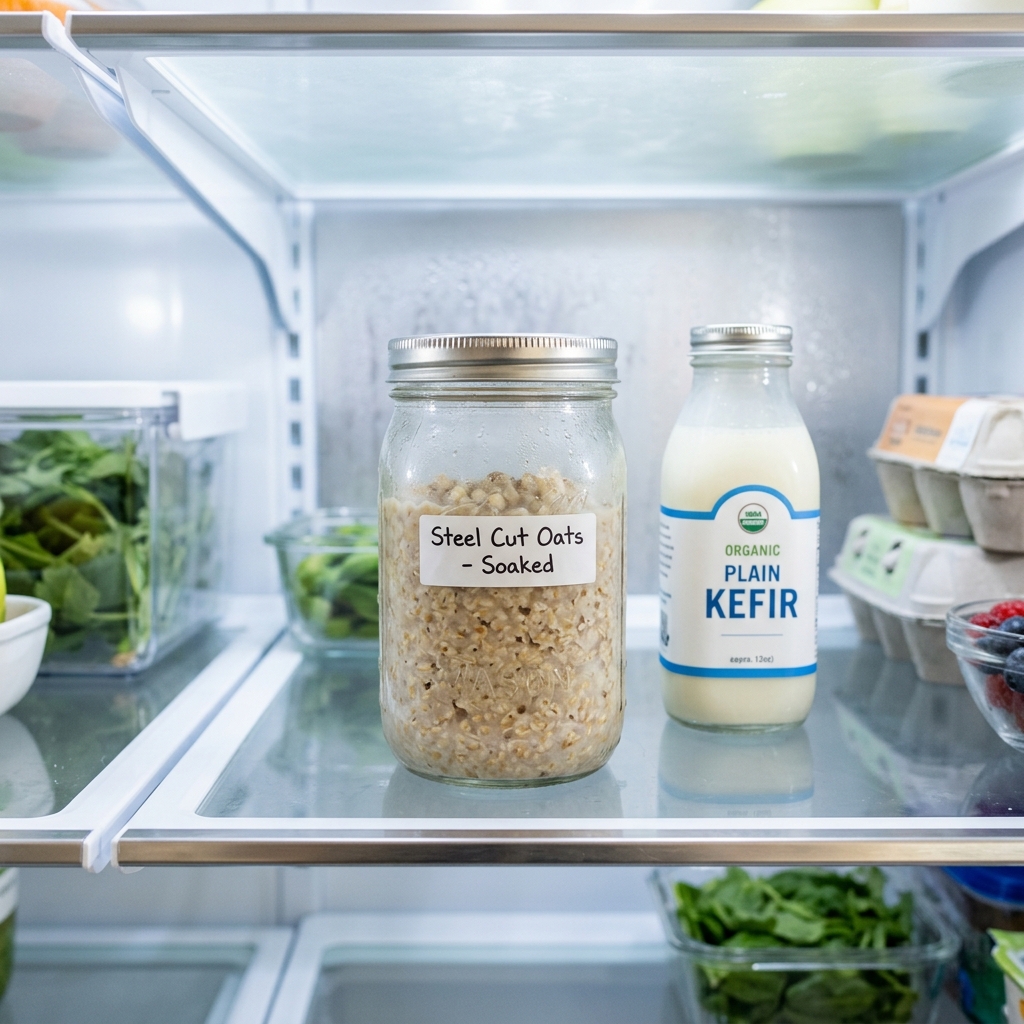
As the hot-soaked oats slowly cool down on your counter (and eventually in your fridge overnight), the starches inside the oat restructure themselves. They convert into resistant starch. As documented by the NIH, resistant starch bypasses the small intestine and acts as a powerful prebiotic resistant starch that feeds the good bacteria in your colon.
The Hot Soak gives you the best of both worlds: a soft, digestible texture that won’t irritate your stomach, combined with the gut-healing benefits of resistant starch.
The Gut-Healing Recipe: Steel Cut Overnight Oats
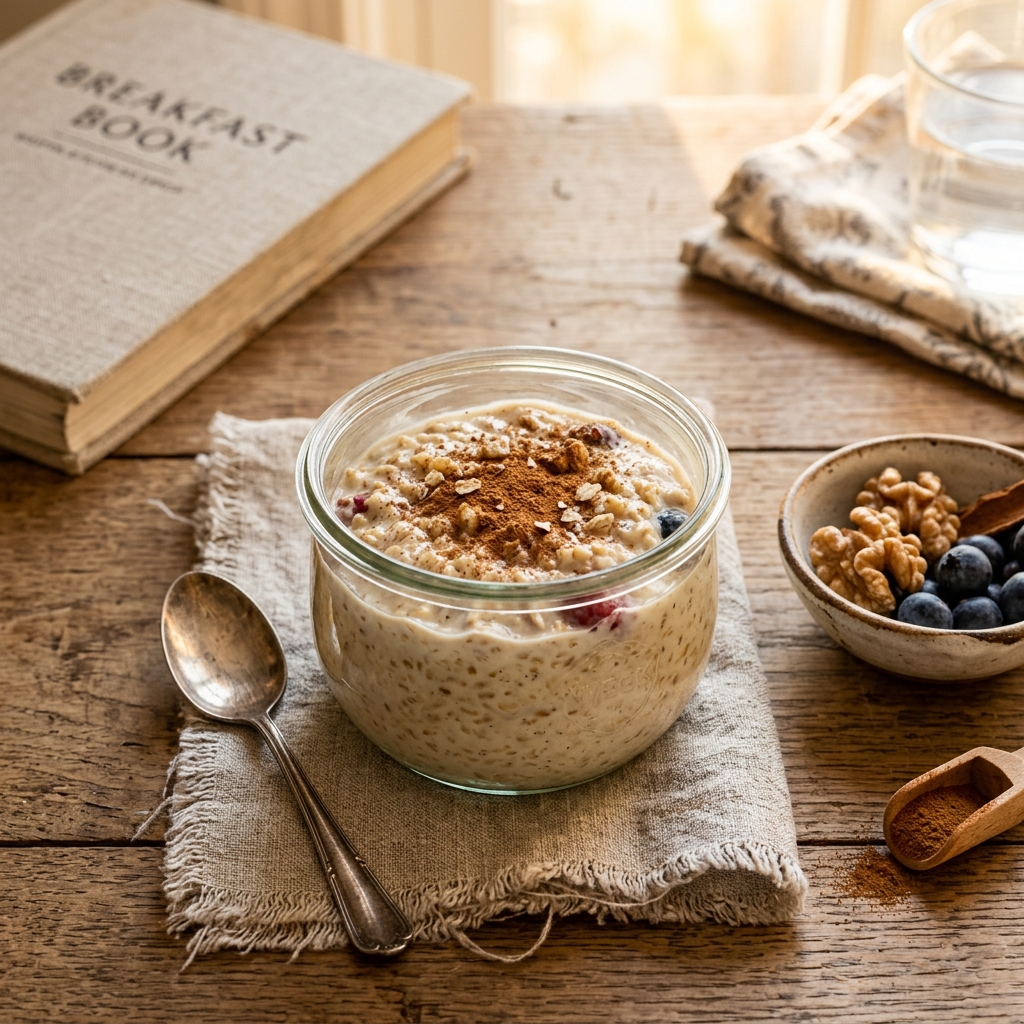
If you are ready to try steel-cut oats the right way, use this foundational recipe.
Ingredients:
- 1/4 cup Steel Cut Oats (Always start with a small portion when introducing very high-fiber foods without overloading a sensitive gut).
- 1/2 cup Boiling Water.
- 1/4 cup Kefir, plain yogurt, or Almond Milk.
- 1/2 tsp ground cinnamon and a pinch of ginger powder (for metabolic warmth).
- 1 tsp maple syrup (optional).
- A pinch of sea salt.
Instructions:
Phase 1: The Hot Soak (Night Before)
- Place the dry steel-cut oats and a pinch of salt into a thick glass mason jar or a wide-mouth thermos.
- Pour the boiling water directly over the oats.
- Stir well, seal the lid tightly immediately to trap the steam, and leave it sitting on your kitchen counter for 1 to 2 hours.
- Before you go to bed, move the jar into the refrigerator.
Phase 2: The Mix (Morning)
- In the morning, take the jar out of the fridge. The oats will have absorbed the water and become soft, plump, and slightly chewy (but not hard).
- Let the jar sit at room temperature for 15 minutes to take the chill off.
- Stir in your kefir (or milk), cinnamon, ginger, and maple syrup. The kefir adds a wonderful probiotic boost, while the spices add necessary metabolic warmth. If you are deciding between cultured dairy options, read kefir vs yogurt for which one is gentler on digestion.
- Eat slowly and chew thoroughly.
Rolled Oats vs. Steel Cut Oats: Which is Better for Your Gut?
Neither is inherently better; it depends on the strength of your digestive fire.
If you are currently recovering from severe bloating, leaky gut, or an active IBS flare-up, you should stick to our modified rolled oats recipe. They are much gentler, and in tougher flare windows you may need a low-FODMAP breakfast strategy for flare-up mornings. However, if your digestion is relatively stable and you want a breakfast that will keep your blood sugar perfectly steady for 5 hours, this hot-soaked steel-cut oat recipe is the ultimate upgrade.
Frequently Asked Questions
Can I make these in a mason jar instead of a thermos?
Yes. A glass mason jar works beautifully. If your kitchen is very cold, you can wrap a kitchen towel around the mason jar during the first hour of the Hot Soak to help insulate it and keep the heat trapped longer.
Are steel cut oats gluten-free?
Oats are naturally gluten-free. However, they are highly susceptible to cross-contamination during processing. If you have Celiac disease or extreme gluten sensitivity, you must buy steel-cut oats that explicitly say “Certified Gluten-Free” on the label.
Why are my oats still crunchy?
If your oats are still hard the next morning, your water was not hot enough (it must be a rolling boil), or your container did not trap the heat effectively. Try using an insulated thermos next time.
Conclusion
Steel-cut oats are a phenomenal food, but they demand respect. If you treat them like rolled oats and cold-soak them, your stomach will pay the price. By utilizing the Hot Soak method, you honor your digestive fire, neutralize the anti-nutrients, and create a perfectly creamy, deeply nourishing breakfast that truly supports your gut health.

About Mr. Anh
We turn solid evidence into everyday habits Americans can actually do—plain English, cups/oz, grocery-aisle swaps, and routines that fit real life. Our editorial process: Experience—we road-test tips in real schedules…