Is Turmeric Good for Inflammation? What the Evidence Really Says
Wondering whether turmeric really helps with inflammation? This guide explains what the evidence says, when it may help, and when supplements deserve more caution.
If you are searching is turmeric good for inflammation, you are probably not trying to become a supplement expert. You want to know whether turmeric can actually help with sore knees, stiff joints, post-workout aches, or that general puffy, inflamed feeling people keep talking about. You also want to know whether it is safer to cook with it, whether capsules are worth the money, and whether the claims on the bottle match real evidence.
Here is the short answer: turmeric may help some inflammation-related symptoms, especially in people with osteoarthritis, but it is not a cure-all. The research is promising in some areas, weak in others, and concentrated supplements deserve more caution than most wellness marketing admits.
Quick Takeaways
- Turmeric may help some inflammation-related symptoms, especially joint discomfort linked to osteoarthritis
- The evidence is encouraging, but it is not strong enough to call turmeric a proven cure-all for every type of inflammation
- Food-level turmeric is usually a lower-risk place to start than high-dose supplements
- Some turmeric or curcumin supplements can interact with medications and may increase liver risk
- The best results usually come when turmeric supports a broader anti-inflammatory lifestyle
Is Turmeric Good for Inflammation? The Short Answer

Yes, turmeric may help with some inflammation-related symptoms, but it is not a magic fix.
The strongest evidence so far is for knee osteoarthritis, where turmeric or curcumin supplements may reduce pain and improve function for some people. For broader “body inflammation,” the picture is less clear. Some reviews show improvements in markers such as CRP, TNF-alpha, and IL-6, but results vary a lot from study to study.
That means turmeric is best viewed as a supportive tool, not a standalone treatment.
If you are still building the basics, our anti-inflammatory foods guide is the better foundation than jumping straight into supplements.
Why Turmeric Gets So Much Attention

Turmeric is the yellow spice used in curry and many traditional dishes. Its most talked-about active compound is curcumin, which has been studied for anti-inflammatory and antioxidant effects.
On paper, curcumin looks promising. It appears to influence several pathways involved in inflammation. That is why it keeps showing up in conversations about joint pain, arthritis, exercise recovery, and chronic low-grade inflammation.
But there is a practical issue: curcumin is not absorbed very well on its own. That is one reason supplement companies often add black pepper extract, usually called piperine, or use special delivery systems to boost absorption. Better absorption may sound like a clear advantage, but it can also change the safety profile.
That difference matters more than people think. Cooking with turmeric in lentil soup, eggs, roasted vegetables, or rice is not the same decision as taking a high-potency curcumin complex. When I look at turmeric in real life, I think of the spice as part of a food pattern and the capsule as a more concentrated intervention.
What the Research Actually Shows

This is where most articles become either too skeptical or too hype-driven. The better answer sits in the middle.
Best-Supported Use: Knee Osteoarthritis
If your inflammation is showing up mainly as aching, stiff, or swollen knees, turmeric has some of its most encouraging evidence here.
A 2025 systematic review and meta-analysis on knee osteoarthritis found that curcumin significantly lowered CRP and TNF-alpha in patients with knee osteoarthritis, suggesting a measurable anti-inflammatory effect in that setting. Earlier reviews also found that curcumin may help reduce pain and improve physical function.
That said, there is an important caveat. A 2026 critical review of systematic reviews concluded that while curcumin looks promising for knee osteoarthritis, the overall quality of the evidence is still low to very low. In plain language, the results are encouraging, but not strong enough to treat turmeric like a proven replacement for standard care.
So if you have knee arthritis, turmeric may be worth discussing with your clinician, especially if you are trying to reduce reliance on pain relievers. Just do not expect it to work for everyone.
Less Certain: Whole-Body and Metabolic Inflammation
This is where many articles overstate the case.
Large umbrella reviews and meta-analyses suggest curcumin supplementation may lower inflammatory markers such as CRP, IL-6, and TNF-alpha in some groups. A 2024 meta-analysis of meta-analyses on curcumin and inflammatory biomarkers points in that direction. That sounds impressive, but the studies include different doses, different formulations, different health conditions, and different lengths of use.
The U.S. National Center for Complementary and Integrative Health takes a more cautious position: there is still not enough evidence to definitively conclude that turmeric or curcumin is beneficial for any health purpose overall.
That does not mean turmeric does nothing. It means the results are mixed enough that you should be skeptical of any product promising to “fight inflammation everywhere in the body.”
If inflammation for you seems tied more to food patterns, weight gain, and energy swings, read foods that cause inflammation and weight gain next. That usually moves the needle faster than chasing one supplement.
Turmeric in Food vs Turmeric Supplements
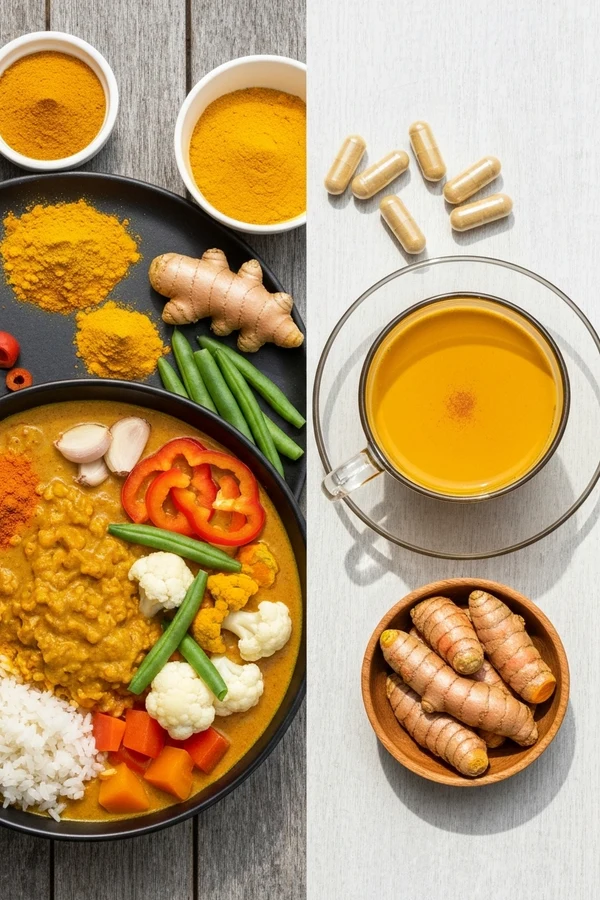
For most people, turmeric in food is the safer and more realistic place to start.
Adding turmeric to soups, curries, roasted vegetables, rice, eggs, or tea is a simple way to include it without jumping straight into concentrated products. Food-level turmeric is also much less likely to cause problems than high-dose supplements.
Supplements are different. They are more concentrated, product quality varies, and formulas with added piperine or enhanced bioavailability may raise both absorption and risk.
A practical way to think about it is this:
- Food turmeric is a low-risk lifestyle addition
- Supplements are a higher-stakes intervention that deserve more caution
If you are trying to decide where to start, I would usually choose consistency over intensity. A daily food habit you tolerate well often beats a supplement you abandon after two weeks because it upsets your stomach or makes you nervous about side effects.
For a practical way to build turmeric into meals, our anti-inflammatory breakfasts guide and list of foods for an anti-inflammatory diet make that much easier than trying to improvise.
Who Should Be Careful With Turmeric
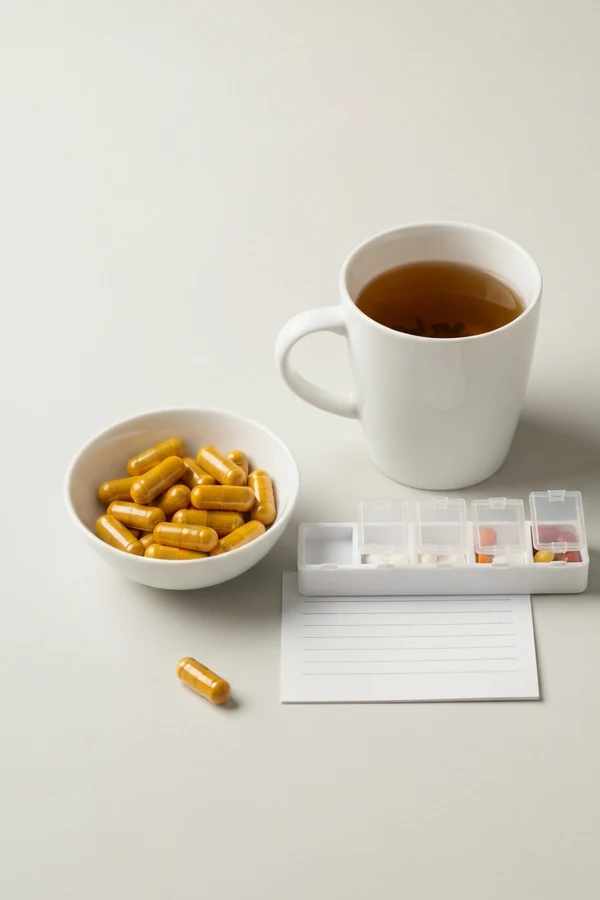
Turmeric is not automatically safe just because it is natural.
You should be especially careful or speak with a healthcare professional first if you:
- take warfarin or other blood thinners
- take chemotherapy drugs
- take tacrolimus
- are pregnant
- are breastfeeding
- have a family history of kidney stones
- already have liver disease or unexplained liver symptoms
This matters because official sources now note real safety concerns. NCCIH warns that highly bioavailable curcumin products may harm the liver. Turmeric as a well-documented cause of rare but clinically significant liver injury, especially with some high-absorption products.
Watch for red flags such as fatigue, nausea, poor appetite, dark urine, or yellowing of the skin or eyes after starting a turmeric supplement. If that happens, stop the product and seek medical care.
This is one of those situations where “natural” does not automatically mean “safe for everyone.” If you already take medications, I would treat turmeric supplements more like a real decision and less like a casual wellness add-on.
How to Use Turmeric Realistically
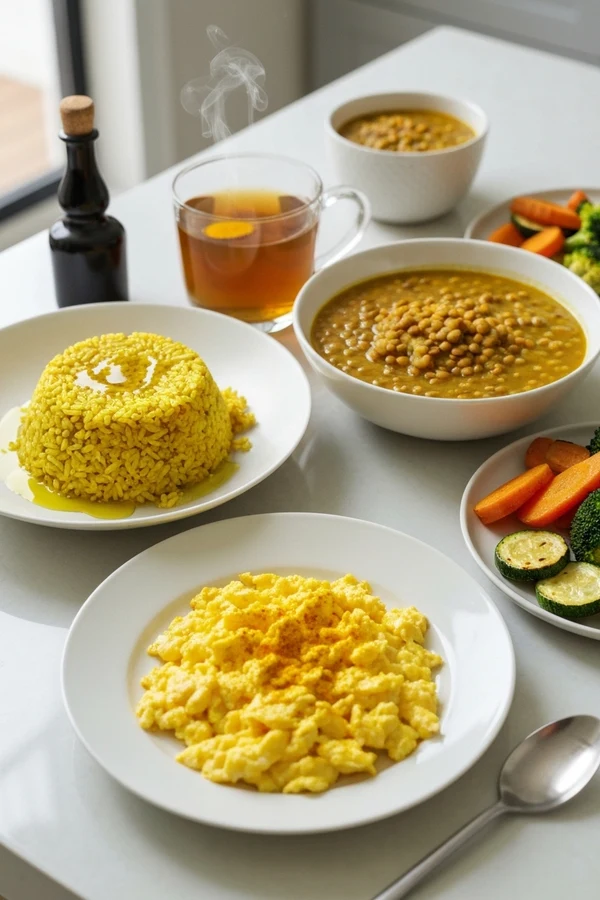
If you want to try turmeric for inflammation, keep your expectations grounded.
First, be clear on what you are trying to improve. Turmeric makes more sense when the goal is easing joint discomfort or stiffness than when the goal is vaguely “detoxing inflammation.”
Second, start with food if possible. It is easier to tolerate and easier to maintain.
Third, if you are considering a supplement, avoid impulse buys. Look for products that are clearly labeled and preferably third-party tested. More absorption is not always better if it also raises risk.
Finally, judge turmeric by real outcomes:
- Do you have less pain?
- Are you moving more easily?
- Are flare-ups less frequent?
If nothing changes after a reasonable trial, turmeric may simply not be the right tool for you.
If your gut feels inflamed along with everything else, how to reduce gut inflammation quickly is a better immediate read than doubling down on supplements.
What Helps Inflammation More Than Turmeric Alone

One of the biggest mistakes people make is expecting one supplement to undo an inflammatory lifestyle.
For most adults, these habits have a bigger impact than turmeric by itself:
- eating a more anti-inflammatory diet with fewer ultra-processed foods
- improving sleep quality
- walking or strength training regularly
- maintaining a healthy weight
- reducing smoking and excess alcohol
- managing chronic stress
In other words, turmeric can be helpful at the margins, but it works best when the basics are already in place.
If your current routine still leans heavily on takeout, sweet drinks, poor sleep, and low activity, turmeric is unlikely to be the missing piece. It makes more sense as support for a stronger foundation, not as a shortcut around it.
That is also why I would rather see someone fix meals, sleep, and movement first, then decide whether turmeric still deserves a place in the plan. If weight loss is part of the goal, our anti-inflammatory diet for weight loss guide is the natural next step.
FAQ
Does turmeric reduce inflammation fast?
Not usually. If turmeric helps, it tends to work gradually rather than overnight. It is more realistic to think in weeks, not hours.
Is turmeric better in food or capsules?
For most people, food is the safer starting point. Capsules are more concentrated, but they also come with more variation in quality, absorption, and side effects.
Is curcumin the same as turmeric?
Not exactly. Turmeric is the whole spice. Curcumin is one of its main active compounds.
Can turmeric replace anti-inflammatory medication?
It should not replace prescribed medication unless your clinician tells you to do that. Some people use turmeric as support, not as a substitute.
Who should avoid turmeric supplements?
People taking blood thinners, chemotherapy, or tacrolimus, as well as those who are pregnant, breastfeeding, prone to kidney stones, or dealing with liver issues, should be especially cautious.
Bottom Line
So, is turmeric good for inflammation?
The most accurate answer is: sometimes, and for specific situations more than others.
Turmeric may help reduce inflammation-related symptoms, especially in people with knee osteoarthritis. It may also improve some inflammatory markers in certain groups. But it is not a guaranteed fix, the research is still uneven, and concentrated supplements come with real safety concerns.
If you want a practical approach, use turmeric as one part of a broader inflammation strategy, not the entire plan. Start with meals and habits first. Then decide whether turmeric belongs in the mix.
Want the simplest next step? Read anti-inflammatory foods, clean up the biggest triggers in foods that cause inflammation and weight gain, and treat turmeric as support rather than the whole solution.
The information on this site is for educational purposes only and is not intended as medical advice. Always consult a qualified healthcare provider before making any changes to your diet, exercise routine, or supplement use.

About Jane Smith
We turn solid evidence into everyday habits Americans can actually do—plain English, cups/oz, grocery-aisle swaps, and routines that fit real life. Our editorial process: Experience—we road-test tips in real schedules…