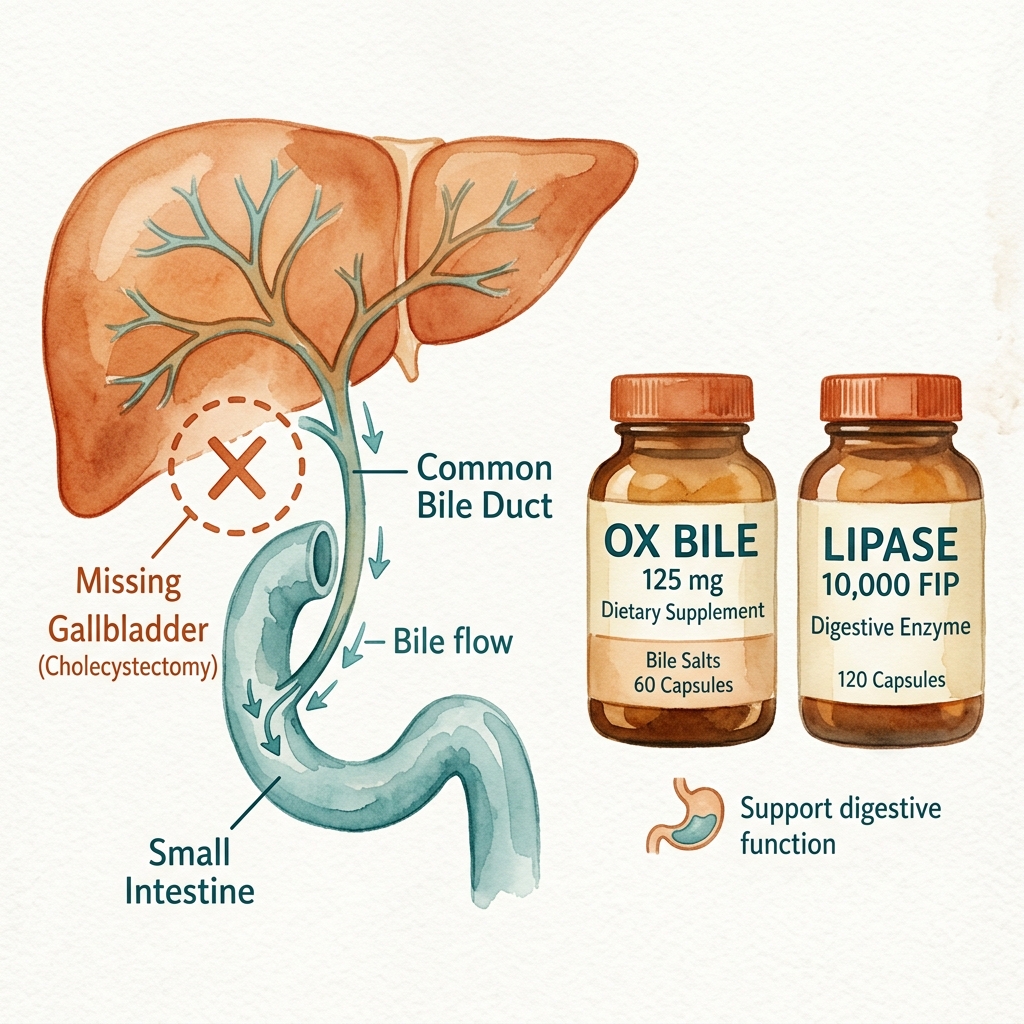
Fibermaxxing Benefits: What Actually Happens When Women Eat Enough Fiber
Over 91% of women don't eat enough fiber. Fibermaxxing isn't just a TikTok trend — it's backed by decades of research from Harvard, Mayo Clinic, and the NIH. Here's exactly what happens to your gut, hormones, energy, and skin when you actually hit your fiber targets — plus a 4-week ramp to avoid every mistake.
Curious about fibermaxxing benefits? More than 91% of American women don’t eat enough fiber — and most of them genuinely have no idea.
Not because they’re not trying. Because nobody ever told them what “enough” actually means, or what happens inside their bodies when they’re consistently short. I was one of them. Tracking my food one afternoon, I discovered I was hitting around 11 grams on a day I considered clean eating. The minimum recommended for my age? 25.
If you’ve seen “fibermaxxing” everywhere lately and wondered whether it’s one more wellness fad to ignore — this guide will settle that. And if you’ve already tried eating more fiber, got so bloated by day three you gave up completely — that wasn’t your fault. You just didn’t have the right protocol. You had the right instinct.
Here’s what the science actually shows about what happens to your body when women consistently hit their fiber targets. Not the vague “it’s good for digestion” version — the specific, sometimes surprising, whole-body changes most sources never connect to something as simple as fiber. Including what it does to your hormones.
By the end of this, you’ll know exactly how much fiber you need, the reason women may need it more urgently than men, and a week-by-week ramp you can start today — without a single day of bloating.
Quick Takeaways
- Over 91% of women eat roughly half their minimum daily fiber requirement
- Fiber directly regulates how your body processes and eliminates estrogen — most women never hear this
- The #1 reason fibermaxxing fails is going too fast; the 4-week ramp below fixes this entirely
- You can add 20+ grams of fiber today using 7 simple food swaps — no supplements needed
What Is Fibermaxxing? (The Trend Nutritionists Actually Agree With)
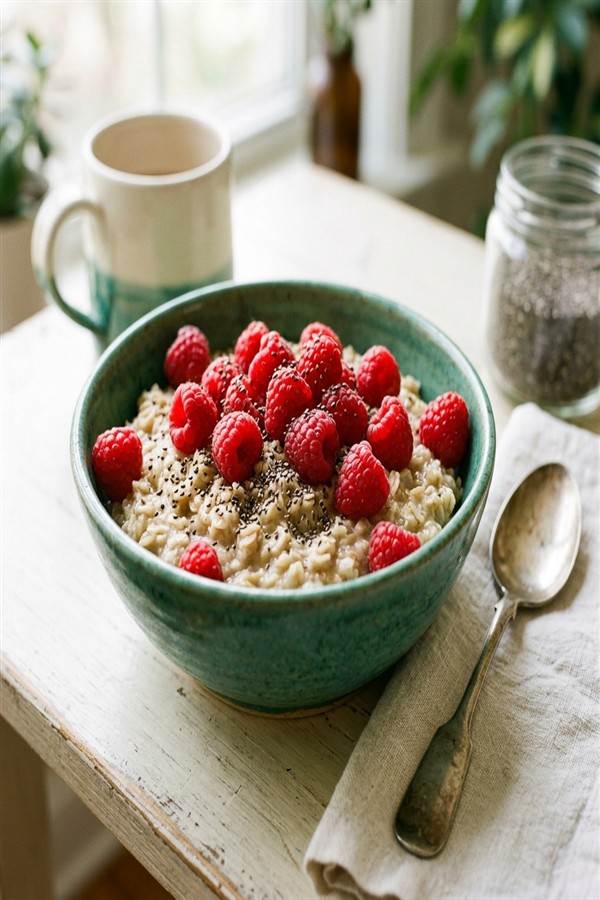
Fibermaxxing is the intentional practice of tracking and hitting your daily fiber target — treating it the way fitness-minded people treat protein. Not a vague nutritional afterthought. A specific, daily number you actually pursue.
The term blew up on TikTok and wellness communities in 2023 and 2024, alongside “sleepmaxxing” and “moodmaxxing.” And what made it resonate so hard? The shock. Most women assume they’re eating a reasonably healthy diet — then track their fiber for one day and discover they’re at 11 or 12 grams. When the minimum is 25. That gap between where you think you are and where you actually are? That’s where this whole conversation starts.
What the Numbers Actually Look Like
The 2020–2025 Dietary Guidelines for Americans set women’s fiber recommendations at:
- Ages 19–30: 28 grams per day
- Ages 31–50: 25 grams per day
- Ages 51+: 22 grams per day
The average American woman currently eats 12–15 grams daily. That’s roughly half the minimum target — and fiber deficiency is so widespread it barely gets discussed because it’s almost universal.
“Fibermaxxers” typically aim for 35–45 grams daily. That sounds high, but it’s comfortably within the safe range. Meaningful negative effects don’t appear until intake consistently exceeds 50–70 grams per day, and even then, hydration changes that ceiling significantly.
Is Fibermaxxing Actually Science-Backed?
Here’s the thing — unlike most wellness trends, fibermaxxing doesn’t require you to trust an influencer. The underlying science is decades old and endorsed by the same institutions that write medical textbooks.
Researchers at the Harvard T.H. Chan School of Public Health found that each additional 10 grams of daily dietary fiber is associated with a 9% reduction in all-cause mortality risk. The Mayo Clinic, Cleveland Clinic, and every major nutrition governing body list higher fiber intake as one of the highest-leverage dietary changes any adult can make.
The trend didn’t invent the science. It just finally got people to act on advice that’s been sitting in every nutrition textbook for thirty years.
Signs you might be under-fibered:☐ Bloating after most meals
☐ Bowel movements less than once daily, or wildly unpredictable
☐ Skin breakouts that don’t respond well to topical treatment
☐ Feeling hungry 60–90 minutes after a full meal
☐ Afternoon energy crashes — especially after carb-heavy meals
If three or more of those sound uncomfortably familiar, your fiber intake is almost certainly lower than your body needs. And the fix is more straightforward than most people expect.
The Fibermaxxing Benefits — What Actually Happens to Your Body
Let me walk you through what consistent, adequate fiber intake actually does — and why several of these effects genuinely caught me off guard when I started digging into the research.
1. Your Gut Microbiome Transforms Within 48 Hours
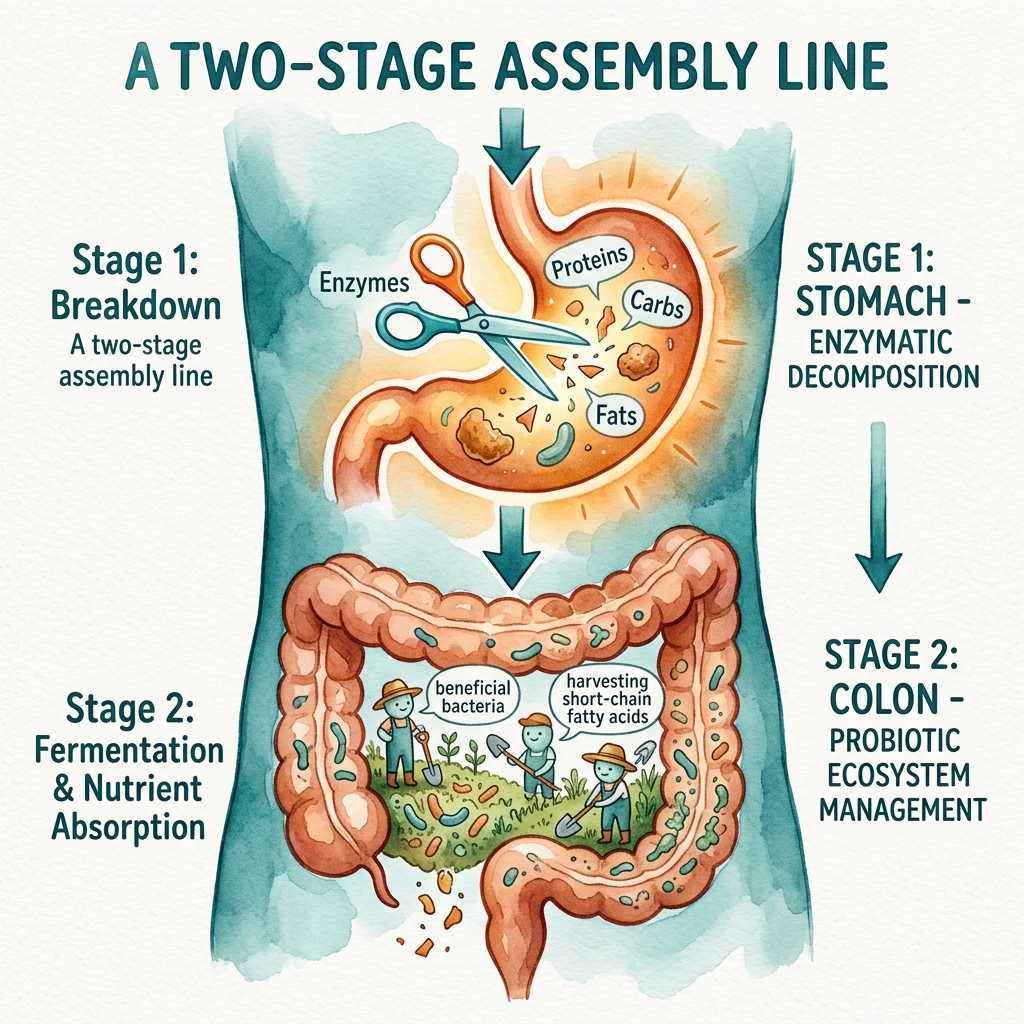
When you eat dietary fiber, your gut bacteria ferment it. That fermentation produces short-chain fatty acids (SCFAs) — primarily butyrate, acetate, and propionate.
Butyrate deserves its own spotlight. It’s essentially the premium fuel for the cells lining your colon. A 2018 review published in Nutrients via the NIH found that SCFAs strengthen the gut epithelial barrier, actively reduce intestinal permeability, and regulate immune function throughout the gut. When that barrier is compromised — what’s commonly called “leaky gut” — you’re looking at systemic inflammation, food sensitivities, and increased autoimmune activity. Butyrate helps maintain and repair it.
What surprised me most: ZOE Health’s large-scale microbiome research shows measurable changes in gut bacteria composition begin within 24 to 72 hours of increasing fiber. You don’t need months. You need consistency over days.
Diversity matters here as much as quantity. Different plant foods have different fiber profiles, which feed different bacterial strains. That’s why ZOE researchers recommend 30+ different plant foods per week as the benchmark for microbiome diversity — and herbs, spices, legumes, fruits, grains, nuts, and seeds all count toward that total.
Practical takeaway: You don’t need 30 plants in a single day. You need a different plant in each meal.
2. Your Hormones Rebalance — The Estrobolome Effect
This is the fibermaxxing benefit almost nobody talks about. And for women specifically, it might be the most important one.
Inside your gut lives a community of bacteria called the estrobolome. They have one specialized job: metabolizing and regulating circulating estrogen.
Here’s how it works. Your liver processes estrogen and packages it for elimination via bile into the digestive tract. Once in the gut, certain bacteria produce an enzyme called beta-glucuronidase. In a healthy, diverse gut, this enzyme’s activity stays balanced — your body eliminates what it’s done with. But when your gut microbiome is low-diversity (which happens with low fiber intake, processed food diets, antibiotic use, and chronic stress), beta-glucuronidase becomes overactive.
It deconjugates estrogen that was supposed to be eliminated — reactivating it and allowing it to be reabsorbed back into the bloodstream.
The clinical term for the downstream result is estrogen dominance. The lived experience is: heavier or more painful periods, worsening PMS, mood instability, bloating, stubborn weight around the hips, elevated PCOS risk, and over time, increased risk of estrogen-dependent conditions.
The research on this is growing fast. A 2024 paper from Gut Microbiota for Health confirmed that high-fiber diets are inversely associated with circulating estrogen concentrations in women. Separate research out of Rutgers University — specifically studying fiber’s effect on gut microbiota and estrogen metabolism in breast cancer survivors — found that higher fiber intake directly modulated how estrogen was processed at a clinically meaningful level.
More fiber → feeds diverse bacteria → those bacteria produce butyrate → butyrate helps regulate beta-glucuronidase activity → estrogen gets eliminated properly.
“More fiber doesn’t just help your gut. It helps regulate the estrogen your body is done with.”
If you’ve been dealing with hormonal symptoms — heavy periods, mood swings, persistent PMS — that just don’t fully respond to other interventions, your estrobolome is worth addressing. And it starts with what’s on your plate. See our full breakdown in the guide on hormone balancing foods for women.
3. Blood Sugar Stabilizes — Energy Crashes Disappear
Soluble fiber — oats, chia seeds, legumes, psyllium husk — forms a gel-like substance in your digestive tract. That gel physically slows gastric emptying and glucose absorption into the bloodstream.
The practical result: your blood sugar rises more gradually after meals. No dramatic spike means no dramatic crash. Cleveland Clinic’s nutrition guidance notes that viscous dietary fiber is one of the most effective non-pharmaceutical interventions available for blood glucose management.
For women specifically, this is huge. The afternoon energy crash, the mid-morning sugar craving, the “I just ate a full meal and I’m already hungry” pattern? These are driven almost entirely by blood glucose instability. Consistent soluble fiber intake flattens that curve.
Quick win you can try today: Add 1 tablespoon of chia seeds to your morning oats. That’s an extra 5 grams of soluble fiber and a measurably lower postprandial glucose response — from a single ingredient that costs pennies per serving.
4. Appetite Decreases Without Restriction
Fiber triggers two key satiety hormones: GLP-1 (glucagon-like peptide-1) and PYY (peptide YY). Both signal fullness to your brain — and they do it with a time delay, meaning a high-fiber meal keeps signaling “still full” long after a low-fiber meal would’ve left you reaching for a snack.
Butyrate adds another layer by influencing appetite regulation through the gut-brain axis directly.
Harvard’s nutrition research consistently shows that high-fiber meals maintain satiety 30–40% longer than equivalent-calorie low-fiber meals. This is not willpower. It’s the biochemistry of satiety hormones — and fiber is one of the most reliable ways to work with those hormones rather than against them.
This is not about eating less. It’s about feeling genuinely satisfied after meals and not spending the rest of the day fighting low-grade hunger.
If you’re not consistently hitting 25 grams from food, a clean psyllium husk powder stirred into water before meals is the simplest gap-filler. Look for organic, single-ingredient options — no sweeteners, no fillers.
5. Your Skin Clears Up — The One Nobody Expects
The gut-skin axis is real, and fiber sits at the center of it.
When your estrobolome is overloaded with reactivated estrogen, that excess can drive androgen production — androgens are a primary driver of acne and oiliness. At the same time, SCFA production (especially butyrate) reduces systemic inflammation throughout your body, including the inflammatory signaling that triggers skin breakouts at the cellular level.
Women often notice meaningful skin improvements within 3–4 weeks of consistent fibermaxxing — before they’ve changed anything else. Skin clarity is actually one of the earlier and more visible indicators that gut microbiome balance is shifting.
Not guaranteed for everyone. But common enough that if your skin isn’t responding the way you expect to topical treatments, your gut is worth looking at before you buy another serum.
The Real Fiber Gap — What 12g vs. 28g Actually Looks Like

Most women have no concrete mental model for the difference between where they are and where they need to be. This table makes it tangible.
| Intake Level | Typical Day | Gut Microbiome | Estrogen Regulation | Energy Pattern |
|---|---|---|---|---|
| 12g (average woman) | White bread, salad, chicken, chips, pasta | Low diversity, poor SCFA output | Higher reabsorption risk | Frequent crashes, afternoon slumps |
| 25–28g (RDA minimum) | Whole grains, legumes, fruits, vegetables daily | Moderate diversity, improving SCFA | Improving elimination | Increasingly stable |
| 35–45g (fibermaxxing) | Intentional variety + swaps + prebiotic foods | High diversity, optimal SCFA output | Proper estrogen flow | Steady, consistent energy |
The jump from 12g to 28g delivers most of the results. Pushing to 35–40g is where the hormonal and microbiome benefits really compound over time.
The 7-Swap Fiber Upgrade — Add 20g+ Starting Today
No supplements. No meal plan restructure. Just seven single-ingredient swaps you can make with your existing grocery habits.
| Swap This ❌ | For This ✅ | Fiber Added |
|---|---|---|
| White rice (1 cup cooked) | Black rice or brown rice (1 cup cooked) | +3.5g |
| White sandwich bread (2 slices) | Ezekiel sprouted grain bread (2 slices) | +3g |
| Apple juice (1 cup) | Whole apple with skin (1 medium) | +4.4g |
| Iceberg lettuce (1 cup) | Baby spinach + mixed greens (1 cup) | +2g |
| Plain yogurt | Same yogurt + 1 tbsp chia seeds stirred in | +5g |
| Chips or crackers (snack) | Edamame, shelled (½ cup) | +4g |
| Regular pasta (1 cup cooked) | Lentil pasta (1 cup cooked) | +7g |
| Total added | ~29g extra per day |
These seven swaps alone can take a 12g-per-day woman to 40g — without changing meal timing, without restructuring how you eat, and without a single supplement. Start with any three of them this week and see how you feel by Friday.
How to Fibermaxx Without Destroying Your Gut — The 4-Week Ramp

The Fibermaxxing Mistake (And Why It Happened to You)
The truth about why most women quit fibermaxxing by day four: they tried to go from 12 grams to 45 grams in a single day. And then they blamed fiber when they felt terrible.
That’s not a fiber problem. That’s a sequencing problem.
When you dramatically increase fiber intake overnight, your gut bacteria experience a sudden surge of new fermentation material. They feed aggressively. They produce large amounts of gas. The result is bloating, cramping, and often unpredictable bowel behavior — depending on how much water you’re drinking.
This is not a sign that fiber is wrong for you. It’s a completely normal microbial response to a sudden environmental change. The bacteria that thrive on high fiber aren’t yet dominant in your gut — they need time to multiply and establish. While they’re doing that, the existing bacterial communities overreact to the new input.
Think of it like a new exercise program. Nobody goes from the couch to a full hour of HIIT intervals on day one and then calls fitness “not for them” when they’re wrecked the next morning. The adaptation has to be gradual for the body to keep up.
The bloating you experienced? Temporary. Entirely avoidable. And the protocol below is how you prevent it.
The Fibermaxxing Ramp — Your 4-Week Protocol
| Week | Daily Fiber Target | Focus Foods | Key Rule |
|---|---|---|---|
| Week 1 | 18–20g | Add 1 serving legumes daily (beans, lentils, chickpeas). Upgrade 2 grain servings to whole grain versions. | Drink 8–10 glasses of water every single day. Non-negotiable. |
| Week 2 | 22–25g | Add chia or ground flaxseeds to 1 meal. Add 1 extra whole fruit serving. | Introduce a prebiotic food: garlic, onion, or leek at dinner. |
| Week 3 | 28–32g | Full 7-swap list active. Leafy greens at every meal (yes, breakfast counts). | Check in honestly: Is regularity improving? Is bloating decreasing? Both should be. |
| Week 4 | 35–40g | Add psyllium husk powder as a top-up if hitting the target from food feels hard. | Maintain hydration. Track your fiber for at least 3 days to verify you’re hitting the number. |
By Week 4, most women report: more consistent bowel movements, noticeably less overall bloating, reduced afternoon cravings — and often, calmer skin.
If Week 4 is difficult to hit from food alone, organic psyllium husk powder is the cleanest supplement option. One tablespoon = 7 grams of soluble fiber, zero additives. Stir into water, smoothies, or yogurt before a meal.
The Top 10 Fibermaxxing Foods for Women
These 10 foods are ranked specifically for women — combining fiber content with estrobolome support, blood sugar impact, and ease of daily use.
| Food | Serving | Fiber | Type | Best For |
|---|---|---|---|---|
| Lentils | ½ cup cooked | 7.8g | Soluble | Estrobolome + satiety |
| Black beans | ½ cup cooked | 7.5g | Soluble + insoluble | Gut diversity + blood sugar |
| Chia seeds | 2 tablespoons | 10g | Soluble | Blood sugar + hydration |
| Raspberries | 1 cup | 8g | Insoluble | Microbiome diversity + skin |
| Avocado | ½ medium | 5g | Soluble + insoluble | Gut health + hormone support |
| Broccoli | 1 cup | 5.1g | Insoluble | Estrobolome + liver detox (DIM) |
| Rolled oats | ½ cup dry | 4g | Soluble (beta-glucan) | Cholesterol + blood sugar |
| Ground flaxseeds | 2 tablespoons | 3.8g | Soluble | Estrogen binding + gut bacteria |
| Sweet potato (with skin) | 1 medium | 4g | Soluble | Satiety + gut health |
| Psyllium husk | 1 tablespoon | 7g | Soluble (viscous) | Blood sugar + regularity |
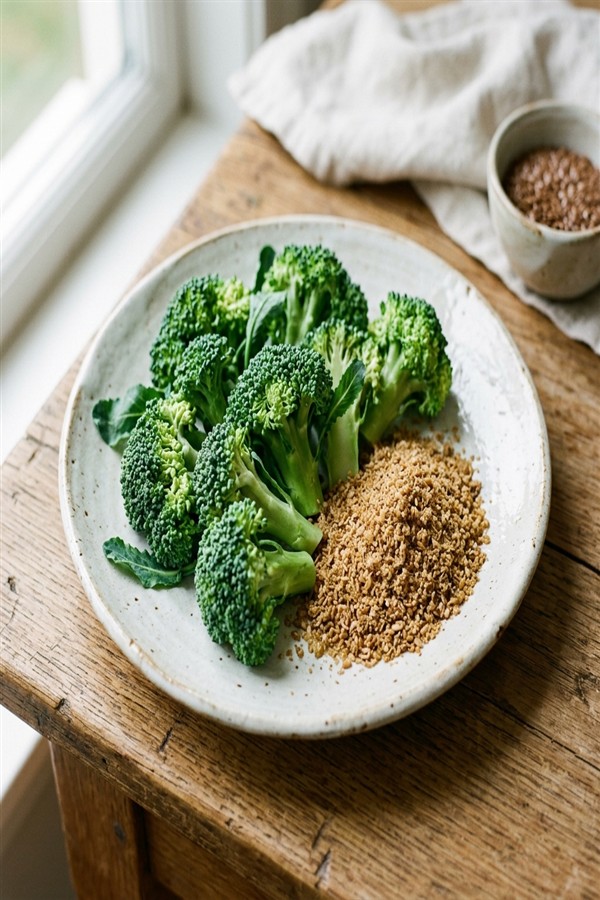
Estrobolome priority duo: Broccoli and ground flaxseeds. Broccoli contains DIM (diindolylmethane), which supports healthy estrogen detoxification through the liver. Flaxseeds contain lignans that bind excess estrogen in the gut and feed the beneficial bacteria of the estrobolome — addressing the estrogen excess pathway from two completely different directions simultaneously.
For how these foods play into the bigger hormonal picture, see our guide on gut health tips for women.
Frequently Asked Questions
What exactly is fibermaxxing?
The core fibermaxxing benefits come from this commitment to intentional fiber intake. Fibermaxxing is the intentional practice of increasing your daily dietary fiber intake to meet or meaningfully exceed recommendations — typically 25–38 grams for women, depending on age. It involves actively prioritizing high-fiber whole foods, making strategic food swaps, and understanding which fiber types serve which health goals. The term became popular on social media in 2023–2024, but the science behind it has decades of backing from Mayo Clinic, Harvard, and Cleveland Clinic.
Is fibermaxxing safe?
For most women, consistently eating 25–45 grams of dietary fiber daily is safe and well-supported by research. The key is gradual increase — adding roughly 3–5 extra grams per week — rather than a dramatic change overnight. Women with IBS, Crohn’s disease, diverticulitis, or a history of bowel obstruction should speak with a healthcare provider before making significant changes, since some high-fiber foods can aggravate those conditions.
Why did I get so bloated when I tried eating more fiber?
Sudden large increases in fiber cause gut bacteria to ferment aggressively, producing gas as a byproduct. This is a sign it’s working — your microbiome is responding to the new input — but the intensity is entirely avoidable with a gradual approach. Using The Ramp (increasing roughly 5g per week) gives bacterial populations time to shift before the higher intake creates discomfort. Almost every woman who “can’t tolerate fiber” ramped too fast, not too far.
How much fiber is too much when fibermaxxing?
Evidence suggests that persistent negative effects — primarily reduced iron, zinc, and calcium absorption, and ongoing GI discomfort — appear around 50–70 grams per day. The sweet spot for fibermaxxing is 35–45 grams for most women. There’s no formal upper limit for dietary fiber from whole food sources, but fiber supplements at very high amounts without adequate hydration can in rare cases contribute to bowel obstruction.
Can fibermaxxing help with PMS, PCOS, or hormonal symptoms?
Growing research supports this — through the estrobolome pathway described above. High-fiber diets support proper estrogen elimination rather than reabsorption, which can reduce estrogen dominance symptoms including PMS severity, mood instability, bloating, and androgen-related PCOS symptoms. This works alongside — not instead of — other hormonal health approaches.
What are the best foods to start with?
The highest-impact starting foods are chia seeds (10g per 2 tbsp), lentils (7.8g per ½ cup), black beans (7.5g), raspberries (8g per cup), and broccoli (5.1g per cup). For women, lentils and broccoli also support the estrobolome, making them the most strategic starting point. If you want one single change to make tomorrow morning: stir 2 tablespoons of chia seeds into your yogurt or oatmeal. That one addition gives you 10 grams.
Can fibermaxxing help with weight?
Fiber supports weight management through satiety biochemistry, not restriction. Soluble fiber stimulates GLP-1 and PYY that signal fullness meaningfully longer than low-fiber meals. Harvard nutrition research consistently links higher fiber intake to easier appetite management and lower long-term body weight in women. Most women doing consistent fibermaxxing notice reduced cravings and less compulsive snacking within 3–4 weeks — without intentionally eating less.
Do I need supplements to fibermaxx?
No — whole food sources are always preferable and provide fiber diversity no supplement can match. That said, psyllium husk powder is a legitimate, well-studied tool for filling gaps on busy days when whole food targets are hard to hit. Choose organic, single-ingredient options without added sugars or flavors. Avoid “fiber gummies” — they typically contain 2–3 grams of fiber alongside significant added sugar, which largely defeats the purpose.
The Bottom Line
The full spectrum of fibermaxxing benefits — gut health, hormone regulation, stable energy, clearer skin — make this the most underrated nutritional practice available to women. It’s backed by decades of research, recommended by every major health institution, and capable of improving your digestion, energy, hormones, and skin — simultaneously, from a single dietary change.
The gap between where most women actually are (about 12 grams daily) and where they need to be (25+ grams) is one of the highest-leverage health improvements available without a prescription or a dramatic lifestyle overhaul. You don’t need to become a different person. You need 7 food swaps and 4 weeks of patience with the process.
Start with The Ramp. Use the 7-Swap list this week — any three of them. Give your gut bacteria three to four weeks to adapt. Track your energy, regularity, and bloating — not obsessively, but honestly. The results compound quietly, and then they become unmistakable.
Your gut health isn’t isolated from the rest of your body. It’s wired to your hormones, your skin, your mood, and your energy in ways that most mainstream nutrition advice never fully acknowledges. Fiber is one of the clearest threads running through all of it.
Related reading:
- Gut Health Tips for Women: The Hormone-Gut Connection Nobody Told You About
- Hormone Balancing Foods: What to Eat at Every Phase of Your Cycle
- Gut-Brain Connection Symptoms: Is Your Gut Affecting Your Mood?
- Anti-Inflammatory Breakfast Ideas to Start Your Day Right
- Morning Wellness Routine for Women: What the Science Actually Supports
🌿 Ready to close the fiber gap with a daily top-up? Organic psyllium husk powder is the cleanest single-ingredient option we’ve found — 7 grams of soluble fiber per tablespoon, nothing else added. It’s what Week 4 of The Ramp is built around, and it works because psyllium is one of the most thoroughly studied dietary fibers in clinical nutrition research. Stir into water, a smoothie, or yogurt before meals.
This article is for educational and informational purposes only. It is not intended to diagnose, treat, cure, or prevent any condition or disease. Always consult with a qualified healthcare provider before making significant changes to your diet, particularly if you have a pre-existing digestive condition, are pregnant, or are taking medications that may be affected by changes in gut motility or nutrient absorption.

About Jane Smith
We turn solid evidence into everyday habits Americans can actually do—plain English, cups/oz, grocery-aisle swaps, and routines that fit real life. Our editorial process: Experience—we road-test tips in real schedules…