24 High-Protein Foods to Add to Your Grocery List
Protein can make meals feel more satisfying, support muscle repair, and help you build a balanced plate—without getting complicated. The...
Protein can make meals feel more satisfying, support muscle repair, and help you build a balanced plate—without getting complicated. The easiest way to eat more protein is to keep dependable high-protein foods on hand, then mix and match them across breakfast, lunch, dinner, and snacks. Below is a practical, US grocery-store-friendly list of 24 protein-rich picks (both animal and plant-based), plus simple ways to use them so they actually show up on your plate.
High-protein foods: what “high” means in real life
Before you fill your cart, it helps to define high-protein foods in everyday portions.
👉 If you’re also working on boosting your fiber intake, our detailed guide on Best High Fiber Foods List to Boost Daily Fiber Intake covers exactly what you need.
High-protein foods targets by age, sex, and activity
Most US labels list protein in grams, but needs vary by body size and activity. A common baseline is about 0.36 grams per pound (0.8 g/kg). For a 150-lb person, that’s roughly 54 g/day. If you’re active, lifting, or trying to protect muscle as you age, a higher range (often 0.5–0.8 g per pound) may be more appropriate with clinician guidance. An easy, food-first target is 20–30 g per meal (plus a snack if needed). Example: 1 cup Greek yogurt at breakfast or 3–4 oz chicken at dinner gets you close without math.
👉 Want to go further? Our complete breakdown of Essential Vitamins: Best Vitamin-Rich Foods List walks you through getting all your essential vitamins step by step.
High-protein foods basics: complete vs. complementary proteins
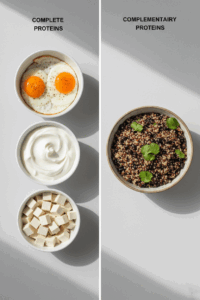
Some high-protein foods are “complete,” meaning they provide all essential amino acids in useful amounts. Most animal proteins (eggs, dairy, fish, meat) are complete, and soy (tofu, tempeh, edamame) is a standout plant-based complete option. Other plant proteins still work great—you just don’t need perfection in a single meal. Over a day, variety covers your bases. For example, black beans + quinoa or lentils + nuts can round out amino acids while adding fiber and minerals. Practical takeaway: pick a protein “anchor,” then add produce and a carb you enjoy at meals.
👉 If you’re also working on healthy weight management, our detailed guide on Best Fruits for Weight Loss: Low vs High Sugar covers exactly what you need.
Animal-based high-protein foods to buy in the US
Now that the basics are clear, animal-based high-protein foods are often the easiest way to hit protein goals.
High-protein foods from poultry, beef, pork, and turkey
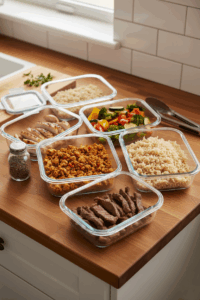
Think in portions you’ll actually cook: 3–4 oz cooked meat (about a deck of cards) is a reliable protein anchor. Build your list with chicken, turkey, beef, and pork, choosing leaner cuts more often if you’re watching saturated fat. Example: cook 1–2 lb ground turkey or chicken on Sunday and use it for tacos, salads, and rice bowls. Keep quick options too—3 oz sliced roast turkey in a sandwich, or pre-cooked chicken for weeknights. These high-protein foods freeze well, so family packs can be a budget win.
High-protein foods from eggs, milk, yogurt, cheese, and fish
For low-effort high-protein foods, dairy and seafood can carry a week. Add eggs (2 eggs for a fast breakfast base), milk (smoothies), Greek yogurt, cottage cheese, and cheese for easy protein boosts. For seafood, rotate salmon, tuna, and haddock (fresh, frozen, or canned). A concrete “no-brainer” dinner: bake salmon at 400°F for about 12–15 minutes, then serve with bagged salad and microwave rice. For easy grab-and-go, keep plain Greek yogurt cups and canned tuna stocked. Frozen haddock fillets thaw fast and bake well at 400°F. It’s great for lunches, too.
Plant-based high-protein foods that actually add up
If you prefer plant-forward meals, the trick is choosing high-protein foods that add up in real portions.
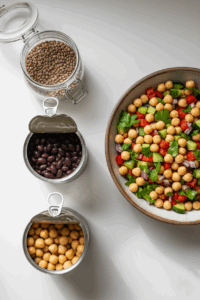
High-protein foods from beans, lentils, and chickpeas
Legumes are some of the most affordable high-protein foods in the store. Stock black beans, lentils, and chickpeas in your pantry (canned) or freezer (pre-cooked). As a practical reference, start with 1/2 cup cooked legumes as one “protein block,” and use two blocks for a heartier meal. Examples: chickpeas in a sheet-pan roast, black beans in burrito bowls, or lentils in soup. If canned beans feel gassy, rinse well and start with 1/3 cup, then increase slowly. Bonus: legumes bring fiber, which many US adults don’t get enough of.
High-protein foods from soy, nuts, nut butter, walnuts, and quinoa
For plant-based high-protein foods that feel meal-sized, lean on soy and smart add-ons. Put tofu, tempeh, and edamame on your list—soy is versatile and protein-dense. Then add calorie-dense boosters: almonds, cashews, peanuts, peanut butter, and walnuts. A realistic snack example is 2 Tbsp peanut butter with fruit or whole-grain toast. Finally, include quinoa, a higher-protein grain that works in salads and bowls; 1 cup cooked can easily become two lunches. Keep frozen edamame for a 5-minute protein add-on. Sprinkle nuts on salads or oatmeal for a quick protein bump.
How to use high-protein foods all week (meals + prep)
With your list in hand, the next step is making high-protein foods automatic in your routine.
High-protein foods meal formula for breakfast, lunch, and dinner
Use one repeatable formula: protein anchor + fiber + color + flavor. Breakfast: 1 cup Greek yogurt + berries + chopped walnuts. Lunch: quinoa + chickpeas + veggies + a lemony dressing. Dinner: 3–4 oz chicken, pork, or haddock + frozen veggies + a carb (potatoes, rice, or pasta). If you’re aiming for 20–30 g per meal, check labels and adjust portions—brands vary. If you snack, aim for 10–20 g protein (like cottage cheese or peanuts). Consistency matters more than hitting a perfect number daily. If mornings are rushed, blend milk, Greek yogurt, and peanut butter for a 2-minute smoothie.
High-protein foods prep plan + snack swaps (fast wins)
Try this 6-step high-protein foods prep plan:
- Cook 1–2 lb chicken or ground turkey with simple seasoning.
- Bake tofu or tempeh at 400°F for 20 minutes, flipping once.
- Rinse and portion beans into 1/2-cup containers.
- Cook quinoa (about 1 cup dry) and refrigerate for bowls.
- Hard-boil 6 eggs for grab-and-go protein.
- Stock “fast wins”: canned tuna, frozen edamame, and Greek yogurt cups.
Tips & swaps (high-protein foods made easy):
- Swap chips for cottage cheese + salsa.
- Swap cookies for Greek yogurt + cinnamon.
- Swap candy for a handful of almonds or peanuts.
- Swap plain toast for peanut butter toast.
- Swap ice cream for frozen yogurt bark.
- Swap “no snack” for milk in a fruit smoothie.
High-protein foods FAQ
Protein weight loss?
High-protein foods can help you feel fuller, which may make portion control easier, but weight loss depends on calories and habits. Start by adding protein to meals you already eat—Greek yogurt at breakfast or beans at lunch then keep portions consistent for 2 weeks.
Fast breakfast protein?
Pick one anchor and repeat it: 2 eggs, 1 cup Greek yogurt, or cottage cheese with fruit. Add walnuts or peanut butter for staying power. If mornings are hectic, prep 2–3 grab-and-go options (hard-boiled eggs or yogurt cups) so breakfast takes under 5 minutes.
Meat-free protein?
Build meals around plant-forward high-protein foods like tofu, edamame, lentils, beans, quinoa, and nuts. Aim for 1/2 cup legumes plus a soy protein. Example: quinoa + chickpeas + edamame with a lemony dressing. Frozen edamame and pre-cooked lentils save busy weeknights when dinner is late often.
Protein powder needed?
Not necessarily. Many people meet needs with high-protein foods like eggs, Greek yogurt, chicken, beans, and tofu. Protein powder can be convenient in smoothies, but it’s optional. If you use it, watch added sugar and choose a brand you tolerate well. Consider your budget, too.
CTA: Save this high-protein foods list, pick your five, and plan one protein anchor for breakfast, lunch, and dinner this week.
Disclaimer: This content is for informational purposes only and is not a substitute for professional medical advice.

About Sarah Williams
We turn solid evidence into everyday habits Americans can actually do—plain English, cups/oz, grocery-aisle swaps, and routines that fit real life. Our editorial process: Experience—we road-test tips in real schedules…