Gut Health Tips for Women: The Hormone-Gut Connection Nobody Told You About
Discover 12 **gut health tips for women** that actually work - from hormone balancing to the 5-day spring reset. Reclaim your digestive vitality today.
Have you ever felt like you’re doing everything “by the book”? You’ve swapped soda for kombucha, you’re hitting your steps, and your fridge looks like a farmer’s market. Yet, there you are at 3:00 PM, feeling like your stomach is about to pop. And don’t even get me started on how everything seems to go south the second your period is around the corner.
If you’re frustrated because generic “gut health” advice hasn’t worked, it’s because it wasn’t made for your body. As a woman, your gut doesn’t work alone. It’s part of a delicate dance with your hormones, your unique anatomy, and a clever group of bacteria we call the oestrobolome (think of them as your gut’s estrogen-cleaning crew).
In this guide, I’m sharing 12 gut health tips for women that actually work. We’ll look at why your hormones might be messing with your digestion, the link between your gut and your skin, and a simple 5-day Spring Reset you can start today.
Quick Takeaways:
- Hormones control speed: Progesterone slows things down, which is why you feel bloated right before your period.
- Your Cleaning Crew: A healthy gut clears out used estrogen, meaning better skin and smoother cycles.
- Diversity is King: Aiming for 30 different plants a week is the best thing you can do for your microbiome.
- Time it Right: Matching what you eat to your cycle phase can stop that “heavy” feeling for good.
Why Our Guts Are Just… Different

It’s not just in your head. Most medical research was based on men for a long time, but our digestive systems are built differently. According to researchers at Yale Medicine, women are twice as likely as men to deal with IBS. Here’s why:
We Have a “Longer” Road
Believe it or not, women’s intestines are actually a bit longer than men’s. Since our abdominal space is smaller, everything is packed in tighter. This means food has a longer, more cramped journey, which gives gas more time to build up. That’s why that “afternoon bloat” hits us so hard.
Progesterone: The Relaxant
Think about the two weeks before your period (the luteal phase). Your progesterone levels climb. While this helps balance your hormones, it also relaxes the muscles in your gut. When those muscles relax, things move slower. This “lag time” is exactly why you feel sluggish and constipated right before your period starts.
Pro Tip: This is a great time to focus on healthy fats for women to keep things moving smoothly.
The “Cleaning Crew” You Didn’t Know You Had
Ever noticed how gut troubles often show up alongside heavy periods or acne? That’s thanks to the oestrobolome.
Think of this as a specialized team of bacteria that “mops up” your used estrogen and gets it ready to leave the body. When your gut is happy, your hormones stay balanced. But when things are off, an enzyme can “reactivate” that old estrogen and send it back into your system. This is a huge reason behind intense PMS and feeling “puffy.”
Supporting your gut isn’t just about digestion—it’s about getting your hormones back in harmony.
12 Gut Health Tips for Women That Actually Work
Forget the “magic pills.” If you want a gut that feels good, start with these simple foundations.

1. The “30 Plants” Challenge
The ZOE Project (one of the world’s biggest gut studies) found that the happiest guts belong to people who eat 30 different plants a week. This sounds like a lot, but “plants” includes spices, nuts, seeds, and even your morning coffee!
Try this: Every time you go grocery shopping, pick up one fruit or veggie you’ve never tried before.
2. Feed Your “Good Guys”
Fiber isn’t just for staying regular; it’s food for your bacteria. Focus on “prebiotics” like garlic, onions, leeks, and asparagus. If you’re struggling to get enough, I’ve found that adding a scoop of fiber to my morning smoothie makes a world of difference.
3. A Little Ferment Goes a Long Way
You don’t need to drink a gallon of kombucha. A small serving of kefir, kimchi, or sauerkraut every day is much better than a huge dose once a week. Check out my list of fermented foods benefits for more ideas.
4. Watch Your Water Timing
Here’s a small change that works: Stop chugging water *during* your meals. It can dilute your digestive juices. Instead, hydrate 30 minutes before or after you eat. And try starting your day with warm lemon water—it “wakes up” your liver and gut.
5. Your Gut is Listening (Stress Matters)
The “gut-brain axis” isn’t just a fancy term. When you’re stressed, your body literally shuts down digestion to focus on “survival.” Just taking five deep breaths before you eat can tell your body it’s safe to digest.
6. Sync Your Plate with Your Cycle
Your gut speed changes throughout the month.
- First half (Follicular): You can usually handle raw salads and cold bowls.
- Second half (Luteal): Your gut is slower. Stick to warm, cooked foods like soups to make things easier on your system.
Match this with a cycle syncing diet plan for the best results.
7. The 10-Minute “Digestive Walk”
A quick walk after a meal isn’t just good for your heart; it helps nudge your gut muscles into action. It’s the easiest way to prevent that “food coma.”
8. Sleep is for Healing
your gut lining actually repairs itself while you sleep! If you’re constantly cutting your sleep short, you’re not giving your gut the time it needs to seal up and stay healthy.
9. Get the Right Probiotic
Not all probiotics do the same thing. For us, specific “Lactobacillus” strains are king—they support both your gut and your vaginal health.
10. Love Your Liver (and Oestrobolome)
Support your estrogen detox by eating “crunchy” veggies like broccoli, cabbage, and cauliflower. They contain a compound called DIM that helps your body clear out used hormones.
11. Seal the Deal
If you feel “foggy” or have skin issues, your gut lining might need some TLC. Bone broth or collagen are great for providing the building blocks your gut needs to stay “tight” and healthy.
12. Don’t Fear the Fats
Despite what we were told in the 90s, your gut *needs* healthy fats to absorb vitamins and produce hormones. Focus on avocados, olive oil, and walnuts.
📅 The 5-Day Spring Gut Reset (April Plan)
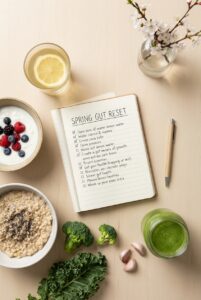
Spring is the perfect time for a clean slate. Try this 5-day plan to wake up your digestion.
| Day | Morning Habit | Power Food | Evening Ritual | ||
|---|---|---|---|---|---|
| 1 | Lemon water + breaths | Add 3 new plants | 15-min post-dinner walk | ||
| 2 | Kefir or yogurt bowl | Broccoli or Kale (DIM power) | No screens 1 hr before bed | ||
| 3 | Oats with chia seeds | Garlic, Leeks, or Onions | 10-min gentle yoga | ||
| 4 | Warm ginger tea | Avoid fancy “processed” snacks | A quick journal session | ||
| 5 | Green smoothie | Check: Did you hit 30 plants? | Vagus nerve reset (cold splash) |
Common Questions I Get
Is coffee bad for my gut?
It depends! Coffee is actually high in antioxidants, which your gut loves. But if you find it makes you jittery or sends you racing to the bathroom, try a low-acid version or have it *after* breakfast, never on an empty stomach.
How do I know if my gut is “unbalanced”?
Look for signs like constant bloating, “moody” skin, irregular cycles, or feeling tired no matter how much you sleep. If you’re curious about specific symptoms, read my guide on gut-brain connection symptoms.
What’s the best fiber for women?
Variety is better than one single source. But if you want a reliable start, ground flaxseeds are a “superfood” for women—they provide fiber and help balance estrogen at the same time.
The Bottom Line
Your gut isn’t a factory—it’s a living, breathing ecosystem that changes with your hormones. When you stop fighting your biology and start supporting it with anti-inflammatory foods and cycle-synced habits, that stubborn bloat finally starts to fade.
Start small. Pick one morning habit and one new plant food this week. Your “cleaning crew” will thank you!
Health Disclaimer: The information on this site is for educational purposes only and is not intended as medical advice. Always consult a qualified healthcare provider before making any changes to your diet, exercise routine, or supplement use.

About Jane Smith
We turn solid evidence into everyday habits Americans can actually do—plain English, cups/oz, grocery-aisle swaps, and routines that fit real life. Our editorial process: Experience—we road-test tips in real schedules…