7 Anti-Inflammatory Green Smoothie Recipes to Heal Your Gut
If your regular green smoothie is not doing much for bloating, energy, or inflammation, these anti-inflammatory green smoothie recipes show how to build a better blend.
- Why Anti-Inflammatory Green Smoothie Recipes Need an Upgrade
- Core Ingredients in Anti-Inflammatory Green Smoothie Recipes
- 7 Powerful Anti-Inflammatory Green Smoothie Recipes
- How to Meal Prep Anti-Inflammatory Green Smoothie Recipes
- Anti-Inflammatory Green Smoothie Recipes FAQ
- The Bottom Line on Anti-Inflammatory Green Smoothie Recipes
I remember the exact morning I realized something was wrong. I was eating clean, working out, and getting my sleep, yet my joints ached every single morning and the scale refused to budge. Sound familiar? It turns out, the culprit for me wasn’t calories—it was chronic, low-grade inflammation hiding in my gut. It saps your energy and makes your body store fat over time.
Here’s what actually changed things for me: swapping my generic morning shake for targeted anti-inflammatory green smoothie recipes. By the end of this read, you’ll have a simple morning routine that floods your body with the exact nutrients it needs to cool inflammation, boost energy, and finally break through that weight loss plateau.
Quick Takeaways:
- Not all green smoothies reduce inflammation; you need specific spices and fats.
- Always add black pepper when using turmeric to actually absorb the curcumin.
- Blending helps break down tough plant cell walls, giving you better nutrient access.
Why Anti-Inflammatory Green Smoothie Recipes Need an Upgrade
For years, I made the mistake of just throwing spinach and water into a blender. Standard green smoothies are great for basic vitamins, but they don’t actively target the root cause of systemic inflammation. You need a strategic blend of greens, healthy fats, and powerful spices to signal your immune system to calm down.
The research backs this up: a 2023 study published in the Journal of Nutrition found that consuming leafy greens paired with specific omega-3 fatty acids significantly reduced inflammatory markers like CRP in just four weeks. So what does that mean for you practically? It means that properly combining your smoothie ingredients creates a compounding effect that works much faster than eating these foods separately.
Core Ingredients in Anti-Inflammatory Green Smoothie Recipes
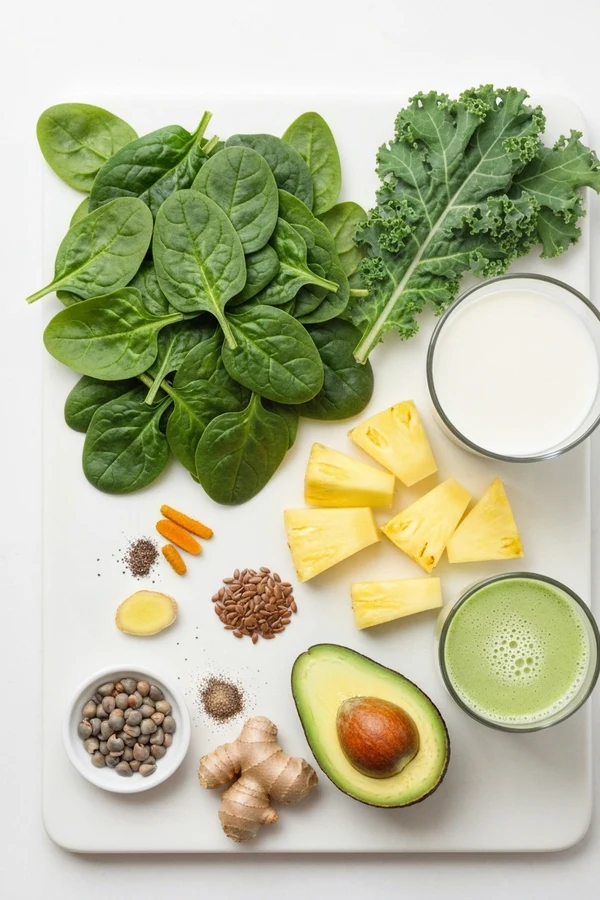
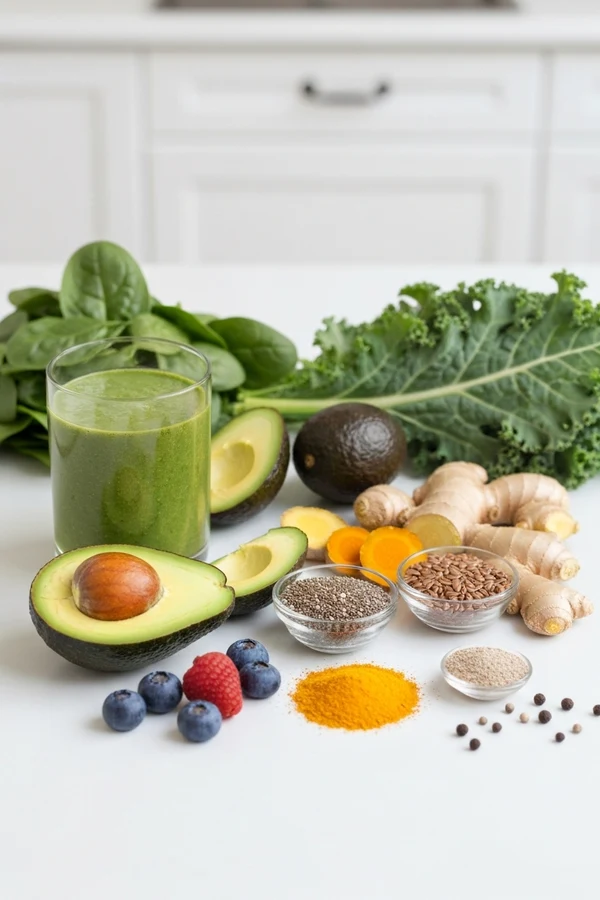
To build the best anti inflammatory green smoothie recipes, you have to respect the science of nutrient absorption. And that’s actually the key a lot of people miss: healthy fats. Without fats, your body literally can’t absorb the crucial fat-soluble vitamins (A, D, E, and K) found in your leafy greens.
Research from the American Journal of Clinical Nutrition demonstrates that adding a source of lipid (like avocado or chia seeds) to vegetables increases the absorption of antioxidant carotenoids by over 400%. This means you should always include a fat source in your blender if you want to get real anti-inflammatory results.
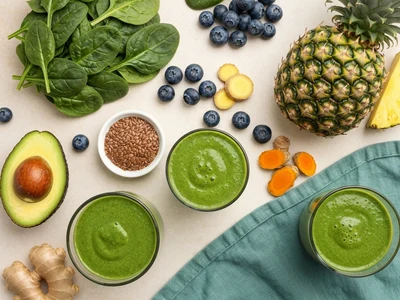
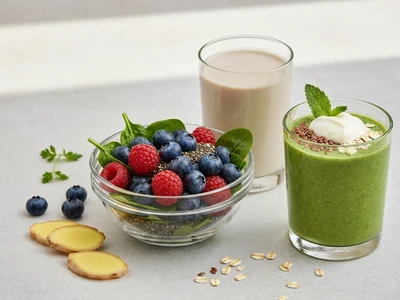
When selecting your anti-inflammatory foods, focus on spinach or kale for the base. Add berries or pineapple to naturally sweeten, and always incorporate a fat like flax seeds, hemp hearts, or avocado. Finally, the magic happens when you add spices. Fresh ginger and ground turmeric are non-negotiable for reducing swelling and joint pain in my experience.
7 Powerful Anti-Inflammatory Green Smoothie Recipes
You don’t need to overcomplicate your morning. Here are seven highly specific, science-backed recipes that I rotate through during my week. They taste incredible and get right to work on reducing your inflammation.
If you want the broader framework behind these blends, the best companion read is our anti-inflammatory meal plan so your smoothie fits into a full day that actually supports gut healing.
1. The Ginger-Turmeric Glow Blend
This is my personal daily defense against joint stiffness. If I am feeling achy after a hard workout or a restless night, this is exactly what goes into my blender.
What you need:
- 1 cup unsweetened almond milk (or coconut water)
- 2 cups fresh baby spinach
- 1/2 cup frozen pineapple chunks
- 1/2 tsp fresh grated ginger (don’t use powdered if you can help it)
- 1/2 tsp ground turmeric
- A tiny pinch of black pepper
- 1 tbsp chia seeds
How to make it: Blend the almond milk, spinach, and chia seeds together first for about 30 seconds to pulverize the greens. Then add the pineapple, ginger, turmeric, and black pepper. Blend for another 45 seconds until completely smooth.
Why it works: The pineapple provides bromelain, an enzyme that actively breaks down inflammatory proteins in your body. But the real magic is the turmeric-pepper combo. Black pepper contains piperine, which boosts your absorption of turmeric’s anti-inflammatory curcumin by up to 2,000%.
2. The Omega-3 Gut Healer
If you struggle with bloating or an unpredictable stomach, this recipe relies on healthy fats to soothe the digestive tract and promote robust gut health.
What you need:
- 1 cup coconut water (for electrolyte hydration)
- 1 cup kale (hard stems completely removed)
- 1/2 medium ripe avocado
- 1/2 cup frozen wild blueberries
- 1 tbsp hemp seeds
- Squeeze of fresh lemon juice
How to make it: Kale can be tough to blend. Add the coconut water, lemon juice, and kale to the blender first and pulse on high until liquefied. Add the avocado, blueberries, and hemp seeds. Blend until creamy.
Why it works: Avocado and hemp seeds are loaded with anti-inflammatory omega-3 and omega-6 fatty acids. These fats don’t just soothe the gut lining; they are absolutely essential for helping your body extract the maximum amount of fat-soluble antioxidants from the kale. Wild blueberries add a massive dose of anthocyanins, which protect your cells from oxidative stress.
3. The Iron-Rich Recovery Shake
Perfect for post-workout recovery or fighting mid-afternoon fatigue. It’s loaded with iron rich foods to build red blood cells while keeping cellular inflammation incredibly low.
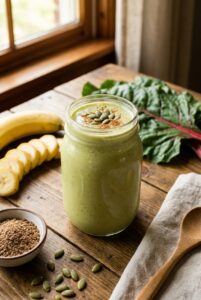
What you need:
- 1 cup soy milk or oat milk
- 2 cups Swiss chard or spinach
- 1 small frozen banana
- 1 tbsp ground flax seeds
- 1 tsp high-quality cinnamon
- 1 tsp raw pumpkin seeds (pepitas)
How to make it: Add your milk of choice and greens to the blender. Next, add the frozen banana, flax seeds, pumpkin seeds, and cinnamon. Blend on medium for 30 seconds, then high for 30 seconds.
Why it works: Swiss chard and pumpkin seeds are stellar sources of plant-based iron (non-heme iron). Because plant iron is harder for the body to absorb, the mild vitamin C from the banana and greens helps pull it into your system. Flax seeds provide the crucial omega-3 fats needed to lower the inflammatory profile of your blood.
4. The Matcha-Avocado Brain Boost
On mornings when my brain feels foggy—a classic symptom of neuro-inflammation—this is my secret weapon. It provides sustained energy without the terrible coffee crash.
What you need:
- 1 cup unsweetened cashew or almond milk
- 1.5 cups fresh spinach
- 1 tsp ceremonial grade matcha powder
- 1/4 medium avocado
- 1/2 frozen green apple (core removed)
- 1 tsp raw honey (optional)
How to make it: Toss the milk, spinach, and matcha into the blender. Blend until smooth to ensure the matcha powder doesn’t clump. Add the avocado and green apple, blending on high until silky.
Why it works: Matcha is packed with EGCG (epigallocatechin gallate), one of the most thoroughly researched anti-inflammatory antioxidants on the planet. Combined with the monounsaturated fats in the avocado, this smoothie helps protect your brain cells from the oxidative damage that causes brain fog.
5. The Celery-Cucumber Deep Flush
When you’ve had a heavy weekend of eating or drinking and you feel puffy and swollen, this ultra-hydrating, low-sugar green smoothie is basically a reset button.
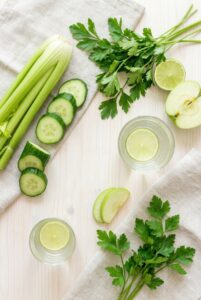
What you need:
- 1/2 cup water or coconut water
- 1 stalk celery, chopped
- 1/2 large cucumber (peel left on if organic)
- 1 handful fresh parsley
- 1/2 green apple
- Juice of half a lime
How to make it: This smoothie has a lot of natural water in the vegetables. Add the water, celery, cucumber, and parsley. Blend for 45 seconds. Add the green apple and lime juice, blending until frothy.
Why it works: Celery and cucumber are natural diuretics rich in antioxidants like luteolin, which has been shown to reduce inflammation in the gut and brain. Parsley contains a powerful flavonoid called apigenin, which actively lowers inflammatory markers in the bloodstream.
6. The Berry-Spinach Antioxidant Bomb
This is the smoothie I make when I feel a cold coming on. It’s vibrant, incredibly flavorful, and perfectly balances earthy greens with tart fruit.
What you need:
- 1 cup green tea (brewed and chilled)
- 2 cups spinach
- 1/2 cup frozen mixed berries (raspberries, strawberries, blackberries)
- 1 tbsp chia seeds
- 1/2 tsp fresh grated ginger
How to make it: Brew the green tea the night before and keep it in the fridge. In the morning, blend the chilled tea and spinach. Add the frozen berries, chia seeds, and ginger. Blend on high.
Why it works: We are stacking antioxidants here. The chilled green tea provides a base of EGCG, while the dark berries offer flavonoids that sweep through your system neutralizing free radicals. The chia seeds provide the fat needed to absorb the vitamins from the spinach.
7. The Tart Cherry & Kale Sleep Support
Who says you can only drink smoothies in the morning? I drink this specific blend about two hours before bed on days when my nervous system feels frayed.
What you need:
- 1/2 cup chamomile tea (brewed and chilled)
- 1/2 cup unsweetened tart cherry juice
- 1 cup baby kale (stems removed)
- 1 tbsp almond butter
- 1/2 frozen banana
How to make it: Blend the tea, tart cherry juice, and kale until the greens are completely broken down. Add the almond butter and frozen banana, blending until creamy.
Why it works: Sleep deprivation is a primary trigger for systemic inflammation. Tart cherry juice is one of the only natural food sources of melatonin, helping you fall into deep, restorative sleep. The almond butter provides healthy fats and magnesium to relax tense muscles, while the kale delivers vital micronutrients.
How to Meal Prep Anti-Inflammatory Green Smoothie Recipes
The biggest trap we fall into is a lack of preparation. When you’re rushing out the door at 7:00 AM, you won’t stop to peel ginger. You need a system that makes drinking your anti-inflammatory green smoothie recipes completely frictionless.
- Step 1: Prep your freezer bags on Sunday. Gather five silicone reusable bags. Divvy up your greens, frozen fruits, and spices into each bag. Don’t add the liquid yet.
- Step 2: Store your healthy fats separately. Keep a small jar of your pre-mixed chia, flax, and hemp seeds on the counter next to the blender. Fats hold up better when not frozen with moisture.
- Step 3: Blend and go. In the morning, dump one freezer bag into the blender. Add your liquid of choice and a scoop of your seed mix. Blend on high for 60 seconds.
If you struggle with consistency, you can also look into incorporating a proven anti-inflammatory diet meal plan alongside your new smoothie habit.
Anti-Inflammatory Green Smoothie Recipes FAQ
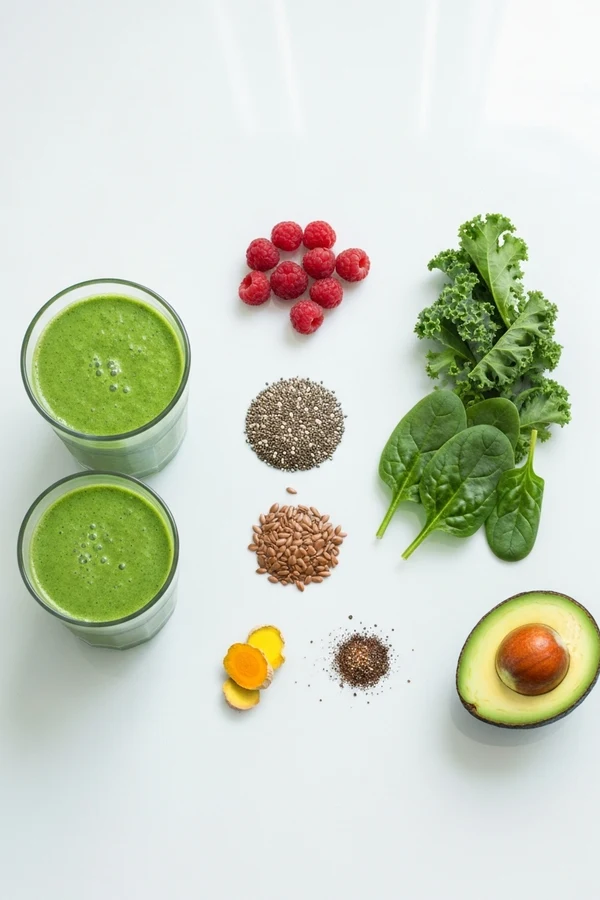
What are the best anti-inflammatory ingredients for smoothies? The best ingredients include dark leafy greens (spinach, kale), omega-3 rich seeds (chia, flax, hemp), and potent spices like turmeric and fresh ginger. Pineapple and berries are the best fruits to use because they also contain highly active anti-inflammatory compounds.
How does black pepper help with turmeric? Black pepper contains a compound called piperine. Piperine significantly increases your body’s ability to absorb curcumin—the active anti-inflammatory component in turmeric—by up to 2,000 percent. Always use them together.
Can I use kale instead of spinach? Yes, you can easily swap them. However, kale has a stronger, slightly more bitter flavor and a tougher texture compared to mild spinach. Always remove the fibrous stems from the kale leaves before blending to maintain a smooth texture.
The Bottom Line on Anti-Inflammatory Green Smoothie Recipes
Chronic inflammation is the silent roadblock standing between you and your wellness goals, but you have the power to turn it around starting tomorrow morning. By upgrading your blender routine with specific fats, greens, and spices, you’re giving your body the exact tools it needs to heal. Keep your recipes simple, remember to add black pepper to your turmeric, and stay consistent with your morning habit.
Want to take this further? Check out our complete guide to potassium rich foods to further support your cellular health and balance out your electrolytes.
The content provided on EssentialWellnessAZ is for informational and educational purposes only and is not intended as medical advice. Always consult with a qualified healthcare professional before making significant changes to your diet, exercise routine, or supplement regimen, especially if you have underlying health conditions or are taking medication.

About Jane Smith
We turn solid evidence into everyday habits Americans can actually do—plain English, cups/oz, grocery-aisle swaps, and routines that fit real life. Our editorial process: Experience—we road-test tips in real schedules…