Best Hormone-Balancing Foods for Sleep & Stress
If you’ve ever felt “off” (wired at night, tired mid-afternoon, moody for no clear reason), it’s tempting to blame hormones,...
- Hormone-balancing foods: what “support” really means
- Estrogen-supporting hormone-balancing foods to add this week
- Testosterone-supporting hormone-balancing foods (for men and women)
- Cortisol-friendly hormone-balancing foods for stressful seasons
- Melatonin hormone-balancing foods for better sleep routines
- FAQ: Hormone-balancing foods
- CTA
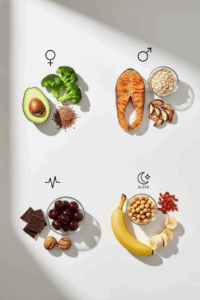
If you’ve ever felt “off” (wired at night, tired mid-afternoon, moody for no clear reason), it’s tempting to blame hormones, and sometimes that’s fair. The good news: you don’t need a trendy cleanse to start supporting hormone health. A short, practical list of hormone-balancing foods can help you build steadier meals, better sleep routines, and calmer “stress days.” This guide breaks down foods commonly linked with support for estrogen, testosterone, cortisol, and melatonin—plus simple portions and grocery-store ways to use them.
Hormone-balancing foods: what “support” really means
Think of hormone-balancing foods as ingredients that support the systems that make and process hormones—your liver, gut, and stress-response pathways—rather than “fixing” hormones overnight. A helpful way to use this list is to pick 1–2 foods per hormone category and rotate them through the week. For example, adding 1–2 tbsp ground flaxseed to breakfast and planning 2 salmon dinners can be more impactful than chasing one “magic” supplement.
👉 For a deeper dive into topics related to medicine, check out: Food Is Medicine: Best Foods for Each Organ — it’s packed with practical tips.
Hormone-balancing foods and hormones 101 (estrogen, testosterone, cortisol, melatonin)
Estrogen and testosterone aren’t just “female” or “male” hormones—everyone has both, and balance is about context. Cortisol is your main stress hormone; it naturally rises in the morning and falls at night. Melatonin is a sleep-wake signal that helps your body know when it’s time to wind down. Hormone-balancing foods generally support these cycles by providing fiber (gut support), omega-3s (inflammation support), and key micronutrients like zinc and selenium. Example: swapping a sugary breakfast for ½ cup dry oats (about 40 g) with protein can reduce the energy crash that makes stress feel worse.
👉 This pairs well with our Acne Diet: Foods to Avoid and Foods to Eat guide if you want the full picture on topics related to avoid.
Hormone-balancing foods: what food can help and what it can’t do
Here’s the realistic promise: hormone-balancing foods can support steadier blood sugar, better sleep habits, and nutrient sufficiency—factors that influence how you feel day to day. What food typically can’t do is replace medical care for thyroid disease, PCOS, endometriosis, low testosterone, or severe insomnia. If symptoms are intense or sudden (missed periods, rapid weight change, new chest pain, or extreme fatigue), it’s worth checking in with a clinician. A practical “food-first” goal: aim for 25–35 g fiber/day and include protein at each meal (like 20–30 g at breakfast) to support steadier mood and energy.
👉 If you’re also working on managing blood sugar naturally, our detailed guide on 15 Best Foods to Control Diabetes Naturally covers exactly what you need.
Hormone-balancing foods safety notes (thyroid meds, blood thinners, allergies)
Before you “stack” new foods, do a quick safety scan. If you take thyroid medication, high-fiber additions (like flax) can change absorption—many people do best spacing them a few hours apart. If you use blood thinners, be cautious with concentrated “superfood” add-ons and ask your care team about what’s appropriate. Food allergies matter too: oysters, nuts, and soy are common triggers. Start small: try 1 tbsp ground flaxseed for a week, or 1–2 Brazil nuts (not a handful) to avoid overdoing selenium.
Estrogen-supporting hormone-balancing foods to add this week
Now that you know what “support” means, let’s make hormone-balancing foods easy to shop and use. For estrogen support, the goal is often fiber, plant compounds, and cruciferous veggies—foods that fit naturally into bowls, salads, and weeknight dinners. You don’t need to eat everything at once. Pick two: flax + chickpeas, or tofu + broccoli.
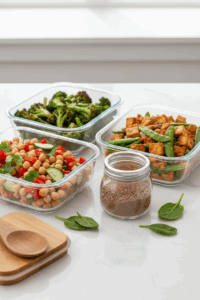
Estrogen-supporting hormone-balancing foods: flaxseeds (how much and how to eat)
Flaxseed is a classic hormone-balancing food because it’s rich in fiber and lignans (plant compounds often discussed in estrogen support). Use 1–2 tbsp ground flaxseed per day (whole flax often passes through undigested). Easy examples: stir 1 tbsp into Greek yogurt, blend into a smoothie, or sprinkle on oatmeal. If you’re new to added fiber, start with 1 tbsp and increase after a week to avoid bloating. A simple breakfast idea: oats + berries + 1 tbsp ground flax + a spoon of peanut butter for staying power.
Estrogen-supporting hormone-balancing foods: chickpeas, tofu, and broccoli meal ideas
Chickpeas add fiber and plant protein—two pillars of hormone-balancing foods. Try ½ cup cooked chickpeas in a salad kit, or mash with lemon and olive oil for a quick “chunky hummus” toast. Tofu is a flexible protein that fits tacos, stir-fries, or sheet-pan meals; a realistic serving is 3–4 oz (85–113 g). Broccoli (and other cruciferous veggies) is easy to keep consistent: roast 2 cups florets at 425°F for 18–22 minutes with olive oil, salt, and garlic. Example dinner: tofu + broccoli + rice with a simple soy-ginger sauce.
Testosterone-supporting hormone-balancing foods (for men and women)
Transitioning from estrogen support, testosterone-focused hormone-balancing foods often highlight zinc, selenium, and antioxidant-rich produce. This isn’t about “boosting” testosterone dramatically—it’s about meeting nutrient needs that support healthy hormone production and recovery. Choose one “anchor” (like salmon or oysters) and pair it with consistent basics (garlic, pomegranate, nuts).
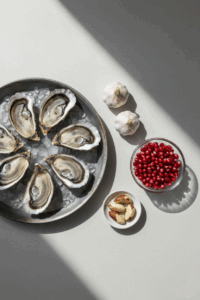
Testosterone-supporting hormone-balancing foods: oysters and zinc portions
Oysters are frequently mentioned as hormone-balancing foods because they’re high in zinc, a mineral involved in hormone production and immune function. If you enjoy seafood, aim for a modest portion: 3–6 oysters as an appetizer or protein add-on. Not into oysters? You can still support zinc intake with grocery-store options like beef, pumpkin seeds, or fortified cereals—though they’re not on the image list, they’re practical substitutes. Example meal: a seafood night with oysters plus a side salad and roasted potatoes—simple, satisfying, and not supplement-heavy.
Testosterone-supporting hormone-balancing foods: Brazil nuts, garlic, pomegranates (smart use)
Brazil nuts are a selenium powerhouse—so treat them like “capsules from nature.” For hormone-balancing foods, the sweet spot is often 1–2 Brazil nuts per day; more isn’t better. Garlic is an easy “daily” food: add 1 clove to eggs, roasted veggies, or sauces. Pomegranates bring antioxidants; choose seeds when you can, and keep juice portions modest. Example: ½ cup pomegranate arils on a spinach salad, or 4 oz (½ cup) 100% pomegranate juice diluted with sparkling water. If you’re watching sugar, seeds usually feel more filling than juice.
Cortisol-friendly hormone-balancing foods for stressful seasons
Moving into stress support, cortisol-friendly hormone-balancing foods are mostly about stability: steady blood sugar, omega-3s, and nutrient-dense carbs. When life is busy, your body doesn’t need perfection—it needs consistency. A simple rhythm helps: protein + fiber at breakfast, a planned snack, and one “real dinner” most nights.
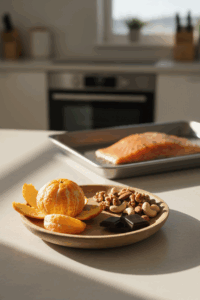
Cortisol-friendly hormone-balancing foods: dark chocolate and oranges (how much)
Dark chocolate can fit into hormone-balancing foods when portions stay realistic. Look for 70% cacao or higher and keep it to 1 oz (about 2–3 squares) as an after-lunch treat—not late at night if caffeine affects you. Oranges (and vitamin C foods) are practical stress-day snacks because they travel well. Example: pack 1 orange plus ¼ cup nuts for a 3 p.m. slump. If you want a grocery-store upgrade, pair fruit with protein (string cheese, yogurt) to avoid the quick dip that can make stress feel sharper.
Cortisol-friendly hormone-balancing foods: salmon and oats (easy weeknight combos)
Salmon earns its spot among hormone-balancing foods thanks to omega-3 fats. A simple cooking method: bake 6 oz salmon at 400°F for 12–15 minutes (depending on thickness) with lemon and garlic. Oats are a cortisol-friendly carb that can support steadier energy—especially when you add protein and fat. Example breakfast: ½ cup dry oats cooked with milk (or soy milk), topped with 1 tbsp flax, walnuts, and cinnamon. Example dinner: salmon + roasted broccoli + a quick oat “savory bowl” (oats cooked in broth, topped with veggies).
Melatonin hormone-balancing foods for better sleep routines
As we shift from stress support to sleep, melatonin-focused hormone-balancing foods work best when paired with a consistent evening routine. Food won’t replace good sleep hygiene, but it can make winding down easier, especially if late-night hunger or blood sugar swings wake you up. Pick one snack idea and repeat it for a week.
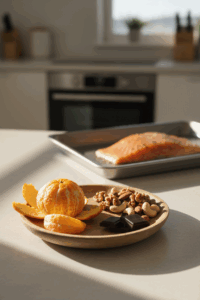
Melatonin hormone-balancing foods: cherries, walnuts, pistachios (timing + portions)
Cherries (especially tart cherry products) are often discussed in sleep support. A simple approach: try ½ cup tart cherries or 4–8 oz tart cherry juice about 1–2 hours before bed and see how you feel. Walnuts and pistachios are satisfying hormone-balancing foods because they combine healthy fats with a snackable format. Keep portions moderate: 1 oz walnuts (about a small handful) or ¼ cup pistachios. Example bedtime snack: Greek yogurt + cherries + chopped walnuts—sweet, filling, and not overly heavy.
Melatonin hormone-balancing foods: goji berries (tea/snack ideas + cautions)
Goji berries can be used like a functional “topping” rather than a giant serving. For hormone-balancing foods, start with 1–2 tbsp stirred into oatmeal, yogurt, or trail mix. You can also steep a small handful in hot water for a mild tea. Example: an evening mug with goji berries + chamomile, plus a few pistachios. Caution matters: if you take blood thinners or have complex medication needs, check with your clinician before making goji berries a daily habit. Like all dried fruit, they’re concentrated—so portions matter.
Tips & swaps (keep hormone-balancing foods simple)
- Grind flaxseed for better use; start with 1 tbsp/day, then increase if tolerated.
- Choose pomegranate seeds over juice to reduce sugar and boost fiber.
- Limit Brazil nuts to 1–2 daily to avoid excessive selenium.
- Bake salmon at 400°F for 12–15 minutes for a reliable weeknight routine.
- Keep dark chocolate to 1 oz and earlier in the day if you’re caffeine-sensitive.
- Pair fruit (like oranges) with protein to prevent an energy crash.
FAQ: Hormone-balancing foods
How fast do hormone-balancing foods work?
Most people notice changes in energy, digestion, or sleep within 2–4 weeks of consistent meals, not overnight. Hormones respond to patterns—fiber intake, protein consistency, and sleep timing. Start by adding just two hormone-balancing foods daily (like flax + broccoli) and keep everything else the same so you can actually tell what’s helping.
Do hormone-balancing foods help with menopause symptoms?
They can support overall comfort by improving sleep, digestion, and steady energy, which often affects how symptoms feel. For example, aiming for 25–35 g fiber/day and including omega-3 foods like salmon can support wellness foundations. But hot flashes, mood shifts, and cycle changes can have multiple causes—so discuss persistent symptoms with a clinician.
Is tofu safe as a hormone-balancing food?
For most people, tofu is a safe, useful protein and can fit a hormone-balancing foods plan. A practical serving is 3–4 oz (85–113 g) a few times a week. If you have a thyroid condition or take thyroid medication, timing and total fiber intake may matter—check your routine with your care team for personalized guidance.
Can hormone-balancing foods lower cortisol?
Food can’t “turn off” cortisol, but it can reduce the spikes caused by blood sugar swings and under-eating. Cortisol-friendly hormone-balancing foods like oats, salmon, oranges, and dark chocolate work best when meals include protein and fiber. Try a consistent breakfast with 20–30 g protein and notice whether your afternoon stress feels less intense.
What’s the best bedtime snack using melatonin hormone-balancing foods?
A small, balanced snack is often better than a sugary treat. Try Greek yogurt + ½ cup cherries + 1 oz walnuts, or ¼ cup pistachios with a small bowl of berries. Keep snacks light and aim to finish them at least 60 minutes before bed so digestion doesn’t interfere with sleep.
CTA
Pick two hormone-balancing foods from this list and use them daily for the next 7 days (like flax at breakfast and salmon twice this week). Small consistency beats big overhauls—especially when you’re busy.
Disclaimer: This content is for informational purposes only and is not a substitute for professional medical advice.

About Sarah Williams
We turn solid evidence into everyday habits Americans can actually do—plain English, cups/oz, grocery-aisle swaps, and routines that fit real life. Our editorial process: Experience—we road-test tips in real schedules…