Foods to Avoid for Common Health Concerns
Many people deal with ongoing health concerns that can be influenced by what they eat day-to-day. While food alone is...
Many people deal with ongoing health concerns that can be influenced by what they eat day-to-day. While food alone is rarely the cause of a condition, certain ingredients can make symptoms worse or harder to manage. Understanding which foods to avoid for common health concerns can help you make more informed choices at the grocery store, reduce flare-ups, and feel more in control of your wellness. This guide breaks down why these foods matter, how they affect specific conditions, and practical swaps American families can use right away.
Why Certain Foods Can Make Symptoms Worse
Making informed nutrition choices starts with understanding why some items trigger symptoms while others do not. Even foods that seem harmless can affect the body in unexpected ways depending on digestion, sodium levels, stimulants, or additives.
👉 If you’re also working on topics related to conditions, our detailed guide on Foods to Avoid for Common Health Conditions covers exactly what you need.
How specific ingredients affect the body
Many foods contain compounds that influence inflammation, fluid balance, digestion, or stomach acidity. For example, high-sodium foods—such as pickles or canned soups—can contribute to fluid retention and increase blood pressure. A single dill pickle spear can contain more than 300 mg of sodium, which is over 13% of the recommended daily limit for many adults. Spicy peppers contain capsaicin, a natural irritant that may irritate the esophagus in people prone to acid reflux. Carbonated sodas add phosphoric acid, which studies suggest may influence calcium balance in the body when consumed regularly. These components are not harmful for everyone, but they may be enough to worsen symptoms in people with specific conditions.
👉 For a deeper dive into reading your body’s signals, check out: Body Warning Signs You Shouldn’t Ignore — it’s packed with practical tips.
When occasional intake is still okay
Avoiding trigger foods doesn’t always mean eliminating them forever. For many individuals, occasional intake—such as enjoying a small spicy meal once a month or having the occasional soda at a party—may not dramatically worsen symptoms. The key is understanding personal thresholds. For instance, someone with mild acid reflux may tolerate half a cup of mild salsa but experience burning after a few bites of hot chili peppers. Likewise, a person with constipation may notice that eating one banana per day worsens symptoms, while eating half a banana as part of a smoothie causes no issues. Moderation, paired with symptom tracking, helps determine what works for your body.
👉 Want to go further? Our complete breakdown of 10-Minute Core Burn Workout at Home (No Equipment) walks you through topics related to equipment step by step.
Foods Linked to Common Health Conditions
Now that we’ve explored why foods can influence symptoms, let’s look at specific examples Americans commonly encounter and the reasons behind them.
High blood pressure — salty and pickled foods
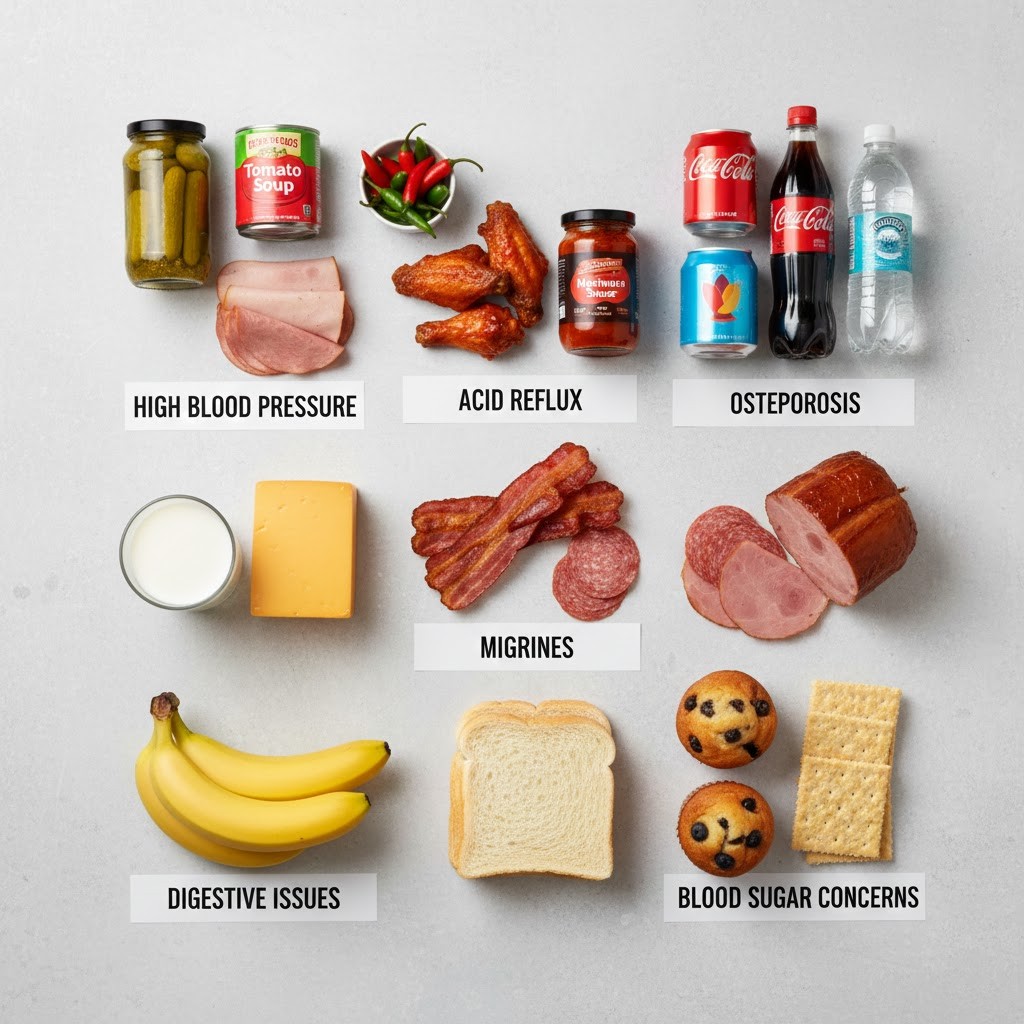
High-sodium foods can raise blood pressure by increasing fluid retention and making the heart work harder. Pickles, for example, are a frequent trigger because brining requires salt. A single pickle can contain 600–900 mg of sodium, which quickly adds up. Americans often consume hidden sodium from deli meats, canned vegetables, and packaged snacks, making it easier to unintentionally exceed daily limits. For someone already managing hypertension, reducing salty condiments, pickled vegetables, and processed snacks may help keep blood pressure more stable. Choosing low-sodium versions or rinsing canned vegetables before cooking can be simple ways to cut back.
Acid reflux — spicy peppers and heat-heavy meals
Spicy ingredients can relax the lower esophageal sphincter—allowing stomach acid to move upward—and irritate the lining of the esophagus. Hot chili peppers, buffalo wings, and spicy ramen are common US favorites that may lead to burning discomfort minutes after eating. For example, meals containing more than 1–2 teaspoons of crushed red pepper often trigger reflux symptoms in sensitive individuals. Even mild spices may be a problem when eaten late at night or paired with tomato-based sauces. People with reflux may benefit from reducing heat-heavy foods and replacing them with herbs like basil, oregano, or parsley for flavor.
Osteoporosis — sugary sodas and carbonated drinks
Sodas, especially colas, contain phosphoric acid and high amounts of added sugar, which may influence bone health over time when consumed frequently. A typical 12-oz can of cola contains around 40 grams of sugar—almost the full daily limit recommended for many adults—and repeated consumption may displace healthier beverages like milk or fortified alternatives. While carbonation itself is not harmful, the combination of acidity, caffeine, and sugar can be problematic for bone density. Limiting soda intake and choosing milk, fortified plant-based milks, or water as daily beverages may better support bone strength.
Digestive issues — dairy and constipation-triggering fruits
Dairy can worsen diarrhea in people with lactose intolerance because they lack the enzymes needed to break down lactose. Drinking just 1 cup of milk may trigger cramping, gas, and loose stools in sensitive individuals. On the opposite end, certain fruits—like bananas—may contribute to constipation when eaten in larger amounts. A medium banana contains roughly 3 grams of fiber, but the type of fiber is more binding, which may make stools firmer. People struggling with irregularity may benefit from reducing bananas and increasing fruits like pears, berries, or prunes.
Migraines — processed meats and additives
Processed meats such as deli ham, bacon, or salami often contain preservatives like nitrates, nitrites, and MSG. These additives may trigger migraines in some individuals by affecting blood vessels in the brain. For example, a single serving of cured meat can contain more than 100 mg of nitrates, which may be enough to trigger symptoms in sensitive people. Even though these meats are common in American sandwiches and breakfast dishes, choosing nitrate-free versions or reducing processed meats may reduce migraine frequency.
Blood sugar concerns — refined carbs like white bread
White bread and other refined carbohydrates break down quickly into glucose, causing rapid spikes in blood sugar. A single slice of white bread typically has a glycemic index of around 70, which is considered high. For people managing blood sugar concerns, these spikes may lead to energy crashes, hunger swings, and difficulty maintaining stable glucose levels. Choosing whole-grain breads with at least 3–4 grams of fiber per slice may promote steadier digestion and better blood sugar control.
Smart Swaps to Reduce Symptoms

With so many foods acting as potential triggers, it helps to replace them with options that support your goals. These swaps provide familiar flavors without aggravating symptoms.
Lower-sodium options
If salty foods are a concern, look for “low-sodium” or “no-salt-added” versions of canned beans, broths, and vegetables. Many brands now offer options with 50–70% less sodium, making it easier to meet daily recommendations. You can also enhance flavor using lemon, garlic powder, smoked paprika, or salt-free seasoning blends. Americans often find that reducing sodium gradually helps their taste buds adjust within about two weeks, making lower-salt meals more enjoyable over time.
Gut-friendly ingredients
If digestive issues are the main challenge, swap dairy milk with lactose-free or plant-based options like almond, oat, or soy milk. Many of these alternatives contain 300–450 mg of calcium per cup, a helpful amount for bone support. For constipation, choose fruits such as kiwi, berries, prunes, and apples with skin; each provides between 2–6 grams of fiber per serving. These options support digestion and regularity without causing discomfort.
Blood-sugar-steady alternatives
If refined carbs are problematic, swap white bread for whole-grain breads with visible grains and higher fiber levels. Choosing snacks like nuts, string cheese, or whole-grain crackers may steady energy levels throughout the day. Breakfast swaps—like oatmeal topped with berries instead of sugary cereal—can help maintain more consistent blood sugar patterns. Even small changes, such as replacing a 12-oz cola with sparkling water and lemon, can reduce sugar intake by more than 35 grams at once.
When to Talk to a Healthcare Professional
Even with thoughtful dietary changes, some symptoms require personalized advice from clinicians or dietitians who understand your full medical history.
Persistent or worsening symptoms
If you consistently avoid certain foods but still experience issues—such as ongoing heartburn, digestive discomfort, headaches, or elevated blood pressure—it may be time to seek professional guidance. Symptoms lasting more than two to three weeks, or those that affect daily activities, deserve evaluation. For example, chronic reflux can sometimes indicate conditions that require medical testing, while recurring migraines may need tailored treatment strategies.
Personalized nutrition guidance
Because everyone responds differently to foods, healthcare providers can help identify unique triggers and create an individualized eating plan. Tools like elimination diets, food journals, or blood tests may pinpoint sensitivities. A dietitian may also help ensure that removing certain foods—such as dairy or high-fiber fruits—does not lead to nutrient gaps. Personalized advice is especially valuable for people managing multiple conditions, such as high blood pressure combined with diabetes, where food interactions can overlap.
FAQs
- Do I have to eliminate these foods completely?
Not necessarily. Many people find that reduction—not elimination—is enough to reduce symptoms. The key is paying attention to your personal tolerance levels and adjusting intake based on how your body responds. - Can healthy foods still be trigger foods?
Yes. Even foods considered nutritious may worsen symptoms for certain individuals. Bananas, for example, can contribute to constipation in some people, while dairy may cause digestive discomfort for those with lactose intolerance. - Is it safe to rely on food changes alone for symptom relief?
Diet can play a helpful role, but it is rarely a complete solution. If symptoms persist despite dietary adjustments, a healthcare professional should evaluate underlying causes. - How long does it take to notice improvements after removing trigger foods?
Many people notice changes within a few days to one week. For others, it may take several weeks, depending on the condition, digestion, and consistency of food choices. - Are there tests to help identify food triggers?
In some cases, clinicians may recommend elimination diets, breath tests, or blood work. However, self-monitoring through a food journal is often a practical first step for many individuals. - What if I have more than one condition with overlapping trigger foods?
This is common, and it may require prioritizing which symptoms affect you most. A dietitian or physician can help you design a balanced plan that accounts for your combined needs.
Tips & Swaps
- Choose low-sodium canned goods to reduce blood pressure impact.
- Swap spicy meals for herb-based seasonings.
- Replace white bread with whole-grain alternatives.
- Use lactose-free or plant-based milks for easier digestion.
- Replace soda with sparkling water and lemon.
- Add high-fiber fruits like berries or kiwi to support bowel regularity.
If you’re ready to feel more in control of your symptoms, start by testing one or two simple food swaps this week. Small changes can create meaningful improvements over time.
Disclaimer: This content is for informational purposes only and is not a substitute for professional medical advice.

About Sarah Williams
We turn solid evidence into everyday habits Americans can actually do—plain English, cups/oz, grocery-aisle swaps, and routines that fit real life. Our editorial process: Experience—we road-test tips in real schedules…