Resistant Starch Benefits: What the Research Shows for Gut, Blood Sugar & Satiety
Resistant starch has quietly become one of the most talked-about topics in gut health — and for good reason. This...
- 1. It feeds your gut and makes butyrate
- 2. It’s gentler on blood sugar
- 3. It can help you feel fuller
- 4. It supports regularity and a diverse microbiome
- Who benefits most
- How to actually get more
- A note on realistic expectations
- FAQ
- Resistant starch vs. other fiber — what’s the difference?
- What the research actually says (and doesn’t)
- Simple ways to get the benefits this week
Resistant starch has quietly become one of the most talked-about topics in gut health — and for good reason. This is a plain-English look at the main resistant starch benefits the research points to, and how to get them from everyday food. For the full picture of what it is and where to find it, see our complete guide to resistant starch.
A quick note: I trained in traditional Vietnamese medicine but don’t practice clinically. This is general education, not medical advice.
1. It feeds your gut and makes butyrate
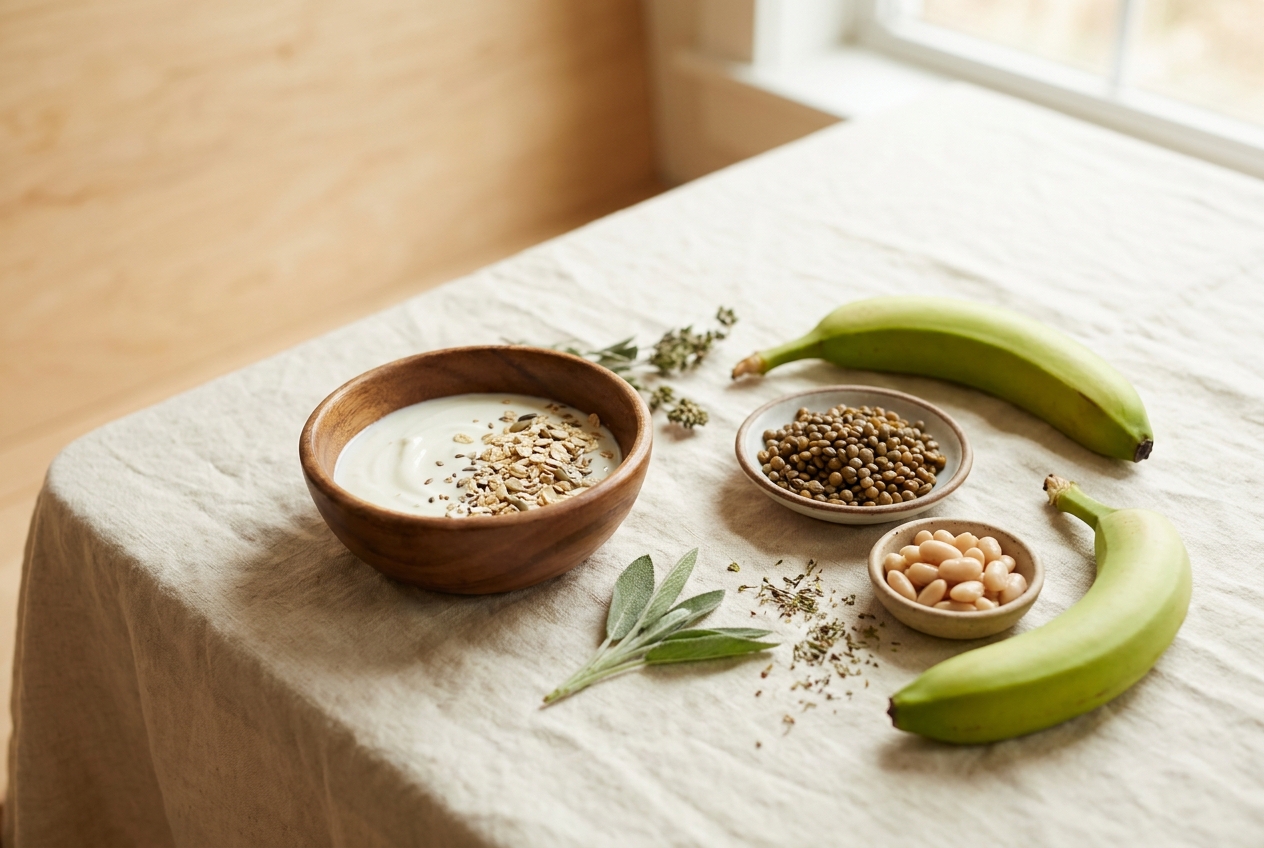
Resistant starch isn’t digested in the small intestine like regular starch. It travels to the colon, where your bacteria ferment it and produce short-chain fatty acids — especially butyrate. Butyrate is a preferred fuel for the cells lining your colon and helps support the gut barrier. In practice, eating resistant-starch foods is a food-first way to feed your own butyrate supply.
2. It’s gentler on blood sugar
Because it isn’t absorbed like normal starch, resistant starch tends to have a gentler effect on blood glucose, and some research points to a helpful “second-meal” effect — steadier blood sugar at the next meal, not just the current one. We go deeper in resistant starch and blood sugar.
3. It can help you feel fuller
The slower, fuller feeling that comes with resistant-starch foods may make it easier to eat without constant snacking. It won’t do the work for you, but for some people it takes the edge off appetite between meals.
4. It supports regularity and a diverse microbiome
As a fermentable, fiber-like carbohydrate, resistant starch adds to your overall fiber intake and feeds a range of beneficial bacteria — both of which many people notice help with comfortable, regular digestion.
Who benefits most
Anyone eating a fairly modern, processed diet is often low on fermentable fibers, so resistant starch is an easy win. People interested in steadier energy, appetite or blood sugar tend to notice it most. If you have a digestive condition, add it slowly and check with your healthcare professional.
How to actually get more
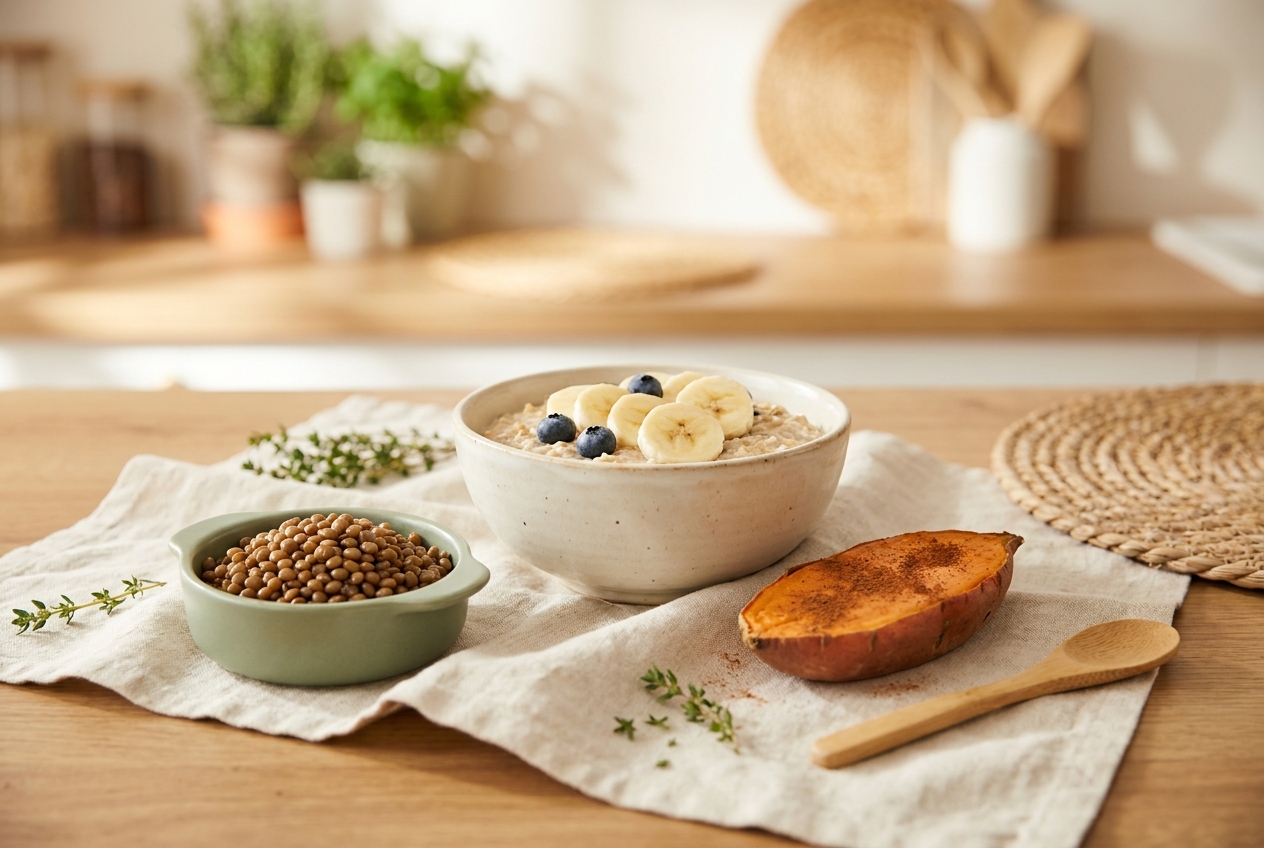
You don’t need supplements. The simplest sources are the resistant starch foods list — and the cook-and-cool trick, which increases resistant starch in foods like sweet potato and oats.
A note on realistic expectations
Resistant starch is a gentle daily habit, not a cure. The people who benefit are usually the ones who add a little consistently — a few spoonfuls a day — rather than chasing a big one-off dose.
FAQ
How long until I notice benefits? Some people feel steadier appetite within days; microbiome changes build over weeks of consistency.
Can it cause bloating? Yes if you add a lot too fast — go slow and it usually settles.
Resistant starch vs. other fiber — what’s the difference?
People often ask whether resistant starch is “just fiber.” It behaves like a fermentable fiber — it isn’t absorbed in the small intestine and feeds bacteria in the colon — but it comes packaged inside familiar starchy foods rather than in bran or supplements. That’s part of the appeal: you get a fiber-like benefit from foods you already enjoy, like potatoes, rice, oats and beans, without a big diet overhaul.
What the research actually says (and doesn’t)
The evidence for resistant starch is genuinely promising for gut and metabolic health, but it’s still developing and results vary by person, dose and food. So it’s fair to say resistant starch may support these areas — not that it guarantees them. The most consistent finding across studies is simple: people who regularly eat more fermentable fiber tend to have healthier, more diverse gut bacteria.
Simple ways to get the benefits this week
You don’t need a plan — anchor it to meals you already eat:
- Cook extra rice or potatoes and eat the cooled leftovers the next day.
- Keep cooked-and-cooled sweet potato in the fridge as a snack.
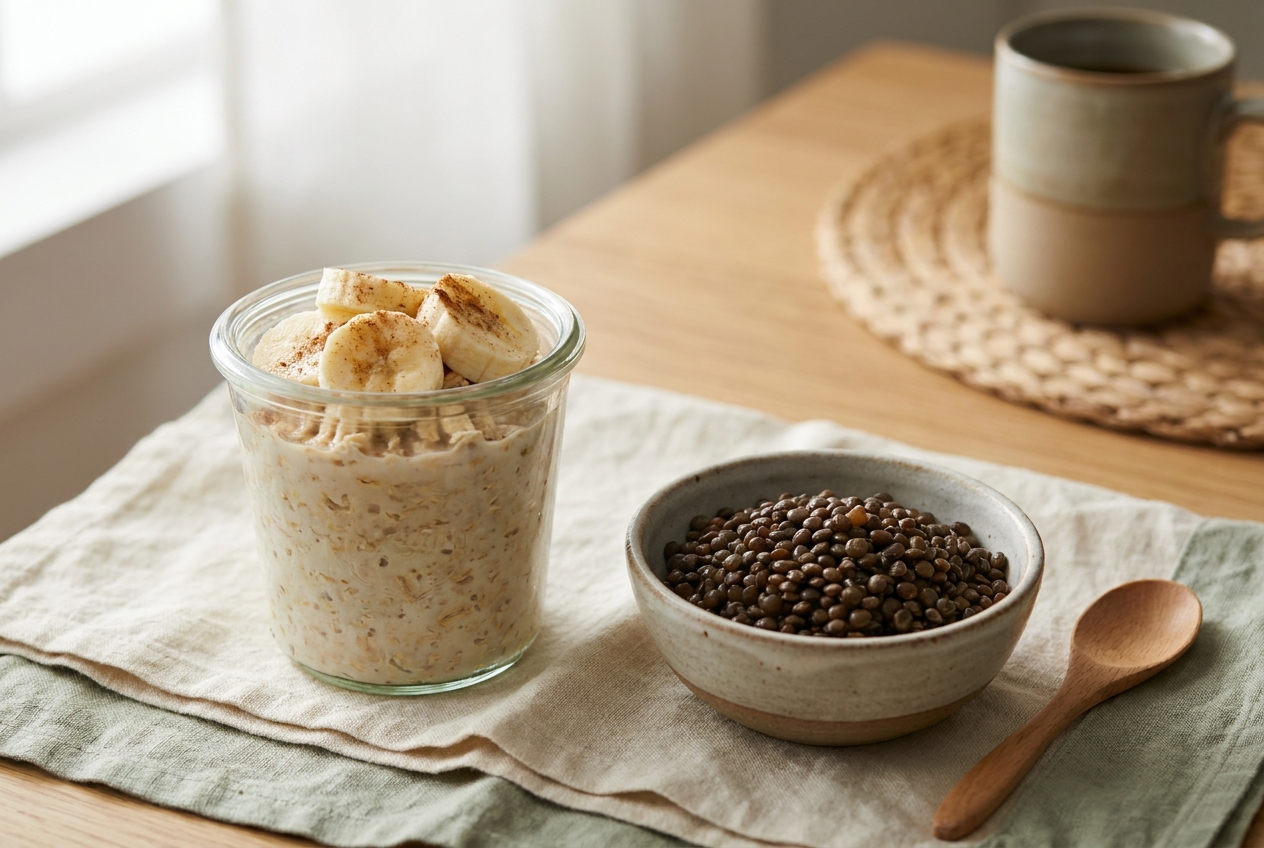
- Add lentils or chickpeas to a lunch you already make.
- Choose a slightly-green banana over a very ripe one.
- Have cooled or overnight oats a few mornings a week.
Consistency beats intensity. A few spoonfuls of resistant-starch foods most days does more than a single big serving once in a while.
Is resistant starch safe every day? For most people, yes — it’s just food. Add it gradually so your gut adjusts, and ease off if you feel overly gassy.
Do I need a supplement like potato starch? Not necessarily. Whole foods give you resistant starch plus other nutrients and fibers; supplements are optional, not required.
General wellness content, not medical advice or treatment for any condition.

About Mr. Anh
We turn solid evidence into everyday habits Americans can actually do—plain English, cups/oz, grocery-aisle swaps, and routines that fit real life. Our editorial process: Experience—we road-test tips in real schedules…