Best Foods to Eat When You’re Sick
When you’re sick, even simple meals can feel like a challenge. But choosing the right foods can support hydration, comfort,...
When you’re sick, even simple meals can feel like a challenge. But choosing the right foods can support hydration, comfort, and energy while your body works to recover. From fever-friendly liquids to congestion-soothing warm meals, certain foods are easier to tolerate and provide gentle nourishment. This guide breaks down the best foods to eat when you’re sick, how they help, and practical ways to use them—especially for common symptoms like fever, colds, and nasal congestion.
Foods That Help When You Have a Fever
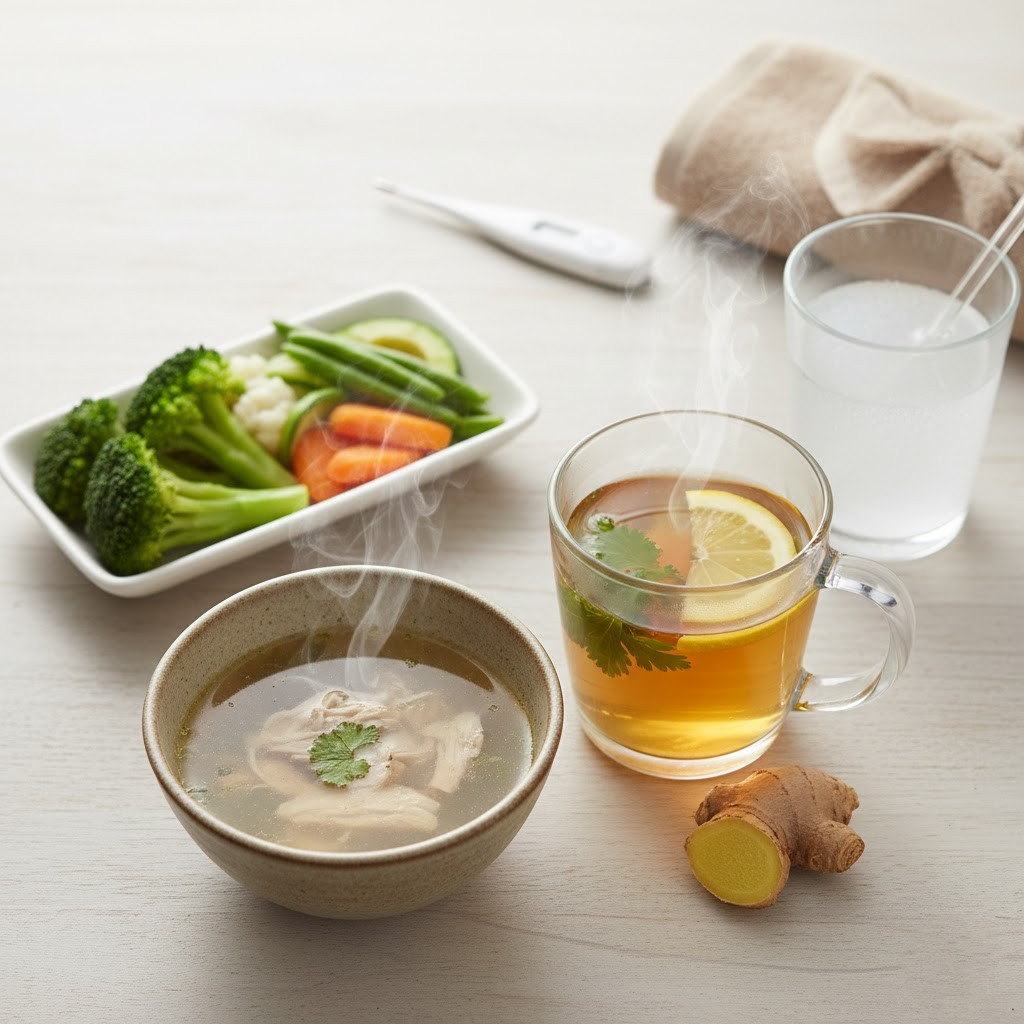
When a fever hits, your body uses more fluids and energy than usual. This makes hydration and easy-to-digest foods especially important. The goal is to stay nourished without overwhelming your stomach.
👉 This pairs well with our 9 Magnesium-Rich Foods to Add This Week guide if you want the full picture on topics related to magnesium.
Hydrating Drinks That Support Recovery
Staying hydrated is the top priority when you have a fever because high body temperature causes fluid loss through sweating. Clear broth is a classic option since it provides both warmth and electrolytes; drinking 1–2 cups (8–16 oz) throughout the day can help replace what you lose. Herbal teas—such as chamomile or peppermint—offer mild flavor without caffeine, and many people find warm liquids soothing for chills. Coconut water is another useful option because it contains natural electrolytes like potassium; even drinking half a cup (4 oz) at a time can help if your appetite is low. Rotating between these drinks ensures hydration without relying on sugary beverages that may upset your stomach.
👉 Want to go further? Our complete breakdown of Liver-Cleansing Foods That Support Everyday Health walks you through liver health and detox step by step.
Light Meals That Are Gentle on the Stomach
Fevers often come with reduced appetite, so choosing foods that are easy to digest makes eating less of a chore. Steamed vegetables, such as carrots, zucchini, or broccoli, provide vitamins without heaviness—try keeping portions around ½ cup to start. Clear soups, like basic chicken or vegetable broth, are also well-tolerated and can be sipped slowly if you’re not ready for solid food. Some people find that warm oatmeal made with water instead of milk can be soothing; using ¼–½ cup dry oats creates a mild, soft texture that’s easier on the stomach. These foods deliver steady nourishment without overwhelming the digestive system when your body is already working hard to regulate temperature.
👉 This pairs well with our 15 Easy Anti-Inflammatory Meals for Weeknights guide if you want the full picture on topics related to inflammatory.
Foods That Help With Cold & Nasal Congestion
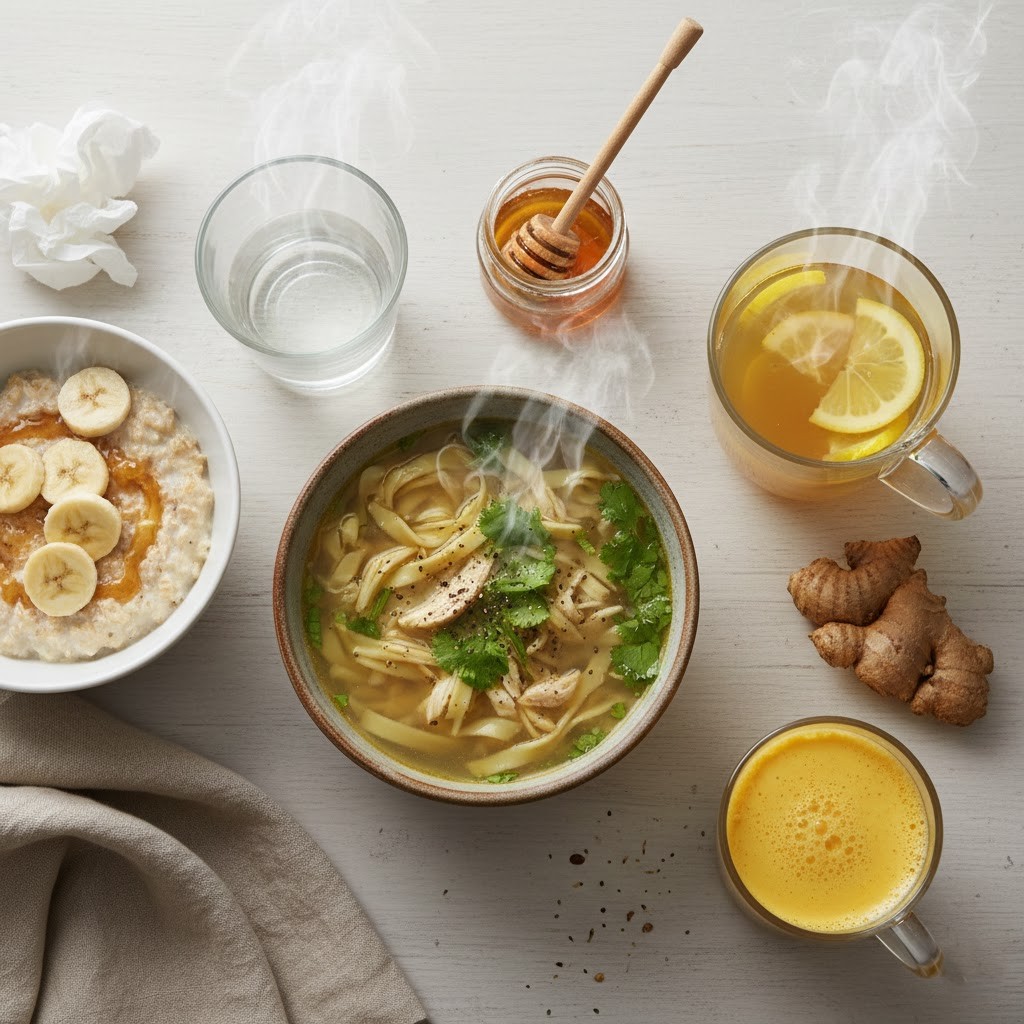
Cold symptoms often make it difficult to breathe, eat, or smell food. Warm, simple meals can provide comfort and help keep energy levels up during recovery.
Warm Soups and Drinks for Comfort
Nothing hits the spot during a cold quite like a warm bowl of chicken soup. Research suggests that warm liquids may help support airflow by loosening mucus, and ingredients like carrots, celery, and onions add nutrients. Even a 1-cup serving (8 oz) can bring noticeable comfort. Ginger tea is another helpful drink that many people use to soothe the throat and warm the body; steeping a few slices of fresh ginger for at least 5 minutes can enhance flavor and warmth. Honey water—simply warm water mixed with 1 tsp of honey—can be sipped slowly to support hydration and soothe irritation. These warm fluids are not cures, but they help create the conditions your body needs for comfort while you recover.
Nourishing Options to Keep Energy Up
When congestion makes eating difficult, sticking to simple, nutrient-dense foods can help maintain steady energy. Oatmeal is an excellent option because it’s soft, warm, and provides fiber; preparing it with water or a light broth can make it even easier to digest. Turmeric milk—made by warming milk to about 140°F (60°C) and adding ¼ tsp turmeric—can offer a cozy nighttime drink when appetite is low. Ginger also appears in many congestion-friendly meals, whether in teas or mild soups, because its warmth is comforting on cold days. These foods don’t need to be heavy to be effective; even small servings, such as ½ cup oatmeal or a single mug of warm turmeric milk, can help maintain energy while your body rests.
Simple Steps to Use These Foods During Illness
Here are practical steps you can follow when choosing foods while sick:
- Start with hydration—sip clear broth or herbal tea every 1–2 hours.
- Add light foods only when you feel ready, starting with small portions.
- Use warm drinks like ginger tea or honey water to ease throat discomfort.
- Choose simple cooked veggies rather than raw salads for easier digestion.
- Eat small meals throughout the day instead of three large meals.
- Avoid heavy, fried, or creamy foods until appetite fully returns.
- Keep electrolytes in mind—coconut water or broth can help replenish them.
Tips & Swaps
- Use low-sodium broth if you’re sensitive to salt.
- Swap oatmeal with cream of rice for an even gentler option.
- Add a squeeze of lemon to warm water for flavor without heaviness.
- Choose caffeine-free teas to avoid dehydration.
- Replace turmeric milk with dairy-free milk if needed.
FAQs
- What should I eat first when I’m sick and have no appetite?
Start with liquids such as clear broth, coconut water, or warm herbal tea. These help prevent dehydration and are easier to tolerate than solid foods. After that, you can slowly introduce mild foods like oatmeal or steamed vegetables in small portions. - Are warm foods better than cold foods when dealing with congestion?
Warm foods often feel more soothing because they can help loosen mucus and make breathing feel easier. Chicken soup, ginger tea, and honey water are popular choices. Cold foods aren’t harmful, but many people find warm meals offer better comfort. - Can I drink dairy when I’m congested?
Some people feel dairy increases mucus, but research shows the effect is minimal for most individuals. If dairy makes you feel uncomfortable, switch to warm herbal teas, broth, or plant-based milk options. - How often should I eat when sick?
Small, frequent meals—every 2–3 hours—work best when your appetite is low. This prevents energy dips without overwhelming your stomach. Hydration should remain consistent throughout the day, even when you aren’t eating much. - Are these foods enough for full recovery?
These foods support hydration and comfort but aren’t a cure. They help your body maintain strength while it fights illness. If symptoms don’t improve or worsen, seek medical attention.
Want more practical wellness tips and simple healing-friendly recipes? Explore our latest guides to support your health, recovery, and everyday well-being.
Disclaimer: This content is for informational purposes only and is not a substitute for professional medical advice.

About Jane Smith
We turn solid evidence into everyday habits Americans can actually do—plain English, cups/oz, grocery-aisle swaps, and routines that fit real life. Our editorial process: Experience—we road-test tips in real schedules…